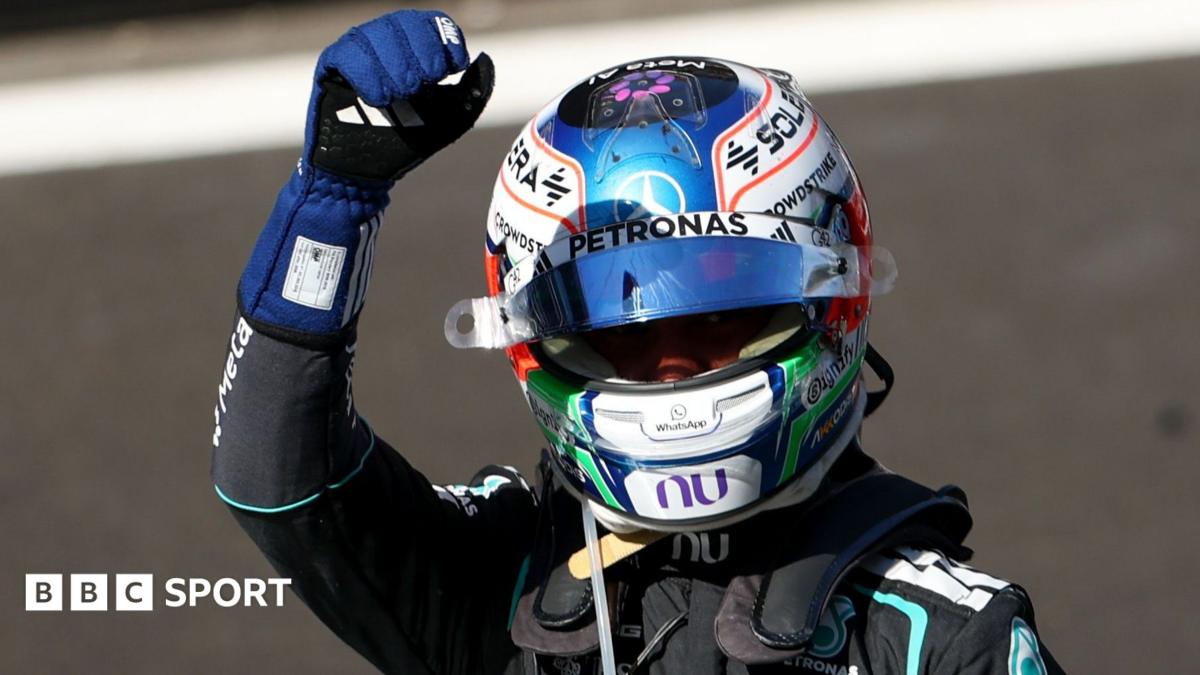


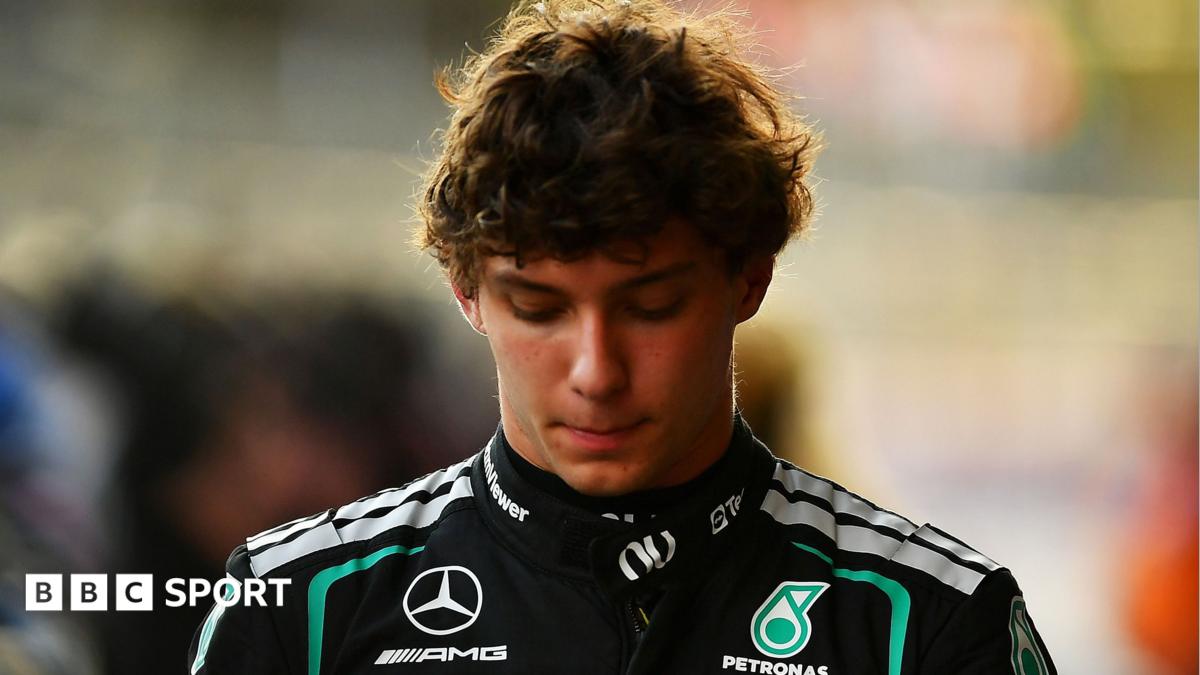
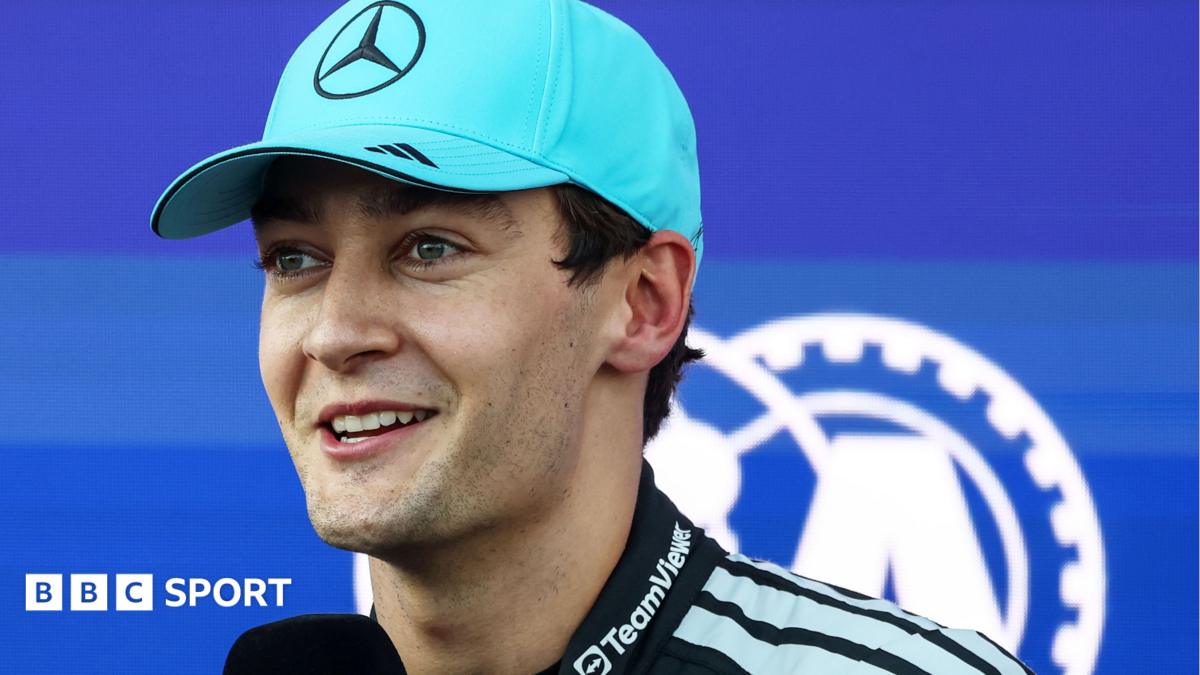

The Canadian Grand Prix was the race in which the Formula 1 title battle finally came alive this year.
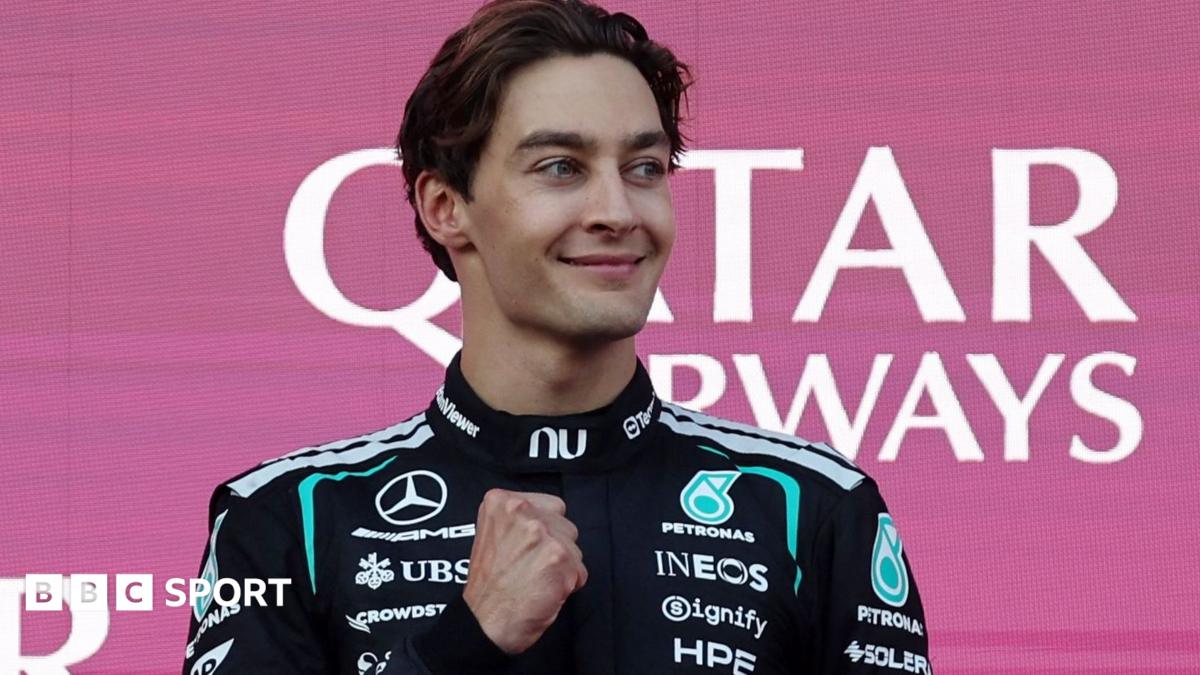
It was also, however, the race in which it took a potentially decisive turn, putting a huge dent in George Russell’s hopes of beating his 19-year-old Mercedes team-mate Kimi Antonelli to the championship.
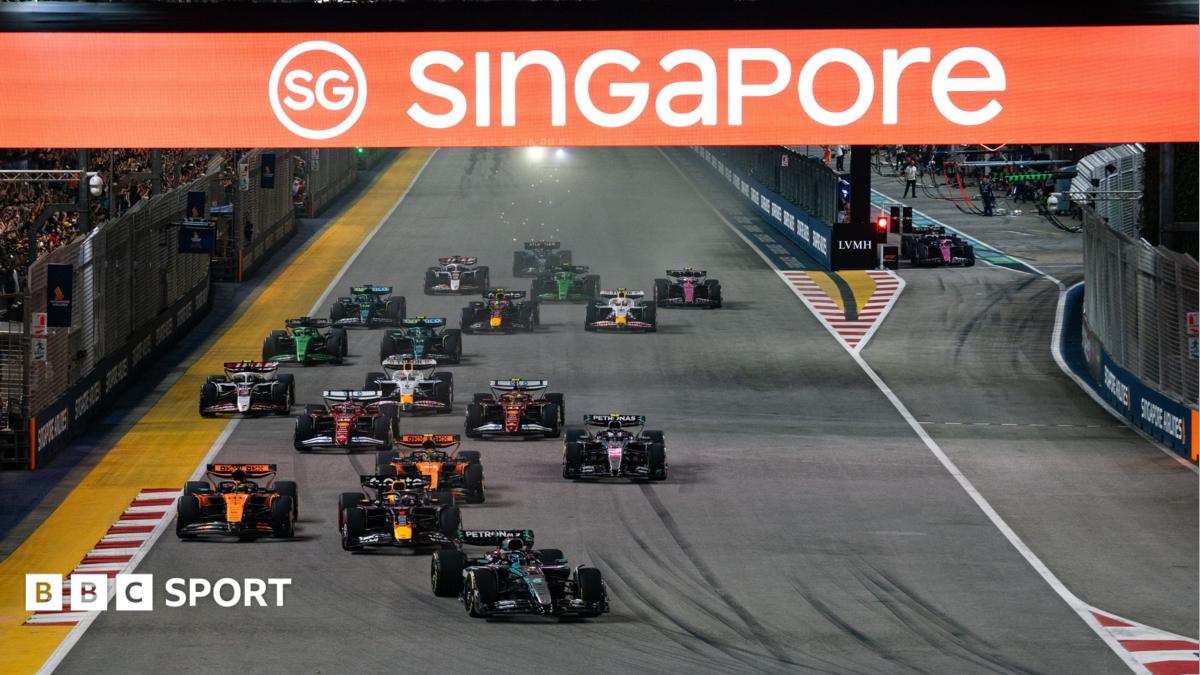
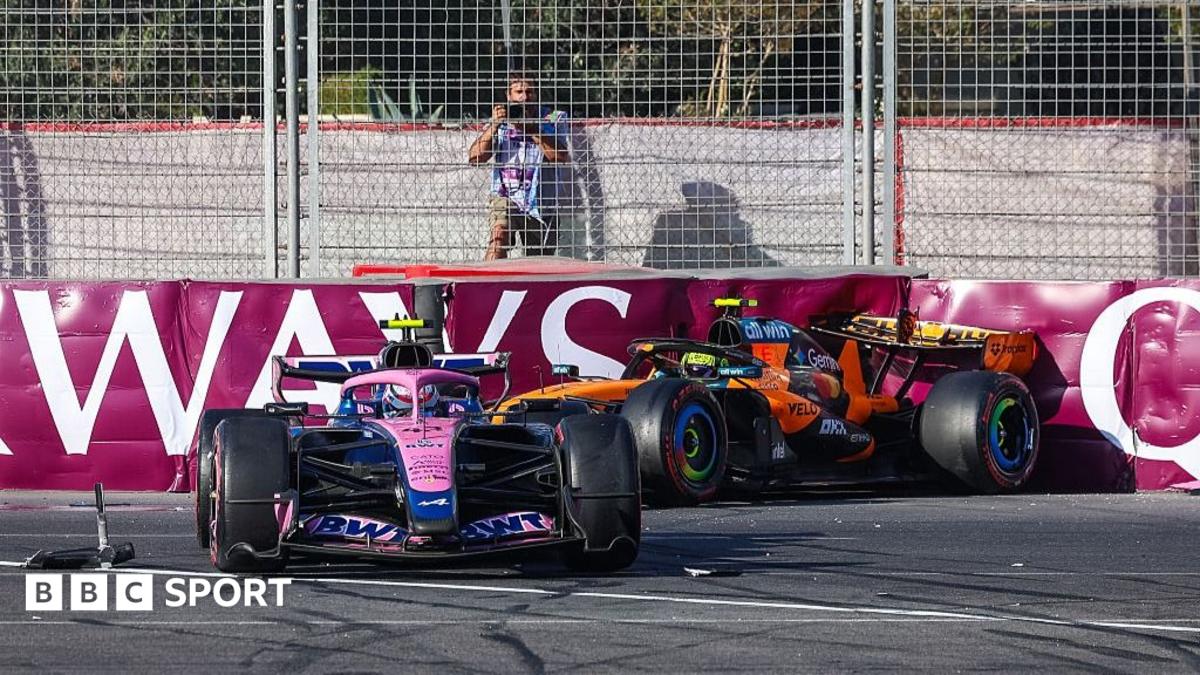
Russell’s retirement from the race came after 30 laps of frenetic battling between the pair which lit up the Circuit Gilles Villeneuve on a damp, gloomy day so cold it tempted world champions McLaren into a seemingly inexplicable decision to start the race on a dry track on wet-weather tyres.
Russell’s retirement handed the win to Antonelli, his fourth in a row, and the Italian now has a massive 43-point lead.
Doubtless there are many twists and turns to come in the remaining 17 races. Even so, that will take some recovering.
Afterwards, Russell was stoic but understandably downbeat.
“Right now it’s his to lose,” he said. “He is so many points ahead. It feels like the gods don’t want me to be in this fight, when I look at the safety-car timing in Japan, breaking down in China Q3, fighting for pole, breaking down from the lead here today.
“But, you know, the pressure’s off. Go out, enjoy every single race. Try to win every single race. And I’ve got nothing to lose.
“I don’t want to be stood here talking like that. It is, of course, frustrating, but I want to be in that fight. Hopefully, the luck will turn.”
George Russell bounced back after a difficult recent run to beat Mercedes team-mate Kimi Antonelli to sprint pole at the Canadian Grand Prix.
The Briton, who is 20 points adrift of the Italian after four races this season, headed Antonelli by 0.068 seconds after being fastest on both runs in final qualifying.
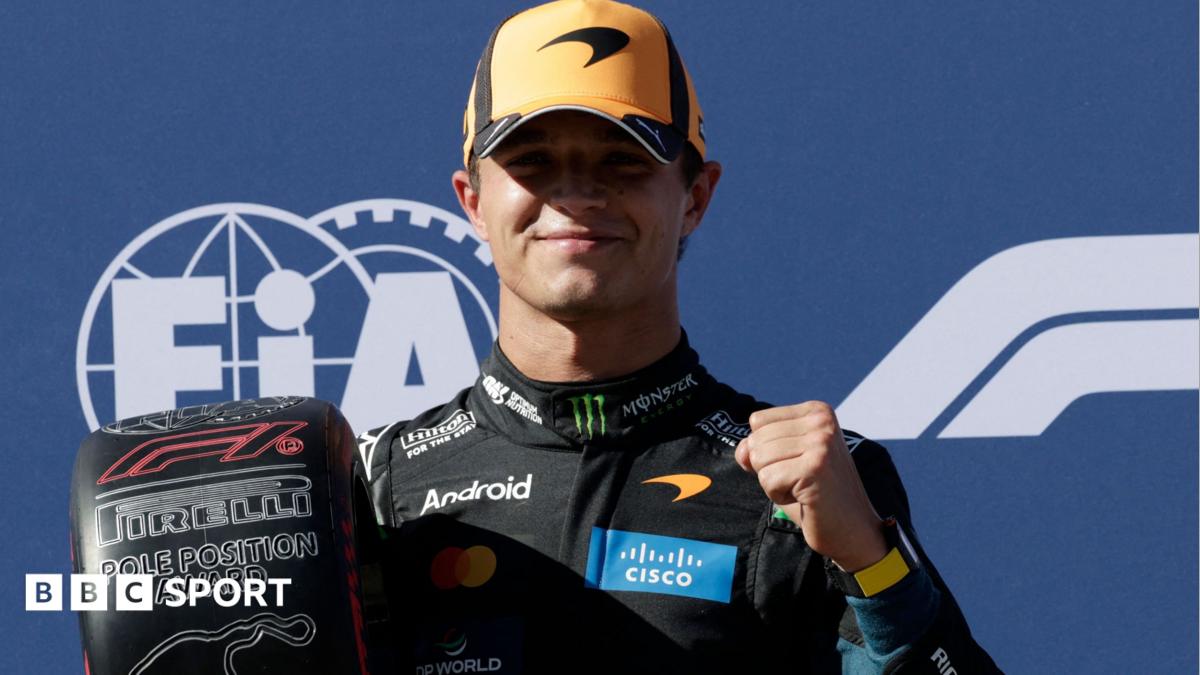
Lando Norris headed an all-McLaren second row, 0.315secs off pole and 0.019secs in front of team-mate Oscar Piastri.
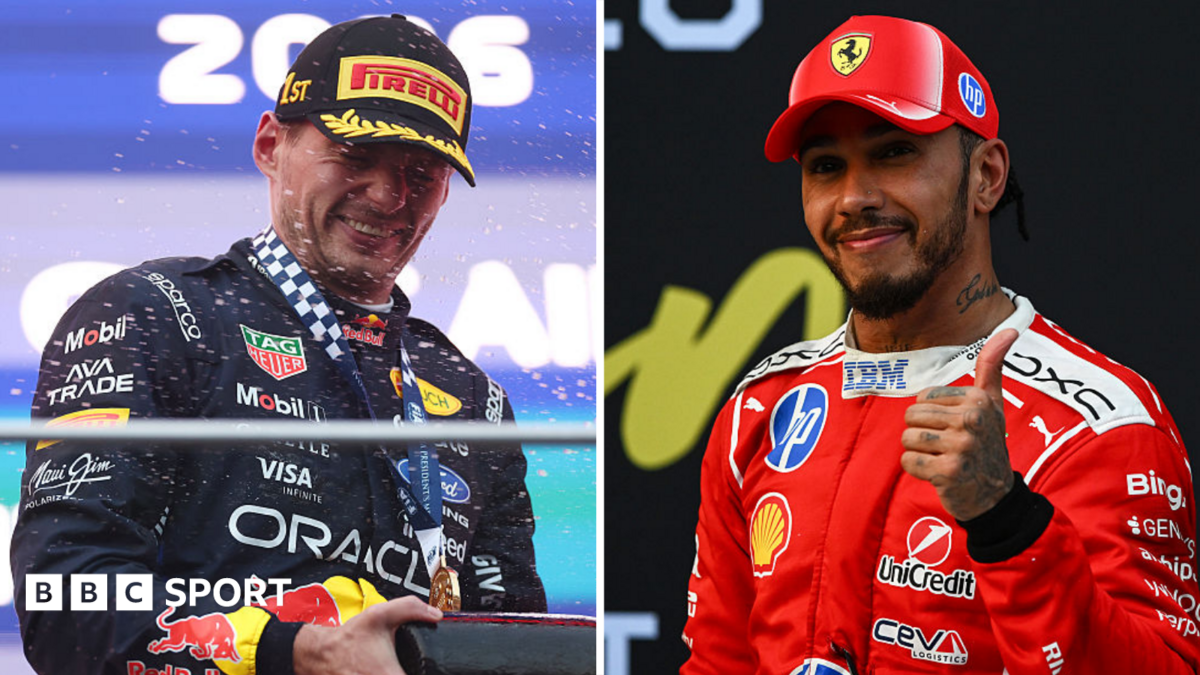
Ferrari and Red Bull completed a two-by-two top eight with Lewis Hamilton ahead of Charles Leclerc and then Max Verstappen in front of Isack Hadjar.
Russell came to Montreal looking to turn around what he admitted had been a “turbulent” start to the season, in which Antonelli has won three of the four grands prix so far, and he has started the weekend off well.
“It feels great after a tough Miami but I never doubted myself,” said Russell. “I always knew what I could do. This is an amazing circuit, high grip, and feels like you’re driving a proper grand prix car.”
Mercedes have a major upgrade on their car for this race and Russell said it had made a significant difference.
“It’s definitely feeling great,” he said. “The team have done a great job to bring this forward. Pleased to have it on the car and pleased to be back in P1. It’s been a little while but still a big focus for tomorrow.”
Antonelli said he had started his lap with his tyres under temperature and described his session as “messy”.
McLaren also brought an upgrade to Montreal, their second in as many races, but while it kept them within range of Mercedes it was not enough to counterbalance the effect of Mercedes on this track, where the world champions have often struggled.
Norris said: “A good surprise. After this morning, we were a little bit worried about how far off we were. More just the lack of confidence in the car.
“But we changed some things on the car and seemed to make a good improvement. I could have got more out of it, but not enough to close the gap to the guys ahead.”
Hamilton was 0.361secs off pole and 0.084secs ahead of Leclerc on a circuit where he shares the record number of wins with Michael Schumacher.
The seven-time champion was pleased with his performance, saying his decision not to go into the Ferrari simulator before this race, because of a feeling it was leading to incorrect set-up choices, had paid off.
“Probably the best qualifying session we’ve had for some time,” said Hamilton. “Great work with the engineers.
“The car felt really fantastic from P1. We made just subtle changes going into qualifying. Q1 and Q2 was looking good and then I don’t know what the others are able to turn up a bit more, but I am just happy to be in the fight.
“I was having so much fun out there, and the fact I didn’t do the sim and it was the best I felt all year. I chose a set-up we’ve not used before and its transformed the car for me.”
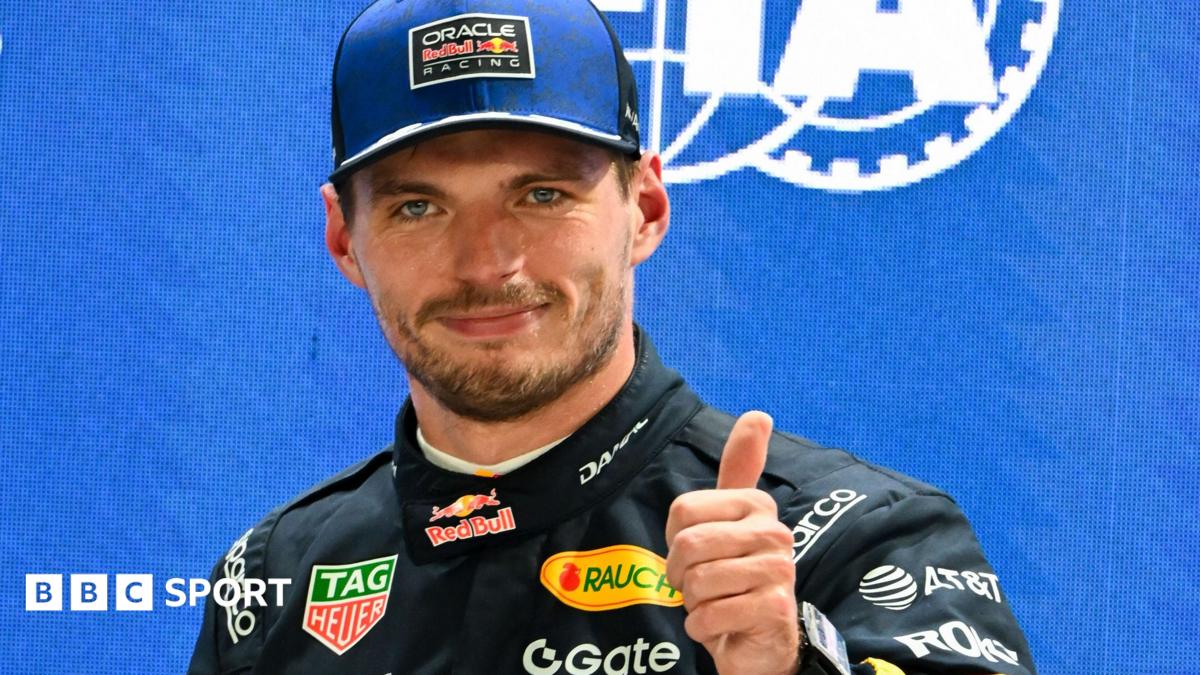
And Verstappen, struggling with a car he said was “jumping” at the rear, was just 0.101secs clear of tea-mate Hadjar.
“My feeling in the car was not very good,” said Verstappen. “I was struggling a lot with the ride. All over the bumps I couldn’t put my foot down. Actually my feet were even flying off the pedals and it made it very difficult to be consistent.”
Look Mum No Computer is representing the UKCredit: AP
What is the Eurovision 2026 running order?
The running order for tonight’s Eurovision 2026 Grand Final was confirmed after the conclusion of the second semi-final on Thursday.
The running order for tonight is as follows:
Denmark: Søren Torpegaard Lund – Før Vi Går Hjem
Germany: Sarah Engels – Fire
Israel: Noam Bettan – Michelle
Belgium: ESSYLA – Dancing on the Ice
Albania: Alis – Nân
Greece: Akylas – Ferto
Ukraine: LELÉKA – Ridnym
Australia: Delta Goodrem – Eclipse
Serbia: LAVINA – Kraj Mene
Malta: AIDAN – Bella
Czechia: Daniel Zizka – CROSSROADS
Bulgaria: DARA – Bangaranga
Croatia: LELEK – Andromeda
United Kingdom: LOOK MUM NO COMPUTER – Eins, Zwei, Drei
France: Monroe – Regarde !
Moldova: Satoshi – Viva, Moldova!
Finland: Linda Lampenius x Pete Parkkonen – Liekinheitin
Poland: ALICJA – Pray
Lithuania: Lion Ceccah – Sólo Quiero Más
Sweden: FELICIA – My System
Cyprus: Antigoni – JALLA
Italy: Sal Da Vinci – Per Sempre Sì
Norway: JONAS LOVV – YA YA YA
Romania: Alexandra Căpitănescu – Choke Me
Austria: COSMÓ – Tanzschein
How can I watch Eurovision 2026?
Coverage will start in the UK on the BBC and BBC iPlayer at 8pm, with Graham Norton returning to his regular commentary role.
The show will last for almost three hours, coverage ending at 11.50pm, when the BBC will switch to the news.
Who is UK entrant Look Mum No Computer?
Look Mum No Computer is the alias of Sam Battle, originating from the name of his YouTube channel dedicated to creative audio electronics projects.
The artist also uses it as his stage name when performing as a musician.
The name is inspired by the phrase “look mum, no hands”, used by kids when they are learning to cycle.
It highlights the artist’s bold, anti-digital approach to making music where he builds his own synthesizers and hardware, such as his famous Furby organ.
During this tournament, she has been able to lean on Meg Jones a little more to lift her mood.
Like the new England skipper, Packer was born and raised in Wales. The pair will occasionally swap a word or two of Welsh, a reminder of home and family.
“We have just some funny phrases that no-one else really understands, but it really makes us laugh,” says Packer.
“She’s very good at making things quite light and I’m probably the opposite – I make it quite serious.”
There is plenty to be serious about when they face France in Bordeaux.
Given England’s home run at the 2025 Rugby World Cup, WXV’s sparse crowds and an expected record attendance at the 42,000-capacity Stade Atlantique, it is likely to be the most hostile environment the Red Roses have played in since that fateful defeat in Eden Park in 2022.
The streak of 37 straight wins England have put together since is in definite peril.
But, beyond her notes and focus points, there is something else, less easily defined, that bolsters Packer amid the stress.
“As a team we are all overly critical of ourselves, but there is a bond that’s really important to us,” she says.
“The biggest thing is how tight we are as a group – and that just really carries us through.”
Packer, her team and that togetherness will be tested.
But the scrum-half, book smart, street smart and quick smart at the breakdown, can pass most things.
Brace yourself, Coronado. The hospitality maven who brought San Diego its most over-the-top maximalist hotel — the Lafayette in North Park — is back with another glitzy project, this time in the wealthy island city known for its traditional bent.
Opening Thursday, Baby Grand includes a 35-foot faux rock wall, a 20-foot waterfall, a Mediterranean restaurant that feels like a Greek ruin being consumed by a jungle and a hidden oyster bar full of crystal and mirrors. All of this, including the Spanish statuary, Moroccan fixtures and Murano glass, is squeezed onto an Orange Avenue lot that once held a 1950s motel. If Liberace had run away with an art historian, they might have landed here.
The idea was “to create this little mirage within the mirage that is Coronado,” said Arsalun Tafazoli, founder of CH Projects, the group behind a multitude of design-intensive establishments across San Diego including the speakeasy Raised by Wolves, the hi-fi listening bar Part Time Lover and the Middle Eastern restaurant Leila.
The Baby Grand hotel and its restaurant Night Hawk stands along Orange Avenue about a block from the Hotel del Coronado.
The patio dining area of Coronado’s new Night Hawk includes seating for about 150.
Baby Grand’s high-density, high-gloss environment, which cost about $17 million and took about five years to complete, will come as no surprise to those who have followed Tafazoli’s earlier ventures.
Asked about the design philosophy behind the 2023 renovation of the Lafayette — the company’s first hotel — Tafazoli had a simple answer: “More is more.”
The Baby Grand project, put together in collaboration with design studio Post Company, is cut from the same cloth, describing itself as a “polychromatic pastiche” on its website. The goal, Tafazoli said, is to enrich Coronado’s culture and give people a respite in an anxiety-ridden time. But “it is different,” he said. “I don’t know if it is going to be embraced.”
Getting the necessary city permissions “was definitely a struggle,” Tafazoli said. “Had I known how difficult this was going to be, I don’t know …”
In the days before the hotel’s opening, Tafazoli, 44, led a tour of the site. The entrepreneur, whose heritage is Persian, wore his hair in braids and a button-down Supreme shirt featuring Barack Obama.
The Baby Grand hotel’s guest rooms feature separate tub and shower.
“I have a very one-dimensional existence. I’m single. I have no kids. This is what I do,” said Tafazoli, who grew up in San Diego and studied at UC San Diego. He lives now in downtown San Diego’s East Village, where his company is based and where his first CH venture, Neighborhood, opened in 2007.
Though his company started with eating and drinking establishments, Tafazoli said, his goals were always to create and run hotels, “the pinnacle of hospitality.” As a child of divorce, he said, he may have a heightened awareness of when the energy feels right in a room and when it doesn’t. Creating social environments, he said, gives him some control over that. Moreover, he added later, “beauty is important to me, because it conveys care.”
To make the most of Baby Grand’s compact location (2/3 of an acre), the CH team has exported parking. Instead of leaving their cars on site, guests will hand keys to valets who will deposit vehicles in a Bank of America parking structure a block away. That move freed up space for not only palm trees, torches, tables, booths and 21 pieces of statuary from Spain, but also a little faux beach with a 4-foot-deep wading pool that can hold a handful of people.
“I can’t tell you how many iterations of sand were brought in and taken out,” Tafazoli said. “Sand is its own universe. You want local sand. But local sand was not conducive to that feeling.” So the sand is from Turkey.
1
2
3
1.Guest shower in an en suite bathroom.2.Hotel design touches include guest bathroom door handles. 3.Fiberglass clamshells serve as headboard in guest rooms.
The property’s main restaurant, Night Hawk, is Mediterranean, with cooking by open fire, a Greek ruins vibe and seating for about 150. The second restaurant lurks behind the lobby — a hidden oyster-and-Champagne bar that holds about 35 people, reservation only. The space, called Fallen Empire, features red mohair booths, built-in Champagne buckets, mirrored walls and chandeliers, sconces and lamps from the Italian glass-blowing island of Murano. The floor is a custom mosaic of sea creatures.
There are 31 guest rooms, beginning at $350 per night. Each is dominated by a custom-made clamshell headboard (fiberglass). Beds are surrounded by animal-print seating, parquet oak flooring, marble tables, mirrored cabinets and custom wallpaper. The rooms measure roughly 300 square feet each, nearly half of that space taken up by their elaborate bathrooms, each with separate tub and shower, sinks from Morocco.
Now picture all of that placed in the heart of Coronado (population 20,192), which sits next to Naval Air Station North Island and is known for attracting well-heeled retirees. The median home value is $2.5 million.
Up the block from the Baby Grand is the grand dame of San Diego County tourism, the Hotel del Coronado, which went up in 1888, completed a $550-million renovation last year and starts its rates north of $600. Another option is the Bower Coronado, also a dramatically upgraded motel that reopened in 2025 with prices similar to Baby Grand’s but a much more buttoned-down style.
This view from above at the Night Hawk restaurant space shows a stone booth, elaborately patterned cushion and table top.
All of those properties stand close to Coronado’s wide, sandy beaches — which means they all face challenges as waters are often fouled by the northward flow of untreated sewage from greater Tijuana. The longstanding problem has worsened in recent years, and Coronado’s Central Beach was closed to bathers on 129 days in 2025 because of unsafe bacteria levels. The U.S. and Mexican government say they have sewage-treatment projects in progress, with improvements expected by the end of 2027.
“We are, unfortunately, not marine scientists just a group of deeply overcaffeinated hoteliers with strong opinions about lighting, linen textures, and good design. So please check local water conditions before swimming,” Tafazoli wrote in a statement.
Asked his target market for the new hotel, Tafazoli said he was looking close to home.
“I see this as a staycation for locals” from San Diego County, Tafazoli said. “The big risk is that we don’t get locals and it doesn’t resonate with tourists who like the status quo.”
That said, Baby Grand and Coronado might be a better match than some imagine. Christine Stokes, executive director of the Coronado Historical Assn. and Museum, sees at least a few parallels to Baby Grand in local history, beginning with the historical association’s own building. From the 1950s into the 1990s, Stokes noted in an email, Marco’s Restaurant operated in the space, with a “Roman Room” bar — “a dark and immersive hidden gem where bartenders performed sleight-of-hand magic tricks.”
Guest rooms, including No. 103, are labeled with inscribed brass clamshells.
Then there was the Hotel del Coronado’s Circus Room restaurant, open from the 1930s into the 1960s. That was “an immersive environment, using specialized murals and striped tents on the walls,” Stokes wrote. It’s also where, in 1950, the manager of an L.A. TV station spotted a promising young piano player and decided to give him a chance on screen. The pianist’s name was Liberace.
However people respond to the particulars of the new hotel, Tafazoli said, he knows that the larger setting of Coronado is a special place.
From his office in San Diego’s East Village, “it’s a six-minute drive,” he said. “I come off that bridge, and I feel like I’m in a different place.” It’s amazing, he said, “to be so close and feel so far away.”
Poland’s Swiatek said she would prefer continued discussions and negotiations with the majors instead of a boycott.
“I think the most important thing is to have proper communication and discussions with the governing bodies so we have some space to talk and maybe negotiate,” the Wimbledon champion said.
“Hopefully before Roland Garros there’s going to be opportunity to have these type of meetings and we’ll see how they go.
“But boycotting the tournament, it’s a bit extreme kind of situation.
“I guess we as players are here to play as individuals, and we’re competing against each other.
“So it’s really hard for me to say how it would work, if it’s even there on the picture. For now, I haven’t heard anything.”
But French Open champion Gauff thinks strike action would be a genuine possibility if the players come together as one.
“If we all collectively agree, then yes,” the American said.
“I wouldn’t want to be the only one, but we definitely can move more as a collective.
“From the things I’ve seen with other sports, usually to make massive progress and things like this, it takes a union. We have to become unionised in some way.”
World number two Elena Rybakina says she has not been involved in the campaign, but would go with the majority.
“If the majority say we are boycotting, then of course I’m up for it. It’s not an issue,” the Australian Open champion said.
World number five Jessica Pegula has been an articulate advocate of the players’ campaign, but virtually ruled out strike action during a BBC Sport interview in Indian Wells in March.
“We love playing the Slams – I don’t think anyone’s going to strike against the Slams,” the American said.
“I just think it’s us asking for what we think we deserve, but I do think that if the men and the women can come together – which we have on that front – and keep pushing, there’s nothing wrong with us just asking for what we think is right.”
For Russell, this cannot be an easy moment in his career. A Mercedes protege himself, he has waited eight years for this moment – the best car, with Mercedes.
Last year, he was comfortably the better driver of the two; only rarely did Antonelli get the better of him. So he earned his status as pre-season championship favourite.
The Briton, 28, lived up to that when he won the first race of the season in Australia from pole position, but since then things have gone against him.
A technical problem almost certainly robbed him of pole in China and handed it to Antonelli, who converted it into a maiden win. A safety car intervened to hand the victory in Japan to Antonelli, when without it most likely either McLaren’s Oscar Piastri or Russell would have won.
But there was no doubt about the Miami win. Antonelli put it on pole. Russell was fifth on the grid, behind upgraded cars from the Red Bull, McLaren and Ferrari teams.
Antonelli made a sixth bad start in a row and lost ground. But he stayed calm, fought back, and grabbed the win from McLaren’s Lando Norris over the pit stop period.
Norris initially thought that was all about McLaren making a mistake by letting Mercedes pit first, not wanting to go too early with rain threatening.
But McLaren team principal Andrea Stella said the team still had the margin to stay ahead of Antonelli when they did stop three laps after him, but that a series of events conspired against them.
First, there was the time gained by what Stella called a “huge” first lap out of the pits by Antonelli after his stop. That risked overheating his tyres, which he would have to deal with later, but ensured he was still within striking range of the McLaren.
Then Norris made a couple of errors on his in-lap and had a slow stop. Combine all that, and it was enough to put Antonelli right on Norris’ tail when the McLaren came out of the pits. The Mercedes quickly swept past, and Antonelli held Norris off for the rest of the race.
Russell is keeping things in perspective, recognising there are still 18 races to go, and a lot can happen.
“Clearly he’s in a very good place at the moment and momentum is with him,” Russell said. “But, having got enough experience myself in championships I’ve won and how momentum swings throughout the year, and looking at the championship last year, to be honest, I’m not even considering it.
“It’s just that I want to get back on to the top step of the podium. The first three races, I had the performance to do that, but this weekend I absolutely did not have the performance to do that.
“So, I could be standing here now with three very different results in previous races, with this one being a bit of a one-off, but obviously things worked out differently in Japan and China, but that’s Formula 1 sometimes.”
Russell admitted that the “pace was really, really poor on my side”, and that he has never gelled with the Miami circuit and its low-grip surface and slow corners.
But Hill said: “You can’t have that, you can’t have a track that you don’t gel with. You’ve got to be good across everything. George now has to regroup, has to look at where he is at and what the new paradigm is.”
Norris was left to rue the pit stop decision – “How did we not win this?” he said over the radio. “We can make it easier for ourselves.”
But this was a strong showing from McLaren, who introduced a major upgrade package this weekend, which brought them right into the fight with Mercedes.
Leclerc was brought in on lap 21 for his stop, and complained over the radio that he had not been consulted.
The decision did drop him down the field and force him to fight past slower cars. He regained third, but then lost it again to Norris’ team-mate Piastri on the penultimate lap as he began to struggle for grip.
Leclerc then spun on his own on the last lap, shortly after Piastri had overtaken him, and he lost two further positions into and out of the final corner, as first Russell and then Verstappen came past him.
Verstappen pitted under the safety car for his fresh tyres, hoping the gamble would pay off. It dropped him to the back, but with some aggressive overtaking and the others pitting in front of him, it put him in the lead mid-race.
But he was never going to hold on with his worn tyres, and he slipped down. Still, fifth was a decent result after his early error, which was followed by some very aggressive racing that prompted complaints from some of his rivals.
Leclerc slipped back to sixth, ahead of team-mate Lewis Hamilton, whose car was damaged in a first-lap clash with Alpine’s Franco Colapinto.
The Argentine took eighth, ahead of the Williams cars of Carlos Sainz and Alex Albon.
Verstappen faces an investigation from the stewards for crossing the white line on pit exit, while a collision between Russell and Verstappen while they were racing in the closing stages and in which the Mercedes’ front wing was damaged is also under consideration.
The decision to move the start time of the race was made by commercial rights holder F1 and governing body the FIA on Saturday evening in Miami.
A statement from F1 and the FIA said the decision was made because “the weather forecast (predicts) heavier rainstorms later in the afternoon close to the original planned race start time”.
The statement added: “This decision has been taken to ensure the least amount of disruption to the race, and to ensure the maximum possible window to complete the grand prix in the best conditions and to prioritise the safety of drivers, fans, teams and staff.”
The aim is to try to finish the race before the worst of the weather arrives, which is forecast to be at about 15:00 local time (20:00 BST), one hour before the original start time.
That heavy rain, once it starts, is expected to stay for hours, so the fear was that sticking with the original start time would have meant the race could not be run.
Moving it forward, the race is still likely to be wet, but the hope is the conditions will be acceptable for running the cars.
F1 cars do run in the rain, but the limiting factor is always visibility from the vast amounts of spray thrown up by the cars, as well as aquaplaning if the amounts of standing water are significant enough to force the low-running cars to effectively float on top of water on the track.
Norris’ team-mate Oscar Piastri added: “It’s obviously going to be a voyage into the unknown for everybody. When it rains here, it normally is pretty torrential, so it could be an interesting day.
“It’s just going to be what happens with the power-unit, how you get power, where you get power is in a computer’s hands.
“Just making sure that that does roughly what we expect. Obviously, the margin for error when it’s wet is significantly smaller.”
It was Norris’ first pole since Las Vegas last year, three races from the end of his championship season, and a suggestion – at the very least – that Mercedes may not have things all their own way this year, after all.
Antonelli salvaged a good result for Mercedes after a difficult session.
The Mercedes car has often struggled in the heat, and the 32C temperatures did not seem to do it any favours.
But after not looking competitive for most of the session, Antonelli ensured he was the very last car to set a time in the final session, when the track would be at its grippiest, and it paid off.
“It was a pretty messy session,” the Italian said. “I struggled a lot with the car and on the medium (tyres) I couldn’t get a lap in, and then on the soft, all of a sudden, the car became more alive. I felt more comfortable.
“We definitely felt we were expecting this weekend to be quite a bit tougher, also because those teams brought major upgrades which they closed the gap massively, or even went in front of us. McLaren have the same engine as us and they improve a lot the car, but I think we can be in the fight.”
Russell took the opposite route, running first, and he ended up 0.4secs back from his team-mate, not an ideal result given he already has to make up nine points on Antonelli in the championship.
“Pretty surprising how big a jump McLaren and Ferrari have made,” Russell said. “That’s pretty damn impressive. All day they’ve been quicker than us. From my side, I’ve been struggling all day.
“Miami is not a track I particularly love, especially in these hotter conditions, but it’s only sprint qualifying. Just overheating the tyres a lot in that twisty section in the middle. Struggling to get the right balance with the car.”
The Ferrari was very fast through practice and the first two qualifying sessions on the medium tyre, but struggled on the soft in the final session.
“The upgrades are fine,” Leclerc said. “It’s just everybody brought upgrades. McLaren did a very big step forward but I felt like they didn’t optimise their first races so they were always there but didn’t put everything together.
“On our side, we have struggled with tyres. The medium were working very well. On the soft, it was not a nice feeling, so on that we have got to look at it. We know on the race pace we are stronger but in terms of qualifying there is still work to be done.”
WASHINGTON — The Justice Department has subpoenaed several witnesses to testify before a federal grand jury in Washington as part of its investigation into former CIA Director John Brennan, three people familiar with the matter said Monday.
The subpoenas were issued in recent days and represent an effort by the Justice Department to press forward with the investigation even as a Florida-based career prosecutor who’d been helping lead the inquiry left the case after expressing doubts about the legal viability of a potential prosecution.
A former Justice Department lawyer who served as a top prosecutor in the 1980s and later supported legal efforts by President Trump to overturn his 2020 election loss has since been sworn in to serve as a special counselor to the attorney general, and is expected to work on the investigation.
The months-old Brennan investigation is one of several criminal probes the Justice Department has opened over the last year against Trump’s perceived adversaries. It centers on one of the Republican president’s chief grievances — a U.S. intelligence community finding that Russia interfered on his behalf during his successful 2016 presidential campaign.
The subpoenas were described by people with knowledge of them who spoke on condition of anonymity to the Associated Press to discuss an ongoing criminal investigation. At least three were said to have been issued, said two of the people. CBS News earlier reported the issuance of subpoenas.
Brennan served as CIA director under President Obama and was in that role when the intelligence community in January 2017 published an assessment detailing Russian interference aimed at helping Trump defeat Democratic nominee Hillary Clinton in 2016. An investigation led by special counsel Robert S. Mueller III concluded that Russia meddled on Trump’s behalf and that his campaign welcomed the assistance, but it did not find sufficient evidence to prove a criminal conspiracy.
The Justice Department last year received a criminal referral from Rep. Jim Jordan of Ohio, the Republican chairman of the House Judiciary Committee, alleging that Brennan made false statements before the panel in 2023 about the preparation of the intelligence community assessment. Brennan and his lawyers have vigorously denied any wrongdoing.
The investigation has been unfolding for months in Florida, with investigators having lined up interviews and issued subpoenas for records. The latest subpoenas seek grand jury testimony in Washington, an indication that prosecutors expect they would have to bring any criminal case in Washington since that is where Brennan’s testimony took place.
On Friday, it was revealed that a key national security prosecutor in Florida who’d been handling the investigation, Maria Medetis Long, left the case. She expressed doubts about the case and was removed, another person familiar with the matter said.
The Justice Department since then has tapped Joseph diGenova, 81, a Trump loyalist who served as the U.S. attorney in Washington for part of the 1980s, to serve as a special counselor to the attorney general. He was sworn in Monday in Florida and is expected to work on the Brennan investigation.
DiGenova supported Trump’s false claims that the 2020 election was stolen from him. He made headlines that year when he said Chris Krebs, a top Trump administration cybersecurity official who said the election was not tainted by fraud, should be killed. DiGenova later apologized and a lawsuit filed against him by Krebs was withdrawn.
Tucker writes for the Associated Press. AP writer Alanna Durkin Richer in Washington contributed to this report.
For two thirds of Sunday’s Acura Long Beach Grand Prix, Alex Palou bided his time… waiting for the one break he needed.
It came in the form of a caution on the 58th lap, allowing him to overtake front-runner Felix Rosenqvist exiting pit lane and hold the lead the rest of the way, taking the checkered flag by 3.96 seconds for his third triumph in five IndyCar Series races this season and his first at Long Beach.
Right after being showered with applause and confetti at victory lane, the 29-year-old Spaniard thanked his crew, whose quick work on the last pit stop proved to be the difference.
“Everyone was coming in on that yellow and they did an incredible job,” he said. “We were either going to win it or not win right there.”
Rosenqvist settled for second and Scott Dixon, Palou’s Chip Ganassi Racing teammate, was third.
It was the 11th win over the last 22 races dating back to 2024 for the Barcelona native and the 22nd win of his career, tying him with Tony Bettenhausen and Emerson Fittipaldi. It also vaulted him to the top of the Series standings as he chases his fourth Series championship in a row and fifth overall. Palou won the opener March 1 in St. Petersburg (also a street course) and the fourth race March 29 in Alabama.
Palou led for only 32 of the 90 laps Sunday and acknowledged it would have been difficult to catch Enqvist if not for the stoppage.
“I wasn’t giving up but it would’ve been tough to get him today,” Palou admitted. “He was already three seconds ahead. I was happy with my car but I was struggling more on the soft tires than the hards so I’d say my chances were low. The feeling was great seeing all the open space coming out of pit lane because when you spend 60 laps behind a car it disturbs you. I tried to match him on soft tires but it wasn’t working.”
Alex Palou speeds through a curve of the track.
(Ronaldo Bolaños / Los Angeles Times)
In six starts at Long Beach, Palou has never finished lower than fifth.
There is little room to maneuver on the 1.968-mile course with 11 tight turns, but after starting in the third position next to defending champion Kyle Kirkwood, Palou managed to sneak past Pato O’Ward into second place heading into the first turn on Lap 2.
“Making that move on the straightaway was big because I knew it was one of our only chances to get a pass on Pato,” Palou said. “I got that good run on that last corner and he didn’t expect it.”
This year marked the 51st edition of the longest-running major street race in North America, which started in 1975 as part of the Formula 5000 Series, switched to the CART/Champ Car World Series in 1984 and joined the IndyCar Series in 2009.
The top four qualifiers started on softer, high-grip “alternate” tires to establish position while the rest of the grid started on harder, more durable “primaries” to manage degradation on the 110-degree track surface. Of the 25 starters, 24 completed the 177.12 miles.
“We were going to make the two-stop strategy work but didn’t know if it would be doable or not,” Palou added. “As soon as I saw I couldn’t get Felix it was all about patience, fuel and waiting for the right time. I owe this win to my team. Without that pit stop I probably wouldn’t be sitting here now. It only takes one mistake to go from second to seventh but they’re great under pressure.”
Cars make their way down a straightaway during Long Beach Grand Prix.
(Ronaldo Bolaños / Los Angeles Times)
Past winners Will Power and Josef Newgarden moved into the top two positions after Rosenqvist pitted but the Swede regained the lead when Newgarden pitted for the first time on Lap 37 and dropped back to 14th.
The first 45 laps were caution-free as Rosenqvist, Palou, Kirkwood, David Malukas and O’Ward held the top five spots. Newgarden fell out of contention when a flat spot on his left front tire dropped him back to 14th.
Rosenqvist’s three-second lead was erased when debris on the track exiting the Aquarium Fountain drew the only yellow flag all afternoon and narrowed the gap. Capitalizing on favorable pit position, Palou emerged from the lane just ahead of Rosenqvist.
After earning the pole position with a lap time of 1 minute, 7.4625 seconds in qualifying, the runner-up had mixed emotions after leading for 51 laps with no win to show for it.
“You want to win when you have an opportunity but I’m proud of today,” Rosenqvist said. “We weren’t as good as Alex on the blacks… the last pit cycle was the defining moment. We had to come around 14, he had more of an opening and his crew nailed it. That happens.”
Kirkwood, who was vying for his third win in four years, finished right where he started in fourth.
“I had a good cushion and figured even with a bad stop I’d probably stay ahead but I knew there’d probably be a yellow at some point and there it came,” Rosenqvist lamented. “Considering Alex had primary [tires] also I think we would’ve been able to hold him off. It’s definitely disappointing when you can’t wrap it up.”
Dixon, who started in the position, earned his first podium this season and the 136th of his career.
Fans watch with two laps left in the race.
(Ronaldo Bolaños / Los Angeles Times)
“The race itself was a bit blah — I sat in the same position for most of it,” Dixon said. “Luckily for us we had it easy out of that last stop.”
Al Unser Jr. holds the record for most wins at Long Beach, chalking up six in eight years, including an unmatched four in a row from 1988 to 1991.
Tom Sargent is becoming a fan of street circuits after two wins this weekend. Driving the Porsche 911 Cup for GMG Racing in the Mobil Pro Class, the 22-year-old Australian led from start to finish in Race 1 of the Carrera Cup North America on Saturday. In Race 2 on Sunday morning, he again started from the pole and claimed a 0.965-second victory over Aaron Jeansonne to complete the double.
In his last bid at Long Beach three years ago, he hit the wall on Lap 2 but still finished second.
“Momentum in sports is critical and the past few weeks have been really cool for me,” Sargent said. “I didn’t do any street circuit racing before I came to the States. Maybe it fits my driving style.”
The high-powered Indy cars that will be racing in Sunday’s Grand Prix of Long Beach will burn about two gallons of fuel on each of their 90 trips around the tight 1.968-mile street course.
So if all 27 cars that start the race also finish it, the field will use 4,860 gallons of fuel. And that doesn’t include the fuel used in qualifying or in the other five classifications of cars that will be participating in the three days of racing in Long Beach.
That’s a lot of fuel for drivers who will end up in the same place they started, especially when seven weeks of war in the Middle East has driven the price of gasoline to record highs. However, the fuel the IndyCar series uses differs significantly from what that comes out of the pump at the gas station.
“This year marks the fourth season that IndyCar has used 100% renewable race fuel for the NTT IndyCar Series — the first motorsport series in North America to utilize this type of fuel,” an IndyCar spokesperson wrote in a statement. “Developed through a collaboration with Shell, this innovative fuel consists of a blend of second-generation ethanol derived from sugarcane waste and other biofuels mainly derived from animal waste. The use of this renewable race fuel enables a 60% reduction in life cycle greenhouse gas emissions.”
So while driving Indy cars 177 miles in a circle may seem wasteful during a gas crunch, Sunday’s race will have a negligible affect on the price and availability of fuel at service stations. The greater impact will be made by fans driving to Long Beach; last year’s three-day race weekend drew more than 200,000 people.