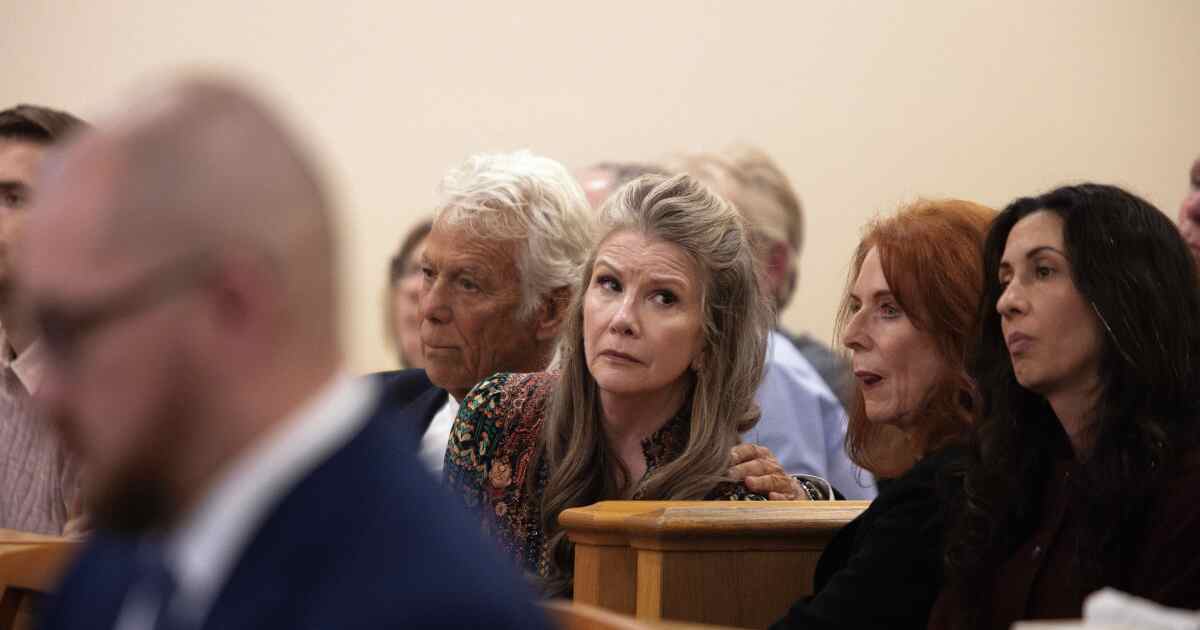
Melissa Gilbert defends ‘canceled’ husband Timothy Busfield
“Little House on the Prairie” alumna Melissa Gilbert remains steadfast in her support for husband Timothy Busfield, the Emmy-winning actor who has been embroiled in a child sex abuse scandal since earlier this year.
Gilbert, in her first sit-down interview since Busfield’s indictment in February, told ABC News’ George Stephanopoulos she trusts her husband “with my children’s lives, my grandchildren’s lives, my nieces and nephews” and said she expects the “Thirtysomething” star will be exonerated at trial next year.
“Believe me, if I thought for a second that Tim Busfield hurt a child, he’d have a lot more to worry about than prison,” she said in part of the interview that aired Monday on “Good Morning America.”
In February, a New Mexico grand jury indicted 68-year-old Busfield on four counts of criminal sexual contact of a child. A month prior, New Mexico officials accused Busfield of of inappropriately touching two child actors, who are brothers, during his time as an actor, director and producer on the Fox crime drama “The Cleaning Lady.”
One child actor alleged that Busfield had first touched his “private areas” multiple times on set when he was 7, according to the complaint. He said Busfield touched him inappropriately again several times when he was 8. The affidavit also detailed a police interview with Busfield in which he suggested that the boys’ mother might have sought “revenge” on the director for “not bringing her kids back for the final season.”
Busfield turned himself in to law enforcement days after the warrant was issued and denied the accusations. He was jailed at the Metropolitan Detention Center in Albuquerque but was released on his own recognizance Jan. 20.
For Gilbert, 61, the allegations and ensuing chain of events have been “hell.” Recent months have brought “the most traumatizing experiences of our lives,” she told Stephanopoulos, adding, “Our life as we knew it is done.”
The couple married in 2013. “The West Wing” actor Busfield has three adult children from two previous marriages and is the stepfather to Gilbert’s two adult sons from her two previous marriages. When the allegations first surfaced, a publicist for Gilbert said the actor would not comment on her husband’s case, denounced “any purported statements” and said that Gilbert was focused on caring for her and Busfield’s family.
During the Monday interview Gilbert said she and her husband are “grieving what we had: all of our plans, all of our dreams, all of our ideas, all of our projects.” She said her husband has become persona non grata — “canceled,” in her words — and that the allegations will continue to cast a shade over his career “even if he’s exonerated.” Busfield’s lawyer Larry Stein and Gilbert both told Stephanopoulos they are confident that will be the case.
When asked what justice for her husband might look like, Gilbert replied: “Exoneration and apology. Free him from this cloud.”
Elsewhere in the interview, attorney Stein doubled down on his belief that the child actors and their parents are “absolutely” making false allegations against Busfield. The actors’ parents did not respond to ABC News’ request for comment.
Gilbert also told Stephanopoulos that before she married Busfield, she was aware he had been accused of sexual harassment twice by different women, once in 1994 and another time in 2012. Those two cases were mentioned in the January complaint against Busfield.
“I didn’t go into my relationship with him blind. I am neither naive nor am I complicit,” she said, adding she and her husband discussed those claims. “I heard his side of the story which no one has ever heard which is the truth. And when the time is right, and that is not now, Tim will tell the truth of all of these past allegations when he needs to.”