gem

Tourists flock to UK’s ‘lost city’ to see hidden gem – only to find it’s a toilet

At one of the most popular tourist destinations, which dates back more than 5,000 years, visitors throw coins into a toilet in what they believe is a wishing well

The UK’s ‘lost city’ has been attracting tourists from around the world – but most of them want to toss pennies into a toilet.

Skara Brae, on the Orkney archipelago in Scotland, is a preserved Neolithic village that was inhabited by a farming community around 5,000 years ago. It stands as one of the finest-preserved farming settlements across the British Isles and is known as the “Scottish Pompeii”.

The village was inhabited between 3100 and 2500 BC, and its close proximity to the sea allowed its residents to easily hunt for fish while also growing crops and tending to their various animals. It isn’t exactly clear why Skara Brae was abandoned, but it’s thought to have become uninhabitable due to climate change and severe weather.

READ MORE: Abandoned UK village left a ‘ghost town’ with 33 unfinished new build homes boarded upREAD MORE: I booked a mystery holiday for £79 and thought things couldn’t get worse — they did

It was left largely untouched until a storm in 1850 uncovered the site, revealing its fascinating past and prehistoric dwellings. Following a dig at Skara Brae, remnants of the community were further uncovered, including stone dressers and box beds, along with artefacts such as tools, gaming dice, pots and jewellery.

Together with a substantial chambered tomb (Maes Howe) and two ceremonial stone circles (the Stones of Stenness and the Ring of Brodgar), the settlement now forms part of the “Heart of Neolithic Orkney” collection of monuments, designated a UNESCO World Heritage Site in 1999.

Dating back thousands of years, the site remains one of the island’s most popular tourist attractions, drawing crowds near and far. In a long-standing tradition, superstitious visitors have frequently thrown pennies into an ancient hole in the ground of the preserved Neolithic village, believing it to be a wishing well.

However, it’s actually a toilet – and not everyone realises. Experts have outlined that the hole in the ground is merely an “old sewer” and a network of well-constructed drains and substantial cisterns.

Local tour guide from Orkney Uncovered, Kinlay Francis, previously shared on Facebook: “For years, people have been throwing money down a subterranean hole in the Skara Brae ground, thinking they are throwing money down a well to make a wish.

“I have great delight in telling my clients and anybody who throws their money down there that they are, in fact, throwing money down a toilet.

“This is the old drain/sewer from the Skara Brae site. It is not, and I repeat, not a wishing well. So don’t go there to spend a penny.”

The post quickly amassed over 2,000 reactions and nearly 150 comments, as people couldn’t believe the hilarious mix-up. One person remarked: “Oh! So! Priceless!”, while a second said: “Really a p*****g well not a wishing well then”.

A third commented: “It’s not a wishing well…it’s a s******g well.” Yet, not everyone was prepared to ditch their beliefs, as one noted: “Still…maybe brings good luck”, and another stated: “Where there is muck, there is brass!”

The confusion hasn’t stopped visitors from marvelling at the Neolithic village, and it’s received outstanding praise on TripAdvisor. One traveller shared: “Skara Brae Prehistoric Village is a must-see if you are in the Orkney Islands. Such an interesting place. You will be blown away by how well-preserved this 5000-year-old site is.”

A second commented: “This was my second time to Skara Brae and it was just as wonderful as the first. The setting of this village is spectacular, and on this visit, the weather was outstanding. On my first visit, the rain was blowing sideways. It is fantastic to view the site and then visit the reconstructed house to see how these people lived. Not so different from us – pretty pots, stone dressers and reasonably comfortable beds with skins as duvets!”

One more noted: “A must-see bucket list experience older than the Giza pyramids. Although the museum is small, the recreated room really brings alive the site. They even had plumbing. Once you are at the site, you can tour the homes from the walkway, which shows the genius of the ancient culture. Plentiful parking with a good gift shop/cafe.”

Do you have a travel story to share? Email webtravel@reachplc.com

Source link

Jason Statham film hailed as his ‘best ever’ is a hidden gem now streaming on ITVX

Directed by Mark Neveldine and Brian Taylor, this “high-octane” action film with Jason Statham proved so popular it was then followed by a 2009 sequel.

An “adrenaline-fueled” action film has been praised as one of Jason Statham‘s best, and it’s now available on ITVX.

Crank, released in 2006, stars Jason Statham as Chev Chelios, a Los Angeles hitman poisoned with a synthetic drug that kills him if his heart rate drops. To survive, he must keep his adrenaline flowing through constant, violent and chaotic actions while tracking down his enemies.

It is a fast-paced film described to be like a “video game” in style, which sees action star Statham at his best as he performs all of his own fight and car stunts.

The film stars Statham in one of his typical roles as an action star, alongside Amy Smart as Eve Lydon, Jose Pablo Cantillo as Ricky Verona, Carlos Sanz as Carlito, and Dwight Yoakam as Doc Miles.

The film was considered a huge success and performed well at the box office, as it grossed $42.9 million (around £31.6 million) worldwide against a $12 million (about £.8.8 million) budget.

Directed by Mark Neveldine and Brian Taylor, the film proved so popular it was then followed by a 2009 sequel, Crank: High Voltage.

On film and TV ratings website Rotten Tomatoes, it scored a moderate 62% but fans have still said it’s worth a watch. One review wrote: “Crank is a relentless, high-octane action film that thrives on its breakneck pacing, jump cuts, and kinetic cinematography – all of which are seamlessly integrated into the storytelling. As a genre piece designed to deliver a near-constant dopamine rush, it excels, offering a uniquely immersive and adrenaline-fueled experience.”

A second posted: “Extremely fast-paced and action-packed psychedelic movie that really feels like a (very effective) parody of the state of modern entertainment.”

A third said: “This is a good film. Jason Statham is great and the rest of the cast is good too. The action is wild. Worth a watch if you’re a fan of Statham.”

A fourth added: “This movie is ridiculous but that is what made it a good, fun movie. It’s high-octane and over-the-top scenes made the movie such a joy to watch.”

A fifth said: “Relentlessly paced and full of ‘whoa’ moments – Crank might just be the peak Statham movie. An outlandish one vs 100 action flick that was popularised in the 80s works better here with the wink and nod to the audience that the movie is in on the gag as well.”

Another wrote: “It’s ridiculous, but highly entertaining and funny.” Another shared: “This is pure 00s action. I loved it but it took me a hot minute to appreciate the style. I can see why people wouldn’t enjoy this film but if you want an action film that doesn’t take itself seriously and has some laugh-out-loud moments, Cranks delivers.”

Try ITVX Premium free for a week

This article contains affiliate links, we will receive a commission on any sales we generate from it. Learn more
Content Image

£59.99

£0

ITVX

Get ITVX Premium here

ITVX Premium offers exclusive ad-free content that can be streamed on-demand and on the go, with everything from Hollywood blockbusters to bingeable British box sets.

An annual plan costs £59.99 – equal to £4.99 per month after a seven-day free trial.

Crank is available on ITVX now.

Source link

Beautiful UK hidden gem Dylan Thomas said was ‘the loveliest village in England’

With its winding cobbled streets, charming cottages and pretty harbour, it’s no wonder a quaint UK fishing village remains one of the country’s most adored coastal spots for visitors

Tucked away on the Cornish coast, about three miles south of Penzance and in an area of Outstanding Natural Beauty, is the village and fishing port of Mousehole.

The picture-postcard hidden gem has seemingly remained unspoiled for years and is where poet and author Dylan Thomas spent significant time, including during his 1937 honeymoon. It was said he treasured the narrow, cobbled streets and fishing harbour and described it as “the loveliest village in England”.

Today, visitors still appreciate the beauty of the sleepy hideaway, with its sandy beach and calm, crystal-clear waters perfect for children to safely play in, a selection of cafes, shops, and galleries for grown-ups to explore, and “sheer beauty” that is perfect for capturing Insta-worthy memories.

READ MORE: Woman visits Victorian train station but is stunned by what’s hidden within wallsREAD MORE: Stunning island ‘bursting with colour’ still sunny in February at 30C

Mousehole, which is actually pronounced ‘Mowzel’, is steeped in history and dates back to the 1300s when it was a prominent harbour and the main port for Mount’s Bay. Pilchards were exported to France, and the trade continued until the late 1880s. Along with other villages on the coastline, Mousehole was attacked by the Spanish in 1595. The only surviving building from the raid was the local pub, the Keigwin Arms. Today, it is a private residence with a plaque in memory of the former owner, Squire Jenkyn Keigwin, who was killed defending his property.

Save on the best holiday cottages in Cornwall

This article contains affiliate links, we will receive a commission on any sales we generate from it. Learn more
Sykes Cottages

From £36 per night

Sykes Cottages

See the deals

Famous for its rugged coastline, golden beaches, picture-perfect villages and rich maritime heritage, Cornwall is one of the most-visited corner of the UK. Sykes Cottages has a large number of holiday homes to choose from, with prices from £36 per night.

Now charming granite cottages line the maze-like winding streets, along with independent galleries, gift shops, and places to eat. The Grade II listed Lobster Pot hotel, where Thomas spent his honeymoon, is now a private residence and holiday let. Still, visitors can admire its uninterrupted sea views, which captured the poet’s imagination from other nearby pubs and restaurants.

The Ship Inn, which Thomas also frequently visited, serves seasonal, local food such as fish and chips, mussels, and Sunday roasts, and is situated directly opposite the harbour, making it the perfect spot to recharge the batteries. Inside the harbour is the small, sandy beach, lapped by crystal clear waters, where children can go crabbing or build sandcastles.

Known for its thriving sense of community, Mousehole hosts a variety of festivals and is famed for its Christmas lights during the cooler months. On 19 December every year since 1981, the lights have been turned off to commemorate the eight crew members of the lifeboat service who were lost during a rescue in hurricane-force winds. Tom Bawcock’s Eve is celebrated every 23 December to mark the end of a 16th-century famine. The festival is the birthplace of stargazy pie, which features fish heads poking out of the pastry topping.

Recent visitors to Mousehole soaked up its tranquility and charm, with one writing on Tripadvisor: “Mousehole is a very beautiful place. You can snap off photos all day and never capture all of its quirkiness, quaintness and sheer beauty. As someone with an interest in photography, I found so much to capture.”

Another added: “This village is absolutely stunning and well worth visiting, it’s truly gorgeous.” A third loved the safe beach and local amenities:: “A lovely little harbour with small sandy beach. Safe for children to play. Very picturesque with little cottages surrounding it. The Mousehole is an excellent gift shop with friendly staff. We also visited Jessica’s Dairy to get a cup of tea,” they shared.

Source link

Hidden gem village with two stunning marinas and historic Tudor hall

This hidden gem is tucked away in West Lancashire with charming attractions and breathtaking views — a truly spectacular getaway.

There’s a secret treasure of a village nestled in West Lancashire which is bursting with delightful attractions and stunning views – and it absolutely deserves a spot on your 2026 travel itinerary.

Boasting a magnificent marina, charming waterfront eateries, Tudor architecture, fantastic pubs and nearby nature reserves plus animal farms – this compact village is genuinely remarkable.

Despite sitting in a prime Lancashire location – positioned where the Leeds and Liverpool Canal meets the River Douglas, Ormskirk and Preston Railway, plus the bustling A59 – it’s frequently ignored thanks to its reputation as a ‘commuter town’, which means most folk simply drive through without giving it a second glance.

Encircled by beautiful countryside and crammed with wonderful attractions, this enchanting settlement provides visitors with far more than initially apparent.

With its distinctive white-painted properties, magnificent marina panoramas, ancient waterway, and superb retail outlets, Rufford village in Lancashire stands as the ultimate destination.

Best Lancashire holiday cottage deals

This article contains affiliate links, we will receive a commission on any sales we generate from it. Learn more
Sykes Cottages

From £42 a night

Sykes Cottages

See the deals

Lancashire is known for its wide open skies, stunning landscapes and lively coastal resorts. Sykes Cottages has a wide range of self catering accommodation across the county from £42 a night.

Magnificent marina

The Leeds Liverpool canal flows directly through Rufford’s centre and connects to St Mary’s Marina plus Fetler’s Wharf Marina, both offering breathtaking panoramas and peaceful waters.

Offering a scenic retreat, Fettlers Wharf Marina sits amid verdant surroundings and creates a perfect backdrop for soaking up the peace and serenity of the local area.

This dog-friendly riverside haven provides waterside dining delights for guests, whilst nature paths and picturesque lakeside strolls enhance its appeal. The well-kept walkways give visitors fantastic chances to enjoy spotting local wildlife and plant life, reports Lancs Live.

Outstanding waterside cafés

Tastebuds at the Wharf is a charming canalside café nestled beside the picturesque Fettlers Wharf Marina.

Serving up various delights such as breakfast, lunch, afternoon teas, and an enticing selection of cakes and scones, during bright spring weather, guests can soak up the rays on the café’s terrace whilst savouring the tranquil marina panorama.

Another exceptional waterside establishment is The Boathouse Brasserie, which commands views across St Mary’s Marina.

Located within a

converted dairy farm, this family-operated venue launched in 2008 and delivers breathtaking perspectives over the thriving marina. The café showcases a delightful alfresco dining space facing the water, featuring its own pergola and cosy outdoor pods for diners to unwind in.

Things to do in Rufford

A trip to Rufford Old Hall is essential. This magnificent Tudor mansion and its colourful gardens have remained in National Trust custody since 1936.

It functioned as the Hesketh family home for more than five centuries before Rufford New Hall was built in Rufford Park.

Fascinatingly, legend has it that the Old Hall’s Great Hall once hosted a young William Shakespeare before his meteoric rise to stardom. Guests can also explore the Old Hall’s stunning Victorian and Edwardian gardens.

Meanwhile, Rufford New Hall was acquired by Lancashire County Council in 1920, before being converted into a pulmonary hospital for tuberculosis patients in 1926. It remains operational as a hospital to this day.

Another site worth discovering in Rufford is the Church of St Mary the Virgin, erected in 1869. This red brick Gothic-style parish church, complete with steeple, holds Grade II Listed status.

The Hesketh Arms, a three-storey property thought to date from the late 18th century, stands as another popular destination for visitors to the village.

This impressive historic inn boasts Grade II listed status and serves everything from traditional ales to pub favourites and dishes featuring seasonal ingredients.

It’s celebrated for welcoming guests with a warm, countryside-pub atmosphere from the moment they arrive, whilst the outside space proves equally delightful, featuring plenty of seating perfect for savouring a drink on summer days.

Situated mere moments from the village centre lies Mere Sands Wood – a nature reserve under the stewardship of the Wildlife Trust for Lancashire, Manchester and North Merseyside.

Boasting 42 hectares of wildlife observation points and walking trails, plus its own visitor centre and café, it makes for an excellent destination for an outing with loved ones.

Other attractions near Rufford include the Windmill Animal Farm, which houses numerous rare breeds of exotic farm animals and boasts indoor and outdoor play areas.

The Martin Mere Wetlands Centre also makes an excellent option for a family day out. This marshland sanctuary and nature reserve carries international significance and provides year-round family-friendly attractions.

Source link

Beautiful Spanish hidden gem with hardly any tourists and £13 flights from UK

Spain is filled with beautiful destinations, but are often packed with tourists — but now Brits can fly to one Spanish city without fighting through the hustle and bustle

A breathtaking Spanish city could be yours to discover — for just the cost of a £13 flight.

Spain has a slew of destinations that are filled with amazing history, phenomenal beaches and great natural trails. However, this often comes at the cost of being inundated by tourists trying to capture their own private moment.

But now, a new destination has opened up for Brits to explore the glorious Spanish sun, without the need for wrangling through swathes of holidaymakers trying to take the perfect picture. The hidden gem also sits right on the Mediterranean coast, making it an unspoilt beauty, but still close to other holiday hotspots.

READ MORE: Inside England’s ‘prettiest seaside town’ with sandy beaches and coastal pathsREAD MORE: British dual-citizens told to do 1 thing before travel or risk not getting back to UK

Castellón de la Plana is a small city sitting just inland of Spain’s Costa de Valencia. With a population of just over 174,000 people, the city is often dwarfed by its popular neighbours, including Benidorm, Valencia, and even Barcelona further along the coast.

However, the city is brimming with culture and history, being the fourth-largest city in the region. The town has been mentioned in history books as far back as 1233, when it was taken over by a Spanish king, and has since built up an impressive history, filled with castles and stunning panoramic views, all with 30 °C temperatures at the height of summer.

Being located close to the sea, the city boasts access to the stunning Islas Columbretes Natural Park, where tourists can take in the amazing natural landscapes. With huge sea stacks and rock formations coming out of the sea, the panoramic views are like no other in Spain itself.

Back on dry land, travellers looking to get stuck into the hustle and bustle of daily life can get lost strolling through the Mercado Central, filled with locals selling their best produce. Seafood is in plenty of supply, with customers often queuing around the markets to get fresh quality goods, including food and drinks.

But if the market chaos is too much, the city also boasts a number of quiet, peaceful plazas that show how locals live their lives. Places such as the Plaça Major offer spots for people-watching, whilst taking in the breathtaking architecture of the local cathedral and other prominent buildings.

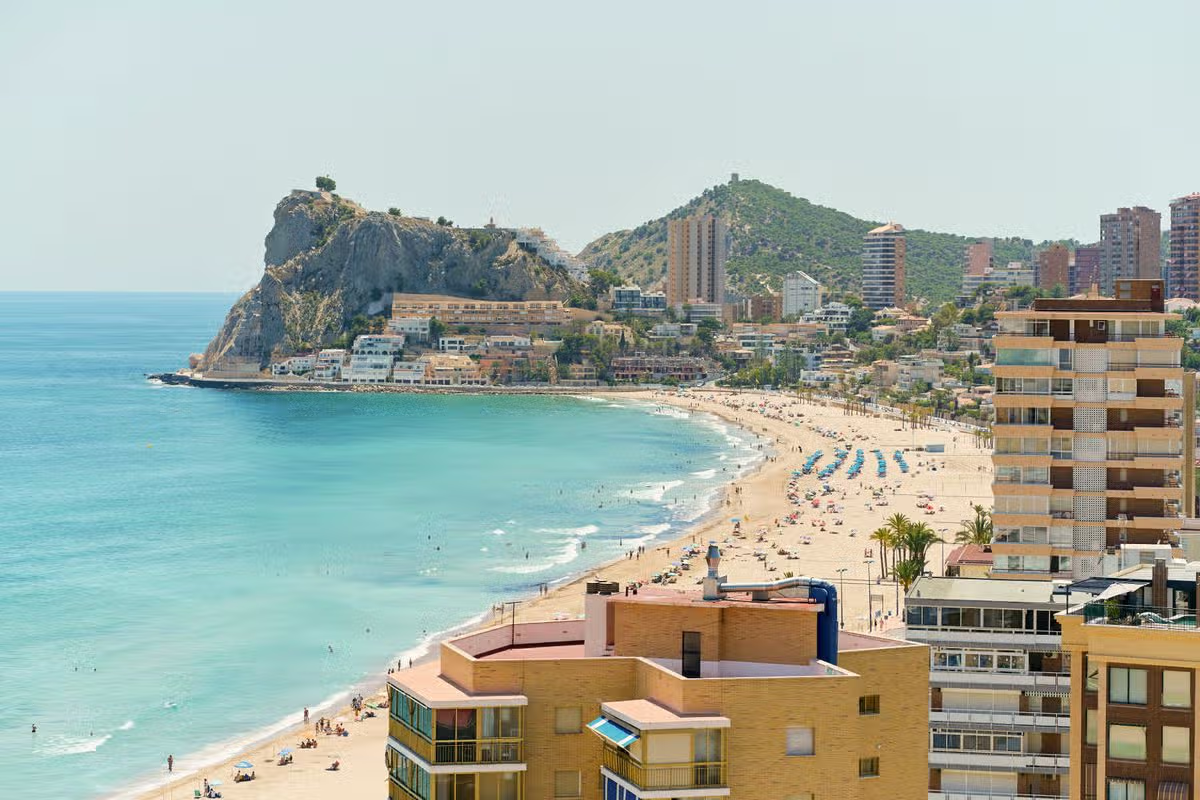
Beaches are also dotted around the city, with the songs such as the Playa del Pinar and Playa El Gurugu being the perfect spots to catch the sunrise over the horizon of the Med.

Food and drink are also staples of the city’s thriving life, as there are a host of bars and restaurants offering traditional meals for a reasonable price. Modern history is also covered, with the Refugio Antiaereo air-raid shelter now serving as a museum, adding an extra quirk to the Spanish diamond.

British tourists are now able to catch a flight to Castellón de la Plana, after Ryanair officially connected London Stanstead Airport to Castellón Airport, based some 30 kilometres away from the city itself. The cost of the flights themselves are also incredibly cheap, with the cheapest one-way flight to the Spanish getaway coming in at £13 this month.

The airport can also serve as a great gateway to the rest of the Valencia region, with holiday hotspots such as Valencia City, Alicante, and Benidorm easily accessible. The price of flights also do not fluctuate that much, meaning a cheap flight to Spain is always guaranteed.

Source link

Tiny hidden gem village inspired much-loved horror story with terrifying folklore

Nestled in lower Wharfedale, Hebden village offers stunning walking routes, trolls folklore linked to Hound of Baskervilles, Roman history, and a charming tea room in a former chapel

Tucked away in the hills of lower Wharfedale lies a hidden treasure brimming with history and spine-tingling stories.

Hebden sits within the Yorkshire Dales National Park’s protected conservation areas – this particular village occupies land where an ancient Bronze Age settlement once stood.

The area boasts stunning walking trails that wind past charming Yorkstone cottages. One notorious route leading to the village passes through a ravine called Trollers Gill.

This now-popular picnic destination harbours a sinister past. Locals once believed the gorge was inhabited by malevolent trolls who would murder humans by hurling boulders at them.

Even more disturbing, the cave at the passage’s end was thought to shelter a wolf-like creature that would slaughter anyone who locked eyes with it, reports Yorkshire Live.

This legend is believed to have inspired Sherlock Holmes creator Arthur Conan Doyle’s celebrated tale The Hound of the Baskervilles, according to Yorkshire Dales.

Romans also established themselves in the vicinity – with 33 silver denarii coins discovered in the surrounding countryside – supporting the theory that Romans inhabited the region between 30 and 170 AD.

Along the village’s main street, you’ll discover something unexpected. Within Hebden Methodist Church, formerly a school, sits a charming tea room.

Outside the Old School Tea Room, the postbox has been painted gold to honour Yorkshire’s Olympic gold medallist – rower Andrew Triggs Hodge. One Trip Advisor user described it as “the perfect pit stop”.

They explained: “We visited the Old School Tea Room while doing a loop walk from Linton, along the river, via Hebden and to Grassington.

“It was about halfway, and we were ready for cake! Lovely, characterful building, inside and out, friendly staff and a great range of cakes. I opted for a raspberry and white chocolate one. Delicious! And all with a really nice cup of Yorkshire tea. I’ll definitely be back!”.

For bird enthusiasts, there’s an impressive array of wildlife worth getting the binoculars out for, including Canada Geese, Teal and Reed Bunting.

Hebden’s more recent past has been shaped by mining. Evidence of this former industry can be spotted along the popular Lead Mining Trail, which begins at Yarnbury to the north of Hebden.

The route takes you through Orefield, one of the principal mines during the Victorian period, and skirts the edge of Hebden.

Save on the best holiday cottages in Yorkshire

Sykes cottages

From £31 per night

Sykes Cottages

See the deals

Famous for its dramatic landscapes, historic cities, hearty food, and rich cultural heritage Yorkshire is just waiting to be explored. Sykes Cottages has a large number of properties to choose from with prices from £31 per night.

Source link

Hidden gem guide transformed my city break

PLANNING a UK city break can be a right headache when you’re skint and short on time – but one must-do activity lets you see a lot without spending a penny.

Recently, my family came to visit me in London and even though I live in the city, I don’t often get the chance to be a tourist.

A free self-guided walking tour is a great way of exploring a city at your own paceCredit: Cyann Fielding

Stumped on ideas of what to do that pleases everyone but didn’t cost much, I took to Google and stumbled across London Walking Tours by Richard Jones.

On the website, there are a number of free, self-guided walking tours – but what makes them even better is that they aren’t to cliche spots, instead you get to uncover hidden pieces of history.

In fact, there are 22 free walking tours on the site to choose from.

I opted for the Soho self-guided walk, taking about two hours starting from Tottenham Court Road Station.

Read more on travel inspo

CHEAP BREAKS

UK’s best 100 cheap stays – our pick of the top hotels, holiday parks and pubs


GO ON

All the little-known websites for cheap or FREE tickets to gigs, theatre & festivals

The walk takes you around the area showing streets and alleyways frequented by famous figures like Charles Dickens and the Beatles.

One of my favourite things about the tour is that it takes you to places you would have otherwise missed.

For example, it took us down this rather normal-looking road to a house with a blue plaque.

The blue plaque simply stated: “John William Polidori, 1795-1821, poet & novelist, author of ‘The Vampyre’, born and died here”.

I had no clue who this person was, but the tour informed me that Polidori was actually a personal physician to the famous poet Lord Byron – whom he idolised.

Upon showing Byron one of his submissions to Byron’s 1816 writing competition – ‘The Vampyre’ – Polidori was dismissed as having little potential.

Not long after, the New Monthly Magazine had published ‘The Vampyre’ but attributed it to Lord Byron – who denied any involvement.

Polidori wrote to the magazine, but was accused of plagiarism and ended up taking his life.

If you aren’t so much of a history fan though, there are other options that are more themed.

For example, you could spend the day on a magical tour that heads all over London showing you locations that have been featured in the Harry Potter movies.

I recently tried one around Soho in London and discovered things I have never seen before despite living in London for five yearsCredit: Getty

Or perhaps, you want to add in a fun game?

Then head on the Mayfair to St James Quiz Trail, where, as you explore different places, you have to find the answers to a number of questions and complete photo challenges.

But what if you are on a city break elsewhere?

There are plenty of different sites out there offering free walking tours.

For example, if you are exploring Manchester you could opt for The Ultimate Manchester Free Walking Tour, where you can discover history about the famous Britannia Hotel and stop by the bustling Corn Exchange for some food.

In Birmingham, you could go on a self-guided Discovering Britain walking tour which takes you to the popular spots but shares information you may not know about them.

Lots of councils also have guides on their websites, as well as walking maps.

To get the best search result for the city you want to explore, make sure to search the name of your city along with ‘free self-guided walking tour’.

By doing this, you will get results which are free and also aren’t led by anyone, which means you can do the tour at your own pace and even stop along the way for a cuppa or bite to eat.

One thing I learned from the tour I did, was definitely print the tour if you can before heading off on it.

I had the tour open on my phone, but obviously walking around London, or any other large city for that matter, with your phone constantly in your hand isn’t the best idea…

Top sites for free self-guided walking tours in the UK

HERE are some sites that offer free, self-guided walking tours:

  • London-walking-tours.co.uk
  • freewalkingtourmanchester.com
  • touristwalks.co.uk
  • discoveringbritain.org
  • Council websites
  • livinglondonhistory.com
  • anywhereweroam.com
  • walescoastpath.gov.uk
  • Tourism board sites

For more things to do in the UK, here are the best free activities for Brits this week for families, couples and mates.

Plus, the top 15 UK attractions for 2025 revealed…including six which are totally FREE for the summer holidays.

And you don’t have to do just major cities, you can also find routes for smaller cities and sometimes townsCredit: Cyann Fielding

Source link

Hidden gem beach with unspoilt golden sand and ‘unreal’ views feels like abroad

This unspoilt beach is dog-friendly all year round and offers pristine golden sands, dramatic Jurassic cliffs and ‘unreal’ walks – visitors say the ‘gorgeous’ water feels worlds away

A hidden beach boasting vast stretches of pristine golden sand, encircled by striking cliffs and crystal-clear blue waters, is being praised as essential viewing by tourists.

This secluded beach in North Yorkshire, situated between Filey and Scarborough, offers unspoilt vistas and picture-perfect scenes that seem almost too beautiful to be real – yet it’s right here in Yorkshire.

Found just off the A165, approximately three miles from Scarborough, this remote retreat is truly idyllic, particularly for dog owners, as it’s exempt from the seasonal dog ban enforced by North Yorkshire County Council which affects other well-known beaches in the area.

The seaside panoramas at this beach are utterly breathtaking, showcasing a fusion of Yorkshire’s wind-swept rolling countryside and sweeping expanses of golden sandy shoreline.

It comes as no surprise that Cayton Bay Beach was recognised as one of Britain’s finest beaches in 2024.

A significant attraction for visitors, this coastal gem is delightful to explore whatever time of year you decide to go. It’s a spot of untouched natural magnificence and provides an ideal base for discovering the Yorkshire Coast, reports Yorkshire Live.

Cayton Bay Beach tends to remain relatively tranquil throughout the year and avoids the noise of crowded hordes.

With its serene ambience and abundant golden sands, tourists have described feeling as though they’ve been transported far from the rugged North Sea, with many even suggesting it resembles a holiday beach overseas.

A favourite destination for surfers, birdwatchers, adventure enthusiasts and fossil hunters, or simply those looking to unwind and recharge, Cayton Bay Beach offers the ideal retreat to enjoy peace and breathtaking views, with its dramatic limestone cliffs dating back to the Jurassic period over 150 million years ago.

Equally cherished by surfers and windsurfers alike, this bay confronts the full force of the North Sea. The beach is home to one of Britain’s oldest surf schools, with The Scarborough Surf School conducting surf lessons at Cayton since 1989.

Cayton Bay Beach boasts crystal-clear waters perfect for paddling and is also regarded as a popular location for learning to surf and kayak. It’s worth noting that the current at this beach can be rather powerful, so swimmers are cautioned against venturing too far from shore.

Today, the northern stretch of the coastline still reveals several World War II pillboxes discovered by beachgoers, with that section of the bay known as Johnny Finton’s Harbour.

It’s not difficult to understand why many have dubbed Cayton Bay Beach North Yorkshire’s hidden treasure, nestled amongst undulating hills. Visitors can wander for hours across the sand whilst savouring peaceful coastal walks, taking in Cayton Bay’s magnificent beauty.

Rocky formations at one end offer possibilities for climbers, whilst vast stretches of sand and sea extend along the shoreline. It truly is regarded as an idyllic beach – and when the weather’s on your side, you could easily imagine you’ve been transported to some far-flung paradise abroad rather than Cayton Bay Beach.

Holidaymakers can’t help but rave about this ‘hidden gem’, with one sharing on Tripadvisor: “What a stunning place the walk to it was unreal. It looked like a holiday beach water was gorgeous just stunning all round we had a lush day here definitely going back”.

Another beach fan said: “A beautiful stretch of England’s East Coast, a bay that allows a peaceful retreat in outstanding natural beauty. Nice sandy beach with grassy hills to sit. A great cafe (Salty Dog) with nice staff offering a wide range of treats at expensive prices.”

A satisfied visitor wrote: “A stunning beautiful beach, great for a walk when the tide is out. The children love running on the beach. It is a steep walk back up but well worth it.”

Meanwhile, one guest added: “Stunning scenery. Gorgeous beach. Lots of surfing going on. Great for walking the dog when the tide is out. You need to be reasonably fit to get back up the hill.”

It’s worth bearing in mind that both the descent to the shore and the ascent back are quite challenging, and those with restricted mobility, along with wheelchair and pushchair users, may struggle considerably with the route.

Additionally, there are numerous steps near the final stretch of the walk leading to the beach, which takes you through a picturesque woodland setting.

Save on the best holiday cottages in Yorkshire

This article contains affiliate links, we will receive a commission on any sales we generate from it. Learn more
Sykes cottages

From £31 per night

Sykes Cottages

See the deals

Famous for its dramatic landscapes, historic cities, hearty food, and rich cultural heritage Yorkshire is just waiting to be explored. Sykes Cottages has a large number of properties to choose from with prices from £31 per night.

Source link

Futuristic project locals hope will put tiny UK seaside gem on the map

Appledore is a beautiful village in north Devon. It is hoping to showcase all it has to offer to even more visitors when its Clean Maritime Innovation Centre opens later this year

A small coastal village steeped in history and a rich shipbuilding heritage, with a vibrant seafood scene and colourful cottages, is hoping a futuristic, million-pound project will put it firmly on the map.

The tiny village of Appledore isn’t one of the most well-known places in Devon, but can certainly be characterised among the most beautiful, with narrow, winding lanes, a bustling quayside to explore, and pastel-coloured houses and coastal views. Its estuary shore is suitable for beachcombing and exploring rock pools.

Located in north Devon at the meeting of the Rivers Torridge and Taw, the village is built on the centuries-old traditions of shipbuilding and fishing.

Renowned for its maritime heritage and vibrant seafood scene, Appledore is also celebrated for its art and creativity, hosting regular arts festivals and resident craftspeople showcasing ceramics, photography, jewellery and more in independent shops and markets.

READ MORE: Cruise packing mistake as passengers warned 1 common item in luggage will be confiscatedREAD MORE: All the routes Ryanair is abandoning in 2026 as airline ditches ‘Hawaii of Europe’

But while the village has a multitude of offerings for those already in the know, Appledore is hoping to boost its popularity among people outside the local area with the opening of its Clean Maritime Innovation Centre later this year.

The global innovation centre has received £15.6million in government funding and aims to support research in clean propulsion, autonomous vessels and marine sustainability.

Due to open in late 2026, the centre will also provide a base for floating offshore wind activity in northern Devon, with the electricity generated able to power approximately three million homes and create 3,000 jobs.

The maritime sector has played such a significant role in Appledore’s history and this project will be a real opportunity for the village to move into a national maritime future. The project is being delivered with funding support from the UK government through the Levelling Up Fund, the Community Regeneration Partnership, and the Devon and Torbay devolution deal. Devon County Council is overseeing the financial management.

Initial construction involves enhancements to the wall along New Quay Street, with full-scale building work set to start in the autumn. Preliminary works began in April, including the creation of a new quay to improve estuary access.

Councillor Ken James, leader of Torridge District Council, said: “This is a very exciting step in the journey of this project, not just for Appledore, but for the wider district. We hope that the delivery of this centre will put Appledore and Torridge at the forefront of innovation and investment in clean maritime energy. By getting as many local tradespeople involved in the build as possible, we hope that this will be just the start of future job creation and investment in the area.”

Reviews of Appledore praise the villages colourful look and picturesque charm.

One reviewer wrote: “Appledore is a lovely place with lots of interesting nooks and crannies with brightly-coloured houses. It’s a lot less busy and touristy than some of its bier neighbours.”

Another said: “Appledore is great – very pretty with small craft shops, cafes, restaurants and is incredibly dog-friendly. Would definitely visit again.”

Source link

Beautiful ‘hidden gem’ is one of Britain’s ‘poshest villages’ with lovely cottages

A pretty English village looks like a postcard, but it’s also one of the UK’s most expensive

Tucked away in a tranquil corner of the Salcombe-Kingsbridge estuary lies a charming village that’s earned a reputation as one of Britain’s “poshest villages”. South Pool in Devon boasts picture-perfect cottages with thatched roofs, set against a backdrop of lush, verdant hillsides.

Those who’ve visited describe “glorious Devon countryside” as well as praising the unique free house pub located here. This diminutive village is home to around 150 residents, guaranteeing plenty of peace and tranquillity.

Yet property prices in this idyllic spot average around £410,000 based on the past year’s sales figures, according to Zoopla. The village recently secured its place among Britain’s 48 “poshest villages” in The Telegraph’s rankings. South Pool also featured in Condé Nast Traveller’s 2022 list of the UK’s 20 most stunning villages.

Despite its modest size, the village boasts rich heritage, with its historic buildings and meandering lanes “would befit any chocolate box or postcard”, according to local holiday lettings company Toad Hall Cottages. They’ve also dubbed the village one of the area’s “hidden gems”, reports the Express.

At the village’s highest point stands a Grade-I listed church, believed to have been built in 1318. There’s also the Millbrook Inn, a celebrated gastropub that’s accessible on foot, by car and, unusually, by boat.

Tucked away where land meets water, perched at the head of a tidal inlet on the Salcombe estuary, the Millbrook Inn bills itself as a “hidden haven” where visitors arriving by canoe, boat and even paddle board can stop off for a pint of local brew or a freshly prepared pub favourite.

A recent visitor to the much-loved pub reviewed their experience on TripAdvisor, writing: “A return visit for a spot of lunch at this wonderful freehouse village pub. Situated by the stream in the centre of South Pool, probably one of the prettiest villages deep in the glorious Devon countryside.

“A hearty soup of the day with crusty fresh bread and a decent amount of butter. Quality paper napkins. It’s the little things that count. Log fire, doggy friendly cosy bar area. “

The surrounding picturesque English countryside provides the perfect setting for this charming village and pub, with rolling fields and lush greenery stretching to the horizon. The panoramic vistas are especially breath-taking during summer when sunshine bathes the nearby hills in golden light.

Given its proximity to the tranquil backwaters of the South Hams, aquatic pursuits prove hugely popular locally, from guided canoe excursions to stand-up paddle boarding adventures. The settlement also offers convenient access to nearby coastal spots, such as Lancombe Beach, South Sands Beach and Salcombe North Sands.

Naturally, rural life comes with a hefty price tag. The Telegraph reports that some of the area’s priciest homes have changed hands for as much as “£844,429”.

Village life in this sought-after location commands a premium when buying a home in the vicinity, with the equally pricey Devon town of Salcombe neighbouring South Pool.

Several of the properties in these locations, once family homes not so long ago, are now listed as “secret getaways” on short lettings sites such as Airbnb.

Source link