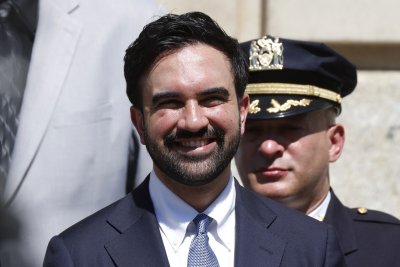
June 26 (UPI) — New York City’s rental board has approved Mayor Zohran Mamdani’s two-year rent-freeze proposal for nearly 1 million rent-stabilized apartments, fulfilling a major campaign promise.
New York City’s Rent Guidelines Board voted 7-1 to set a 0% increase for rent-stabilized one-year and two-year leases commencing on or after Oct. 1, and on or before Sept. 30, 2027.
Cheers erupted from the spectators assembled as it was announced that the motion passed.
“This is a historic victory for New York City tenants,” Mamdani said in a statement following the vote.
“After reviewing the data and hearing from New Yorkers across the city, the independent RGB has delivered a freeze on one-year leases, and the first-ever freeze on two-year leases in our city’s history. This is the relief that working people across our city deserve.”
Mamdani, a democratic socialist, campaigned heavily on making life more affordable for the average New Yorker, including by creating new affordable housing and freezing rents where legally permitted.
The mayor said he is grateful for the board members’ “thoughtful consideration of the data” before casting their votes.
“I’ll continue to deliver a more affordable city by building and preserving affordable housing, lowering building operating costs like insurance, and ensuring tenants know their rights,” he said.
According to a New York City housing survey from 2023, there were 996,600 rent-stabilized units, representing about 41% of all rental units across the city. Rent stabilization generally applies to buildings with six or more units built before 1974.
The only vote against the rent freeze came from Arpit Gupta, an associate professor of finance at New York University’s Stern School of Business.
In a statement published online following the vote, Gupta argued that the rent freeze will not solve the housing crisis while possibly making it worse and ultimately driving up rents. He also said the rent freeze could prevent building owners from considering improvements and renovations.
“Residents might continue to enjoy low rents but at the cost of being trapped in units that no longer fit their needs, and with few alternatives and steadily deteriorating conditions,” he said.
“A better option is to undertake the harder reforms needed to make housing more affordable and accessible — that is, build more of it.”
The vote was held following a series of hearings in which nearly 330 people participated and nearly 700 people submitted written, audio or video testimony about their experiences.
New York State Assembly Member Tony Simone said the rent freeze will impact about 2 million New Yorkers and is expected to save renters as much as $6.8 billion over Mamdani’s four-year term.
“This immediate action reflects the urgency needed to prevent more working-class New Yorkers from being priced out of our city,” he said in a statement, while stating that the structural factors that are driving up prices must be addressed.
“To truly address the housing crisis, we need to tackle its root cause: the housing shortage,” he continued.
REBEKAH Vardy insists that “hell will freeze over” before she ever apologises to former pal Coleen Rooney over their Wagatha Christie row.
The wife of footie star Jamie said she must live with her libel loss to Wayne Rooney’s missus.
Sign up for the Showbiz newsletter
Thank you!
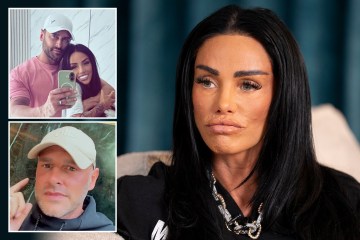
Becky Vardy insists that ‘hell will freeze over’ before she ever apologises to former pal Coleen Rooney, Jamie and Becky look the part in the new showCredit: Refer to sourceFormer pals Becky and Coleen at the 2016 EurosCredit: Splash News
But Becky, 44 — accused of leaking stories about Coleen — said: “I’m never going to apologise for something I didn’t do. Hell will freeze over before I do that.”
Rebekah says her Wagatha Christie beef with Coleen is “done, it’s over” — and does not care what her ex-pal thinks about her.
The wife of former Leicester striker Jamie insists her own “peace” is more important amid the fallout to their legal battle.
In new ITV reality show The Vardys, she admits to still suffering from a public backlash after losing her libel case against Wayne Rooney’s missus. Becky, 44, had taken legal action after Coleen claimed stories about her were leaked from her Instagram account.
And she says: “I’m living with the judgment the judge made but, still to this day, I believe she was wrong.”
The mum of five goes on: “People constantly go, ‘Well, it’s not going to change anything unless you apologise’ — but I’m not apologising for something I didn’t do. Like never, ever, going to apologise for something I didn’t do — it’s never going to happen. Hell will freeze over before I do that.
“It’s over, it’s done, I’m not going to carry on living in the past. I’m so f***ing bored of it.”
Becky, 44, was accused of leaking stories about ColeenCredit: Dan CharityRebekah says her Wagatha Christie beef with Coleen is ‘done, it’s over’ — and does not care what her ex-pal thinks about herCredit: Getty
She says: “I don’t have any negative feelings towards her whatsoever. Some people might go, ‘That’s bull’, but whatever, that’s your opinion. If I ever saw her or bump into her, people will assume it’ll be like handbags at dawn, or ‘Birkins at dawn’, whatever they want to say. ‘Wag War 4’. I’ve forgotten how many headlines have been ‘Wag War’, but my peace is too important.”
She adds of her one-time friend: “I’ve got no idea what she thinks of me, but I’m not bothered.”
In new ITV reality show The Vardys, Becky admits still suffering from a public backlash after losing her libel caseCredit: Dan CharityThe wife of former Leicester striker Jamie insists her own ‘peace’ is more important amid the falloutCredit: Dan Charity
Becky’s Prem-winning hubby has stayed silent on it, until now.
He says: “Becky’s a strong woman. If she wasn’t, it would definitely have broken her 100 per cent. But that’s not her.”
He adds: “People thinking that Bex was a villain, it’s just a load of s but everyone close to her knows, that’s all she needs. It was really tough seeing Bex in pain, obviously with all the crap coming her way. As a husband, the only thing you can do is be there for her.”
The couple celebrate their tenth anniversary today — and their close bond is evident during The Vardys’ opening episode.
Becky with Jamie at the trialCredit: Splash
Timeline
OCT 2019: Coleen Rooney says stories about her were leaked from Rebekah Vardy’s Insta account.
JUN 2020: Becky launches libel proceedings.
FEB 2022: WhatsApps emerge between Becky and agent Caroline Watt, who claims her phone was lost in the North Sea.
APR 2022: Becky blames Caroline for the leaks.
MAY 2022: Blockbuster trial starts at the High Court, with Coleen and Becky’s husband there.
JULY 2022: Becky’s claim is dismissed, with a judge ruling that it is likely she “knew of and condoned” the leaking.
MAY 2025: She is ordered to pay Coleen’s legal costs of around £1.2million.
Whether it’s playfighting in their home gym, Jamie’s disdain for her “banana breath” or Becky’s utter bewilderment at how “chilled out” her husband is, they are perfect reality TV material.
Becky says: “We have five kids, but if you include Jamie in that, we have six.”
Jamie is seen telling his young children about him leaving Leicester after 13 years.
But the transfer was far from straightforward — as he was initially bound for a Dutch club.
Coleen and Wayne pictured leaving the courthouseCredit: Getty
VIEWERS of The Vardys will see Jamie get off to the worst possible start at new club Cremonese.
Their biggest-ever signing — and highest-paid player — suffers an untimely injury ahead of his debut against Parma.
Vardy says he’s torn a thigh muscle and adds: “The kids and everyone have come over to watch the first game and Daddy’s not playing.”
His injury concerns start to worry Becky, who questions whether they were right to relocate.
She asks: “Why have we moved? What’s the upheaval for?”
Her mood then darkens in the second episode, which is teased as the opener comes to an end.
The Vardys’ new villa is raided by robbers, leaving them shaken — and Becky without a much-loved piece of jewellery.
She screams: “They’ve taken my f***ing watch.”
Becky says to the camera: “When something like this happens it makes you question everything.”
Things continue to spiral as their new life in Italy moves from one disaster to the next.
Jamie says of his wife: “It’s horrible — she’d happily go home right now.”
Becky rants: “The last 24 hours has been a total s*** show. Yesterday morning we were all on holiday in Portugal, chilling, rosé, life couldn’t get any better. And then Jamie tells me, ‘I’m going to sign for a Dutch team.’ I ask him, ‘Are you sure?’ And he seems pretty sure at that point.
“So I thought, ‘OK, that’s fine then, we’re going to Holland’ and literally, just as we’re boarding a flight home from Portugal, he changed his mind — standard Jamie.
“We landed back in the UK at 3pm, dropped the kids off, went straight back to the airport and back out on a flight to Italy.”
The Vardys starts on ITV, June 2, 9pm, with all episodes on ITVX.