four-year contract

Mauricio Pochettino agrees to 4-year extension through 2030 World Cup

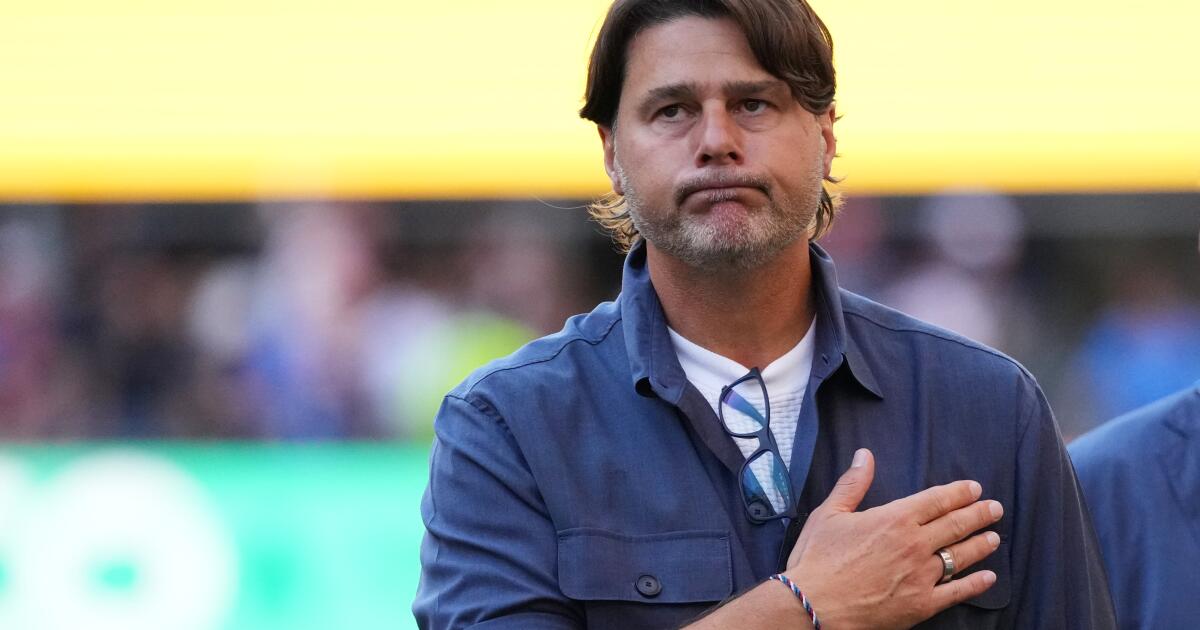
Mauricio Pochettino is staying with the U.S. soccer team, agreeing Monday to a four-year contract to coach the Americans through the 2030 World Cup.

A 54-year-old who took over in October 2024, Pochettino led the U.S. to the World Cup round of 16, where the tournament co-hosts were eliminated with a 4-1 loss to Belgium.

Still, he helped the seeded U.S. to a pair of firsts in the expanded 48-nation tournament, clinching advancement from the group stage with a game to spare and winning three games in a single World Cup. The team captivated American fans with excited audiences in stadiums and record television viewers.

“The magic thing that happened during the World Cup, the connection with the people, of course with the whole organization and everything was a key point,” Pochettino said during a Zoom news conference from his home in Barcelona, Spain.

Hedge fund manager Ken Griffin is again the lead philanthropic funder supporting Pochettino’s contract. Pochettino earned just over $5 million in his first seven months as coach, according to the U.S. Soccer Federation tax return.

Since reaching the quarterfinals in 2002, the U.S. has lost four straight round-of-16 games.

“What we learn(ed) is that we can compete, that we have the quality and we have the talent,” Pochettino said. “We were so close. That gap with the best teams in the world is not too big.”

Pochettino said there is potential to make soccer in the U.S. “grow and grow and grow and be one of the important sport(s) in America, like it is in the rest of the world.”

“We have players and organization that can compete with the best organization in the world in that sport,” he said. “We learned that the fans are amazing and when they were so excited to discover a sport that made our fans become crazy, no? The connection was amazing.”

Pochettino views the next cycle as a new start for a program lacking quality depth at goalkeeper and central defender.

“It is going to be important to provide the young kids that we really believe that they have the potential to arrive in 2030, in four years, to start to work and start to know,” he said.

Before taking the U.S. job, Pochettino coached Espanyol (2009-12), Southampton (2013-14), Tottenham (2014-19), Paris Saint-Germain (2021-22) and Chelsea (2023-24).

When Pochettino replaced Gregg Berhalter two years ago, he signed an initial contract through the 2026 World Cup. Pochettino said ahead of the tournament that he had discussed a possible new deal with the USSF. He also said in May that his agent had spoken with AC Milan, a club that then hired Rúben Amorim.

Pochettino, who has homes in Spain and London, said he may move to the U.S. He intends to stay with the American team until 2030 but left himself an out.

“Four years time is a really long period. You never know what can happen in soccer,” he said. “Today people really love you. In eight weeks time, maybe that change(s), that feeling.”

He has led the U.S. to 17 wins (including a penalty-kicks victory), 13 losses and one draw. Twenty-three of 62 players to appear under Pochettino have accounted for the team’s 57 goals.

“We know we have a lot of work to do to achieve our clear ambitions, including competing to win Men’s World Cups and having soccer become the most played sport in every community,” USSF CEO JT Batson said in a statement.

U.S. coaches have not been successful when they remained for a second World Cup cycle.

After leading the Americans to the 2002 quarterfinals, Bruce Arena was unable to get his team past the group stage in 2006.

Bob Bradley helped the U.S. reach the round of 16 in 2010, then was fired a year later after the team lost the CONCACAF Gold Cup final.

Jurgen Klinsmann took over and in December 2013 was given an extension through the 2018 World Cup. The Americans reached the round of 16 in 2014 but Klinsmann was fired in late 2016 after the U.S. lost its first two games in the final round of qualifying. Arena returned but the U.S. failed to reach the 2018 World Cup.

Berhalter was hired in late 2018 and led the Americans to the round of 16 in 2022. Given a new contract in 2023, he was fired a year later after the U.S. failed to advanced past the group stage of the Copa America.

“We are going to demand more from them,” he said of the players. “We are not going to be in some situation(s) not flexible like we were because before it was (for) the benefit of players, benefit of structures that were already built. But now it’s about to start the house from zero.”

Blum writes for the Associated Press.
Source link

DGA ratifies four-year contract with major studios

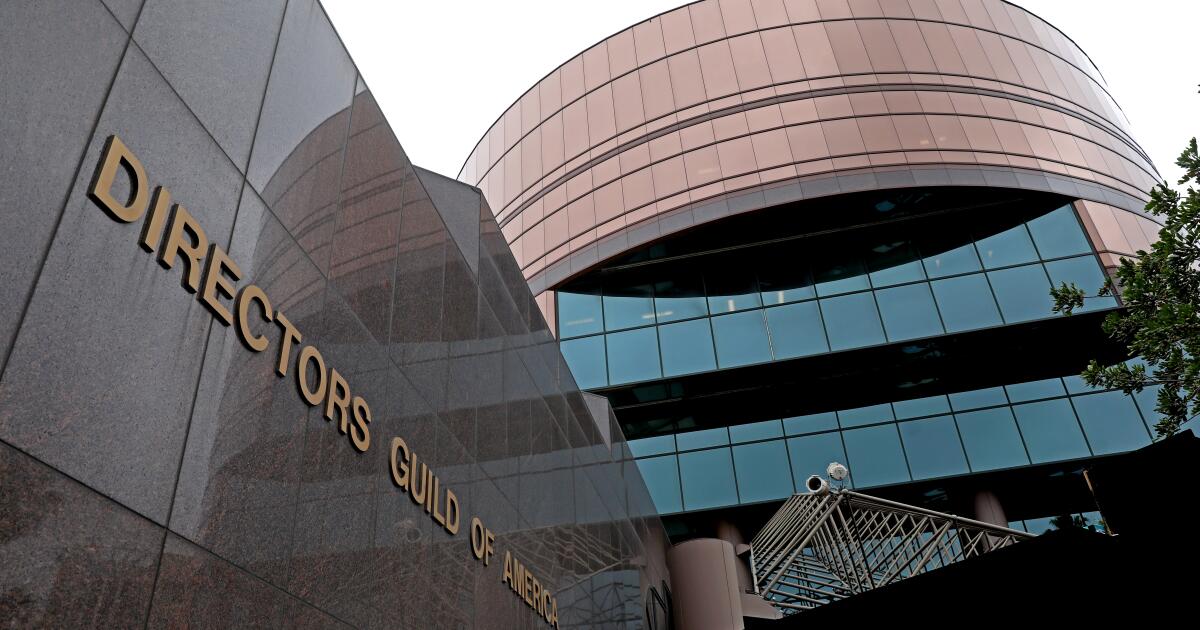
The Directors Guild of America on Thursday night said it approved a four-year contract with the major studios.

The new contract will boost studio contributions to DGA’s healthcare plan, increase minimum salaries and offer AI protections. The DGA declined to say how many voted in favor of the contract, but in a memo to members, union President Christopher Nolan and National Executive Director Russell Hollander said members “voted overwhelmingly” to ratify it.

“Throughout this process, our focus was clear: protect our members, strengthen the Guild, and address the challenges facing our industry during a period of profound change,” Nolan and Hollander wrote in a memo to members sent on Thursday. “… We have achieved critical wins that put the Guild in a position to further protect our members economic and creative rights now and into the future.”

The newly ratified contract provides some stability in Hollywood, about three years after a summer of strikes led by the Writers Guild of America and performers guild SAG-AFTRA. WGA approved a contract with major studios under the Alliance of Motion Picture and Television Producers in April and SAG-AFTRA members ratified their contract in June. All the contracts extend the terms to four years instead of three years, which studios had sought out.

The AMPTP in a statement thanked DGA, WGA and SAG-AFTRA “for their thoughtful and collaborative approach to negotiations.”

“Together, we reached agreements that deliver substantial gains for guild members while supporting greater stability across the entertainment business,” the AMPTP said. “We are encouraged by the trust built throughout this cycle and look forward to building on that momentum to advance opportunity and shared success across our industry.”

The new DGA contract starts on July 1 and runs through June 30, 2030. Key aspects of the agreement include requiring the studios to increase their contribution to DGA’s health plan by 24.4% over four years. In return, the DGA would support “modest” increases to the eligibility threshold and annual premiums.

The contract also increases minimum salaries on many jobs by 2.5% in the first year and up 3% for each of the following years in the agreement.

It also adds more rules around the use of AI technology, including requiring that directors oversee any footage created by artificial intelligence.

Source link

DGA’s board throws support behind tentative contract with major studios

The Directors Guild of America’s national board on Friday unanimously recommended its membership vote in favor of a four-year contract with the major studios that would increase wages, boost contributions to its health plan and establish guardrails surrounding AI technology.

“We entered this negotiation with three main priorities: secure our Health Plan, protect jobs, and ensure that our members remain secure as AI continues to impact our industry,” DGA President Christopher Nolan said in a statement. “We succeeded in these areas and gained in many others.”

Under the proposed contract, major studios would increase their contributions to the DGA’s health plan by 24.4% over four years, the largest since the plan was founded. In return, the DGA would recommend changes to its plan’s trustees including “modest” increases to the eligibility threshold and annual premiums, the DGA said on Friday.

The contract also increases minimum salaries for most jobs by 2.5% in the first year and up 3% for each of the following years in the agreement. Directors of network non-prime time strip dramatic programs will see their minimum salaries increase 2.5% for each year under the agreement.

The union, which represents more than 19,500 directors and members of directorial teams in areas such as film, commercials and news, said the agreement helps the union’s push for a federal production incentive. Hollywood creatives believe such a benefit could prevent U.S. entertainment jobs from moving overseas where production costs can be significantly lower. The proposed agreement secures a commitment that most senior management at the major studios represented by the Alliance of Motion Picture and Television Producers “would engage in meaningful advocacy for a federal production incentive above and beyond the ongoing lobbying efforts of the Motion Picture Association,” according to the DGA.

The contract also adds more guardrails to AI technology, including treating footage created by artificial intelligence as the same as footage shot by a camera, meaning it will still be under the director’s control, according to the DGA. Major studios will also be required to notify the DGA if an employer decides to license a director’s work to train a generative AI system to create new work, the union said. The agreement also establishes an employer-funded program to enhance directors’ AI skills.

“With these gains, a four-year Agreement was both appropriate and necessary to provide stability and potential for growth at a moment when the industry has been experiencing contraction,” Nolan said in a note to members on Friday.

DGA and AMPTP reached the tentative contract earlier this week. At that time, AMPTP said “we appreciate the hard work and commitment of our guild partners in achieving a fair deal that helps advance a stable and successful entertainment industry.”

DGA members will have until June 25 at 5 p.m. to vote on the plan. If approved, the contract would go into effect July 1 and run through June 30, 2030.

Source link