Florida

Jan. 6 rioter convicted after taking Pelosi’s lectern seeks Florida county office

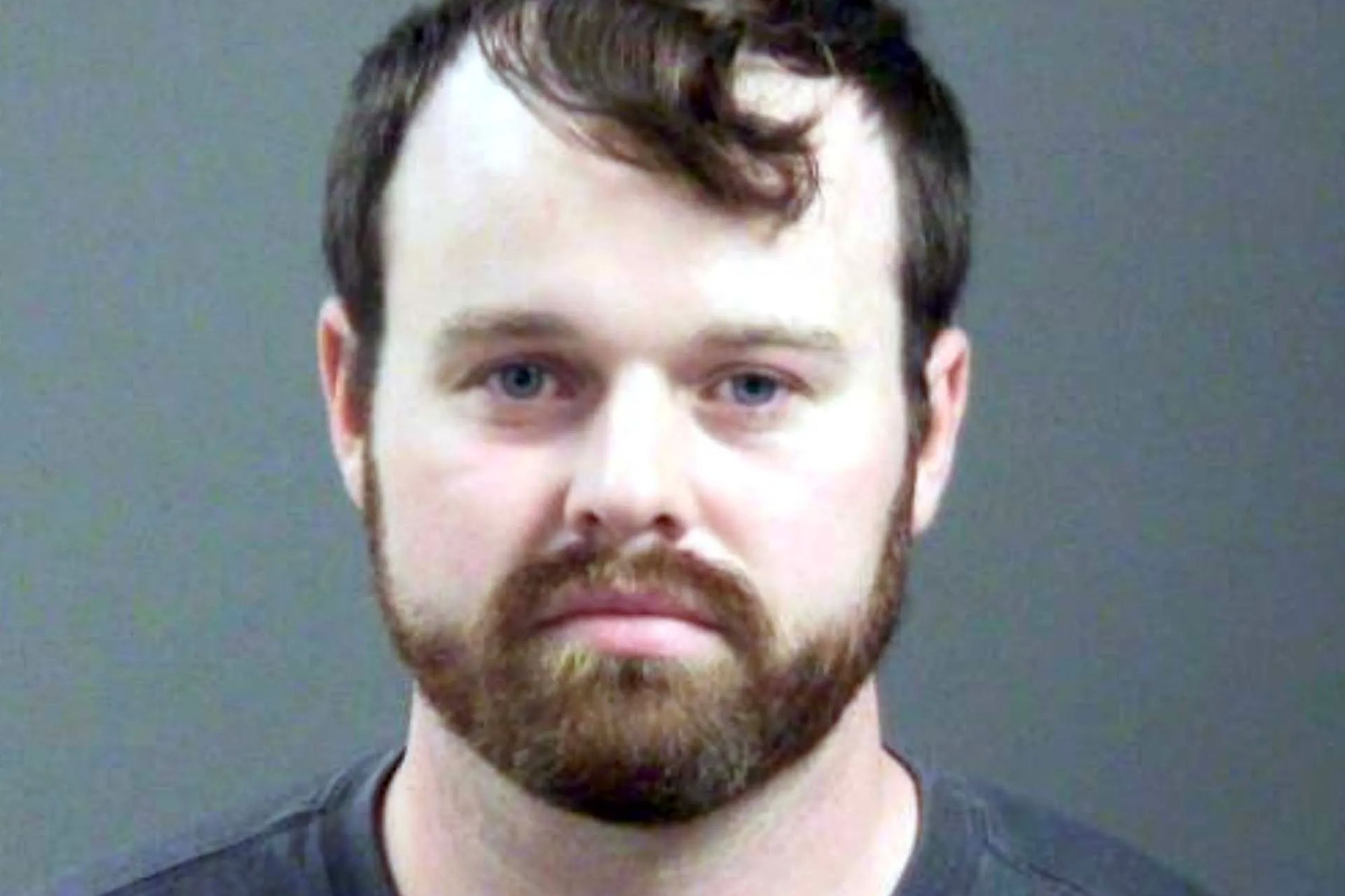
A Florida man convicted of crimes after grabbing then-House Speaker Nancy Pelosi’s lectern and posing for photographs with it during the U.S. Capitol riot is running for county office.

Adam Johnson filed to run as a Republican for an at-large seat on the Manatee County Commission on Tuesday. That was the fifth anniversary of the Jan. 6 insurrection, where he was photographed smiling and waving as he carried Pelosi’s lectern, commonly known as the speaker’s podium, after the pro-Trump mob’s attack on the Capitol as people there sought to prevent the certification of Joe Biden’s election win.

Johnson told WWSB-TV that it was “not a coincidence” that he filed for office on Jan. 6, saying that “it’s definitely good for getting the buzz out there.” His campaign logo is an outline of the viral photograph of him carrying the lectern.

He’s far from the first person implicated in the Jan. 6 riot to run for office. At least three ran unsuccessfully for Congress in 2024 as Republicans. And there are signs that the Republican Party is welcoming back more people who were convicted of Jan. 6 crimes after President Trump pardoned them.

Jake Lang, who was charged with assaulting an officer, civil disorder and other crimes before he was pardoned, recently announced he is running for Secretary of State Marco Rubio’s vacant U.S. Senate seat in Florida.

Johnson placed the lectern in the center of the Capitol Rotunda, posed for pictures and pretended to make a speech, prosecutors said. He pleaded guilty in 2021 to entering and remaining in a restricted building or ground, a misdemeanor that he equated in the interview to “jaywalking.”

“I think I exercised my 1st Amendment right to speak and protest,” Johnson said.

After driving home on Jan. 6, 2021, Johnson bragged that he “broke the internet” and was “finally famous,” prosecutors said.

Johnson served 75 days in prison followed by one year of supervised release. The judge also ordered Johnson to pay a $5,000 fine and perform 200 hours of community service.

Johnson told U.S. District Judge Reggie Walton at sentencing that posing with Pelosi’s lectern was a “very stupid idea,” but now says he only regrets his action because of the prison sentence.

“I walked into a building, I took a picture with a piece of furniture and I left,” he now says.

Four other Republicans have filed to run so far in the Aug. 18 primary in the deeply Republican county. The incumbent isn’t seeking reelection.

In March, Johnson filed a lawsuit against Manatee County and six of its commissioners, objecting to the county’s decision not to seek attorney’s fees from someone who sued the county and dropped the lawsuit. The county has called Johnson’s claims “completely meritless and unsupported by law.”

Johnson said he objects to what he sees as high property taxes and overdevelopment in the county south of Tampa, and he says current county leaders are wasteful.

“I will be more heavily scrutinized than any other candidate who is running in this race,” Johnson said. “This is a positive and a good takeaway for every single citizen, because for once in our life, we will know our local politicians who are doing things.”

Source link

It’s not the oil. It’s Florida | Nicolas Maduro

On Saturday, United States military forces carried out a dramatic strike in Venezuela that resulted in the capture and forcible removal of President Nicolas Maduro and his wife, Cilia Flores. They were flown to New York and are now in federal custody. Maduro appeared in federal court on drug and weapons charges and pleaded not guilty. Several governments, international legal experts and United Nations officials have described the military operation as an illegal “kidnapping” and a breach of international law. The UN secretary-general warned that it sets a “dangerous precedent”, undermining foundational norms of sovereignty under the UN Charter.

Yet, as Washington justifies its operation primarily with rhetoric about oil and narcotics, a deeper inspection reveals another dynamic: This was first and foremost an ideological battle, shaped by domestic political incentives in the US – in particular the strategic influence of Florida’s electorate and its political elite.

Oil is not the prime motive

The mainstream narrative frames Venezuela’s enormous oil reserves – officially among the largest proven in the world at roughly 298 billion to 303 billion barrels – as the core strategic prize. But a closer, evidence-based analysis shows the immediate economic rationale to be weak.

US crude imports from Venezuela, once significant, have dwindled to about 220,000 barrels per day (bpd) as of 2024, representing less than 4 percent of US crude imports. By contrast, imports from Canada dominate, accounting for roughly 60 to 63 percent of US crude import needs, and US production of light crude has risen sharply, reducing dependence on foreign sources. This shift undermines claims that Venezuelan oil alone is a strategic imperative.

Why does Venezuelan crude matter at all? The answer lies in its composition. Venezuelan oil is heavy and sour, the type that many US Gulf Coast refineries were designed to process. This, however, reflects refinery configuration rather than any compelling immediate strategic case. Furthermore, Venezuelan oil infrastructure has deteriorated over years of underinvestment with output falling from about 3.5 million bpd to roughly 1 million bpd by 2025, and a meaningful revival would require many years of sustained and consistent investment. Markets reacted only modestly to the capture of Maduro with global oil prices remaining relatively stable, suggesting that oil was not the main driver of the operation.

Not drugs either: Pretext vs reality

US officials have cited drug trafficking and “narcoterrorism” as part of the justification for the intervention. Maduro and other senior Venezuelan officials are indicted in the US on charges linked to alleged cocaine trafficking, and these accusations have been reiterated in court. However, research by international agencies and independent analysts suggests that, while Venezuelan territory is used as a transit route, it is not a major source of the drugs entering the US, which are overwhelmingly produced and trafficked through Mexico, Central America and the Caribbean. This gap between the scale of the drug trade and the rationale invoked has led many analysts to view the narcotics argument as a pretext rather than a primary driver of the operation.

Florida, ideology and domestic political incentives

A more persuasive rationale emerges when the domestic political incentives shaping US foreign policy are examined, particularly the role of Florida’s electorate and elite networks. With 31 electoral votes, Florida remains a pivotal state in presidential elections, where narrow margins mean even modest shifts among key constituencies can determine national outcomes.

This political reality is reinforced by Florida’s large and politically mobilised Latino communities. Cuban American voters have long prioritised anti-communist foreign policy positions while Venezuelan American communities, many of whom settled in the state over the past decade, have expressed strong opposition to authoritarian leftist governance in Caracas. Political scientists note that these constituencies constitute a significant voting bloc in closely contested elections, giving political elites strong incentives to adopt hardline positions against leftist regimes that resonate with these voters.

At the centre of this dynamic stands Marco Rubio, the US secretary of state and a Florida native whose political biography is deeply rooted in opposition to leftist governments in Latin America. Rubio’s family fled communist Cuba, and he has consistently championed confrontational policies towards socialist and authoritarian regimes in the region. Reports suggest that, during negotiations, Maduro offered concessions on oil and economic matters that could have been commercially beneficial, but advisers aligned with Florida’s political interests reportedly pushed for a harder line, prioritising ideological confrontation over economic pragmatism.

Florida’s political ecosystem also includes influential donor networks that have historically supported hawkish foreign policy positions, including well-organised pro-Israel constituencies with leverage at state and national levels. In recent months, high-profile visits by Israeli leaders to Florida and sustained engagement with US political figures have reinforced ideological alignments that frame regimes perceived as hostile to Israel or aligned with its adversaries as challenges requiring decisive responses. The convergence of electoral incentives, ideological commitments and elite networks helps explain why US policy towards Venezuela has been shaped as much by domestic political drivers as by external strategic interests.

Lessons for the Middle East

The implications for Middle Eastern actors are profound.

First, international law appears weakened. The US capture of a sitting head of state without multilateral authorisation underscores a willingness to sidestep international legal norms when domestic political imperatives are prioritised. The ineffectiveness UN Charter’s prohibition on the use of force absent Security Council approval or clear self-defence appears to have been discounted, eliciting global concern.

Second, the Middle East’s strategic relevance persists, albeit in an evolving context. While global energy markets are less dependent on Middle Eastern oil than in prior decades, other factors – capital flows, counterterrorism cooperation, strategic geography and enduring security partnerships – maintain the region’s importance. Intensifying US-China competition and Washington’s concern over closer China-Middle East ties will likely continue to anchor US engagement in the region. Israel, for its part, is expected to sustain robust lobbying efforts in Washington and European capitals to preserve its strategic relationships.

Yet the Venezuela episode illustrates that alliances predicated chiefly on energy security can be fragile and ideological and domestic political drivers can abruptly reshape foreign policy priorities. Middle Eastern states must, therefore, pursue a calibrated diplomatic strategy: engaging the US where interests converge while hedging against abrupt shifts driven by internal political calculations.

The views expressed in this article are the author’s own and do not necessarily reflect Al Jazeera’s editorial stance.

Source link

Gov. Ron DeSantis calls for special session in April to redraw Florida’s congressional districts

Florida Gov. Ron DeSantis said Wednesday he plans to call a special session in April for the Republican-dominated Legislature to draw new congressional districts, joining a redistricting arms race among states that have redrawn districts mid-decade.

Even though Florida’s 2026 legislative session starts next week, DeSantis said he wanted to wait for a possible ruling from the U.S. Supreme Court on a key provision of the Voting Rights Act. The ruling in Louisiana vs. Callais could determine whether Section 2, a part of the Voting Rights Act that bars discrimination in voting systems, is constitutional. The governor said “at least one or two” districts in Florida could be affected by the high court’s ruling.

“I don’t think it’s a question of if they’re going to rule. It’s a question of what the scope is going to be,” DeSantis said at a news conference in Steinhatchee, Fla. “So, we’re getting out ahead of that.”

Currently, 20 of Florida’s 28 congressional seats are held by Republicans.

Congressional districts in Florida that are redrawn to favor Republicans could carry big consequences for President Trump’s plan to reshape congressional districts in GOP-led states, which could give Republicans a shot at winning additional seats in the midterm elections and retaining control of the closely divided U.S. House.

Nationwide, the unusual mid-decade redistricting battle has so far resulted in a total of nine more seats Republicans believe they can win in Texas, Missouri, North Carolina and Ohio — and a total of six more seats Democrats expect to win in California and Utah, putting Republicans up by three. But the redrawn districts are being litigated in some states, and if the maps hold for 2026, there is no guarantee the parties will win the seats.

In 2010, more than 60% of Florida voters approved a constitutional amendment prohibiting the drawing of district boundaries to unfairly favor one political party in a process known as gerrymandering. The Florida Supreme Court, however, last July upheld a congressional map pushed by DeSantis that critics said violated the “Fair Districts” amendment.

After that decision, Florida House Speaker Daniel Perez last August announced the creation of a select committee to examine the state’s congressional map.

Florida Senate Democratic Leader Lori Berman said in a statement that what DeSantis wants the Legislature to do is clearly illegal.

“Florida’s Fair Districts Amendment strictly prohibits any maps from being drawn for partisan reasons, and regardless of any bluster from the governor’s office, the only reason we’re having this unprecedented conversation about drawing new maps is because Donald Trump demanded it,” Berman said. “An overwhelming majority of Floridians voted in favor of the Fair Districts Amendment and their voices must be respected. The redistricting process is meant to serve the people, not the politicians.”

In a statement, the Florida Democratic Party called the move by DeSantis “reckless, partisan and opportunistic.”

“This is nothing more than a desperate attempt to rig the system and silence voters before the 2026 election,” the statement said. “Now, after gutting representation for Black Floridians just three years ago, Ron is hoping the decimation of the Voting Rights Act by Trump’s Supreme Court will allow him to further gerrymander and suppress the vote of millions of Floridians.”

Michael McDonald, a political science professor at the University of Florida, said the state already has a fairly strong Republican gerrymander, so it would be difficult for Republicans to pick up additional seats, unless they’re planning to draw “noncompact districts that squiggle all over the place” and then hold the election before a judge can throw out the map. McDonald said DeSantis also could be trying to shore up Republican strongholds to mitigate the losses generally experienced by the party in power during midterm elections.

“Trump’s approval ratings are pretty low,” McDonald said. “And so looking at what we would expect to happen in November, unless something fundamentally changes in the country between now and then, we expect the Democrats to have a very good year.”

Schneider and Fischer write for the Associated Press.

Source link

Florida Gov. Ron DeSantis calls for special session on redistricting

Jan. 7 (UPI) — Florida Gov. Ron DeSantis issued a proclamation on Wednesday calling on the state Legislature to hold a special session for the purpose of redistricting its U.S. House seats.

The special session is to occur in April and will last no more than 20 consecutive days, unless extended by a three-fifths vote in each chamber, the proclamation says.

“Every Florida resident deserves to be represented fairly and constitutionally,” DeSantis said in a news release.

“Today, I announced that I will be convening a special session of the Legislature focused on redistricting to ensure that Florida’s congressional maps accurately reflect the population of our state and to comply with an upcoming U.S. Supreme Court ruling,” he said.

“This special session will take place after the regular legislative session, which will allow the Legislature to first focus on the pressing issues facing Floridians before devoting its full attention to congressional redistricting in April.”

He said the redistricting will better ensure that race is not a predominant factor in determining Florida’s federal congressional districts and cited a Supreme Court case challenging recent redistricting in Louisiana that created a congressional district comprising mostly of racial minority populations.

That case accuses Louisiana of violating the 14th and 15th Amendments to the U.S. Constitution by using race as a basis for creating congressional districts.

DeSantis’ proclamation says there is no law against the state redrawing its congressional district mid-decade, and a majority vote in both chambers of Florida’s bicameral Legislature is required to legally redraw the districts ahead of the 2026 mid-term elections.

Florida has 28 U.S. House seats after gaining one in 2022 as a result of the 2020 census, with Republicans holding 20 seats and Democrats eight.

Florida’s redistricting effort comes after several other states have announced their intent to do the same or already have, with Texas and California being the most-publicized efforts.

Source link

Five key takeaways from Trump-Netanyahu meeting in Florida | Israel-Palestine conflict News

Israeli Prime Minister Benjamin Netanyahu and US President Donald Trump have presented a united front and heaped praise on each other as they held another meeting to discuss the tensions in the Middle East.

On Monday, Netanyahu paid his fifth visit to the United States since Trump’s inauguration in January, meeting the president at his Mar-a-Lago resort in Florida.

Recommended Stories

list of 3 itemsend of list

Their mutual flattery turned into geopolitical alignment as the two leaders addressed the most pressing issues in the Middle East: Gaza and Iran.

Trump claimed that Israel is helping the people of Gaza and dismissed the near-daily Israeli ceasefire violations.

Here are the key takeaways from Monday’s meeting.

Trump stresses Hamas must disarm

Before and after his meeting with Netanyahu, Trump stressed that Hamas must disarm, issuing a stern threat to the Palestinian group.

Asked what would happen if Hamas refused to give up its weapons, Trump said: “It would be horrible for them, horrible. It’s going to be really, really bad for them.”

Last week, US Secretary of State Marco Rubio said that Washington’s top priority was to move to the second phase of the ceasefire, which would see the establishment of a technocratic Palestinian administration and the deployment of an international police force.

But on Monday, Trump kept the focus on Hamas, reiterating the claim that other countries have offered to “wipe them out” if the group refuses to give up its weapons.

Israel has killed 414 Palestinians in Gaza since the start of the ceasefire in October, and it continues to restrict the flow of international aid into the territory, including temporary shelter provisions, despite people suffering deadly weather conditions in makeshift tents.

Trump, however, said that Israel is fully living up to its commitments under the deal – “100 percent”.

“I’m not concerned about anything that Israel is doing,” he told reporters.

US threatens Iran

Trump suggested that Washington would carry out further military action against Iran if Tehran rebuilds its nuclear programme or missile capacity.

The president kept returning to the oft-cited argument that the US air strikes against Iranian nuclear facilities in June are what paved the way for the ceasefire in Gaza.

“Now I hear that Iran is trying to build up again, and if they are, we’re going to have to knock them down,” Trump said.

“We’ll knock them down. We’ll knock the hell out of them. But, hopefully, that’s not happening.”

In recent weeks, Israeli officials and their US allies have shifted the focus to Iran’s missile programme, arguing it should be dealt with before it poses a threat to Israel.

When asked whether the US would back an Israeli attack targeting Iran’s missile programme, Trump said, “If they will continue with the missiles, yes. The nuclear? Fast. OK? One will be: Yes, absolutely. The other is: We’ll do it immediately.”

Iran has ruled out negotiating over its missile programme, and it has denied seeking to build a nuclear weapon.

Israel, meanwhile, is widely believed to have an undeclared nuclear arsenal.

Bromance festival

Since the early days of Israel’s genocidal war on Gaza, US media reports have suggested that the US president, first Joe Biden, then Trump, was angry or frustrated at Netanyahu.

But the US military and diplomatic support for Israel has never been interrupted.

Ahead of Netanyahu’s visit, similar reports emerged about a potential rift between him and Trump.

Nonetheless, the two leaders put on a show of brotherly romance on Monday.

Trump called Netanyahu a “hero”, stressing that Israel may not have existed without his wartime leadership.

“We’re with you, and we’ll continue to be with you, and a lot of good things are happening in the Middle East,” Trump told Netanyahu.

“We have peace in the Middle East, and we’re going to try and keep it that way. I think we will be very successful in keeping it that way. And you’ve been a great friend.”

The US president also highlighted his efforts to secure a presidential pardon for Netanyahu, who is facing corruption charges in Israel.

The Israeli prime minister announced that the US president will be awarded the Israel Prize, which is normally given to Israeli citizens.

“I have to say that this reflects the overwhelming sentiment of Israelis across the spectrum,” Netanyahu said.

“They appreciate what you’ve done to help Israel, and to help our common battle against the terrorists and those who would destroy our civilisation.”

Netanyahu has notably not been pardoned.

Trump calls for Israel-Syria rapprochement

One area where Trump appeared to press Netanyahu was Syria.

Trump said Netanyahu is “going to get along” with Syria, lauding Syrian President Ahmed al-Sharaa.

Since the fall of former President Bashar al-Assad last year, Israel has expanded its occupation of southern Syria beyond the Golan Heights, seizing large areas in Jabal al-Sheikh. The Israeli military has also been carrying out raids, reportedly abducting and disappearing people in the country.

The new Syrian authorities have stressed that they do not seek conflict with Israel, but talks to reach a security agreement between the two countries have stalled.

“We do have an understanding regarding Syria,” Trump said. “Now, with Syria, you have a new president. I respect him. He’s a very strong guy, and that’s what you need in Syria.”

Netanyahu was non-committal on Israel’s approach to Syria.

“Our interest is to have a peaceful border with Syria,” he said. “We want to make sure that the border area right next to our border is safe — we don’t have terrorists, we don’t have attacks.”

On renewed war in Lebanon: ‘We’ll see about it.’

Since the start of the truce in Gaza, Israel has intensified its attacks in Lebanon, leading to fears that it may re-launch its full-scale war against the country.

Earlier this year, the Lebanese government issued a decree to disarm Hezbollah, but the group pledged to hold onto its weapons to defend the country against Israel.

On Monday, Trump did not rule out renewing the conflict in Lebanon.

“We’ll see about it,” the president said when asked whether he would support more Israeli strikes in Lebanon.

“The Lebanese government is at a little bit of a disadvantage, if you think of it, with Hezbollah. But Hezbollah has been behaving badly, so we’ll see what happens.”

Source link

Trump and Netanyahu are to meet in Florida at a crucial moment for the U.S.-backed Gaza ceasefire

President Trump is scheduled to meet with Israeli Prime Minister Benjamin Netanyahu Monday, as Washington looks to create fresh momentum for a U.S.-brokered ceasefire in Gaza that could be in danger of stalling before a complicated second phase.

Trump could use the face-to-face at his Mar-a-Lago estate in Florida to try to leverage his strong relationship with Netanyahu and look for ways to speed up the peace process. Before that, Netanyahu met separately with Secretary of State Marco Rubio.

The ceasefire between Israel and Hamas that Trump championed has mostly held, but progress has slowed recently. Both sides accuse each other of violations, and divisions have emerged among the U.S., Israel and Arab countries about the path forward.

The truce’s first phase began in October, days after the two-year anniversary of the initial Hamas-led attack on Israel that killed about 1,200 people. All but one of the 251 hostages taken then have been released, alive or dead.

The Israeli leader has signaled he is in no rush to move forward with the next phase as long as the remains of Ran Gvili are still in Gaza. Netanyahu’s office said he met with Gvili’s parents in Florida.

Now comes the next, far more complicated part. Trump’s 20-point plan — which was approved by the U.N. Security Council — lays out an ambitious vision for ending Hamas’ rule of Gaza.

Iran and other topics likely to come up

The two leaders also are expected to discuss other topics, including Iran, whose nuclear capabilities Trump insists were “completely and fully obliterated” after U.S. strikes on its nuclear sites in June. Israeli officials have been quoted in local media as expressing concern about Iran rebuilding its supply of long-range missiles capable of striking Israel.

There are many key facets of the ceasefire’s second phase that Israel’s leader doesn’t support or has even openly opposed, said Mona Yacoubian, director and senior adviser of the Middle East program at the Center for Strategic and International Studies.

“This is going to be a really tall order, I think, for President Trump to get Netanyahu to agree,” she said.

“How he does that, what kind of pressure he puts on Netanyahu, I think, is going to be important to watch for,” said Yacoubian, who also said the two could exhibit ”a broader clash of approaches to the region.”

Next phase is complex

If successful, the second phase would see the rebuilding of a demilitarized Gaza under international supervision by a group chaired by Trump and known as the Board of Peace. The Palestinians would form a “technocratic, apolitical” committee to run daily affairs in Gaza, under Board of Peace supervision.

It further calls for normalized relations between Israel and the Arab world, and a possible pathway to Palestinian independence. Then there are thorny logistical and humanitarian questions, including rebuilding war-ravaged Gaza, disarming Hamas and creating a security apparatus called the International Stabilization Force.

The Board of Peace would oversee Gaza’s reconstruction under a two-year, renewable U.N. mandate. Its members had been expected to be named by the end of the year and might even be revealed after Monday’s meeting, but the announcement could be pushed into next month.

Netanyahu was the first foreign leader to meet Trump at the White House in his second term, but this will be their first in-person meeting since Trump went to Israel in October to mark the start of the ceasefire’s initial phase. Netanyahu has been to Mar-a-Lago before, including in July 2024 when Trump was still seeking reelection.

Much remains unsettled

Their latest meeting comes after U.S. Mideast envoy Steve Witkoff and the president’s son-in-law, Jared Kushner, recently huddled in Florida with officials from Egypt, Qatar and Turkey, which have been mediating the ceasefire.

Two main challenges have complicated moving to the second phase, according to an official who was briefed on those meetings. Israeli officials have been taking a lot of time to vet and approve members of the Palestinian technocratic committee from a list given to them by the mediators, and Israel continues its military strikes.

Trump’s plan also calls for the stabilization force, proposed as a multinational body, to maintain security. But it, too, has yet to be formed. Whether details will be forthcoming after Monday’s meeting is unclear.

A Western diplomat said there is a “huge gulf” between the U.S.-Israeli understanding of the force’s mandate and that of other major countries in the region, as well as European governments.

All spoke on the condition of anonymity to provide details that haven’t been made public.

The U.S. and Israel want the force to have a “commanding role” in security duties, including disarming Hamas and other militant groups. But countries being courted to contribute troops fear that mandate will make it an “occupation force,” the diplomat said.

Hamas has said it is ready to discuss “freezing or storing” its arsenal of weapons but insists it has a right to armed resistance as long as Israel occupies Palestinian territory. One U.S. official said a potential plan might be to offer cash incentives in exchange for weapons, echoing a “buyback” program Witkoff has previously floated.

Questions about Gaza reconstruction

One displaced man in Khan Yunis, Iyad Abu Sakla, said Trump needed to urge Netanyahu to allow Palestinians to return to their homes. Under the agreement, most Palestinians are permitted in a zone just under half the size of Gaza.

“We are exhausted. This displacement is bad; it’s cold and freezing. Enough lying to us and enough insulting our intelligence,” Sakla said.

Israeli bombardment and ground operations have transformed neighborhoods across Gaza into rubble-strewn wastelands, with blackened shells of buildings and mounds of debris stretching in all directions.

Egypt, Qatar, Saudi Arabia and Turkey are pressing for a negotiated deal on disarming Hamas and on additional Israeli withdrawal from Gaza before moving to next elements of the plan, including deployment of the international security force and reconstruction, three Arab officials said.

Three other officials, including two Americans, said the United Arab Emirates has agreed to fund reconstruction, including new communities, although they said plans have not been settled.

All the officials spoke on condition of anonymity to discuss internal deliberations between the various countries. The UAE did not respond to multiple requests for comment.

Weissert, Mednick and Magdy write for the Associated Press. AP writers Darlene Superville in Washington and Lee Keath and Fatma Khaled in Cairo contributed to this report.

Source link

US-Israel ties: What Netanyahu and Trump will discuss in Florida | Donald Trump News

Israeli Prime Minister Benjamin Netanyahu will visit the United States to meet with President Donald Trump as regional turmoil approaches a boiling point amid Israel’s attacks in Palestine, Lebanon and Syria and mounting tensions with Iran.

Netanyahu is to hold talks with Trump at the president’s Mar-a-Lago resort in Florida on Monday as Washington pushes to complete the first phase of the Gaza truce.

Recommended Stories

list of 3 itemsend of list

The visit comes as the US continues to pursue its 20-point “peace plan” in the Palestinian enclave despite near-daily Israeli violations of the truce.

Israel is also escalating attacks in the occupied West Bank, Lebanon and Syria as Israeli officials suggest that another war with Iran is possible.

What will Netanyahu discuss with Trump, and where do US-Israel ties stand?

Al Jazeera looks at the prime minister’s trip to the US and how it may play out.

When will Netanyahu arrive?

The Israeli prime minister will arrive in the US on Sunday. However, the talks will not take place at the White House. Instead, Netanyahu will meet Trump in Florida, where the US president is spending the holidays.

The meeting between the two leaders is expected to take place on Monday.

How many times has Netanyahu visited Trump?

This will be Netanyahu’s fifth visit to the US in 10 months. The Israeli prime minister has been hosted by Trump more than any other world leader.

In February, he became the first foreign leader to visit the White House after Trump returned to the presidency.

He visited again in April and July. In September, he also met with Trump in Washington, DC, after the United Nations General Assembly in New York.

What has the relationship between Trump and Netanyahu been like so far?

Netanyahu often says Trump is the best friend Israel has ever had in the White House.

During his first term, Trump pushed US policy further in favour of Israel’s right-wing government. He moved the US embassy to Jerusalem, recognised and claimed Israeli sovereignty over Syria’s occupied Golan Heights and cut off funding to the United Nations agency for Palestinian refugees (UNRWA).

Since returning to the White House this year, Trump has shown a greater willingness to publicly disagree with Netanyahu. Still, his administration has provided unflinching support for Israel, including the decision to renew the genocidal war on Gaza in March after a brief ceasefire.

Trump joined the Israeli attack on Iran in June to the dismay of some segments of his base. And he pushed to secure the current truce in Gaza.

The US president also opposed the Israeli attack on Doha in September. And he swiftly lifted sanctions against Syria despite some apparent Israeli reservations.

The ties between the two leaders have seen some peaks and valleys. In 2020, Trump was irked when Netanyahu rushed to congratulate Joe Biden on his election victory against Trump, who has falsely insisted the election was fraudulent.

“I haven’t spoken to him [Netanyahu] since,” Trump told the Axios news site in 2021. “F*** him.”

The strong ties between the two leaders were rekindled after Trump won the presidency again in 2024 and unleashed a crackdown on Palestinian rights activists in the US.

In November, Trump formally asked Israeli President Isaac Herzog to pardon Netanyahu, who is facing corruption charges at home.

The two leaders, however, are not in complete alignment, and cracks in their positions are showing up over issues that include Gaza, Syria and the US partnerships with Turkiye and the Gulf states.

During his US visit, Netanyahu may seek to flatter Trump and project a warm relationship with the US president to advance his agenda and signal to his political rivals in Israel that he still enjoys support from Washington.

How has Netanyahu dealt with the US since October 7, 2023?

Since the outbreak of the war in Gaza, Netanyahu has asked for unchecked US diplomatic and military support.

Then-President Biden travelled to Israel 11 days after Hamas’s October 7, 2023, attacks on southern Israel, and he declared that support for the US ally is “vital for America’s national security”.

His “bear hug” of Netanyahu on arrival at the airport in Tel Aviv would set the stage for the US backing of Israel as it unleashed horror and destruction on Gaza, which has translated into more than $21bn in military aid and multiple vetoes at the UN Security Council over the past two years.

Netanyahu has seized on the notion that Israel is an extension of US interests and security structure. In a speech to the US Congress last year, the prime minister argued that Israel is fighting Iran indirectly in Gaza and Lebanon.

“We’re not only protecting ourselves. We’re protecting you,” he told US lawmakers.

Throughout the war, there have been countless reports that Biden and Trump have been displeased or angry with Netanyahu. But US weapons and political backing for Israel have continued to flow uninterrupted. And Netanyahu makes a point of always expressing gratitude to US presidents, even when there may be apparent tensions.

Where does the US stand on the Gaza truce?

US Secretary of State Marco Rubio said last week that the top priority for the Trump administration is to complete the first stage of the Gaza ceasefire and move from mere cessation of hostilities to long-term governance, stabilisation and reconstruction of the Palestinian enclave.

Israel has been violating the ceasefire in Gaza regularly, recently killing at least six Palestinians in an attack that targeted a wedding.

But Trump, who claims to have brought peace to the Middle East for the first time in 3,000 years, has focused on broadly moving the truce forward rather than on Israel’s daily conduct.

“No one is arguing that the status quo is sustainable in the long term, nor desirable, and that’s why we have a sense of urgency about bringing phase one to its full completion,” Rubio said last week.

The top US diplomat has also suggested that there could be some flexibility when it comes to disarming Hamas under the agreement, saying the “baseline” should be ensuring that the group does not pose a threat to Israel rather than removing the guns of every fighter.

But Israel appears to be operating with a different set of priorities. Defence Minister Israel Katz said on Tuesday that the country is looking to re-establish settlements in Gaza, which are illegal under international law.

He later walked back those comments but stressed that Israel would maintain a permanent military presence in the territory, which would violate the Trump plan.

Expect Gaza to be a key topic of discussion between Netanyahu and Trump.

Can a Syria agreement be reached?

Trump has literally and figuratively embraced Syrian President Ahmed al-Sharaa over the past year, lifting sanctions against the country and beginning security cooperation with his government’s security forces.

But Israel is pursuing its own agenda in Syria. Hours after the collapse of the government of former President Bashar al-Assad a year ago, Israel began expanding its occupation of Syria beyond the Golan Heights.

Although the new Syrian authorities stressed early on that they did not seek confrontation with Israel, the Israeli military launched a bombardment campaign against Syria’s state and military institutions.

Israeli forces have also been conducting raids in southern Syria and abducting and disappearing residents.

After the Israeli military killed 13 Syrians in an air raid last month, Trump issued a veiled criticism of Israel.

“It is very important that Israel maintain a strong and true dialogue with Syria and that nothing takes place that will interfere with Syria’s evolution into a prosperous state,” he said.

Syria and Israel were in talks earlier this year to establish a security agreement short of full diplomatic normalisation. But the negotiations appeared to collapse after Israeli leaders insisted on holding onto the land captured after al-Assad’s fall.

With Netanyahu in town, Trump will likely renew the push for a Syria-Israel agreement.

Why is Iran back in the headlines?

Netanyahu’s visit comes amid louder alarm bells in Israel about Iran rebuilding its missile capacity after their 12-day war in June.

NBC News reported last week that the Israeli prime minister will brief the US president about more potential strikes against Iran.

The pro-Israel camp in Trump’s orbit seems to be already mobilising rhetorically against Iran’s missile programme.

US Senator Lindsey Graham visited Israel this month and called Iran’s missiles a “real threat” to Israel.

“This trip is about elevating the risk ballistic missiles pose to Israel,” Graham told The Jerusalem Post.

Trump authorised strikes against Iran’s nuclear sites during the June war, which he said “obliterated” the Iranian nuclear programme.

Although there is no evidence that Iran has been weaponising its nuclear programme, fears about a possible Iranian atomic bomb were the driving public justification for the US involvement in the conflict.

So it will be hard for Netanyahu to persuade Trump to back a war against Iran, said Sina Toossi, a senior fellow at the Center for International Policy.

The president is portraying himself as a peacemaker and prioritising a possible confrontation with Venezuela.

“It could just as well backfire on Netanyahu,” Toossi said of the push for more strikes against Iran. But he underscored that Trump is “unpredictable”, and he has surrounded himself with pro-Israel hawks, including Rubio.

What is the state of US-Israel relations?

Despite growing dissent on the left and right of the US political spectrum, Trump’s support for Israel remains unwavering.

This month, the US Congress passed a military spending bill that includes $600m in military aid to Israel.

The Trump administration has continued to avoid even verbal criticism of Israel’s aggressive behaviour in the region, including Gaza ceasefire violations and the expansion of illegal settlements in the West Bank.

At a White House Hanukkah celebration on December 16, Trump bemoaned the growing scepticism of unconditional support for Israel in Congress, falsely likening it to anti-Semitism.

“If you go back 10, 12, 15 years ago, at the most, the strongest lobby in Washington was the Jewish lobby. It was Israel. That’s no longer true,” Trump said.

“You have to be very careful. You have a Congress in particular which is becoming anti-Semitic.”

Despite Trump’s position, analysts said the gap between the strategic priorities of the US and Israel is growing.

While Washington is pushing for economic cooperation in the Middle East, Israel is seeking “total dominance” over the region, including US partners in the Gulf, Toossi said.

“Israel is pushing this uncompromising posture and strategic objective that I think is going to come to a head more with core US interests,” Toossi told Al Jazeera.

What’s next for the US-Israel alliance?

If you drive down Independence Avenue in Washington, DC, you will likely see more Israeli than American flags displayed on the windows of congressional offices.

Despite the shifting public opinion, Israel still has overwhelming support in Congress and the White House. And although criticism of Israel is growing within the Republican base, Israel’s detractors have been pushed to the margins of the movement.

Marjorie Taylor Greene is leaving Congress; commentator Tucker Carlson is facing constant attacks and accusations of anti-Semitism; and Congressman Tom Massie is facing a Trump-backed primary challenger.

Meanwhile, Trump’s inner circle is filled with staunch Israel supporters, including Rubio, megadonor Miriam Adelson and radio show host Mark Levin.

But amid the erosion of public support, especially among young people, Israel may face a reckoning in American politics in the long term.

On the Democratic side, some of Israel’s strongest supporters in Congress are facing primary challenges from progressive candidates who are centring Palestinian rights.

The most powerful pro-Israel lobbying group, the American Israel Public Affairs Committee (AIPAC), is increasingly becoming a toxic brand for Democrats.

On the right, the faultlines in the consensus in support of Israel are growing wider. That trend was put on display at the right-wing AmericaFest conference this month when debates raged around support for Israel, a topic that was a foregone conclusion for conservatives a few years ago.

Although the Trump administration has been pushing to codify opposition to Zionism as anti-Semitism to punish Palestinian rights supporters, Vice President JD Vance has presented a more nuanced view on the issue.

“What is actually happening is that there is a real backlash to a consensus view in American foreign policy,” Vance recently told the UnHerd website.

“I think we ought to have that conversation and not try to shut it down. Most Americans are not anti-Semitic – they’re never going to be anti-Semitic – and I think we should focus on the real debate.”

Bottom line, the currents are changing, but the US commitment to Israel remains solid – for now.

Source link

Zelenskyy to meet Trump in Florida amid diplomatic push to end war | Russia-Ukraine war News

Ukrainian president highlights ‘significant progress’ in talks, but Moscow says Kyiv is working to ‘torpedo’ deal.

Ukrainian President Volodymyr Zelenskyy is to meet with his United States counterpart, Donald Trump, in Florida on Sunday to discuss territorial disputes that continue to block progress towards ending Russia’s war on Ukraine.

Announcing the meeting on Friday, Zelenskyy said the talks could be decisive as Washington intensifies its efforts to broker an end to Europe’s deadliest conflict since World War II. “A lot can be decided before the New Year,” Zelenskyy said.

Recommended Stories

list of 3 itemsend of list

Territory remains the most contentious issue in the negotiations. Zelenskyy confirmed he would raise the status of eastern Ukraine and the Zaporizhzhia Nuclear Power Plant, which has been under Russian control since the early months of Russia’s invasion.

“As for the sensitive issues, we will discuss both Donbas and the Zaporizhzhia Nuclear Power Plant. We will certainly discuss other issues as well,” he told reporters in a WhatsApp chat.

Moscow has demanded that Kyiv withdraw from parts of the Donetsk region still under Ukrainian control as it pushes for full authority over the wider Donbas area, which includes Donetsk and Luhansk. Ukraine has rejected that demand, instead calling for an immediate halt to hostilities along the existing front lines.

Territorial concessions

In an attempt to bridge the divide, the US has floated the idea of establishing a free economic zone should Ukraine relinquish control of the contested area although details of how such a plan would operate remain unclear.

Zelenskyy reiterated that any territorial concessions would require public approval. He said decisions on land must be made by Ukrainians themselves, potentially through a referendum.

Beyond territory, Zelenskyy said his meeting with Trump would focus on refining draft agreements, including economic arrangements and security guarantees. He said a security pact with Washington was nearly finalised while a 20-point peace framework was close to completion.

Ukraine has sought binding guarantees after previous international commitments failed to prevent Russia’s invasion, which began in February 2022.

Trump has previously voiced impatience with the pace of negotiations, but he has indicated he would engage directly if talks reached a meaningful stage.

Last week, US Secretary of State Marco Rubio said his country is the only mediator that can speak to both sides to secure a peace agreement. At the same time, he downplayed the importance of the conflict for Washington.

“It’s not our war. It’s a war on another continent,” he said.

Zelenskyy said European leaders could join Sunday’s discussions remotely and confirmed he had already briefed Finnish President Alexander Stubb on what he described as “significant progress”.

Despite Zelenskyy’s assertion, Russian Deputy Foreign Minister Sergey Ryabkov accused Ukraine of working to “torpedo” the peace talks, saying a revised version of the US peace plan promoted by Kyiv was “radically different” from an earlier version negotiated with Washington.

“Our ability to make the final push and reach an agreement will depend on our own work and the political will of the other party,” he said during a television interview on Friday.

Ryabkov said any agreement must remain within the parameters set out between Trump and Russian President Vladimir Putin during a summit in August, which Ukraine and European partners have criticised as overly conciliatory towards Russia’s war aims.

On the ground, Moscow has intensified strikes on Ukraine’s energy infrastructure and the southern port city of Odesa while an attack on Kharkiv on Friday killed two people.

Source link

Tennis icon Venus Williams weds actor, model partner in Florida

Tennis legend Venus Williams wed Danish model and actor Andrea Preti over the weekend in Florida, the new bride announced in a shared post.

An Instagram post from Vogue Magazine’s Weddings section announced the nuptials, with the message garnering more than 30,000 likes as of Tuesday afternoon.

“We all love each other so much,” Williams, 45, said in the Vogue post. “It was just the happiest, most beautiful, sweetest day.”

The post was scant on details other than the event took place over five days in and around the couple’s home in Palm Beach Gardens.

An email for comment to representatives for Williams and Preti, 37, was not immediately returned.

The couple met at 2024 Milan Fashion Week and began texting shortly after, according to Vogue.

The couple eventually became engaged on Jan. 31 in Tuscany, according to Vogue. That detail was confirmed in July during what was a historic month for Williams.

The Compton native defeated 23-year-old Peyton Sterns 6-3, 6-4 in the first round action of the D.C. Open after a 16-month hiatus from singles matches.

In victory, Williams became the second-oldest woman to win a tour-level singles match, trailing only fellow legend Martina Navratilova, who was 47 when she won in 2004.

“Yes, my fiance is here, and he really encouraged me to keep playing,” Williams told the Tennis Channel’s Rennae Stubbs in a post-match interview. “There were so many times where I just wanted to coast and kind of chill. … He encouraged me to get through this, and it’s wonderful [for him] to be here. He’s never seen me play.”

Preti has written, acted and directed in a handful of films, primarily in Italy.

The wedding was the second for the couple, who also held a ceremony in Italy in September.


Source link

Ex-CIA Director John Brennan wants ‘favored’ Trump judge kept away from Justice Department inquiry

Lawyers for former CIA Director John Brennan want the Justice Department to be prevented from steering an investigation of him and other former government officials to a “favored” judge in Florida who dismissed the classified documents case against President Trump.

The request Monday is addressed to U.S. District Judge Cecilia Altonaga, the chief judge in the Southern District of Florida, where federal prosecutors have launched a criminal investigation related to the U.S. government assessment of Russian interference in the 2016 presidential election. Brennan and other officials have received subpoenas, and his lawyers say Brennan has been advised by prosecutors that he’s a target of the investigation.

Brennan’s lawyers say the Justice Department is engaged in “judge shopping” and trying to arrange for the case to be handled by U.S. District Judge Aileen Cannon, who issued favorable rulings to Trump during the classified documents case and dismissed it last year. The letter asks Altonaga to exercise her “supervisory authority” as chief judge to ensure that the Justice Department is unable to steer the current election interference investigation into her courtroom.

“In short, we are seeking assurance that any litigation arising out of this grand jury proceeding will be heard by a judge who is selected by the court’s neutral and impartial processes, not by the prosecution’s self-interested maneuvering contrary to the interests of justice,” wrote Brennan’s attorneys, Kenneth Wainstein and Natasha Harnwell-Davis. The New York Times earlier reported on the letter.

It remains unclear what crime prosecutors in Florida believe was committed, but the subpoenas issued last month to Brennan and other former law enforcement and intelligence officials sought documents related to the preparation of the Obama administration’s intelligence community assessment, made public in January 2017, that detailed how Russia waged a covert influence campaign to help Trump defeat Democratic nominee Hillary Clinton.

Trump was investigated but not charged during his first term over whether his campaign conspired with Russia to tip the outcome of the election. He has long sought retribution over the Russia investigation and the officials who played a key part in it.

His Justice Department in September secured a false-statement and obstruction indictment against James Comey, the FBI director at the time the Russia investigation was launched, though the case was dismissed and its future is in doubt because of a judge’s ruling that blocked prosecutors from accessing materials they considered to be key evidence.

Brennan’s lawyers say the Trump administration’s Justice Department tried to “forum-shop” the investigation into Brennan to multiple jurisdictions, including Pennsylvania, before settling in Florida. But they say prosecutors have been unable to answer basic questions about why Florida is a proper venue for the investigation given that the intelligence community assessment at issue was produced by officials in the Washington, D.C., area.

The grand jury investigation is based in the Miami division of the Southern District of Florida, but Brennan’s lawyers say they’re concerned that the Trump administration may be poised to transfer the case to the smaller Fort Pierce division, where Cannon is the only judge. They cited as a basis for that alarm a Justice Department decision to seek an additional grand jury in Fort Pierce even though there’s no apparent caseload need.

“The United States Attorney’s efforts to funnel this investigation to the judge who issued this string of rulings that consistently favored President Trump’s positions in previous litigations should be seen for what it is,” Brennan’s lawyers wrote.

Tucker writes for the Associated Press.

Source link

Bob Chesney brings James Madison coordinators with him to UCLA

Preserving a winning formula, new UCLA football coach Bob Chesney is bringing his top two assistants across the country with him.

Chesney is hiring offensive coordinator Dean Kennedy and defensive coordinator Colin Hitschler — who both served in those same capacities under Chesney at James Madison — in a nod to continuity after the Dukes reached the College Football Playoff for the first time.

The hiring of both coordinators was confirmed by someone with knowledge of the situation who spoke on condition of anonymity because the moves have not been formally announced.

Kennedy has worked with Chesney for four consecutive seasons, joining Chesney’s staff at Holy Cross as quarterbacks coach prior to the 2022 season before earning a promotion to offensive coordinator the following season. Kennedy then accompanied Chesney to James Madison before the 2024 season.

Hitschler’s ties to Chesney go all the way back to the Division III level. In 2011, Hitschler was Chesney’s defensive line coach and co-special teams coordinator at Salve Regina before the duo reconnected at James Madison before the recently completed season.

Both Kennedy and Chesney presided over units that were among the best in the country last season, James Madison ranking No. 11 nationally in points scored (37.1 per game) and No. 15 in points allowed (18.4).

James Madison rolled up 509 yards of offense during a 51-34 loss to Oregon on Saturday, those totals representing the most points and yards the Ducks have allowed this season. Kennedy is known for designing creative offenses that spread the field, breaking out flea-flicker and Statue of Liberty plays to help the Dukes post 70 points against North Carolina in 2024 while tying a record for the most points ever given up by the Tar Heels.

Both coordinators possess something their boss doesn’t — experience coaching at the Power Four level. Kennedy was a graduate assistant at Mississippi State and Florida before earning a promotion to offensive quality control coach and later assistant quarterbacks coach with the Gators.

Hitschler was co-defensive coordinator and safeties coach at Wisconsin in 2023 before taking a job as co-defensive coordinator and defensive backs coach at Alabama in 2024. Hitschler also has NFL experience as a training camp assistant with the Philadelphia Eagles and a player personnel assistant with the Kansas City Chiefs.

Kennedy’s connection with Chesney goes back to a flurry of job-seeking letters that Kennedy sent to college football coaches around the country while he was at Florida. Chesney not only responded but also donated to two charities with ties to Kennedy’s family after doing some research on the persistent assistant. A year later, Chesney hired Kennedy when a vacancy opened on his staff at Holy Cross.

Chesney is also expected to hire several more of his James Madison assistants to fill similar roles at UCLA after bringing in Florida State’s Darrick Yray as general manager.

Yray, who recently completed his fourth season as general manager with the Seminoles, also has strong West Coast connections. Yray rose to director of player personnel at Oregon State after having worked for the Beavers in a variety of roles and also was assistant director of football operations at Fresno State, his alma mater.

Source link

Retired NASCAR driver Greg Biffle and family killed in plane crash

A business jet crashed Thursday while trying to return to a North Carolina airport shortly after takeoff, killing all seven people aboard, including retired NASCAR driver Greg Biffle and his family, authorities said.

The Cessna C550 erupted into a large fire when it hit the ground. It had departed Statesville Regional Airport, about 45 miles north of Charlotte, but soon crashed while trying to return and land, the North Carolina State Highway Patrol said.

Flight records show the plane was registered to a company run by Biffle. The cause of the crash wasn’t immediately known, nor was the reason for the plane’s return to the airport in drizzle and cloudy conditions.

Biffle was on the plane with his wife, Cristina, and children Ryder, 5, and Emma, 14, according to the highway patrol and a family statement. Others on the plane were identified as Dennis Dutton, his son Jack, and Craig Wadsworth.

“Each of them meant everything to us, and their absence leaves an immeasurable void in our lives,” the joint family statement said.

Biffle, 55, won more than 50 races across NASCAR’s three circuits, including 19 at the Cup Series level. He also won the Trucks Series championship in 2000 and the Xfinity Series title in 2002.

NASCAR said it was devastated by the news.

“Greg was more than a champion driver; he was a beloved member of the NASCAR community, a fierce competitor, and a friend to so many,” NASCAR said. “His passion for racing, his integrity, and his commitment to fans and fellow competitors alike made a lasting impact on the sport.”

The plane, bound for Florida, took off from the Statesville airport shortly after 10 a.m., according to tracking data posted by FlightAware.com.

Golfers playing next to the airport were shocked as they witnessed the disaster, even dropping to the ground at the Lakewood Golf Club while the plane was overhead. The ninth hole was covered with debris.

“We were like, ‘Oh my gosh! That’s way too low,’” said Joshua Green of Mooresville. “It was scary.”

The National Transportation Safety Board and the Federal Aviation Administration were investigating.

The Cessna plane, built in 1981, is a popular mid-sized business jet with an excellent reputation, aviation safety expert Jeff Guzzetti said. It has two engines and typically seats six to eight passengers.

In 2024, Biffle was honored for his humanitarian efforts after Hurricane Helene struck the U.S., even using his personal helicopter to deliver aid to flooded, remote western North Carolina.

“The last time I spoke with Cristina, just a couple of weeks ago, she reached out to ask how she could help with relief efforts in Jamaica. That’s who the Biffles were,” U.S. Rep. Richard Hudson, a Republican from North Carolina, said.

Wadsworth was Biffle’s friend and helped him with odd jobs, including delivering supplies to places hit by Hurricane Helene, roommate Benito Howell said.

“He didn’t know how to say no,” Howell said of Wadsworth, who had worked for several NASCAR teams. “He loved everybody. He always tried to help everybody.”

The joint family statement also spoke about Dutton and his son Jack, saying they were “deeply loved as well, and their loss is felt by all who knew them.”

With 2025 almost over, there have been 1,331 U.S. crashes this year investigated by the NTSB, from two-seat planes to commercial aircraft, compared to a total of 1,482 in 2024.

Major air disasters around the world in 2025 include the plane-helicopter collision that killed 67 in Washington, the Air India crash that killed 260 in India, and a crash in Russia’s Far East that claimed 48 lives. Fourteen people, including 11 on the ground, died in a UPS cargo plane crash in Kentucky.

Source link

Gov. DeSantis: Florida to have AI regulations despite Trump order

Dec. 15 (UPI) — Florida Gov. Ron DeSantis on Monday said President Donald Trump’s executive order last week seeking national rules on artificial intelligence doesn’t prevent states from imposing laws on the use of the technology.

Speaking at an AI event at Florida Atlantic University, DeSantis said Florida will move forward on AI policies he has dubbed a “Citizen Bill of Rights for Artificial Intelligence.”

“The president issued an executive order. Some people were saying, ‘well, no, this blocks the states,'” DeSantis said, according to The Hill. “It doesn’t.”

Trump signed an executive order Thursday seeking to give the United States a “global AI dominance through a minimally burdensome national policy framework.”

“To win, United States AI companies must be free to innovate without cumbersome regulation,” the order says. “But excessive state regulation thwarts this imperative.”

Politico reported the Trump administration has said it’s prepared to file lawsuits and without funding to states that interfere with federal AI plans.

DeSantis said, though, that an executive order can’t block states.

“You can preempt states under Article 1 powers through congressional legislation on certain issues, but you can’t do it through executive order,” he said.

“But if you read it, they actually say a lot of the stuff we’re talking about are things that they’re encouraging states to do. So even reading very broadly, I think the stuff we’re doing is going to be very consistent. But irrespective, clearly we have the right to do this.”

Source link