A snapshot of fire-ravaged Altadena is laid out before me, hovering like a diorama. My eyes zero in on a red door, its frame one of the few surviving remnants of a home. I pull it closer to me, and in moments I see a fraction of the house as it once was — now I’m in a cozy kitchen with blurred but welcoming pictures in the background and a grandfather celebrating a birthday. A voice-over tells me that it was Alexander, a grandfather, who painted the door red.
It’s as if a memory has sprung to life and exists solely in the ether in front of me. But in seconds it’s gone, and I see only rubble — scattered bricks and tiles, tree branches and wooden boards.
I shed a tear, but it’s obscured by the virtual reality headset I’m wearing. I am experiencing a work-in-progress segment of the multimedia documentary “Out of the Ashes,” which will be previewed Friday evening at a Music Center event demonstrating how emerging technologies can help people process collective experiences such as the L.A. fires.
Musician David Low and his family in virtual reality film “Out of the Ashes,” which shows the destruction — and reconstruction — of the Palisades and Eaton fires.
(The Mercantile Agency)
Filming is continuing on the project, which began just days after the flames ignited. Filmmaker, academic and virtual reality pioneer Nonny de la Peña secured media access to the burn zones for her and a small team via her role as the program director of narrative and emerging media at Arizona State University, which she operates out of offices in downtown Los Angeles. “I knew that this was going to be transitory type of situation, that it was going to change quickly,” says De la Peña, co-director on the film with Rory Mitchell. “I’ve covered enough disaster stories to know how huge this was.”
De la Peña has long been at the forefront of merging immersive technologies and journalism. Her 2012 project “Hunger in Los Angeles,” for instance, was the first VR documentary to screen at Sundance. “I think this technology is unique,” De la Peña says. “I’ve seen a lot of helicopter footage, but when you’re right there in it, it’s a different perspective as to what happened.” For this documentary, she partnered with Mitchell, an independent filmmaker, whose augmented-reality tabletop experience “The Tent” premiered at SXSW last year.
In my preview of “Out of the Ashes,” one segment whisks me to the coastline. If I angle my head down, I see the glistening lights of the Santa Monica Pier. Look up ever so slightly, however, and the sky is charred red and black. I hear a cello, and soon musician David Low stands before me, recounting the day the flames began and the rush to remove his young son from school to help rescue a smattering of heirlooms.
The family saved a few plushies and a couple prized musical instruments, but in the urgency to leave, not much else. He sits at a kitchen table, reconstructed in VR from family photos, but the rest of the home has vanished. As I see glimpses of Low’s home before and after the fires, I again feel as if I’m standing in a liminal space, a remembrance but also a reminder. Low exists only as a 3D figure before me, but I wish I could reach out my hand.
The instinct to extend a hand feels natural in virtual reality, as it’s visceral and creates a sense of presence. And it also seems a part of the mission for “Out of the Ashes,” a work as much about the effects of the fires as it is a vessel for collective grief and empathy. “Sometimes, you just need someone to say, ‘Hey, I’m sorry that happened to you.’ Sometimes you just need someone to hug you,” says De la Peña. “When you lose that much, it’s sometimes hard to fathom.”
Landscape architect Esther Margulies discusses which trees did and didn’t burn in the Palisades and Eaton fires in the virtual reality film “Out of the Ashes.”
(The Mercantile Agency)
Adds Mitchell, “We understand the numbers and acreage,” he says before rattling off a host of fire statistics. “But it’s only through story that we can begin to wrap our hearts and brains the scale of the emotional devastation, and the psychic pain that the city has gone through. Maybe this can provide a way into this collective pain and a way to talk about it.”
Another aspect of “Out of the Ashes” is augmented reality, which will also be shown at the Music Center event. The tech is used to capture short snapshots of scenes from Altadena and the Palisades.
Retired professor Ted Porter, for instance, recalls buying a loaf of his late wife’s favorite bread when the winds first started, thinking he may need something to nibble on if the power went out. Melissa Rivers talks of grabbing photos of her late father, and running for her mother’s Emmy, recalling how meaningful the award was to Joan. “I don’t know why I grabbed what I grabbed,” Rivers says. “It’s just what I did.” They’re short scenes in which a small item floats before us, and they’re reflective of life’s unpredictability, but also how, in times of stress, our minds race to the symbols that truly matter to us.
“Part of what this process is, is trying to provide a space for the folks directly affected by it, who are trying to rebuild their lives and explain to their children what happened,” Mitchell says. “Everyone is going to process at difference speeds and in different ways, but to do that collectively and communally is the hope with this.”
The Friday event, officially dubbed the Music Center’s Innovation Social: Reflections on Loss, Hope and Renewal, will also include a live musical performance by survivors of the Eaton fire. Guests will additionally have the ability to learn how to use 3D scanning tools via their smartphones to begin to create their own short, memory-filled clips. Acorns will also be given away as representations of resilience, and audio interviews of those who experienced the fires will be collected into a sound collage.
The Music Center’s Innovation Social: Reflections on Loss, Hope and Renewal
De la Peña and Mitchell say they have more work to do on the film, which, when completed, can be brought to festivals or become its own touring exhibition. “We want people to know what we’ve gone through,” Mitchell says.
And what we continue to experience. One virtual reality segment centers on landscape architect Esther Margulies discussing the effects of climate change and the importance of planting California live oaks — “ember catchers,” says Mitchell — rather than palm trees. In the headset, we see Mitchell standing amid fire-burned trees, a stark, dreadful landscape. This contrasts soon, however, with the surviving oaks, shown standing grandly among empty, otherwise deserted streets. Amid much despair, they’re framed as one small symbol of hope.
A year ago, we were all glued to our phones, namely the Watch Duty app, as we watched fires rip through beloved neighborhoods and landscapes. We braced ourselves for the death toll, the number of homes lost and what was harmed in our beloved mountains.
The Eaton and Palisades fires were the beginning of a crushing year for L.A.
I don’t believe in closure or want to push the idea of resilience, concepts too often forced in these kind of post-disaster narratives. But I do believe in pausing to discern what we have learned over the past year.
I recently spoke with trail crew volunteers, including two who lost their houses in the fires, to get their takes.
You are reading The Wild newsletter
Sign up to get expert tips on the best of Southern California’s beaches, trails, parks, deserts, forests and mountains in your inbox every Thursday
They each shared what’s helped them move through this past year, including what we can learn from the regrowth and recovery of our local forests. I left these conversations feeling inspired by both the natural and human spirit. I hope you will be too.
Lesson 1: Humans are adaptable like the trees and plants
After the devastating 2018 Woolsey fire, which burned much of the Santa Monica Mountains, photographer Jane Simpson made regular pilgrimages to Malibu Creek State Park to document the renewal process. She saw the hillsides start to green, and lupine and other flowers (and mustard) start to bloom.
It helped give her a baseline for what to expect when she started returning to the mountains scorched by the Palisades fire.
Simpson is a member of the Sierra Club Angeles Chapter’s Santa Monica Mountains Task Force trail crew, known often by their nickname, the Trailies.
In November, Simpson worked alongside other Trailies on the Bienveneda and Leacock trails in Topanga State Park. The area was badly burned, but still Simpson noticed green sprouts peeking out of the ashy soil and from the branches of trees that the average passerby might assume were dead.
“I just want to think that the trees, the flowers, the [landscape] are not just responding blindly and dumbly — we know they’ve learned to adapt, and humans are learning to adapt as well,” said Simpson, who joined the Trailies in 2017.
Simpson has been forced to adapt. Her home in the Palisades Highlands was among thousands that burned in the Palisades fire, and she alongside her neighbors are grappling with whether to rebuild. Simpson grew up in Mandeville Canyon, and as a kid, she’d head out the door with a sack lunch and friends for a day of unsupervised adventures. It’s hard to imagine not living there.
Trail crew worker Jane Simpson observes a Humboldt’s lily in Santa Ynez Canyon last summer.
(Gaby Valensi)
Before the fire, Simpson could walk out her front door and quickly take one of about five nearby trailheads. She and a neighbor would often “just head out the door and go anywhere,” she said, like the many times they headed along Palisades Drive to Temescal Ridge Trail to Radio Peak, a local name for Temescal Peak.
Those trips helped them learn the local plants and how they changed with the seasons, like how the ceanothus would blossom with blue blooms in early spring. And in Santa Ynez Canyon, Simpson loved spotting the Humboldt’s lilies, knowing the perennials would come back every year.
Even after the devastation of the Palisades fire, she’s seen those lilies return to the same spot they’ve always been.
“A fire-scarred landscape may look dead, but spotting a familiar flower is like seeing old friends,” she said. “It’s reassurance — that some kind of normal is possible. Of course, when it is your own property, there is no normal there, but there is reassurance that for the earth, the wildlife, plants, things will go on, even if I don’t return.”
Lesson 2: We have our own ecological role to play
Trailie crew member Ron Dean is drawn to trail work for creativity. Every 10 minutes, there’s seemingly a new problem the trail crew faces, like, “Where should we put the trail? Should we put the rocks over here? Does this need a drain? How can we move this thing out of the way? It’s wonderful,” he said.
When I asked Dean, who joined the crew 12 years ago, to describe his relationship with the Santa Monica Mountains, he was quick to answer.
“When I’m out in the mountains, I feel like I’m hanging out with my best friend,” Dean said.
A Trailies volunteer works on the Leacock Trail in 2019.
(Jane Simpson)
Dean moved from Wisconsin to L.A. in 1970 for a job and stayed for the climate and landscape. Every Sunday for the past several years, Dean and his son Josh would hike in the Santa Monica Mountains, leaving Dean’s home in the Palisades and often hitting a loop trail to Goat Peak, also referred to by some locals as High Point. After the hike, they’d have brunch and watch football.
That home, which was built in 1951, burned in the Palisades fire. Similar to how he approaches trail work, Dean is looking at how to create a better home for today’s climate, adding solar panels, backup batteries, water recycling and a heat pump system.
Dean is comfortable tackling problems that seemingly have no end. He’s known among his fellow Trailies as the “mustard man” because whenever he sees invasive black mustard — the yellow flowers that cover L.A.’s hillsides in the spring before drying into quick-burning brown twigs — he yanks it out. “Will I win? Of course not,” Dean said.
A member of the Trailies works on Leacock Trail in 2019.
(Jane Simpson)
This is the kind of acceptance Dean has learned from our local mountains — that we can all do our part for as long as we’re here.
Lesson 3: Restoration is a form of reciprocity
In 2012, Rubio Canyon Trail Crew member Sean Green made it his personal mission to restore the Lone Tree Trail in Rubio Canyon. The path, built more than 100 years ago, was constructed so that workers from a municipal water company could reach the utility’s water intakes far into the canyon, Green said.
The trail had been abandoned for decades, but was rediscovered after the 1993 Kinneloa fire ripped through the area. “I decided I loved that trail and I restored it,” Green said.
The Rubio Canyon Trail Crew removes a landslide from the Gooseberry Motorway in 1997.
(Sean Green)
The trail crew’s work is part of a long history of give and take between humans and the canyon.
The lush landscape of chaparral, coast sage scrubs and creek beds was once a stop on the Mount Lowe Railway. The “railway climbed the steep Lake Avenue and crossed the poppy fields into the Rubio Canyon,” according to a local history website. “This part of the trip was called the Mountain Division. At this juncture stood the Rubio Pavilion, a small 12-room hotel. From there the passengers transferred to a cable car funicular which climbed the Great Incline to the top of the Echo Mountain promontory.”
The Rubio Cañon Land and Water Assn. has pulled water from the canyon since the 1880s, delivering it to nearby residents in Altadena. But in the late ’90s, in a still-debated controversy, the water company completed a construction project that sent thousands of yards of debris into the canyon, burying at least three waterfalls.
“Whether by nature’s hand or man’s, with time or with money, Rubio Canyon’s waterfalls will return,” Pasadena Star-News journalist Becky Oskin wrote at the time.
It appears that time has finally come.
Green said heavy rains pushed debris away from the once-covered Maidenhair Falls, a 30-foot cascade named after the Maidenhair ferns that once surrounded it.
The Rubio Canyon Trail Crew, which has worked in the area for more than 25 years, is busy bringing the rest of the canyon’s trails back too.
Claus Boettger, Phil Fujii and Jason Trevor backfill a new retaining wall along the Gooseberry Motorway in 2005. The original road was built in 1923 by Southern California Edison to install electric towers along the foothill ridges. It is now a single-track trail.
(Sean Green)
The Eaton fire ripped through the Rubio Canyon Preserve, seriously damaging the canyon’s chaparral, coast sage scrub and riparian habitats.
Green said his crew has almost finished restoring the Loma Alta Trail and has put in several hours on the Gooseberry Motorway, which takes hikers up and over a ridgeline, eventually into Angeles National Forest. The motorway was originally built by Southern California Edison to install electrical towers, Green said.
The crew has started seeing wildflowers, trees and wildlife all return to the canyon.
“The land is recovering,” Green said. “The Eaton fire caused a lot of damage, burning many houses down and burning the vegetation, but nature is very resilient and it will come back. … The canyon itself is going to take awhile to look like a vegetated canyon bottom because of all the debris that came down, but the rest of Rubio Canyon is going to regrow. It’s going to look pretty, and we’re going to get the trails in shape.”
Lesson 4: Hard work pays off
Lowelifes founder Rob Pettersen repairs a trail in Angeles National Forest.
(Erik Hillard, Lowelifes RCC)
The hiking trails of Angeles National Forest, as a whole, are in far better shape than they were 10 years ago. In spite of repeated wildfires — the Bobcat fire in 2020, the Bridge fire in 2024, the Eaton fire last year — and heavy rains, the trails remain.
I was so focused on the damage of the past year from the Eaton fire and heavy rainfall, I hadn’t zoomed out to consider the bigger picture until I spoke to Rob Pettersen, a founding board member of the Lowelifes Respectable Citizens’ Club.
The Lowelifes are among a dedicated coalition of trail crews that dedicate hundreds of hours every year to reestablishing damaged trails by lugging out fallen and dead trees, moving soil and rock, and more.
“We are moving forward, but Mother Nature has other ideas sometimes,” Pettersen said. “There’s no silver bullet for fixing these trails. They just need constant attention. It’s just the nature of our geology.”
Pettersen has volunteered on trail work crews off and on for the past 20 years, most consistently after Lowelifes was founded in 2019. Pettersen enjoys living in Los Feliz, but like most of us, is drawn to the solace and peace that the mountains provide.
After the 2020 Bobcat fire, which burned through Big Santa Anita Canyon and several other beloved places, the Lowelifes focused several months on restoring the Idlehour Trail, a six-mile jaunt through lush woodland.
“This time last year, Idlehour was in some of the best shape it’s ever been — and then it got melted” in the Eaton fire, Pettersen said. “It’s a very popular [and] special place for Lowelifes folks individually, and the fact we had just completed a lot of work there is kind of brutal.”
This ebb and flow of fire and flood, exacerbated by human-caused climate change, he said, is why the Lowelifes focus on restoring trails to a quality that can withstand harsh conditions.
“Even though we’ve had multiple years now where we’ve done a bunch of trail restoration work and then got hit by several inches of rain in 12 hours,” Pettersen said, “the vast majority of the trail mileage holds up because we do good work so the trail isn’t gone. But the trouble spots — the heavy drainages, the cliffy areas — those are always impacted by debris flow. So it’s a bummer, but it also feels good to be making a difference and doing good work for the community.”
Rob Pettersen cuts through a downed log during a Lowelifes work day on trails in Angeles National Forest.
(Matt Baffert, Lowelifes RCC)
Several Lowelife crew members lost their homes or livelihood in the Eaton fire, including Lowelifes president Matt Baffert. Additionally, the fire also burned up the crew’s tools, which were stored at Baffert’s home.
A year later, though, Baffert and others are rebuilding and moving back, Pettersen said.
That’s in large part because the community rallied behind the Lowelifes. The group received several grants and donations, and the Lowelifes as a nonprofit came out of the fire more financially secure than before. Pettersen said so many volunteers showed up to help that the Lowelifes had to turn people away because they couldn’t safely fit everyone who showed up on the trails to work.
“It’s amazing seeing how many people care about our Lowelifes individually and about our trails and our Angeles National Forest,” Pettersen said. “People care about trails, people care about public lands; that’s been positive and we want to keep building on that.”
This month, the Lowelifes plan — rain and snow permitting — to head back to the Idlehour trail.
The work continues.
3 things to do
Hikers with Hearts for Sight and the Sierra Club Angeles Chapter trek along a path together.
(Joan Schipper, Hearts For Sight)
1. Volunteer as a hiker guide in L.A. Hearts For Sight and the Sierra Club Angeles Chapter will host their monthly White Cane Hike at 8:30 a.m. Jan. 18 in Griffith Park. Volunteers are needed to guide blind and visually-impaired hikers on a gentle hike from Franklin’s Cafe & Market to a heliport in the park. The hike is free, and lunch is provided. To register, call Hearts for Sight at (818) 457-1482.
2. Make new friends hiking in Elysian Park LA for the Culture Hiking Club will host a beginner-friendly, free community hike at noon Saturday in Elysian Park. The group will meet at the Grace E. Simons Lodge parking lot before heading onto the Elysian Park West Loop, which offers stunning views of the city. Register at eventbrite.com.
3. Commune with nature and a notebook near Calabasas California State Parks and Santa Monica Mountains Nature Journal Club will host a nature journaling meetup from 10 a.m. to 12:30 p.m. Sunday at Malibu Creek State Park. Participants who are new to nature journaling are invited to take a free introductory course while experienced nature journalers can head into the park. The group will reconvene at noon to share their experiences. Guests are invited to bring a potluck dish to share. Register at eventbrite.com.
The must-read
(Mary Forgione / Los Angeles Times)
One of the first places I go to research a trail is The Times archives because we’ve been writing about the trails and campgrounds of Angeles National Forest for more than 100 years. In all that time, we haven’t slowed down enough to write a comprehensive guide of the forest — until now. I spent the past few months researching and writing what is a part love letter/part guide to help you explore every corner of the 700,000-acre national forest playground that sits right in our backyard. I hope you save this guide and use it for many of your future adventures! I know I will.
Happy adventuring,
P.S.
After the recent rain and snowfall, there are new and serious hazards on our local trails that you must consider before heading out. We have already lost at least three hikers locally this winter. As I’ve written previously, you often need crampons and an ice axe, equipment you need to be experienced using, before heading into a snow hike with elevation gain. I have seen several images on social media of hikers celebrating at the snow-covered Mt. Baldy summit, the highest point in the San Gabriel Mountains, but anyone headed up Baldy needs to understand how dangerous the hike is in winter conditions. As Kyle Fordham, a 36-year-old experienced hiker, told my colleagues, the Devil’s Backbone trail is typically considered the easier option, but it becomes “a death slide” in the winter. “It basically becomes a giant ice cliff,” Fordham said. “If you don’t know what you’re doing, you can very easily die on it.” If you do run into a fellow hiker in need, please help however you can. It can sometimes be the kindness of a stranger that saves a life. Stay safe out there, friends!
For more insider tips on Southern California’s beaches, trails and parks, check out past editions of The Wild. And to view this newsletter in your browser, click here.
Firestorm: The Great Los Angeles Fires and America’s New Age of Disaster
By Jacob Soboroff Mariner Books: 272 pages, $30
If you buy books linked on our site, The Times may earn a commission from Bookshop.org, whose fees support independent bookstores.
If journalism is the first draft of history, TV news is a rough, improbable sketch. As last year’s wildfires multiplied, still 0% contained, field reporters — tasked with articulating the unintelligible on camera — grieved alongside Los Angeles in real time.
“What are you supposed to say when the entire community you were born and raised in is wiped off the map, literally burning to the ground before your eyes?” Jacob Soboroff writes in “Firestorm,” out in early January ahead of the Palisades and Eaton fires’ first anniversary. “I couldn’t come up with much.”
Viewers saw that struggle Jan. 8, 2025. Soboroff, then an NBC News national correspondent, briefly broke the fourth wall while trying to describe the destruction of his former hometown, the Pacific Palisades.
“Firestorm,” the first book about the Great Los Angeles Fires of 2025, pulls readers inside Soboroff’s reporter’s notebook and the nearly two relentless weeks he spent covering the Palisades and subsequent Eaton wildfire. “Fire, it turns out, can be a remarkable time machine,” he writes, “a curious form of teleportation into the past and future all at once.”
The book argues the future long predicted arrived the morning of Jan. 7. The costliest wildfire event in American history, so far, was compounded by cascading failures and real-time disinformation, ushering in what Soboroff calls America’s New Age of Disaster: “Every aspect of my childhood flashed before my eyes, and, while I’m not sure I understood it as I stared into the camera…I saw my children’s future, too, or at least some version of it.”
In late December, Soboroff returned to the Palisades Recreation Center for the first time since it burned. Tennis balls popped from the courts down the bluff. Kids shrieked around the playground’s ersatz police cars, ambulance and fire trucks — part of a $30-million public-private rebuild backed by City Hall, billionaire real estate developer Rick Caruso and Lakers coach JJ Redick, among others.
The sun peeks through the morning marine layer as Soboroff stops at a plaque on the sole standing structure, a New Deal-era basketball gym. His parents’ names are etched at the top; below them, family, friends, neighbors. It’s practically a family tree in metal, commemorating the one-man fundraising efforts of his father, the business developer Steve Soboroff, to repair the local play area. It was also the elder Soboroff’s entry point into civic life, the start of a career that later included 10 years as an LAPD police commissioner, a mayoral bid and a 90-day stint as L.A.’s’ fire recovery czar.
“All because my dad hit his head at this park,” Soboroff says with a smirk, recalling the incident that set off his father’s community safety efforts.
He checks the old office where he borrowed basketballs as a kid. “What’s happening? Are people still coming to the park?” he asks a Recreation and Parks employee, slipping into man-on-the-street mode.
On a drive down memory lane (Sunset Boulevard), Soboroff jokes he could close his eyes and trace the street by feel alone. Past rows of yard signs — “KAREN BASS RESIGN NOW” — and tattered American flags, grass and rose bushes push through the wreckage. Pompeii by the Pacific.
Jacob Soboroff.
(Eric Thayer / Los Angeles Times)
At the corner where he once ran a lemonade stand, Soboroff FaceTimed his mother on national television to show her what remained of the home he was born in. Before the fires, he had never quite turned the microphone on himself.
During the worst of it, with no one else around but the roar of the firestorm, “I had to hold it up to myself,” he says. “That was a different assignment than I’ve ever had to do.”
Soboroff is a boyish 42, with a mop of dark curls and round specs, equally comfortable in the field and at the anchor desk. J-school was never the plan. But he got a taste for scoops as an advance man to New York City Mayor Michael Bloomberg. MTV News once seemed like the dream, but he always much preferred the loose, happy talk of public television’s Huell Howser. MSNBC took notice of his post-grad YouTube and HuffPost spots and hired him in 2015.
Ten years later, he was tiring of breaking news assignments and stashed away his “TV News cosplay gear” to ring in 2025. But when he saw the winds fanning the flames in the Palisades from NBC’s bureau at Universal Studios, he fished out a yellow Nomex fire jacket and hopped in a three-ton white Jeep with his camera crew.
The opening chapters of “Firestorm” read like a sci-fi thriller. All-caps warnings ricochet between agencies. Smoke columns appear. High-wind advisories escalate. Soboroff slingshots the reader from the Palisades fire station to the National Weather Service office, a presidential hotel room, toppled power lines in Altadena, helitankers above leveled streets and Governor Newsom’s emergency operations center.
Between live shots with producer Bianca Seward and cameramen Jean Bernard Rutagarama and Alan Rice, Soboroff fields frantic calls from both loved ones and the unexpected contacts, desperate for eyes on the ground. One is from Katie Miller, a former White House aide who cut contact after the reporter published “Separated,” his 2020 book on the Trump family separation policy. Miller, wife of Trump advisor Stephen Miller, asks him to check on her in-laws’ home. “You’re the only one I can see who is there,” she writes. Soboroff confirms the house is gone. “Palisades is stronger than politics in my book,” he replies. For a moment, old divisions vanish. It doesn’t last.
Jacob Soboroff at McNally Avenue and East Mariposa Street in Altadena.
(Eric Thayer / Los Angeles Times)
He returns home to Frogtown, changes out of smoke-soaked clothes and grabs a few hours’ sleep before heading back out. “Yet another body blow from the pounding relentlessness of the back-to-back-to-back-to-back fires,” he writes. Fellow native Palisadian and MS Now colleague Katy Tur flies in to tour the “neighborhood of our youth incinerated.”
After the fires, Soboroff moved straight into covering the immigration enforcement raids across Los Angeles. He struggled to connect with others, though. Maybe a little depressed. The book didn’t crystallize until April, after a conversation with Jonathan White, a captain in the U.S. Public Health Service Commissioned Corps, who is now running for congress.
Fire, White tells him, has become the fastest-growing threat in America and, for many communities, the most immediate. Soboroff began tracking down people he’d met during the blaze — firefighters, scientists, residents, federal officials — and churned out pages on weekends. He kept the book tightly scoped, Jan. 7–24, ending with President Trump’s visit to the Palisades with Gov. Newsom. He saved the investigative journalism and political finger-pointing for other writers.
“For me, it’s a much more personal book,” Soboroff says. “It’s about experiencing what I came to understand as the fire of the future. It’s about people as much as politics.”
Looking back — and learning from the fire — became a form of release, he said, as much for him as for the city. “What happened here is a lesson for everybody all across the country.”
Rudi, an L.A. native, is a freelance art and culture writer. She’s at work on her debut novel about a stuttering student journalist.
The missile test comes as President Lee Jae Myung arrives in Beijing to meet his Chinese counterpart, Xi Jinping, their second in two months.
Published On 4 Jan 20264 Jan 2026
Share
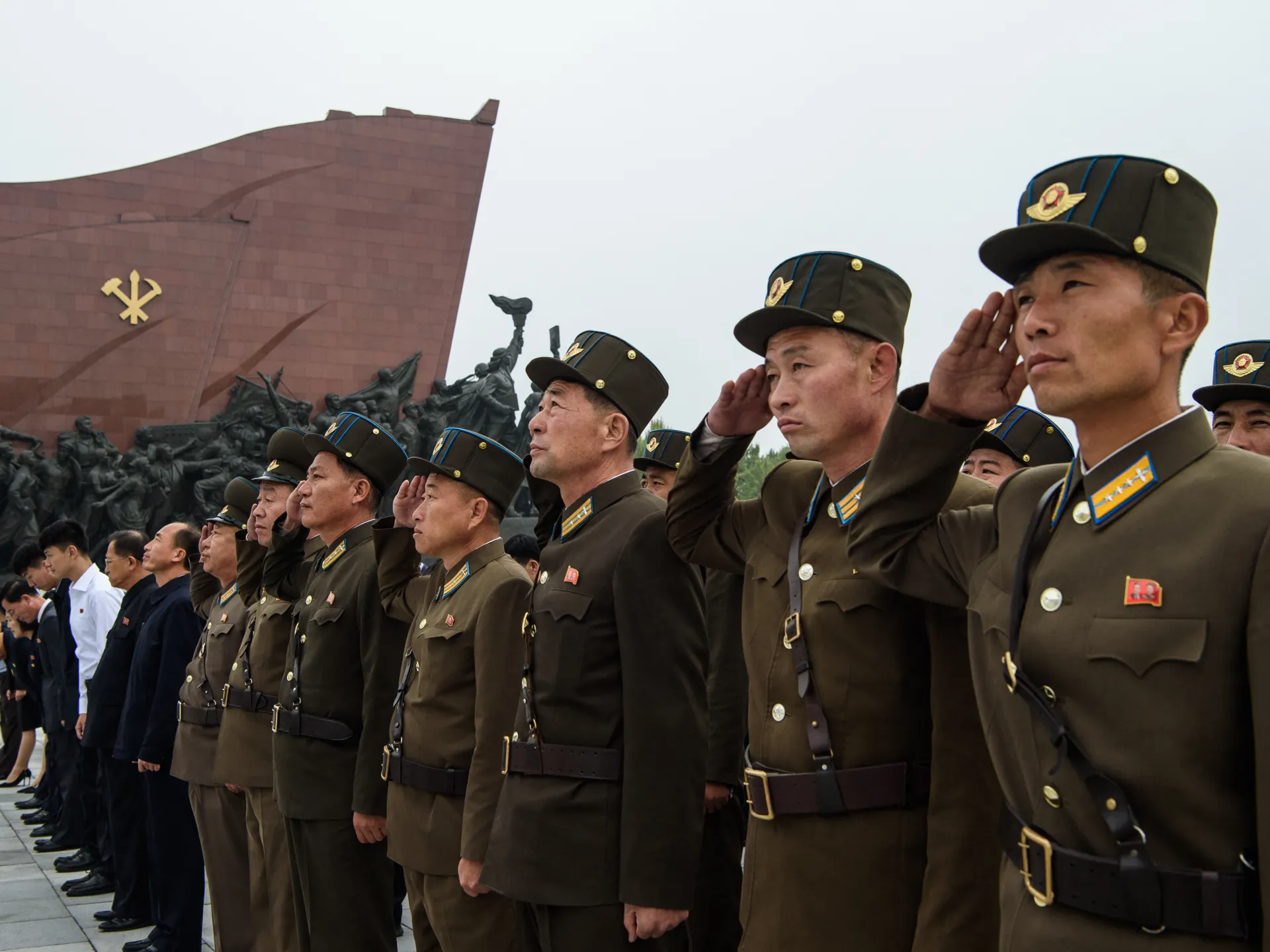
North Korea has launched multiple ballistic missiles off its east coast into the sea as South Korea’s leader begins a state visit to China in its first barrage of the new year.
According to South Korea’s military, the missiles launched at about 7:50am on Sunday (22:50 GMT on Saturday) flew about 900km (560 miles).
Recommended Stories
list of 3 itemsend of list
The military added that the country, as well as the United States, was “closely analysing the specifications” while “maintaining a full readiness posture”.
In a statement, the US forces for the Asia Pacific said the missile launches did not pose an “immediate threat to US personnel or territory, or to our allies”.
Japan also reported that at least two missiles had reached distances of 900km (560 miles) and 950km (590 miles).
“North Korea’s nuclear and missile development threatens the peace and stability of our country and the international society, and is absolutely intolerable,” Japan’s Defence Minister Shinjiro Koizumi told reporters.
The last time Pyongyang tested its ballistic missiles was on November 7.
According to North Korean state media, leader Kim Jong Un on Saturday called for the doubling of production capacity of tactical guided weapons while visiting a munitions factory.
In recent weeks, Kim has visited a series of weapons factories and a nuclear-powered submarine, overseeing missile tests in advance of the ninth party congress of the Workers’ Party, which will take place later this year and set out key policy goals.
Lim Eul-chul, a professor at the Institute for Far Eastern Studies in Seoul, told the Reuters news agency the launches from Pyongyang represented “a message to China to deter closer ties with South Korea and to counter China’s stance on denuclearisation”.
Lim added that it was North Korea sending a message of strength that they were different from Venezuela, after the US launched a series of attacks on Saturday and “captured” President Nicolas Maduro.
South Korean President Lee Jae Myung and his wife Kim Hye-kyung bow at Seoul airbase as they leave for Beijing, in Seongnam, South Korea, on January 3, 2026 [Kim Hong-Ji/Reuters]
China visit
On Sunday morning, Chinese state broadcaster CCTV reported that South Korean President Lee Jae Myung had arrived in Beijing on a four-day visit.
Lee, accompanied by more than 200 South Korean business leaders, is expected to discuss supply chain investment, the digital economy and cultural exchanges.
The South Korean leader will meet his Chinese counterpart, Xi Jinping, for their second meeting in just two months. According to analysts, the short frequency of the meetings signals Beijing’s interest in increasing economic collaboration and tourism.
Seoul has said peace on the Korean Peninsula would be on the agenda during the Beijing trip.
Lee’s trip comes at a time of heightened tensions between China and Japan after Japanese Prime Minister Sanae Takaichi said in November that her country’s military could get involved if China were to take action against Taiwan.
Before his trip, Lee gave an interview to CCTV, in which he assured that South Korea consistently respects the “One-China” policy when it comes to Taiwan. He said the healthy development of Beijing-Seoul relations depends on mutual respect. Lee also praised Xi as a “truly reliable neighbour”.
People wave South Yemen flags on Thursday during a rally in Aden, Yemen, calling for the region’s independence that was organized by the Southern Transitional Council separatist group. Photo by Najeeb Mohamed/EPA
Dec. 26 (UPI) — Saudi Arabia has reportedly fired on the eastern Hadramout province in Yemen.
The Southern Transitional Council, a separatist group in Yemen, claims that the Saudis fired warning airstrikes at its forces.
The STC seized two oil-rich provinces in December. The group is backed by the United Arab Emirates. It released a video showing the airstrikes that it said were close to its positions in Wadi Nahab in the Hadramaut province.
The strikes haven’t been independently verified.
Saudi Arabia on Thursday made a diplomatic appeal urging the STC to abandon Hadramaut and al-Mahra, which it recently captured . The strikes would be the first military action by Saudi Arabia since that plea.
“The kingdom remains hopeful that the public interest will prevail through ending the escalation by the Southern Transitional Council and the withdrawal of its forces from the two governorates in an urgent and orderly manner,” Saudi Arabia said in a statement on Thursday.
“The kingdom stresses the importance of cooperation among all Yemeni factions and components to exercise restraint and avoid any measures that could destabilize security and stability, which may result in undesirable consequences,” the statement said.
On Thursday, there were large demonstrations in the port city of Aden calling for STC President Aidarous al-Zubaidi to declare independence from Yemen. The U.N. and several other gulf states back Yemen and want it to stay whole. The United States hasn’t taken a side.
The Houthis have controlled the northern areas of Yemen since 2015.
Former actor and sports broadcaster Ronald Reagan, known for films such as “Knute Rockne, All American” and “Kings Row,” is pictured in the Oval Office after delivering his farewell address to the nation on January 11, 1989. Reagan later served as the 40th president of the United States. Photo by Joe Marquette/UPI | License Photo
A worried mother working miles away from her family frantically tries to get her three children out of harm’s way as an out of control fire ravages their community. Firefighters do everything they can, but strong winds are working against them to make the destruction go from bad to worse.
This scenario is reminiscent of the heroics that are portrayed weekly on the CBS firefighter television drama “Fire Country,” which follows the dedicated Cal Fire station in Northern California where an abundance of wooded areas make fire a common hazard. However, this particular story is very real and comes from actor Diane Farr, who plays Cal Fire Division Chief Sharon Leone and mother to firefighter Bode Leone (Max Thieriot, also a co-creator and executive producer) on the series. Farr remembers how in January she was on the show’s set in Vancouver while the wildfires were wreaking havoc in Los Angeles.
“My house was inside the evacuation order and I had to start flying my children out as fast as I could from L.A.,” she says of her La Cañada Flintridge home, which survived. “We were evacuated for eight days and the wind just went toward Altadena as opposed to coming toward our house. It was terrifying and was very eye opening for us.”
The horrific Los Angeles fires were eventually contained after catastrophic damage to the city, with some heroic firefighters leaving with jarring stories they were able to share with the “Fire Country” cast and crew. “Two of our consultants are L.A. firefighters, Matty and Marty Mullen, who had shown me a lot of videos of real firefighting of what was going on in L.A. that we were able to infuse into our [Season 3] finale,” says executive producer Tia Napolitano. “It felt important that we could show real authenticity inspired by the L.A. fires that we all lived through. I can’t believe it’s only been a year.”
Diane Farr as Sharon Leone in “Fire Country.” The actor’s home was in the evacuation zone during the L.A. wildfires in January.
(Sergei Bachlakov / CBS)
That dedication to authenticity has helped “Fire Country” become one of the sturdiest series on CBS’ prime-time schedule since premiering October 2022. Currently in its fourth season, “Fire Country” has won its time slot every week this season except when it aired against Game 6 of the World Series. It is now the veteran drama on Friday nights sandwiched between two new successful procedurals, “Sheriff Country” starring Morena Baccarin at 8 p.m. and “Boston Blue” starring Donnie Wahlberg at 10 p.m. Pacific, both spinoffs that have quickly caught the attention of audiences since their October debuts.
Farr believes the success of these shows is akin to the huge popularity of genres like true crime and their basic storytelling structure. “There is a good guy and a bad guy that’s very clear and very binary,” she says. “If you can create a situation that feels a little bit unsafe, if you can show me how people would make me safe in it, how they would solve the problem, it’s slightly relieving on a nervous system level.”
“Fire Country” delivers on all those components with the Station 42 crew performing regular acts of heroism as they keep their community safe, a reflection of real-life firefighters, says Thieriot. “People who have to do this job day in and day out are really a special breed. For me, a big thing has always been trying to capture that and trying to portray that the best way possible,” he says. “It’s television, so obviously there are more moments when we’re trying to find the drama, but at the end of the day, it’s really important that we focus on the real and we find the real in there.”
Eve (Jules Latimer) and Bode (Max Thieriot) in “Fire Country.” “People who have to do this job day in and day out are really a special breed. For me, a big thing has always been trying to capture that and trying to portray that the best way possible,” Thieriot says.(Sergei Bachlakov/CBS)
Part of the real comes in knowing that where there are heroes, there are also villains and, as its midseason finale is set to air on Friday, “Fire Country” currently has a frightening one in the form of Landon (Josh McDermitt). Initially seen as meek and even-tempered, the layers have been pulled back to show something different.
“Landon is a threat to our people and that’ll go forward for a few episodes,” teases Napolitano. “You feel like this guy is out there and he has nothing to lose.”
That’s because Landon has already lost the trust of his girlfriend Chloe (Alona Tal) and her teenage son Tyler (Conor Sherry), who recently revealed to Bode that Landon set the tragic Zabel Ridge Fire. That’s the L.A.-inspired blaze from the third-season finale that not only destroyed homes and land but also took the life of Cal Fire battalion chief Vince Leone (Billy Burke), Sharon’s husband and Bode’s father.
In Friday’s episode, a vengeful Landon isn’t happy about being investigated or the fact that Bode and Sharon have made sure that Chloe and Tyler are staying away from him. “Landon’s a small man with a very big ego and a big victim complex and that’s going to manifest in a scary way,” Napolitano says.
It also may not help matters that Chloe and Bode were once romantically involved and a spark may still exist, especially since Bode has been mentoring the troubled Tyler. Is the single Bode’s heart open to a second chance at love? “He’s getting there,” says Thieriot. “Leading up to this season, Bode had so many obstacles and I think this journey with Tyler [as mentor] is a big part of that.”
Bode (Max Thieriot) and Chloe (Alona Tal) were once romantically involved.(Sergei Bachlakov/CBS)
Hearts are also healing on the show in the aftermath of Vince’s shocking death, an event that was never in the show’s plan to quickly sweep under the rug. “We really want to be the show that everyone knows and loves, which is a comfort to a lot of our viewers,” says Napolitano. “It’s a show of joy and levity but also honors the fact that we are missing a core character who did die a hero’s death and honoring him by keeping his memory alive.”
That memory exists for Farr in several rings she regularly wears representing Sharon’s marriage and family with Vince, but she added another piece this season based on a suggestion from director Sarah Wayne Callies.
“Vince’s bracelet is heavy and regularly bumps the smaller bones in my hand,” Farr says. “Just like my former scene partner Billy, who would debate any word or line or blocking or intention with me to get to the truest take on anything we did together. Losing him is always going to be loss.” Farr said she doesn’t want to play grief forever but upcoming episodes will continue to show Sharon “trying to figure out who she is as a ‘one’ instead of a ‘two.’”
Though everyone hopes Los Angeles won’t see more fires like the ones from nearly a year ago, “Fire Country’s” creators and cast will continue to shine a light on firefighters and all the life-and-death work they do on a daily basis and, above all else, entertain.
“It’s not always easy to continue to surprise the audience and come up with this stuff that’s just really captivating and fresh and new but I believe that we can,” Thieriot says. “I’m really eager to accomplish that.”