Newsom counters Trump’s claims about California crime with stats
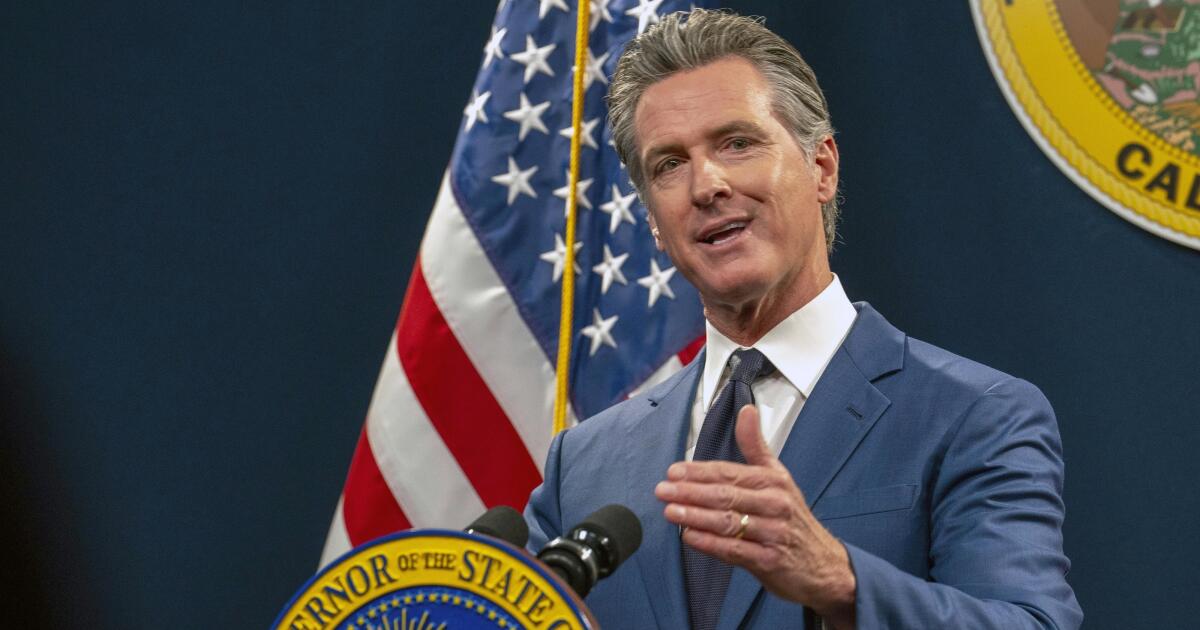
Gov. Gavin Newsom used his final State of the State address to underscore California’s jaw-dropping crime figures — stats that he said refute the president’s claims about widespread murder and mayhem.
To put in perspective some of the numbers cited by the governor on Thursday:
The last time homicides were this low in Oakland, Rev. Dr. Martin Luther King Jr. was visiting Joan Baez at Santa Rita Jail to commend her on her recent arrest in protest of the Vietnam draft.
Killings haven’t been so rare in San Francisco since superstar Marilyn Monroe wed baseball legend Joe DiMaggio at City Hall.
And violent deaths in the city of Los Angeles fell to rates not seen since the Beatles played Dodgers Stadium, their penultimate public show.
“We have seen double-digit decreases in crime overall in the state of California,” Newsom said. “We’ve got more work to do, but to those with that California derangement syndrome, I’ll repeat — it’s time to update your talking points.”
The governor’s remarks follow reporting by The Times that showed L.A.’s homicide rate is nearing a record low, mirroring trends in other cities nationwide.
With the counts based on data from the LAPD and other law enforcement agencies, President Trump’s insistence that crime in California is out of control has come to seem increasingly bombastic. Recently, the president has modified his message to warn of a possible crime resurgence.
“We will come back, perhaps in a much different and stronger form, when crime begins to soar again,” Trump said on Truth Social in a post announcing an end to his legal battle to maintain National Guard troops in L.A., Portland and Chicago. “Only a question of time!”
In his speech Thursday, Newsom credited the stark drop in violence to a flood of crime-fighting cash unleashed by the California Legislature.
“No one’s walked away from public safety,” Newsom said. “We didn’t turn a blind eye to this, we invested in it. We didn’t talk about it, we leaned in.”
But experts said the reality is more complicated. Those who study the root causes of crime say that it may take years, if not decades, to disentangle the causes of the pandemic-era surge in violence and the precipitous drop that has followed.
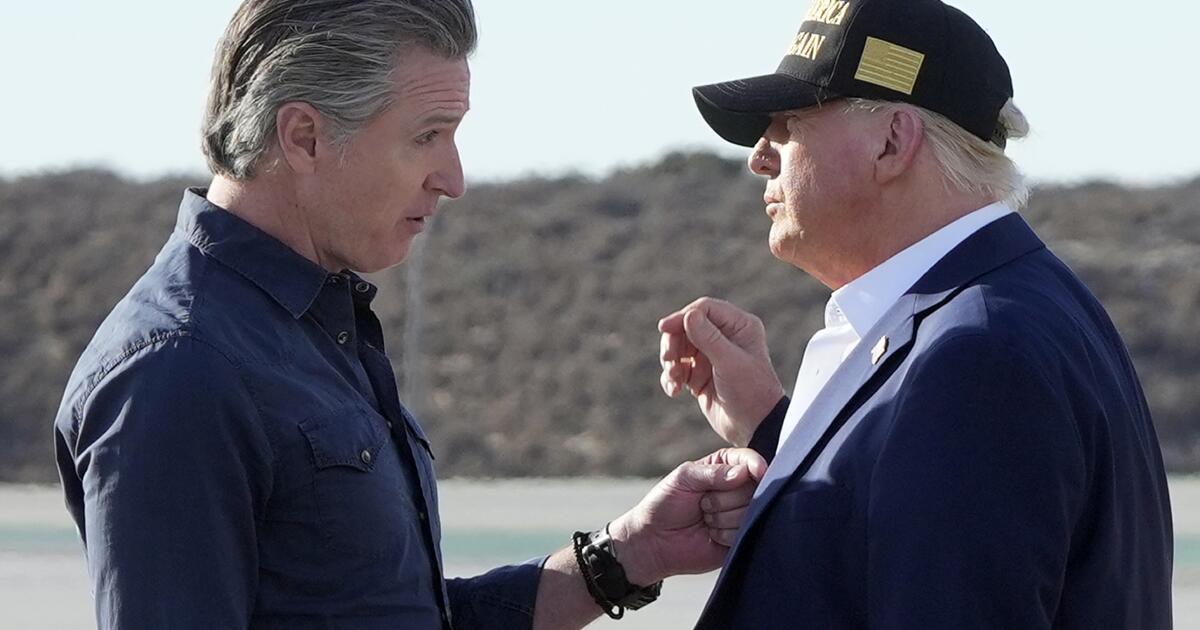
Trump hammered lawlessness in California’s streets during the 2024 presidential campaign and throughout his first year back in the White House. He rarely names Newsom without invoking crime and chaos, and regularly threatens to surge armed soldiers back into into the streets.
At the same time, the Trump administration has slashed hundreds of millions in federal funding from school safety grants, youth mentoring programs and gang intervention networks that experts say have been instrumental in improving public safety.
Proponents worry those cuts could threaten L.A.’s patchwork of alternative crisis response programs aimed at easing the city’s reliance on law enforcement. In recent years, scores of groups have sprung up to assist people dealing with homelessness, drug addiction and the symptoms of untreated mental health disorders — all of which can heighten the perception of crime, even when actual numbers go down.
Looming cuts in federal spending could hinder efforts to scale up these initiatives, some warned.
“I just don’t know how we can continue to trend in the right direction without continuing to invest in things that work,” said Thurman Barnes, assistant director of the New Jersey Gun Violence Research Center.
According to data published by the Major Cities Chiefs Assn., homicides were down in San Francisco, San José, Sacramento and Oakland. Other violent crimes, including rape, aggravated assault and robbery, also dropped, with a handful of exceptions.
Property crime was also down, the governor said Thursday.
Street-level disorder and perceptions of widespread lawlessness helped topple progressive administrations across California in 2024 and earned Trump an unexpected windfall in some of the state’s bluest cities.
Those concerns are “at the core” of California voters’ frustrations, Newsom acknowledged Thursday.
“We’re seeing results, making streets safer for everyone,” the governor said.
Jeff Asher, a leading expert in the field of criminology, said it’s hard to say whether the perception gap is closing “because we don’t necessarily track it super systematically.”
But he pointed to a Gallup poll from late last year that showed less than half of Americans believed that crime had gone up — the first time in two decades that that number had dipped below 50%.
“The pandemic broke us in a lot of ways, and we’re starting to not feel as broken,” he said.
Newsom also touted sharp declines in the number of people living on the streets.
Unsheltered homelessness dropped 9% in California and more than 10% in Los Angeles, the governor announced — data he sought to contrast with an 18% rise in homelessness nationwide.
The sight of encampments and people in the throes of psychosis in the streets drives perceptions of lawlessness and danger, studies show. Lowering it soothes those fears.
But California’s overall homeless population remains stubbornly high, with only modest reductions. Federal funding cuts could hamper efforts to further reduce those numbers, experts warned.
Rather than dig into the complexities of crime, Newsom sought to portray the president himself as the driver of lawlessness, calling the first year of his second term a “carnival of chaos.”
“We face an assault on our values unlike anything I’ve seen in my lifetime,” the governor said. “Secret police. Businesses being raided. Windows smashed, citizens detained, citizens shot. Masked men snatching people in broad daylight, people disappearing. Using American cities as training grounds for the United States military.”
“It’s time for the president of the United States to do his job, not turn his back on Americans that happen to live in the great state of California,” Newsom said.