There was a time in the beginning of Sublime’s recent revival when Jakob Nowell, the son of the band’s late singer Bradley Nowell, saw himself simply as a good son trying to help his adoptive uncles — drummer Bud Gaugh and bassist Eric Wilson — restart his dad’s iconic Long Beach trio. The goal wasn’t to take the place of his frontman father who died of an overdose in 1996. “I’ll never look at it as my band. Sublime is my dad’s band, and I’m helping out, that’s all,” he told The Times in 2024. Luckily, he was wrong.
The journey of finding his own voice through his father’s sly, shambolic poetry and reggae rock anthems, along with his determination on the road with Gaugh and Wilson through a barrage of festivals and tour dates helped him eventually step into his own as a songwriter and Gen Z rock star. It’s all been done with the mission to preserving his dad’s legacy and having fun while doing it. Now it feels as natural as the trio sitting together on the waterfront in LBC’s shoreline marina within earshot of the bellowing horn of the Queen Mary earlier this year as they were finishing the recording of “Until the Sun Explodes,” the first album under the Sublime moniker in 30 years.
Just like the band’s original recipe of shoving punk, dub reggae, hip-hop and ska into a blender, the new songs dutifully stick to the formula along with Jakob’s soulful caterwauls that sound scarily similar to his dad. But what emerges from the 21-song tracklist is the evolution of a trademark sound that gives a nod to the past while standing strong on its own, just like Jakob, despite coming to the interview on crutches while healing from a performance-related knee injury. The band members chatted with The Times about recapturing the effortless essence of their immortal beach-ready sound and looking forward to a second chance to chase an endless summer.
This interview was edited for length and clarity
It’s kind of a rare thing for all three of you guys to be in one place at the same time. What was it like working in the studio together to finish the new album?
Bud Gaugh: Magical. Things are just coming together. We showed up, Jake had an idea for another song, and he sent us a little demo and said “Hey, this is what I’ve been thinking about.” And then we get down to the studio [in San Pedro], and he’s like, “Oh yeah, so I had another idea,” and kind of changed it. We jumped in there [and by the end of our sessions, we had written] brand new songs to the list of songs that we already had.
The band’s revival has been a long time in the making. I remember when you guys had your first show together, a surprise gig a couple years ago as part of a benefit show for the Bad Brains frontman H.R. Do you feel you’ve come a long way since then?
Eric Wilson: I never thought the chemistry would be like it was with Bradley.
Jakob Nowell: Especially now that we’ve been playing together this long, the chemistry is very much there. We’re just comfortable and having fun. Jamming together is the best. We get in there to do a take for a song, and I’m always like “Let’s just do like three more!” It’s just that much fun, and that’s how it feels playing live too.
When did the idea for creating a new album come about?
Gaugh: It was pretty much just while we were playing shows, At first, the idea was that we were getting together to do this benefit for H.R. [at Teragram Ballroom in December 2023]. We went from “How’s this going to work?” and then [after the show] it was like, “Wow, this is something special. We should definitely go out and play some more shows, and get this music out there and get the opportunity to bring the music to the people in the purest form that we possibly could.” As we’re doing that, it’s like we’re seeing the reaction in the fans, and we were feeling it emotionally. We realized this is going to be bigger than we ever thought. That’s when we really decided where it was going to go.
Jakob Nowell, right, once thought Sublime was only his late father’s band; now, fronting the Long Beach trio, he’s leading a new chapter that still honors Bradley Nowell’s legacy.
(Allen J. Schaben / Los Angeles Times)
Were any of the songs on the new album mined from previously unreleased material or did you start fresh?
Nowell: There was that song we did with Stick Figure [“Feel Like That”], so I think that kind of inspired us. [We realized] “Oh s—, there really is some meat on the bone.” And then I had found some old recordings of stuff that were just like jams without even like vocals or whatever. Then it became just this thing during sound check or maybe in the middle of sets, we’d just start jamming these random progressions and stuff, and it kind of just evolved from there naturally.
The new songs that I’ve heard fit right in the vein of what people love about Sublime. What was it like putting some of those new songs in the setlist as you were building them?
Nowell: It was like magic. We were joking yesterday that sometimes we’ll play a new song for the first time just randomly and I’d see people try mouthing the lyrics and stuff and I’ll say “you’ve never even heard this before! I know you haven’t. We don’t even really know what the hell we’re saying.”
Gaugh: You frontin’! [Laughs]
Nowell: But [the new material] sounded like it was supposed to be there, so it was kind of a rad little test in a lot of ways. We almost don’t even have to think about it. That’s always going to be the guiding goal of any band trying to make fun music that’s relatable.
Wilson: What if you’re Slayer? That’s not true if you’re Slayer.
Jakob, it seems like you’ve gotten a lot more comfortable in the frontman role since joining the band. What’s it like just taking the lead, not just for the sake of your dad, but for the fans?
Nowell: Oh, dude, it’s the best. I don’t even have to think about it. We really feel like this is — we’re a band, you know?
Gaugh: It’s [Jakob’s] band too. Now it’s our band. It’s us.
Nowell: It feels like that whenever we’re hanging out, just doing stuff, or at the studio or at these shows. So, this upcoming year feels like a really rad adventure. We got all these different eras [of fans] — people who were in their 50s when [Sublime’s] first stuff dropped, who are still alive, and then their kids and their grandkids and great grandkids. Everybody finds a piece of the discography they can relate to. That’s what is most exciting. It’s not just one or two songs, people sing along to everything.
I was at Warped Tour in Long Beach last year when you guys played and —
Nowell: That was my favorite set!
To me that felt like it encapsulated what you were talking about with the multigenerational groups of fans that have enjoyed you guys and associate you with Long Beach.
Gaugh: It was like a homecoming for me. I remembered playing the Chili Cook off, you know, right over there in the same area [as Warped Tour], and it was just bringing me back 30 years. It’s so meaningful to be in our backyard playing our music again, right there. This is where it all started. It’s come full circle.
Nowell: It was like playing at a local bar in a cool way. I had this huge group of people up front, they were just talking and shouting and saying stuff, like f–ing with us and joking around. I was like “Damn this is great!”
How about you, Eric? How’d you feel playing Warped?
Wilson: [Mumbles] It was f–ing awesome.
Now that you’ve played all these festival shows, from Coachella to No Values, you’ve got your own festival going on. Can you talk a little bit about Sublime Fest and your Sublime Reef Madness Cruise and how you came up with it?
Nowell: We could put on a bunch of the bands we love, and some of our boys, like Vandals, and make it our own vibe.
Gaugh: You walk around Coachella and there’s so many different elements there. Wouldn’t it be neat if we could make like all this like a Long Beach element, a Sublime element. Looking at this thing, it’s like “Oh wow. So we can actually get some of our friends and set up like a tattoo booth, and have our idea of art and everything out there, and mix it all together — food, art, music — bringing all these different elements, and friends of ours that play music. We get to decide who’s going to share the stage with us, so it’s really neat. It’s like planning a high school party or something like that.
Nowell: The biggest backyard party ever seen.
You guys always had your own sound going on, what’s it like to see that the fans still want it?
Wilson: It took a lotta years to catch on, but it did.
Nowell: Yeah, the kids really want that, like ‘90s, Y2K kind of vibe. That was the last era of like cool authenticity and stuff. You can see it when young people make stuff to look retro … when things get so high fidelity, we’re almost losing a little element, so I think these festivals kind of seek to bring some of that back in a way that everybody can get into.
With “Until the Sun Explodes,” Sublime’s first album in three decades, Jakob Nowell, Bud Gaugh and Eric Wilson rediscover their studio chemistry, jamming new songs that feel instantly familiar onstage.
(Allen J. Schaben / Los Angeles Times)
You guys also have the timeless iconography of the Sublime sun logo. The title of the album is “Until the Sun Explodes.” Does that title have any particular meaning to you?
Nowell: It’s almost just another way of saying “forever,” like “Oh baby I’m gonna love you till the sun blows up.” That’s gonna happen in billions of years, if at all. The fact that [Sublime’s] lasted this long and has this many fans is evidence to me that we wanna be here forever. I think that’s what everybody wants for themselves.
Jake, you’ve taken steps to advance your own aspirations and music with your label, Sunburnt Records, how does that fit into where Sublime is right now?
I was inspired by the whole Skunk Records thing [Sublime’s first label], Evan Zinger with [his lifestyle brand] SRH, and just all the local brands I grew up with when I was a kid. So just trying to do a cool, chill local thing that has that vibe of putting on small shows and kind of getting to use this new notoriety to be like, man, I have so many friends in these small bands like Strange Case and Eight Ball, and other bands up and down Southern California. Let’s put on shows and sneak them on a Sunburnt Stage at [Sublime Fest] and if people really like that Sublime sound here’s a bunch of kids who are carrying the torch like Slightly Stoopid did when they started out. Mike Watt always said “start your own band!” So the more we can inspire people to do that and be some small part of that, it’s a dream come true.
Do you feel like this version of Sublime is something Brad would be proud of?
Gaugh: We all kind of brought our own element to the music orignally. So we just kind of followed that recipe. Jake’s his own person, he’s got his own influences, and we just kind of stick with that idea. Jake brings in his feelings, and Eric brings in his and we sat there and recorded this song, and then as we were recording it, we’re coming up with ideas. It’s like, “Oh wait, we should do this here, slow that down there, stop here,” it’s all a conglomeration of ideas, everyone does their part, brings in their own spices and we mix it in a pot like gumbo.
Krutzsch says the event was designed to be accessible. “It was critical to make sure that there were affordable opportunities for the community and fans of the World Cup, or any of these countries that are participating, to have a place to come be part of these official celebrations,” he says.
Tickets for FIFA Fan Festival are $10 including fees, with free admission for children ages 12 and under when accompanied by a paid adult. (There is a limit of three free child tickets per one adult ticket purchase.)
TikTok content creator Carlos Maciel plays a game at the DoorDash booth during a media preview of the FIFA Fan Festival.
(Allen J. Schaben / Los Angeles Times)
Meanwhile, reserved club seats and loge boxes are $30 including fees. These premium tickets offer access to shaded lounge areas, enhanced seating, food and beverage offerings and elevated viewing locations overlooking the festival grounds and match screens.
Tickets can be purchased online or at the Coliseum box office on event days when the festival is not sold out. The box office is located at Gate 29. General admission entry will be at Gates 1, 4 and 28.
Other features of the festival include chill out zones and a number of VIP areas.
Little other details have been revealed about the festival yet.
Visitors can even camp right near the runwayCredit: Wikipedia
Visitors can book camping passes for £103, which allow for a pitch with up to 10 people (so £10.30 per person) or a camper van.
And with each camping pass, one weekend festival pass is included (so other guests camping at the pitch will need to purchase their own festival ticket).
A regular weekend pass costs from £37 per person or you can get four for £112.50.
If you fancy heading to the festival for just one day, you can do so for £22 and kids go free.
And the festival will have a cheap shuttle bus from Thanet Parkway Station if travelling to the festival via train.
Manston Airport closed back in 2014 and was used as a former RAF base and a regional hub, flying Brits abroad from the 1960s.
However, there are current talks to see if the airport could reopen, with the return of flights scheduled for 2029 – however this will be for cargo aircraft only.
Initially, the airport planned to reopen in 2025, but this has been pushed back.
A UK woman has vanished in Paris after travelling abroad for a festival, with no contact with her family for over a week. Lucy Stemp has been reported missing by her loved ones. The woman, from Tonbridge, Kent, has been described as “very vulnerable” by her family.
She had travelled over to France for a festival in the city of Brest but her last known location is believed to have been Paris. Lucy is believed to have gone missing on May 30. Her loved ones are pleading with locals and expats to report any information they have on to the police or themselves.
Her last known location was the Bercy neighbourhood in the French capital. Lucy’s stepdad Sean said: “Lucy is my stepdaughter and is very vulnerable, she has been missing for over a week now.”
It is believed that Lucy will have no access to sorting how to get herself back home. The British embassy and Interpol are reportedly working together on a cross-border operation to help track her down.
Paul Arnott, who helps find missing Brits, said: “Lucy Stemp, from Tonbridge, Kent, has been missing in France for approximately one week and her family are becoming increasingly concerned for her welfare. Lucy had travelled to France for a music festival in the city of Brest and is believed to have subsequently been in Paris.
“No one has heard from her for the past week. Lucy is considered vulnerable and efforts to locate her are ongoing. The British Embassy, police authorities and Interpol are involved in the search.
“If you know Lucy, have spoken to her, seen her, or have any information that could help establish her whereabouts, please come forward as soon as possible.”
A US influencer and actor have caused outrage after mocking Palestinians subject to rape and beastiality in Israeli prisons. Elon Gold and Lizzy Savetsky made the comments at the Tribeca Film Festival as they promoted a new film made in Israel.
Eight people were shot on Saturday afternoon at a festival in Toledo, Ohio, but all are expected to make full recoveries. File Photo by Justin Lane/EPA-EFE
June 6 (UPI) — Several people were shot Saturday afternoon at an outdoor festival in Ohio, with “many victims” sent to the hospital.
At least eight people were shot around 5:30 p.m. at the Old West End Festival in Toledo, Ohio, all of whom were transported to the hospital and all of whom are expected to survive, the city’s mayor, Wade Kapszukiewicz, told WTOL-11.
As of 8:00 p.m., police said that they were still looking for the suspect or suspects that were involved in the shooting.
“The investigation currently includes scenes in the area of Delaware Avenue and Robinwood Avenue,” the Toledo Police Department said in a statement posted to Facebook.
“Residents and visitors are asked to avoid scenes in the area and expect a significant police presence as officers continue their search and investigators work to determine the circumstances surrounding the incident,” the police department said.
The Old West Festival, an event that has been held for more than 50 years, is a celebration of the history of the area, and was scheduled for Saturday and Sunday.
“Summer festivals should be safe spaces for families to spend time together without fear of violence,” Ohio Gov. Mike Dewine said in a statement on social media.
“We are confident that law enforcement will locate the suspects involved in this senseless crime,” he said.
President Donald Trump discusses renovations to the Lincoln Reflecting Pool and makes an announcement on coal in the Oval Office at the White House on Thursday. Photo by Samuel Corum/UPI | License Photo
FESTIVAL season is finally upon us and party-goers are dusting off their wellies in preparation.
But this year music lovers could have to shell out up to £700 or more for weekend-long events.
Sign up for the Travel newsletter
Thank you!
Party at top spots for less than a festivalCredit: ShutterstockThe Aegean Sky Hotel is yards from the stripCredit: Supplied
Those planning on heading to Reading Festival this year are looking at £325 to £361 for the ticket alone.
Meanwhile, First Choice has revealed that festival-goers will spend an average of £80 a day on food and drink and an additional £150 on camping gear and equipment.
The tour operator looked at festival prices in line with holiday booking data and found that for less than a third of the price, you could party just as hard at a week-long holiday at a sun-drenched beach hotel.
So would you consider swapping festivals for a getaway in the sun?
IF you’re on a budget, you won’t regret booking a break to Sunny Beach in Bulgaria where pints cost around €2.50.
You’ll be able to knock them back in bars, nightclubs and at the beach – just make sure you can keep the party going until the early hours if you’re heading to Cacao Beach.
It’s known for having some of the most spectacular sunrises in Europe and DJs will keep you dancing until dawn.
Better still, if you stay at the TUI Blue Nevis, you won’t have to shell out a penny extra for meals or drinks within the hotel, thanks to its bargain all-inclusive packages.
GO: Seven nights’ all-inclusive at the 3T TUI Blue Nevis is from £485.46pp including flights from Gatwick on June 12.
Muslims around the world have begun celebrating Eid al-Adha, the “Festival of Sacrifice”, which falls on the 10th day of Dhul Hijjah, the 12th and final month of the Muslim lunar calendar.
One of the biggest holidays in the Muslim calendar, it coincides with the last day of the annual Hajj pilgrimage in Saudi Arabia.
In Gaza, where Israel’s months-long offensive has devastated neighbourhoods and displaced most of the population, many families are marking Eid in tents and crowded shelters, with little meat or festive clothing.
More than 1.7 million people are taking part in the Hajj this year, slightly up from 2025, even as a war pitting the United States and Israel against Iran casts a long shadow across the Middle East.
On Tuesday, pilgrims prayed on Mount Arafat, where Prophet Muhammad is believed to have delivered his final sermon. They then spent the night out in the open at Muzdalifah, halfway between Arafat and Mina, where they collected pebbles for the symbolic stoning of the devil.
After the stoning ceremony in Mina, pilgrims return to Mecca for a final circumambulation of the Kaaba, the cube-shaped building at the heart of the Grand Mosque towards which Muslims around the world face when they pray.
Eid al-Adha commemorates the Quranic story of Prophet Ibrahim’s willingness to sacrifice his son Ismail as an act of obedience to God. Islamic tradition holds that God spared the boy, replacing him with a ram.
The day is marked with the sacrifice of an animal – usually a sheep, goat or cow – and the distribution of its meat among family, neighbours and those in need, underlining the festival’s themes of faith, charity and community.
ACTRESS Demi Moore wraps up the Cannes Film Festival in her 16th outfit of the gala.
The US star was on the jury so became a red carpet fixture over two weeks.
Sign up for the Showbiz newsletter
Thank you!
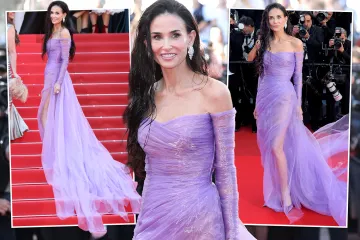
Demi enveloped herself in a green Balenciaga gown with huge blue sleeves for the closing ceremonyCredit: GettyThe US star also wore this hot-pink decaying gown with an oversized bowCredit: GettyHer other outfits included a mermaid-inspired sheer lilac dress she wore in 2003 for the Matrix Reloaded premiereCredit: GettyActress Demi also wore this royal blue gown with a statement Swarovski necklaceCredit: Getty
For Saturday’s closing ceremony, Demi, 63, enveloped herself in a green Balenciaga gown with huge blue sleeves.
Across the fortnight, she dazzled in an array of outfits.
She kicked things off with two Jacquemus designs, including a crystal-embellished gown and a polka-dot dress.
But her designer of choice was Gucci, with four custom-designed gowns.
Demi wore this pale sequin gown to the opening ceremonyCredit: GettyShe went back to Gucci with this shiny purple gown and diamond necklaceCredit: GettyDemi also wore this elegant sequin gown with a floral patternCredit: GettyThe US actress went for a more casual look in this black top and ivory skirtCredit: AFP
They included a mermaid-inspired sheer lilac outfit she wore in 2003 for the Matrix Reloaded premiere.
Her judging stint came 29 years after her Cannes debut.
Back in 1997 she joined then-husband Bruce Willis for festival opener The Fifth Element.
Mother-of-three Demi’s fellow jurors included Hamnet director Chloe Zhao.
She was also seen in this black shorts and buttoned jacket comboCredit: GettyDemi matches the red carpet in another captivating Gucci ggownCredit: GettyOne of Demi’s 16 outfits included this all-black look comprising a Gucci top and trousersCredit: GettyDemi also wore this Jacquemus polka-dot dress with white heels and matching sunglassesCredit: Getty
Demi said: “We had the opportunity to truly appreciate contemporary cinema every day.
“There was a lot of kindness — both between us and in the way we felt about the films.”
Actress Demi was joined on the red carpet by stars including Gillian Anderson and Ruth Negga.
Demi was last at Cannes in 2024, promoting her film The Substance, which won her a Golden Globe for Best Actress.
Just months ago, Demi capped off a stellar career comeback by being named Glamour’s Woman of the Year.
She was interviewed by her Substance co-star Margaret Qualley for the mag and said: “With everything I’ve been through, which has been a lot, I wouldn’t trade where I am today.”
Demi wore all-black again on the red carpet at the Chopard Miracle Gala EveningCredit: GettyShe also went for a tuxedo-inspired look for one screeningCredit: GettyDemi looked stunning in this extravagant lookCredit: GettyAge-defying Demi looked more than all white in this outfitCredit: Getty
After 10 days of crazed moviegoing at the Cannes Film Festival, Times film critic Amy Nicholson and Times film editor Joshua Rothkopf are all but spent. They leave with 10 recommendations (listed below in alphabetical order), including several titles you’ll be hearing about during awards season, but also, admittedly, more reservations than usual.
Amy Nicholson: There are worse ways to spend your life than watching four movies a day in the south of France. For a week and half, we ran in and out of the dark theaters, blinking at the shock of the sun and bickering about what we just saw with the highest concentration of film lovers anywhere — most of us jacked up on espresso or rosé. Yet, we’re flying home miffed that the movies themselves were mediocre. Cannes is meant to launch ambitious, prickly works by grandmasters and next-generation talents. This year, the programming looked like a party with an impressive invite list — Nicolas Winding Refn, Asghar Farhadi, Hirokazu Kore-eda — but upon arrival, all the guests felt like old acquaintances tapped out of anything interesting to say.
I’m being harsh. Cannes had good movies, too. But I needed this year’s Cannes to be great. Audiences trickling back into theaters deserve to see something fantastic. Instead, too many filmmakers took the crowd’s attention span for granted; even the strongest films in competition could delete a half-hour of dead air. Fittingly, the majority of my favorites came from Cannes’ kookier programming sections, Directors’ Fortnight and Un Certain Regard — and I suspect many of yours did, too, oui?
Joshua Rothkopf: I did find a handful of films from the main competition that impressed me, but point taken: Nobody is served if we can’t admit that this year’s edition was weaker than others. We could blame screenwriting or pacing (though paradoxically I was impressed by both the longest and the shortest movies in competition). Maybe it’s an overall lack of boldness. When a restored version of Ken Russell’s salacious 55-year-old “The Devils” eclipses virtually everything else shown at the festival, a certain timidity is hard to deny. There were too many “nice” films: perfectly respectable but not what I want Cannes to be.
Fortunately, we saw enough to sharpen up a list of favorites. Here’s what stirred us.
‘All of a Sudden’
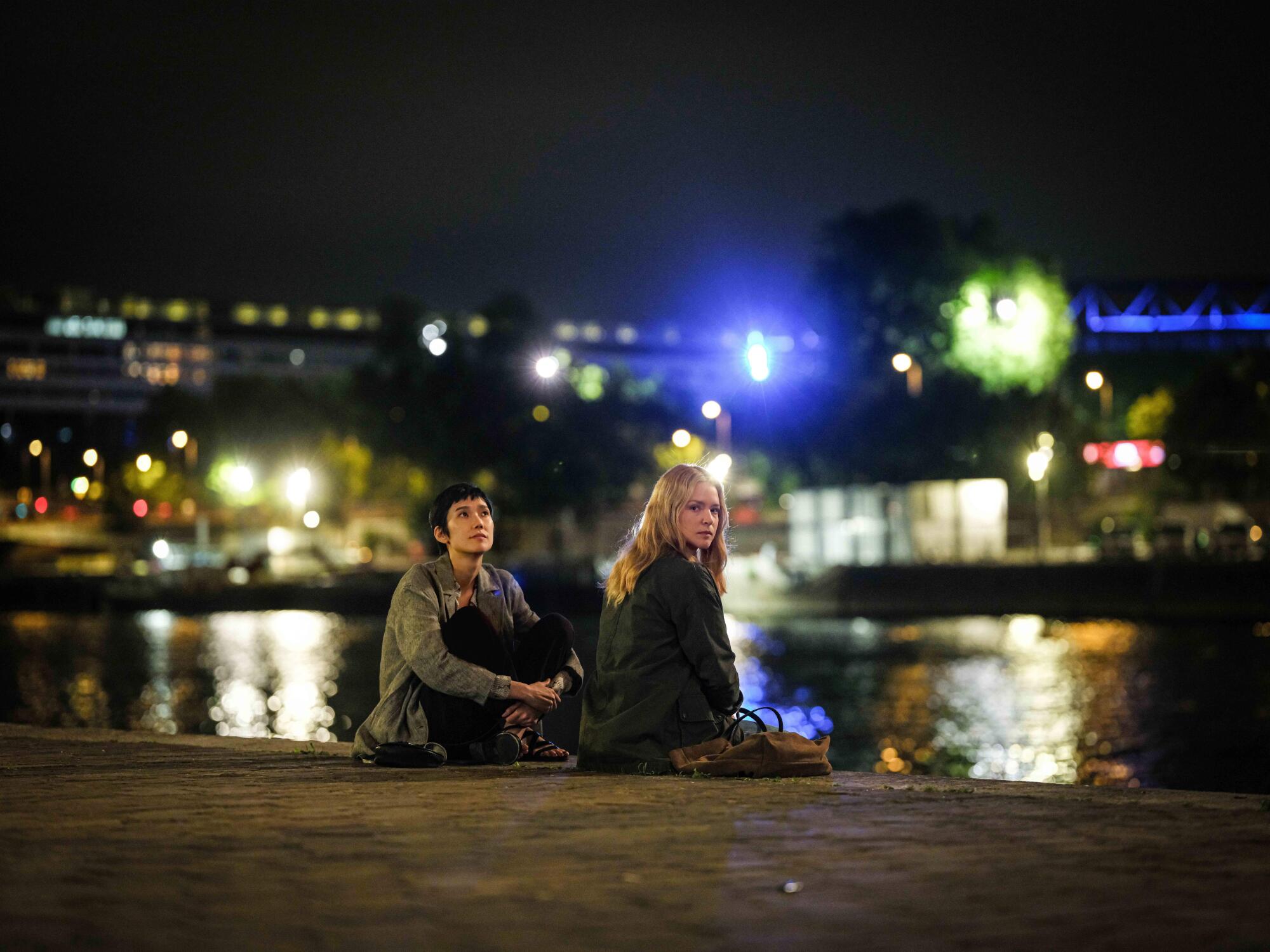
I’m not convinced that the utopian vision of end-of-life care presented in Ryusuke Hamaguchi’s drama has a fighting chance in America, but we deserve the opportunity to grapple with its compassionate turns and have that discussion. The director of “Drive My Car” continues his process-centric exploration of workplace relationships in this quietly revelatory movie, one with a centerpiece conversation that merits comparison to the long walks of Richard Linklater’s “Before” movies. Virginie Efira and Tao Okamoto let a day’s stroll linger into profundity, the twilight dimming and human connection brewing in all its possibilities. Is it too late for them? It doesn’t need to be. — Joshua Rothkopf
‘The Beloved’
Esteban (Javier Bardem), a renowned bad boy Spanish filmmaker, returns to his homeland from New York to shoot a period picture in the desert. Off-screen, he’s gifted one of the four leading roles to his estranged daughter (Victoria Luengo), an aspiring actor who hasn’t seen her father in 13 years. Esteban failed as Emilia’s dad. Can he succeed as her director, especially when her big break packs this much pressure? Not likely, especially as Emilia has inherited his disastrous boozing habits. “The Beloved’s” actual director, Rodrigo Sorogoyen, unleashes his leads to become a tag team of destruction, each blaming the other for what’s going wrong on set. They’re both mired in clashing narratives of their relationship. Sorogoyen shows us the truth, as well as the visible frustrations of the film-within-a-film’s cast and crew that risk shutting down this too-passionate passion project. — Amy Nicholson
‘Bitter Christmas’
(Iglesias Mas / Sony Pictures Classics)
Pedro Almodóvar’s self-flagellating film about his artistic process has a Charlie Kaufman-lite structure that I’d rather let audiences discover on their own. In brief: Almodovar’s avatar, a filmmaker named Raúl (Leonardo Sbaraglia), gets dragged over the artistic coals by the dramatic female characters he’s been writing for decades, one of whom dares him to simply coast on his legacy. Too many veteran filmmakers in his year’s Cannes competition seem to have accepted that bargain, so when Raúl got to the end of a new script and decided it wasn’t up to his standards, I nearly shouted “Bravo!” Navel-gazing cinema about the creative process isn’t usually my bag, but Almodóvar doesn’t take his own misery that seriously, even inserting a manic pixie dream hunk, a male stripper-slash-firefighter played by Patrick Criado, for a little bump and grind. — Amy Nicholson
‘Clarissa’
It’s been 101 years since Virginia Woolf first published “Mrs Dalloway,” a novel about persnickety party hostess Clarissa Dalloway colliding with her former lovers, one male and one female. The plot seems simple, but every glare and sigh tells a whole story about modernization, capitulation, cynicism and violence. Twin brothers Arie and Chuko Esiri have transplanted the tale to present-day Nigeria and stacked the cast with Sophie Okonedo, Ayo Edebiri, Nikki Amuka-Bird, David Oyelowo and the staggeringly talented India Amarteifio as the diva in her captivating youth before she married a tedious oilman and started bullying the help. “Clarissa” makes several smart adjustments, swapping in a traumatized Boko Haram soldier for a shell-shocked veteran of the Great War, and cocking an eyebrow at the shiny new yoga studios and coffee shops littering Lagos’ once-lush waterfront. Better still, it’s sexy as heck — the flashbacks are one swimsuit party after another. — Amy Nicholson
‘Club Kid’
The one-sentence pitch of Jordan Firstman’s debut dramedy — a gay nightclub promoter sobers up when he discovers he has a 10-year-old boy — sounded as fun as snorting a line of aspartame. I stand corrected. “Club Kid” is a blast: a spicy, surprising and irreverent comedy that rarely peddles the audience anything artificially sweet. Firstman stars as Peter, a debauched millennial aging out of a New York scene that never cared about him as a person in the first place. His business partner Sophie (Cara Delevingne) is a horror; his selfish squatter-roommate Nicky (Eldar Isgandarov) is even worse and so hilarious I’d watch a spin-off sequel just about him. Peter’s shock son Arlo (Reggie Absolom) has a casual charm that pickpockets your heart, but it’s the script’s sour quips that will have you urging people to get past the treacly set-up and go see “Club Kid” themselves. — Amy Nicholson
‘The Diary of a Chambermaid’
Art punk Radu Jude’s latest satire is about a Romanian immigrant with a burlesque double life. By day, Gianina (Ana Dumitrașcu, fantastic) is the live-in housemaid of a daft Parisian family; by night, she’s an actress in a turn-of-the-20th century slapstick farce about a housemaid whose master suckles her patent leather boots. In neither world can she openly say what she thinks (although in her native tongue, she curses her employers and their young son plenty). Fast, crisp and snide, “The Diary of a Chambermaid” gives equal weight to the monotony and the absurdity of Gianina’s grind. And Jude isn’t above including a mocking slow-motion shot of a spoiled French boy totally whiffing a soccer kick. — Amy Nicholson
‘Fatherland’
The tension at the heart of Paweł Pawlikowski’s period piece, set in a ravaged, fallen Germany after the end of World War II, is one that goes unresolved. All that’s left are defensive denials, evasions of Nazi collaboration and the faint hope that something higher has survived. I could watch this kind of guilt-ridden post-apocalyptic movie for hours; instead, this lasts a scant 82 minutes. The conclusion, a wordless moment between father and daughter set to the strains of Bach played on a broken pipe organ, was the most devastating passage of the entire festival. “Fatherland” shows off Pawlikowski’s exquisite way with black-and-white evocations of European tragedy, but he’s never summed them up as poetically. — Joshua Rothkopf
‘Fjord’
People at the festival called this one complex; I found myself disagreeing. It’s actually a fairly straightforward story about a religious but mostly level-headed family flung into conflict with an overly sensitive branch of child protection services — and maybe with the whole of agnostic Norwegian progressivism. As reactionary as that sounds, I was totally rapt. Partly that’s due to a beautifully plotted courtroom scenario and the immersive performances of Sebastian Stan and Renate Reinsve, reuniting after “A Different Man,” as parents increasingly out of their depths. But mainly, I credit Romanian director Cristian Mungiu, who knows a good story when he sees one, crystallizing its potency with every camera choice. — Joshua Rothkopf
‘Minotaur’
The ice-chilled return of Russian filmmaker Andrey Zvyagintsev (after a multiyear battle with long COVID) is worth the wait: a condensation of everything he does well into something so purely distilled, it should come with a proof warning. The movie kicks off as a casual portrait of the vacant nouveau riche lifestyles of the mini-oligarchs: fancy dinners, divorces, bathroom gossip. Then it becomes an erotic thriller (it’s based on Claude Chabrol’s 1969 “The Unfaithful Wife,” as was Diane Lane’s “Unfaithful”). But the best comes last, as the situation gets fixed in broad daylight with breathtaking brutality. The war in Ukraine? Someone else’s problem. “Minotaur” takes on the whole of Putin’s dissociative society and puts its winners above the blackened clouds, looking down at the rest of us. — Joshua Rothkopf
‘Teenage Sex and Death at Camp Miasma’
I am growing to love Jane Schoenbrun’s exfoliation of ’80s horror obsessions, especially for the movie’s nonjudgmental embrace: Let these movies be free in all their “problematic” badness and let them work on you. The fact that “Teenage Sex” sometimes plays like a bottle episode of “Hacks” doesn’t hurt. Hannah Einbinder brings vulnerability to a project that needs her brand of self-excoriating fearlessness. Points, too, for not turning this into yet another celebration of some forgotten male director reclaimed as a genius. Rather, the opposite: It’s about an abused scream queen (Gillian Anderson, gamely campy), a liminal, wintry campground and the exhilaration of running in the woods in your pajamas. — Joshua Rothkopf
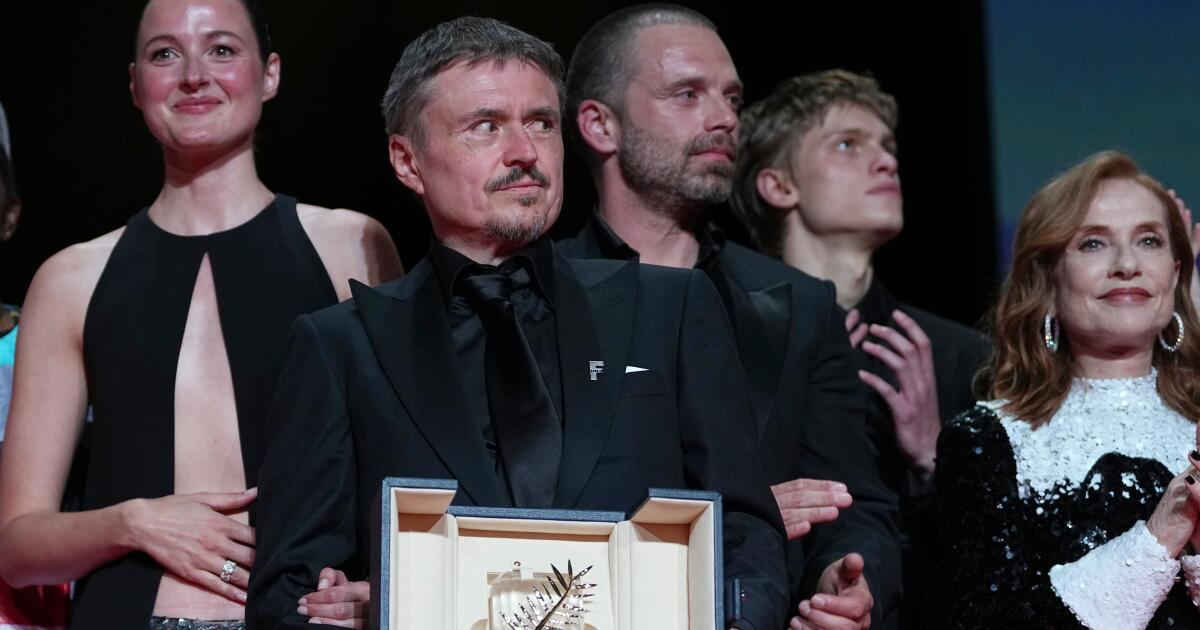
In a squeaker race for Cannes’ top prize, Romanian director Cristian Mungiu prevailed on Saturday, taking the Palme d’Or for his tense community drama “Fjord.”
The movie, a widely admired conversation-starter at the festival, stars Sebastian Stan and Renate Reinsve as religious parents who come into conflict with the child protection services of their tiny Norwegian town where they have relocated with their family.
Mungiu, a previous winner of the Palme for his controversial 2007 abortion drama “4 Months, 3 Weeks and 2 Days,” now joins an exclusive group of 10 filmmakers who have won the Palme twice — an achievement shared by Francis Ford Coppola (1974’s “The Conversation” and 1979’s “Apocalypse Now”) and Ruben Östlund (2017’s “The Square” and 2022’s “Triangle of Sadness”), among others. No one has ever won a third Palme d’Or.
Neon will release “Fjord” in the fall, with an extensive awards campaign to follow.
This year’s nine-member main competition jury, led by Korean director Park Chan-wook and studded with notables including “The Substance” star Demi Moore, Stellan Skarsgård and “Hamnet” director Chloé Zhao, seemed intent on spreading the wealth among as many winners as possible. There were three ties at Saturday’s awards ceremony.
The award for actress was shared by Virginie Efira and Tao Okamoto, co-stars of Ryusuke Hamaguchi’s “All of a Sudden,” a movie pegged by many to potentially go all the way. Similarly, the prize for actor was bestowed on both Emmanuel Macchia and Valentin Campagne, co-stars of Lukas Dhont’s World War I romantic drama “Coward.”
The prize for directing went to three people — and two movies — with a joint win for Javier Calvo and Javier Ambrossi (better known as Los Javis) for their century-spanning queer historical drama “The Black Ball,” as well as to director Paweł Pawlikowski for his exquisite post-World War II psychodrama “Fatherland.” (Pawlikowski half-joked at the podium, “This was a disastrous piece of mise-en-scène” after the awkward award presentation had him waiting in the wings.)
Claiming this year’s Grand Prize (essentially second place) was “Minotaur,” the rapturously received comeback film of Andrey Zvyagintsev, a Russian director who had been sidelined with a near-fatal bout of long COVID that put him in a coma. His new movie, about a wealthy Moscow family, is both an erotic thriller and an indictment of amoral oligarchy detached from the war with Ukraine.
The festival’s third-place Jury Prize went to the borderland German drama “The Dreamed Adventure,” directed by Valeska Grisebach.
OUR Spotlight On column takes an in-depth look at the best things to see and do in popular holiday destinations, as well as shining a light on the lesser-known spots.
This week we’re heading to Vilnius in Lithuania, and Travel Reporter Alice Penwill recently visited.
Sign up for the Travel newsletter
Thank you!
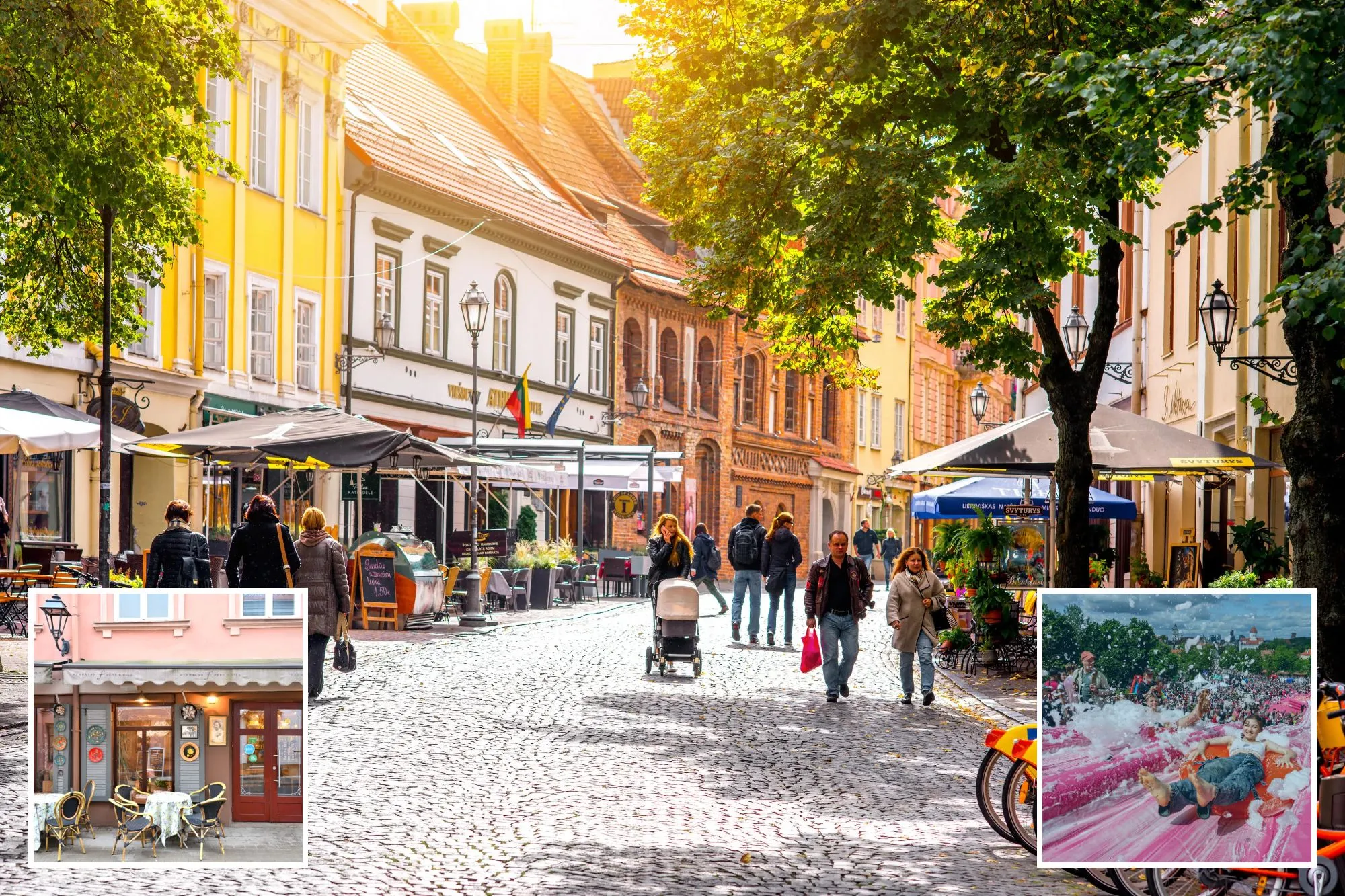
Vilnius is having a moment as a city break destinationCredit: Getty
Travel Reporter Alice Penwill recently visited and was stunned by how cheap it was.
She said: “Eating and drinking out is such a bargain, so it makes for an insanely affordable European weekend break.
“I found bars serving beer for around £2.60, and coffee for just a few quid.
“Even cocktails like Aperol Spritzes were under a fiver – and make sure to soak it up with some ‘kepta douna’ (a local garlic fried bread that’s a popular bar snack).”
Yes, Vilnius has one of Europe’s oldest and best-preserved medieval Old Towns but it’s quickly gaining a reputation as a capital of cool.
With a thriving arts scene and a vibrant coffee shop culture, it’s a great value option for a weekend break with beers from £3.50 and a traditional lunch for under £9.
It’s also just 15 minutes from the airport to the city centre.
While there’s history and amazing architecture aplenty in the Old Town, cross Vilnele River to enter the self-declared ‘Republic’ of Uzupis.
This bohemian neighbourhood has its own constitution, president, currency and anthem celebrating free spirit, art and community with lots of cafes, galleries and bars.
Don’t miss Literatų Gatvė (Literature Street), a winding alleyway decorated with more than 200 small pieces of art dedicated to famous writers.
It is home to one of Europe’s oldest Old TownsCredit: Alamy
HIDDEN GEM
Lukiškės Prison 2.0 has seen a high security prison that doubled as a filming location for the Netflix smash Stranger Things transformed into a museum and arts venue.
There are more than 250 creators working in the repurposed former cells. Take a tour to find out about its grim history then stay for a gig or a drink in the courtyard in the evening.
BEST VIEW
Take in the Old Town’s unique red-tiled roofs, church spires and narrow streets from 14th Century Gediminas Tower.
Set at the top of Gediminas Hill, it houses an interactive exhibition. Also great for panoramic views is the Hill of Three Crosses.
RATED RESTAURANT
You can’t go to Vilnius and not try its legendary Pink Soup – a cold beetroot soup.
The traditional dish is so popular there’s even an Pink Soup Festival with themed food, music and festivities to kick off summer.
This year it runs from May 29 to 31.
And you can try the soup at any time of year at Lokys in the Old Town where a bowl costs £7.50 and comes with baby potatoes.
Lukiskes Prison is unique but a must visitCredit: GettyVisit in May and you’ll find the Pink Soup FestivalCredit: AFP
BEST BAR
For sheer quirkiness, check out Peronas Bar, literally next to the tracks at the main train station and great for live music – don’t miss the giant statue of Tony Soprano by the al-fresco tables!
For pint professionals, head to Alaus Biblioteka – an actual Beer Library where there are 60 styles of beer with 17 beer taps and almost 500 bottled beers from around the world.
HOTEL PICK
The 4* Neringa Hotel has a great combination of historic vibes and modern touches.
Freshly revamped, there’s a restaurant and rooftop bar to admire the views and you’re within walking distance of all the main sights.
Rooms are very Scandi-chic and prices are keen.
Three nights’ room-only is from £240pp including flights from Stansted in June. See onthebeach.co.uk.
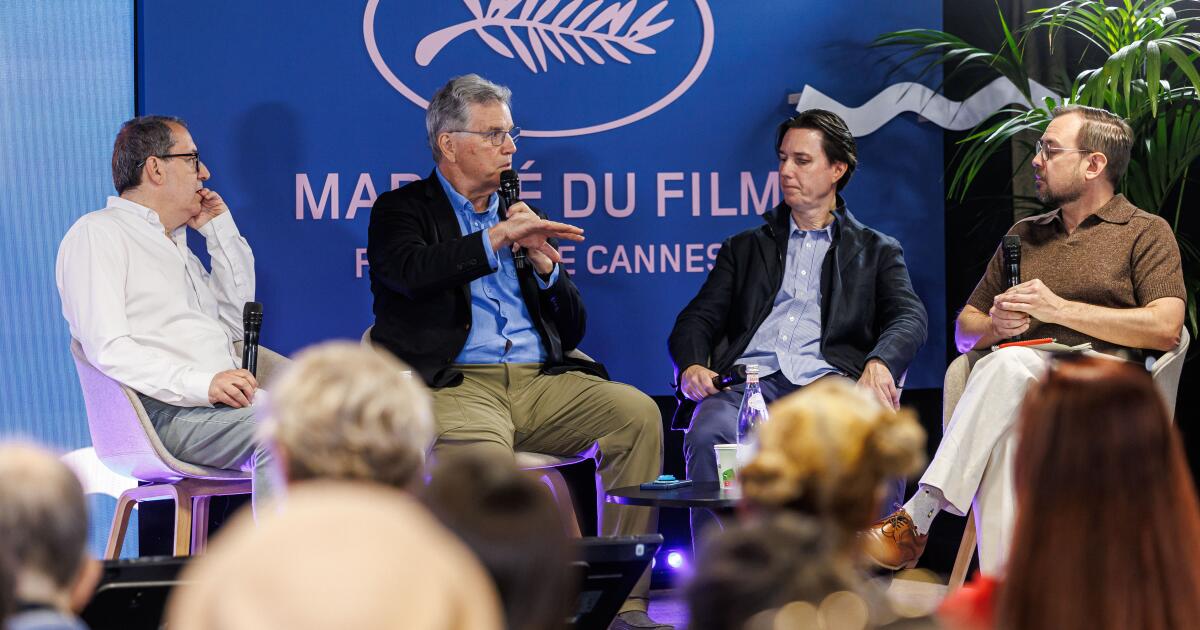
At this year’s festival to unveil our inaugural Cannes issue, I had to opportunity to sit down with Sony Pictures Classics co-founders and co-presidents Michael Barker and Tom Bernard and EVP of Acquisitions, Production and Business Affairs Dylan Leiner on the Main Stage at the Marché du Film to discuss the company’s festival strategy, bidding wars, artificial intelligence and more. Watch the full conversation and read edited excerpts below.
How much does the festival reception of a movie, the reviews coming out of a festival, the buzz around it, shape decisions that you’re making? Or is it just confirming what your gut already knows?
Leiner: I want to tell one story that speaks to that, which was at the first Berlin Film Festival we attended after COVID. I remember, in the same day, I ran into three international distributors who all asked if we had seen “The Teacher’s Lounge.” And I didn’t even know what the film was. It wasn’t on our radar, it wasn’t in competition. So we quickly saw “Teacher’s Lounge” and we acquired the film [which went on to be nominated for the 2024 international feature Oscar]. And that was one of the great values of an in-person festival, the ability very quickly to communicate with distributors, with tastemakers, with critics from around the world and get that kind of information. Gut, personal taste… It plays into it a lot, but then we need reassurance. And being at a festival and being in this fishbowl environment is really helpful for that.
For a lot of people, myself included, the mystique of a festival is often around the bidding war narratives: Who’s going to pick up what and what are they going to pay? I’m curious for your take on the first big acquisition of this year’s Cannes, A24 buying “Club Kid” for a reported $17 million.
Bernard: Throughout the years, there were companies [that would] maybe overpay, or they were going to bid to get this movie no matter what, because they were the headline in all the newspapers covering this festival. So in terms of a company that’s branding — which, A24 is one of the best in branding — I think that that had to do with a little bit of the cash that went up. … There’s a branding aspect in a lot of festivals for a movie that’s a hot movie that the press has decided to seize on.
Barker: Here’s a key to how we have survived. It’s different from the way you talk about it. When we acquire a movie, whether anyone else has offers, we try to block it out. And we have trained ourselves to not let that noise bother us. What is it worth to us? What do we think it’s going to do? Dylan runs these incredible models of what it’ll do on the low end, what it will do on the high end. And then you decide where you want to be.
Bernard: Or we think we can make it work.
Barker: But at no point do we sit around and worry about who else has a higher offer for the movie. Because I have to say, in very few instances, on the movies we buy, are we the higher offer. We just do the best we can, and if we lose it, we lose it.
Bernard: [French film producer] Serge Silberman, a sage of the past, he always said, “You never lose money on a movie you didn’t buy.”
That brings up a question that I had about “Nuremberg,” which was a real success.What you’re saying is,it performed in alignment with your expectations. Were there any lessons that you took away from that in terms of future projects that might come along?
Leiner: Yes, it performed in accordance with our expectations. What’s interesting about that film, we acquired it here last year. Nobody else was really interested in the movie. … So our challenge basically was to figure out how to convince the filmmaking team that, because it was a very expensive film, that we were the right company to acquire the film on the terms that we could afford and that we could make it work. And it was a very intense series of phone conversations, in-person meetings.
Bernard: We felt like we were auditioning to get married to somebody. We were never going to be able to pay to make their money back. It was a $40-million movie, and they were really sort of out there without anybody really looking at it. And we said, “Listen, sell it to us. We think it’s going to be a great success. We’ll make your movie way more valuable over the test of time.”
Barker: There are two types of movies that are being made and distributed. One are the big tentpole studio movies. It’s about winning the weekend theatrically. These are the theatrical-driven movies. And it’s all about making that huge budget back very quickly. But the other kind of film, which is why we are in business, is the evergreen. Every one of our films, we open it with the best marketing push we can. Yes, we try to get the highest box office. But what we know will happen, even if the box office ends up being less, we believe in these films as long-term players. And these films have really long tails. You look at movies like “Run Lola Run” or “Call Me By Your Name” or even “Living” … They have generated revenues to the filmmakers and to us that’s way beyond what the box office would have portended when it opened.
I would be curious, what areas of the filmmaking process or the film distribution process do you think AI is appropriate for use, that you’ve experimented with it, that you’re excited about its prospects? And where are your red lines, if you have any?
Barker: One of the people on our staff — we really love our young staff. One of them was writing a screenplay with AI, and told me they got certain rules on AI. And I’m listening to all these rules. You can’t have your main character die in a first scene. You can’t have your romantic female lead be totally unlikable, people aren’t going to go. I’m listening to this, and I said, “Have you ever seen ‘Sunset Boulevard?’” And she goes, “No, what is that?” I said, “Go watch that movie.” She came back and she was like, “Holy cow.” I said, “Billy Wilder sat down and made that up based on what he observed.” AI is not going to be able to do that.