federal funding

82 lawsuits saved $207 billion for California, Bonta says

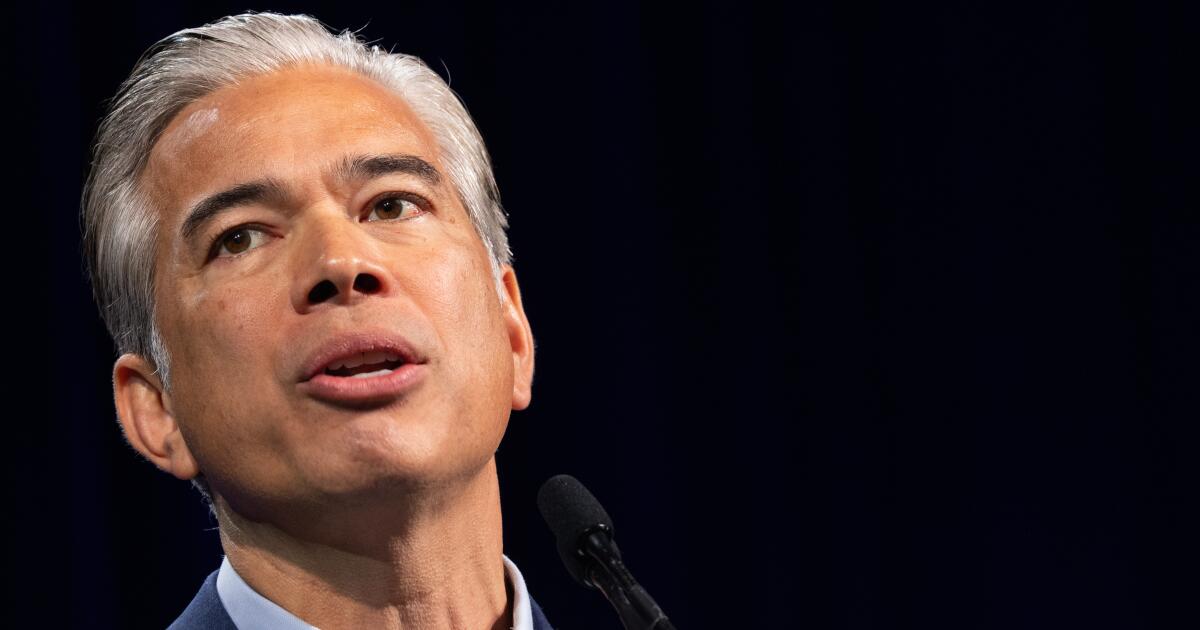
California Atty. Gen. Rob Bonta said Tuesday that his office has protected more than $200 billion in federal funding for the state, defended core civil rights and removed military forces from Los Angeles streets by suing the Trump administration about once a week.

“Since President Trump returned to office, California has been under attack — and has led the way in fighting back,” Bonta said.

Bonta said his office has filed 82 lawsuits against the administration since Trump’s inauguration last year, in addition to 122 amicus briefs supporting lawsuits against the administration by other parties and 112 comment letters in response to federal actions.

That work has saved the state an estimated $207.1 billion, Bonta said, including $168 billion — equal to a third of the state’s annual budget — that was threatened when the Trump administration tried to freeze trillions of dollars in federal funding to the states last year. Billions in threatened cuts to transportation, emergency preparedness, education and family assistance funding were also prevented, Bonta said.

The work has also protected birthright citizenship for the U.S.- born children of immigrants, ensured that National Guard troops are not deployed in major California cities against the wishes of local leaders, lifted multiple sets of tariffs driving up costs for American consumers and repeatedly blocked administration efforts to interfere in California’s elections, Bonta said.

“We’ve protected funding that keeps our communities safe, feeds hungry families, and ensures our kids get the education they deserve. We’ve gone all the way to the Supreme Court to defend constitutional rights — and won. We’ve protected our elections and stopped the militarization of our cities. We’ve defended our right to prioritize public safety over assisting with the President’s inhumane immigration agenda,” Bonta said.

As it has done in the past, the White House on Tuesday derided Bonta’s lawsuits as misguided.

“Instead of bragging about filing frivolous lawsuits against the Trump Administration, the California AG should focus on addressing problems in his own state — like the countless criminal illegal aliens the Newscum Administration allows to roam free and terrorize communities,” said White House spokeswoman Abigail Jackson in a statement to The Times.

The White House has previously said Trump is “trying to restore American Greatness” and that Californians would be “infinitely better off” if Bonta got out of the president’s way.

Bonta’s office is required to report annually to the state Legislature on its work fighting the Trump administration as part of a 2025 special session measure delivering it an extra $25 million to fund such litigation. His office published its latest report to lawmakers Tuesday.

The report said the office had received $19.2 million of the special session funding through July 30, which had “contributed to — but in no way has been sufficient to cover — the costs of the litigation.”

Bonta’s office has also received regular appropriations to fund such litigation in each of the state’s last two budgets, of $14.2 million last fiscal year and $23.9 million this fiscal year. The office’s overall budget is about $1.4 billion.

At a morning news conference with other state leaders, Bonta said his office has spent close to $30 million on its “federal accountability work” overall since Trump took office, and argued that investment has been “paying off in droves” given the billions saved.

Senate President Pro Tempore Monique Limón (D-Goleta) and Assembly Speaker Robert Rivas (D-Hollister), standing with Bonta, agreed.

Limón said she was proud to have worked with Bonta and Gov. Gavin Newsom to form a “collective backstop” against the Trump administration, while Rivas said the funding provided to Bonta’s office “may be one of the smartest investments that this legislature has ever made.”

Of the 82 lawsuits, 66 remain active, according to the report. Despite that, Bonta said his office has won 45 orders providing some early relief from the Trump administration’s actions, and 21 final orders in its favor. In eight cases, he said, the administration “backed down” in advance of a trial.

Bonta’s office has lost arguments made against the Trump administration, including on behalf of other litigants, particularly on issues related to transgender rights and the scope of Trump’s executive power to reshape government and federal immigration policy.

However, Bonta claimed his office has won in 83% of the court orders issued in cases brought by the state and praised his team for having “worked around the clock on behalf of Californians, pulling countless all-nighters along the way” to make it possible.

Bonta, who is up for reelection in November, is campaigning in part on his willingness to stand up to Trump — which polling and voting has suggested many Californians want their elected officials to do.

Xavier Becerra, the Democratic candidate for California governor, is running on a similar message. Before he was the U.S. Health and Human Services secretary, Becerra had Bonta’s job and sued the first Trump administration more than 120 times, often successfully.

Bonta said he expects Becerra will be an “incredible partner” in the fight moving forward.

Republicans Michael Gates, who is running against Bonta, and Steve Hilton, who is running against Becerra and is endorsed by Trump, have said they would work collaboratively with the Trump administration to ensure the needs of Californians are met, rather than fighting it at every turn.

“I would be wanting to work with the administration to help Californians,” Hilton has said. Gates has called Bonta’s campaign against Trump “out of touch.”

Many of the lawsuits Bonta’s office has brought against the administration have been filed as part of a multistate coalition of Democratic attorneys general. As presidents of both parties have flexed more executive power in recent decades, state attorneys general have become more collaborative and litigious in fighting back — and that has been especially true under Trump.

Bonta said Trump will be remembered in part for his “repeated attacks on California, on Californians, on our Constitution, and on our democracy,” but California will be remembered for fighting back.

“Are these trying times? 100%. Absolutely, yes,” Bonta said. “But we shouldn’t be helpless, because we’re not helpless.”

Source link

Trump refashions America’s 250th as a celebration of himself

Small towns across America had big plans to celebrate the nation’s semiquincentennial this weekend. Local historical societies scheduled town square readings of the Declaration of Independence, hired bands to play patriotic tunes, organized parades and set up themed baking contests.

But many of their most ambitious plans were scrapped after the Trump administration cut $100 million in federal funding for humanities nonprofits and state councils at the start of its term. The decision severely hampered local planning for America’s 250th anniversary, disrupting history projects, museums and educational programs nationwide.

Instead, the Trump administration funneled tens of millions in federal dollars to Event Strategies, the firm behind Trump’s infamous rally at the Ellipse on Jan. 6, 2021, to organize anniversary events throughout the nation’s capital centered on President Trump.

The result, historians say, has become a centralized, more politicized spectacle, marking the national milestone as a celebration of an imperial presidency rather than a revolution from kingly rule.

The spectacular show that Americans will see features Trump at its center, culminating a year of concerted efforts by the president to put his face on passports and currency, national park passes and government buildings.

Girls in red and blue sequined dresses hold up red, white and blue balloons.

Members of the Dance4Life studio in Claymont, Del., prepares to march ahead of the Red, White, & Blue To-Do Pomp & Parade on July 2, 2026, in Philadelphia.

(Al Drago / Getty Images)

Yet, beyond the noise of the nation’s capital, historians and teachers, docents and curators, archivists, tour guides and reenactors have sustained the messy, organic discourse of the American story, less funded but no less vocal in their patriotism.

“The way history has been argued since Trump returned to office has been a reminder that governments and political figures have remarkable power to shape a society’s historical memory,” said David Ekbladh, a history professor at Tufts University and author of “Look at the World: The Rise of an American Globalism in the 1930s.”

Trump’s effort to control the anniversary narrative has reminded Ekbladh of one of George Orwell’s most famous quotes: “Who controls the past controls the future. Who controls the present controls the past.”

“The administration’s clear signals that it can and will restrict funding to institutions seems to have muted the way many institutions, like museums and universities, have approached the anniversary,” Ekbladh added. “With this said, Trump’s own direct, personal use of the 250th has been less about articulating a clear view of the nation’s history than using the moment itself to keep attention on him.”

The White House has taken a more active role in the festivities than initially planned, setting up its own Freedom 250 project to supplement America250, a bipartisan congressional effort to celebrate the occasion.

A "detour" sign appears on an image of the Statue of Liberty on screen fencing.

Fencing is seen around the Great American State Fair on the National Mall on Thursday.

(Kevin Dietsch / Getty Images)

The Trump administration has directed funding to events centered on the president’s attendance, primarily around Washington, and partnered with conservative organizations such as PragerU and Hillsdale College to present the country’s founding story through a conservative Christian lens.

Historians are in broad agreement that this year’s celebration has garnered far less attention than the bicentennial, marked in 1976, which generated blanket media coverage and widespread national excitement.

Andrew Rudalevige, a professor of government at Bowdoin College and author of “The New Imperial Presidency,” attributed the lack of enthusiasm this time in part due to a more fragmented media landscape than existed 50 years ago, denying the country a “core curriculum” and a shared story.

“I don’t think it’s a lack of patriotism, so much as a determination that no presidential administration should be able to center itself as the focus of that patriotism,” Rudalevige said.

“There’s a lot to celebrate in the text of the declaration. But that’s not where the focus of the Freedom 250 efforts has been,” Rudalevige said. “It would have been interesting to see what the bipartisan America250 initiative could have come up with if its funding and energies had not been diverted.”

A sign on a chain-link fence says "Coming to you on July 4th."

The Lincoln Memorial Reflecting Pool is fenced off in preparation for Fourth of July fireworks.

(Kevin Dietsch / Getty Images)

Trump has scheduled little national travel around the anniversary, visiting North Dakota this week for an event that allowed him to debut a new version of Air Force One, donated by Qatar and outfitted to the president’s tastes. Trump intends to keep the plane after leaving office for his personal use.

The jet will fly over the National Mall alongside the Defense Department’s most impressive equipment on Saturday, before the president delivers a speech in what is forecast to be a blistering heat wave. The evening will end, according to administration officials, with the largest fireworks display in U.S. history.

“The fundamental challenge that we face now is the fight between the historians — people who have been studying the past and who have been thinking about how to tell that story to the public — and government leaders over who gets to control that story,” said Peter Kastor, chair of the history department at Washington University in St. Louis.

“The people who are really on the front lines are museum professionals, the operators of historic sites and schoolteachers,” he said. “They face the responsibility for explaining the past to a general audience on a day-to-day basis, and they are the ones who most often face the backlash from people who want the story to be told differently.”

Source link

Congress passes landmark housing bill with overwhelming bipartisan votes

The House passed Congress’ most significant housing legislation in decades on Tuesday, sending the bill to President Trump’s desk — a bid by both parties to show midterm voters that they’re paying attention to affordability concerns ahead of November’s election.

The legislation, which the Senate passed Monday, aims to boost the housing supply through dozens of targeted provisions whose effects are expected to be seen over the next several years. In California, measures to unlock some federal block grant dollars for new housing in big cities could be particularly significant.

The bipartisan agreement over the legislation, after weeks of negotiation, marks a highly unusual collaboration in the divided Congress. It reflects growing public pressure on Washington to address economic issues at a time when Americans’ economic woes are deepening amid inflation, elevated gas prices and the ongoing effects of Trump’s tariffs.

The bill passed in the House with a 358-32 vote after it was approved by the Senate on Monday in an 85-5 vote. Those opposed in both chambers were Republicans. The Trump administration has signaled support for the bill, meaning it will probably become law.

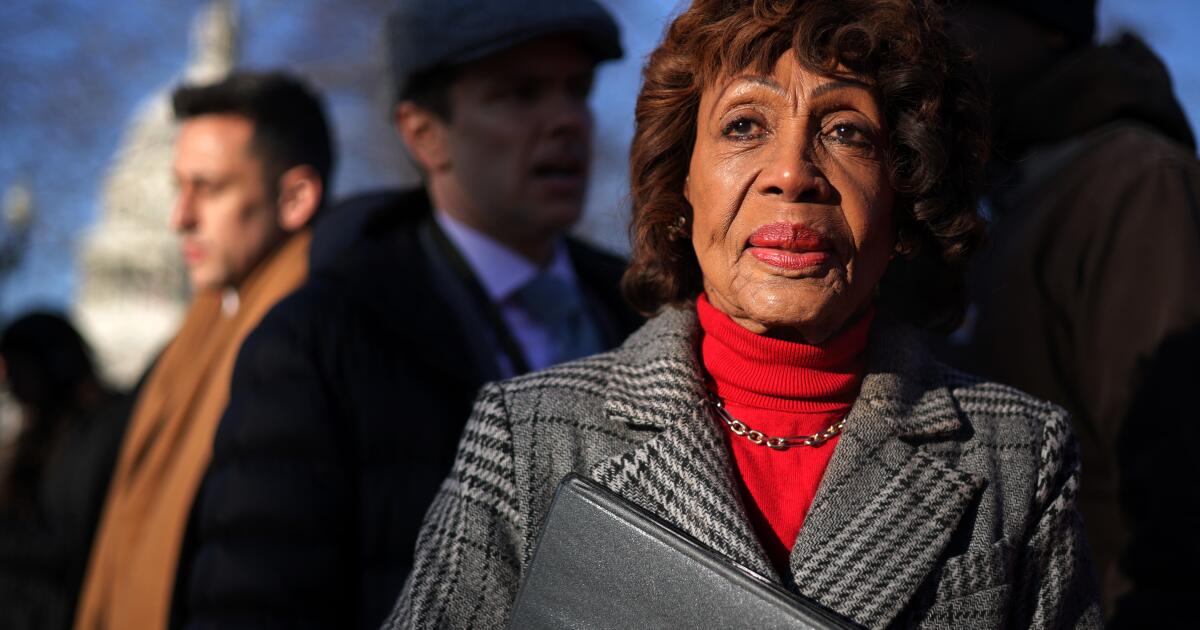
“This legislation must serve as a foundation for continued action, not the final step in addressing our nation’s housing crisis,” Rep. Maxine Waters (D-Los Angeles), one of the lawmakers who put together the deal, said on the House floor before the vote.

The bill aims to help housing supply by removing regulatory barriers to building affordable housing units, preventing large investors from buying up single-family homes and incentivizing new housing in cities with federal funding, among other measures.

The package focuses on addressing housing supply constraints and making federal programs easier to use, said David Gonzalez Rice, senior vice president of public policy at the National Low Income Housing Coalition. Though the legislation does not create major new funding streams, advocates see the bipartisan acknowledgment of the need for housing reforms as significant.

“It’s a big step in the right direction,” Gonzalez Rice said, “and there’s still a lot of work to do.”

Addressing cost-of-living issues has become high stakes for lawmakers engaged in midterm reelection campaigns, as Americans increasingly disapprove of Trump’s handling of the economy. Democrats are hoping to leverage affordability issues to gain control of at least one chamber of Congress, while Republicans are fighting to maintain their majorities.

It was politically crucial for members of both parties to be able to tell voters they had worked in good faith to address housing affordability, said David Garcia, deputy director of policy at UC Berkeley’s Terner Center for Housing Innovation.

“It would’ve been hard to justify to voters during their campaigns that their party did not do everything they could to advance the first meaningful legislation on housing policy in decades,” Garcia said.

The legislation was a product of intense bipartisan negotiations led by Waters and Rep. French Hill (R-Ark.), as well as Sens. Elizabeth Warren (D-Mass.) and Tim Scott (R-S.C.), after months of discussions in both parties about how to address housing.

“The work has been extraordinary between the majority and minority in this House, answering the call [for] solutions from the American people,” Hill said on the House floor.

Trump — who has largely dismissed the affordability issue, last week calling it “a fake word” — had indicated support for housing reforms.

In a March statement of policy, the administration indicated it “strongly supports” passage of the bill, saying it represented “significant advances in federal housing policy.” Trump also signed an executive order suggesting that regulatory barriers to home building should be removed, a concept reflected in the bill.

The nationwide affordability crisis has been driven for years by rising costs, a shortage of affordable housing, higher mortgage rates and other factors. Recent rising construction costs and labor shortages have exacerbated the issue, according to the National Assn. of Home Builders.

The number of new housing starts in May dropped by more than 15%, according to a report last week from the U.S. Census Bureau and Department of Housing and Urban Development.

California has added housing supply in recent years, but its shortage remains significant and prices high. The state has among the highest rates of households spending disproportionate amounts of their income on housing, according to the Public Policy Institute of California.

The momentum in Washington to respond to those pressures — which came as something of a surprise to advocates — can be viewed as a reflection of current public sentiment, Gonzalez Rice said.

“It speaks to the broader understanding of the public that housing is a policy problem, that government can do something about it and the expectation that government will do something about it,” he said. “It’s clear elected officials are hearing from their constituents.”

The bill includes nearly 50 provisions, including the prohibition on investor purchase of single-family homes, which is intended to help increase the housing supply for individual buyers. It also seeks to help cities convert abandoned buildings into new housing and help landlords and homeowners make home repairs.

Two measures are expected to be particularly significant for cities such as Los Angeles and San Francisco, Garcia said: One ties some federal funding under the Community Development Block Grant program to housing production to motivate cities with low housing supply and high costs to build more housing. The other allows block grant money to be used for affordable housing construction, opening a new revenue source for cities.

California’s big cities may be spurred to increase new housing in future years, Garcia said, and they also could benefit from the ability to direct the block grant funding to housing.

“Costs to build are so high,” he said, “that any new funding could be critical.”

Among other steps that could have swift results is a plan to preserve a rental assistance program for nearly 400,000 rural homeowners and a measure to streamline the leasing process for families using vouchers, Gonzalez Rice said.

The bill also exempts certain projects from a set of environmental regulations, a step aimed at speeding up the review and construction process. And it seeks to make it easier to build manufactured homes by removing a requirement that they be built on a chassis, which the Senate committee estimated would reduce the cost of each new unit by up to $10,000.

Source link

Judge halts Trump plan to link USDA SNAP funds to gender, immigration

A federal judge sided with California and other Democratic states on Friday in a preliminary injunction that blocked the Trump administration’s attempt to condition food benefits on compliance with the president’s policies on gender and immigration.

Twenty states and the District of Columbia filed a lawsuit in March against the Trump administration in U.S. District Court in Massachusetts, arguing that the “unlawful” and “unconstitutional” funding requirements are vague and designed to force policies on states.

Billions in federal funding are ultimately at stake, including money for school lunch programs that provide meals to 30 million children nationwide and food stamps that support about 40 million Americans living in low-income households.

“As the Trump Administration tries to use essential programs and billions in funding as leverage to advance their hateful, discriminatory agenda, California continues to fight to uphold the law and ensure that our communities can continue to access the funding they need to thrive,” said California Atty. Gen. Rob Bonta in a statement.

The policy shift from the United States Department of Agriculture marks another effort by the president to force left-leaning states to submit to his positions on hot-button political and cultural issues to receive government funding. California’s current budget relies on $174.5 billion in federal dollars, or roughly one-third of the overall state budget funds.

Last year, the Trump administration canceled a sexual education grant to California after the state declined to remove gender identity from sexual education curriculum. The administration is also restricting federal funds in an attempt to force states to ban transgender athletes from competing in women’s sports.

The funding conditions from the USDA relate to gender ideology, women and girls’ sports and immigration, according to the lawsuit.

States argue that the conditions do not explain what activities are prohibited for entities that receive grants. The USDA did not cite any law allowing the organization to impose anti-discrimination policies that go beyond federal law, the suit states.

The states that joined the lawsuit contend that they are left with the “unlawful” choice of adhering to the conditions or risk losing up to $74 billion in collective federal assistance from the USDA.

U.S. District Judge Myong Joun approved a preliminary injunction Friday and is expected to issue a memorandum later explaining the decision, according to the Associated Press.

Source link