Federal Aviation Administration

Ex-CIA agent charged with stealing $40M in gold bars from the agency

May 28 (UPI) — A former CIA agent is accused of stealing nearly $40 million worth of gold bars and about $2 million in cash from the agency, and lying to the agency about his education, military history and pilot license.

David J. Rush of Virginia, who is described in a criminal complaint as a former senior executive with a top secret clearance, was arrested last week and charged with theft of public funds, The Washington Post, USA Today and NBC News. He also claimed about $77,000 of paid military leave for which he wasn’t entitled.

The FBI searched Rush’s home last week and found 303 gold bars that weighed 2.2 pounds each and are estimated to be worth about $40 million, according to an affidavit written by Special Agent Matthew Johnson, USA Today reported.

The FBI seized the gold from the home along with about $2 million in cash and 35 luxury watches, many of which were Rolexes.

From November 2025 and March 2026, Rush requested and received “a significant quantity of foreign currency and tens of millions of dollars in gold bars for work-related expenses,” the affidavit said. When the government visited the storage facility where it was supposed to be stored, most of it was missing. The documents don’t list the reason he needed so much money and gold.

Rush had been in the Navy and was honorably discharged in 2015. But he allegedly told the agency that he was in the reserves for 10 years and took 744 hours of military leave during that time adding up to about $77,000, the affidavit said.

The affidavit alleges that Rush claimed to have a bachelor’s degree from Clemson University and a master’s degree from Rensselaer Polytechnic Institute. An FBI investigation found no record of him attending either school. He also claimed to have been a Navy pilot, but the investigation found no record of that, and the Federal Aviation Administration has no pilot’s license registered to Rush.

Rush is in the custody of the U.S. Marshals Service. He waived his right to a preliminary hearing, and a detention hearing is set for June 5.

Secretary of State Marco Rubio and President Donald Trump participate in a Cabinet meeting in the Cabinet Room of the White House on Wednesday. Photo by Samuel Corum/UPI | License Photo

Source link

FAA tells SpaceX to investigate booster failure during test launch

May 27 (UPI) — The Federal Aviation Administration on Wednesday ordered SpaceX to investigate why a booster for its Starship rocket system failed during a test flight Friday, grounding the megarocket for a time.

The FAA declared the incident a “mishap” that involved the Super Heavy first-stage booster as it separated from the main ship and returned to the Gulf of Mexico after launch. The booster was supposed to perform a sustained burn to a controlled landing in the gulf, but a possible engine failure meant it fell back to Earth instead in a “hard splashdown,” SpaceX said in its launch report. The FAA said there were no reports of public injury or damage to public property from the mishap.

“The FAA will oversee the SpaceX-led investigation, be involved in every step in the process, and approve SpaceX’s final report, including any corrective actions,” the agency statement said.

“A mishap investigation is designed to enhance public safety, determine the root cause of the event, and identify corrective actions to avoid it from happening again,” the statement continued. “A return to flight of the Starship-Super Heavy vehicle is based on the FAA determining that any system, process, or procedure related to the mishap does not effect public safety.”

This means that another launch is less likely before the company’s planned initial public offering in June, TechCrunch reported.

The Starship system has two parts: the Super Heavy booster and the spacecraft itself, also called Starship. This was the first launch of the third version of the system, which is the first capable of deep-space flight. Plans call for Starship to carry Artemis 4 astronauts to the surface of the moon in a mission set for late 2028.

The Starship portion of the overall system did make it to space during this test launch, although it also lost one of its Raptor 3 vacuum engines there. Overall, this and other portions of the launch, including deployment of satellites and simulators, were considered a success.

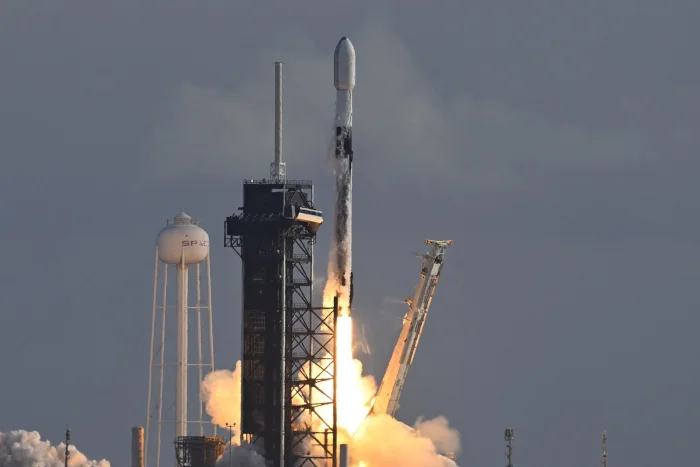
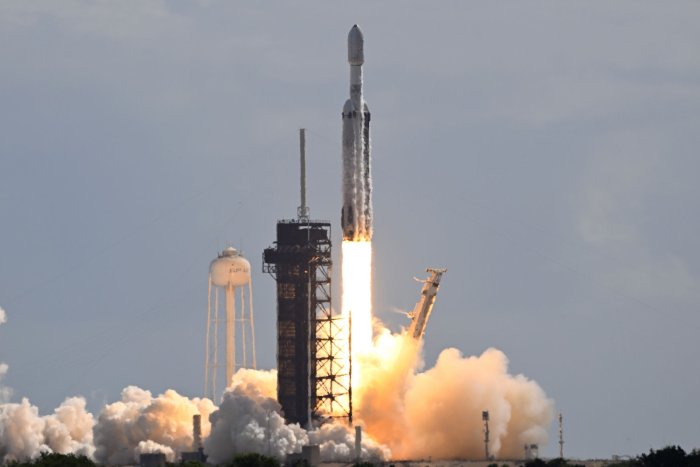
The SpaceX Falcon Heavy rocket launches the ViaSat-3 F3 satellite from Launch Complex 39A at the Kennedy Space Center in Florida on April 29, 2026. Photo by Joe Marino/UPI | License Photo

Source link

2-day NTSB hearing on UPS plane crash in Louisville begins

Members of the National Transportation Safety Board and FBI agents walk the runway looking for evidence from the UPS Flight 2976 MD-11 that crashed in November at the Louisville Muhammad Ali International Airport in Louisville, Ky. The NTSB hearing began Tuesday morning in Washington, D.C. File Photo by John Sommers II/UPI | License Photo

May 19 (UPI) — The National Transportation Safety Board began its two-day hearing on Tuesday on the deadly UPS cargo plane crash in Louisville, Ky., that killed 15 people on Nov. 4.

The NTSB released the agenda of the hearing as soon as it began at 8 a.m. EDT in Washington, D.C. The hearing will continue to 6 p.m. Tuesday, and 8 a.m. to 1 p.m. Wednesday at the NTSB Boardroom and Conference Center in Washington.

The NTSB has investigative hearings to find the facts and circumstances of transportation accidents or incidents under investigation, a press release said. The hearing is open to the public, but only NTSB board members, investigators, witnesses and parties to the hearing are allowed to participate.

The crash is the deadliest in the history of UPS. All three crew members on UPS Flight 2976 died, as well as 12 others on the ground, several of whom were working or shopping at nearby businesses. The crash also injured about 23 others.

The NTSB’s preliminary report showed that fatigued and overly stressed connecting pylons likely caused the left engine to detach from the McDonnell Douglas MD-11. The engine fell from the aircraft as it was taking off from the Louisville Muhammad Ali International Airport. The aircraft crashed into the ground and burst into flames. The fully fueled flight was intended for Honolulu.

The preliminary report said cracks caused by fatigue and signs of excessive mechanical stress were found in the pylon that connected the left engine to the wing. The plane was 34 years old and had recently undergone maintenance in San Antonio.

The engine-mounting hardware was last inspected in October 2021. It wasn’t due for another inspection until the aircraft completed 7,000 more flights, the NTSB said. The preliminary report showed no apparent pilot errors.

The NTSB invited several groups to participate in the hearing: the Federal Aviation Administration, UPS, The Boeing Company, GE Aerospace, Teamsters Airline Division, Independent Pilots Association and Collins Aerospace.

The hearing panel includes accident investigators and engineers. They will hear from nine witnesses on Tuesday. A new panel will hear from four witnesses from the FAA and Boeing on Wednesday.

In January, UPS announced it was retiring all MD-11 planes and was reducing its workforce by 30,000.

Vice President JD Vance speaks during a news conference on anti-fraud initiatives in the Indian Treaty Room of the Eisenhower Executive Office Building at the White House on Wednesday. Photo by Daniel Heuer/UPI | License Photo

Source link

Southwest jets take evasive action to avoid mid-air crash over Nashville

April 20 (UPI) — A Southwest Airlines flight arriving at Nashville International Airport over the weekend was directed into the path of another Southwest flight that was taking off, causing them to pass within 500 vertical feet of each other.

A flight arriving from Myrtle Beach, S.C., on Saturday evening initiated a go-around before landing because it was facing “gusty winds” during it’s approach, but air traffic controllers directed the crew into the path of another flight, USA Today, WSMV and WTVF reported.

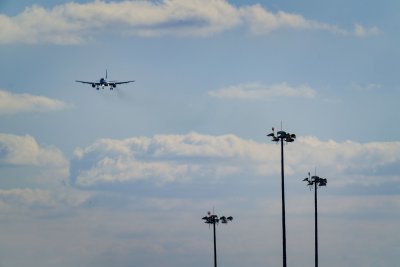
The other flight was departing NIA on a parallel runway, which caused the close call, and “both flight crews responded to onboard alerts” because the two aircraft were 500 feet apart, the Federal Aviation Administration said in a statement.

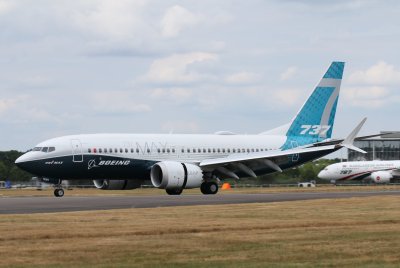
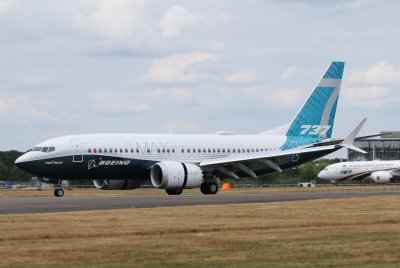
Five hundred feet is equivalent to 1 2/3 football fields, including the end zones, or two Boeing 747s lined up nose-to-tail, which is half the 1,000-foot distance the FAA requires aircraft to maintain.

The air traffic controller who gave the errant order recognized the mistake and corrected himself with both flight crews, who had already responded to alerts from their Traffic Collision Avoidance System, devices that are standard on all commercial aircraft.

“We are engaged with the FAA as part of the investigation,” Southwest said in a statement.

“Southwest appreciates the professionalism of its Pilots and Flights Crews in responding to the event,” the company said. “Nothing is more importing to Southwest than the Safety of our Customers and Employees.”

Secretary of Health and Human Services Robert F. Kennedy, Jr. speaks during a House Appropriations Subcommittee on Labor, Health and Human Services, Education, and Related Agencies hearing on the budget for the Department of Health and Human Services in the Rayburn House Office Building near the U.S. Capitol on Thursday. Photo by Bonnie Cash/UPI | License Photo

Source link

FAA grounds New Glenn rocket after botched satellite release

The FAA has grounded Blue Origin’s New Glenn rocket because although its launch was successful, one of the engines on its second stage did not fire properly when it got to space, which resulted in the spacecraft releasing a communications satellite in too low of an orbit to be useful. Photo by Joe Marino/UPI | License Photo

April 20 (UPI) — The Federal Aviation Administration grounded Blue Origin‘s New Glenn rocket after it botched the release of a satellite following its successful launch two hours earlier.

The third launch of New Glenn and second landing of its reusable booster stage “Never Tell Me The Odds” on a drone ship in the Atlantic Ocean was a success in those terms, but the spacecraft delivered AST SpaceMobile’s BlueBird 7 satellite to an orbit too low for it to operate properly.

Blue Origin said Monday that it is leading an investigation into one of New Glenn’s engines producing insufficient thrust to reach the mission’s target orbit.

“While we were pleased with the nominal booster recovery, we clearly didn’t deliver the mission our customer wanted, and our team expects,” Blue Origin CEO Dave Limp said in a post on X.

The FAA, NASA, the National Transportation Safety Board and the U.S. Space Force also have been monitoring the situation and will require Blue Origin to complete its investigation and report on the engine anomaly, the Orlando Sentinel reported.

“A return to flight is based on the FAA determining that any system, process or procedure related to the mishap does not affect public safety,” the FAA said in explaining why it grounded the rocket.

The New Glenn-3 rocket launched around 7:30 a.m. EDT on Sunday morning, nailing the flight and landing portion of its mission, and successfully released the BlueBird 7 satellite once it reached orbit.

Because one of the two BE-3U engines that power New Glenn’s upper stage didn’t produce sufficient thrust on its second engine burn, which is meant to boost the spacecraft to its target orbit above Earth, it never got there.

Although the satellite was released and powered on properly, the off-nominal orbit — which was too low for it to be useful — AST said it would be jettisoned.

BlueBird 7 is one of 45 satellites that AST SpaceMobile hopes to get in orbit by the end of 2026 as part of a satellite-based cellular network designed to operate with standard smartphones.

The satellite would have been the companies eighth to reach orbit, and it’s share price Feller by more than 6% on Monday, The BBC reported.

Limp said Blue Origin is analyzing data as it conducts the investigation and is “in steady communication with the team at AST SpaceMobile.”

“We appreciate their partnership, and we’re looking forward to many flights together,” Limp said.

NASA’s Orion spacecraft, with the four-member Artemis II crew aboard, is seen under parachutes as it lands in the Pacific Ocean off the coast of California on Friday after its nearly 10-day journey around the Moon and back. NASA Photo by Bill Ingalls/UPI | License Photo

Source link

FAA accepting bids for AI system to assist air traffic controllers

The FAA is considering bids to develop an artificial intelligence system that could help air traffic controllers predict and correct potential issues hours earlier than they currently can. File Photo by Caroline Brehman/EPA

April 18 (UPI) — The Federal Aviation Administration is working with three bidders to develop artificial intelligence software to help air traffic controllers manage flights across the nation’s airspace.

Transportation Secretary Sean Duffy discussed the effort during a media event on Friday, and said the goal is to help anticipate schedule conflicts and improve planning for bottlenecks at busy airports.

“This software, as they look at the flight paths, won’t see [potential issues] 15 minutes before it happens .. a controller will get a notice that they could change one of the airplane’s flight paths slightly and they can deconflict it an hour and a half or two hours before the conflict even happens,” Duffy said during a media event hosted by Semafor.

The program is aimed at fundamentally changing how airspace in the United States operates, The Air Current reported, and is a major part of the agency’s efforts at modernization and redesign.

The FAA has mounted an effort to see how AI can improve the functionality and safety of the country’s air traffic control systems, especially amid a growing shortage of controllers, at least partially because political debates that have hampered the agency’s funding.

The system that the FAA is looking to develop — called SMART, which stands for Strategic Management of Airspace Routing Trajectories — is part of a $32.5 billion modernization program that includes replacing hundreds of radars and growing its air controller staff, The Next Web reported.

Development of the new system, which follows a series of issues at airports across the country that have seen near-misses and actual crashes that have raised concerns among experts and travelers alike, is being bid on by the companies Palantir, Thales and Air Space Intelligence.

The system could begin to be operational some time later this year, with an update on progress expected from the Department of Transportation and FAA on April 21.

Secretary of Health and Human Services Robert F. Kennedy, Jr. speaks during a House Appropriations Subcommittee on Labor, Health and Human Services, Education, and Related Agencies hearing on the budget for the Department of Health and Human Services in the Rayburn House Office Building near the U.S. Capitol on Thursday. Photo by Bonnie Cash/UPI | License Photo

Source link