Favourite

Coronation Street airs shock death as fan favourite drops earth-shattering bombshell

Coronation Street revealed surprise death news in Monday’s episode of the ITV soap and Debbie Webster has implied that all is not what it seems after the surprise passing

Coronation Street aired scenes of a shock death on Monday evening. Earlier this year, Carl Webster (Jonathan Howard) arrived as the long-lost half brother of Kevin Webster, and whilst things were going well to begin with, their reunion quickly soured when it was revealed that Carl had been having an affair with his brother’s wife Abi.

Little is known about Carl’s past, but what has been established is that he grew up in Germany with his parents Bill and Elaine Webster. Bill was the father of Kevin (Michael Le Vell) and Debbie Webster (Sue Devaney), and their mother Alison never appeared on the programme, having died in 1980. Carl was then born to Bill and Elaine off-screen in 1986.

On Monday’s episode of the world’s longest-running TV soap, Abi was at Debbie’s hen-do when she got a panicked phone call and rushed straight home. Once there, Carl revealed to her that his mother had died, and he had been completely unaware that she had been fighting cancer.

READ MORE: Coronation Street’s Dee Dee Bailey quits soap in emotional scenes as fans issue complaintREAD MORE: Corriedale’s biggest secrets revealed – villain returns, soap ‘rivalry’ and plot exposed

For the first time, Carl began to open up about his mother to Abi and hinted at a mystery that was never solved between the pair. He said: “She was… formidable. Not the most loving of mothers, that’s for sure. Our relationship was tricky. I knew she wanted me to settle down, get married and have kids and all then.

“I was immature back then – late developer. She did bail me out a few times, though, let me stay at hers, when I hit the skids. I remember my 30th, I had to come home, tail between my legs, after my latest job and relationship had gone pear-shaped.

“She was back in Southampton then. I must’ve been there a week and I hadn’t really got out of bed. She came in my room one morning, dragged me out of bed and said we were going to the beach. I hadn’t been to the beach with my mum since I was a little boy.

“And I said I was sorry for being a mess. 30 and still kipping in my mum’s spare room. She was quiet for a long time and then said I deserved more from my growing up. But if I knew what had happened, then I would understand why.”

Abi then asked if she ever explained herself to him, and Carl replied: “No. I’m sorry Abi, for being the kind of person that not even a mother can love.” It was then that Abi pulled Carl in close, her eyes wide, clearly worried about what her partner had just said to her. She later reminded him that just because Elaine rarely called, that didn’t make him a bad son, and Debbie then burst in, having heard that something terrible had happened.

Through tears, Carl told his half-sister: “Apparently she’d been in the hospice for months. I didn’t even know that she was ill,” and when he and Abi voiced their dismay that Elaine had never been in touch, Debbie began to justify it. She said: “Well, we don’t know what’s gone on, do we?

“She might not have been well enough.” Carl then asked Debbie when she last spoke to Elaine, and the hotel owner quickly claimed that they hadn’t spoken since Bill died, which would have been in 2023.

But there was a further twist in store when Debbie, who was diagnosed with vascular dementia earlier this year, went home to her fiancé Ronnie. When he said it was odd that Elaine had not got in touch with the family, Debbie revealed: “She tried to. Recently. I just… I just forgot to tell him. With everything going on, it just… it just went out of my head.

“I haven’t told Carl – I can’t. He’d never forgive me. Ronnie, don’t tell him, will you? I feel terrible Really terrible.” When Ronnie reassured Debbie that it wasn’t her fault and she didn’t do it on purpose, she didn’t respond and simply gave a weird look.

Coronation Street airs Mondays, Wednesdays and Fridays at 8pm on ITV1 and ITV X. * Follow Mirror Celebs and TV on TikTok, Snapchat , Instagram , Twitter , Facebook , YouTube and Threads


Source link

‘You can’t beat a wintry walk on a crisp, bright day’: readers’ favourite UK winter activities | Walking holidays

A Spirograph of starlings in Cambridgeshire

Arrive at Fowlmere RSPB reserve, 10 miles south-west of Cambridge, an hour before nightfall to allow yourself time to find a good vantage point to enjoy the spectacle of the murmuration. Starlings gather and swirl in fluid Spirograph shapes, framed by shadowy trees against sunset reds until the sky darkens and the birds take their last dip into the reed beds. It really is a spectacular display, available most winter evenings here.
Helena

Rowing the canals of Bristol in all weathers

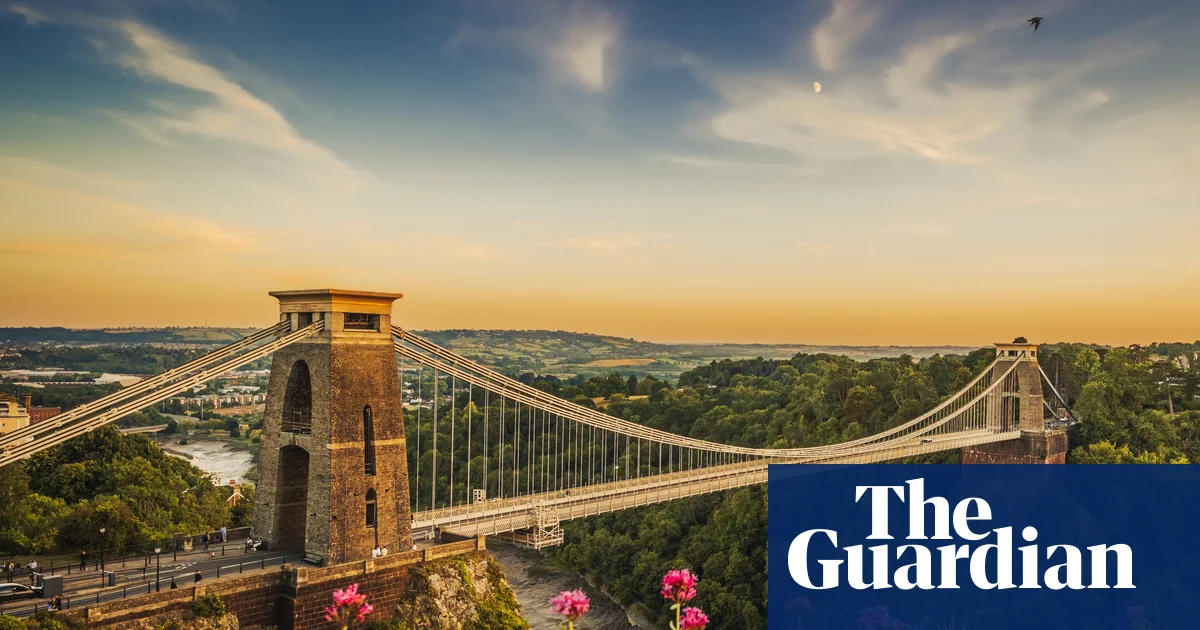
Bristol harbour at sunrise. Photograph: NXiao/Getty Images/iStockphoto

Our Bristol Channel Social Rowers club goes out in all weather. Frosty and clear, intense blue skies add pleasure to our early morning session. We soon warm up, for as it says on the side of our gig, Rowing Keeps You Going. It’s quiet except for the rhythm of the long oars and the ripple of water under us. We skim past Isambard Kingdom Brunel’s SS Great Britain. Then round St Mary Redcliffe church with its 84-metre spire. Hearing the bells during a Sunday row is magical.
David Innes-Wilkin

Profile

Readers’ tips: send a tip for a chance to win a £200 voucher for a Coolstays break

Show

Guardian Travel readers’ tips

Every week we ask our readers for recommendations from their travels. A selection of tips will be featured online and may appear in print. To enter the latest competition visit the readers’ tips homepage

Thank you for your feedback.

Marvellous Malvern Hills, Worcestershire

Photograph: Jan Sedlacek/Digitlight Photography

You can’t beat a wintry walk on the Malvern Hills on a crisp, bright day. One of my favourite routes is up the Herefordshire Beacon, on top of which is British Camp, an iron age hill fort. I always pass the tiny Giant’s cave (also called Clutters cave) and loop back above the reservoir. My inner child recommends taking cardboard for dry-sledging down the ditches (or a normal sledge, if we’re lucky enough for snow), but a post-ramble hot chocolate from either the Sally’s Place cafe or Malvern Hills hotel, both across the road from the car park, is a must.
Jemma Saunders

Untamed route in north Cornwall

Trebarwith Strand in winter. Photograph: Maggie Sully/Alamy

Few corners of the UK feel wilder than Cornwall’s north coast during low season. Here, the untamed Atlantic meets the spectacular sheer cliffs between Tintagel and Port Isaac, with the South West Coast Path snaking its way precariously along the top. After a walk with the elements, settle down for some wave-watching at the Port William inn perched above Trebarwith Strand. Spectacular sunsets and family-run surf clubs are on offer, all in the imposing shadow of legendary Gull Rock. The best part? There is no phone signal in this former smuggling inlet, affording undivided attention to this dramatic land/ocean double act.
Adam McCormack

Rockpooling and dinosaurs in Somerset

The beach at Kilve is perfect for rockpooling, fossil-hunting and leaping around. Photograph: Carolyn Eaton/Alamy

Donning woolly hats, jumpers and waterproofs, I set off with my young children to the fossil-strewn beach at Kilve, Somerset. On the way we play Poohsticks, get stuck in mud and paddle in a stream. Once at the beach, every new trip brings fresh delights; devil’s toenails, ammonites, fossilised wood and crabs. We paint pebbles, fall on on our bums on wet rocks and play dinosaurs in rock pools.
Chantelle

Cycling and dark skies in Northumberland

A visit to the Kielder Observatory is the perfect end to a day exploring the forest.

Kielder Water in Northumberland, one of the largest artificial lakes in Europe, offers walking, wildlife, cycling and water sports. We hired bikes and did the wonderful 26-mile route round the reservoir. There are also a multitude of routes available in the forest for mountain bikers. If clear skies are forecast book an evening at the Kielder Observatory where we were entranced by the dark skies and the amazing telescopes. Hot chocolate was also on offer to warm us up as we gazed into the depths of our universe.
Matthew

Spot heroes of the underworld in UK woods

Bleeding fairy helmet (Mycena haematopus) fungi in the New Forest. Photograph: Rixipix/Getty Images

I love mushroom-spotting in the colder months. Apps such as Seek can help you identify the ones you find (but don’t rely on apps to establish whether a mushroom is edible or not). I also have my little pocket-size mushroom book. It keeps me on the lookout and interested in my surroundings, helping me stay mindful. I especially like the common name of the mushrooms. I am on the lookout for witch’s butter, wood ear and velvet shank. I am combining this with my love of photography and learning how to take pictures of mushrooms to highlight their beauty. They really are the unsung heroes of the underworld.
Ese

Hiking has taught me to embrace the rain

I’m usually the hibernating type in winter, but since joining a local hiking group, I’ve changed my ways. There has been nothing more satisfying than feeling the crisp, fresh wind against my face and forcing myself to be present in the moment. It’s taken me 37 years to acknowledge the beautiful, natural landscapes right on my doorstep. Where once I was afraid of the cold and rain, I now wrap up warm, take it in my stride and beat those winter blues one step at a time. Not to mention the sense of achievement I feel afterwards.
Shema

Boxing Day charity walk in Derry

The Peace Bridge in Derry. Photograph: Shawn Williams/Getty Images

The Goal Mile is a charity walk (and run) that takes place in many locations across the island of Ireland every Boxing Day to support the charity Goal’s work in the developing world. In Derry the walk follows the River Foyle and crosses the iconic Peace Bridge. It’s a much-needed release valve for those of us suffering cabin fever at this time of the year and a great way of raising money.
Ciaran

Winning tip: a clear day on Cader Idris, Eryri national park

Cader Idris is one of Eryri’s most popular mountains. Photograph: Visit Wales

First, pick a dry, clear, cold day and ensure you wear good boots and warm clothes, have told people where you’ll be, and know what the weather forecast holds. Now you’re ready for a rewarding day: a circular, five-hour walk to the summit of Wales’s finest mountain, Cader Idris starting from the Eryri national park’s Dôl Idris car park. Up steep steps through woods to Llyn Cau, a wonderful corrie; next, a tough ascent of Craig Cau and Cader Idris’s summit Penygader (fall asleep there, and wake up mad or a poet, according to legend); then back along Mynydd Moel, where Richard Wilson made one of the first (18th century) and finest mountain portraits in British art. Unforgettable!
Andrew Green

Source link

Share a tip on a favourite beach in Europe | Travel

At this time of year, thoughts turn to warmer days and dreamy holidays on sun-drenched beaches. We’d love to hear about favourite beaches you’ve discovered on your travels in Europe (excluding the UK). We’re interested in places beyond the usual tourist haunts – lesser-known bays, coves and sandy stretches overlooked by the holiday crowds. Tell us where it is and what makes it special.

The best tip of the week, chosen by Tom Hall of Lonely Planet wins a £200 voucher to stay at a Coolstays property – the company has more than 3,000 worldwide. The best tips will appear in the Guardian Travel section and website.

Keep your tip to about 100 words

If you have a relevant photo, do send it in – but it’s your words we will be judging for the competition.

We’re sorry, but for legal reasons you must be a UK resident to enter this competition.

The competition closes on Monday 5 January 2026 at 10am GMT

Have a look at our past winners and other tips

Read the terms and conditions here

Share your travel tip using the form below.

Please share your story if you are 18 or over, anonymously if you wish. For more information please see our terms of service and privacy policy.

Send us your travel tip

You can share your travel tips using this form.

Your responses, which can be anonymous, are secure as the form is encrypted and only the Guardian has access to your contributions. We will only use the data you provide us for the purpose of the feature and we will delete any personal data when we no longer require it for this purpose. For alternative ways to get in touch securely please see our tips guide.

If you’re having trouble using the form click here. Read terms of service here and privacy policy here.

Source link

Our 25 favourite European travel discoveries of 2025 | Travel

A train ride to Titanic’s last stop in County Cork, Ireland

On a midsummer trip to Ireland, I saw dolphins in the Irish Sea, sunset by the Liffey, and misty views of the Galtee Mountains. The half-hour train journey to Cobh (“cove”), through Cork’s island-studded harbour, was especially lovely. As the railway crossed Lough Mahon, home to thousands of seabirds, there was water on both sides of the train. I watched oystercatchers, egrets, godwits and common terns, which nest on floating pontoons. Curlews foraged in the mudflats, and an old Martello tower stood on a wooded promontory.

Spanning one of the world’s largest natural harbours, Cork’s bridge-linked archipelago includes 20-sq-mile Great Island at the seaward end. Here you’ll find Cobh, with its colourful terrace houses, prom-side palm trees and smell of toasting soda bread. The town was the Titanic’s last port of call before its doomed voyage. Today’s Cork is a sustainable-transport trailblazer: cycle greenways run through huge reedbeds across Ballyvergan marsh and eight new railway stations are coming soon.
Phoebe Taplin

Affordable skiing in Bulgaria

Borovets was Bulgaria’s first ski resort. Photograph: Roy Conchie/Alamy

“I don’t smile, I’m Bulgarian,” Yuri my ski instructor told me, “but I can make you a better skier.” By day three I had earned a “not too bad”, and my grin stretched from ear to ear.

There’s plenty to smile about in Borovets, droll instructors aside: the price for a start. A half-term ski break here is far kinder on the wallet than heading to the Alps. Borovets, in the Rila mountains, was Bulgaria’s first ski resort and has 58km of well-maintained slopes bordered by forests. To keep our energy up, we ate hot flaky banitsa (stuffed pastries), sausages cooked over an open fire, and hearty bean stews.

My teenage sons and I stayed at the no-frills Soviet-style Samokov Hotel, where I loved using the 25m pool after a day on the slopes, and they loved pushing the limits of the hearty buffet evening meals.
Ailsa Sheldon

A lakes escape in Switzerland

Lake Neuchâtel. Photograph: Imagebroker/Alamy

For a landlocked country, Switzerland is surprisingly obsessed with messing about in boats. Paddle steamers and scenic ferries are common currency on lakes Constance, Léman and Lucerne, but sailing across the unfathomably blue surfaces of lakes Biel, Neuchâtel and Murten (in the Three Lakes region, about 90 minutes by train from Geneva) this summer was a first for me. The temperatures, with the sun splitting the waters, felt Mediterranean. The late evening swims and paddleboarding did the trick too.

I hopped between Neuchâtel and Le Landeron on Lake Biel, slipping through time-warp villages on the slopes of the Jura mountains. I swam in the Zihl Canal with only kingfishers and herons for company. I drank too many glasses of chasselas white wine in Ligerz, where a wonderfully pretty church sits amid the grapevines. I discovered forgotten St Peter’s Island, home to a 12th-century monastery hotel and where Enlightenment philosopher Jean-Jacques Rousseau once turned his back on the world. As I explored, I thought I’d like to do the same.
Mike MacEacheran

Watching a ‘skydance’ over Lancashire’s wetlands, UK

Martin Mere Nature Reserve. Photograph: Media World Images/Alamy

Martin Mere on the west Lancashire plain, once the largest lake in England, was drained by arable-avaricious lords. Mercifully, they didn’t empty it completely and the wetlands, managed by the Wildfowl and Wetlands Trust, is now a precious habitat for waders and reed-loving birds. In autumn, more than 45,000 pink-footed geese roost here.

Like many who grew up in the north-west, I bypassed Martin Mere every summer, bound for Southport. Leisure time meant beach, fairs and shopping. Perhaps the area’s industrial heritage encouraged the notion that land was for turning into houses, roads and workplaces. It’s only since returning to live in the county five years ago that I have re-educated myself about its natural assets.

Earlier this year, I was lucky enough to see ring ouzels, peregrines, a merlin and, greatest prize of all, hen harriers – famed for their “skydancing” and victimisation by grouse rearers – in the Forest of Bowland national landscape.

Season by season, Lancashire becomes something other than a place framed by the past. Growing up, I wondered at all the contrails; I’ll grow old gazing at the kinder, quieter patterns of nature’s aviators.
Chris Moss

A country house in the middle of Milan

Villa Necchi Campiglio. Photograph: Stefanos Kyriazis/Alamy

Summers in Milan are, inevitably, very often hot, humid affairs. Like many Italian cities, its residents are likely to head for the sea and countryside as the temperatures rise. However, the Necchi Campiglios, a wealthy family who made their fortune manufacturing sewing machines, chose to build their perfect country house in the middle of the city.

Designed in the 1930s by Piero Portaluppi, Villa Necchi Campiglio still stands like a mirage in Italy’s second largest city, set in lush gardens with a swimming pool – a perfect little oasis to escape the heat yet on a very ordinary street. There’s much to admire inside, with chic furniture and fittings, wood panelling and marble floors, and an impressive art collection. It’s hard to imagine a nicer place to cool off as the heat of the city intensifies than the veranda overlooking the garden.
Max Benato

Walking in Kosovo’s mountains

The Accursed Mountains. Photograph: Gryf/Alamy

History books provide crucial context for hiking in Kosovo, but don’t prepare you for the beauty of the mountains. I spent a week on the recently remapped Via Dinarica Kosovo in the summer. We hiked past edelweiss flowers on the border ridge with Montenegro; craggy and sheer on one side and vibrant green on the other, sloping down to pink and yellow wildflower meadows.

Choughs flew around high rocky outcrops, while brightly coloured bee-eaters perched on branches lower down. Wildlife lost to much of Europe still thrives here (bears, wolves, lynx) in a mosaic of oak and beech trees, blueberries and shrubs, deep valleys and high plateaux. Mountain lakes make for dreamy swim spots beneath the high peaks near Albania.

We stayed in secluded huts with mountain backdrops, where börek (savoury pastries) were devoured in the evenings and washed down with rakia – a homemade fruity spirit varying wildly in quality and strength.
Stuart Kenny

A peaceful village in Provence

South Park Lodges in Cotignac.

Wiggling across France in a car groaning with kids and camping gear has become a summer tradition. This year, on our way to the Gorges du Verdon, we detoured via Cotignac and landed upon the very special South Park Lodges. Owners Stan and Wendy Kluba have spent five years restoring three wild hectares just outside the village, which are now home to two bell tents on hillside terraces among the pines (sleeps four, from £160 a night).

Everything has been so thoughtfully put together: a handbuilt kitchen under the shade of a canvas sail, an outdoor shower soundtracked by cicadas. Days were slow: walking to buy pastries at Lou Gourmandises, long lunches at Le Bistrot de Lou Calen, climbing the steep steps to explore old cave houses in the limestone cliffs above the village. But mostly the kids loved the pool and the Shetland ponies (Scotchy and Whisky), and I fell for the deep sense of peace.
Fiona Kerr

Going off the beaten track in Albania

A swimming spot in Albania. Photograph: Holly Tuppen

The first stop on a family hiking holiday in Albania this summer made a lasting impression and proved that stepping off the beaten track often brings the greatest rewards. We spent two nights in Bujtina Lëpushë, a guesthouse surrounded by orchards, beehives and small farms that peter out towards the Accursed Mountains – a towering amphitheatre. Arriving at dusk, the kids (10 and 12) played with kittens on our cabin’s porch while we chatted to the owner about life in Lëpushë. Migration abroad or to cities is a problem (the local school has only one pupil), and tourism is a lifeline for anyone left behind.

Luckily, Lëpushë has a lot going for it. On the first day, we jumped off rocks into a brilliant-blue swimming spot and gorged on homemade cheese and bread at a shepherd’s stan (summer encampment). On the second, we hiked to the top of Maja e Nagvacit (2,412m) on near-deserted trails, scoffing wild blueberries along the way. Despite all this, Lëpushë receives a fraction of the visitors that nearby Theth and Vusanje welcome, because it isn’t on the popular Peaks of the Balkans hiking route.
Holly Tuppen

A lucky discovery on Spain’s Costa Tropical

Calahonda in Andalucía. Photograph: Rhiannon Batten

A long smile of a beach braced with blocky hotels at the edge of a snowdrift of white plastic-covered greenhouses – we had no expectations of Calahonda, in Andalucía. We stopped in this former fishing village near Motril, not to be confused with the much bigger Sitio de Calahonda further west, for no other reason than it seemed the least built-up place to break a journey along Spain’s Costa Tropical.

Finding a room at the Hotel Embarcadero, we photographed the shoal of tiny boats bobbing beneath the town’s headland, swam in leagues of deep, Kool-Aid-blue water, ate fat boquerones (fried anchovies) at a simple chiringuito (beach bar), and watched elderly Spanish couples stroll languidly to dinners that were just starting as we went to bed. Back on the road the next morning, our swimsuits drying on the back seat, we agreed that sometimes the best travel plan is to have none.
Rhiannon Batten

Untouched islands in Finland

Lake Saimaa. Photograph: ShinyHappy74/Getty Images

The most spectacular sunset I’ve seen this year? Whizzing back across the iridescent waters of Finland’s Lake Saimaa on a chilly afternoon in late September, as the liquefying sun and white feathers of wispy cloud interrupted vivid blue skies.

We’d gone out from our base, the Järvisydän resort, to see the most endangered seal in the world – just 530 ringed seals are estimated to live in the lake. They were shy on the afternoon we were out, their basking rocks empty, but it couldn’t have mattered less; we stopped at one island to pick chanterelle mushrooms and blueberries, and at another to follow a hiking path up to a viewpoint that looked out over dozens of untouched islets, thick with pine forest and fringed with silver-grey rocks. In winter, when the lake freezes, there are 38 miles of ice-skating trails. I can’t wait to go back.
Annabelle Thorpe

A night in Italy’s smallest town

Atrani on the Amalfi Coast. Photograph: Veronika Pfeiffer/Alamy

We took each bend carefully as we descended Monte Aureo. On the final turn, Atrani appeared through a tunnel in the rock, its bridge lit up against an October night sky and its houses cascading down the cliffs towards the Tyrrhenian Sea. Roberto, our driver, said we were entering the smallest town in Italy – and the most beautiful.

The entrance to our hotel lay hidden beneath the bridge, a narrow opening leading to a maze of whitewashed steps twisting between old walls. We awoke to the sound of bells from Santa Maria Maddalena and stepped on to the balcony, where tiled roofs tapered up the cliffside and, below, the sea moved softly against the beach. A cock crowed and a single car crossed the bridge.

After breakfast, we took another tunnel, this one longer. On the far side was Amalfi, its port lively and bright, as if we had slipped through a portal and returned to another age entirely.
Vic O’Sullivan

Tasty fish in Tynemouth, UK

Seafood from Riley’s Fish Shack.

A handful of surfers rode the waves of the North Sea beneath a brilliant blue sky. But instead of swimsuits we were wrapped in wool jackets on this brisk January day.

Three generations of my family had come to the one-of-a-kind Riley’s Fish Shack set beneath Tynemouth’s green cliffs and the ruins of a priory and castle. We were lured by the shipping container’s chimney – a lighthouse-like beacon of smoke. Brave diners sat on the patio and on deck chairs in the sand, bundled up in blankets. We had reserved a wooden table in the cosy interior, warmed by the wood-fired grill.

I had expected fish and chips. Instead, we devoured enormous fish empanadas loaded with salsa verde; squid ragu topped with parsley mayo; roast turbot chop bathed in ancho-chilli butter, with caperberry and cucumber salad; and irresistible fresh sourdough – all sustainably served in wooden boxes with disposable wooden cutlery.

I dream of returning despite living about 1,000 miles away in Marseille. Thankfully, my cousin lives in nearby Newcastle, so I have an excuse to return.
Alexis Steinman

An unsung Northern Irish city

Newry town hall straddles a river. Photograph: Stephen Barnes/Alamy

My latest book, Sh*tty Breaks, champions unfashionable cities and makes the case that anywhere can be enjoyable if given half the chance. The Northern Irish city of Newry is known for its shopping, being in the thick of the Troubles and former goalkeeper Pat Jennings. It’s not known for the quality of its museum, the friendliness of its people, or the staggering beauty of its countryside – but it should be.

The town hall straddles a river and is a sight for sore eyes; a bakery called The Cake Granny sits alongside a number of excellent cafes – Measured, Finegan & Son, Nine Squared. The Bridge Bar will see you through to midnight. The Canal Court hotel is a decent accommodation option in the centre, while Balance Treehouse is a rural alternative with a stargazing hammock and a hot tub.
Ben Aitken

The perfect Parisian bistro

Bistro des Livres

I’m perpetually on the hunt for the best bistro in Paris and, on a spring trip this year, I think I found it. Following a cobbled backstreet en route to the inimitable Shakespeare and Company bookshop, I came upon the blue awning of a cosy restaurant named Bistro des Livres. It resembled a sunlit wine cellar, with pale stone walls, black marble-topped tables and books everywhere: patterned, leatherbound books with yellow pages piled in the window.

The menu featured vin à la ficelle – wine “by the string”, measured and charged by what you drink – along with a concise and no-nonsense list of five mains, plus a tomahawk steak, aubrac rib and veal chop for the carnivorous. Grilled bone marrow was sizzling on arrival, rock salt sparkling on its surface like diamond dust. My confit de canard was a crisp leg which fell apart into dark gleaming chunks, steam piping off the bone. But it was the chocolate pudding that brought me back for my second and third visits. Arriving at my side – lugging a casserole dish of whipped dark mousse – the waiter ladled a mountain in to my bowl; rich, smooth, and enough for four diners. When the bill came, the waiter gave my well-consumed Côtes du Rhône a cursory glance and barely charged me €10 for drinks. The meal itself came to €35. Oddly, it was quiet, so I still like to think I’ve stumbled upon a spot of magic on the Left Bank.
Monisha Rajesh

A memorable meal off Mull

The Boathouse restaurant on Ulva off Mull. Photograph: Matt Limb/Alamy

To summon the ferry for Ulva – a small, community-owned island off Mull – you flick the wooden board above the slipway from white to red and Rhuri, the boatman, will chug across the narrow strait to fetch you. Unless it’s a Saturday, his day off. It was a sunny Sunday in summer when I headed over for lunch at the Boathouse, the waterfront restaurant everyone was talking about after its takeover by Banjo Beale of Designing the Hebrides, his husband and cheesemaker Ro, and farmer, baker and charcuterie-maker Sam this year.

I was early, so followed one of the island’s impossibly pretty walking trails, skirting round the coast, through ancient woodland, past a cluster of old stone barns and the Thomas Telford-designed church, before circling back for a pile of langoustines, apple-sour salad and warm brioche at a picnic table beside the sea, dogs splashing in the shallows, children skimming stones, families chatting on the rocks – wonderfully old-school and unspoilt.
Lucy Gillmore

Treasure hunting in Prague’s flea market

A waiter, recalling his grandmother’s dumplings and her kitchen’s “terrible” decor, alerted me to the existence of the u Elektry flea market. “She had the kind of stuff everyone throws out at u Elektry; nobody wants reminders of being poor under communism,” he said with a shrug.

It’s located in Prague 9, and getting there requires a lengthy-ish tram ride. The market is open 6am-2pm every Saturday and Sunday, and when I arrived mid-morning, people were already leaving, laden with items I was certain I wanted. A fee of 30 koruna (about £1) is payable at the entrance, where there are also food stalls and – because you never know – an ATM.

Hundreds of vendors had their wares – ceramics, linens, brass and mirrors, signed and framed oil paintings, nude photographs, you name it – set out over a seemingly interminable area. I had to squat, sift and search, but my heart and hands were full by the end – and low prices and cheerfully haggling locals meant my wallet wasn’t much depleted, either.
Sarah Rodrigues

Dramatic scenery and saunas on the Fife coastal path, Scotland

One of the saunas on the Fife coastal path. Photograph: Iain Masterton/Alamy

It’s always good to meet an old friend, even better when unexpected. There I was, strolling through the Scottish coastal village of Lower Largo, when I spotted Robinson Crusoe. I hadn’t thought about him for a while, but there he was, or at least his real-life inspiration, Alexander Selkirk. A statue of the man stands on the site of the cottage where he was born in 1676.

The joy of the Fife coastal path is like that. Unexpected pleasures abound amid picturesque villages, dramatic scenery and beaches. The 117-mile route starts in Kincardine with a few miles of post-industrial landscape that soon gives way to a more bucolic coast. Villages such as Anstruther, Crail and St Monans hold plenty of historical interest, fine old harbours, plus a few great food outlets (try the Bowhouse and the Cocoa Tree). The Elie chain walk at Kincraig Point is a particularly good section if you enjoy scrambling.

North of Cellardyke, watch for Tide Line, an art installation by Julie Brook. Apart from Crusoe, however, the real discovery was the saunas that are being installed along Fife’s many beaches.
Kevin Rushby

An art trail in a picture-perfect town in Puglia, Italy

Monopolio in Puglia. Photograph: AGF/Alamy

It’s less than half an hour by train along the Adriatic coast from Bari to Monopoli, a historic town with a pretty harbour, winding alleys, a 16th-century castle and an impressive cathedral. While nearby Polignano a Mare – Insta-famous for its dramatic cliffs – felt busy, Monopoli had a laid-back vibe and a string of uncrowded beaches where local families were picnicking.

It’s worth a visit any time of year, but mine coincided with the PhEST international festival of photography and art, which uses the town and its buildings as a backdrop. Every year it runs for four months, from August to November, with a packed programme of photography, screenings, music, guided tours and talks.

We followed an artwork trail around town, some outdoors, some inside churches and the castle. We loved the Martin Parr works – some seen by looking through telescopes out to sea – and Gregg Segal’s thought-provoking images highlighting over-consumption, with people photographed lying in the rubbish they generated in a single week.
Jane Dunford

Finally finding paradise in Pembrokeshire

The cathedral in Saint Davids. Photograph: Sonja Ooms/Getty Images/iStockphoto

Growing up, we always went south for holidays – to Dorset, or Brittany, or as far as my dad could put up with driving three children in summer without aircon. Wales never even made the shortlist. When I finally discovered Pembrokeshire in June this year, and saw how incredibly beautiful it was, I felt irrationally cross that its charms had been kept from me for so long. “Oh yes,” my parents said airily when I complained, “St Davids is lovely, isn’t it? Great cathedral.”

Not only was the cathedral indeed stunning, with an excellent, dog-friendly cafe to boot, but the countryside around it was even better, and the coastline … well, the coastline took my breath away, literally, when I tried to run it one morning after overindulging in fish, chips and gelato. Rocky cliffs, green water, wide sandy beaches and little whitewashed pubs where the locals have their own tables – why had no one told me paradise lies at the end of the A40?
Felicity Cloake

Croatia without the crowds

The Greeting to the Sun installation. Photograph: Imago/Alamy

With Dubrovnik hitting the headlines for all the wrong reasons this year, I was wary of contributing to overtourism. But the lure of the Med on a budget took me on a four-day break with my four-year-old to Zadar.

What I discovered was a Croatia without the crowds, a pretty walled city and lots of kid-friendly (and free) things to do. Without spending a bean, we explored the Old Town – wandering along the city walls, enjoying the Sea Organ – an experimental musical instrument on the front that plays notes as the waves move in and out of its underwater pipes – and dancing at sunset on the Greeting to the Sun installation, a 22-metre wide circle of solar panels that harness energy during the daytime, then, when night falls, create an environmentally friendly light show that keeps kids of all ages entertained.

For just a few euros, we took a ferry over to Ugljan Island, where we swam in the sea at Preko and climbed to the summit of the fort, parts of which date back to the sixth century, for views over to Italy. Then, before we left, we ventured to Vrana Lake nature park to kayak amid some of the 260 species of birds that call the place home. A perfect break for a family.
Phoebe Smith

Seafood under the pines, France

Cooking éclade de moules. Photograph: Isabel Choat

The village of Mornac-sur-Seudre in the Charente-Maritime is famous for the oysters that are cultivated in the surrounding marshes, but the dish that caught our attention was éclade de moules – mussels cooked under pine needles. We ordered ours at Le Parc des Graves, where we sat on a terrace overlooking the water. The éclade is prepared on the road outside – at a safe distance from diners. First, the mussels are arranged on a wooden platter in concentric circles, then they are covered in dry pine needles which are set on fire. The result is an ashy platter of shells that looks more like a sculpture than something edible. But the mussels are surprisingly tasty – smoky and sweet. Virtually every table was tucking into them during our visit – including small children, their faces streaked with ash. We ordered oysters too, and plates of crevettes and langoustines – but the éclade stole the show. Once we’d had our fill, we wandered up Rue du Port, past pretty blue-and-white houses, to Saint-Pierre church, known for its giant shell font, a reminder that on this coastline, shellfish are treated with near religious reverence.
Isabel Choat

Innocent fun on a Swedish island

A fishing hut on South Koster island. Photograph: Mauro Toccaceli/Alamy

As the ferry docked at South Koster, an island off Sweden’s south-west coast about 100 miles north of Gothenburg, it seemed I’d arrived inside a Famous Five novel. Life for the next few days was all carefree cycling down quiet lanes (cars are prohibited), splashing about in the clearest seas (where cold-water coral thrives), kayaking between the smooth granite skerries of Kosterhavet national park, and hauling up on empty beaches to picnic on (lashings of) coffee and hunks of banana bread.

The only thing missing was a Blyton-esque mystery to solve – though something was flummoxing me: where were all the people? Coastal Sweden has a curious tourism season. For five weeks in July and early August the place is heaving. Outside of that? Bliss. It was early September: the sky was blue, the berries bright, the water brisk but deliciously swimmable. With the summer crowds gone, it was like discovering my very own Treasure Island.
Sarah Baxter

Step back in time in a boutique hotel in Latvia

Kukšu Manor hotel

I discovered a beautiful 10-bedroom boutique hotel while travelling in the tranquil, lushly green region of Kurzeme in Latvia. Restored by German chef and hotelier Daniel Jahn, Kukšu Manor has spectacular interiors and a wonderful lakeside location – cranes fly overhead, storks perch on chimney-top nests, nightingales warble. But it isn’t on any booking sites so it remains something of a secret.

Every door, wall and architrave is delicately painted with 18th-century frescoes, stencils and murals. Every piece of cornicing is intricately carved. Beneath lavishly painted ceilings (my favourite was ultramarine blue scattered with golden flowers), each room is an extravagant curation of antique finery. But there’s nothing formal here: Jahn and his two labradors greet visitors like old friends.

This is a place where you can step back in time and imagine yourself as a Baltic baron. And the breakfasts are to die for: garden berries, homemade jams, marinated vegetables, forest mushrooms, local fish and meat, freshly baked bread and pancakes. All for the price of a very average British B&B.
Annabel Abbs

Wales’s answer to Land’s End

Andy Pietrasik on the Llŷn peninsula in Wales

The long slender finger of the Llŷn peninsula had been beckoning me for years, but I only made it to this area of outstanding natural beauty in north Wales this year. It was love at first sight.

It probably helped that my initial encounter was with the head-turning Tŷ Coch Inn, set in a stunning little cove near Nefyn. But over the course of a few days’ walking and camping along the Wales Coast Path, there were so many other beguiling moments: the sweeping curve of Whistling Sands beach; the pod of seals lolling in a secluded bay that mimicked the outline of Wales; the kestrel hovering above a promontory; the musical lilt of people speaking Welsh.

But perhaps the standout moment was arriving, after a long day’s ramble, in the picturesque fishing village of Aberdaron at the tip of the peninsula, and settling in for a couple of pints in the sunshine outside the Ship Hotel. This was followed by crab cakes, chips and mushy peas at the Sblash fish bar around the corner. Perfect.
Andy Pietrasik

Meeting the resident cat in Norwich Cathedral

Budge the cathedral cat. Photograph: Bill Smith

I am fond of cats. I am keen on churches. Better yet are churches with resident cats. How delightful then, on a recent visit to Norwich Cathedral, to encounter Budge. He was seated on a pew, eyes as green as The New English Hymnal, a small creature in that great ancient space.

I hadn’t meant to visit, but found myself with an hour to spare. Long enough to stroll from the bright copper font to first world war heroine Edith Cavell’s grave. Time, too, for a circuit of the cloister, sun slanting through the tracery and making the flagstones gleam.

Budge, though, was the highlight, and I learned his story. As a young cat, he roamed the pubs, but has long since left that roguish life behind. “He’s found God,” I was told. “He’s found a place he feels at home.” His day begins with morning prayer and ends with evensong. He makes a wonderful place even more wonderful. He let me stroke his back then padded off up the nave.
Peter Ross


Source link

‘We walked in awe, gazing across the sea’: readers’ favourite travel discoveries of 2025 | Travel

A Venetian masterpiece in Slovenia

Moments after stepping off the bus, I wanted to text my friend: “What have I done to you, why did you tell me to come here?” As I weaved my way through coach-party day trippers, my initial suspicions dissipated. I came to swim, but Piran offered so much more. Venetian squares provided a delicately ornate backdrop, while cobbled passageways housed bustling seafood restaurants, serving the day’s catch. The majestic Adriatic was made manageable by concrete diving platforms, fit for all ages. Naša Pekarna stocked delightfully crisp and filling böreks, and the bar/cafe Pri Starcu – owned by Patrik Ipavec, a former Slovenia international footballer – married warm hospitality with ice-cold beer and delicious early evening refreshments.
Alex

Vintage rock’n’roll, pop and soul in Berlin

The Soul Cat bar

A real discovery can be found in Neukölln, Berlin, if you love 1950s rock’n’roll, 1960s pop and classic soul music. A night out in Soul Cat, a 50s and 60s music bar, is a lot of fun and looks fabulous. There is a DJ who spins only vinyl records, and chairs and tables are moved to leave room for everyone to get up and dance. The bar stays open late and sometimes they have live bands. A great night out.
Richard Watkins

Lemkos culture in a Polish spa town

Slotwiny lookout tower in the Beskid mountains. Photograph: Merc67/Getty Images

I crossed from Slovakia to the Polish spa town Krynica-Zdrój by bus in mid-May, too late for skiers and too early for tourists. My son arrived and we walked to the top of the ski run and then ascended a giant spiral wooden viewing platform (the Slotwiny lookout tower) that gave magnificent views over fresh green pastures and woodland stretching far into the distance. In these Beskid mountains live Lemkos – a Carpathian upland people persecuted before the last war and dispersed afterwards. We found rustic wooden benches covered in animal skins, enthusiastic folk music and robust cuisine at the excellent Karczma Łemkowska restaurant. A whole museum is devoted to prolific Lemko “naive” artist Nikifor, and the verdant central spa centre has several mineral and medicinal waters on tap – try Zuber or Słotwinka. It was a refreshing change of scene and palate, and a cultural education.
Martin

Profile

Readers’ tips: send a tip for a chance to win a £200 voucher for a Coolstays break

Show

Guardian Travel readers’ tips

Every week we ask our readers for recommendations from their travels. A selection of tips will be featured online and may appear in print. To enter the latest competition visit the readers’ tips homepage

Thank you for your feedback.

Brilliant beaches in Sardinia

One of many fine beaches near San Teodoro. Photograph: Daniele Macis/Getty Images

My daughter booked our holiday this year in San Teodoro. I’d never heard of it. The town has three wonderful white sand beaches, and its vibrant centre was thronged every night with generations of locals eating and socialising. The world famous (and rammed) Costa Smeralda is an hour’s drive north, but San Teodoro offered a more authentic experience at a quarter of the price. Our hotel, the genteel Hotel L’Esagono, led directly to the beach and had a chic but friendly atmosphere.
Ciaran Kearney

A classic mountain railway in France

The viaducts of Morez in the Jura mountains. Photograph: Arnaud Martinez/Alamy

The Swallows’ Line (La Ligne des Hirondelles) is a little-known rural railway of the SNCF (French railways) tucked away in the Jura mountains, close to the Swiss border. It makes for a great day trip from Besançon, but may soon become a thing of the past, as the line from Dole (where the old town is worth a wander) to Saint-Claude (famous for hiking routes, diamonds and artisan pipe-making) is threatened with closure. The viaducts around Morez are photographic gems. Go before it’s too late.
Martin

A Baltic battleground in Finland

The Finnish coast near Mariehamn. Photograph: Robert Harding/Alamy

The Åland islands, in the Baltic, are part of Finland but culturally Swedish. The capital, Mariehamn, has a good maritime museum and some nice restaurants and it’s quite easy to get there thanks to ferries from Sweden, mainland Finland and Estonia. I found the countryside really attractive, with rocky inlets, woods and farms. At Bomarsund the ruling Russians set out rather half-heartedly to build a huge naval base in the first half of the 19th century. It was destroyed by the British and the French at the start of the Crimean war in 1854 during a naval action in which the first Victoria Cross was awarded – to a 20-year-old Irishman called Charles Davis Lucas. It’s free to explore the fort ruins but there’s a charge to enter the visitor centre.
Martin Lunnon

The only way is Essex

St Peter-on-the-Wall dates from the 7th century. Photograph: Wirestock/Alamy

In July, we walked for five hours along an English coastline without seeing a soul or passing any habitation. Where were we? Essex. The Dengie peninsula is a secret world with expansive views, seals bobbing off shore, and clouds of butterflies serenaded by piping oystercatchers. The King Charles III England Coast Path meanders along the salt marsh flanking the Crouch estuary, where the skeletons of stricken vessels lie submerged. Start at 7th-century St Peter-on-the-Wall, one of the oldest churches in England, and walk into pretty Burnham-on-Crouch with its quirky houseboats, friendly pubs, museums and vineyards.
Cathy Robinson

Automotive perfection in Romania

The Transfăgărășan Highway at sunrise. Photograph: Mike Mareen/Getty Images

An “unbroken grey ribbon of automotive perfection” was former Top Gear presenter Jeremy Clarkson’s description of the Transfăgărășan Highway. Romania’s second-highest paved mountain road (after the Transalpina) is inaccessible in winter and only opened five days before our journey in early June. Constant turns are required to conquer the steep southern section of the Carpathian mountains, but these provide excellent views, and we were able to reach the still snowy Bâlea Lake by car instead of cable car. Our journey may have been less exhilarating than Jeremy’s in his Aston Martin, but at least we took in the sights along the way including, to my great delight, five brown bears at the roadside.
Helen Jackson

Mansions and cats on an island near Istanbul

Cats at a historic wooden house in Büyükada. Photograph: Ayhan Altun/Getty Images

As the sun lowered in the soft July sky, two friends and I took a cheap ferry from Istanbul to the island of Büyükada. Cutting across the Sea of Marmara, urban combustion was replaced by an oceanic calm. Upon arrival, we walked in awe along mansion-lined, car-free streets, regularly stalling our meanderings to stroke one of the island’s many cats, and to gaze across the sea, back through the haze towards the distant city of 16 million people. On the ferry back at night, in high spirits, we plotted future expeditions to return to this most incredible of islands.
Will Brown

Winning tip: medieval manuscripts in France

The Dominican library has medieval maps and manuscripts. Photograph: Colmar Tourisme

Our Interrail trip took us to the French Alsatian town of Colmar – a history-packed, medieval, half-timbered melange of French and German culture, food and wine. Hidden in the town, behind the 14th-century Dominican church is the Dominican library. It’s free to visit and breathtaking. There are thousands of magnificent books, of which the 1,200 illuminated manuscripts are the highlight. Glorious 16th-century maps and translations of letters from Christopher Columbus are set alongside 13th-century books of psalms, Bibles and musical scores. Some documents date to the 8th century. Many are sumptuously decorated by hand in gold and brilliant ultramarine. It’s wonderful.
Wendy Holden

Source link