farmworkers

Peter Turnley’s photographs show 1975 farmworkers’ ‘other California’

p]:text-cms-story-body-color-text clearfix”>

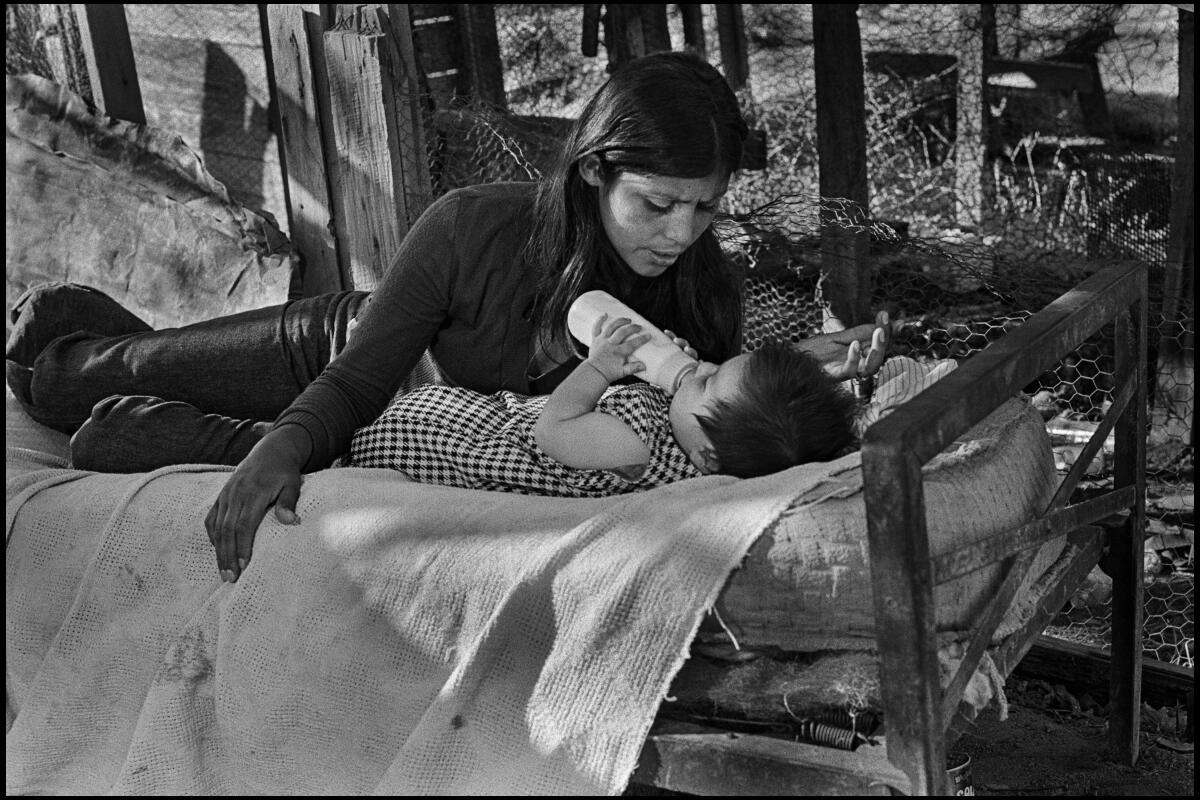
When photographer Peter Turnley was just 20 years old, an acquaintance from the California Office of Economic Opportunity reached out to him with a question. Would he be interested in taking four months off from school in Michigan to come out west, drive around, and take pictures of the state’s poor and working-class populations? An eager Turnley jumped at the chance and ended up spending the summer of 1975 traversing California in his tiny white Volkswagen, doing everything from spending time with migrant farmworkers in the San Joaquin valley to hopping trains with travelers looking for work to chatting up Oaklanders about how they were making ends meet.

But then his OEO contact left mid-project and, while Turnley says he submitted a set of prints to the department, they never ended up seeing the light of day. That will all change Dec. 4, when the pictures — along with others the news photographer has taken in his current hometown, Paris — will go on display at the Leica Gallery in L.A.

Why did California’s OEO think of you for this project back in 1975?

When I was a freshman in college at the University of Michigan, during the winter break, I went back to Fort Wayne, Indiana, which is where I’m from. There was a very progressive mayor in power at that point and he assembled a really interesting group of people in his city government.

When I began photography at the age of 16, I decided to use it to try to change the world, and I particularly admired photographers that had used photography to affect public policy, like the Farm Security Administration photographers in the 1930s, which included people like Dorothea Lange. So I convinced this mayor to hire me to shoot pictures for the city of Fort Wayne on the themes that the city was making policy around.

The Other California, 1975

During that time, I met a woman who was the public affairs officer for the city of Fort Wayne. Unbeknownst to me, two years later she moved out to California and that’s how I got a letter at the end of my sophomore year of college asking me if I would be willing to come out to California to do a four-month road trip to document the lives of the working class and the poor of California. She explained to me that the Office of Economic Opportunity needed to make a report that underlined its efforts in trying to help the the poor of California, and that they they wanted to use these photographs as a way to illustrate that report.

I was given some very basic statistics of pockets of poverty around the state of California, but no other specific direction, and I was promised just enough money to cover fleabag hotels and diner food and gasoline. I was given access to a government darkroom in Sacramento, where occasionally I would go to develop film and make contact sheets and prints, but otherwise, I was out, driving to every corner of the state.

What were your impressions of the state before you came, as someone originally from the Midwest?

I didn’t grow up on a farm [in Indiana] but I knew a little bit about farming and what really struck me when I went out to California was what I think most of the world doesn’t really realize, and that is that [much] of the state is agricultural and rural. In many ways, the San Joaquin Valley felt a whole lot more like Indiana than almost any other place I could imagine.

What did you take away from the project as a whole?

One of the aspects of this body of work that fascinates me and that I guess in some ways I’m very proud of is that one feels in the photography and in the connection with people an almost innocent and authentic view. The pictures are very direct. They’re very human and they really deal with the lives of people, because you’re looking into their eyes and getting close to them.

Another thing that struck me was that because I was dealing particularly with people that were working class or often very poor, that there was something very similar in terms of people’s plight, whether they were living in urban areas or in the countryside. Everyone I met seemed like really decent, good, hard-working people that just wanted a better life for themselves and their family. They wanted to survive with dignity, and I felt that we all owe these people a great sense of debt.

I also remember that when I spent some time with hobos — and I’m not sure if that’s a pejorative word today, but they’re a little different category of people than simply those who are homeless. Hobos were most often men that chose this lifestyle to ride the trains and stop and work in various places. But I remember being in a boxcar with four men and all four were pretty much like everyone else. It was just that their lives had kind of crossed over a line into the margins, just by a thread. And I remember realizing at this young age just how fragile life is, or how close we can be to that line at almost any time.

The Other California 1975

Something I found striking in these pictures is how little has changed, in some ways. There have always been people working in California’s fields that are underpaid and underappreciated, and in some ways, things have only gotten worse for a lot of that population.

During COVID, I lived in New York City and every day for three months from the very first day of the lockdown, I went out and I walked. I would meet people and I would ask them three questions: What was their name, their age, and how were they making it? And then after three months, I went back to Paris, and I walked the streets there and did the same thing, ultimately making a book of the pictures I took from that time called “A New York-Paris Visual Diary: The Human Face Of Covid-19.

A young migrant worker picks strawberries in a field in the San Joaquin Valley.

But the thing that struck me during COVID was that it was the working class of New York that saved all of our lives. There were whole walls of buildings on the Upper West Side that were dark at night because everyone had gone to the Hamptons or left New York, but the people that saved our lives were cashiers, postal workers, FedEx workers, nurses, doctors, medics, ambulance drivers and mostly working-class people. And looking back, I had this hope that maybe when the COVID crisis was over, that we would rectify in a general way how we looked at our society and how we value the people that are actually doing the work in our society, but in actuality, once the lockdown was over, we just went back to being ruled and led by people that have a lot of money. And, really, the well-to-do of California and the rest of the world would never go and pick their own strawberries.

Have you kept in touch with anyone whose picture you took in 1975, or heard from anyone after the fact?

I’ve for sure wondered what happened to all the people in the pictures, but unfortunately over all these years, I’ve never had contact with anyone. It would be absolutely amazing if somebody from that time would come out of the woodwork.

The Other California 1975

You’ve been a working photographer for over 50 years now, having worked in 90 countries, taking 40 covers for Newsweek, and shooting many of the last century’s most important geopolitical events. Are there moments you still can’t believe you saw, or pictures you can’t believe you took?

Well, just this morning, I signed the prints that will be in this exhibit and they’re really beautiful. They’re made in Paris and they’re traditional silver gelatin prints, beautiful quality. But I held up one of the images from The Other California – 1975, and it was this Okie, a guy that was born during the Dust Bowl in Oklahoma and moved out to California. Looking at that image today, looking in the eyes and the face of this man, I really had the impression that — even though it’s my own photograph — that I was looking at one of Dorothea Lange’s photographs. I’m very proud of the fact that there’s a continuity of that kind of attention to the heart of people’s lives in my work.

The Other California 1975

Other California 1975

In this modern era of digital photography, on the one hand I think it’s wonderful that everyone is making photographs now more than ever before. On the other hand, I think that the world of photography has moved away from real powerful, direct human connection. And to me, that’s what’s most important. I’m a lot more interested in life than I am in photography. I mean, I care a lot about photography. I love beautiful photographs, and I try to take them as well as possible, but what’s most important to me are the themes of life that I photograph and at the center of all that is emotion.

Peter Turnley — Paris-California

Where: Leica Gallery, 8783 Beverly Blvd. in West Hollywood

When: Dec. 4-Jan. 12. Turnley will present the work at the gallery Dec. 7 from 2 to 4 p.m. and sign copies of his book “The Other California – 1975.”
Source link

Lax oversight leave child farmworkers exposed to toxic pesticides

Hundreds of thousands of times each year in California, farmers and their contractors spray pesticides on fields and orchards in the state’s agricultural heartlands.

Farmworkers young and old can be exposed to dangerous concentrations of toxic chemicals if they are not properly trained, left uninformed about when they can safely enter sprayed fields or exposed to pesticide applications — because of factors such as wind drift or operator error.

Yet California’s system of protecting farmworkers from pesticide dangers is anything but a tight safety net. Through interviews, public records and data analyses, an investigation by Capital & Main has found that:

  • Enforcement of pesticide safety rules is splintered among dozens of county agriculture commissioners, resulting in piecemeal citations. Companies that operate in multiple counties were not fined for hundreds of violations — many of them pertaining to worker safety.
  • County inspections to enforce pesticide safety are minimal in the state’s farm belt. In 2023, there was one inspection for every 146 times that pesticides were applied in eight of California’s top 11 producing counties, according to data provided by those counties.
  • In interviews, more than two dozen underage farmworkers and parents described feeling sick and dizzy or suffering from skin irritations after being exposed to pesticides. Although state law requires illnesses resulting from pesticide exposure to be reported to the state, experts and labor advocates say the number of cases is surely undercounted, in part because laborers fear retaliation from employers if they report unsafe working conditions.

Asked about these findings, state officials said the data does not reflect some of the broader actions they have taken to protect farmworkers. County regulators contend that their enforcement has improved safety conditions for laborers and noted that use of toxic pesticides has decreased significantly over the last decade. Yet groups that have researched pesticide enforcement say the state of California is not using its powers to fine repeat offenders for safety violations — and hold them accountable.

“It’s especially troubling because it means workers aren’t being protected,” said Anne Katten, director of the Pesticide and Work Health and Safety Project for the California Rural Legal Assistance Foundation.

Exposure to pesticides and laboring in extreme heat are problematic for all farmworkers, but the long-term effects on the neurological system and vital organs can be more pronounced for younger laborers, according to medical experts.

“Children are still developing, and so we don’t want to mess with that development,” said Dr. Jose Suarez, a physician and associate professor of public health at UC San Diego, who has researched the effects of pesticides on adolescents.

Araceli, who started working the fields of the Santa Maria Valley four years ago when she was just 13, said that some of her most disturbing experiences involved planting vegetables in fields that reeked of chemicals.

“Sometimes, it would be really, really pungent,” she recalled, adding that she’d get headaches and feel like throwing up.

At times, Araceli said, skin peeled off her fingers and they turned white.

Her mother, in a separate interview, said in Spanish that her “head began to hurt” after she entered a lettuce field where a tractor had sprayed liquid that smelled like chemicals.

A 17-year-old strawberry picker

A 17-year-old strawberry picker at one of the many berry fields in the Salinas Valley.

(Barbara Davidson / Capital & Main)

Unlike in other states, California’s system to protect farmworkers is split between local and state agencies.

Enforcement at the local level is the responsibility of 55 county agricultural commissioners, who are appointed by their boards of supervisors and have a dual role of promoting agriculture and enforcing state pesticide safety laws. The state Department of Pesticide Regulation enforces pesticide safety across California and provides guidance and training to agricultural commissioners.

In interviews, agricultural commissioners said the dual regulation system works because crops and growing seasons vary in each county and they can focus on the specific needs in their jurisdictions.

Yet when agricultural commissioners take enforcement action against a company for pesticide violations, they are not required by the department to check whether the firm has committed violations in other regions of California. In a statement, the department said that it “monitors compliance for repeat offenders as well as trends that may occur throughout the state.”

Capital & Main analyzed 40,150 records detailing pesticide enforcement actions across California from January 2018 through the first quarter of 2024.

According to the records, more than 240 businesses were cited for at least 1,268 violations of state pesticide laws in three or more counties. But for at least 609 of these violations — or 48% — the businesses paid no fines and received only notices or warnings.

Pesticide safety violations

Over six years, California cited more than 240 businesses across the state for at least 1,268 violations of pesticide safety laws in three or more counties.

Graph shows more than 240 businesses have at least 1,268 violations of state pesticide safety laws in three or more counties, but nearly half of the fines were not paid.

But for nearly half of those violations the companies paid no fines and only received warnings or notices to correct the problems.

Analysis is from more than 40,000 state enforcement records from 2018 through early 2024.

Lorena Iñiguez Elebee LOS ANGELES TIMES

Craig Cassidy, a spokesperson for the Department of Pesticide Regulation, said in a written response that the number of violations with no fines “does not account for broader actions [that state and county regulators] may have taken to address the violations or to support compliance,” including warning letters or required training.

“Issuing fines is one tool in an effective enforcement program, which may be used in conjunction with other strategies to support compliance with statewide pesticide use laws and regulations,” he said.

Still, according to the data, there were repeated cases in which businesses were cited for multiple violations in separate counties but were never fined.

Agricultural contractor Nextcrop Inc., for example, was cited for 10 violations in four counties within a span of three years, but it was never ordered to pay a fine and received only warnings and notices to correct the problems, the records show.

All the violations pertained to requirements such as failing to provide pesticide safety training for workers, not posting information to inform employees about which pesticides were used on crops and failing to post information about when it was safe for workers to enter pesticide-sprayed fields.

The chief executive of Nextcrop and another company official did not respond to requests for comment.

Nutrien Ag Solutions, which is operated by a leading global supplier of agricultural services and products, is a company known to state regulators. In 2018, the firm agreed to pay $331,353 to U.S. officials in connection with 52 federal pesticide safety violations, some of them at seven facilities in the San Joaquin and Santa Maria valleys. The Department of Pesticide Regulation was involved in the investigation, according to federal regulators.

And from 2018 to 2022, agricultural commissioners cited the company for 35 separate violations of state law in 12 counties, the records show. They included failing to provide decontamination facilities and protective gear for workers, not following label instructions for pesticide use and failing to post emergency medical information in fields.

The firm paid fines for only 10 of the violations for a total of $14,700, according to the records.

In a statement, Nutrien Ag Solutions said that the violations “were resolved years ago, with prompt action taken at the time to address and correct them.”

“Nutrien upholds high standards in our operations,” the company said, “and remains dedicated to supporting farmers globally with the tools and expertise they need to produce safe and healthy crops.”

On two separate occasions, in 2018 and 2021, the Fresno County agricultural commissioner referred Nutrien Ag Solutions to the Department of Pesticide Regulation for enforcement action, the records show. Yet even after the second referral, the business continued to operate and was cited for 16 additional state violations in more than a half-dozen counties, the majority for which it was not fined.

The department said the case was referred to a regional office in Fresno County, but that it was never forwarded to headquarters in Sacramento for review.

“This was an error,” Cassidy said, “and we are looking into this matter.”

He added that the department is planning to propose regulations that would require agricultural commissioners to check a company’s statewide compliance history when taking enforcement actions, as well as justify the amount of their fines.

California agriculture has long depended on chemical-based pesticides to reduce crop damage and boost yields. Although organic farming has grown over the years, it accounts for less than 10% of all cropland statewide, far from the 20% goal by 2045 that California has adopted.

Commissioners in eight of California’s top 11 agricultural-producing counties agreed to provide estimates for the total number of times pesticides were sprayed in their jurisdictions — a figure they are not required by the state to track.

Nearly 176 million pounds of pesticides were applied to crops in 2023, with farmers in Fresno and Kern counties being the top users. In most counties, farmers decreased pesticide use.<br> <br><b>(Search by county below)</b>

According to the estimates, pesticides were sprayed more than 687,000 times in the eight counties in 2023. That same year, 4,720 total inspections were performed in those counties — or less than 1% of the time that fields and orchards in those jurisdictions were sprayed with pesticides, according to enforcement records filed with the state.

Pesticide inspections

Agricultural commissioners provided estimates for the number of pesticide applications for 2023 in eight of the top 11 counties for agricultural production in California. The data and state enforcement records showed that these counties performed a small number of inspections compared with overall pesticide applications.

= 1,000 pesticide applications

Graph shows there were more than 687,000 pesticide sprayings in California counties, but inspections were performed less than 1% of the time.

Safety inspections were performed less than 1% of the time

Agricultural commissioners in Fresno, Imperial, Kern, Merced, Monterey, San Joaquin, Santa Barbara and Tulare counties and state pesticide enforcement records.

Lorena Iñiguez Elebee LOS ANGELES TIMES

In interviews, six agricultural commissioners said the pesticide regulatory system is too complex to be measured by a single metric, such as the number of inspections.

“I don’t think it’s a realistic way to gauge effectiveness,” said Melissa Cregan, the commissioner in Fresno County.

She and other commissioners pointed to illnesses from pesticide exposure as a key indicator of their success. Of the 859 cases reported in California in 2021, the most recent figures available, 210 — or 24% — were agricultural workers.

But experts and worker advocates say that such figures are probably undercounted, noting that more than half of the state’s farmworkers lack documentation.

“There are many, many cases that are not reported because the workers are afraid of being deported or retaliation from the employer,” United Farm Workers President Teresa Romero said.

Commissioners also said that farmers are using less dangerous chemicals, citing a 56% increase in use of biopesticides over the last decade.

In the last 10 years, they said, use of carcinogenic substances has dropped by 20% statewide, groundwater contaminants have been reduced by 77% and the use of reproductive toxins has dropped by 45%.

Commissioners said that most of their field enforcement is focused on so-called restricted use pesticides, which represent a relatively small percentage of all pesticides used but have a higher potential to harm people, wildlife and the environment and include chemicals that can cause cancer.

Yet even by that measure, relatively few inspections are conducted.

The hands of a 17-year-old strawberry picker

The hands of this 17-year-old strawberry picker are a testament to the physical nature of the work.

(Barbara Davidson / Capital & Main)

In Monterey County, where 14-year-old Jose and his family labor in Salinas Valley strawberry fields, the number of all agricultural pesticide safety inspections in 2023 equaled just 3% of the total number of times that restricted-use pesticides were used, according to state records. That equates to just one inspection for every 35 times that the toxic chemicals were applied on farmlands.

From 2021 to 2023, the Monterey County agricultural commissioner approved more than 53,800 “notices of intent,” which businesses are required to file prior to applying restricted-use pesticides. That was the highest number of approvals among the top agricultural counties in California — and more than three times the number in the next-closest county, according to enforcement records.

Monterey County’s agricultural commissioner, Juan Hidalgo, said that, unlike other counties in the state, his jurisdiction has multiple growing seasons. He added that “we do review every single one of those notices of intent.”

The Salinas Valley stretches for about 90 miles across the county and is lined with rows of berries, lettuce, spinach, artichokes and cauliflower.

The valley is where, in 1970, Cesar Chavez and the United Farm Workers launched their Salad Bowl strike, the largest farmworker labor action in U.S. history.

Today, the Salinas Valley’s biggest cash crop is strawberries, accounting for more than 20% of Monterey County’s $4.9-billion annual production value from agriculture.

A dozen minors interviewed in Monterey County described picking berries in fields that smelled of chemicals or working in fields where tractors had sprayed liquids with a strong chemical odor. Under state law, the amount of time that pickers are supposed to stay away from treated fields generally ranges from four hours to several weeks, depending on the pesticide.

Jose and his sister Raquel, 19, described entering a field in 2022 after a tractor had sprayed in rows next to where they were working.

“It smelled like chemicals, really strong … It made me dizzy,” said Raquel, who graduated from high school with a 4.0 grade point average and now attends college. She wants to become a nurse and work in the region, where she can use her Spanish and Mixteco language skills to help her community.

The California Strawberry Commission, which represents hundreds of growers, said that the state has the nation’s most stringent workplace safety laws and that protecting berry pickers is a top priority.

“The health and safety of farm workers is paramount in all aspects of production and prioritized by farmers and federal, state and local regulatory agencies,” Chris Christian, a vice president with the commission, said in a written response. “Farmers are also working in the fields, and their families live, work, and go to school in the communities where they farm.”

Hidalgo, the county agricultural commissioner, said worker safety is also his top priority.

He acknowledged that his 20 inspectors can’t cover all of the 314,000 acres in the county used to grow fruits and vegetables, but he said they know the growing cycles for different crops and when pesticides are most likely to be used.

“We just show up,” Hidalgo said, “and start doing an inspection.”

The inspections include a check of company records to confirm that workers receive required pesticide safety training. Yet underage workers don’t necessarily understand the documents they are told to sign, according to youths and their parents.

When she was 16, Raquel recalled, she was handed a stack of documents that had something to do with pesticides. “They just told us to sign it and to just get ready to work,” she said.

“I didn’t really know what it was because I was young,” she added, “but I signed it.”

Lopez is an independent journalist and fellow at the McGraw Center for Business Journalism. Data journalist Cherry Salazar analyzed state pesticide records for this report.

Source link