The National Television Awards are back for 2026 and every year, the biggest TV talent takes on one another to win the top prizes in the coveted categories
20:15, 08 Sep 2026Updated 20:44, 08 Sep 2026
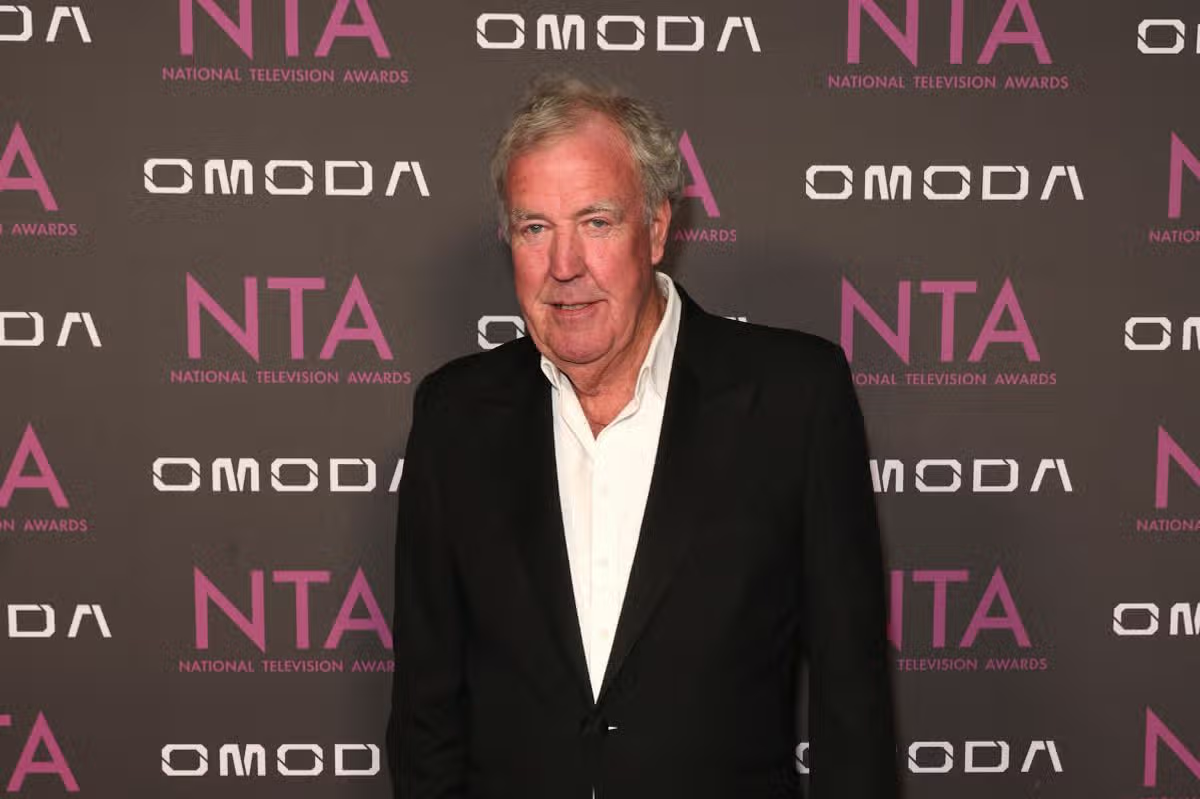
Clarkson’s Farm won Reality Docuseries (Image: Getty Images for The NTA’s)
The big award ceremony is back, with Joel Dommett hosting for a sixth year in a row. Every year, he rubs shoulders with national treasures, such as Ian McKellen, and ahead of the ceremony, he told The Mirror that “just to be part of that is really cool”.
“There was a moment where I was still on stage with Ian McKellen for seven minutes, watching the VTs,” he told us, “I was just panting, because I was running around before, but then I was watching the VTs with Ian, who was presenting an award next. We had a nice little chat and I loved that moment because he’s someone you would never meet in real life.”
The NTAs are also celebrating their first all-female drama performance shortlist – with Gavin And Stacey star Ruth Jones to compete with Ella Bruccoleri, Judy Parfitt, Sheridan Smith and Vicky McClure for the prize.
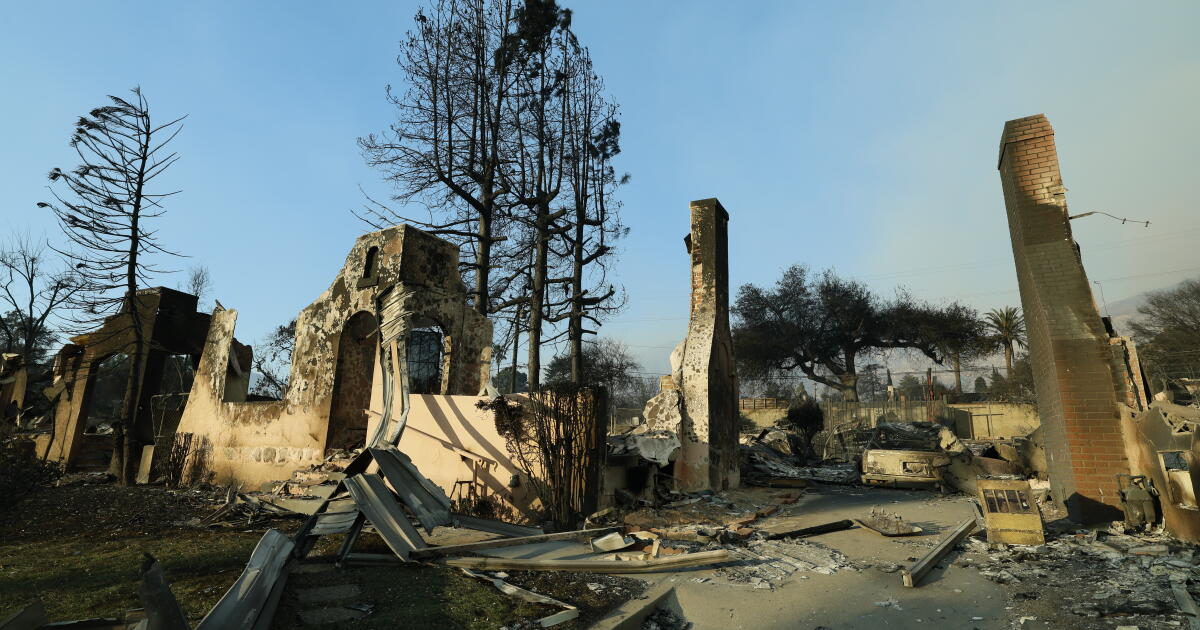
Los Angeles County announced Monday that it had filed a lawsuit against State Farm General after hundreds of victims of last year’s devastating wildfires complained that their claims had been delayed, denied or underpaid.
The lawsuit alleges that State Farm engaged in illegal and deceptive business practices that kept victims of the Palisades and Eaton fires from receiving what they were entitled to under their policies.
County officials said their investigation into the complaints found unreasonable delays in processing claims, as well as “systematic underpayments.”
Officials said they also found that State Farm had illegally suppressed smoke damage claims.
“Survivors are just asking for what’s right,” L.A. County Supervisor Kathryn Barger, who represents Altadena, said at a Monday news conference.
Bob Devereux, a State Farm spokesman, said in a statement that the company would respond to the lawsuit through the legal process.
“State Farm General strongly disagrees with Los Angeles County’s characterization of our wildfire claims response,” he said.
Devereux said that State Farm has so far paid more than $6.2 billion on claims related to the two wildfires, including about $1 billion for smoke-related damage. About 78% of the claims have been closed, he said.
“We continue working directly with customers whose claims remain open and evaluating each claim based on the facts of the loss and the coverage provided by the customer’s policy,” he said.
“Our focus remains on helping customers recover,” he said.
Wildfire victims praised county officials for the lawsuit, which was filed in L.A. County Superior Court.
Joy Chen, executive director of Every Fire Survivor’s Network, said at the news conference that, in the months after the fires, it became apparent in talking to victims that those with State Farm policies were not getting the benefits they had paid for.
She said for those families, insurance had become “a barrier to recovery” rather than a safety net.
“Nineteen months after the fires, families are still suffering,” she said.
The county’s investigation included looking at complaints that Chen’s group and others had collected, as well as hundreds of other documents from State Farm policyholders.
County officials said that State Farm “failed to substantially comply” with their requests for documents and information during their investigation.
With more than 2.8 million residential and commercial policies, State Farm is California’s largest private insurer.
The county’s lawsuit includes dozens of complaints of L.A. County fire victims.
“After six decades of paying thousands a year for insurance, we expect them to honor their agreement,” said one family.
Many families say the insurer refused to test their homes for toxins left by smoke.
The lawsuit claims that State Farm “drastically lowballed” estimates of financial losses for destroyed or partially damaged homes.
“They offered us $11,000 to remediate our five-bedroom house,” complained one family. ”That’s only 13% of the actual cost.”
According to the California Department of Insurance, 11,300 State Farm policyholders filed homeowner claims arising from last year’s L.A. County fires.
The lawsuit asks the court to require State Farm to pay full restitution to policyholders, as well as civil penalties for violating state law.
The light is doing the golden hour thing it only does in June, and my four-year-old is scattering dragonflies as she launches herself into the cold water.
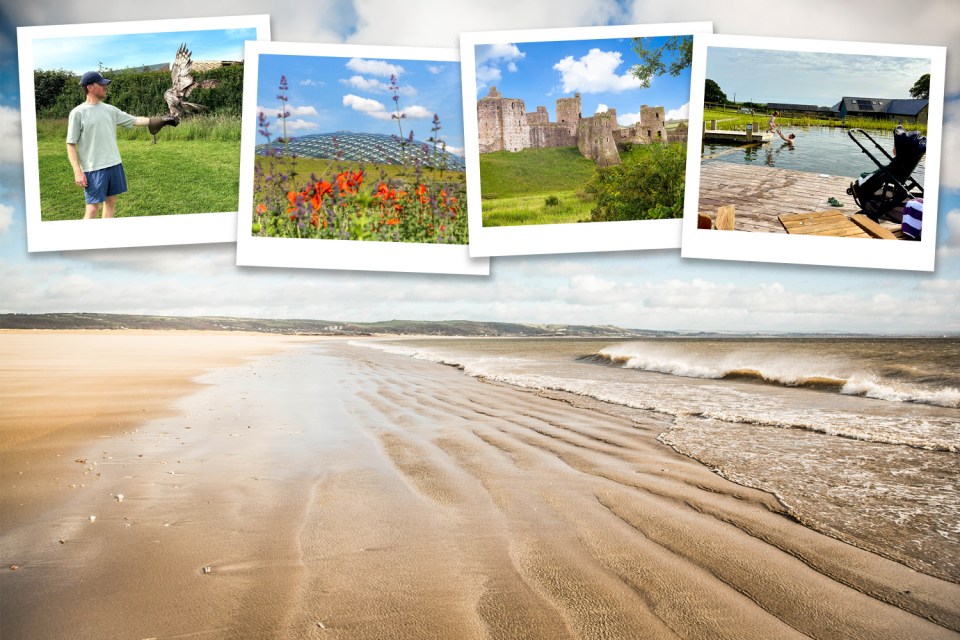
Cefn Sidan, an eight-mile stretch of sand that was the first beach in Wales to win a Blue FlagCredit: GettyThe National Botanic Garden of Wales, just over half an hour’s drive from the farm, was one of the most relaxing family days out we’ve ever doneCredit: Getty
“Can we go in the ‘cold pool’ again?” she asks the next morning. Again. She has asked roughly 200 times this week.
The pool in question is the natural swim pond at Tanylan Farm, on the coast road between Ferryside and Kidwelly in Carmarthenshire.
Sign up for the Travel newsletter
Thank you!
We stayed in Ty Llo (Calf House), one of a handful of holiday barns on site — and the pool was the single best thing that has ever happened to my daughter.
There was a sauna next to it for the grown-ups, a private hot tub outside our holiday cottage, and the beach was 400 yards down the lane.
My wife and I, our daughter and baby son had travelled by train to Swansea then picked up a hire car and made our way to Carmarthenshire — that bit of Wales everyone drives past on the way to Pembrokeshire. Their loss.
On day one, the sun was out so we visited Pembrey Country Park — 500 acres of woodland backing on to Cefn Sidan, an eight-mile stretch of sand that was the first beach in Wales to win a Blue Flag.
The sand is absurdly fine and the water so shallow that by mid- afternoon it had warmed up like a paddling pool.
Kidwelly Castle, of Monty Python movie fameCredit: GettyOur final stop was the British Bird of Prey CentreCredit: Supplied
For small children, it is close to perfect.
The park itself is the showstopper, though.
There’s a dry ski slope, a toboggan run, crazy golf, a pirate adventure playground and miles of flat, traffic-free cycling on rental bikes.
We arrived planning to stay two hours and left after seven.
Next day, the National Botanic Garden of Wales, just over half an hour’s drive from the farm, was one of the most relaxing family days out we’ve ever done.
Monty Python fame
Think Eden Project but at a size you can easily get round with a buggy and a pre-schooler.
The Great Glasshouse, packed with plants of six Mediterranean climates, sits in the landscape like a dropped raindrop.
We ate our picnic sandwiches in the “Canary Islands”, with the smell of cedar and lavender.
Outside is 568 acres of restored Regency parkland, lakes, waterfalls — and a Gruffalo trail themed on the kids’ book character.
Kidwelly Castle, of Monty Python movie fame, is a 20-minute drive away.
“Let’s climb to the top, Daddy,” my daughter begged. So we did — and the views over the Gwendraeth estuary are worth the effort.
Princess Gwenllian, who rode out from this castle to lead an army into battle against the NormansCredit: UnknownThe Sun’s Jacob Lewis and daughterCredit: Supplied
From on high, I told my princess-obsessed daughter about a real one, Gwenllian, who rode out from this castle to lead an army into battle against the Normans.
I left out how it ended (head lopped off) and she was suitably impressed.
Our final stop was the British Bird of Prey Centre which recently moved to a purpose-built site at Idole, near Carmarthen, after years at the National Botanic Garden of Wales.
It flies golden eagles, red kites, owls and peregrines, with three shows a day and an indoor arena for when the Welsh rain sets in.
We did get four days of rain but it barely affected our week’s getaway.
There was always a glasshouse, a castle, an indoor flying arena — or that cold pool.
We’ll be going back for more — she’s already asked.
Kelvin and Liz Fletcher share the highs and lows of farming on Fletcher’s Family Farm
Kelvin Fletcher said collecting sheep samples was not the easiest job(Image: ITV)
Kelvin and Liz Fletcher shared fears for their Cheshire farm following a heartbreaking loss.
The couple shares the highs and lows of farming in their ITV series, Fletcher’s Family Farm. However, in the latest repeat episode, Kelvin and Liz faced a setback. They also bid a bittersweet farewell to their beloved alpacas as they needed to make space on the farm.
Kelvin Fletcher and Liz welcomed vet Angelica to the farm for a health check on their flock following the death of their beloved pet lamb, Aga.
“It kind of looks a bit chaotic, but this is the smoothest it’s ever happened,” Liz shared when referring to them rounding up the sheep.
Kelvin noted, “We’re improving. It just shows we are improving. With the ewes and lambs separated, it’s time for a not-so-pleasant job of the season.”
“Put your hand up if you want a poo bag,” Kelvin shouted to his kids, who seemed more than enthusiastic about picking up sheep poo.
The former soap star went on to share his fears, “To try to prevent losing any lambs, vet Angelica will take the poo samples collected today for testing so we can treat any early signs of infection.”
She explained to Kelvin, “As they grow up, they build some kind of immunity, but lambs are naive to them, and worms are everywhere at pasture, so we need to make sure that they have a good level of exposure when they’re young, which means that they will build up their immune response, but at the same time, the burden is not too high and make them sick. “
Sharing their previous loss, he continued, “We’re taking a belt and braces approach this year, as through the winter worms were a real problem and proved to be fatal for a couple of our lambs, including our beloved Aga. Aga was an orphan lamb, whom we fell in love with, but later lost to a worm infection.”
With all the samples collected, vet Angelica went back to the lab to test the sheep poo.
Luckily for the Fletcher family, the results came back all clear, as he informed viewers, “Angelica has been back in touch with the good news that the worm count isn’t dangerous, but as advised, we still treat them.
“It’s not the easiest job to do, but such an important one, and this time it was such a great team effort. Right, so now it’s that simple chase and getting them back out, back out in the pasture. “
Fletcher’s Family Farm is available to watch on ITVX.
SACRAMENTO — The California legislature passed a bill Wednesday that would require the state to track the use of pesticides that contain perfluoroalkyl and polyfluoroalkyl substances, known as PFAS chemicals, which can be harmful to humans.
The bill, by Assemblymember Nick Schultz (D-Burbank), heads to Gov. Gavin Newsom, who can sign it into law or veto it.
Schultz’s original bill would have phased out pesticides with PFAs and put California in line with Maine and Minnesota, which passed laws restricting their use.
The state’s powerful agricultural industry objected to the proposed ban. Nearly half of the country’s vegetables and more than three-quarters of its fruits and nuts come from California, according to the state.
The revised bill instead requires the Department of Pesticide Regulation to flag which pesticides have PFAs in its public state database.
The vast majority of PFAS chemicals have not been tested for human health effects, according to the Environmental Protection Agency. Studies show that exposure to certain levels of PFAs may lead to decreased fertility and developmental delays in children and increase the risk of cancers.
State regulators and environmental groups disagree on the definition of the chemicals, making it difficult to find a consensus on regulations.
The European Union has prohibited 23 of the PFAS pesticides in use in California, including bifenthrin, trifluralin and flufenacet, according to Environmental Working Group, a sponsor of Schultz’s bill.
Schultz expressed disappointment after his bill was changed this summer but said Thursday that the remaining regulations are “a vital step toward ensuring California’s agricultural legacy is defined by health and innovation, not by the accumulation of toxic PFAS in our soil and water.”
“We need to help our farmers transition away from these persistent chemicals so that California can be a global leader in food safety,” he added.
The Magic Castle is getting in on the theme park game.
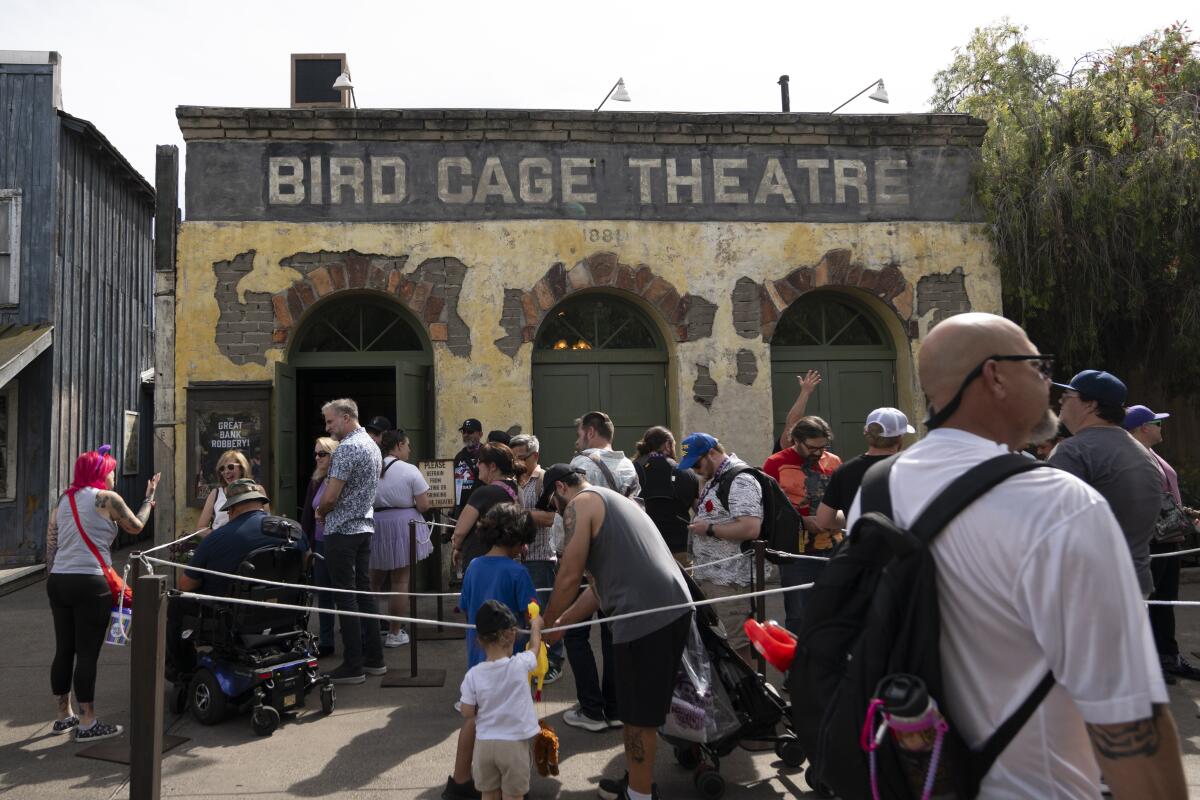
The famed Hollywood institution is teaming up with Knott’s Berry Farm for its after-hours Halloween event, Knott’s Scary Farm, now in its 53rd year. The Magic Castle will supply the artists and show direction for a production that is expected to run nightly in the park’s recently refurbished Bird Cage Theatre.
Sign up for Mr. Todd’s Wild Ride
An insider guide to the ever-changing world of theme parks, coming to you straight from SoCal — the theme park capital of the world.
By continuing, you agree to our Terms of Service, which include arbitration and a class action waiver. You agree that we and our third-party vendors may collect and use your information, including through cookies, pixels and similar technologies, for the purposes set forth in our Privacy Policy such as personalizing your experience and ads.
The theme park initially reached out to the Magic Castle last year, says Payden Adams, vice president of entertainment for Knott’s Berry Farm, but the castle was in the middle of a leadership reorganization at the time. With that completed, a partnership could finally begin.
“It is just astounding what they’ve done with the Bird Cage Theatre,” says Jessica Hopkins, granddaughter of castle pioneers Bill and Irene Larsen and the castle’s chief operating officer. “Magic Castle magicians have been performing in there for decades. It just felt right.”
The magic shows will take place at the park’s recently refurbished Bird Cage Theatre.
(Kyusung Gong / For The Times)
Curating Knott’s magic show will be Rudy Coby, a resident magician at the Magic Castle. Coby performed at Knott’s about 35 years ago and credits the park in helping him get his start. He says the new show, “Occultum,” will vary by week with different performers lined up throughout the Halloween season. Knott’s Scary Farm begins Sept. 17.
And yet, says Coby, “Not every magician is for this audience.” So what’s the differentiating factor for a Halloween magic show?
“It’s a little more edgy,” Coby says. “You really have to grab their attention. It’s the TikTok generation.”
Some of the illusions Coby says he will bring to Knott’s Scary Farm would be “too intense for the Magic Castle.”
“The ideas I’ve had, with chainsaws and cutting off my limbs, I couldn’t get away with at the Magic Castle,” he says.
“But you can here,” says Hopkins.
The Magic Castle-headlined show is not the only new addition to Scary Farm in 2026. Here are two other reasons I’m looking forward to the event.
Inked: A new maze with killer vintage cartoons
Concept art for the new Knott’s Scary Farm maze, Inked.
(Knott’s Berry Farm)
One of the two new mazes coming to Knott’s Scary Farm will rely heavily on black-and-white, vintage-style animation. Inked, as it’s called, will be set in the 1930s, and was introduced at a media event with a song-and-dance production that recalled Disney’s classic Silly Symphony “The Skeleton Dance.”
The story centers on Mortimer Morbid, a deadbeat, down-on-his-luck animator whose career changes — not necessarily for the better — when it’s discovered his blood can bring his drawings to life. Of course, cartoons infused with blood don’t have the most altruistic desires.
Inked designer Daniel Miller says the maze took two years to create, largely because Knott’s conceived the animation for the walk-through in-house with a team of four. Most every room in the haunted house is expected to feature original media, as the animated creations will be represented both in their cartoon form and as costumed characters.
And it’ll be gruesome.
“We kind of geared it around the notion that they’re bloodthirsty,” Miller says of the killer ‘toons. “We see all the animators in various stages of disembowelment.”
Expect the unexpected with ‘Voodoo: Bayou’s Edge’ and Unearthed
Concept art for Unearthed, a new Knott’s Scary Farm maze.
(Knott’s Berry Farm)
Knott’s Scary Farm, unlike its main SoCal competitor, doesn’t rely on known film and television properties. That means the event can generally get a little … weirder. You see that in its mazes, as noted above, as well as in its theatrical productions. Also new this year is a show titled “Voodoo: Bayou’s Edge,” which takes place on an outdoor stage. The production centers on a voodoo queen and the mysterious happenings in a cemetery. Knott’s is pitching it as a music, dance-focused show.
And while voodoo can potentially be a culturally sensitive subject to tackle in a theme park, the show comes from the mind of the respected Rovin Jay, who has long been closely involved in the park’s spectacular “Ghost Town Alive!” Expect “big dance numbers” and something “really sexy,” says Adams.
Another new maze, Unearthed, will be set in the present day but takes its cues from films such as “Raiders of the Lost Ark” and “The Mummy” as it deals with a supernatural archaeological dig. Maze designer Jon Asperin says it will have numerous interactive elements, such as effects triggered by guests pulling a lever.
“Having the ability to come up with original stories lets us tap into the nerd in all of us,” says Asperin. “We don’t feel restricted by certain IP or things that may not be appropriate. We get a chance to challenge ourselves with trying out new things that some folks won’t take a risk on.”
This week in SoCal theme parks
The Disneyland attraction Mad Tea Party as it was under construction just months before the park opened. The image is from the documentary “Disneyland Handcrafted.”
(Disney+)
A must–see Disney history event. Nonprofit creative institution Ryman Arts, in partnership with Santa Ana’s Bowers Museum, will host a talk and cocktail reception centered around a screening of Leslie Iwerks’ documentary “Disneyland Handcrafted” on Sept. 27. It’s a charity event, and a good one, as the panel lineup is top notch. Historian and author Tim O’Day will moderate a talk that includes the film’s producer, Mark Catalena, former Imagineer-turned-historian Tom Morris and current Imagineer Emily “Emo” O’Brien, who oversees creative at Disneyland and is leading the team behind the just-announced makeover of Tomorrowland. Don’t expect any insights on the latter, of course, but do anticipate a lively talk on the evolution of Disneyland. Tickets start at $125 and are on sale now.
Exciting Disneyland construction news. Big changes are coming to Disneyland, and while many are years away, the positive sign is that the park is wasting no time in getting started. There are now indications of construction in Disneyland’s esplanade between its two parks. This will pave the way for a new parking garage, of which groundbreaking has just begun, as well an entrance experience on the eastern side of the resort. This is the first of many steps, but one that must be completed before Disney begins its wider expansion that could bring attractions such as “Avatar” to the resort.
Ride report
A photo of the Haunted Mansion’s new gingerbread house, as snapped from my ride vehicle.
(Todd Martens / Los Angeles Times)
Merry Christmas! Yes, that’s right, as the Haunted Mansion has been given a Christmas-heavy makeover, as always focused on “Tim Burton’s The Nightmare Before Christmas.” (And yes, before the debate begins, it’s clearly a Christmas movie.) While I prefer the original Haunted Mansion, there are plenty of fun and clever details in the seasonal makeover that still make it a must-experience attraction. The attic scene, for instance, is full of clever nods to Disney history, including a Rolly Crump-inspired melting candelabra man. Each year I wonder if what I’m seeing is brand new, or was always there, such as what appeared to be a tiny bride figurine.
But one change is guaranteed: Each season Disneyland’s team concocts a new gingerbread house for the ballroom diorama. This year’s edition is a giant, candy-infused music box-like creation, which gradually opens as guests glide past it and a skeleton pops out. The concoction is designed in the shape of the Haunted Mansion itself, so it’s a little mansion-within-a-mansion. And, bonus, the room smells like gingerbread.
The best thing I ate at the parks this week
The delicious pumpkin cookie from Disneyland’s Harbour Galley.
(Todd Martens / Los Angeles Times)
I love a cookie, and Disneyland’s Harbour Galley has the best one on the property this Halloween season with its pumpkin creation. They’re small-ish — three or four bites — but come in packs of 6 ($8.49) or 13 ($14.49). They’re soft, slightly chewy and addictive. I love it when I get a little brown sugar crystal in my mouthful. The pumpkin flavor isn’t overpowering. It’s closer to a ginger snap than it is a slice of pumpkin pie, meaning it has just the right balance of sugar and spice. It‘s also, it should be noted, one of the best values at the resort for a dessert item. I get a pack of 13 and have breakfast for a week.
Tell us your stories. Ask us your questions.
Have a theme park tale to share? Whether it was a good day or less-than-perfect day, I would love to hear about it. Have a question? A tip? A fun photo from the parks to share? Email me at todd.martens@latimes.com. I may feature your note in an upcoming newsletter.
Ride on,
Todd Martens
P.S.
The Walt Disney Co. stated that it will soon reimagine Disneyland’s Tomorrowland at its fan convention D23. The move has been one fans have long clamored for.
(Todd Martens / Los Angeles Times)
The topic consuming most Disneyland fans for the next few years will be the Tomorrowland reimagining. The project is just getting started, and I’ll refrain from offering a wishlist. Let the Imagineers do their work, I say, although I consider all of it, save for the monorail and Space Mountain, on the table. Gut it. Start over. But reader Peter La Barba of Long Beach wrote in with a request that I wouldn’t disapprove of.
“Whatever they do, I hope they restore the two Mary Blair murals that were in Tomorrowland,” La Barba wrote. “I’d like to see optimism restored to Tomorrowland. I was about 3 or 4 when we went to the park in August of 1955 and I wanted to live in that future. Not the incessant war future of ‘Star Wars.’”
Hear, hear. The murals of animator/fine artist Blair were a wonder, full of children of the world in celebration mode. Flying contraptions! Communication devices! Satellites! Planets! I don’t have an image safe to use, so head over to Disney history site Yesterland for a look. The two murals lasted until the ’80s and ’90s, and replacing them was a mistake that’s only looked more shortsighted over time. As Blair’s work continues to grow in stature, who needs another “Star Wars” painting?