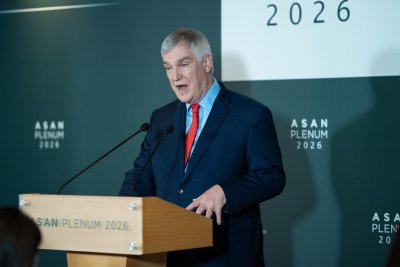
Fred Fleitz, former chief of staff of the NSC, predicted Wednesday that U.S. President Donald Trump could meet with North Korean leader Kim Jong-un for a summit sometime this fall. Fleitz made the comment at the Asan Plenum in Seoul. Photo courtesy of Asan Institute of Policy Studies
A former Trump administration official predicted Wednesday that U.S. President Donald Trump could meet with North Korean leader Kim Jong-un for a summit sometime this fall, citing Trump’s continued indications of interest in resuming dialogue with the reclusive leader.
Fred Fleitz, a former chief of staff of the National Security Council under the previous Trump administration, made the remarks as speculation persists that Trump and Kim may resume dialogue around the time when Trump visits China for summit talks with Chinese President Xi Jinping, in May.
“I believe there is a good chance of a Trump-Kim summit this fall,” said the vice chair of the America First Policy Institute at a press event on the sidelines of a forum hosted by the Asan Institute of Policy Studies.
“President Trump has often indicated that he wanted to resume a successful personal diplomacy … It is something that Trump believes in that this was a big success that he has to build upon,” he said.
Fleitz pointed out that although Trump is open to meeting Kim again, he would not back away from the U.S. demand for denuclearization.
“The Trump administration might join talks with North Korea but will be pushing for denuclearization,” he said. “I would strongly advise the Trump administration that another progress should be that North Korea has to stop sending weapons (to Russia for its war) in Ukraine.”
“They are helping a disastrously bloody war and I don’t think it’s a lot to ask for Trump to say that to Kim Jong-un.”
On a similar note, Victor Cha, Korea chair at the Center for Strategic and International Studies, gave an outlook of a “more than 50 percent chance” that Trump will meet Kim, after he meets Xi in Beijing.
“I don’t think Xi Jinping will want a meeting (between Trump and Kim) before his summit with Trump,” he said. “There is a greater than 50 percent chance that they could meet after their (Trump-Xi) meeting in Beijing.”
Cha also noted that unlike the approach to China, Russia or Iran, Trump shows that he puts North Korea in a “different basket” in terms of his potential engagement with Kim.
“I think he clearly wants to engage with him, which is just fascinating,” he said.
Copyright (c) Yonhap News Agency prohibits its content from being redistributed or reprinted without consent, and forbids the content from being learned and used by artificial intelligence systems.
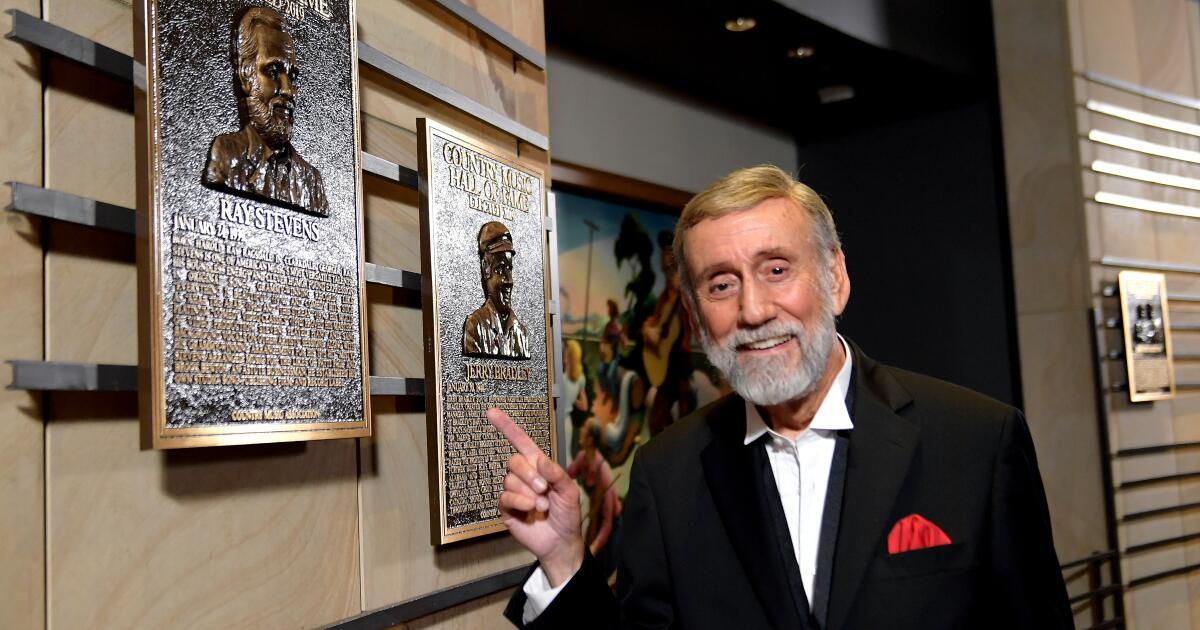
Country singer Ray Stevens is recovering after breaking his neck.
On Sunday, Stevens, 87, fell and broke his neck, according to a press release shared with The Times. The two-time Grammy winner was “briefly hospitalized in the Nashville area and is now recovering at home,” and was advised by doctors to wear a neck brace for the next four weeks.
“Despite the injury, he remains fully mobile and in good spirits as he continues his recovery,” the statement read.
Stevens still plans to release his upcoming album, “Favorites Old & New,” this Friday. The album features recordings of classic songs like “It Had to Be You” and “Come Rain or Come Shine,” as well as originals.
“I had a lot of fun creating this album, ‘Favorites Old & New,’” explained Stevens in the press release. “It really does contain a few of my favorite old songs as well as favorite new ones penned by some talented writers. I just hope Ray Stevens fans enjoy it as much as Ray Stevens!”
In July, Stevens suffered a heart attack that required a heart catheterization and subsequent surgery. Shortly after the procedure, Stevens’ Instagram account shared that he was “working towards recovering from this surgery.”
“Ray is very grateful for all of the cards and get-well messages,” the post read. “Everything is Still Beautiful!!!!”
Stevens was inducted into the Country Music Hall of Fame in 2019. Upon his induction, he quipped to The Times that his retirement was not on the horizon.
“I feel fine; I’ll probably keel over after I hang up the phone. [He laughs.] But I’m gonna do what I want to do because I can,” Stevens said.
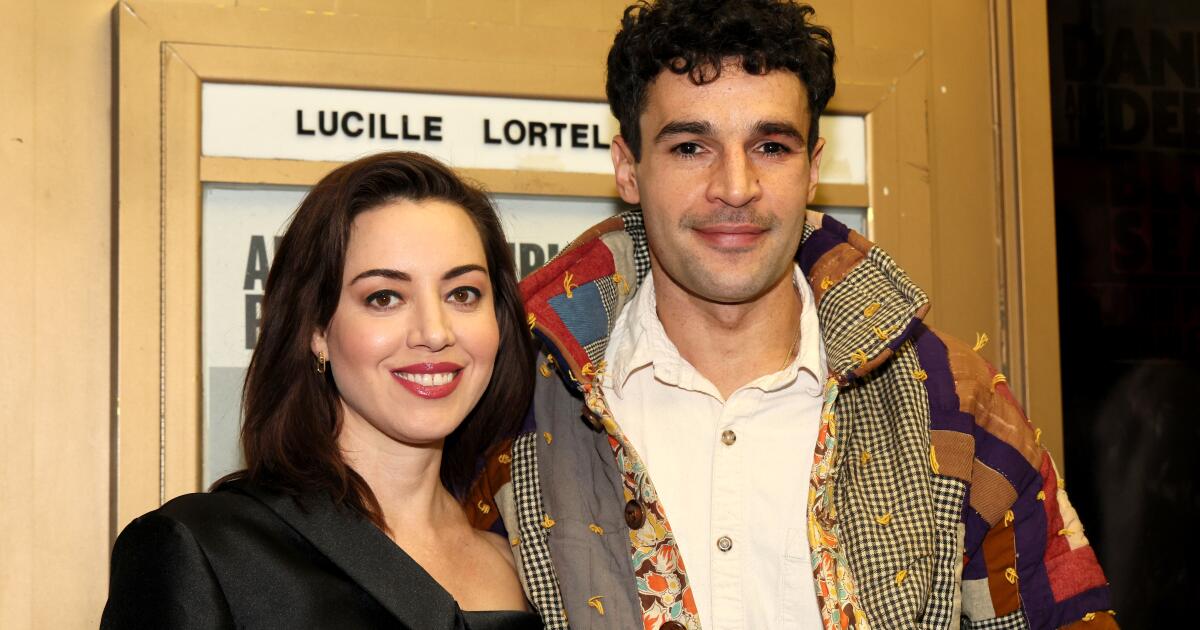
Plaza and “Girls” star Christopher Abbott are expecting their first child together. Representatives for Plaza confirmed to People that the pair are set to become parents in the fall. The couple, who have kept their romance under wraps, were spotted together at the Khaite Fall/Winter 2026 fashion show during New York Fashion Week in February.
Plaza, who’s become Hollywood’s favorite weirdo since splashing onto the scene as April Ludgate in the mockumentary sitcom “Parks and Recreation,” met Abbott when they worked together in 2020. The two starred in the psychological thriller “Black Bear,” and then joined forces once more in 2023 for the off-Broadway revival of “Danny and the Deep Blue Sea.” Abbott may be best known for stealing the hearts of “Girls” fans when he portrayed Charlie Dattolo on the HBO megahit.
In “Danny,” the pair portrayed volatile lovers, and they raved about working with each other while chatting with the New York Times ahead of the production’s premiere. “He cares but he also doesn’t care; it’s the best recipe for me for a scene partner,” Plaza said.
“It’s fun and it’s also good and it’s also safe. I like to just throw things out the window also and laugh and mess around and not take it so seriously. It’s a hard combo to come by.”
“We’re both unafraid to be ugly and weird and strange,” Abbott added. The two also agreed that although they aim to entertain the audience, they both hoped to entertain each other.
Plaza — who is known for her deadpan delivery not only on screen but also while giving interviews on red carpets and the late-night circuit — has become known for dropping lines tailor-made for internet culture. In 2011, she notoriously told Jay Leno that she was too awkward for dating. “I’m kind of like all or nothing,” she said. “Either put a baby inside of me or leave me alone.”
The big baby news arrives for the “White Lotus” star a year after the death of husband Jeff Baena, an independent filmmaker who directed Plaza in “The Little Hours.” Baena, who died at 47 in January 2025, had been separated from Plaza for a few months before his death.
More than a year after California Atty. Gen. Rob Bonta announced indictments against 30 probation officers accused of coordinating or allowing so-called “gladiator fights” between youths inside L.A. County juvenile halls, almost half of the criminal cases are falling apart.
In recent weeks, state prosecutors dismissed charges against at least 10 of the 30 officers from the initial indictment, according to court documents and interviews with defense attorneys. An additional four officers entered into plea deals Tuesday that will end with their cases dropped after completing community service.
Attorneys for the officers and probation union officials said the prosecutions were an overreaction to a video — first published by The Times in 2024 — that showed officers standing by as several youths pummeled a fellow inmate at Los Padrinos Juvenile Hall in Downey.
“I believe the case was a reactionary case that was overcharged,” said attorney Adam Koppekin, who represents an officer whose case was dismissed. “They swept in a bunch of truly innocent probation officers who were following directives and doing their jobs.”
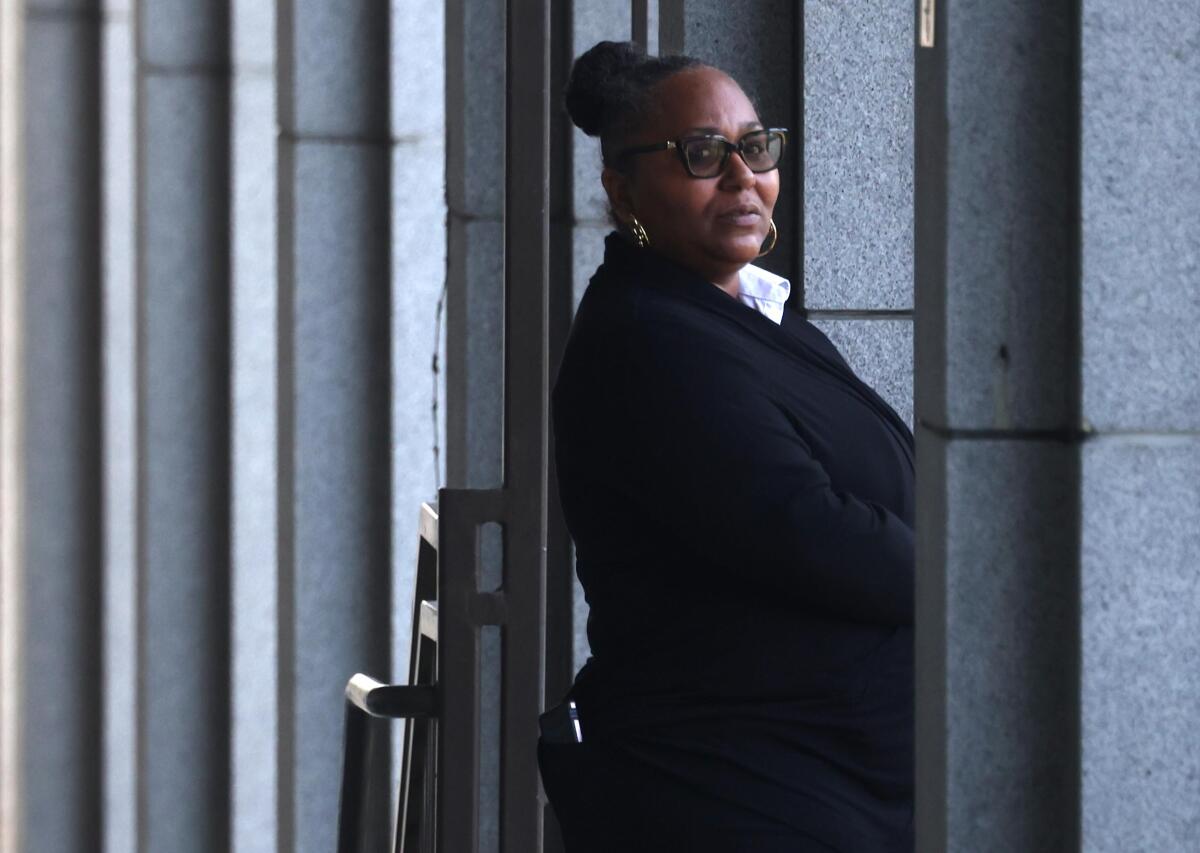
Two officers at the center of the Los Padrinos fight video — identified in court filings as Taneha Brooks and Shawn Smyles — remain charged with multiple counts of child abuse and conspiracy to commit willful cruelty against children. In the security video, the two officers can be seen laughing and shaking hands with the assailants. The 17-year-old who was attacked in the video suffered a broken nose and a concussion, according to a summary of his grand jury testimony contained in a motion filed in the case.
Brooks has repeatedly declined to speak to Times reporters. She showed up in court Tuesday in support of the other officers. E-mails to her attorney and a lawyer representing Smyles were not immediately returned.
Taneha Brooks, an L.A. County probation officer listed as the top defendant in the “Gladiator Fight” case, leaves the Clara Foltzridge Criminal Justice Center on Tuesday, April 7, 2026 in Los Angeles, CA. Brooks has been accused of orchestrating and allowing many of the fights between juveniles in L.A. County detention centers that sparked the California Department of Justice’s investigation. Her case will be heard in May.
(Genaro Molina/Los Angeles Times)
Bonta said when announcing charges last year that his office had identified 69 other fight incidents involving nearly 150 youths between the ages of 12 and 18. The 30 officers were indicted on 71 counts of conspiracy, battery and child abuse.
But many of those other fights were different from the 2023 video in that they lasted only seconds, involved minimal injuries and ended after probation officers intervened, according to defense motions and video reviewed by The Times.
The Times confirmed that state prosecutors dismissed charges against 10 officers in recent weeks through interviews with attorneys and two law enforcement sources who spoke on the condition of anonymity to discuss an ongoing investigation.
Court documents reviewed by The Times showed that some of the cases were dismissed “in the interest of justice” after motions filed by the state attorney general’s office. Records of those officers’ arrests were then ordered sealed, the documents show.
In a statement Tuesday, the attorney general’s office said it adjusts its treatment of defendants “based on our continued consideration of all evidence developed before, during and after criminal charges were initiated.”
“Some defendants were appropriately dismissed from the case based on the law as applied to their factual circumstances,” the statement said.
“What we are seeing raises real questions about a rush to judgment, one that has already had the effect of maligning an entire profession without the facts being fully vetted,” Curtis Chambers, president of the union that represents rank-and-file probation officers, said in a statement. “When cases begin to fall apart after being advanced so publicly, it is fair to ask whether the process itself was flawed from the outset.”
Motions to dismiss charges in the case paint some of the officers as rookies deferring to their superiors. Defense attorneys for others questioned why state prosecutors charged officers who failed to intervene in fights that were in effect over before they began.
The Times reviewed video of one incident that showed a fistfight between two youths that lasted 20 seconds. In the brief dust-up, the teens throw a series of wild hooks at each other with few of the punches actually making contact. The officer charged in that incident briefly paused before joining a crowd of other officers who pulled the two apart. That officer, whose case has since been dismissed, was charged with two counts of willful cruelty to a child.
The indictments — along with a civil lawsuit and grand jury testimony referenced in motions to dismiss the charges — portray Brooks and Smyles as the main drivers of the fights.
They told other officers who were present, all of them rookies in the juvenile halls, “not to say anything, write down anything, and just watch when youth fights occurred,” according to the charges.
One juvenile told grand jurors he was “incentivized to fight” by Brooks and claimed both officers “rewarded him for fighting by giving him extra snacks,” according to a motion to dismiss filed on behalf of one officer.
According to the court filing, the juvenile told the grand jury that Brooks awarded special jobs to kids she favored.
“He testified Ms. Brooks would pick the ‘KP’ or kitchen patrol person based upon that person’s fighting prowess,” the motion said.
A Times investigation last year found the practice of probation officers rewarding teens who beat up other youths in custody was a problem that predated the “Gladiator Fight” scandal, with one attorney calling it an “open secret.”
Jonathan Evans, who represents Officer Isaiah Goodie, said his client was specifically told by Brooks and Smyles not to break up fights.
“They were seeing that these kids from different neighborhoods were going to fight anyway and they were finding a way to get it out of their system,” Evans said of the senior officers’ training of his client.
Two law enforcement officials told The Times that Brooks and Smyles had been investigated for allowing fights to happen years earlier while assigned to Central Juvenile Hall. It was unclear what, if any, discipline they faced.
One of the cases that will be dismissed after a plea agreement involved a high-ranking officer, 54-year-old Ramses Patron. He was charged with child abuse for failing to stop a fight that lasted less than 10 seconds, according to a motion to dismiss. His attorney, Tom Yu, argued that the state had wrongly accused many officers of planning fights that either occurred spontaneously or were arranged by Brooks and Smyles.
Patron must serve 40 hours of community service and then his case will be dismissed. Yu said his client has served the Probation Department for 30 years with a “spotless record” and the indictment upended his life.
“There’s no words to describe what my client and his family went through,” Yu said.
Indicted probation officer Ramses Patron, center, stands with his attorney Tom Yu, right, pleading no contest in the “Gladiator Fights” case.
(Genaro Molina/Los Angeles Times)
Advocates for the officers whose cases were dismissed said they had suffered serious harm to their finances and reputations, with each placed on leave without pay for more than a year.
“County employees are entitled to due process. To the extent that charges are reduced or dismissed, employees may have the right to seek reinstatement or back pay,” said Vicky Waters, communications director for the Probation Department.
Several defense attorneys credited the state prosecutors for scrutinizing the charges more thoroughly and ultimately deciding that some of the cases did not pass the smell test.
“Everybody would love an apology letter,” said defense attorney Bart Kasperowicz. “They did this giant witch hunt sweep and effectively changed the lives of 30 people and all the people that depend on them.”
Ryan Strome scored his 500th career point with a goal against his former team, Morgan Frost had two goals and the Calgary Flames sent the Ducks to their fifth consecutive loss with a 5-3 victory Saturday night.
Joel Farabee and Matvei Gridin had a goal and an assist apiece for the Flames, who extended the Ducks’ late-season spiral by earning their first win over Anaheim in four meetings this season. Devin Cooley made 36 saves.
Leo Carlsson and Mason McTavish scored in the third period, but the Ducks’ comeback from a 4-1 deficit fell short when Frost put his second goal into an empty net with 1:11 to play.
Beckett Sennecke also scored and Ville Husso stopped 15 shots during yet another rough defensive performance by the Ducks.
The Ducks are attempting to end the franchise’s seven-year playoff drought under first-year coach Joel Quenneville, but this skid has endangered the Ducks’ entire playoff candidacy even after they spent the past four weeks leading the mediocre Pacific Division.
The Ducks remained even with first-place Edmonton with 87 points because of the Oilers’ loss to Vegas, which is now just one point behind the division leaders with five games to play.
Strome sneaked behind Anaheim’s leaky defense and scored on a breakaway early in the second period, getting his fifth goal in 15 games since the Ducks traded him to Calgary last month. The veteran forward spent the previous 3½ seasons with the Ducks, but struggled to produce during inconsistent playing time from Quenneville before his departure at the deadline.
Sennecke opened the scoring when he drove the net and muscled home his 23rd goal, most among NHL rookies this season, but Calgary replied with four consecutive goals that prompted the Honda Center crowd to boo its team into the second intermission.
Carlsson got his 27th goal in the third, and McTavish fired home his second goal since January during a power play midway through the period. But Calgary repelled another Ducks power play and wrapped it up with Frost’s empty-netter.
Injuries left Ducks playing without top scorer Cutter Gauthier and defensemen Radko Gudas and Pavel Mintyukov.
Defenseman Tyson Hinds made his NHL debut for the Ducks, whose defensive struggles are the primary source of their late-season woes.
Up next for the Ducks: vs. Nashville at Honda Center on Tuesday night.
John Tavares redirected a shot from Morgan Rielly into the net with five seconds left in overtime to lift the Toronto Maple Leafs to a 5-4 come-from-behind victory over the Ducks in a fight-marred game Monday night.
The Leafs overcame a 3-1 deficit with three goals in the third period, including Rielly’s snap shot from the high slot that beat Ducks goalie Ville Husso stick-side to give Toronto a 4-3 lead with three minutes left in regulation.
But Leo Carlsson, who hobbled to the locker room after taking a hard hit and falling to the ice in the first minute of the third, gathered a loose puck near the left circle and flicked a shot past Toronto goalie Anthony Stolarz to make it 4-4 with 1:39 left.
Tavares added a first-period goal, and Stolarz stopped 28 of 32 shots for Toronto, which took the ice about 1½ hours after general manager Brad Treliving was fired near the end of his third season, with the Maple Leafs on the verge of being eliminated from the playoffs for the first time in a decade.
Carlsson and Cutter Gauthier scored in the first 10 minutes, and John Carlson scored his first goal for the Ducks. Gauthier, who leads the Pacific Division-leading Ducks with 38 goals and 65 points, suffered an upper-body injury on a cross-check late in the first and did not return. Husso had 22 saves.
Ducks captain Radko Gudas, slowed by a lower-body injury, insisted on playing in the rematch of a March 12 game in which his knee-on-knee hit on Auston Matthews led to a season-ending injury for the Toronto captain and a five-game suspension for Gudas.
It took three seconds for the Leafs to exact some revenge, Toronto forward Max Domi and Gudas dropping the gloves and exchanging punches as soon as the puck dropped.
That set the tone for a hard-hitting game that featured a combined 85 penalty minutes, numerous scuffles and game misconducts incurred by Toronto’s Michael Pezzetta and Domi in the second.
British rider Tom Pidcock is out of the Volta a Catalunya after crashing during Friday’s fifth stage.
The Pinarello-Q36.5 rider had what he described as a “horror” fall in a ravine after he went off the road, misjudging a corner during the penultimate descent of the day.
The 26-year-old eventually finished more than 29 minutes behind stage winner Jonas Vingegaard.
But following medical checks, he has been ruled out of the remainder of the race.
“Due to his crash he suffered injuries, most likely bone and ligament damage in particular to his right knee and also right wrist,” said team doctor Lorenz Emmert.
“Unfortunately we had to make the decision to take him out of the race. Further clinical evaluation and imaging will follow in the next days.”
Pidcock won the Milano-Torino race earlier this month and was just edged out in the Milan-San Remo by world champion Tadej Pogacar.
“We did everything to try to make it to the start [of Saturday’s stage six] but it’s not possible,” said the two-time Olympic cross-country mountain bike champion.
“I fought to finish the stage yesterday to make sure I had the option to continue. Now the focus is on recovery, and I’ll be back.”
THE creator of the 90s hit movie Air Bud has died aged 63 after a tragic fall from Hollywood stardom.
Kevin DiCicco’s death comes a year after he revealed he was homeless and battling health issues.
Sign up for the Showbiz newsletter
Thank you!
Kevin DiCicco was dealing with homelessness and a series of health issuesCredit: Facebook/GofundmeKevin DiCicco with Golden retriever dog Buddy, thee basketball-playing star of motion picture Air BudCredit: Getty
His sad passing on Saturday March 21 was confirmed by his brother Mark to TMZ.
Kevin was credited as a creator of the beloved 90s film Air Bud, about a lonely boy who befriends a stray dog who has a natural talent for basketball.
Together they experience the highs and lows of life as their friendship remains solid through a series of escapades.
Kevin had found Buddy the dog as a stray, transforming him into a star.
The duo originally found fame on America’s Funniest Home Videos before making a memorable appearance on David Letterman.
More to follow… For the latest news on this story keep checking back at The Sun Online.
Thesun.co.uk is your go-to destination for the best celebrity news, real-life stories, jaw-dropping pictures and must-see video.
A proposed gubernatorial forum hastily cobbled together in the hours after USC canceled its Tuesday debate fell apart because the candidates of color who were excluded from the previously planned event were unable to show up in person at KNBC-TV’s studio in Universal City, according to multiple sources.
Facing mounting pressure that its debate selection criteria excluded every candidate of color, the university canceled its debate late Monday. On Tuesday morning, billionaire Tom Steyer — a Democrat — proposed holding an alternative face-off, with KNBC moderating. But the candidates who had not been invited to the USC debate had already made other commitments.
“A lot of this came out of nowhere — there’s a debate and you’re not invited, followed by there’s no debate, and then maybe we should all hang out and have a conversation,” said Kyle Layman, a strategist advising former U.S. Health and Human Services Secretary Xavier Becerra.
USC officials declined to comment on Tuesday’s developments — as did KABC-TV, one of the broadcast partners of the canceled debate. KNBC did not respond to a request for comment, but someone involved with planning a potential debate there said pulling together such an event in just a few hours was impossible, and also unfair to the candidates who had made other plans after initially being excluded from the USC debate.
“We looked into the possibility of doing something. It just wasn’t possible because of the last-minute logistics. It was not feasible,” said the person, who asked for anonymity to speak candidly. “We couldn’t get everybody here.”
The fact that the candidates excluded from the USC debate couldn’t find a way to participate in Tuesday evening’s alternative forum irritated some people involved in the planning, however. Becerra, state Supt. of Public Instruction Tony Thurmond, former Los Angeles Mayor Antonio Villaraigosa and former state Controller Betty Yee had loudly protested not being invited to the USC event.
“This is like probably one of the last opportunities they have to be with other leading contenders of the race, so why not take this opportunity?” said someone who took part in conversations about the proposed last-minute debate, who asked for anonymity to speak openly. “If the whole thing is about bringing your message to the voters, making sure voters have as much information as possible, talking about the issues that matter, wouldn’t you want to take every opportunity to do that?
“If you’re going to talk a big game about taking your message to voters, the importance of debates, why not do it?” this person said.
Becerra, Thurmond, Villaraigosa and Yee have reportedly formed an informal pact not to participate in any debate that does not include all of them, which Yee referenced in a Tuesday afternoon news conference.
“The idea that none of the candidates of color are going to be joining a debate is just inappropriate for a state like California,” Yee said. “We also need to have a commitment from all of the debate sponsors that they will include all of us going forward.”
Yee and Thurmond were not invited to the next major televised debate, which will take place April 1 at Fresno State University. Becerra and Villaraigosa had previously confirmed their attendance, according to a news release from the Western Growers Assn., one of the event’s sponsors.
And all four candidates of color, along with San José Mayor Matt Mahan, were not invited to a debate on April 22 in San Francisco that will be hosted by KRON-TV and broadcast on Nexstar Media Group stations throughout California.
“We don’t need gatekeepers,” Mahan said in a statement Tuesday evening. “I’m calling on my fellow candidates to work together to organize our own debates — so we can take our ideas for a better California to every corner of California. Let’s let the voters truly decide.”
The scrapped USC debate was going to be hosted by the institution’s Dornsife Center for the Political Future and co-sponsored by KABC and Univision. Six candidates had been invited to participate: Democrats Rep. Eric Swalwell (D-Dublin), former Orange County Rep. Katie Porter, Mahan and Steyer; along with the leading Republicans, conservative commentator Steve Hilton and Riverside County Sheriff Chad Bianco.
Candidates and elected officials called the criteria used to determine participation in the debate biased because it included Mahan, a white candidate who is polling near the bottom of the pack but is supported by notable names in the USC community. Hours after the debate was canceled, Steyer’s campaign sought to create an alternate event that would include all of the candidates.
“We were trying to do the right thing upon learning that the debate was canceled at USC,” said a member of Steyer’s campaign who asked for anonymity to speak candidly. “Tom immediately was like, ‘We can do something alternative.’ People want to hear from the gubernatorial candidates. It was on the table. It was offered.
“NBC couldn’t get all the candidates here, but we tried,” this person said. “Given the short amount of time we were trying to put this together, it ultimately could not happen because not all the candidates could get to the studio.”
Thurmond, who was in Sacramento and Richmond on Tuesday, joined a political influencer on YouTube Tuesday evening, while Yee attended previously scheduled events with the East Area Progressive Democrats and a women’s group in the L.A. area. Villaraigosa had lined up other interviews at his Wilshire campaign office, Becerra was traveling, and Porter was scheduled to host a livestream on her Instagram account Tuesday evening.
WASHINGTON — White House chief of staff Susie Wiles has been diagnosed with early stage breast cancer but will continue working during her treatment, President Donald Trump said in a social media post on Monday.
Trump said Wiles’ prognosis is “excellent” and described her as “one of the strongest people I know.” He said Wiles plans to begin treatment immediately but made no suggestion she was pulling back on her work as one of his closest advisers.
“During the treatment period, she will be spending virtually full time at the White House, which makes me, as President, very happy!” Trump said on his Truth Social platform. “She will soon be better than ever!”
It comes as the Republican president confronts mounting challenges on global and national fronts, from the war in Iran and soaring oil prices to this fall’s midterm elections and American’s concerns over affordability.
Wiles, 68, is a longtime Trump ally who rose from his campaign co-chair to his closest adviser and counsel. The first woman to become White House chief of staff, Wiles spent decades as a lobbyist and political operative in Florida and led Trump’s 2016 effort in the state.