expands

South Korea’s Democratic Party expands outreach to businesses

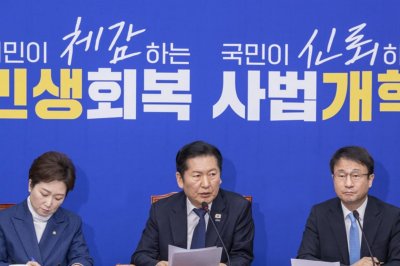
Jung Chung-rae (C), leader of the ruling Democratic Party, speaks during a meeting of its Supreme Council at the National Assembly in Seoul, South Korea, 23 February 2026. Photo by YONHAP / EPA

March 6 (Asia Today) — South Korea’s ruling Democratic Party has recently increased its engagement with major companies and business groups, a shift analysts say reflects growing economic uncertainty and the political importance of economic performance.

Party leaders have held a series of meetings with industry representatives while launching policy initiatives such as a “KOSPI 5000” special committee and a task force reviewing economic criminal penalties and business regulations.

The outreach marks a change from the party’s earlier image as primarily focused on regulation, positioning itself instead as a listener to industry concerns.

The move comes as tensions in the Middle East, potential U.S. tariff measures and volatility in financial markets raise economic risks. Political leaders have increasingly addressed these issues directly, as economic developments quickly translate into political and legislative debates.

On Wednesday, the Democratic Party held a meeting with business leaders to discuss risks stemming from the Middle East conflict and possible U.S. trade tariffs. Participants discussed concerns including potential disruptions to projects in the Middle East, export slowdowns and measures to stabilize financial markets.

Party officials have also held policy discussions with the Korea Chamber of Commerce and Industry while continuing work through the KOSPI 5000 committee on capital market reforms. Another task force has been examining ways to adjust criminal penalties related to economic activity and ease regulations that business groups say hinder corporate operations.

Economic risks increasingly shape political debate

Analysts say economic shocks are now quickly becoming political issues.

Recent disagreements between the ruling party and opposition lawmakers over legislation tied to investment cooperation with the United States delayed discussions in a parliamentary special committee for several weeks, illustrating how economic policy disputes can quickly turn into political battles.

Economic performance influences political approval

Academic research has also shown that economic conditions can influence political approval and election outcomes.

A study published in a Korean academic journal examining presidential approval ratings from 1993 to 2019 found statistically significant links between approval ratings and macroeconomic variables such as interest rates and inflation.

Research by scholars at Seoul National University also found that voting behavior in South Korea cannot be explained solely by regional political loyalties and is strongly influenced by voters’ economic evaluations.

Similar findings appear in international research, including a study from the University of Cambridge that examined how personal economic conditions and perceptions of national economic performance affect voting decisions in South Korea.

Corporate performance tied to government finances

South Korea’s fiscal structure is another reason the ruling party is expanding contact with businesses, analysts say.

According to the National Assembly Budget Office, national tax revenue in 2024 totaled about 336.5 trillion won ($253 billion), down 7.5 trillion won ($5.6 billion) from the previous year.

Corporate tax revenue alone fell by about 17.9 trillion won ($13.5 billion), making it one of the main reasons for the overall decline in tax revenue.

For the administration of President Lee Jae-myung, which has promoted a broader welfare framework described as a “basic society,” maintaining corporate growth and investment has become increasingly important to sustaining tax revenues needed for expanded public spending.

Still, analysts caution that the ruling party’s outreach should not necessarily be interpreted as a shift toward a pro-business policy stance.

Business groups have continued to raise concerns about legislation such as revisions to the Commercial Act and labor-related bills sometimes referred to as the “Yellow Envelope Law,” which they argue could weaken corporate governance protections.

Some lawmakers have therefore adopted what observers describe as a two-track approach – consulting with companies while continuing to pursue regulatory legislation.

Analysts say the recent outreach to business leaders reflects a broader political strategy combining economic crisis management, legislative coordination and efforts to maintain political support.

— Reported by Asia Today; translated by UPI

© Asia Today. Unauthorized reproduction or redistribution prohibited.

Original Korean report: https://www.asiatoday.co.kr/kn/view.php?key=20260306010001790
Source link

Mizuho to cut 5,000 clerical jobs as AI rollout expands

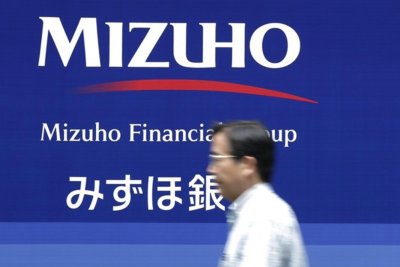
A pedestrian walks past the corporate logo of Mizuho Financial Group Inc. displayed outside the headquarters of Mizuho Bank Ltd., its banking unit, in Tokyo, Japan. Photo by KIYOSHI OTA / EPA

Feb. 27 (Asia Today) — Mizuho Financial Group said it will reduce up to 5,000 clerical positions over the next decade as it accelerates the adoption of artificial intelligence across its operations, in a bid to improve profitability.

The Japanese megabank plans to shrink its nationwide administrative workforce of about 15,000 by as much as one-third through automation, organizational streamlining and natural attrition.

Under the plan, its core unit Mizuho Bank will deploy AI systems to handle document verification for account openings and fund transfers, as well as customer data registration. The bank aims to sharply reduce manual tasks such as document review and data entry.

An executive at the group said AI use could render “most clerical work unnecessary,” as automated systems take over scanning, analyzing and validating customer applications.

The AI platform will be designed to review document accuracy, ensure consistency in customer information and check compliance with regulations and internal rules – processes that previously required multiple staff members.

The bank said it will avoid direct layoffs and instead reassign affected employees to revenue-generating areas such as branch sales, corporate client analysis and operational support. The group will also expand reskilling programs to help workers transition into new roles. Staff reductions will rely on hiring freezes, retirements and voluntary departures.

Mizuho has already cut about 10,000 clerical jobs over the past decade through digitalization and expansion of online services. The latest plan signals a further shift away from back-office-heavy operations toward a leaner, AI-driven structure.

As part of an organizational overhaul set for April, the group will rename its “Administrative Group” to “Process Design Group,” reflecting a stronger emphasis on efficiency and digital process management.

The bank plans to invest up to 100 billion yen ($670 million) over three years from 2026 through 2028 to develop and implement AI systems. In addition to back-office automation, the investment will support the development of AI assistants for asset management. The tools are expected to analyze customers’ assets, risk profiles and cash flows to generate personalized investment and cash management proposals for retail and corporate clients.

Among Japan’s major megabanks, Mizuho is seen as the most aggressive in restructuring its clerical workforce around AI. Industry observers say the move could accelerate similar changes across the country’s financial sector.

— Reported by Asia Today; translated by UPI

© Asia Today. Unauthorized reproduction or redistribution prohibited.

Original Korean report: https://www.asiatoday.co.kr/kn/view.php?key=20260227010008338

Source link

Global cocaine market expands, U.N. report says

Members of the National Institute of Forensic Sciences organize packages of confiscated cocaine in Santo Domingo, Dominican Republic, on February 26 before incinerating 5,038 pounds of the drug after seizures made under the U.S.-led Operation Southern Spear, an international initiative to combat drug trafficking in Latin America. Photo by Orlando Barria/EPA

Feb. 27 (UPI) — The global cocaine market is the fastest-growing segment of the illicit drug trade, driven by rising production in South America and increasing demand in Africa and Asia, according to a United Nations report released this week.

Ecuador, meanwhile, has become one of the countries most affected by violence and the expansion of drug trafficking routes, the report said.

The findings appear in the 2025 report of the International Narcotics Control Board, the U.N. body responsible for monitoring compliance with international drug control treaties. It was published Thursday.

Global cocaine production exceeded 3,700 metric tons in 2023, a 34% increase compared with 2022, according to the control board.

The expansion is largely attributed to Colombia, where both the area under illicit coca cultivation and the production capacity of clandestine laboratories increased.

“The global cocaine market continues to expand and diversify,” the board said, warning that trafficking routes now reach “all regions of the world.”

While Western and Central Europe and North America remain the main destination markets, the report highlights rising consumption and seizures in Africa and parts of Asia.

In Africa, seizures rose 48% in 2023 compared with the previous year, which the report said reflects an expanding market rather than merely a transit region.

Between 2013 and 2023, the number of cocaine users worldwide increased from 17 million to 25 million, according to U.N. data.

Against this backdrop, Ecuador has emerged as a critical hub.

“In South America, the impact of increased cocaine trafficking has been felt particularly in Ecuador, which in recent years has experienced a wave of lethal violence caused by both local and transnational criminal groups,” the control board said.

Ecuadorian authorities seized more than 290 metric tons of cocaine in 2024, an unprecedented figure and approximately 30% higher than in 2023.

The surge in trafficking has coincided with a deterioration in security. The country recorded 6,964 violent deaths in 2024, with a homicide rate of 38.76 per 100,000 inhabitants, meaning the rate has quintupled over five years.

The report notes that Ecuador has become a major maritime export hub for cocaine shipments bound for the European Union.

In March 2025, Ecuadorian and European authorities dismantled an intercontinental criminal network that shipped tons of cocaine in maritime containers from South America to Europe.

In that operation, 73 metric tons of cocaine were seized in Ecuador and several European Union countries. Authorities arrested 14 people in Germany and Spain and 36 in the port city of Guayaquil, according to the report.

The control board also warned that traffickers are using increasingly sophisticated concealment methods to evade controls, including chemically altering cocaine to hinder detection during routine inspections, embedding the drug in plastics and textiles and using double-bottom compartments in legitimate goods.

Offshore deliveries coordinated through geolocation systems have also been seen.

As an example, the report cited the 2024 seizure of 13 metric tons of cocaine at the port of Algeciras in Spain, hidden in a shipment of bananas from Ecuador and described as the largest cocaine seizure in the country’s history.

The report further warns that sustained increases in production and the diversification of routes reflect a structural transformation of the global cocaine market, with criminal networks operating in an increasingly transnational manner and with greater logistical capacity.

The board stressed that the phenomenon is no longer limited to traditional production or consumption regions but now involves multiple continents at different stages of the drug trafficking chain.

Source link

US envoy suggests it would be ‘fine’ if Israel expands across Middle East | Israel-Palestine conflict News

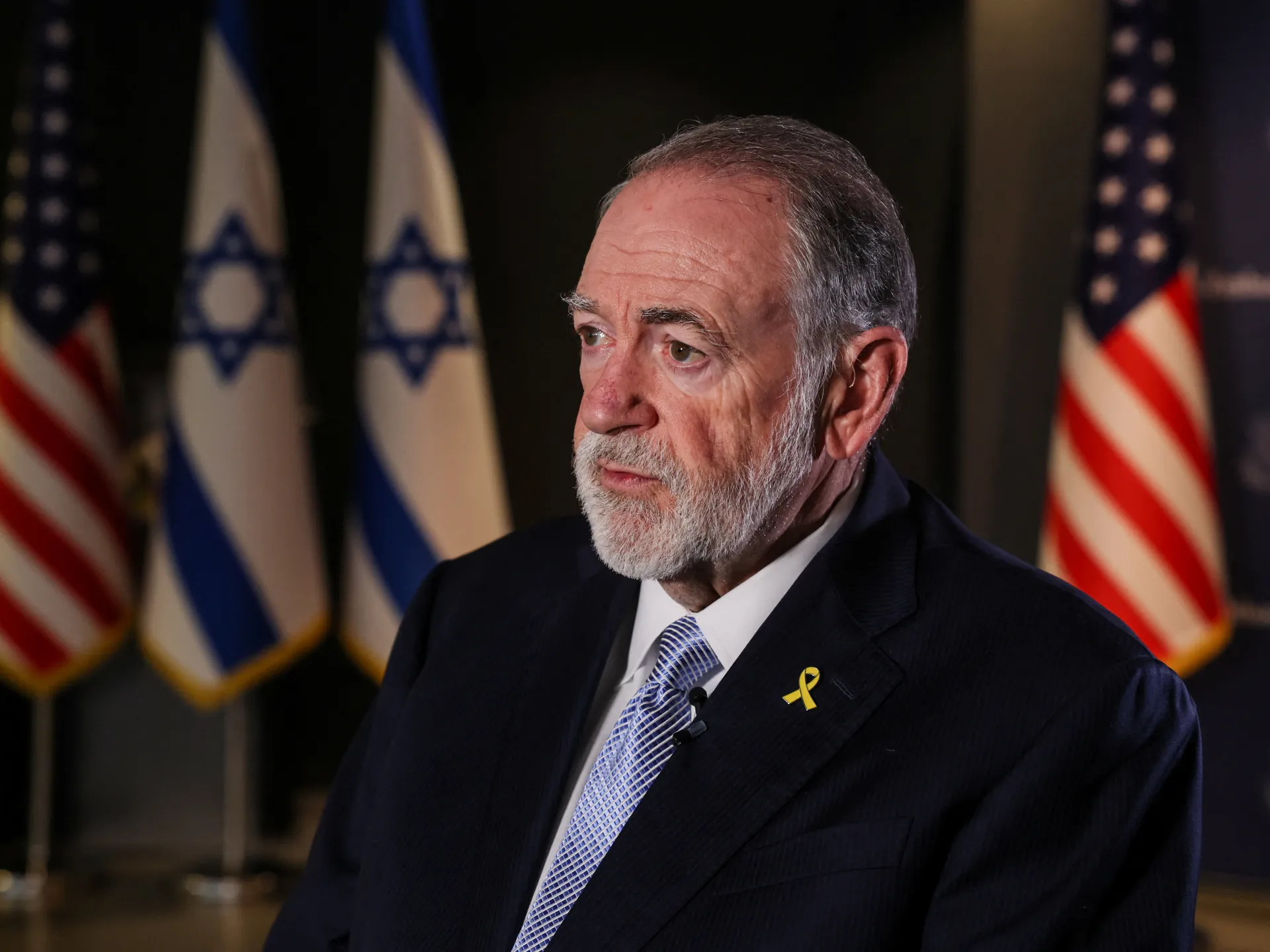
Mike Huckabee, the United States ambassador to Israel, has suggested that he would not object if Israel were to take most of the Middle East, stressing what he described as the Jewish people’s right to the land.

In an interview with conservative commentator Tucker Carlson that aired on Friday, Huckabee was pressed about the geographical borders of Israel, which he argues are rooted in the Bible.

Recommended Stories

list of 3 itemsend of list

Carlson told Huckabee that the biblical verse had promised the land to the descendants of Abraham, including the area between the Euphrates River in Iraq and the Nile River in Egypt.

Such a swath would encompass modern-day Lebanon, Syria, Jordan and parts of Saudi Arabia.

“It would be fine if they took it all,” said Huckabee, who was appointed by President Donald Trump last year.

Carlson, who appeared taken aback by the statement, asked Huckabee if indeed he would approve of Israel expanding over the entire region.

“They don’t want to take it over. They’re not asking to take it over,” the ambassador replied.

The US envoy, an avowed Christian Zionist and staunch defender of Israel, later appeared to walk back his assertion, saying that it “was somewhat of a hyperbolic statement”.

Still, he left the door open for Israeli expansionism based on his religious interpretation.

“If they end up getting attacked by all these places, and they win that war, and they take that land, OK, that’s a whole other discussion,” Huckabee said.

The Department of State did not respond to Al Jazeera’s request for comment on whether Secretary of State Marco Rubio shares Huckabee’s views on Israel’s right to expand.

The principle of territorial integrity and the prohibition against the acquisition of land by force have been a bedrock of international law since World War II.

In 2024, the International Court of Justice (ICJ) ruled that Israel’s occupation of the Palestinian territories is illegal and must cease immediately.

But Israeli law does not clearly demarcate the country’s borders. Israel also occupies the Golan Heights in Syria, which it illegally annexed in 1981.

The US is the only country that recognises Israel’s claimed sovereignty over the Syrian territory.

After the 2024 war with Hezbollah, Israel also set up military outposts in five points inside Lebanon.

Some Israeli politicians, including Prime Minister Benjamin Netanyahu, have openly promoted the idea of a “Greater Israel” with expanded borders.

Israel’s Finance Minister Bezalel Smotrich stirred international outrage in 2023 when he spoke at an event featuring a map that included the Palestinian territories and portions of Lebanon, Syria and Jordan as part of Israel, set against the colours of the Israeli flag.

In his interview with Carlson, Huckabee tried to argue that Israel’s right to exist is rooted in international law, but he also attacked the legal institutions that oversee international law for their opposition to Israeli abuses.

“One of the reasons I’m so grateful President Trump and Secretary Rubio are pushing hard, trying to get rid of the ICC [International Criminal Court] and the ICJ is because they have become rogue organisations that are no longer really about an equal application of law,” he said.

Beyond his professed religious devotion to Israel, Huckabee has faced criticism for failing to speak up for the rights of US citizens who have been killed and imprisoned by Israeli forces during his ambassadorship.

Last year, Huckabee even sparked anger from some conservatives in the US when he met with convicted spy Jonathan Pollard, who sold US intelligence secrets to the Israeli government, details of which later made it to the Soviet Union at the height of the Cold War.

Pollard, a former civilian analyst in the US Navy, served 30 years in jail and moved to Israel in 2020 after his release. He never expressed regret for his crimes, and in 2021, he called on Jewish employees in US security agencies to spy for Israel.

Huckabee said he does not agree with Pollard’s views, but he denied hosting him, arguing that he simply held a meeting with him at the US embassy in Jerusalem.

Asked if anyone can walk into the embassy to meet the envoy, Huckabee acknowledged that such a meeting requires a pre-approved appointment.

“He was able to come to the US embassy to have a meeting at his request. I did, and frankly, I don’t regret it,” Huckabee said.

“I met with a lot of people over the course of the time I’ve been here and will meet with a lot more.”

Source link