The soaps are lining up some big twists next week according to new spoilers, with exits teased and new discoveries across Emmerdale, EastEnders, Coronation Street and Hollyoaks

The soaps are lining up some big twists next week according to new spoilers(Image: ITV)
The soaps feature major twists next week that could impact the future of some favourite characters.
Emmerdale will air a big confession, and the fallout could lead to the exit of three characters. Coronation Street is also hinting at exits, as some secrets may be exposed and one villain teases they are leaving Weatherfield for good.
Over on EastEnders, there’s a discovery about one newcomer, and Bea takes worrying action against another Walford resident. As for Hollyoaks, there’s a sibling twist and prison breakout plan.
Finally Home and Away is lining up a reunion and some worrying health news. Ensure our latest headlines always appear at the top of your Google Search by making us a Preferred Source. Click here to activate or add us as your Preferred Source in your Google search settings.
READ MORE: Hollyoaks star calls for Justin Burton return ahead of ‘explosive’ new Osborne plotREAD MORE: Coronation Street love triangle erupts – and Maggie’s antics exposed
Emmerdale
Bear loses control and lies to DS Walsh that he killed Ray on purpose in a bid to protect Paddy. Paddy’s devastated, fearing his dad will get a life sentence. It leads to Paddy and Dylan agreeing to confess to their part in Ray’s death cover-up, and the events prior.
They’re told they will be charged with perverting the course of justice, and the family soon realise that finding a witness to confirm it was Ray’s intent to kill Dylan could back their self-defence claim. Elsewhere, Kim’s vulnerable with Lydia as she vows to keep her heart closed off to Graham.
Joe is fed up by Graham’s attempts to turn him off Kim, while Kim presses Joe until he makes an admission. Also next week, Jacob’s struggling with his placement and Dr. Todd’s mentorship programme but is left shattered by Dr. Todd’s brutal notes.
Kerry and Jai continue to keep their fling a secret, but Eric soon realises something could be going on. When Mary offers her advice, will he listen? Finally next week, Isaac is upset as he fears his dad Cain will die from cancer, while Cain is preoccupied in his search for farm land.
Coronation Street
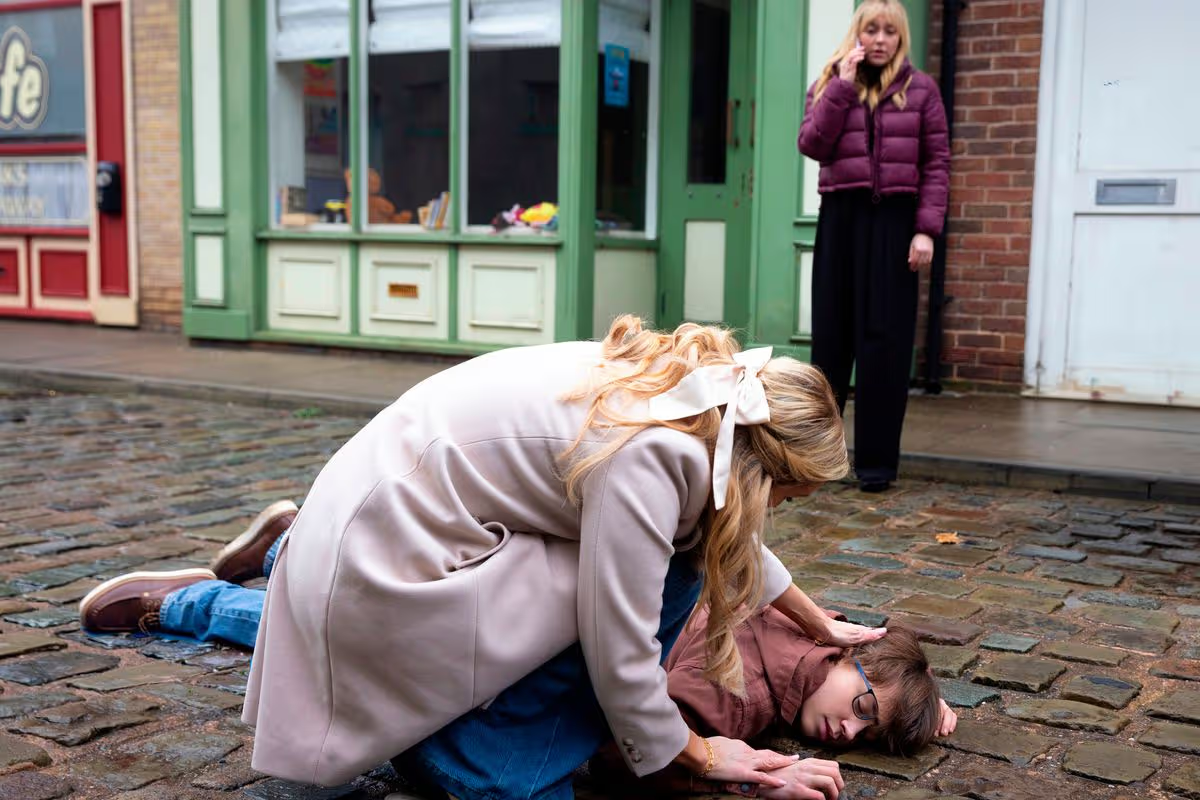
Nina’s worried about Sam’s behaviour, and soon things worsen when he collapses on the pavement. He’s rushed to hospital, and when Leanne gently suggests that his exams weren’t the only reason he resorted to taking drugs, he considers confessing all.
As Sam’s family rally around him, will the walls close in on Megan? Soon, Megan’s past comes back to haunt her as a shock discovery rocks the Driscolls, and Daniel wants answers.
Lisa quizzes Kit about the attack on Mal, but he gives nothing away. When Lisa reveals a witness has come forward, Kit masks his unease before ambushing them at the station and it seems he could be exposed.
Later, Lisa reveals that Mal has regained consciousness, so Kit visits him in hospital and questions him about the attack. Some news from Adam leaves Alya forcing a smile while a data breach leaves them panicking, as residents fume. George despairs over the continuing smear campaign targeting the undertakers.
Todd’s upset to see Theo with another man, leading to Glenda urging Todd to get back on the dating scene, but how will Theo react? Later on, Theo tells Todd he’s thinking of accepting a job in Belfast as it’ll be best for both of them to have a clean break. But things take a sinister turn when he drugs Todd’s drink.
EastEnders
Peter organises a surprise for Lauren, while Max soon finds himself at loggerheads with his family and leaves. With Max away, Mark offers Lauren a business proposition with the promise of luxury cars, but she has no idea of Mark’s criminal motives.
Later, Lauren gets off to a good start as she successfully sells one of Mark’s cars, but Max is suspicious about the paperwork. Soon Callum drops some news that leads to Lauren confronting Mark.
Johnny remains distant with Linda, while she’s caught in the middle when Bea clashes with Elaine. Soon, Linda is on the receiving end of some crossed words from Max. Soon Max and Linda get closer, with Max stepping in to support her, but a shocking discovery leaves Linda reeling.
Meanwhile, when Bea’s credit card application is rejected she sets one up in Honey’s name. Later in the week, Billy, Janet and Will arrive home without Honey, and Billy’s left concerned about Bea’s obsession with his family.
Jean returns to Walford, and she and Zoe put aside their differences. Sandra arrives and is asking questions about Jasmine, with Kim and Denise discovering she is the adoptive mother of Jasmine’s twin brother Josh.
It’s not long before Josh arrives. When he finds out Zoe is also there, he insists he wants nothing to do with his mum. He does seem keen to get to know his grandfather Patrick though, while he also catches Oscar’s eye.
There’s also drama when Suki finds out about Penny and Vinny’s baby news. Penny tells Suki that she and Vinny are having their baby, with or without her blessing.
Hollyoaks
Dillon tells Vicky his plan to break Lucas out of prison so they can run away together. Later, he confides in her sister Gemma that Vicky is taking weight loss injections. Meanwhile, Rex, James and Froggy form an alliance to help Lucas, who is keen to serve his time.
Also next week, Theresa offers to help Mercedes track down her mystery new man, but is shocked by his identity. Soon, Warren drives out to the woods and opens his boot to reveal Jenson tied up.
There’s a shock when Jenson claims he’s Warren’s brother, leading to Warren attacking him before heading off to find proof. While alone, Jenson suffers an asthma attack.
Diane tells Tony she is determined to make the most of her time with her family after her cancer diagnosis. When the teens bunk off from school, Ant apologises to Trina, while Kathleen-Angel upsets him before they end up sleeping together. Ste returns from his holiday, while Dom is left hurt after being tricked by the teens and Rex struggles to open up to Ste.
Home and Away
Remi notices he’s experiencing pins and needles in his hands after a recent seizure following his brain tumour diagnosis. Eden’s devastated by some news, and soon she finds out Cash has lied to her. It’s up to Remi to tell her the truth to explain everything, before he agrees to speak with a neurosurgeon.
Marilyn shares her concerns with Alf that she could have done more to stop Leah leaving, while Leah’s furious over Justin’s ultimatum. Leah ends up staying, and she and Justin reconcile.
Mali has a warning for Lacey about Holden, while Kerrie won’t stop calling Harper before she takes a damning revenge on Tane with a drugs lie. When Tane is questioned by police, he’s aware the drugs were planted by Kerrie, but can he prove it? Also next week, Dana helps Sonny settle into the rehabilitation clinic, only for him to end their relationship.
Home and Away is available to stream from 6am weekdays, with double bill episodes airing from 6pm on 5Star. Hollyoaks is available to stream on Channel 4’s streaming service now, while it also airs Mondays to Wednesdays on E4 at 7PM.
EastEnders airs Mondays to Thursdays at 7:30pm on BBC One and BBC iPlayer. Emmerdale airs weeknights at 8pm on ITV1 and ITVX.
Coronation Street airs weeknights at 8:30pm on ITV1 and ITV X. * Follow Mirror Celebs and TV on TikTok , Snapchat , Instagram , Twitter , Facebook , YouTube and Threads .