“undertone,” a muted, personal and static microbudget horror debut by Ian Tuason, takes place in the writer-director’s actual childhood home where he tended to both of his parents before they died. Both hospice and inspiration, it’s a stifling place decorated with floral wallpaper and crucifixes. The pain and exhaustion and grief are so real and oppressive, the camera never dares set a foot outside.
Upstairs, Evy (Nina Kiri), watches over her own terminally ill mother (Michèle Duquet). Tuason funneled his emotional gloom into this movie; Evy co-hosts a horror podcast with her overseas best friend Justin (voiced by Adam DiMarco). “This is the only thing keeping me sane right now,” she says. They’re words she’ll regret within the week.
Kiri and DiMarco have the comfortable, convincing chemistry of two old pals who have done a show for a while. One snippet seems to be an episode on Elisa Lam, the real-life tourist found dead in the rooftop water tank of Los Angeles’ Cecil Hotel. There’s also a reference to a website with a red-faced ghoul who hypnotizes victims into cutting off their ears. The latter may be Tuason seeding his idea for a sequel.
Here the central story is that Justin, who lives in London, has received an email with 10 audio files recorded by a couple named Mike and Jessa (Jeff Yung and Keana Lyn Bastidas) who are trying to understand what she’s saying in her sleep. The sender is unknown. (Possibly an evil spirit hoping for the exposure of a mattress ad?) Justin, the believer, is instantly alarmed by how these eerie tapes escalate from cute banter to ghostly crying babies and backward incantations. Evy is the skeptic who dismisses the noises as either an online hoax or bad plumbing.
Due to the time zone differential, Evy and Justin record their show just before he heads out to work in the morning, which for her is 3 a.m. Most of the movie takes place in that witching-hour window, an airlessly silent time where an at-home podcaster doesn’t worry about being interrupted by a leaf blower, an ice cream truck or a dog. Sound-designed by David Gertsman, “undertone” is so quiet that a tea kettle sounds like a fire alarm. Story-wise, it’s equally inert. One of the biggest action shots in the first hour comes when — eek! — a sink turns on.
I’d love to understand why horror films that I find excruciatingly dull give others the heebie-jeebies. My working theory is that they tap into audiences with a preexisting suspicion that the world is wicked — they prove paranoia to be well-founded. My mental default is that the world is neutral-good, and that may be why I prefer movies with active villains scaring me out of my complacency. I spent “Paranormal Activity” and “Skinamarink” restlessly admiring the production design; here, my main thrill came from the soundscape, like when a vibrating cellphone made my chair rattle like it was a tractor, or a noise that can only be described as death-rattle ASMR.
When Evy slips her on headphones, she’s so focused making sense of the latest scary tape, playing it forward, reversed and slowed-down, that she’s oblivious to the bumps in the night in her own house, upstairs near her comatose mother’s bedroom. I suspect Tuason deeply relates to Evy, to the disassociation of living with death every day, and uses her resistance to explore denial. She refuses to admit that the supernatural is real, even as she repeatedly takes a break to steady herself and, as she puts it, “get back into character.” Her stifled panic makes it obvious that fear is taking over.
The screenplay also has a passing reference to Evy’s useless, off-screen boyfriend Darren (voiced by Ryan Turner). Their miserable dynamic is compelling but overall comes off like a plot point Tuason stuffed in his pocket and never got around to using. Our one peek into it comes when Darren phones Evy to pressure her to ditch her mom and come to a party. He claims he’s throwing a kegger to cheer her up. (A frozen lasagna on the doorstep would be better, dude.)
Evy does reluctantly leave the house — we don’t follow her there — and that one moment says as much about crossed-signals communication as anything else in the movie. It’s bullseye-accurate about how isolating it is to lose a parent earlier than your peers.
The film is so committed to its rigors — the two-person cast, the glacial camera pivots, the moody lighting — that it teeters on the line of becoming monotonous. When Tuason eases up a bit, say in a scene in which Evy pops on a sleep podcast that begins by describing a babbling brook and rapidly becomes a nightmare tale of bobbing corpses, he finally shows you that he has the potential for range.
But “undertone” is rooted in that slow-and-still horror discipline that holds its breath waiting for something to happen. It requires the audience to bring their own bad vibes to shots of religious icons on the wall and long takes of Evy clacking on her laptop, unaware of a flickering light behind her. (Rumor is Tuason has already signed on to shoot the next “Paranormal Activity” sequel.)
Mostly it puts the audience in the position of watching a protagonist so passive that chunks of the running time are watching her sit at a table waiting for Justin to look up things for her on Wikipedia. Like amateur detectives, we learn alongside them as they click around pages about Sumerian devils, Catholic saints and the origin of the nursery rhymes “London Bridge” and “Baa, Baa, Black Sheep.”
As visuals go, “undertone” is so far removed from anything resembling the cinematic experience that I left with a fresh appreciation for campfire storytelling. At least then the listener gets to use their own imagination. But production designer Mercedes Coyle does dig up two satisfyingly creepy props: one, an antique speaking doll, the other, a small white statue that appears to be the Virgin Mary until we get a better look at her mouth, deformed by a hungry scream.
Despite my quibbles with how her character reacts when things really go awry, Kiri’s Evy has a clarity of purpose that holds our attention despite not having that much to do. In her strongest sequence, she and Justin take a few live callers on their podcast, some of whom bear bad news about Mike and Jessa, and another who phones up in the middle of a crisis that’s too big for these self-positioned experts to handle. Real violence is coming and these armchair ghosthunters are totally out of their depth. Yes, everyone is into podcasts. Maybe they shouldn’t be.
Coronation Street’s Megan Walsh will finally be exposed in upcoming scenes on the ITV soap, leaving Eva Price and her entire family shaken when they discover what she has been doing
Eva Price will make a shock discovery about her stepson on Coronation Street
Coronation Street‘s Megan Walsh will finally be exposed in upcoming scenes on the ITV soap. The teacher, played by Beth Nixon, has been carrying out an illicit affair with her student Will Driscoll as part of a controversial storyline on the ITV soap.
Will arrived with his family last October to move into the Rovers Return, and it was quickly established that Megan was his athletics coach but there was a lot more to it than just that. Megan eventually moved to Weatherfield, got a job at the local secondary school and has even started up a relationship with Daniel Osbourne (Rob Mallard) as a cover-up.
Megan’s flatmate Leanne also looks set to weigh in on the harrowing situation, as her own stespon Sam Blakeman (Jude Riordan) has worked out what his going on between Will and Megan, and has received multiple threats from the villainous teacher. After the bombshell scenes, this will also leave Daniel wondering where he stands as he potentially comes to realise that his entire relationship was a lie.
Just weeks ago, Corrie aired a flashforward episode that revealed that Megan is one of five potential murder victims, along with fellow villains Jodie Ramsey, Carl Webster, Maggie Driscoll, and Theo Silverton. So will this all lead to the ultimate downfall for Megan or will the teacher actually face prison time for her crimes?
Coronation Street boss Kate Brookes recently explained that she the story was a “very important” one to tell. She said: “It’s a very important story to tell and we want to be as truthful as possible. As part of that story Sam will end up getting embroiled in it all.
“Sam is semi-related to the pub family and he potentially gets wind that something’s amiss. We will see the lengths that Megan will go to manipulate Sam into keeping quiet. It’ll be massively detrimental to Sam’s wellbeing.”
Meanwhile, for actress Beth Nixon, Coronation Street marks her television debut but she had actually auditioned for other parts on the soap before landing the role of Megan. Speaking to York College, Beth shared that the casting team had seen Beth in several shows at her drama school: the Arden School of Theatre in Manchester, so she was “kind of on their radar.”
Revealing her past audition history, Beth explained: “But I’d auditioned for Corrie twice before – as a baddie both times of course – including for the role of Lauren.” Actress Cait Fitton ended up being cast as Lauren, making her debut in 2022, and has remained on the show since.
Beth added: “Then, earlier this year, my agent sent me a casting brief and explained it was for a paedophile, which is a bit crazy to play because they’re obviously not a redeemable character, so they can push it pretty far.” After sending a self-tape Beth attended a chemistry test with other actors who were being considered to play Will. She then performed a scene on the set at The Bistro – and it turned out the bosses were rather impressed with her.
Beth – who was working as a skin clinic manager before joining Corrie – said: “I was at work when my agent called me. I was upstairs as my colleague watched the desk and, when he told me I’d got it, everybody in the clinic could hear me screaming my head off and then I cried, because it’s been four years since I graduated and this is my first TV role.
“It’s been a hard time and I was really close to quitting, having a normal job and pursuing a different career, so this just came at exactly the right time and when I needed it.”
Hello! I’m Mark Olsen. Welcome to another edition of your regular field guide to a world of Only Good Movies.
If you are anything like me, you felt pretty out of sorts this week, not sure how to process the news that we are suddenly, apparently, a nation again at war. It can make the movies seem frivolous — a glorious, privileged sandbox to stick your head in — but it is also times like these that make them seem most vital and necessary: a place to focus energy and anxiety and maybe figure things out.
I was particularly struck by something New York Times critic Wesley Morris said in an appearance on the podcast “The Big Picture.” He was ostensibly talking about the downside of the Paramount-Warner Bros. merger news (“These people are f— with our dreams here” is how he began) but he landed on why movies matter in their moment, crucial to “how we develop as a culture, how we come to understand ourselves as a people, what this country ought to or should look like 40 years from now.”
The week’s big new release is Maggie Gyllenhaal’s “The Bride!” a sort-of adaptation of 1935’s “Bride of Frankenstein” starring Jessie Buckley and Christian Bale that is also very much its own thing, purpose-built to drive some people up a tree and already sharply dividing critics.
Christian Bale and Jessie Buckley in the movie “The Bride!”
(Niko Tavernise / Warner Bros. Pictures)
In her largely positive review, Amy Nicholson calls the movie “an unhinged scream,” adding, “‘Every wacky second, you’re well aware how perilously close it is to falling apart at the seams. This spiritual sequel to ‘Frankenstein’ is a romantic tale of obsession, possession and fantasy — adjectives that also apply to its filmmaker, Maggie Gyllenhaal, who expends massive quantities of energy jolting it to life. She succeeds by the skin of her teeth.”
I interviewed Gyllenhaal about “The Bride!” — including the significance of that exclamation point in the title. There have been numerous reports about a back-and-forth between the filmmaker and execs at Warner Bros. and Gyllenhaal didn’t shy away from talking about it. She had specific praise for Pam Abdy, co-chair and co-chief executive of Warner Bros. Motion Picture Group.
“Something really alive was born, and I think the movie is better for the work that she and I did together,” Gyllenhaal told me. “I know that’s an unusual thing to say. I know that you have lots of people saying like, ‘Ah, the studio f— my movie up.’ That is not my experience. It’s really not.”
Louis Malle’s ‘…and the Pursuit of Happiness’
A scene from Louis Malle’s documentary “…and the Pursuit of Happiness.”
(Janus Films)
On Saturday, in a co-presentation of 7th House at the Philosophical Research Society and El Cine, the will be a 16mm screening of director Louis Malle’s 1986 “…and the Pursuit of Happiness,” a documentary made for television that explores the immigrant experience in America. The French-born filmmaker traveled across the U.S. interviewing recent arrivals from all walks of life.
Writing about the film in 1988, The Times’ Kevin Thomas called it “an often amusing and always insightful survey of the contemporary emigre experience. … an irresistible array of vignettes depicting cultural accommodation and assimilation in all its variety.”
I got on a video call this week with 7th House programmer Alex McDonald and El Cine founder Mariana Da Silva to talk about why this movie matters now.
The movie is streaming on the Criterion Channel right now. Why was it important to also put this movie in front of audiences right now?
Alex McDonald: I think Mariana and I are on the same page with this. I never let streaming or home video availability deter programming. Growing up, the theater was a holy place, a cathedral of congregation. I feel like these films are meant to be seen with an audience. And thankfully, I feel like our audience recognizes that as well, even if the film is out there. Particularly in our current moment, it’s a very prescient film and it’s one that will be all the more powerful within community.
Mariana Da Silva: I agree fully. One of the biggest things within our program is the communal aspects — just seeing the same people come back, that trust that develops with the audience. The best part I love about going to movie theaters is standing outside with people I maybe would never speak to and having a conversation about a film.
A scene from Louis Malle’s documentary “…and the Pursuit of Happiness.”
(Janus Films)
Do you respond to a movie like this as a sort of time capsule of how things were, or is it important to you that it is saying something about what’s happening right now?
McDonald: That’s something I’m very conscious of when I program repertory titles. When I program social, politically minded films, a lot of what I’m trying to do is to show that the issues within these things have not really changed — the ways in which things have progressed, the way in which we have regressed. Malle has such a humane view on all of these people in the film. He narrates but he doesn’t really editorialize. He just sort of observes, and in doing so, he’s making the most compelling argument for the richness of diversity and everything that these people contribute to this country, what they lose in assimilation, what they have to give up and what they bring. There’s a complexity to it. There are certainly dissenting voices in it and those resonate differently now.
It wasn’t perfect then. Obviously, there’s always been conflict, but I think there was an open-heartedness that has really shifted. And this is kind of a poignant reminder of what we need to try to get back to and recognize.
Da Silva: If we were able to have these conversations more openly, it would put us all on an even playing field. Humans are flawed. There’s been a lot of miseducation. In this moment, especially for me as somebody who is an immigrant, I feel like there’s so many people who I know who are so liberal and so aware, but then they don’t really understand the experience of the immigrant. And it’s not their fault in any capacity. They just haven’t been exposed to somebody like me before.
I think we can all come together on the things we celebrate, but we also need to be very open and come together on the things that we differ on too.
Points of interest
‘Good Night, and Good Luck’ in 35mm
George Clooney, left, and David Strathairn in the 2005 movie “Good Night, and Good Luck.”
(Melinda Sue Gordon / Warner Independent Pictures)
On Sunday afternoon at the Los Feliz Theater, as part of the American Cinematheque’s ongoing “Sunday Print Edition” series, there will be a 35mm screening of George Clooney’s “Good Night, and Good Luck,” introduced by The Times’ own Rosanna Xia.
Starring David Strathairn as pioneering television journalist Edward R. Murrow at the height of the McCarthy era, the film was nominated for six Oscars, including picture, director, actor and original screenplay.
As Kenneth Turan wrote in his original review, “‘Good Night, and Good Luck’ couldn’t be more unlikely, more unfashionable — or more compelling. Everything about it — its look, its style, even its sound — stands in stark opposition to the trends of the moment. Yet by sticking to events that are half a century old, it tells a story whose implications for today are inescapable. … The son of a TV anchorman, Clooney had the nerve to believe that a drama of ideas could be as entertaining as ‘Desperate Housewives.’ He insisted that a fight for America’s soul, a clash of values over critical intellectual issues like freedom of the press and the excesses of government, had an inherent intensity that would carry everything before it. And it does.”
‘Days and Nights in the Forest’ 4K restoration
An image from Satyajit Ray’s 1970 drama “Days and Nights in the Forest.”
(Janus Films)
Now playing at the Laemmle Royal in a new 4K restoration undertaken by the Film Foundation is Satyajit Ray’s 1970 “Days and Nights in the Forest.” In this examination of masculinity and class, four male friends drive from the bustling city of Kolkata to a rural village, mixing with the locals with volatile results.
In a special video introduction, Wes Anderson, a longtime admirer of Ray, admits he lifted a scene from “Days and Nights” for one of his own films — 2023’s “Asteroid City” — and says, “Anything by Satyajit Ray must be cherished and preserved, but ‘Days and Nights in the Forest,’ I think you will agree, is one of the special gems among his many treasures.”
‘Grease 2’ returns
Michelle Pfeiffer on the set of “Grease 2” in 1981.
(Vinnie Zuffante / Getty Images)
The Cinematic Void series at the American Cinematheque will show 1982’s pastiche musical “Grease 2” on Monday. Directed by choreographer-turned-filmmaker Patricia Birch, the film is, of course, a sequel to 1978’s megahit “Grease” but it is also very much its own thing. Largely dismissed on initial release, it has found a growing following over the years thanks in large part to its extremely engaging young cast, including an on-the-rise Michelle Pfeiffer.
In his initial review (more complementary than one might expect), Kevin Thomas wrote, “There’s so much youthful talent and vitality in ‘Grease 2’ that it’s depressing to discover it is so unblushing and relentless and paean to ignorance. … This is a pity, because Birch displays an organic sense of how to make dance evolve out of the kids’ everyday activities — converging en mass at Rydell High on the first day of school or having fun at the bowling alley. But Birch has scant opportunity beyond letting us know she cares for these ignoramuses, most of who seem likable enough beneath aggressively crude exteriors.”
Anti-fascist films at UCLA
Ingrid Bergman and Charles Boyer in the 1948 drama “Arch of Triumph.”
(Enterprise-UA / Photofest)
The ongoing series at the UCLA Film and Television Archive titled “From John Doe to Lonesome Rhodes: Anti-fascism from the Archive” hits a real stride this weekend for two nights of restored rarities. On Friday comes a restored 35mm print of 1948’s “Arch of Triumph,” directed by Lewis Milestone and starring Ingrid Bergman, Charles Boyer and Charles Laughton in a romantic drama of refugees in 1938 Paris. Also playing is Arthur Ripley’s rare 1944 emigree drama “Voice in the Wind.”
Much of the press around the film at the time of its release had to do with the challenge of bringing the racier aspects of the novel by Erich Maria Remarque (“All Quiet on the Western Front”) to the screen. As producer David Lewis told The Times’ Philip K. Scheuer, “I promise you that as Joan, Ingrid Bergman will set the town on its ear. They’ll never think of her as anything but sexy again.”
Saturday brings the world premiere of the 35mm restoration of Walter Comes’ 1947 “The Burning Cross,” in which a returning veteran is recruited into the KKK. John Reinhardt’s 1948 “Open Secret,” about antisemitism, will also play in a 35mm restoration.
The series concludes next week with a 35mm screening of Elia Kazan’s 1957 “A Face in the Crowd,” starring Andy Griffith in an examination of the dark side of populist politics and media manipulation.
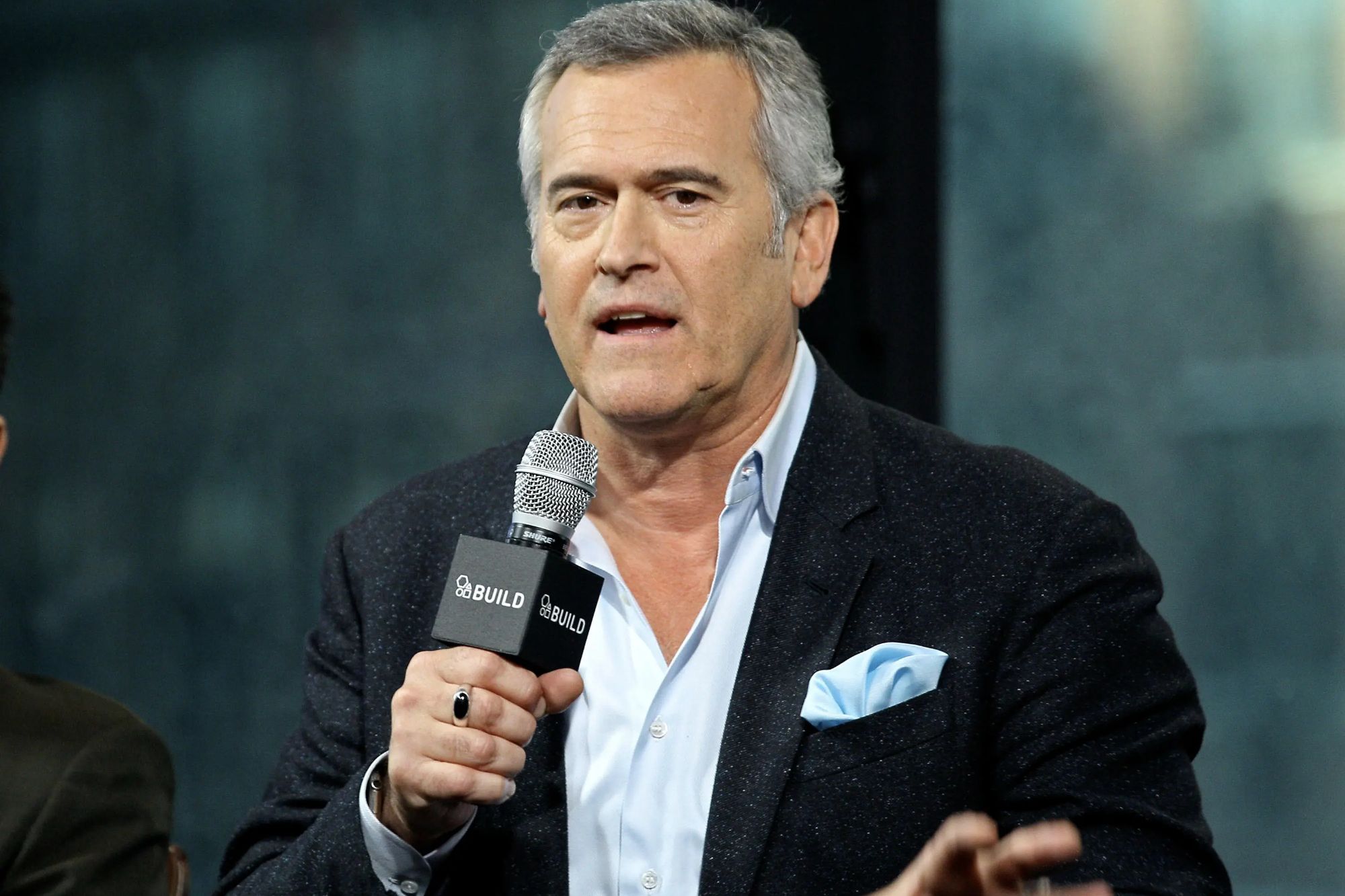
EVIL Dead actor Bruce Campbell has revealed he has cancer in an emotional Instagram statement.
The 67-year-old screen star told fans in the message “sorry if it’s a shock – it was to me too”.
Sign up for the Showbiz newsletter
Thank you!
American actor Bruce Campbell has revealed he has cancer in an emotional Instagram statementCredit: AlamyThe Evil Dead star reassured them he is a ‘tough old son of a b***h’Credit: AlamyThe 67-year-old has told how his cancer is ‘treatable not curable’Credit: Alamy
Yet the Michigan-born horror actor was then quick to reassure them “fear not, I am a tough old son of a b***h”.
Bruce has revealed he has a “treatable but not curable” form of the disease and will need to take time away from work to recover.
The Hysteria! star wrote in a text post uploaded to his Instagram grid: “Hi folks these days when someone is having a health issue its referred to as an ‘opportunity’ so let’s go with that – I’m having one of those.
“It’s also called a type of cancer that’s ‘treatable not curable’.
“I apologize if that’s a shock, it was to me too.”
Bruce who was in cult flicks Crimewave and Maniac Cop added: “The good news is, I’m not going to go into any more detail.
“I’m posting this, because professionally, a few things will have to change – appearances and cons and work in general need to take [a] back seat to treatment.
“There are several cons this year summer [sic] that I have to cancel. Big regrets on my part.
Most read in Entertainment
“Treatment needs and professional obligations don’t always go hand-in-hand.
“That’s about it. I’m not trying to enlist sympathy – or advice – I just want to get ahead of this information in case false information gets out (which it will).
“Fear not, I am a tough old son-of-a-b***h and I have great support, so I expect to be around a while.
“As always, you’re the greatest fans in the world and I hope to see you soon!”
Fans were also quick to offer words of support for the science fiction TV star.
One insisted: “Cancer doesn’t stand a chance. Hail to the king, baby. We love you Bruce.”
A second put: “Sending you all the best, Bruce!”
A third posted: “You are loved and must feel the terrific support flooding your direction! You definitely have this!”
One then added: “Hail to the King, baby.”
Bruce is best-known for his role in the Evil Dead franchise, playing Ash Williams.
He is the only character to appear in each instalment of the series and battles a series of possessed creatures called Deadites, who have been taken over by the Kandarian Demon.
His stints in the Evil Dead movies saw him voted as the greatest horror movie character ever back in 2013.
His personal profile has rocketed thanks to his movie status, with many hailing Bruce a cultural icon.
In 2007, he featured in a parody of his movie career in My Name Is Bruce.
He previously told dvdtalk.com of filming the gory Evil Dead instalment and said: “In retrospect, it’s funny as hell.
“The last three days of shooting Evil Dead we never fell asleep. At the time we were just zombies.
“Various people would fall asleep in the middle of the woods and we’d find each other randomly.”
He added: “We didn’t even think we’d finish the movie, so there was none of this, ‘Wow, I hope we make a hit!’
“We were just hoping we’d get the hell out of Tennessee in one piece. We were wrecking rental cars, rental trucks, cameras, wrecking actresses and ourselves. Everything.
“We were getting poked, bitten, scrapped, and my brother fell off a cliff.
“It was a comedy of terror. That was the most terrifying part: making the movie.”
Bruce has been hailed a horror movie icon by fans – who have been quick to issue messages of support in his health battleCredit: AlamyHe told how his plan is ‘to get as well as I possibly can’Credit: AlamyHe has opened on the real-life horrors while filming Evil DeadCredit: AlamyHe has also had a cameo in SpidermanCredit: YouTube