evacuation

A Gaza family split by medical evacuation hopes transplant could unite them | Gaza News

Padova, Italy – Abdullah, 10, barely lifts his gaze from his tablet as he plays his favourite video game, where he creates a virtual universe that lets him be anything he imagines.

The beeping of the chemotherapy infusion pump delivering drugs into his veins briefly brings his attention back, and he fumbles for the charger of the plug-in device before resuming his game.

Recommended Stories

list of 3 itemsend of list

His mother, Iman Ismail Mohammad Abu Mazid, says he picked up the gaming habit after leaving Gaza on May 14 for the Italian city of Padova to receive life-saving treatment for leukaemia.

Back in Deir el-Balah, the city in central Gaza that the family called home, he was a “very sociable child” who “would always be in the streets playing football with his brothers and other children his age,” she told Al Jazeera, before looking through her phone to retrieve a picture of the boy she remembers.

In it, three well-groomed children look at the camera. Abdullah has the same calm look, but his hair is now longer and his skin has a tinge of yellow. Standing beside him in the picture is Mohammad, who is now 11, and Mahmoud, who is eight. Towering above them and proudly placing his arms on their shoulders is their father, Ahmad.

[Federica Marsi/Al Jazeera]
Abdullah, right, his brothers Mahmoud and Mohammad, left, and father Ahmad [Courtesy of Iman Ismail Mohammad Abu Mazid]

The cancer that consumes Abdullah also tore their family apart.

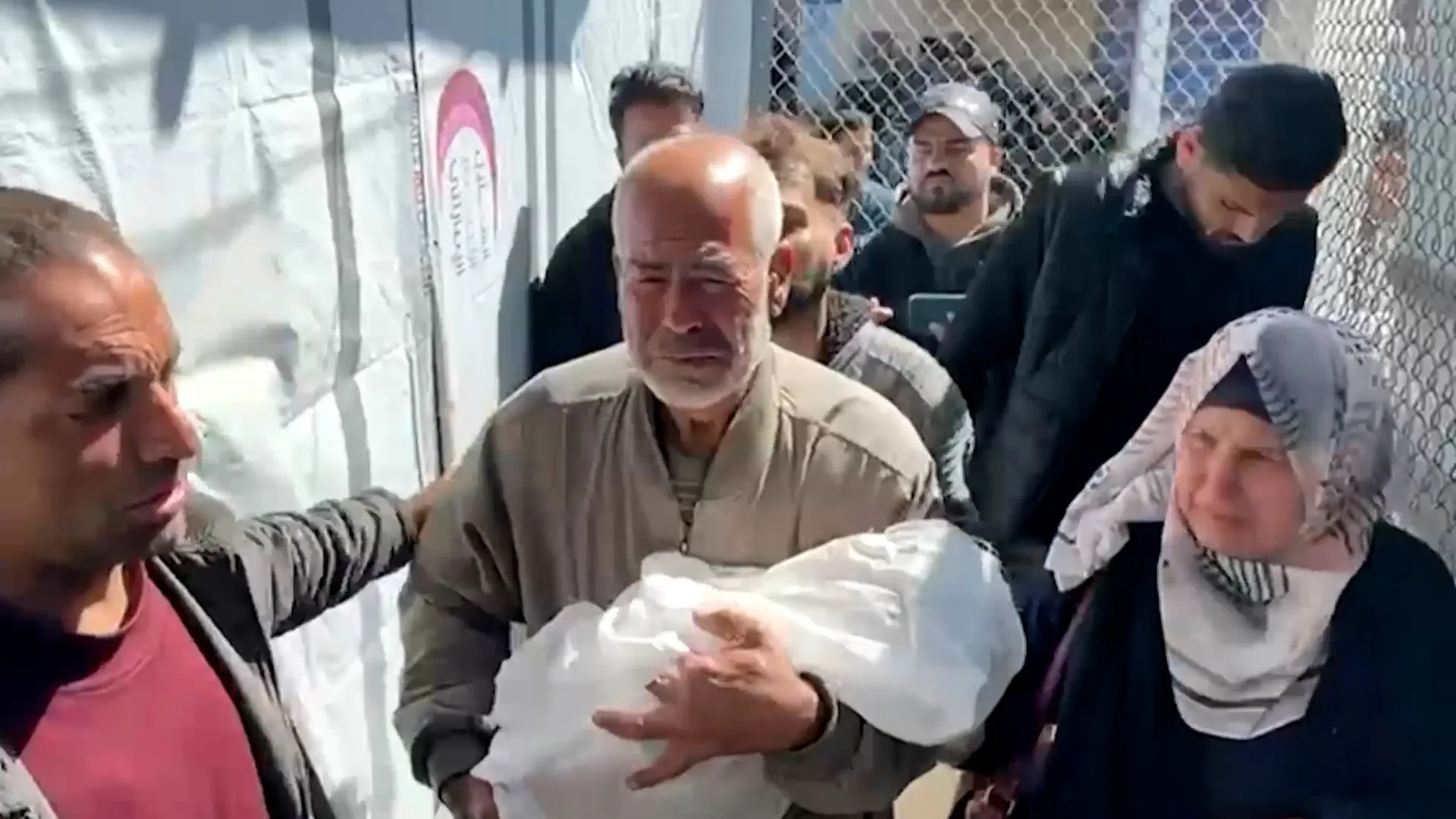
While Abdullah, his mother Iman and one-year-old Qamar were granted seats on a medical evacuation flight that took them to Italy, the rest of the family – Ahmad and the other two children, Mohammad and Mahmoud – stayed behind in Gaza, which Israel continues to bomb despite a ceasefire agreement being in place.

Now the disease could be what brings them back together. In early November, a team of doctors in Gaza took blood samples from Abdullah’s siblings and sent them to Italy to determine their compatibility as donors for the boy’s marrow transplant.

If one is a match, they will all be allowed onto a medical flight to Padova. If the results are negative, they will need to apply to the Italian government for family reunion – a much longer process fraught with logistical challenges.

Iman said the fate of his family hangs on those results. They could save Abdullah from the disease, and the rest of their family from Israel’s genocidal war on Gaza.

“I fear for their safety every day,” she said. “Abdullah misses his siblings, and I miss my children, too.”

Abdullah shyly nodded in confirmation, adding that he misses a nicely done kebab, too. He has no penchant for Italian food and reminisces about the seasoned meat the family’s go-to restaurant in Deir el-Balah served.

Asked whether he would like to bring Gaza to Padova, he said, “Not all of it, just my neighbourhood.”

Escaping war in Gaza

Iman found out she was pregnant with Qamar in March 2024, as the war was raging around her. At first, she thought her period had skipped because she had been barely surviving on water and bread. When it became apparent that a fourth child was on the way, she recalls feeling “terrified”.

“I was constantly worried and anxious that they’d tell me the baby was deformed, abnormal, sick,” because of the lack of food and sanitation, she said. “My body was exhausted, and I couldn’t stand. I spent my entire pregnancy lying on the floor,” she says rapidly in Arabic, before picking up the toddler tugging insistently at her leg and placing her on her lap to feed her.

Her baby girl was delivered in a tented field hospital in Deir el-Balah that lacked basic sanitation and medicines, as victims of Israeli bombardment were rushed in.

“You could see someone injured at any moment – an amputated limb, an amputated hand … The scenes were horrific,” she said. “And the doctors were nervous because the area was being targeted.”

Months later, in April this year, Abdullah started feeling sick.

“He was yellow, had abdominal cramps, a headache,” she said.

At the Al-Aqsa Hospital in Deir el-Balah, Abdullah was strapped to an IV and given painkillers and antibiotics. The fluids kept the fever from spiking, but nothing could stop the cancer from spreading.

The family was advised to take him to the European Hospital in Khan Younis, despite the Israeli army having announced a major expansion of military operations in the area.

The 10-kilometre (six-mile) ride southward was “terrifying”.

“There wasn’t a soul on the street,” Iman remembered. Doctors could only offer diluted chemotherapy treatment. Abdullah was flagged to the World Health Organization (WHO) for medical evacuation.

Unexpectedly, medical evacuation was granted shortly afterwards. Iman and her husband, Ahmad, did not need words to take the decision to split the family.

“There was more silence than dialogue,” she said.

Ahmad arrived at the European Hospital on May 13 to bid Iman, Abdullah and Qamar an emotional farewell. As he was leaving the compound, the earth shook and a slab of concrete flew right past his head.

That day, the Israeli military announced they had dropped nine bunker-busting bombs and dozens of other munitions on the hospital’s courtyard and surrounding area. They claimed to have killed Hamas leader Mohammed Sinwar and more than 20 other members of the group. International law prohibits attacks on hospitals, which constitute a war crime. Hamas confirmed Sinwar’s death in August, but did not provide details on how he died.

“I was convinced that [my husband] had been killed,” Iman recalled.

“I kept calling him and screaming, saying, ‘I swear, he’s gone’,” she said. “I called 10 times or more, but he didn’t answer. I was certain he had been martyred. But I didn’t give up, I didn’t give up! After so many attempts, finally, he answered.”

A new life away from home

Abdullah is among more than 5,500 children who have been evacuated from Gaza through medical evacuations coordinated by the WHO.

A total of 8,000 people have so far been able to leave for life-saving treatment, but 16,500 people are still waiting, according to United Nations figures. Of those, 3,800 are children.

Since July 2024, more than 900 patients have died while awaiting medical evacuations, according to the WHO.

Abdullah was taken to Padova thanks to the doggedness of lawyer Rebecca Fedetto, who in February founded an organisation to facilitate and support medical evacuations.

“I knew I wanted to do something and be active,” she told Al Jazeera. “I couldn’t live normally, my conscience didn’t allow it.”

Fedetto worked the phone in search of anyone who could help her navigate the process of paperwork, approvals, and coordination required to provide a referral for a patient to be moved to a medical facility abroad.

“At one point, I thought I wouldn’t make it, it was all so complex,” she said. “When it started to work out, I couldn’t believe it.”

Her self-made NGO, Padova Abbraccia i Bambini (Padova Hugs Children), has facilitated six medical evacuations, welcoming 25 people. Among them are six-year-old Ahmad, who is recovering from third-degree burns on nearly half of his body, and eight-year-old Seela, who lost both legs.

A team of volunteers caters to the families’ every need, offering transport, babysitting, homeschooling and emotional support.

Fedetto said the city’s response has been overwhelmingly welcoming.

“Many people have emailed us asking if they could help, because this war is something that touches our conscience” she said. “Often people want to help, they just don’t know how.”

WHO has appealed for countries to offer more medical evacuations, as Gaza’s healthcare remains limited. Only 18 hospitals out of 36 are partially functional.

More than 30 countries have so far heeded the call, including European Union member states, Qatar, Jordan, Egypt and the United Arab Emirates.

“We are thankful for their solidarity,” Rik Peeperkorn, WHO’s representative for the occupied Palestinian territory, told Al Jazeera.

Peeperkorn said that under the terms of the ceasefire, WHO should be able to evacuate 50 patients per day, in addition to their caregivers.

“To make this possible, more countries must step forward with generosity and accept patients in need,” he said.

Source link

Indonesian eruption forces evacuation, threatens air traffic

Mount Semeru spews volcanic materials during an eruption in Lumajang, East Java, Indonesia, on Wednesday, causing local officials to raise the volcano’s alert status to the highest level. Photo by EPA/National Agency for Disaster Countermeasure

Nov. 19 (UPI) — Indonesia’s Mount Semeru sent volcanic ash columns 6,500 feet high after erupting Wednesday afternoon, posing a danger to regional air traffic and forcing more than 300 to evacuate.

The eruption occurred at 4 p.m. local time on East Java’s tallest peak at 12,060 feet and triggered a red aviation alert by Australia’s Bureau of Meteorology’s Volcanic Ash Advisory Center in Darwin.

The alert indicates a threat to aviation, and officials at Qantas and Jetstar Airways said they are monitoring the situation but so far have not changed any flights.

The airlines will contact any customers who might be affected if the situation changes.

Virgin Australia also has not cancelled any scheduled flights.

Officials in Indonesia increased Mount Semeru to a Level 4 for volcanic activity, which is the highest warning level and indicates an eruption that is in progress, Fox Weather reported.

The volcano is capable of ejecting pyroclastic rocks as far as 5 miles from its peak, and local officials are prohibiting people from coming within 12 miles of the volcano due to the dangers posed by potential lava flows and clouds of hot ash.

Indonesia has 101 volcanoes and frequently experiences eruptions, according to the Smithsonian Institution Museum of Natural History Global Volcanism Program.

Source link