Energy

Gas, power and AI’s role in the new age of energy addition | Energy News

For two decades, global energy demand was static and efficiency gains, economic shifts, and renewable growth created an illusion of control.

The narrative was one of managed transition — a straight line from fossil fuels to a cleaner, perhaps simpler, energy system.

Recommended Stories

list of 4 itemsend of list

Energy companies believe that narrative is over.

Addition, not substitution

It’s unusual to see that many security personnel lining the road to Qatar’s convention centre. Enter LNG 2026, and the vast conference centre in Doha is hosting the people who shape the global energy system. Seated on the same stage were Saad Sherida al-Kaabi of QatarEnergy, Wael Sawan of Shell, Darren Woods of ExxonMobil, Patrick Pouyanne of TotalEnergies, and Ryan Lance of ConocoPhillips — leaders of companies that collectively sit at the centre of global energy supply.

Their estimation: The era of demand is here, and the age of gas is accelerating, not fading.

Everything from artificial intelligence, data centres, electrification and population growth are all pulling the energy system to a new scale. The executives say that demand is rising faster than grids, infrastructure, and policy frameworks can adapt.

From oil to energy

Perhaps that is why the industry is changing how it describes itself. These companies no longer frame their future narrowly like “international oil companies” or oil producers. They now talk about being “international energy companies” – a deliberate shift reflecting a broader ambition: to manage molecules, systems, and supply chains in a world with increasing energy demands.

LNG at Raslaffans Sea Port,
This undated file photo shows a Qatari liquid natural gas (LNG) tanker ship being loaded up with LNG at Raslaffans Sea Port, northern Qatar [File: AP]

Executives outlined projections that underline how deeply the market is changing. Global LNG demand, currently about 400 million tonnes a year, is expected to reach 600 million tonnes by 2030 and approach 800 million tonnes by 2050, according to the energy executives, and LNG is growing at more than 3 percent annually, making it the fastest-growing fuel among non-renewables, according to their data.

Building for a bigger world

The confidence in Doha was backed by construction on a vast scale. QatarEnergy, under Saad al-Kaabi, is expanding LNG production and assembling a fleet expected to reach about 200 LNG carriers, one of the largest shipping expansions in energy history.

In the United States, ExxonMobil and QatarEnergy are partnering on a new 18 million MMBtu LNG facility, part of a wider North American build-out. Canadian LNG is entering the market, while new supply is emerging from Africa and South America.

These are substantial investments.

As al-Kaabi put it during the discussion: “The world cannot live without energy. People need to be prosperous, and nearly a billion people still do not have basic electricity. We cannot deprive them of growth.”

It is a framing shared across the panel. This is no longer a conversation about replacement, as one executive summed it up, “we are in a world of energy addition, not energy substitution.”

Europe and energy security

The Russia–Ukraine war remains a defining reference point. Europe’s sudden loss of Russian pipeline gas forced a dramatic pivot to LNG. Imports jumped from roughly 50 million tonnes a year to approximately 120 million tonnes, transforming Europe into a major LNG market almost overnight.

What began as crisis management has reshaped global gas flows. LNG delivered flexibility, security, and scale, and for investors, that restored confidence that LNG infrastructure could be strategic.

As new supply comes online, executives expect prices to ease. When that happens, Asian demand, currently constrained by cost, is expected to rebound sharply. Several Asian economies are also shifting from exporters to net importers as domestic reserves decline.

Oil’s quiet re-entry

Two years ago, oil was widely predicted to disappear from the energy mix by 2030. That narrative, too, has faded.

Oil demand has proven resilient, and even gas-focused producers are expanding oil portfolios. Qatar is actively seeking new oil opportunities and remains one of the world’s largest holders of exploration blocks.

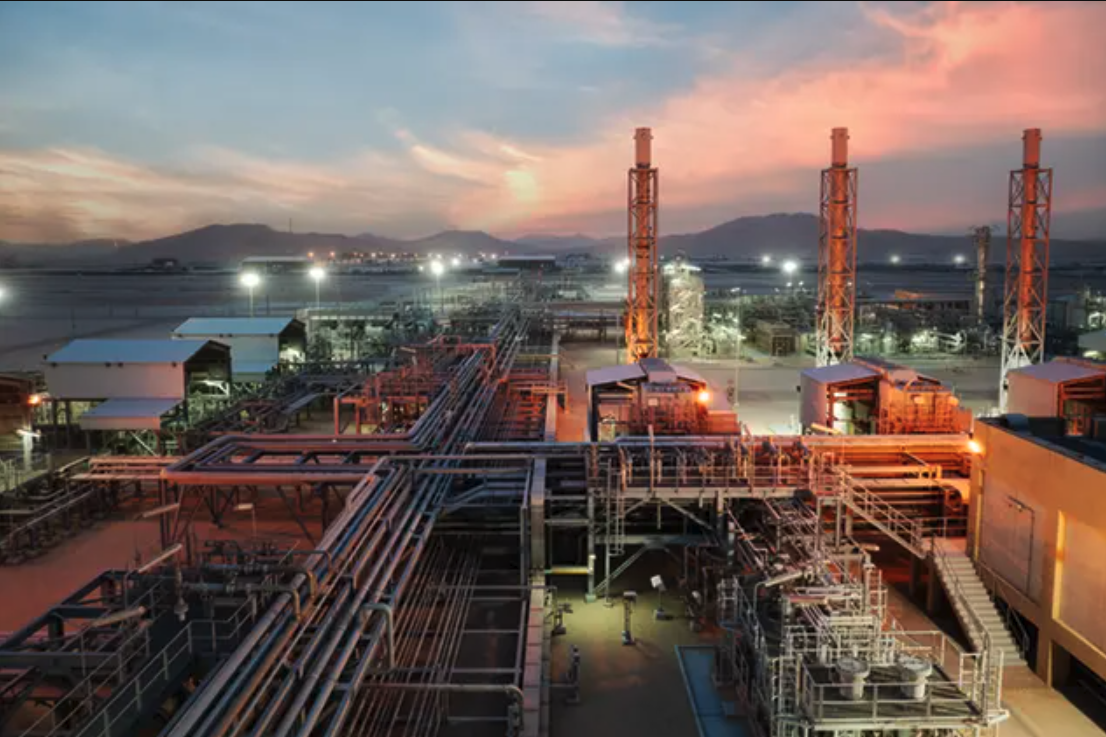
Qatar Petroleum Refinery
A petroleum refinery of Qatar Petroleum stands near Umm Sa’id, Qatar. Qatar is ranked 16th in countries with the biggest oil reserves and 3rd in natural gas reserves [File: Sean Gallup/Getty Images]

The shift is pragmatic. The industry is no longer debating whether oil and gas will be needed, but how they can be supplied at the lowest possible cost and emissions intensity. Several executives noted that many former oil sceptics have quietly reversed course.

AI and the end of low demand

The most urgent driver of change is not geopolitics — it is artificial intelligence.

For nearly 20 years, global energy demand was relatively stable. That period has ended. AI-driven data centres are consuming electricity at a scale planners failed to anticipate. Individual facilities can require thousands of megawatts of constant power, running 24 hours a day, with no tolerance for interruption.

Executives described this moment as a decisive break with the past. After decades of flat demand, the system has entered what they call hyper-scaling mode.

This demand, they say, is inflexible. Data centres cannot wait for weather conditions. They require power that is reliable, dispatchable, and immediate.

When renewables need backup

No one on stage dismissed renewables. Shell’s Wael Sawan and TotalEnergies’ Patrick Pouyanne both stressed their central role in the future mix. But they were clear about limitations.

The executives viewed wind and solar as intermittent and argued that grids built for predictable generation are under growing stress. Recent blackouts and near-misses in highly renewable systems have exposed the consequences of imbalance.

“When the wind isn’t blowing and the sun isn’t shining,” one executive noted, “gas fills the gap.”

Gas turbines remain essential for grid stability. Nuclear takes decades to scale. Batteries are improving but remain limited. Hydrogen is promising, but not yet deployable at the pace required.

Gas, the industry argues, is the only option that can be built fast enough to meet the contemporary surge in demand.

AI: The friction points

But behind the power-hungry AI-driven confidence are real snag lines. Building energy infrastructure has become slower and more complex.

The executives pointed to permitting delays that stretch projects more than a decade. Water and grid connections are major bottlenecks. Skilled labour is in short supply. Community resistance is growing, driven by cost concerns and environmental pressure.

Executives were openly critical of policy frameworks they see as detached from operational reality. Overlapping and conflicting regulations, they argued, raise costs and delay supply.

“The market dictates what can be delivered,” one leader said, warning that governments risk choking the arteries of energy flow.

Sustainability, emissions and the social contract

The industry acknowledges that its future depends on emissions performance. Methane leakage, efficiency, manufacturing footprints, and transport emissions remain under scrutiny. Gas offers immediate reductions where it replaces coal – about 40 percent in power generation and 20 percent in marine fuels. Carbon capture and sequestration is increasingly integrated into new projects.

ExxonMobil’s Darren Woods emphasised the company’s push to be seen as a technology player — working on hydrogen, carbon capture, and new uses for hydrocarbons beyond combustion. They describe this approach as responsible energy addition.

Yet the tension remains. The current demand surge has pushed environmental scrutiny to the background, but executives know that window is temporary. The sustainability of gas in this new role is under intense scrutiny.

While it burns cleaner than coal, its emissions of CO2 and methane, along with the transport footprint of LNG, remain central to the climate debate. Industry leaders acknowledge that gas must evolve to maintain its social licence. The CEO of QatarEnergy emphasised delivering energy “in the most environmentally responsible manner”.

There is awareness that the current surge in demand has sidelined environmental concerns, but these questions will resurface forcefully once the immediate capacity crisis abates. The gas industry risks a fate similar to coal if it fails to accelerate its decarbonisation efforts through carbon capture, utilisation, and storage (CCUS), and the integration of low-carbon gases, such as hydrogen.

Inclusive not mutually exclusive

The dynamic with renewables and emerging technologies adds another layer of complexity. Executives recognise that, for many regions, building new infrastructure, renewables are the cheapest and easiest option.

The role of gas, therefore, is evolving from a baseload provider to a “complementary load-following role,” essential for balancing grids increasingly saturated with variable wind and solar power.

The advancement of battery storage technology also looms as a potential competitor for this grid-balancing role. The future energy mix is envisioned as abundant, accessible, reliable, and clean, but the path is uncertain.

Investments in hydrogen and ammonia are continuing, though with fluctuating levels of hype, indicating a sector in search of the next breakthrough.

The human connection

Strip away politics and technology, and the core driver is human. Roughly five billion people still consume far less energy than developed economies. To paraphrase QatarEnergy’s al-Kaabi: Prosperity requires power.

Removing energy poverty means adding supply – reliable, affordable supply – at unprecedented scale. That is the context in which the energy company executives are positioning gas: not as a bridge, but as a stabiliser. Energy producers are betting that global demand – supercharged by AI and economic ambition – will outpace the ability of renewables alone to carry the load.

They are building for a world that they say cannot afford shortages, blackouts, or theoretical purity. Gas, they believe, is not a bridge, but the foundation to weather the storm of demand.

And its future will be defined by a simple metric: Can the system deliver abundant, accessible, reliable, and progressively cleaner energy?

Source link

Can India switch from Russian to Venezuelan oil, as Trump wants? | Energy News

New Delhi, India – When US President Donald Trump announced a trade deal with India on Monday this week, he declared that New Delhi would pivot away from Russian energy as part of the agreement.

Indian Prime Minister Narendra Modi, Trump said, had promised to stop buying Russian oil, and instead buy crude from the United States and from Venezuela, whose president, Nicolas Maduro, was abducted by US special forces in early January. Since then, the US has effectively taken control of Venezuela’s mammoth oil industry.

In return, Trump dialled down trade tariffs on Indian goods from an overall 50 percent to just 18 percent. Half of that 50 percent tariff was levied last year as punishment for India buying Russian oil, which the White House maintains is financing Russian President Vladimir Putin’s war in Ukraine.

But since Monday, India has not publicly confirmed that it has committed to either ceasing its purchase of Russian oil or embracing Venezuelan crude, analysts note. Dmitry Peskov, a Kremlin spokesperson, told reporters on Tuesday that Russia had received no indication of this from India, either.

And switching from Russian to Venezuelan oil will be far from straightforward. A cocktail of other factors – shocks to the energy market, costs, geography, and the characteristics of different kinds of oil – will complicate New Delhi’s decisions about its sourcing of oil, they say.

So, can India really dump Russian oil? And can Venezuelan crude replace it?

Donald Trump and his advisors announce an attack on Venezuela
US President Donald Trump speaks during a news conference on Saturday, January 3, 2026 at his Mar-a-Lago estate in Palm Beach, Florida, the US as Secretary of State Marco Rubio listens [Alex Brandon/AP]

What is Trump’s plan?

Trump has been pressuring India to stop buying Russian oil for months. After Russia invaded Ukraine in 2022, the US and European Union placed an oil price cap on Russian crude in a bid to limit Russia’s ability to finance the war.

As a result, other countries including India began buying large quantities of cheap Russian oil. India, which before the war sourced only 2.5 percent of its oil from Russia, became the second-largest consumer of Russian oil after China. It currently sources around 30 percent of its oil from Russia.

Last year, Trump doubled trade tariffs on Indian goods from 25 percent to 50 percent as punishment for this. Later in the year, Trump also imposed sanctions on Russia’s two biggest oil companies – and threatened secondary sanctions against countries and entities that trade with these firms.

Since the abduction of Maduro by US forces in early January, Trump has effectively taken over the Venezuelan oil sector, controlling sales cash flows.

Venezuela also has the largest proven oil reserves in the world, estimated at 303 billion barrels, more than five times larger than those of the US, the world’s largest oil producer.

But while getting India to buy Venezuelan oil makes sense from the US’s perspective, analysts say this could be operationally messy.

india
A man sits by railway tracks as a freight train transports petrol wagons in Ajmer, India, on August 27, 2025. US tariffs of 50 percent took effect on August 27 on many Indian products, doubling an existing duty as US President Donald Trump sought to punish New Delhi for buying Russian oil [File: Himanshu Sharma/AFP]

How much oil does India import from Russia?

India currently imports nearly 1.1 million barrels per day (bpd) of Russian crude, according to analytics company Kpler. Under Trump’s mounting pressure, that is lower than the average 1.21 million bpd in December 2025 and more than 2 million bpd in mid-2025.

One barrel is equivalent to 159 litres (42 gallons) of crude oil. Once refined, a barrel typically produces about 73 litres (19 gallons) of petrol for a car. Oil is also refined to produce a wide variety of products, from jet fuel to household items including plastics and even lotions.

FILE - Russian President Vladimir Putin, left, and Indian Prime Minister Narendra Modi greet each other before their meeting in New Delhi, India, on Dec. 6, 2021. (AP Photo/Manish Swarup, File)
Russian President Vladimir Putin, left, and Indian Prime Minister Narendra Modi greet each other before a meeting in New Delhi, India, on December 6, 2021 [File: Manish Swarup/AP]

Has India stopped Russian oil purchases?

India has reduced the amount of oil it buys from Russia over the past year, but it has not stopped buying it altogether.

Under increasing pressure from Trump, last August, Indian officials called out the “hypocrisy” of the US and EU pressuring New Delhi to back off from Russian crude.

“In fact, India began importing from Russia because traditional supplies were diverted to Europe after the outbreak of the conflict,” Randhir Jaiswal, India’s Foreign Ministry spokesperson, said then. He added that India’s decision to import Russian oil was “meant to ensure predictable and affordable energy costs to the Indian consumer”.

Despite this, Indian refiners, currently the second-largest group of buyers of Russian oil after China, are reportedly winding up their purchases after clearing current scheduled orders.

Major refiners like Hindustan Petroleum Corporation Ltd (HPCL), Mangalore Refinery and Petrochemicals Ltd (MRPL), and HPCL-Mittal Energy Ltd (HMEL) halted purchasing from Russia following the US sanctions against Russian oil producers last year.

Other players like Indian Oil Corporation (IOC), Bharat Petroleum Corporation, and Reliance Industries will soon stop their purchases.

india
A man pushes his cart as he walks past Bharat Petroleum’s storage tankers in Mumbai, India, December 8, 2022 [File: Punit Paranjpe/AFP]

What happens if India suddenly stops buying Russian oil?

Even if India wanted to stop importing Russian oil altogether, analysts argue it would be extremely costly to do so.

In September last year, India’s oil and petroleum minister, Hardeep Singh Puri, told reporters that it would also sharply push up energy prices and fuel inflation. “The world will face serious consequences if the supplies are disrupted. The world can’t afford to keep Russia off the oil market,” Puri said.

Analysts tend to agree. “A complete cessation of Indian purchases of Russian oil would be a major disruption. An immediate halt would spike global prices and threaten India’s economic growth,” said George Voloshin, an independent energy analyst based in Paris.

Russian oil would likely be diverted more heavily towards China and into “shadow” fleets of tankers that deliver sanctioned oil secretly by flying false flags and switching off location equipment, Voloshin told Al Jazeera. “Mainstream tanker demand would shift toward the Atlantic Basin, most likely increasing global freight rates as a result,” he noted.

Sumit Pokharna, vice president at Kotak Securities, noted that Indian refineries have reported robust margins in the last two years, majorly benefitting from the discounted Russian crude.

“If they move to higher-costing, like the US or Venezuela, then raw material cost would increase, and that would squeeze their margins,” he told Al Jazeera. “If it goes beyond control, they may have to pass the excess onto consumers.”

venezuela
A pumpjack for oil is pictured at the Campo Elias neighbourhood in Cabimas, south of Lake Maracaibo, Zulia state, Venezuela, on January 31, 2026 [File: Maryorin Mendez/AFP]

Can India stop buying Russian oil altogether?

It may not be able to. One of India’s two private refiners, Nayara Energy, is majority-Russian-owned and under heavy Western sanctions. The Russian energy firm Rosneft holds a 49.13 percent stake in the company, which operates a 400,000-barrel-per-day refinery in India’s Gujarat, PM Modi’s home state.

Nayara is the second-largest importer of Russian crude, buying about 471,000 barrels per day in January this year, accounting for nearly 40 percent of Russian supplies to India.

Its plant has relied solely on Russian crude since European Union sanctions were imposed on the company last July.

Nayara is not planning to load Russian oil in April as it shuts its refinery for more than a month for maintenance from April 10, according to Reuters.

Pokharna said the future of Nayara hangs in the balance, with the US unlikely to grant India an overt exemption for the Russia-backed company to import crude.

Can India switch to Venezuelan oil?

India has been a major consumer of Venezuelan oil in the past. At its peak, in 2019, India imported $7.2bn of oil, accounting for just under 7 percent of total imports. That stopped after the US slapped sanctions on Venezuelan oil, but some officials of the government-owned Oil and Natural Gas Corporation are still stationed in the Latin American country.

Now, major Indian refiners have said they are open to receiving Venezuelan oil again, but only if it is a viable option.

For one thing, Venezuela is roughly twice as far from India as Russia and five times further than the Middle East, meaning much higher freight costs.

Venezuelan oil is more expensive as well. “Russian Urals [a medium-heavy crude blend] has been trading at a wide-ranging discount of about $10-20 per barrel to Brent, while Venezuelan Merey currently offers a smaller discount of around $5-8 per barrel,” Voloshin told Al Jazeera.

“Importing from Venezuela and forgoing the Russian discount would be a costly affair for India,” said Pokharna. “From transportation cost to forgoing discounts, it could cost India $6-8 more per barrel – and that is a huge increase in the importing bill.”

Overall, a complete pivot away from Russia could raise India’s import bill by $9bn to $11bn – an amount roughly equal to India’s federal health budget – per year, according to Kpler.

“Venezuelan crude must be discounted by at least $10 to $12 per barrel to be competitive,” argued Voloshin. “This deeper discount is necessary to offset the much higher freight costs, increased insurance premiums for the longer Atlantic voyage, and the somewhat higher operational expenses required to process Venezuela’s extra-heavy high-sulfur crude.”

Without deeper discounts, the longer journey and complex handling make Venezuelan oil more expensive on a delivered basis, he added.

Another major issue is that many Indian refiners simply do not have the facilities to process very heavy Venezuelan oil.

Venezuelan crude is a heavy, sour oil, thick and viscous like molasses, with a high sulphur content requiring complex, specialised refineries to process it into fuel. Only a small number of Indian refineries are equipped to handle it.

“[Venezuelan oil’s heaviness] makes it an option only for complex refineries, leaving out older and smaller refineries,” Pokharna told Al Jazeera. “The shift is operationally difficult and would require blending with more expensive light crudes.”

Then there is the question of availability. Today, Venezuela produces barely a million barrels per day when pushed to its limit. Even if all production was sent to India, it would not match the total Russian oil import.

Where else could India buy oil?

India’s Minister Puri has said that New Delhi is looking to diversify sourcing options from nearly 40 countries.

As India has reduced Russian imports, it has increased them from Middle Eastern nations and other countries in the Organization of the Petroleum Exporting Countries (OPEC). Now, while Russia accounts for nearly 27 percent share in India’s oil imports, OPEC nations, led by Iraq and Saudi Arabia, contribute 53 percent.

Reeling from Trump’s trade war, India has also increased purchases of US oil. American crude imports to India rose by 92 percent from April to November in 2025 to nearly 13 million tons, compared to 7.1 million in the same period in 2024.

However, India would be competing for these supplies with the European Union, which has pledged to spend $750bn by 2028 on US energy and nuclear products.

Meanwhile, for Venezuela to return to higher production, Caracas needs political stability, changes in foreign investment and oil laws, and to clear debts. That will take time, experts say.

nayara
Customers refuel their vehicles at a Nayara Energy Limited fuel station, the Russian oil major Rosneft’s majority-owned Indian refiner, in Bengaluru, India on December 12, 2025 [File: Idrees Mohammed/AFP]

Source link

What does 303 billion barrels of Venezuelan oil look like? | US-Venezuela Tensions News

Oil becomes more meaningful when you turn it into fuel.

A barrel contains 159 litres of crude oil, or 42 gallons.

To use this oil, it must be refined. The refining process produces various products, including petrol, diesel, jet fuel and numerous household items, such as cleaning products, plastics and even lotions.

Once refined, a barrel typically produces about 73 litres, or 19.35 gallons, of petrol to power cars and trucks.

A pick-up truck that can drive 24 miles on 1 gallon of petrol, or 100km on 10 litres, can travel about 730km, or 450 miles, from one barrel of oil.

Put another way, one barrel of crude oil can fuel that pick-up on a trip from New York City to Cleveland, Ohio.

INTERACTIVE - Venezuela oil - How many Michigan stadiums could hold Venezuelas oil-1770023997
(Al Jazeera)

Now let’s scale that up to US national consumption. According to the US Energy Information Administration, the US has about 285 million motor vehicles and consumes nearly 9 million barrels of petrol every day.

If all of Venezuela’s crude oil were refined into petrol, it could supply US vehicles for roughly 40 years at today’s consumption rate.

INTERACTIVE - Venezuela oil - How long Venezuelas oil could fuel US cars-1770023993
(Al Jazeera)

Source link

Argentina privatizes natural gas imports, ends government role

Argentina has authorized private companies to import and sell liquefied natural gas — a move that removes the state from those operations. File Photo by Olivier Hoslet/EPA

BUENO AIRES, Jan. 30 (UPI) — The Argentine government authorized private companies to import and sell liquefied natural gas — a move that removes the state from those operations and accelerates the privatization of Enarsa, the country’s public energy company.

The decision was formalized through a decree signed by President Javier Milei and published in the Official Gazette this week. The decree also extends through December 2027 a state of emergency in natural gas transportation and distribution, underscoring continued strain on the system.

Enarsa has historically handled production, transportation and marketing of oil, natural gas and electricity in Argentina. With the new policy, the government begins dismantling that role and shifting functions long overseen by the state to the private sector.

The decision addresses a long-standing structural problem. According to the Secretariat of Energy, Argentina lacks sufficient pipeline capacity to move all gas from producing areas to major urban centers.

That limitation becomes acute in winter. As heating demand rises, domestic supply falls short and the country must import liquefied natural gas by ship.

Until now, the state managed that process. Enarsa bought LNG on the international market at high prices and sold it domestically at well below cost, with the gap covered by taxpayer-funded subsidies.

“This change is part of the decision to move forward with privatizing Enarsa’s assets and activities and to remove the state from its role as an entrepreneur and intermediary in the energy market,” the Energy Secretariat said.

Officials said the state should focus on regulating the market, ensuring clear rules, promoting competition and guaranteeing supply rather than directly buying and selling gas.

Under the new framework, Enarsa will stop importing and marketing LNG, and private operators will take over under a competitive scheme.

The system eliminates the implicit subsidy that existed until now and transfers the entire operation to the private sector, subject to competition rules and state oversight.

To implement the plan, the government will sell access to the Escobar terminal on the outskirts of Buenos Aires. It is the country’s only operational facility where imported LNG is regasified for distribution.

The Secretariat of Energy will set the tender conditions. If no bids are received or the process fails, Enarsa may intervene temporarily to avoid supply disruptions.

Because only one terminal is operating, the government also said it will set a maximum gas price for the upcoming winter to prevent abuse of a dominant position.

Juan José Carbajales, a former undersecretary of hydrocarbons, told UPI that privatization basically means giving a private company the job of buying LNG shipments and then selling that gas inside Argentina.

He said the operation is purely commercial and does not include physical management of the Escobar terminal.

“The scheme will be based on requests the awardee receives from power generators and gas distributors, and sales will be capped by a maximum price set by the Energy Secretariat at least for the next two periods,” Carbajales said.

He said the decision reflects the government’s view that the function failed under state management — a stance rooted in broader distrust of public-sector economic activity, in this case Enarsa.

He said the position is ideological and supported by the so-called Bases Law, which prioritizes private initiative in the economy.

The former official added that large budget allocations to Enarsa did not prove a system failure, but rather a political decision by successive administrations to channel residential gas subsidies by buying fuel at international prices and selling it domestically at far lower levels.

He said the measure also aligns with reforms in the electricity market aimed at gradually returning to a system of free contracting between supply and demand.

Carbajales warned gas prices in Argentina could rise if international conditions push LNG costs higher.

“Although the government will cap that value for two years, uncertainty will remain about what happens once the ceiling is lifted,” he said.

The authorization for private companies to import natural gas is part of a broader privatization agenda promoted by Milei. Since taking office in December 2023, his administration has moved to sell or prepare for sale several state-owned companies.

Source link

IAEA: Backup systems help to ensure nuclear reactors’ safety

Jan. 30 (UPI) — While Russia and Ukraine continue targeting each other’s energy infrastructure amid their war, the International Atomic Energy Agency leader said backup systems are critical for ensuring safety.

IAEA Director General Rafael Grossi on Friday told the agency’s board of governors the war in Ukraine is nearing its fifth year and poses the world’s greatest risk for a nuclear accident.

Ukraine has 15 nuclear reactors that generate about half of the nation’s electricity, and Russia has 36 operable reactors that generate up to 20% of its electricity, according to the World Nuclear Association.

The number of reactors in the two warring nations highlights the need for backup systems in those nations and all others that contain nuclear reactors to prevent accidents and ensure reliable off-site power, Grossi said.

“There must be secure off-site power from the grid for all nuclear sites,” he told the board of governors.

Grossi cited Russia’s control of the Zaporizhzhya Nuclear Power Plant in southeastern Ukraine as especially troubling, saying “all efforts should be made to ensure off-site power remains available and secure at all times.”

The nuclear power plant is Europe’s largest and was reconnected to its last active power backup system on Jan. 19 after undergoing repairs amid a temporary cease-fire between the two nations.

The backup system helps to ensure the reactor is cooled and supports other important safety systems, which Grossi said must remain “available and secure at all times” to prevent a nuclear accident.

It went offline after being damaged on Jan. 2 due to military actions, which forced the facility to rely on its main power line to cool its six shutdown reactors and spent-fuel pools.

The IAEA also is monitoring the facility’s ability to operate during the winter months, including ensuring water does not freeze its respective cooling and sprinkler ponds.

Grossi also warned of a potential calamity if some or all of Ukraine’s electrical substations were to go offline.

“Damage to them undermines nuclear safety and must be avoided,” Grossi said, adding that a group of agency experts are examining 10 substations amid Russian military strikes on Ukraine’s power infrastructure.

Other nuclear facilities that pose significant concerns include Ukraine’s Chernobyl site, which recently relied on diesel-powered generators to supply backup power until repairs were completed on its damaged substation power lines.

While the IAEA and others have managed to prevent a nuclear accident amid the ongoing war, Grossi said the “best way to ensure nuclear safety and security is to bring this conflict to an end.”

Source link

UN nuclear watchdog discusses Ukraine nuclear safety risks | Nuclear Energy News

Russian attacks on Ukraine’s electrical substations could cut power to nuclear plants, increasing risks of meltdown.

The United Nations nuclear watchdog has held a special session on Ukraine amid growing fears that Russian attacks on its energy facilities could trigger a nuclear accident.

Rafael Grossi, director-general of the International Atomic Energy Agency (IAEA), said at the start of Friday’s extraordinary board meeting in Vienna that the war in Ukraine posed “the world’s biggest threat to nuclear safety”.

Recommended Stories

list of 3 itemsend of list

The meeting was held as an IAEA expert mission conducted a weeks-long inspection of 10 electrical substations that Grossi described as “crucial to nuclear safety”.

Although nuclear power plants generate power themselves, they rely on an uninterrupted supply of external power from electrical substations to maintain reactor cooling.

Ukraine has four nuclear power plants, three of them under Kyiv’s control, with the fourth and biggest in Zaporizhzhia occupied by Russian forces since the early days of their full-scale invasion in 2022.

Moscow and Kyiv have repeatedly accused each other of risking a nuclear catastrophe by attacking the Zaporizhzhia site.

The plant’s six reactors have been shut down since the occupation, but the site still needs electricity to maintain its cooling and security systems.

Earlier this month, Russia and Ukraine paused local hostilities to allow repairs on the last remaining backup power line supplying the plant, which was damaged by military activity in January.

Ukraine is also home to the former Chornobyl plant, the site of the world’s worst nuclear accident in 1986. The site’s protective shield containing radioactive material was damaged last year in a drone strike allegedly carried out by Russia.

Status of energy ceasefire unclear

The four-hour IAEA meeting, which aimed to increase pressure on Russia, was called at the request of the Netherlands, with the support of at least 11 other countries.

Russia’s “ongoing and daily” attacks against Ukraine’s energy infrastructure in recent weeks have caused significant damage, Netherlands’ Ambassador Peter Potman told the board.

“Not only does this leave millions of Ukrainians in the cold and dark during a very harsh winter, but it is also … bringing the prospect of a nuclear accident to the very precipice of becoming a reality,” he said.

Ukraine’s ambassador, Yuriy Vitrenko, said it was “high time” for the IAEA to “shine an additional spotlight on the threat to nuclear safety and security in Europe” caused by Russia’s “systematic and deliberate” attacks.

Russian Ambassador Mikhail Ulyanov dismissed the board’s gathering as “absolutely politically motivated”, adding there was “no real need to hold such a meeting today”.

The status of a current weeklong moratorium on attacks targeting energy infrastructure is currently unclear.

United States President Donald Trump said Thursday that Russia had agreed to his request not to attack Ukraine’s energy infrastructure for a week.

On Friday, Ukrainian President Volodymyr Zelenskyy confirmed that neither Moscow nor Kyiv had conducted strikes ⁠on energy targets from Thursday night onwards.

However, Kremlin spokesman Dmitry Peskov later suggested the pause in attacks would end on Sunday.


Source link

After Trump call, Russia agrees to pause attacks on Kyiv amid cold spell | Russia-Ukraine war

NewsFeed

The Kremlin says it’s agreed to halt attacks on Kyiv and surrounding towns until February 1, after a request from US President Donald Trump pointing to the ‘record-setting cold’ gripping the region. Many Ukrainians have no heating, after Russian attacks on power infrastructure.

Source link

Venezuela’s Rodriguez signs oil reform law while the US eases sanctions | US-Venezuela Tensions News

Venezuela’s interim President Delcy Rodriguez has signed into law a reform bill that will pave the way for increased privatisation in the South American country’s nationalised oil sector, fulfilling a key demand from her United States counterpart, Donald Trump.

On Thursday, Rodriguez held a signing ceremony with a group of state oil workers. She hailed the reform as a positive step for Venezuela’s economy.

Recommended Stories

list of 3 itemsend of list

“We’re talking about the future. We are talking about the country that we are going to give to our children,” Rodriguez said.

The ceremony came within hours of the National Assembly – dominated by members of Rodriguez’s United Socialist Party – passing the reform.

“Only good things will come after the suffering,” said Jorge Rodriguez, the assembly’s head and brother of the interim president.

Since the US military’s abduction of Venezuela’s former leader Nicolas Maduro and his wife Cilia Flores on January 3, the Trump administration has sought to pressure President Rodriguez to open the country’s oil sector to outside investment.

Trump has even warned that Rodriguez could “pay a very big price, probably bigger than Maduro”, should she fail to comply with his demands.

Thursday’s legislation will give private firms control over the sale and production of Venezuelan oil.

It would also require legal disputes to be resolved outside of Venezuelan courts, a change long sought by foreign companies, who argue that the judicial system in the country is dominated by the ruling socialist party.

The bill would also cap royalties collected by the government at 30 percent.

While Rodriguez signed the reform law, the Trump administration simultaneously announced it would loosen some sanctions restricting the sale of Venezuelan oil.

The Department of the Treasury said it would allow limited transactions by the country’s government and the state oil company PDVSA that were “necessary to the lifting, exportation, reexportation, sale, resale, supply, storage, marketing, purchase, delivery, or transportation of Venezuelan-origin oil, including the refining of such oil, by an established US entity”.

Previously, all of Venezuela’s oil sector was subject to sweeping US sanctions imposed in 2019, under Trump’s first term as president.

Thursday’s suite of changes is designed to make Venezuela’s oil market more appealing to outside petroleum firms, many of whom remain wary of investing in the country.

Under Maduro, Venezuela experienced waves of political repression and economic instability, and much of his government remains intact, though Maduro himself is currently awaiting trial in a New York prison.

His abduction resulted in dozens of deaths, and critics have accused the US of violating Venezuelan sovereignty.

Venezuela nationalised its oil sector in the 1970s, and in 2007, Maduro’s predecessor, Hugo Chavez, pushed the government to increase its control and expropriate foreign-held assets.

Following Maduro’s abduction, Trump administration officials have said that the US will decide to whom and under what conditions Venezuelan oil is sold, with proceeds deposited into a US-controlled bank account.

Concerns about the legality of such measures or the sovereignty of Venezuela have been waved aside by Trump and his allies, who previously asserted that Venezuelan oil should “belong” to the US.

Source link

Mexico’s president confirms suspension of oil deliveries to Cuba

Mexican President Claudia Sheinbaum said Tuesday that oil shipments to Cuba have been suspended, reflecting a decision made by Petróleos Mexicanos. Photo by Jose Mendez/EPA

Jan. 27 (UPI) — Mexican President Claudia Sheinbaum said Tuesday that oil shipments to Cuba have been suspended, reflecting a decision made by Petróleos Mexicanos within the framework of its contractual relationship with the island.

During her morning news conference at the National Palace, Sheinbaum was asked about press reports indicating that Pemex had canceled a crude shipment bound for Cuba scheduled for January.

The president did not deny the suspension, but stressed that it is up to the state-owned company to decide when and how shipments are carried out.

“It is a sovereign decision, and it is made at the time deemed necessary,” she said when questioned about the published information.

Sheinbaum said decisions related to energy supplies to Cuba are part of Pemex’s operational and contractual assessments. She emphasized that Mexico’s policy toward the island is neither new nor exclusive to her administration.

She noted that previous governments maintained different types of energy ties with Cuba, even amid political disagreements.

“From the first blockade of Cuba, Mexico was the only country that voted against it, and since then it has maintained communication and different types of relations with the island,” she said.

The president also framed the bilateral relationship within a historical tradition of Mexican foreign policy, which has maintained ties with Cuba since the early years of the economic embargo imposed by the United States.

“Beyond positions toward whichever Cuban government is in power, the relationship is with the peoples, and that is a fundamental principle of Mexican foreign policy,” Sheinbaum said.

In that context, Sheinbaum said the economic blockade has generated supply problems on the island and that Mexico has maintained a policy of solidarity with the Cuban people over time.

She added that any future decision on resuming shipments will be communicated in a timely manner by the relevant authorities.

Asked whether Mexico could play an intermediary role between Cuba and the United States in the event of bilateral tensions, the president said such initiatives can only move forward if both parties request them, and reiterated that Mexico will continue to promote dialogue and the peaceful resolution of international differences.

Mexico consolidated its position in 2025 as Cuba’s main oil supplier, covering approximately 44% of the island’s crude imports and displacing Venezuela, with an average of more than 12,000 barrels per day.

With Venezuela’s exit as a key supplier following the capture of President Nicolás Maduro on Jan. 3 by U.S. military forces, Mexico assumed a central role in supplying the island’s energy needs.

As a result, in Cuba the decision by Mexico could have a significant impact on its already fragile energy situation, by reducing one of the external sources that had helped ease the island’s fuel deficit.

The measure could translate into increased blackouts, transportation restrictions and disruptions to key sectors such as industry and services, in a context marked by a shortage of foreign currency and difficulties accessing alternative suppliers on the international market due to the blockade that has affected the island for decades.

Source link