
Emily Blunt

‘Under the radar’ BBC series fans say is ‘better than American Primeval’ and Yellowstone

The series has been called an “understated masterpiece”, comparing it favourably to Yellowstone

For many people BBC iPlayer has become a great destination for drama, evolving far beyond its original role as a simple catch-up service for television. One of its biggest strengths is its extensive box-set offering, allowing viewers to binge entire series rather than waiting for new episodes to air weekly on the BBC.

The BBC has also continued to expand its selection of returning dramas, with previous seasons increasingly available to watch in full. Some of the most popular dramas listed on there include Happy Valley, Taboo, Wolf Hall and Normal People.

However, one drama series has caught the attention of viewers and it is essentially a revenge story, love story and Western epic rolled into one,

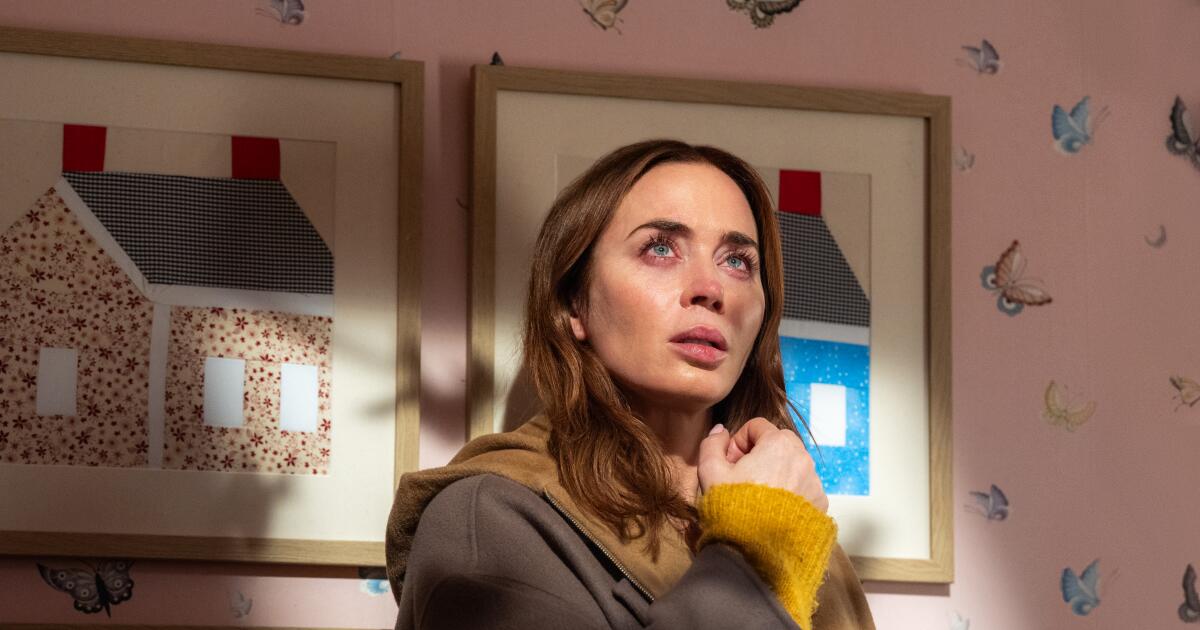
Set in 1890, the BBC series follows Lady Cornelia Locke (Emily Blunt), an Englishwoman who journeys to the American West in pursuit of the man she believes is responsible for her son’s death.

Her journey brings her into the path of Eli Whipp (Chaske Spencer), a former cavalry scout and member of the Pawnee Nation seeking to claim land promised to him for his military service. As their paths converge, the pair form an unlikely alliance while navigating the violence and lawlessness of the American frontier.

The English is created and directed by Hugo Blick’s which transports you to the dying days of the Old West for six hours, reports the Express.

Audiences have described the drama as an underappreciated gem alongside American Primeval and Yellowstone.

The English, aired on BBC Two and Amazon Prime in late 2022, and comprises of six episodes that have earned acclaim from traditional western devotees and those discovering the genre.

Westerns are enjoying a resurgence, fuelled by the popularity of shows such as Yellowstone, American Primeval, and 1923.

Despite its parallels to Yellowstone, devotees of The English have queried why it doesn’t attract the same recognition as other contemporary shows, despite being “Western in all the right ways”.

“Instantly, The English has made my top 10. I have seen a lot of movies and series over the many many years I’ve walked this earth. And seldom have I been struck so profoundly,” one IMDB reviewer described in a 10-star review.

“Every scene, every word, each gesture, to a person reaches out, aiming for the heart. Relentlessly uncovering a story that weaves beauty and horror in equal measure.”

“It never waits for you to catch up. But rather pulls you along as you follow- never really knowing what will happen and carefully doling out what has happened.”

“Fans of American Primeval should watch The English. Both are great Westerns featuring a strong female lead,” Emily Long writes for Screen Rant, adding “Though each of the shows have their own stories and unique characters, The English and American Primeval are surprisingly similar. Both shows centre on a woman trying to make her way across the American West with a travelling partner, encountering numerous challenges along the way.”

The show has also won over the hearts of Reddit’s 67,000-strong r/Western community, with one user, apswim22, remarking, “This was an amazing under-the-radar series. One of the better Western series in a while.”

Hundreds have applauded the series’ storyline, with BeautifulDebate7615 telling the Western subreddit, “We did not see the twist coming but kept wondering why things weren’t developing the way we expected. Then the twist perfectly explained things.”

Both Chaske Spencer and Emily Blunt earned nominations for Best Actor at the British Academy Television Awards and Outstanding Performance by a Female Actor in a Television Movie or Limited Series at the Screen Actors Guild Awards, respectively.

Stephen Rea earned an Irish Film and Television Award for his portrayal of Sheriff Robert Marshall.

Beyond the exceptional acting on display, Arnau Valls Colomer’s breathtaking cinematography is wonderfully complemented by Federico Jusid’s classical score, together creating an utterly compelling atmosphere.

Some critics have taken issue with the show’s tempo, with the opening episode labelled something of a slow burner, though such gripes quickly fade once the second episode hits its stride.

The English is available to stream on both BBC iPlayer and Amazon Prime.
Source link

‘Disclosure Day’ review: Spielberg returns to alien life a little lifelessly

Anticipation. Rumors. Anxiously scanning the horizon, hoping that a brilliant force will leave the masses forever changed. Yes, a new Steven Spielberg movie about close encounters with extraterrestrials is landing — and misses the mark.

“Disclosure Day” is a story of truth and feared consequences. A personality-free cybersecurity expert, Daniel (Josh O’Connor), is on the run with evidence of little gray men arriving on our planet to a rude reception. The aliens are kind. Our species is barbaric. Wittily bruising us with that fact, Spielberg opens with a POV of a wrestler kicking the audience in the face. Welcome to Earth.

Elsewhere in America, a weathergirl named Margaret (Emily Blunt) breezes into her Kansas City studio, babbling up until the minute the news camera turns on, a bravura sequence that channels her restlessness, the station’s tempo and the film’s alarm that this ditz has just this morning been stricken with preternatural powers. (The cinematography and editing are by Janusz Kaminski and Sarah Broshar.) Locally, Margaret is known for announcing hailstorms with a sexy shimmy. Suddenly, she’s fluent in Russian, Korean and telepathy. Although she and her boyfriend, Jackson (Wyatt Russell), are a bad match, she’s giving everyone else life advice like an intergalactic Dear Abby.

When Margaret starts spouting alien-ese — spasms of gutteral clicks — on live TV, she and Jackson rush to the hospital for a brain scan followed by several suspicious men who claim to be with the FBI. Russell’s befuddled Jackson is as useless as a traffic cone but Blunt’s Margaret is a gas before the movie makes her go all glassy-eyed and solemn. Yet, the movie is less inspired by why she was chosen or how she feels about it than in dragging us back in time to the moment when it happened, which isn’t that interesting except for its resemblance to a Disney princess having a psychotic break. The CG animals and aliens look stiff, other than a nifty close-up of an eyeball. (Later, I did like how one alien appears to be wearing sportswear.)

Chasing both Daniel and Margaret around the Midwest is a deep-state company called Wardex that wants to steal back the proof in Daniel’s backpack, a heap of hard drives with footage of 70-plus years of extraterrestrial visitations. It’s a treat to see Spielberg enjoying staging this conspiratorial gossip in different film stocks, from the black-and-white noir of 1947 Roswell to the clinical security-camera look of today. Whatever Wardex does on a day-to-day basis is unclear (we just see video screens and lab equipment). But it acts all-powerful, seeming to know more about outer-space tech than its overseers at the Department of Defense.

The script is by David Koepp of the paranoid thriller “Black Bag” and Spielberg’s 2005 version of “War of the Worlds,” yet, this plot strand about private enterprise isn’t science fiction. Last year, in the unrelated UFO documentary “The Age of Disclosure,” current Secretary of State Marco Rubio admitted that companies have a stronger institutional memory of “exotic materials” than any presidential administration: “The people in government who know where it came from originally — they’re long gone and their successors have no idea that it was there at all.” To add nationalistic insult to injury, the head of Wardex isn’t even American. He’s a Brit played by Colin Firth.

If anything, “Disclosure Day” isn’t paranoid enough. Clutching a mysterious tool the shape of a mouse coffin, Firth’s villain tracks Daniel’s location by mentally transplanting himself into another person’s body, changing the color of their pupils to his own icy blue. His gadget also makes his targets super sweaty. This laborious alien tactic leads to a few fun scenes but frankly feels old-fashioned when the omnipresent surveillance that Spielberg himself warned about nearly 25 years ago in “Minority Report” is now here with recording devices constantly tracking our faces, voices and movements just so we don’t have to dial phones, fetch sandwiches or talk to human drivers. Although his movie urged us against this 24/7 spyware future, we have since embraced the convenience.

I bring this up because “Disclosure Day’s” driving question is how humanity will react to life-altering information. (Not that the plot has much momentum — too many scenes end with the belief that ducking 10 feet out of view makes you invisible, with an antagonist simply giving up.) Daniel insists on total honesty: “People have a right to know the truth,” he says. His girlfriend Jane (Eve Hewson) doubts 8 billion people can handle his alien revelations. A Catholic, she’s alarmed that extraterrestrial intelligence could replace the concept of God, naively claiming that “religion holds society together.” Since when?

There’s some wan comedy in an early scene where these new-ish lovers debate the ethics of secrecy while revealing the skeletons they’ve been hiding from each other. Both have pasts you wouldn’t put on a Tinder profile. The script is glancingly empathetic to Jane’s moral turmoil but like Daniel, the film has made up its mind before the movie started. Narratively and logistically, Daniel’s whistleblowing escape limps along with a lack of suspense. Wardex doesn’t even bother to preemptively discredit Daniel in the public’s eye, which, given the two sentences of backstory we know about his character, would be easy.

Nattering in the background are broadcasts about the impending threat of global war at the hands of the United States, Russia and North Korea. Given that scary possibility, the risk that Daniel’s reveal could tip over the world order doesn’t seem that bad. Honestly, I’m dubious of the film’s certainty that folks even have the bandwidth to care about such news, let alone agree on what they’re seeing. The serious journalism Margaret aspires to do is splintering under our distrust of who controls the megaphones. Last month’s infodump of an Armed Forces report listing 209 sightings of unidentified objects was announced with a presidential tweet that “the people can decide for themselves.” I didn’t bother to click. Did you?

Getting information about these space invaders out leaves no time for taking the marvel of their existence in. Decades after Spielberg unveiled his signature shot — a face amazed at wonders we can’t see — he seems wearied by his awareness that today’s moment of revelation would look like a person staring down at their phone. When lens flares continually beam right at the screen, the whole movie feels like enlightenment under duress.

Where are the aliens from and why are they here? Who knows. “Disclosure Day” speeds around frantically, talking constantly and explaining little. Back in 1977, Spielberg’s “Close Encounters of the Third Kind” was a popcorn masterpiece of withheld information. Its quiet assurance that experts had a handle on flying saucers and a plan to meet them felt comforting. Here, Colman Domingo’s renegade intelligence operative also refuses to tell anyone anything, but all the unspoken beats just feel like plot holes. Mostly, his character builds what looks like a Hollywood set to reveal a truth he already suspects. That’s what Spielberg is doing too, but a film needs a sense of curiosity.

Instead, the wows come from good stagings of ordinary action: a car crash, a gripped crucifix, a hideout crowded with jostling, thrumming musical instruments. There’s a great train-track crossing sequence that’s also a vicious callback to Richard Dreyfuss’ epiphany in “Close Encounters.” Yet, I wanted to see more of the old Spielberg, the one who expressed awe in moments of silence rather than relentless motion.

That Spielberg has come full circle to his lifelong obsession with the sky had me convinced that this might be a secret sequel to “Close Encounters” beyond the droll joke that both Dreyfuss’ Roy and Blunt’s Margaret are shacked up with unsupportive blonds. They do share a universe; you’ll see a glimpse of what could pass for an outtake from Devils Tower, a.k.a. Mashed Potato Mountain, on one of Daniel’s hard drives. Still, I left underwhelmed. I didn’t need Dreyfuss to step off a spaceship gangplank and say, “I’m back.” I just needed “Disclosure Day” to have the same spark of intelligent life.

‘Disclosure Day’

Rated: PG-13, for action/violence, some bloody images and strong language

Running time: 2 hours, 25 minutes

Playing: Opens Friday, June 12 in wide release

Source link