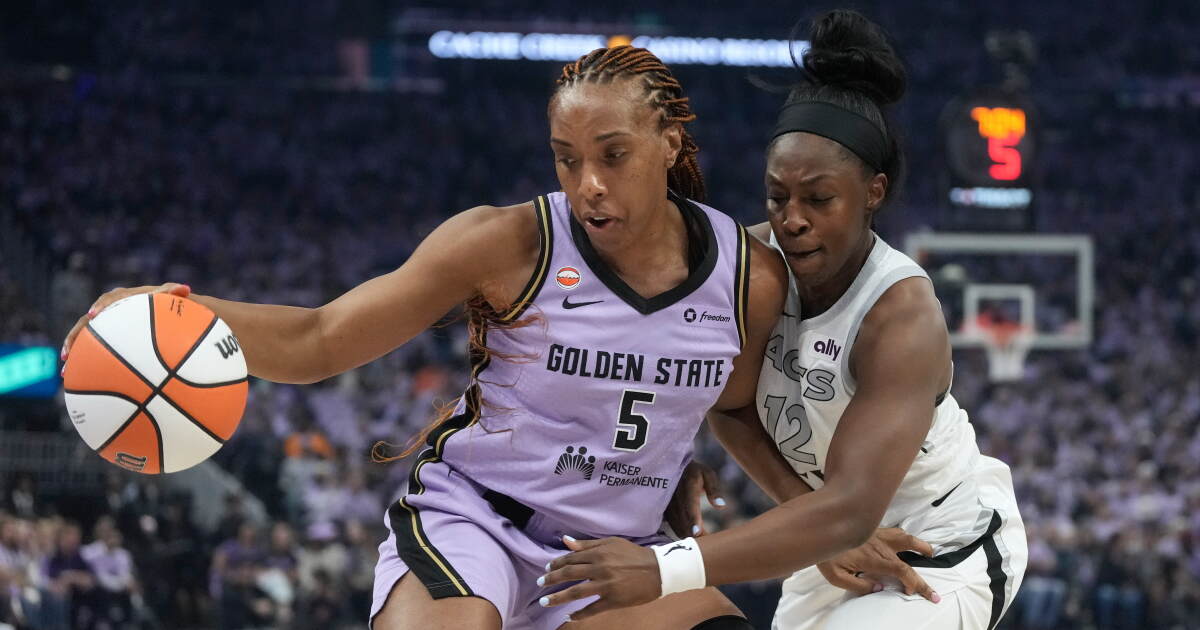
LAS VEGAS — Kayla Thornton scored 18 points and the second-year Golden State Valkyries became the quickest expansion team to reach the WNBA Finals, sweeping the defending champion Las Vegas Aces 87-77 in overtime Friday night in Game 3.
The second-seeded Valkyries will have home-court advantage and will host No. 4 Atlanta beginning Oct. 17. The Dream swept New York earlier on Friday, and now teams are 22-0 in playoff history when leading a series 2-0.
Las Vegas, which was seeded third, had won three of the past four championships.
Gabby Williams added 16 points for the Valkyries, including eight in overtime. Former Aces Kiah Stokes and Tiffany Hayes each had 11 points, and Stokes also grabbed 10 rebounds.
A’ja Wilson, honored before night’s game for winning an unprecedented fifth MVP, scored 21 points, but on six-for-19 shooting for the Aces. She also had 10 rebounds, joining DeWanna Bonner as the only players with 1,300 points and 600 rebounds in the postseason.
Jackie Young added 18 points and Chelsea Gray 17.
A 17-point run bolted Golden State past the Aces for a 53-47. Las Vegas closed within a point by the end of the quarter, giving the Aces only seven points in the period.
The Aces led by six points late in the game before the Valkyries evened the score when Gabby Williams stole the ball from Wilson and Thornton finished with a transition layup to make it 69-69 with 1:50 left.
Golden State then took the lead Veronica Burton’s 9-foot floater with 1:12 remaining. The Aces tied the score on Gray’s inbound pass to Young with 27 seconds left and ultimately force overtime.
The extra period belonged completely to the Valkyries, who outscored the Aces 16-6.
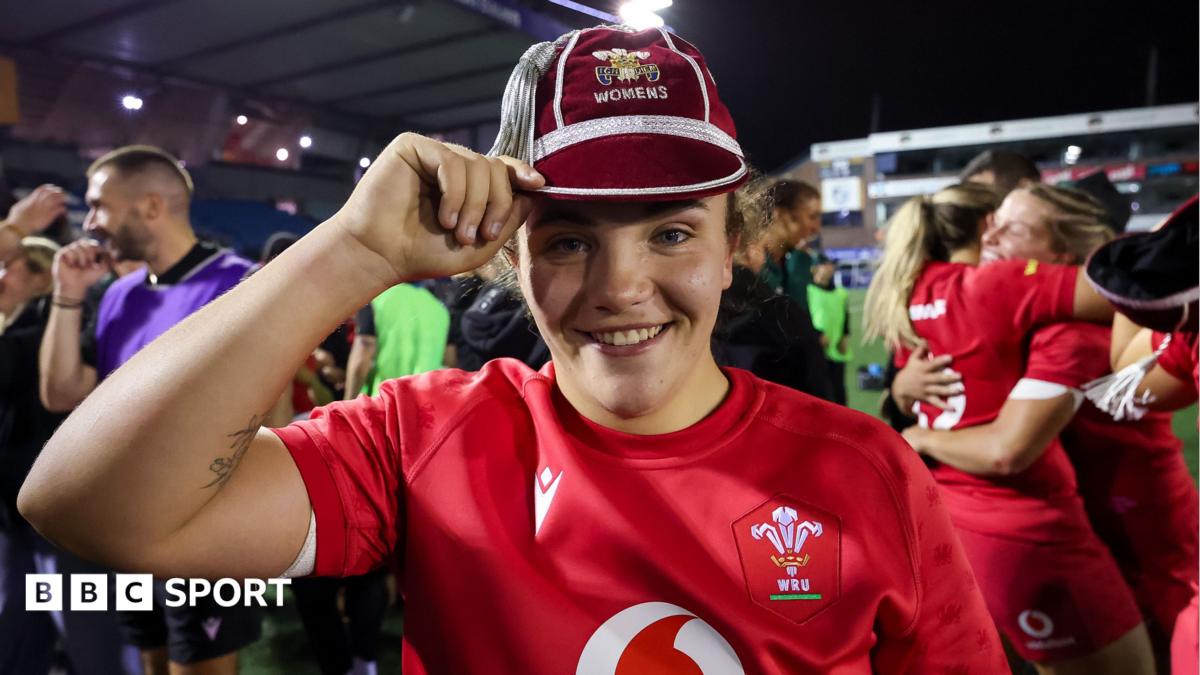
Shanelle Williams has already fulfilled one childhood ambition after making her Wales debut and now she is preparing for another milestone in Japan.
The 19-year-old former Gwernyfed RFC junior came off the bench in Wales’ 50-19 win over South Africa in the WXV Global Series in September.
As a child, Williams had written on her Christmas list that she wanted to play for Wales.
“I didn’t actually know that there was a women’s team,” the hooker said.
“I used to tell my dad that I was going to play for Wales with the boys.
“Then I obviously realised that I actually can play for Wales. Since then, everything I’ve done, rugby’s always been a priority.”
Williams had forgotten about the Christmas list until her older sister reminded her after she won her first Wales Under-18 cap.
“It’s quite a nice reminder that I have been working for this for so long, so it has all been worth it,” she said.
Williams started playing rugby at Gwernyfed aged eight, spending four years there before joining the Red Kites and later moving into the Wales pathway.
She went on to play for Cardiff Quins and Cardiff Rugby before attending Hartpury College.
Her father played a key role, regularly making the journey from home to Cardiff for training.
“Obviously I’m from Gwernyfed, so it was about an hour and a half down to Cardiff,” she said.
“He used to take me for training on Friday nights straight after school.
“I wouldn’t have been able to do it if my dad hadn’t given me that opportunity, so I’m very lucky.”
On Wednesday, Taylor Lautner and his wife Tay Lautner (née Dome) announced the arrival of their first child in a shared Instagram post, a baby girl they named … drumroll please … Lennon Taylor Lautner.
“One week loving our sweet little Lenny,” the couple wrote in the Instagram caption. Lennon arrived Sept. 16, according to the social media post, which showed a partial image of the infant.
The new parents have been married since 2022 and met through the 34-year-old “Twilight” actor’s younger sister, Makena Moore.
They announced the pregnancy in March on their Instagram accounts, hinting that the future baby could share a matching name, with the photo carousel’s caption: “What’s better than two Taylor Lautners?”
A “weight lifted” off her shoulders when she shared the news, Tay said in April on her podcast “The Squeeze.” She was afraid the news would leak when she went among the public.
“It was really exciting that Taylor and I got to do that on our own terms,” Tay continued.
In June, the two revealed the baby‘s sex in an emotional Instagram Reel, with the “Twilight” actor later writing on his personal Instagram stories that his dream “has always been to become a girl dad,” according to People.
“All I wanted was a healthy baby but deep down this moment is what I was dreaming of. The weight that was lifted off my shoulders in this moment knowing that dream came true was unlike anything I’ve felt,” the actor wrote.
In her third trimester, Tay, a 29-year-old registered nurse who has been open about mental health, expressed her thoughts and feelings about pregnancy, sharing in an Aug. 12 episode of “The Squeeze” that she gained 50 pounds, experienced swelling and had stretch marks.
“Women don’t get enough credit for what we put our bodies through because it is truly just insane,” she said in the podcast. “Let the pregnant women live a little more. We need to just applaud them, praise them and give them a little more respect.”
You’ve probably never seen Michael Araujo, but if you’ve attended an Angels game since 2013, you’ve definitely heard him.
On Sunday, Araujo will work the final game of his 14th season as the Angels’ public address announcer. During that time he has started more home games than Mike Trout and finished hundreds more than any reliever to come out of the bullpen.
Yet for most fans, his voice has been little more than background noise, an acapella Muzak that only gets noticed when Araujo makes a mistake.
And mistakes just don’t happen, said Davin Maske, the Angels’ director of entertainment and production.
“I don’t remember any,” said Maske, Araujo’s boss. “There isn’t that one major mistake since I’ve been here that I could recall.”
Araujo, who is also the stadium voice for the Galaxy, has worked Gold Cup and Copa América soccer matches, eight World Cup games and the 2003 Women’s World Cup final. But the Angels’ gig is his dream job and he passed 1,000 games as the team’s PA announcer last month.
“He loves sports,” said his wife Kathryn Casey. “He really does enjoy being there and being part of it because he’s a huge fan. It’s not just a job.”
It is a job that comes with high expectations, though. Because if the broadcasts of the late Vin Scully were the soundtrack for baseball fans in Southern California, for people of a certain age, the booming baritone of John Ramsey will forever be the template for what a PA announcer should sound like.
Ramsey, who died in 1990, was the original PA voice of the Angels, as well as the Dodgers, Kings, Lakers and L.A. Raiders. He also did the Rams and USC football with a calm, articulate and authoritative delivery that was so powerful, it had its own echo.
“Would you all please rise (rise, rise, rise) and honor America in the singing of our national anthem (anthem, anthem, anthem).”
It was like being spoken to by God, an impression aided by the fact that Ramsey, hidden in a small booth near the press box, was heard but never seen.
“That’s not me, Araujo said. “So I try not to emulate that.”
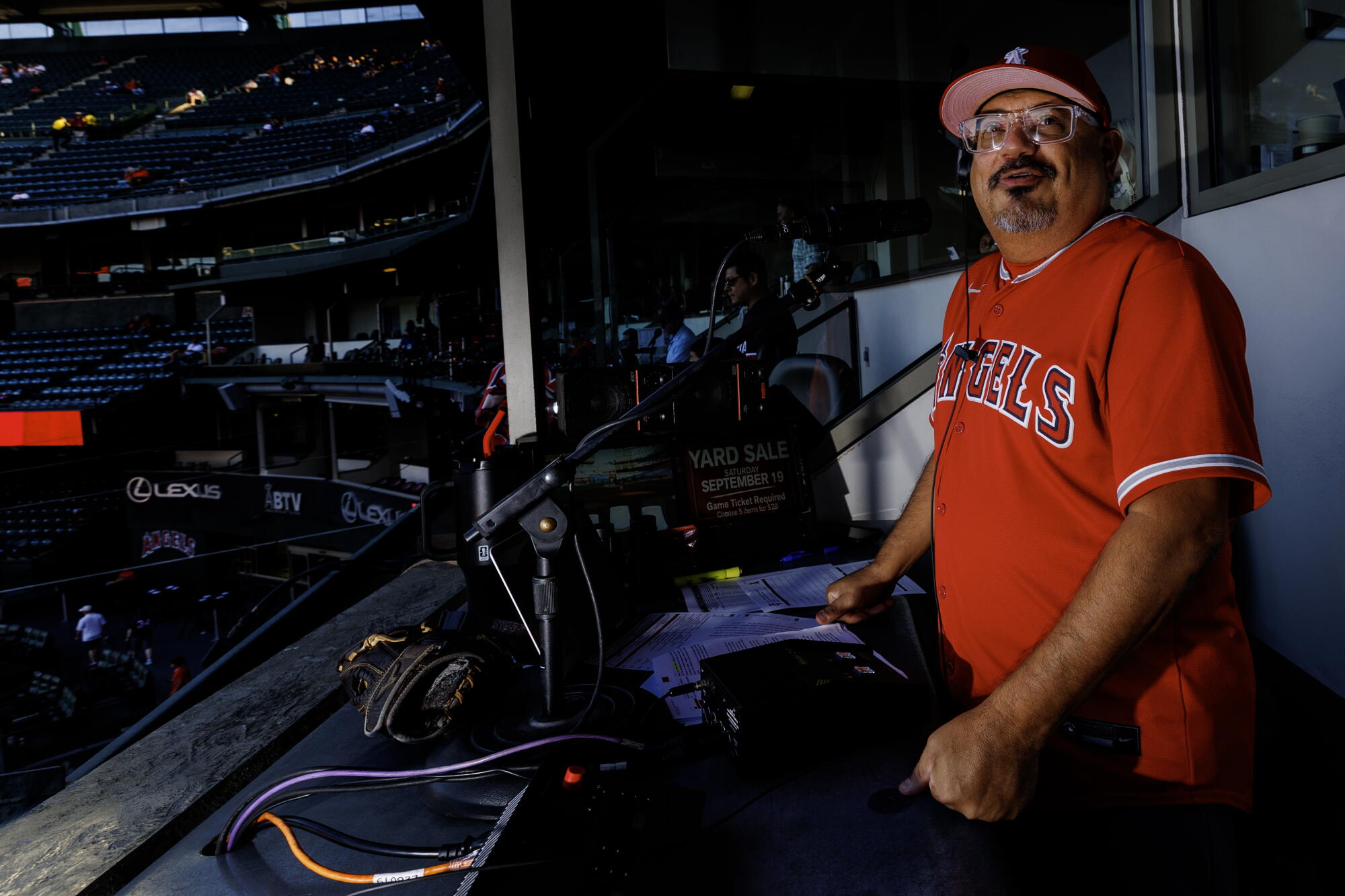
Angels public address announcer Michael Araujo overlooks the field in his booth before a game against the Minnesota Twins on September 17.
(Gina Ferazzi / Los Angeles Times)
Still, like Ramsey, Araujo’s gift is his voice. And though his delivery isn’t nearly as deep and commanding as Ramsey’s, it is unique in that it has a distinct, enthusiastic lilt, one he’s been able to maintain through what will likely be the Angels’ first 100-loss season.
“I try to bring the energy,” he said.
“It’s all about riding your vibes,” Maske added. That’s why Araujo’s perch on the club level behind home plate is exposed to the crowd rather than enclosed, like the booths to his right used by the radio and TV broadcasters. The idea is to feed off the fans, not lock them out.
“Baseball is gnarly. It’s repetitive. It’s a sport that’s inherently, at times, very boring,” Maske said. “So you’ve got to find those little moments to make it entertaining.
“It’s not NFL. It’s not the NBA. It’s baseball. Mike’s good at kind of finding that balance of excitement and traditionalism.”
And the excitement, even at the end of a blowout loss, is genuine, he said.
“The Angels were my team growing up, so the Angels was my dream job,” said Araujo, a former season-ticket holder. “I’ve been very fortunate.”
“I want to get paid to watch sports and that’s it,” he continued. “So whatever I’ve got to do to be invaluable so that I stay there, that’s kind of my mission.”
It’s not a mission that pays much, however, with most PA announcers across the majors earning between $100-$500 a game to announce each hitter as he comes to plate, read commercial copy between innings and, in Araujo’s case at least, to handle the play-by-play for the cartoon races that run on the scoreboard late in the game.
“It’s fun money,” said Casey who, like Araujo, is a teacher as well as the clock operator at Galaxy games, where she works alongside her husband. “We use it for travel.”
The job is one Araujo stumbled into. Despite a rich voice and a lifelong passion for sports, pairing the two was something that just happened, not something that was planned.
A teacher at an alternative-education high school in La Puente, Araujo, 54, has worked for the Galaxy since the MLS team’s second game in 1996, filling a number of roles from glorified errand boy to assistant game-day producer. That last job required him to stand behind the PA announcer and relay silent cues, and since he knew the gig, Araujo was handed a microphone and asked to fill in a few times during absences, sick days and other emergencies.
The biggest emergency came when Victor Villalba, the Galaxy’s regular announcer, left in the middle of a season to join the Dallas Cowboys radio team. Araujo was the natural choice to finish out the year and he’s been there ever since.
“That was 2002,” he said. “So I’m in my 25th season.”
It was similar desperation that led to his job with the Angels. When David Courtney, who had been with the team for nearly two decades, died at 56 two months after the 2012 season, the Angels began asking around for a replacement and Araujo’s name was the one they heard most frequently. So he was invited to spring training the following year to audition and he beat out two others to claim the job.
On game days Araujo gets to the ballpark about 2½ hours before first pitch, pausing in the parking lot to pull on an Angels cap and jersey with his name on the back. If the team wins, he’ll wear the same jersey the next day; if not, he’ll rotate through a closet of red, white, gray and City Connect jerseys.
Araujo’s only other tools are a microphone and a laptop, on which he’s installed an interactive software program he created that tracks the lineups of both teams. He can also call up pronunciation guides for players on all 30 major league teams, though he’s found the radio broadcasters for the visiting clubs are often more helpful.
Angels public address announcer Michael Araujo has worked more than 1,000 games at Angel Stadium and has been the Galaxy’s public address announcer since 2002.
(Gina Ferazzi / Los Angeles Times)
His cramped work space, about 90 feet from the field, has enough room for two green vinyl chairs, though Araujo prefers to stand when he’s working. And unlike many people whose vocal chords are their livelihood, Araujo says he has few ritualistic habits to protect his voice.
“In my bag I have a gazillion cough drops; a couple of different kinds, some with honey,” he said. “I definitely wouldn’t do anything carbonated before a game. Makes you burp and all that kind of stuff.”
Araujo is one of three Latino PA announcers in the majors, alongside Marysol Castro, who works for the New York Mets, and Frank Fernandez of the Miami Marlins. Given that 30% of big-league players are from Latin America, the fact that just 10% of the PA announcers are Latino is something Araujo said he thinks about during Hispanic Heritage Month.
“Did I grow up in Boyle Heights or anything like that? No, I’m no poster child or miracle story or anything like that,” said Araujo, who was raised middle class in La Verne, where his father, a sheriff’s deputy, and mother, a nurse, often spoke to one another in Spanish.
“We are here in 2026 and it’s not a little more prevalent. It can be an aspiration to any kid, even one of my students, that bigger things are possible.”
For a PA announcer, it turns out, there are times when it’s important to be heard and seen.
It is now 11 years since the Cherries were first promoted to the Premier League, meaning there is now a generation of supporters who will view top-flight football as the norm.
From that perspective then, qualifying and playing in Europe might simply appear the next logical step for a well-run and ambitious club.
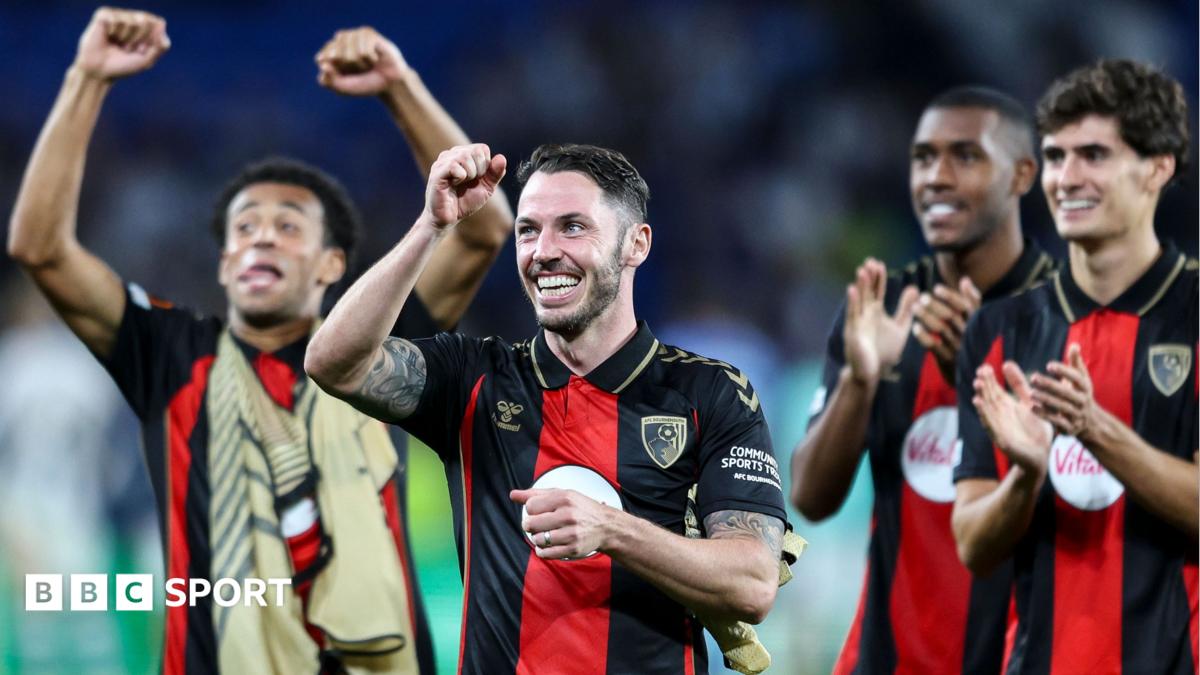
“It’s a brilliant win in our first European game. It’s brilliant for the club and the 2,000 fans from Bournemouth,” manager Marco Rose told TNT Sports.
Yet for the vast majority of fans celebrating a famous victory on Thursday, the whole thing still seems surreal.
Just 18 years ago, the club was on the brink. A 10-point deduction for entering administration resulted in their relegation to League Two.
To even stay in the Football League for the 2008-09 season, they had to accept a 17-point deduction and agree not to appeal against the decision after it was ruled that, as they had been unable to agree a Company Voluntary Arrangement, they had not met their terms for exiting administration.
Thoughts of a £100m-rated midfielder picking out a Brazil winger to head Bournemouth to victory in Europe was the stuff of fantasy as the Dorset club battled for survival.
But that now is Bournemouth’s reality with Alex Scott swaggering around San Sebastian, showing why there is such a clammer for his signature among top Premier League clubs, and Rayan providing another example of why the Cherries will demand every penny of a reported £130m release clause to let him go.
Bournemouth have nothing to compare it to but this was a proper European away performance.
Up against a Real Sociedad side led by a World Cup-winning forward in Mikel Oyarzabal and who beat Atletico Madrid to win the Copa del Rey last season, they were dominant for 45 minutes.
They suffocated Sociedad with their relentlessness off the ball, winning the ball back high up the pitch time and again and showing the quality on the ball to create chances – even when the defence was set.
But there is an edge to the Basque side and, poor as they had been, that they came out fighting after the break was no surprise.
The adrenaline-fueled exuberance of Rose’s side in the first half appeared to catch up with them in the second, but their desire to compete never wavered.
Bournemouth are not known for their defensive resilience and, as Sociedad ramped up the pressure as the game wore on, thoughts might have turned to leads surrendered in each of their first four Premier League games.
But the Cherries, aided by the sharp reflexes of Djordje Petrovic in goal, held on to secure a famous win.
“It was very intense and tough,” Rose told TNT Sports.
“Brilliant first half in everything. The way we won balls and the possession high up. In the second half, we needed to suffer because we were not so sharp.”
Speaking on BBC Radio Solent, former Cherries full-back Charlie Daniels added: “It is a big occasion. A big moment for the club, and they should be applauded for it.”
The Sunday lunch uses seasonal produce in a welcoming settingCredit: Alamy
What is there to eat and drink at the hotel?
The kitchen is led by executive chef Michael Shaw who has worked for some of Britain’s best known chefs including Gordon Ramsay and Raymond Blanc.
We visited on a Thursday so Mike popped out of the kitchen and encouraged us to enjoy a six-course tasting menu (£85pp).
English asparagus, cornish crab, stuffed mushrooms, glazed duck and salted white chocolate.
Andrew, our host, allowed us to choose some wine, before choosing us a better bottle of red. An a la carte menu is also available.
The following morning we enjoyed a three-course breakfast – fresh baked pastries, smoked salmon and cured meats and a delicious cooked breakfast.
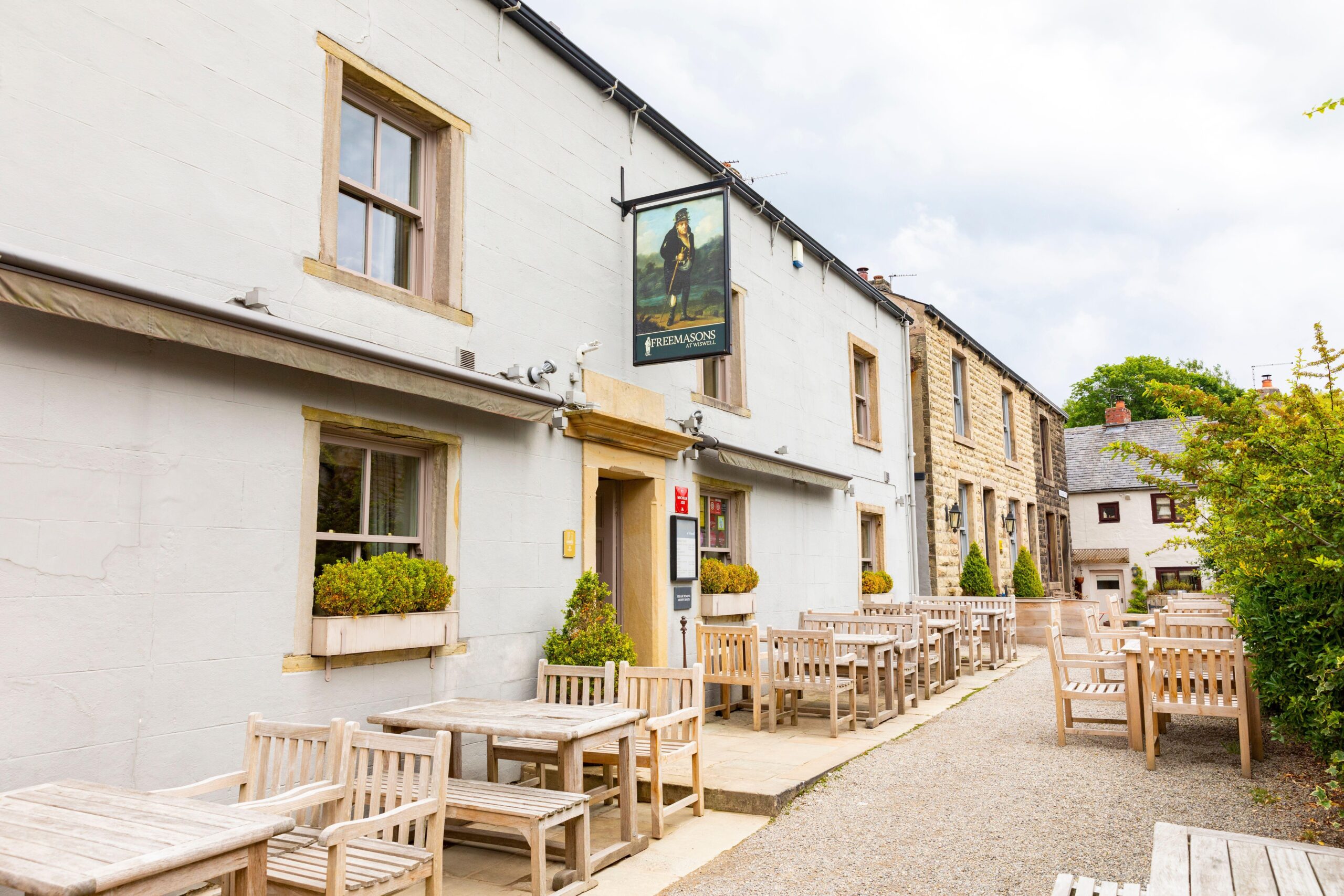
Even if not staying at the hotel, the Freemasons is a lovely place for a pint, or a celebratory meal. Sunday lunch (£39.50 for two courses) looks good too.
What else is there to do there?
Chocolate box Wiswell is lovely to stroll around before or after a meal.
A few minute’s drive away is the popular village of Whalley which features lovely little shops, wine bars and traditional pubs.
We got into the car and drove 15 minutes to nearby Barley and spent a lovely couple of hours walking up 557-metre Pendle Hill, famous as the spot where ten people were hanged during the 1612 Pendle Witch trials.
Is it family friendly?
For families, it is advisable to get in contact to discuss the needs of your stay so there’s plenty of room for everyone.
Is there access for guests with disabilities?
Freemasons at Wiswell offers disabled access rooms on the ground floor.