
donates

KFCC donates AI companion robots to support S. Korea’s aging population

Officials from the Korean Federation of Community Credit Cooperatives pose with representatives of welfare organizations during an event marking the donation of AI companion robots in South Korea on June 11. Photo by KFCC

June 15 (UPI) — The Korean Federation of Community Credit Cooperatives, or KFCC, said Monday that it will provide AI-powered companion robots to elderly residents as South Korea faces the social challenges posed by rapid population aging.

The nationwide cooperative federation noted that a total of 200 robots will be supplied to senior citizens living alone, with the aim of dealing with social isolation.

The robots are designed to offer various support functions, including interactive conversations, medication reminders, and motion-detection capabilities. When emergencies arise, they can alert authorities and connect users with relevant services, according to KFCC.

Information collected by the robots can be shared with caregivers and social welfare workers to help track their health status and identify potential signs of social isolation, the cooperative said.

“The problem of social isolation among elderly people living alone is becoming more severe amid population aging and the growing number of single-person households,” KFCC said in a statement.

“We will continue our social contribution activities to help build warm and inclusive communities where no neighbor is left behind,” it added.

South Korea is one of the fastest-aging societies in the world. Data from the Ministry of the Interior and Safety show that people aged 65 and older accounted for 21.21% of the population as of the end of last year. When the proportion surpasses the 20% mark, a country is classified as as uper-aged society.

Single-person households represented 36.1% of all households in the nation as of the end of 2024.

KFCC is not a publicly listed company.
Source link

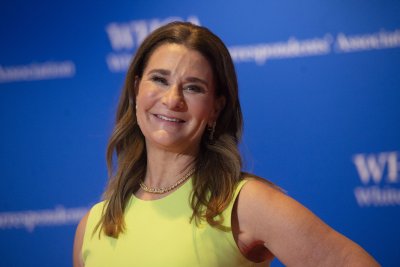
Melinda French Gates donates $215M, funding $600M for women’s health

June 4 (UPI) — Melinda French Gates has added another $215 million to her organization Pivotal, which funds social initiatives for women and families around the world.

The latest boost in funding is specifically to address problems with women’s reproductive and menopause health, she said. French Gates has contributed $600 million to women’s health over the past two years.

As part of this round, she is donating $10 million to The Menopause Society for the education of healthcare professionals and to expand outreach in areas where access to menopause care is limited.

“For too long, perimenopause and menopause have been treated as invisible — something women are expected to manage quietly, without clear answers or support. That must change. By getting healthcare practitioners better training and investing in research, we can help ensure women have the care they need to live full and healthy lives,” French Gates said in a statement.

While midlife issues have seen more attention, thanks to social media, that attention doesn’t always translate to correct information from practitioners.

“The piece that I’m focused on with Pivotal is: How do we make sure that women get accurate information about what we do know about this phase of life? And how do we make sure that all providers are trained?” she told Time in an interview.

“In midlife, I would say we both don’t have enough knowledge or tools,” she said. “The research should have been started more than 50 years ago. We should have had many, many, many studies about this period of life, so that we have different tools, not just hormone replacement therapy. Then, we have a lack of provider training, which is the piece I’m going to work on with this particular amount of funding.”

The Menopause Society said the funding will help reach women who need the care.

“Menopause is a universal life stage, but quality care is not universally available,” said Dr. Stephanie Faubion, medical director of The Menopause Society, in a statement. “With this funding, we can scale evidence-based training for front line clinicians and extend our reach to areas where menopause care has long been overlooked. This is a meaningful step toward ensuring that women receive the informed, compassionate care they need and deserve so they can make smarter healthcare decisions. It also allows for exploration and a better understanding of the need for system changes.”

While the donation is critical, Faubion said the attention generated by French Gates is even more important.

“It shows that somebody like Melinda Gates and Pivotal feel that this is an important issue,” Faubion told the Independent. “It will illuminate the gaps that are still there … and it makes people not only aware, but maybe motivated to take some action.”

Though women make up half the population, health issues that affect them get only 2% of private healthcare funding, according to the World Economic Forum.

“The role of philanthropy, in my opinion, is to look at some of these societal problems that have been left behind, and shine light on them, show ways of making progress so you can then crowd in other donors and ultimately crowd in government funding,” French Gates told The Independent. “Part of what I’m doing here, I hope, is sending a signal to say, ‘This is really important. Let’s do something about it.’ And my hope is that I’ll be able to get others who will join me.”

Source link