Barred Bosnian Serb leader Dodik’s ally wins snap presidential election | Elections News
Sinisa Karan wins 50.89 percent of the vote, while his main rival Branko Blanusa gets 47.81 percent, preliminary results show.
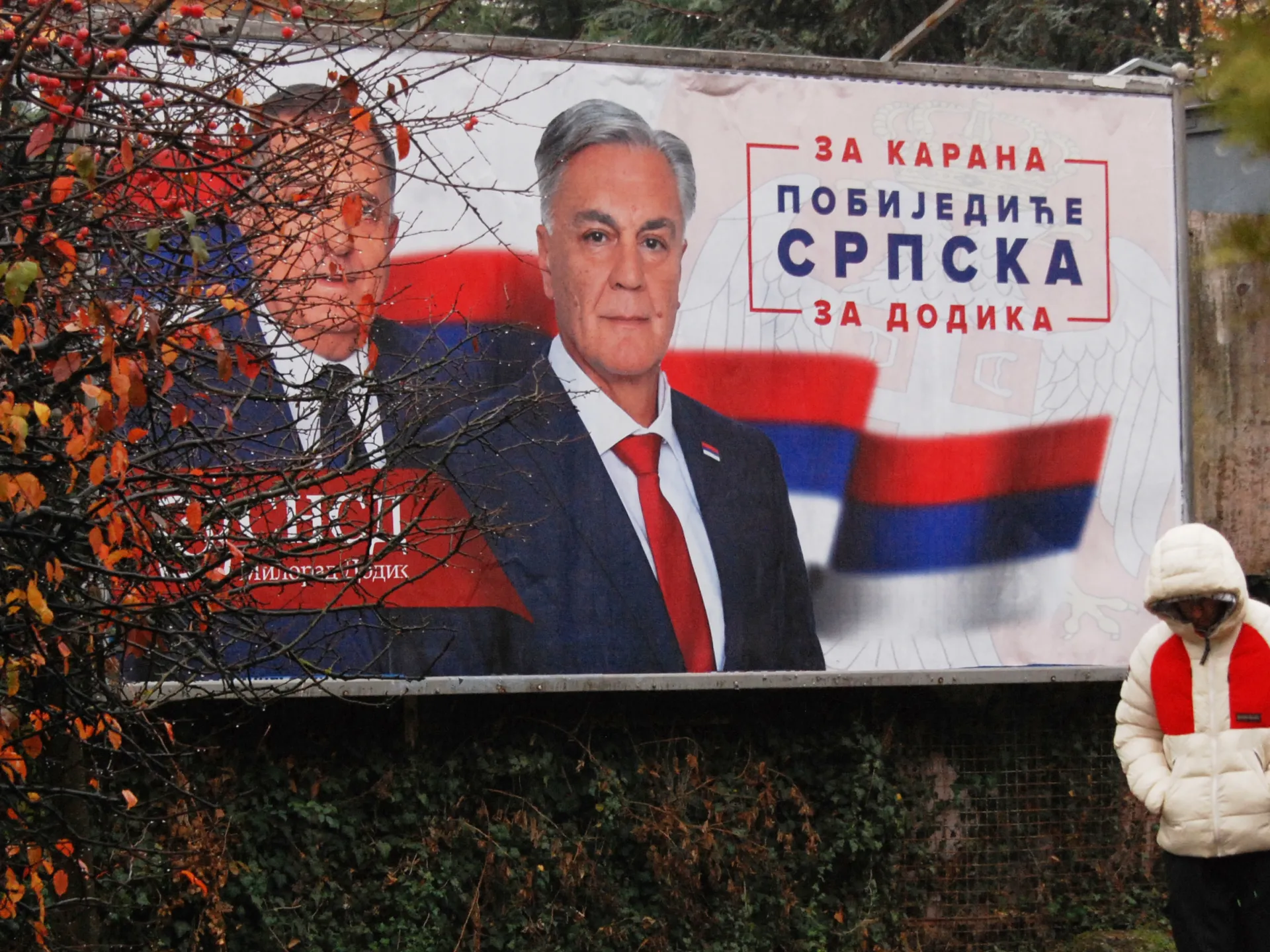
A close ally of Bosnia’s former Serb Republic leader Milorad Dodik, who was ousted from office over his separatist policies, has won the territory’s snap presidential election, according to electoral authorities.
Sinisa Karan of the Alliance of Independent Social Democrats party (SNSD) won 50.89 percent of the vote in Sunday’s poll, the election commission’s president Jovan Kalaba told reporters.
Recommended Stories
list of 4 itemsend of list
Opposition candidate Branko Blanusa of the Serb Democratic Party (SDS) won 47.81 percent, he said.
The results were based on 92.87 percent of counted votes, the election commission said, adding that 35.78 percent of some 1.2 million eligible voters had turned out for the election.
The presidential mandate will last for less than a year since a general election is scheduled next October.
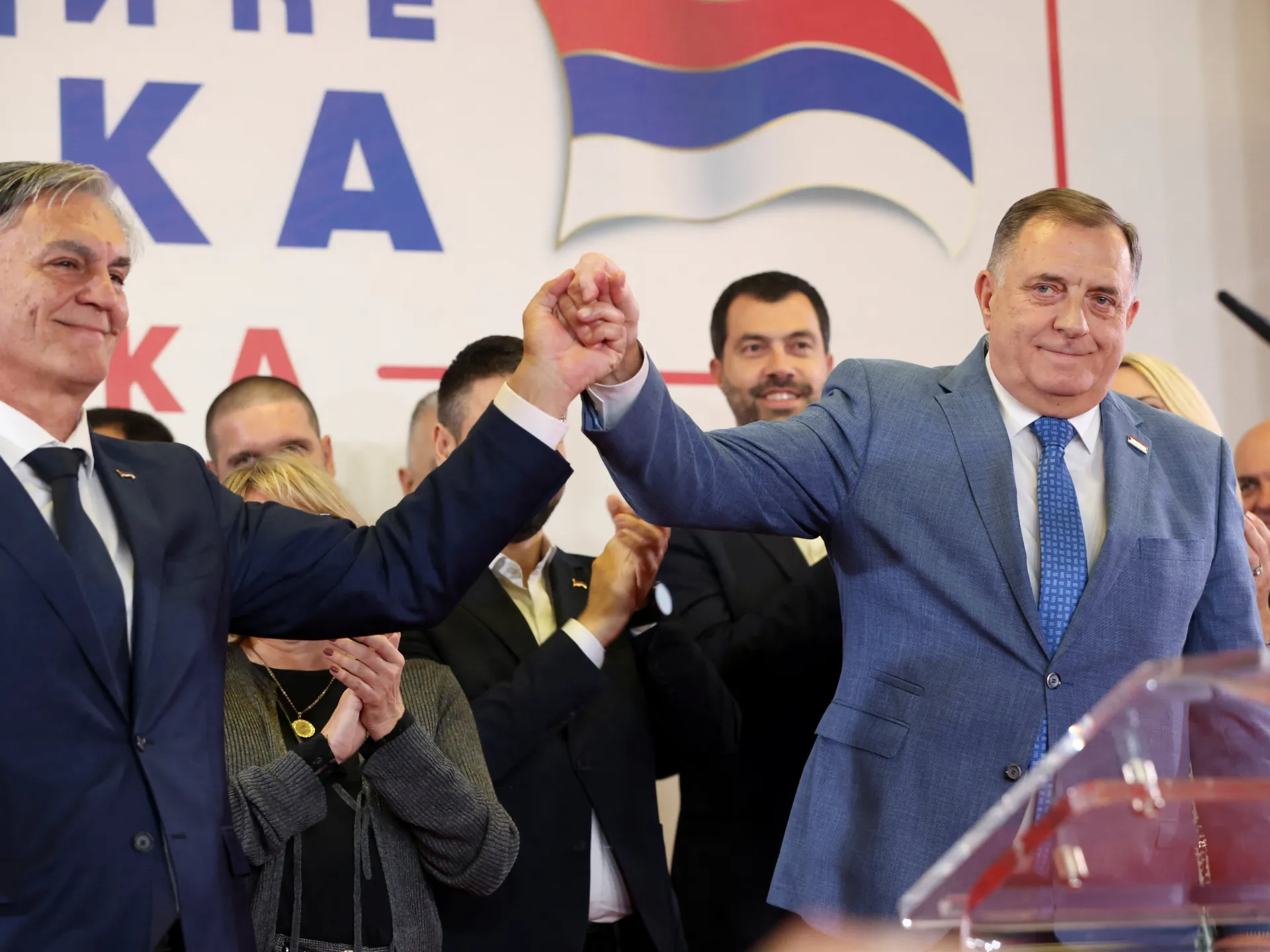
Dodik, speaking at the SNSD headquarters in Banja Luka, the capital of Bosnian Serb statelet Republika Srpska, called Karan’s win “unquestionable”.
Karan, who currently serves as the Serb Republic minister of scientific and technological development, pledged to continue Dodik’s policies “with ever greater force”.
“As always, when the times were difficult, the Serb people have won,” he added.
The SDS, meanwhile, said it would request the repetition of the vote at three polling stations, citing major election irregularities.
The election was called to replace Dodik after he was stripped of his office and banned from politics for six years.
Dodik was ousted in August after a Bosnian court convicted him of disobeying the orders of the international High Representative for Bosnia, who oversees the implementation of the 1995 Dayton Accords, which ended the bloody three-and-a-half-year Bosnian war.
He had repeatedly clashed with High Representative Christian Schmidt, declaring his decisions illegal in Republika Srpska, which is controlled by Bosnian Serbs.
The other half of the country is run jointly by Bosniaks, who are mainly Muslims, and Croats. The two entities are bound together by a central administration.
Dodik, who still advocates eventual separation of Republika Srpska from Bosnia, paid a fine to stay away from jail and stepped aside as president while staying at the helm of his governing SNSD party.
Prior to the vote, Karan said that democratic elections were “a way to strengthen our peace and stability” and to “strengthen the institutions of our Republika Srpska and our entire republic”.
But Dodik appeared to be intent on remaining in the driving seat, telling voters that “I will remain with you to fight for our political goals”, and Karan’s “victory will be my victory too”.
Bosnia’s complex political structure was established 30 years ago by the United States-brokered Dayton peace agreement, ending the 1992-95 ethnic conflict that killed more than 100,000 people and left millions homeless.
The war started when Bosnia declared independence from Yugoslavia and the country’s Serbs took up arms to carve up their own territory, hoping to join with neighbouring Serbia.