Nathan Fielder and Lance Oppenheim’s experimental Elizabeth Holmes documentary “You Can See Everything” is not only one of the most buzzed-about films of the year; it has proved the hype at the box office, already making $15 million during its opening weekend.
One last warning before we proceed: Spoilers ahead.
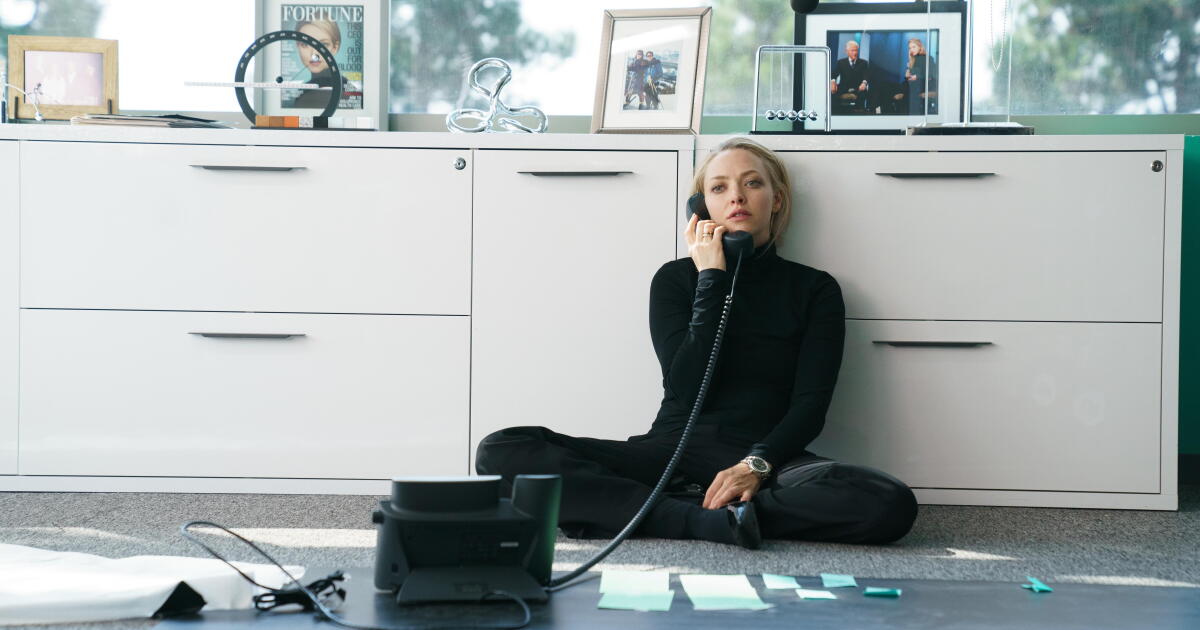
Before “You Can See Everything” put Holmes back in the spotlight, Amanda Seyfried portrayed the Theranos CEO in the Hulu limited series “The Dropout,” winning a lead actress Emmy for the role.
In the documentary, Holmes tells Fielder she has never watched the series. After his prodding, they watch it together — along with Holmes’ partner Billy Evans — in a Del Mar beach cottage days before she is set to leave her family, including two young children, to report to a Texas prison to serve an 11-year sentence after being convicted of fraud.
In an interview with The Times in 2022, Seyfried recounted telling filmmaker David Fincher about the role, who made a suggestion about how to play Holmes: “He turned to me, and he said, ‘This Theranos girl, she’s not listening.’ And I was like, ‘You’re right!’ Watch her listen. She’s playing listening. … Everything is like, ‘Do you see me listen? Make sure you see that I’m listening to you.’ It’s one of the things that helped her succeed. So much of it was an act, and her bubble was bound to burst. It must have been so tiring.”
During “You Can See Everything,” we observe Holmes watching Seyfried dance in a scene from “The Dropout,” a much-memed moment in the series.
“My favorite thing was getting to express Elizabeth Holmes’ frustration through dance. A character working her s— out. A lot of it was based on the fact that she was a dance student,” Seyfried said.
Holmes cringes at seeing it portrayed onscreen (if you’ve ever had your own dancing or karaoke sessions broadcast, you know the feeling).
In the documentary, Holmes and Evans also claim research wasn’t done before creating the series. Seyfried told us she spent months listening to the 10 hours of deposition tapes in preparation, something she also mentions in “You Can See Everything.” The actor, in a separate interview with The Times published in March 2022, also spoke about how she learned to mimic Holmes’ baritone voice.
Meanwhile, for the dialogue in “The Dropout,” Meriwether discussed getting access to texts sent between Holmes and her former romantic partner, Theranos COO Sunny Balwani, in an essay she wrote for The Envelope in August 2022.
“I had been on conference calls with lawyers for hours discussing every detail, every word, every action line in every script,” she wrote. “The writers had to justify our choices based on the facts we had, so we had scoured the source material, trying to piece together the mystery of what had happened between Elizabeth Holmes and Sunny Balwani behind closed doors at Theranos. And here I was about to open an attachment with the actual text messages that Elizabeth and Sunny had written to each other. It was thrilling and infuriating.”
In the mindbending documentary “You Can See Everything,” comedian Nathan Fielder and professed inventor Elizabeth Holmes sit in her beach house staring at each other like gunslingers. Fielder is the creator of the TV series “The Rehearsal” and “Nathan for You” who constructs discombobulating sham realities that include bogus businesses such as Dumb Starbucks. Holmes is the former billionaire CEO of Theranos who pretended she’d built a revolutionary blood testing machine to squeeze investors for a few dollars more.
Each is an expert in the con. But Fielder is deadpan and cold where Holmes is earnest and warm — and he’s been nominated for Emmys while, in May of 2023 when the film begins, she’s about to serve an 11-year sentence in federal prison. As the camera cuts between close-ups of his narrowed eyes and her big, blue ones, Fielder tries to suss whether he can trust the famous fibber to be honest with him. The showdown is riveting.
“You’re being real right now?” Fielder asks, dubious.
Holmes beams. “I’m always being real,” she swears with a smile.
Her charm hits Fielder in the gut. His face stays neutral yet you can see his own confidence bleed out across the screen.
Co-directed by Fielder and Lance Oppenheim (“Primetime”), “You Can See Everything” is the closest Fielder has come to making a traditional documentary. A thrillingly cringe-tastic interviewer, he blurts out blunt questions like a bungee jumper leaping off a bridge, including asking Holmes’ romantic and business partner Billy Evans, the heir to a San Diego boutique hotel chain, whether it’s possible a woman convicted of fraud might be with him for his money.
At nearly three hours long, “You Can See Everything” won’t bore you for a minute. The hook is right there in the title, Fielder’s challenge to the audience: Here’s how Holmes held up to his scrutiny — do we think she’s telling the truth? But be alert. Fielder remains a trickster. One shot in particular proves you can see everything while being blind to what you’re actually watching.
In the first half of the movie, Holmes and Evans, the father of her two young children, give the small crew complete access to their lives during her last weeks of freedom, including inviting Fielder to sleep in their guest bedroom. It’s an act of “radical transparency,” Evans says. As evidence, there’s a fully nude shot of Evans in the shower, testifying to the intimacy the subjects claim they’re granting the team and the confidence they have that the documentary will make them look great. (Evans also boasts that he’s “excellent” in the sack.)
Holmes maintains both her innocence and her eerie smile, a rictus of empathy. She constantly nods, subliminally snake-charming the listener into a sense of agreement. That assessment might be fair or it might be her reputation making you over-analyze her tics. Doubling down, she even insists she’s never told a lie in her life — a claim that momentarily leaves Fielder at a loss for words.
Yet at times, Holmes really does appear to be sincere. Once she surrenders herself to the Bryan Federal Prison Camp in Texas (where, in an unmentioned coincidence, Epstein collaborator Ghislane Maxwell is also incarcerated), the tone shifts into film noir as Fielder struggles to reconcile Elizabeth Holmes’ dual identities. Is she the sweet-natured scientist, the only version of her he’s ever met, or a femme fatale who may still be running a scam?
“It’s personal,” Fielder says of his fixation. How frustrating that he of all people — the dark prince of pranks — may be Holmes’ latest patsy. Composer Ari Balouzian borrows bits of Bernard Herrmann’s violin score from “Vertigo” while cinematographer David Bolen makes the audience hold its breath by framing an image of Fielder and Holmes like they might kiss.
When the movie’s style gets weird, that’s when Fielder is most in his wheelhouse. Stop reading now if you want to preserve the surprise. Micro-analyzing his encounters with Holmes, he reenacts them with an actor, Amanda Seyfried, whose emotional intensity blows into the film like a gust of fresh air. Seyfried, of course, won an Emmy and a Golden Globe for playing Holmes in the 2022 miniseries “The Dropout.” The twists to come, however, feel as much like last year’s naughty hit “The Housemaid,” the domestic thriller in which Seyfried played a shady wife with a marriage made of lies.
Evans initially seems to think they’re participating in a project closer to Netflix’s glossy portrait of Meghan Markle and Prince Harry. The couple doesn’t know much about humor, pop culture or Fielder himself. Fumbling to figure out what makes him tick, Evans attempts to neg the provocateur as someone who lacks the passion to think differently. (Evans may also be the person who used Holmes’ social media account to write a flattering post calling JD Vance “Lisan al-Gaib,” revealing he’s entirely missed the point of “Dune.”)
But thinking differently is Fielder’s awkward superpower. Sooner or later, all of his projects circle around to his concern that he’s simply wired to be unpleasant. His interactions with Holmes are pure cringe comedy, like when she starts to cry perhaps a bit on cue and he stiffly sputters, “Do you want, like, a tissue?” For the record, he brings her one.
As a viewer, the biggest strike against Holmes is this documentary’s very existence. Whether or not you think she’s guilty of fraud, she is about to be separated from her infant and toddler until they’re in grade school. Who on Earth would genuinely want Fielder, the human equivalent of a skunk, to crash their last moments with their loved ones as he does his darnedest to stink up the place?
Fielder is most comfortable as the film’s villain, shooting himself lurking in the couple’s house like “Halloween’s” Michael Myers. At times, his presence does feel monstrous. In one scene, he needles Evans about whether he thinks his soulmate has ever lied to him while Holmes is on the phone in the next room, tearing up as she asks how often she’ll be able to bathe in prison.
The film doesn’t drill into the technical details of Theranos beyond one dizzying scene where Fielder tries to pin Holmes down on exactly what she meant when she said her machine can run hundreds of different tests. She means it just as I would if I bragged I can benchpress a beer keg — that is, once I strength-train beyond my piddly 5 lb dumbbells.
Instead, it tilts into becoming a caper flick as Seyfried’s commitment to understanding her character’s motivation inspires the actor to invite herself along. The drama they uncover is psychological, as befits an era where Silicon Valley CEOs are closer to cult leaders than engineers, making their cash from being televangelists for their IPOs. And both are attuned to the moments when Evans lets his aggravation slip. One scene is a doozy.
Ultimately, suspicion reigns. “You Can See Everything” is an absorbing study of public presentation and private doubts, a documentary that asks more questions than it answers. I hope Fielder will smile and nod approvingly at me if I say I left the film distrusting him, too, especially Seyfried’s re-staging of a long monologue Holmes delivered in prison where recording devices aren’t allowed. Can we believe that Holmes really did say, “I’m tired of having other people speak for me,” or was that laugh line written by the master manipulator himself? I’m now as paranoid as he is — and what a pleasure.
Nathan Fielder would rather you not read this article. At least not until you’ve seen his new movie.
He has a point.
Now in theaters, “You Can See Everything,” the nearly three-hour documentary Fielder co-directed with filmmaker Lance Oppenheim about convicted Theranos founder Elizabeth Holmes, is full of head-spinning twists and turns best left unspoiled, and the filmmakers have gone to extreme lengths to keep them that way. At its secret premiere at the Telluride Film Festival last month, audience members were required to lock their phones in pouches and warned that security guards with night-vision goggles would be watching for anyone trying to record the screening. Afterward, Fielder pleaded with the crowd to keep the film’s biggest surprises to themselves.
Holmes was convicted in 2022 of defrauding investors in her failed blood-testing company and sentenced to more than 11 years in federal prison. Fielder and Oppenheim began filming her and longtime partner Billy Evans, an MIT graduate and heir to a family-owned San Diego hotel business, shortly before she reported to prison in 2023, gaining extraordinary access to the couple and their two young children.
Holmes and Evans welcomed the cameras, hoping they would help vindicate her. But the closer Fielder and Oppenheim got to the couple, the harder it became to distinguish candor from calculated performance. Fielder, whose series “Nathan for You” and “The Rehearsal” put real people through elaborate, often uncomfortable experiments, began to wonder whether the tables had been turned.
“I really am struggling to this day to understand exactly what I experienced in this,” Fielder admitted during a post-screening Q&A at Telluride. “I don’t quite know what I went through.” He said he hoped audiences might help him make sense of the “glitchy feeling” it left in his head.
Having seen the film twice, we’re not entirely sure we can help him.
In deference to Fielder’s wishes, this is your last chance to turn back: Major spoilers follow. For those still with us, here are 10 of the film’s strangest moments — by no means the only ones — along with a few clues from Fielder himself about how they came to be.
Evans takes ’radical transparency’ too far
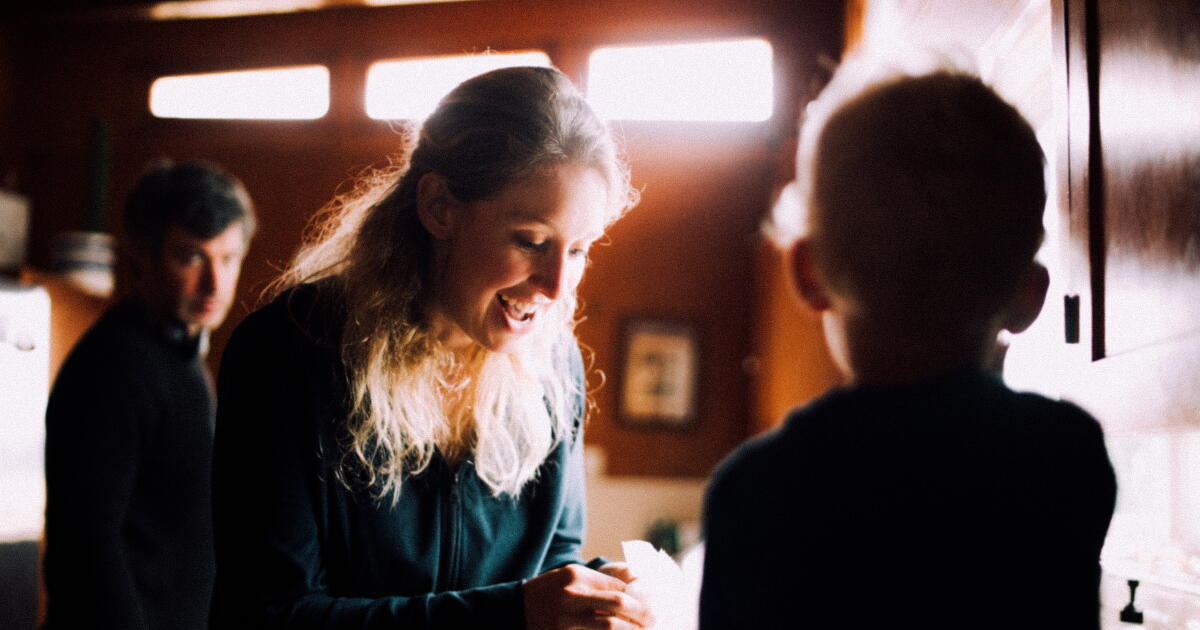
Evans has a theory about why the world sees his partner as a monster: Nobody really knows her. “In the absence of knowing somebody, it’s really easy to make them feel other and scary,” he tells the filmmakers. His proposed solution is “radical transparency” — a familiar Silicon Valley mantra with an ironic resonance given Theranos’ notorious culture of secrecy. The filmmakers are allowed virtually unlimited access to the family’s life, with Fielder even invited to move into their rented house in Del Mar, near San Diego. In one scene, Evans stands completely naked in the shower, brushing his teeth with the bathroom door wide open and the cameras rolling, as Fielder stands awkwardly nearby. At Telluride, Fielder, who had initially planned to stay behind the scenes, admitted he was still perplexed by the couple’s openness. “I’m a weird guy — why do they want me there?” he said. “That messed with my head a little bit.”
Fielder observes Holmes and her family in a scene from the documentary “You Can See Everything”
(A24)
Theranos, the sequel
A federal fraud conviction apparently hasn’t ended Holmes’ ambitions to revolutionize medical testing. Before heading to prison, she and Evans begin laying plans for a new venture involving lasers and artificial intelligence that Evans describes as “2.0” — a chance, he says, “to put the band back together and do it all again.” Holmes declares, “From wherever I am, I’m going to continue to work inventing, even if it’s inventing from a cage.”
Holmes claims she’s never told a lie
For someone convicted of defrauding investors, Holmes has a remarkably uncomplicated view of her own honesty. Asked by Fielder whether she’s ever told a lie in her life, she replies, “I don’t think so.” Pressed — surely she’s pretended to be sick to get out of a party? — she concedes she has, explaining that she thought he meant the criminal case against her. In a scene that became the centerpiece of the film’s teaser trailer, Holmes fixes Fielder with an unwavering stare. “Why would I deceive you?” she asks. “There’s no reason for me to do that.” When Fielder asks whether she’s being real with him, she doesn’t miss a beat: “I’m always being real.”
The Theranos device gets a second look
Holmes hauls out of storage the infamous Theranos device, the machine that helped bring down her company. “So this is the famous scam device,” Fielder says. “It is not a scam device,” Holmes replies. When she insists the machine can perform any medical test, Fielder finds himself drawn into an absurd debate over the meaning of the word “can.” Did she mean it could actually perform those tests, or that it theoretically would once the necessary chemistry had been developed? The man who has made a career out of baffling other people seems genuinely baffled himself, reduced to explaining the word “can” to the founder of Theranos.
Holmes and Evans enter federal court in 2022.
(Nic Coury / Associated Press)
Elizabeth Holmes meets Abbott and Costello
Still trying to make his point, Fielder turns to Abbott and Costello. He plays Holmes the classic “Who’s on First?” comedy routine — two people hopelessly talking past each other. Holmes watches politely and says she finds it funny. But she seems to have missed the central joke: The first baseman’s name is actually Who. “I didn’t pick it up,” she admits. Fielder’s attempts to explain the joke and why he showed it to her get him nowhere. Evans, watching the exchange, regards his wife’s difficulty following the joke as further evidence that her mind simply works differently from everyone else’s.
Fielder gives Holmes an escape kit
On the morning Holmes is due to report to prison, Fielder arrives with a parting gag gift: hair dye and glasses, in case she’d prefer to disguise herself and flee the country. Fielder is famous for excruciatingly awkward deadpan comedy, but Holmes’ parents are there, the family is preparing for an emotional goodbye and he seems to realize almost immediately that he has misjudged the situation. “I didn’t know your parents would be here,” he says, assuring everyone that it’s “just kind of like a joke.” The more he tries to explain himself, the more uncomfortable things become. “Maybe not appropriate for the moment,” he concedes.
Amanda Seyfried becomes a surprise co-star
Seyfried won an Emmy for playing Holmes in Hulu’s “The Dropout,” which Holmes had avoided watching for fear it would be too emotionally disturbing. Fielder persuades Holmes to watch it for the first time, on a laptop in the couple’s bed. She soon breaks down in tears and asks him to turn it off. Later, Fielder visits Seyfried at her apartment and shows her footage of Holmes watching her performance. So we watch Seyfried watch Holmes watch Seyfried playing Holmes as Fielder watches her. And things only get weirder from there.
At Telluride, Fielder said the filmmakers initially doubted Seyfried would want to participate. But after a brief phone call, she invited them over and agreed to be filmed. Neither side knew where things would lead. “It just actually evolved in that organic way, which was really exciting,” Fielder said.
Seyfried as Holmes in a scene from Hulu’s “The Dropout.”
( Beth Dubber / Hulu)
Seyfried plays detective
Seyfried soon finds herself reenacting Holmes’ conversations with Fielder as he tries to make sense of their encounters. She becomes so invested that she joins Fielder on a visit to Evans’ home, hoping she might get him to open up in ways Fielder can’t. “I feel like an undercover cop right now,” she says, clearly getting a rush. There, after meeting the couple’s children, she unexpectedly winds up on a prison phone call with Holmes herself. With only two minutes for the family to talk, Seyfried suddenly seems mortified to be intruding. “I’m so sorry — I don’t want to ruin your two minutes with your beautiful family,” she says. Fielder, naturally, has a camera running.
Evans takes control of the narrative
With Holmes behind bars, Evans seems determined to manage her public image himself. Armed with power of attorney, he takes over her verified X account, posting messages in her name, some of which sound nothing like the carefully controlled Holmes, including one telling another user to “f— off.” “There’s just so much trust that most things I don’t really consult her on,” Evans says at one point. “I know what she’d want.”
Evans’ attempts to steer the documentary itself begin even before Holmes reports to prison. In a meeting later reenacted in the film, after Holmes leaves the room, he raises the subject of money with Fielder, Oppenheim and executives from A24, the studio behind the film, demanding a share of the profits. Fielder says A24 reluctantly agreed, leaving him worried that the integrity of the project may have been compromised. When Holmes later insists she has no financial interest in the film, Fielder is taken aback. Either she’s “fully sincere,” he tells Seyfried, or “she honestly might be the most manipulative person that’s ever lived.” (The film notes at the end that Evans later changed his mind and decided not to accept payment.)
On Oct. 5, Holmes’ X account promoted the documentary with a tantalizing warning: “I really don’t think you are ready for this doc.” Whether that was Holmes speaking or Evans speaking for her is anyone’s guess.
Seyfried confronts Evans
Things turn ugly during that same visit to Evans’ home. A conversation about conjugal visits and Evans’ sex life gives way to a heated argument over his use of Holmes’ X account. Evans brings up the social media backlash Seyfried faced for criticizing Charlie Kirk after his shooting death, then attacks her portrayal of his partner in “The Dropout.” Soon he’s threatening vengeance against people he believes have wronged Holmes. “I’m going to ruin their lives,” he declares. Asked whose lives he means, Evans replies, “F—ing everyone. I’ve got vengeance in my heart.”
Later, away from Evans, Seyfried offers her own assessment: “He is bat— crazy.”
96-year-old Emma Finch was found dead in her own home, but detectives suspected a sinister reality
Murder Scene The Incident Room returns to Channel 5
A killer who faced police after a chilling crime remained silent, as chilling footage has been revealed in a Channel 5 true crime documentary.
Taking viewers beyond a crime scene, the Channel 5 series once again plunged people into the heart of another brutal criminal investigation as detectives investigate high-profile murder and criminal cases across the UK.
Back for a new series on Channel 5, Murder Scene: The Incident Room aired a chilling episode tonight (October 14) titled A Killer in the Family. Tonight’s heartbreaking instalment transported viewers to a devastating 2024 fire in Hampshire when firefighters made a heartbreaking discovery.
But when detectives arrived on the scene to piece together what happened, they were soon faced with a chilling reality. 96-year-old grandmother Emma Finch was found dead on her bedroom floor, with suspicions soon turning to her grandson Joshua Powell.
The episode heard from detectives involved and how they pieced together vital information, as the police interview with Joshua was also shown.
But with 96 hours to question him, and detectives working against the clock, Joshua decided to exercise his right to silence on multiple occasions.
The episode hears how the evidence against Joshua “kept getting stronger” before detectives had a sufficient amount to bring a charge of murder, with viewers also hearing heartbreaking accounts from family, including Emma’s son Peter.
What happened to Joshua Powell, and where is he now?
On May 16, 2025 – a day before the anniversary of Emma’s killing – Joshua pleaded guilty to the murder of his grandmother. The documentary heard: “He was left with no option but to plead guilty. By admitting his guilt and telling everyone how he killed Emma, he did at least avoid putting the family through a trial.”
Months later, on November 14, Joshua Powell was sentenced at Portsmouth Crown Court, where he was handed the sentence of life imprisonment with a minimum term of 26 years.
Aged 17 at the time, he would be 53 before even being considered for release. As of 2026, he would still be in prison for his crime.
At the time of the sentencing, Senior Investigating Officer, Detective Chief Inspector Howard Broadribb, said: “Joshua’s callous actions took advantage of Emma’s trust in him. His subsequent denials when faced with mounting evidence against him showed a total disregard for Emma and her family.
“His subsequent admission at court spared them from having to endure a trial, but that is little comfort when compared to the loss that they have suffered. I hope that this sentence gives all of Emma’s relatives the opportunity to grieve their loss in the knowledge that justice has been served.”
Murder Scene: The Incident Room airs Mondays at 8pm on Channel 5
The multidisciplinary artist rafa esparza was maybe 19 and in the break room of the now-defunct Orchard Supply Hardware in Pasadena when he first found out about the revolutionary art group Asco. It was the early 2000s, and he was working full-time while going to school part-time at East Los Angeles College. He’d bring his homework to his job, and an older colleague, Ignacio, took interest in the books he was reading — mostly about Chicana/o studies and art.
Ignacio grew up in East L.A., and showed esparza a big manila envelope stuffed with incredible sketches and drawings by Glugio “Gronk” Nicandro. Gronk, a friend of Ignacio, was one of the founding members of Asco, which roared to life as an unapologetically Chicano organization in the early 1970s and was made up of East L.A. natives including Patssi Valdez, Harry Gamboa Jr. and Willie Herrón.
Esparza is now among two generations of L.A. Chicano and Mexican artists who have passed the torch that Asco used to blaze its groundbreaking trail. The story of the art group and its descendants, also including Maria Maea and San Cha, is featured in the new documentary, “Asco: Without Permission.” Executive produced by Gael García Bernal and Diego Luna, the film premiered last year at SXSW and arrives on TV for the first time at 7 p.m. Friday as part of PBS SoCal’s “Voces” series (plus PBS.org and the PBS app).
The beginning of a movement
When Asco first coalesced, Gamboa Jr. went to Los Angeles County Museum of Art and noticed a striking absence of Chicano pieces. In the film, he recounts how, after his concerns were dismissed by a higher-up at LACMA, Asco decided to take matters into its own hands. The group came back later that evening and tagged the building with their names (“Spray Paint LACMA,” 1972), effectively reclaiming the entire museum as a work of Chicano art.
1/7
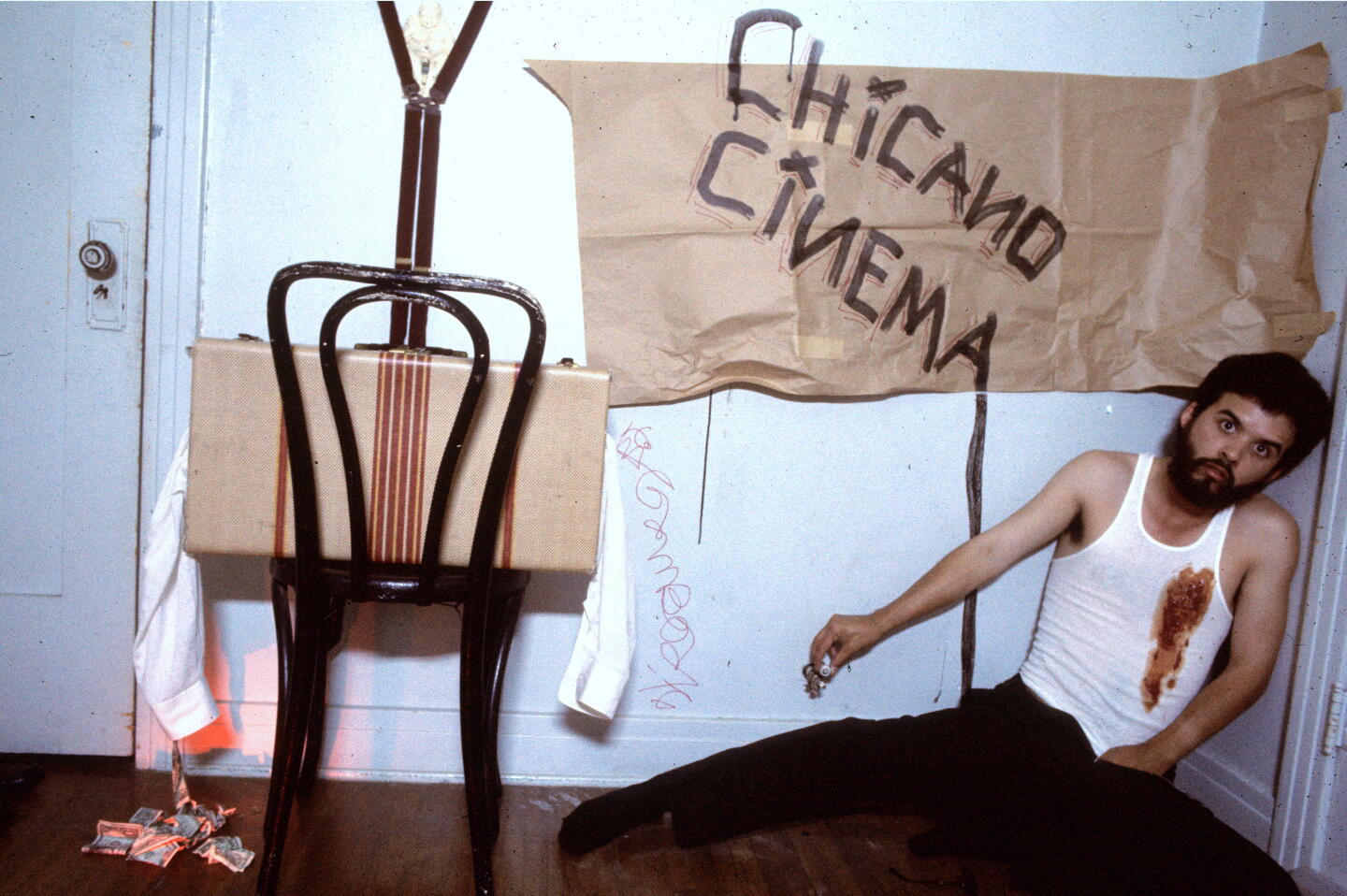
The No-Movie “Chicano Cinema,” starring Harry Gamboa Jr. (Asa Nisi Masa Films / PBS)
2/7
A group shot of the art group Asco. From left to right: Willie Herrón, Gronk, Patssi Valdez and Harry Gamboa Jr. (Asa Nisi Masa Films / PBS)
3/7
Members of the art group Asco pose in Malibu. From left to right: Gronk, Patssi Valdez, Willie Herón and Harry Gamboa Jr. (Asa Nisi Masa Films / PBS)
4/7
Patssi Valdez poses with her golden No-Movie Award, a parody of the Academy Awards, protesting the lack of Latino representation in Hollywood. (Asa Nisi Masa Films / PBS)
5/7
The Asco No-Movie “The Gores (Whittier Blvd + Ax)” (1974). (Asa Nisi Masa Films / PBS)
6/7
The Asco No-Movie “Star” (1980), starring Patssi Valdez. (Asa Nisi Masa Films / PBS)
7/7
A still photo of the Asco performance piece “Birds Wave Goodbye,” from 1972. (Asa Nisi Masa Films / PBS)
Asco’s work remained in relative obscurity — living in local mythology through storytellers like Ignacio — for decades. Then, in 2011, LACMA‘s views evolved and the museum gave Asco its first major retrospective, “Elite of the Obscure.” Documentary writer and director Travis Gutiérrez Senger came across press coverage of the retrospective and felt immediately drawn to the group, connected “on almost a cellular level.”
But it wasn’t until Trump’s first run for presidency and subsequent election, when his language around Latinos and immigrants dangerously sharpened, that Gutiérrez Senger knew in his gut that he needed to make this film now.
What set Asco apart was the fact that it was an art group, not a singular artist, working in tandem to react to social and political realities, including the 1968 East L.A. walkouts, the 1970 Chicano Moratorium, the Vietnam War, police brutality and gang violence.
“I would have never done the film if it wasn’t a collective,” Gutiérrez Senger said. “The thing about art history — and in literature and film — we often canonize individuals. When I saw Asco and it was a group, and they’re [on] the cover of Artforum or at the Whitney … that to me was really, really captivating. And, I thought, also very constructive.
“This isn’t just a group; this is a metaphor for how we mobilize and change,” Gutiérrez Senger remembers thinking.
Art as action
Asco was a fecund ecosystem, as is the close-knit community of contemporary artists following in its footsteps. The documentary recounts the history of the original group while heeding its call to action by collaborating with next-gen artists to carry the tradition forward. In 2023, Gutiérrez Senger curated a pop-up exhibition — featured in the film — alongside Pilar Tompkins Rivas, called “Asco and the Next Gen: An Inter-Generational Celebration of Latinx Art.” “Asco and the Next Gen” included esparza, Maria Maea, San Cha, Ruben Ulises Rodriguez Montoya, Guadalupe Rosales, Gabriela Ruiz and Dorian Wood.
“When you’re deeply collaborating with folks, and you’re in each other’s mediums and you’re sharing thoughts, and you’re thinking together, conceptualizing together, birthing a project together from scratch, you really have to step beside yourself, and understand that this is something that you’re co-creating,” esparza said. “Versus, I think art teaches us to center the single voice, the singular author of an artwork. And my experience of life, of art-making, has been the complete opposite: I think that we’re constantly reflecting each other.”
Esparza’s contribution to that 2023 pop-up was called “Corpo RanfLA: Terra Cruiser” and was originally staged outside the fairgrounds of Art Basel Miami a year prior. The L.A. version took place in the parking lot of an Arts District strip mall. Esparza bounced. He lay in a prone position, arms extended, body ensconced in gold and green lowrider armature, adhered to a blue bike frame, rocking on a 25-cent mechanical ride mechanism. The early connections esparza had with Asco resonated deeply in his relationship to art-making.
“They’re guerrilla, not asking for permission, just doing what they wanted to do with the help of their collective efforts,” esparza said. “That’s an ethos that’s very present in my own performance work, and it’s something that I hold very dear to me. It’s something that I always want to protect, in terms of how the art industry so powerfully commodifies everything you make as artists. I feel like performance still holds this power to really resist that, depending on how we will it into being.”
The interdisciplinary artist Maria Maea (left) and the filmmaker Travis Gutierrez Senger (right), writer and director of “Asco: Without Permission,” pose at Barker Block. Maea is featured in the film, in which she and Gutierrez Senger collaborated on a new “No-Movie,” titled “Pasado/Futuro.”
(Carlin Stiehl / For The Times)
Moving pictures are part of the revolt
Asco also had an interest in film. The art group members didn’t see themselves — or Chicanos or Latinos — represented in Hollywood, so they did it themselves, subverting a movie into a single still photograph that became its own story; an implied narrative. These, featured in the documentary, were called No-Movies.
In addition to the “Asco and the Next Gen” pop-up exhibition, Gutiérrez Senger and the filmmaking team invited multidisciplinary artist Maria Maea, San Cha, musician Fabi Reyna and Mexico City-based Ruben Ulises Rodriguez Montoya to create new No-Movies, also featured in the film, in response to Asco’s original No-Movies.
Maea first learned about Asco through esparza, too. He’s a mentor of sorts to her (they’re part of the same “interlocked brown community,” she says), and they were making adobe bricks together on the banks of the L.A. River for esparza’s 2017 Whitney Biennial installation when he told her the story about the hardware store and the manila envelope.
“They had a finite amount of resources, and they took this cinematic film lens or film camera film and shot these stills,” Maea said. “I think for me, it was so beautiful to see the infinity that could happen in front of it, the story that could happen behind it. It felt like we were just seeing this snapshot of a beautiful cinematic moment.”
The documentary’s new No-Movies are slightly longer, but still snippets of less than five minutes. The main character of Maea’s “Pasado/Futuro” No-Movie, the Being, sprang from the show “L.A. Fonts,” in the artist Alfonso Gonzalez Jr.’s backyard. (“Pasado/Futuro” also includes a group of kids working in a garage, meant to emulate Asco’s own garage origins — and to represent the next next gen. Its cast includes Maea’s younger sister, Ariel-Evelia Tuilaepa Diaz.) The Being is alien, mystical and magical, a migrant finding her way in a new world. (Maea often works with palm weaving, incorporated here, and palms have their own migration story to L.A.)
A still from “Pasado/Futuro,” one of the contemporary No-Movies in the film, featuring Maria Maea as The Being.
(Asa Nisi Masa Films / PBS)
“Something that really intrigued me was their sci-fi aspect of this film,” Maea said of Asco. “Like, they lived in a real world where they were experiencing the Chicano Moratorium, they’re experiencing violence in the streets, and they were also experiencing … the news projected back at them, that they were the issue,” stranger-than-fiction scenarios they synthesized into sometimes-futuristic or dystopian work.
Composer and performer San Cha’s No-Movie, “Luna,” made together with the musician Fabi Reyna, began as a song San Cha had written for a friend who had died; she had had a dream of him on the moon. In collaboration with Gutiérrez Senger, the No-Movie evolved into a piece about a lover, played by Reyna. Now, “Luna” is tender and otherworldly, drenched in the high drama and glamour that San Cha so loves.
San Cha was born in San José, then moved to San Francisco, where she was taken in by the Bay Area drag scene — specifically by her drag mother Per Sia, who’s still there. (San Cha recently relocated to Amsterdam.)
“She is from South-Central, but she studied art, visual art,” San Cha said. “She was a photographer, and she really got into the drag scene, and she was super familiar with Asco. We would do these processions in the Mission, from the Mission to the Castro … and she would always mention Asco in these moments.”
That’s likely because Asco’s early performances, as the art historian and curator C. Ondine Chavoya points out in the film, emphasized procession, mobility, mobilization and occupation, marking sites of political violence. Once San Cha moved to L.A., she found community quickly, too. She met Maea — with whom she made a video, “Coatlicue,” for the Music Center’s For the Love of L.A. program — and later lived with esparza.
“We can’t really perform in a vacuum,” San Cha said. “I can’t imagine doing this by myself, ever.… When I moved to L.A., there’s someone for everything.… And that way I didn’t feel the need to do everything alone. And even though in L.A. it was a little more professional, there’s so many people that are just like family.”
A still from “Luna,” one of the contemporary No-Movies in the film, featuring Fabi Reyna (left) and San Cha (right).
(Asa Nisi Masa Films)
When Gutiérrez Singer first started making this film, he thought that it — and Asco itself — was about saying “f— you” to the systems and institutions and racism that give us asco. (“Asco” means nausea or disgust in Spanish.)
“But at the end of the project, I started looking at the work and myself and the artists I had made the film with, and just seeing this incredible beauty and love,” he said. “And I realized that the power of Asco’s work is ultimately about self-love, and that when you feel that — and you can feel almost a collective sense of self-love as brown people — it gives you incredible potential and strength.”
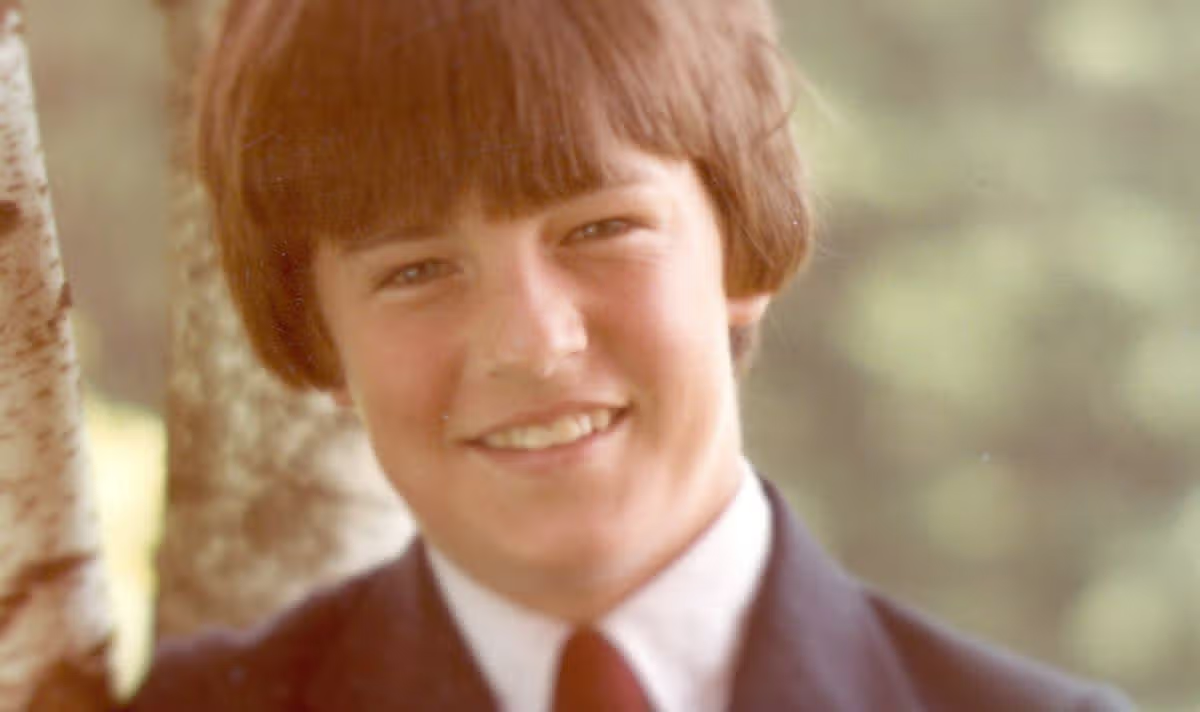
Friends star Matthew Perry will be the subject of a moving new documentary series about his life and struggles with addiction
The One About Matthew Perry teased in trailer from Netflix
Netflix has unveiled a trailer for its documentary series about Matthew Perry.
The One About Matthew Perry will focus on the late Friends star’s life, career and struggles with addiction. In the trailer, Perry’s close friends and family members open up about the 17 Again and The Whole Nine Yards star.
The trailer prominently features Perry’s sister, Mia Perry Bowick, who shares details about the huge sums of money her sibling had spent trying to beat addiction. The footage also includes some of Perry’s most iconic on-screen moments from Friends.
In a particularly poignant moment, one person reveals how Perry “saved my life” through his own advocacy to help fellow addicts. There is also touching archival footage of Perry discussing his demons in his own words.
A logline for the upcoming series reads: “Told through intimate testimonies from close family and friends, this documentary event reveals the real Matthew Perry—generous, funny, vulnerable, larger than life—and the battles he fought to become the man behind the icon. A raw record of a life lived in full, and the honesty that became his greatest legacy.”
The One About Matthew Perry is the first in-depth documentary about the actor since his death. The series will shed light on the different facets of his life from the comedy genius to the man struggling with addiction and also a campaigner to help others get sober.
A Netflix description goes on to state: “Tender and unflinching, the series doesn’t separate Matthew’s humor from his pain, or his fame from his addiction. It sits with both, the way the people who loved him had to. Millions around the world are touched by addiction – their own, or someone they love – and this series speaks directly to them.”
The streaming platform is releasing the three-part factual series The One About Matthew Perry on October 27. The programme will be coming out a day before the third anniversary of the star’s death.
Perry tragically died on October 28, 2023 at the age of 54. He was found unresponsive in a hot tub at his Los Angeles home. His cause of death was the acute effects of ketamine, according to the Los Angeles County Department of Medical Examiner.
Get Netflix free with Sky
This article contains affiliate links, we will receive a commission on any sales we generate from it. Learn more
Sky is giving away a free Netflix subscription with its new Sky Stream TV bundles, including the £15 Essential TV bundle. This lets members watch live and on-demand TV content without a satellite dish or aerial and includes hit shows like Stranger Things and The Last of Us.
His death sent the world into mourning with his Friends co-stars paying tribute to Perry. Prior to his death, Perry had released his 2022 autobiography – Friends, Lovers, and the Big Terrible Thing: A Memoir.
Reflecting on the decision to open up about her brother’s death, Mia Perry Bowick said: “It’s taken time for me to feel ready to share these memories and what it was like to love Matthew through all the complexity of his life—to see him as a whole person, not just as Chandler, and not just as someone who struggled with addiction. As his sister, he shaped who I am today, the person I strive to be, and the work to which I’ve devoted my life.
“Matthew had a beautiful heart and a generous spirit, and even in his darkest moments, he could still make you laugh and feel loved. I hope this series gives everyone who loved him, whether personally or from afar, a deeper appreciation for who he truly was, and the legacy he leaves behind.”
The One About Matthew Perry will be released on Netflix on October 27