disappeared

Ecuador’s disappeared: Inside one family’s search for answers | Human Rights News

While it might be true that the cases are progressing, families of the missing argue they are moving at a snail’s pace.

Since early December, Fault Lines has spent time with families who are pushing for accountability and pleading with the government to learn what happened to their loved ones.

In some cases, they have spent years without receiving any direct response.

“It gets harder every time my nephew asks when his father will come home and I don’t have any answers,” said Rosario Villon, whose brother, Jonathan Villon, has been missing for almost a year and a half.

The 31-year-old father of three was last seen on December 9, 2024, when he left to pick up groceries in his hometown of Guayaquil.

Addressing a vigil for Jonathan last December, Rosario explained the toll his disappearance has taken on her family.

“Seeing my mother cry for her son, not knowing what to do next to bring him home — it isn’t easy,” she said.

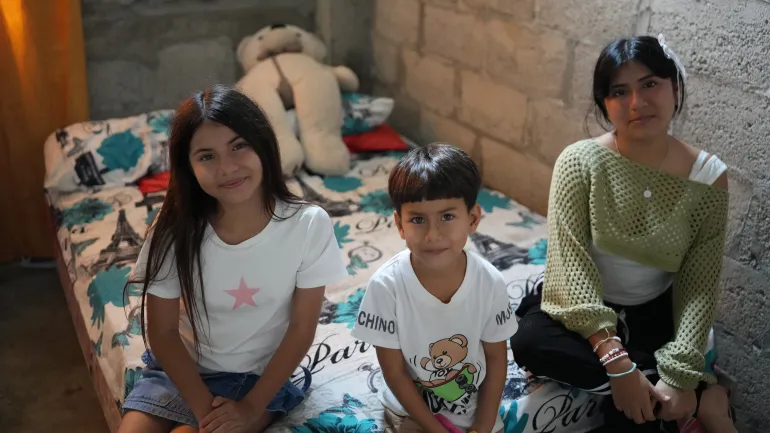
The three children of Jonathan Villon in Ecuador
Jonathan Villon, who disappeared in the custody of Ecuadorian soldiers, leaves behind a partner and three children, pictured here [Fault Lines/Al Jazeera]

Fault Lines has reviewed footage of the day Jonathan was detained. Security cameras show soldiers patrolling Jonathan’s neighbourhood, Nueva Prosperina.

A neighbour’s mobile phone video also captures the moments after Jonathan was forced into the truck’s bed, under a wooden bench. The truck then drives off, and he has not been seen since.

The family recorded the licence plate numbers of the municipal vehicle the soldiers were using, but the military has refused to respond to requests about Jonathan’s case.

“We have the evidence, we have videos, we have the licence plates of the truck, and they won’t give us a concrete and exact answer. What happened to my husband?” asked Jonathan’s partner, Yadira Bohorquez.

Lawyers representing the family say the military simply declared that it had no operations in that area on that date, despite the video evidence.

“The case of Jonathan Villon is completely paralysed by the refusal of the Ministry of Defence to cooperate in handing over information that the Prosecutor’s Office has already requested,” said Fernando Bastias, a lawyer with CDH Guayaquil, a human rights nonprofit representing the family.

Source link

Nearly 8,000 people died or disappeared on migration routes in 2025: IOM | News

More than four in every 10 deaths and disappearances occurred on sea routes to Europe, the UN agency says.

Nearly 8,000 people died or disappeared on migration routes last year, with sea routes to Europe the most deadly, according to the United Nations.

The UN’s International Organization for Migration said that many of the victims were lost in “invisible shipwrecks,” as it released new figures in a report on Tuesday.

Recommended Stories

list of 4 itemsend of list

“These figures bear witness to our collective failure to prevent these tragedies,” Maria Moita, who directs the UN agency’s humanitarian and response department, told a news conference.

The figure of 7,904 people that the UN counted as died or missing in 2025 constituted a fall from the all-time high of 9,197 in 2024, the IOM said in its report. However, it added that the drop was partly due to 1,500 suspected cases that went unverified due to aid cuts.

Total deaths since 2014 exceed 82,000, with about 340,000 family members estimated to have been directly affected.

Shifting routes

More than four in every 10 deaths and disappearances occurred on sea routes to Europe, the IOM reports.

“In Europe, overall arrivals declined, but the profile of movements changed, with Bangladeshi nationals becoming the largest group arriving while Syrian arrivals fell following political and policy shifts,” the report reads.

Many cases were so-called “invisible shipwrecks” where entire boats are lost at sea and never found.

The West African route northwards accounted for 1,200 deaths, while Asia reported a record number of deaths, including hundreds of Rohingya refugees fleeing violence in Myanmar or misery in crowded refugee camps in Bangladesh.

The organisation stressed that the data showed migration routes “are shifting rather than easing, with risks remaining high along increasingly dangerous journeys”.

“Routes are shifting in response to conflict, climate pressures and policy changes, but the risks are still very real,” said IOM Director General Amy Pope.

“Behind these numbers are people taking dangerous journeys and families left waiting for news that may never come,” she added.

“Data is critical to understanding these routes and designing interventions that can reduce risks, save lives and promote safer migration pathways.”

Source link