Derbyshire

Gem of a village with cosy pubs, tearooms and unmatched views

Nestled near Peak District National Park, this charming Derbyshire village is bursting with character and offers the perfect pit stop after a day of hiking around Mam Tor

Tucked away near the Peak District National Park, this picturesque rural village provides an ideal stopping point for ramblers exploring Derbyshire, with numerous welcoming pubs just a short stroll away.

Located next to the renowned Mam Tor, a 517-metre peak within the national park, Castleton ranks among the most spectacularly positioned villages in the region. The settlement is encircled by breathtaking vistas of limestone and gritstone escarpments, which regularly draw visitors from cities including Sheffield and Manchester.

Numerous visitors pause in the village either before or following a day’s trek up the hill, where a stone-paved footpath guides walkers along a circular route spanning roughly three miles. The moderately challenging ramble typically requires up to two hours – an expedition well worth rewarding with a refreshing beverage afterwards.

One recent rambler shared on TripAdvisor: “I finally decided to pay Mam Tor a visit to walk up to rather than just driving past it. It’s so dominating on the horizon as you drive through Castleton. Now, you can walk up to it from a variety of paths. The tourist path from the official Mam Tor car park is a popular one; however, you pay for car parking there, and it usually gets busy.”

At its core sits a thoroughly English village, packed with pubs, tearooms, bakeries and shops, ideal for leisurely browsing. Highly-rated drinking establishments in the village include The George, Ye Olde Nags Head, 1530 The Restaurant and the Bulls Head. All within a stone’s throw of each other, these pubs provide the perfect haven after a hard day and maintain a cracking atmosphere throughout the year. Ye Olde Nags Head, believed to be the oldest in the area, has been serving pints since the 17th century. One satisfied punter left a review, stating: “The pub is lovely, warm and welcoming. The staff were very friendly. The building is old and tired in places, but it’s part of the character of the place.”

In addition to the beer selection, the village boasts a high number of cafes for its size, offering passers-by a cuppa and a sweet treat. Regardless of the weather, both locals and tourists pack the rooms for a hot beverage and their locally baked cakes, biscuits and other treats – delicious and totally Instagram-worthy.

Castleton is believed to be the only place on earth that possesses the precious Blue John stone, found within several of its hidden gem caverns. There are four caves in total, open for anyone to explore, including Peak Cavern, Speedwell Cavern, Treak Cliff Cavern and Blue John Mine. The most frequented is the Peak Cavern, nestled beneath Peveril Castle and amusingly dubbed ‘the devil’s arse’. Eager explorers flock to the site for tours lasting over an hour, detailing its history and showcasing the intricacies of the underground hidden gem.

Source link

Quaint village perfect for foodies with very famous attraction

This town in Derbyshire is one of the Peak District’s most beloved destinations, boasting the famous desserts in which it shares its name and spectacular walking trails with historic attractions

Arguably the most beloved Peak District village – and rightly so – this spot boasts all the appeal of regional specialities, breathtaking rambles and stately homes.

As part of the Peak District National Park, Bakewell is a destination flocked to by visitors eager to explore its local sights and sample the delectable confections for which it’s renowned. That is, naturally, the ultimate pair, the Bakewell pudding and Bakewell tart, available throughout numerous bakeries in the vicinity, with many boasting they possess the authentic recipe.

Places you can visit and sample the regional delights include The Bakewell Tart Shop and Coffee House, Fountain View Bakery, Cornish Bakery and even The Old Original Bakewell Pudding Shop. A recent patron, who sampled the celebrated puddings at the original establishment, said: “This establishment was a high-priority visit for us whilst we were staying in the Peak District, as my partner loves Bakewell tarts.

“We were so excited to find it and were impressed by how many items were in the store available to buy.” Scrumptious delicacies aside, the village is a sought-after location, for it sits within easy reach of numerous heritage structures and hiking routes.

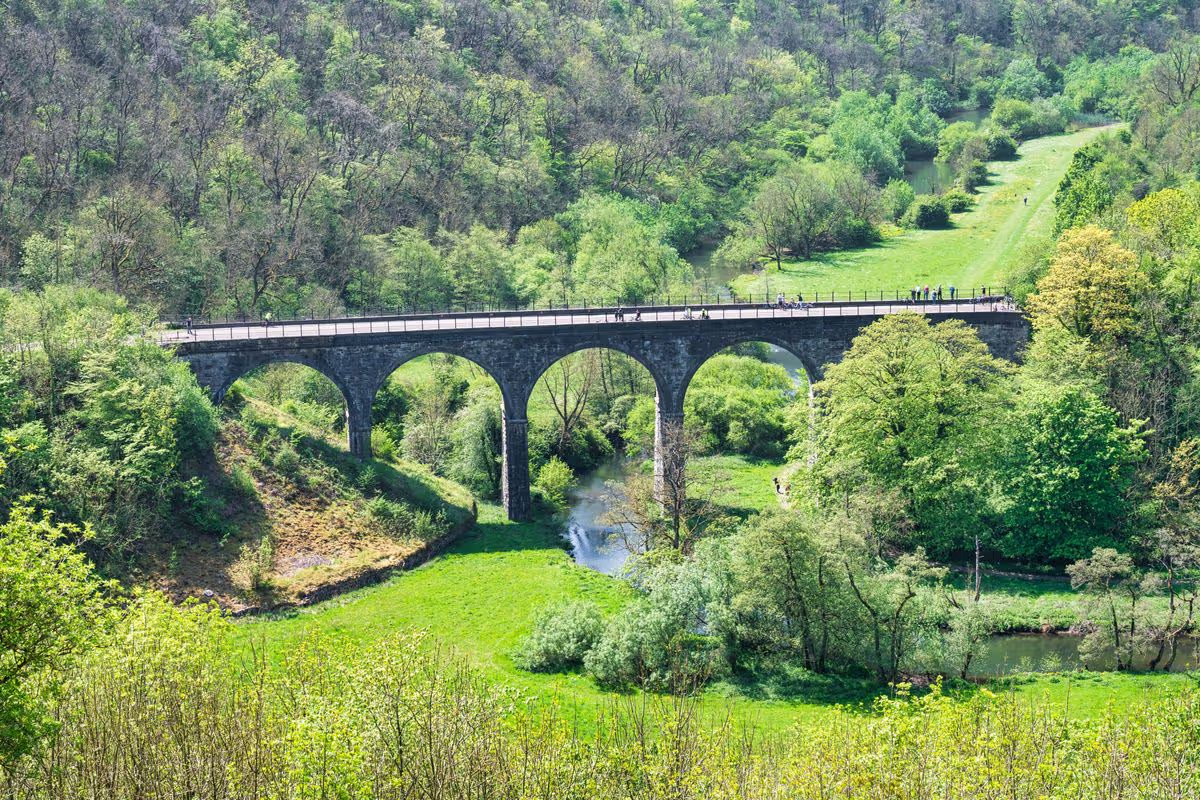
Most notably, the magnificent Monsal Trail provides stunning vistas of an old abandoned railway viaduct. Indeed, it ranks as the highest-rated attraction in the region, according to TripAdvisor reviews. One visitor who completed the walk said “The views are just incredible with a lovely mix of scenery. You can start off at the pub and enjoy the views of the viaduct.

“Walk down the trail and capture the scenery of the valley from the top of the viaduct. Then follow down into the valley and wander across the trail down towards the weir.”

Beyond this, holidaymakers are enticed to discover the estate of Chatsworth House and, naturally, take a glimpse inside the magnificent structures, brimming with heritage. The grand residence boasts 25 chambers to discover, from impressive galleries to formal apartments and a stunning decorated hall, as you reveal the past of the renowned family that previously resided there.

As one of Derbyshire’s most splendid manor houses, Chatsworth presents countless occasions and pursuits throughout the year that are worth monitoring, including the Chatsworth Christmas Market. A recent delighted visitor penned: “We visited Chatsworth House to see the Christmas experience and were delighted with how magnificent this place is.”

They went on to add: “The house is spectacular, and the Christmas decorations just added to the magic of this beautiful place. The grounds are also incredible. I wish that I had allowed more time and seen more of the garden during the day.”

Bakewell, a tranquil town nestled along the River Wye and approximately 15 miles from Sheffield, is the largest settlement within the National Park. Believed to have been established during the Anglo-Saxon era, it now houses around 3,695 residents, as recorded in 2019.

Source link

Exploring the home town of the artist Joseph Wright of Derby | Derbyshire holidays

The river rushes white around each of the large, flattish rocks as I tread tentatively over the stepping stones that Dovedale is famous for. This limestone valley on the border between Derbyshire and Staffordshire is a popular spot for day trips and hiking. Thankfully, it’s quiet on this brisk November morning, and I’m able to soak in the scene: the River Dove flowing fast, the autumn trees turning russet and gold, the green fold of hills rising around me.

On days like this, it’s clear why Dovedale has inspired creatives. One of those was the 18th-century artist Joseph Wright of Derby, whose work is being celebrated in a new exhibition at the National Gallery.

Landscapes such as Dovedale were painted by Wright at a time when “people started travelling to places that in those days were hard to get to – places like the Peak District”, says Tony Butler, executive director of Derby Museums Trust. We meet at Derby Museum and Art Gallery, which houses the world’s largest collection of Wright’s paintings. Places such as Dovedale were seen as wild, Butler explains, but there was an increasing appreciation of landscapes like this, with a gradual opening up of the country, and the idea of nature evoking the sublime.

Wright’s Dovedale By Moonlight. Photograph: Alamy

The gallery showcases Wright’s prolific and varied work. In the place of paintings that have gone to the National Gallery exhibition are works from other artists, including paintings inspired by Wright’s use of light and dark by Nottingham-based Joseph Norris.

Much of Wright’s work reflects the industry and invention of the Enlightenment, a time of faith in reason and scientific discovery. As a hub of industrial growth, Derby was one of the Midlands towns at the centre of the movement, and Wright spent time with members of the Lunar Society, the Midlands-based group of Enlightenment thinkers. “The Enlightenment was a way of life in Derby, and he was a documenter of that,” says Butler. “He’s really reflecting the spirit of the age.”

One of Wright’s most famous works, A Philosopher Giving That Lecture on the Orrery (in Which a Lamp Is Put in Place of the Sun), shows a philosopher lecturing on the solar system at a time when talks like this were held in Derby’s town hall. He painted portraits of figures reflecting the area’s role in industry, including Sir Richard Arkwright, the industrialist who built his cotton mill in nearby Cromford and was one of Wright’s patrons.

I have lunch at The Engine Room, a recently opened restaurant that draws on another element of Derby’s industrial heritage, as a centre for railway manufacturing, with railway art decorating the walls. Afterwards, I wander with Alex Rock from Derby Museums along the River Derwent as Canada geese bob by and the breeze throws leaves on the water. It’s a short walk to the Museum of Making, which stands on the site of Derby Silk Mill, often regarded as the world’s first modern factory, near where Wright grew up.

The Museum of Making. Photograph: Kate Lowe

The museum explores 300 years of Derby’s history of making, from the Enlightenment era that inspired Wright through to the city’s contemporary creativity. A Toyota car hangs high in the atrium as a sign of Derbyshire’s modern manufacturing. “In Stoke, we lift up crockery to see where it’s made,” I say, a nod to my own home town’s industry. “I do the same,” Rock says, and we lift our coffee mugs to see them stamped as Denby, the Derbyshire-based pottery company. Afterwards, I join the crowd gathered to watch the trains running on the museum’s impressive model railway.

I look around the Assemblage room, curated so items are displayed by their principal material, such as wood or metal. There are racks of everything from Derby-made train parts to ceramics showcasing the museum’s collection. The museum is also home to a workshop where visitors can book sessions to learn skills such as pot-throwing and woodwork.

skip past newsletter promotion

We wander to Derby cathedral, striking for how bright it is inside a nave that was rebuilt in 1725 – the large windows symbolically letting in the light of the Enlightenment. I amble down Sadler Gate, a pedestrianised street lined with independent shops, where I settle for a while with a pint of cider at the Old Bell Hotel, a 17th-century former coaching inn that’s been sensitively restored.

Following the Derwent and the A6 north leads to the village of Cromford, home to Cromford Mills, the world’s first successful water-powered cotton spinning mill. I join an hour-long guided tour and learn how it was built in 1771 by Arkwright, and is seen as another important site of the Industrial Revolution. The tour takes us into vast old factory buildings, and we see examples of the machinery that would have been used. Wright painted Cromford Mills in day and night scenes.

Cromford, home to Sir Richard Arkwright’s cotton mill. Photograph: Daniel Matthams/Alamy

I have lunch at Oakhill, built by the Arkwright family in the mid-19th century as a private family dwelling, and now a boutique hotel and restaurant. I eat a delicious and generously sized cauliflower steak in the elegant restaurant, with wide windows offering views over the Derbyshire countryside.

I leave with a sense of the people and places that inspired Joseph Wright, from the valley of Dovedale to the industrial changes of the 18th century, and how places like Cromford and Derby are drawing on that history. As Alex Rock says: “If you really want to experience the culture that Wright came from, you need to come to Derby.”

Wright of Derby: From the Shadow is at the National Gallery, London, until 10 May, tickets from £12. The trip was provided by Visit Derby and Visit Peak District & Derbyshire


Source link

Chatsworth estate in Derbyshire opens a new family-friendly hotel | Derbyshire holidays

Nothing quite prepares you for your first glimpse of Chatsworth. As we turn into the drive, the house reveals itself, a handsome limestone edifice framed by a steep ridge of wooded hills, ablaze with autumn colours, and fronted by rolling parkland where sheep graze on the riverbanks. Despite its bucolic aspect, this is a landscape that has been carefully honed and crafted over centuries by successive generations of the Cavendish family, who have lived in this beautiful corner of Derbyshire for more than 450 years.

Some of the most significant alterations were made in the 19th century by the 6th Duke of Devonshire (also known as “the Bachelor Duke”), an extravagant character who had the estate village demolished and rebuilt over the brow of a hill because he felt it was spoiling the view from the house. His perfectionism paid off; as the long queue of cars snaking up to the ticket office on a beautiful October morning attests, Chatsworth is one of the most popular stately homes in the UK today, welcoming more than 600,000 visitors a year.

Opening its doors to the public is just one of the ways that this grand old pile keeps the show on the road. The estate is a sprawling enterprise that covers a sizeable chunk of the Peak District national park and has grown to encompass the Chatsworth Farm Shop, dozens of holiday lets – ranging from shepherd’s huts to a 16th-century hunting tower – two pubs (the Beeley Inn and the Pilsley Inn), and the Cavendish Hotel.

The Hide has doubles from £80 and good value meals made with produce from the estate

The latest addition to the fold is the Hide hotel, which is being pitched as an affordable, family-friendly alternative to some of the pricier accommodation in the Chatsworth Escapes portfolio, with doubles from £80 a night, room only. Previously known as the Highwayman hotel, it sits on the A619 road from Chesterfield to Bakewell and was run as a Premier Inn and Beefeater restaurant for many years (“lots of orange and pictures of cows”, as one staff member described it to me). It reopened in October after a refurbishment overseen by Laura Burlington, daughter-in-law of the current Duke and Duchess of Devonshire. We’re among the first guests to stay in the new-look hotel.

After completing the automated check-in (there’s no reception desk, but staff are on hand in the bar/restaurant next door), we settle into our family bunk room, which has a kingsize bed and built-in “cabin bunks”. The decor is simple but cosy, with soft woollen blankets and carpets, furniture made from reclaimed wood and modern artwork from the Cavendish family’s private collection.

A family bunk room at the Hide hotel. Photograph: Anna Batchelor

We’re booked in for dinner at the Hide Grill and Pizzeria, which offers a “campfire-inspired menu designed for sharing and cooked over an open flame”. Fears of being marched outside and forced to sing Ging Gang Goolie quickly dissipate as we’re shown to a fireside table in a quiet corner of the large and sprawling restaurant. The menu offers a long list of crowd-pleasers from fish and chips to wood-fired pizzas and barbecued spare ribs, as well as kid-friendly desserts such as s’mores sharing boards. The food isn’t the only thing that’s designed with families in mind. There’s a dedicated play corner, with books, toys and a miniature kitchen to keep younger diners entertained while they wait for their food. It’s a Sunday, so we order from the roast menu – a choice of rotisserie chicken, Chatsworth estate-reared beef or lamb with all the trimmings, followed by ginger parkin with custard. The food is great, the portions generous and, at £18 a person, it’s incredibly good value.

Entry to the house and grounds is not included in the room rate, but multi-entry tickets are available, which give unlimited access for the duration of your stay. Hotel guests can buy a day pass to the Chatsworth Health and Fitness Club, a couple of miles away, with its pool, gym, tennis courts and treatments, and can book conservation tours during the winter when the house is closed to the public. Another perk is having direct access to the estate’s 14,000 hectares (35,000 acres) of park and moorland.

In our room is a booklet of circular walks that start from the hotel or the nearby village of Baslow. One route takes you from the hotel’s back gate across the fields to Chatsworth House, a walk of around 5 miles; another takes you up to Curbar Edge, one of the Peak District’s distinctive gritstone escarpments. Walkers and cyclists are made to feel welcome here with bike and boot wash stations, cycle storage and an outdoor dog bath and shower for those bringing a four-legged friend. There’s also a bus service that runs from Chesterfield to Chatsworth with a stop outside the hotel, making this a viable base for exploring the national park without a car.

We’ve arranged to have a private tour of the house, and our guide, Martin, proves to be a mine of fascinating facts about the 17 generations of Cavendishes who have called this their home. He leads us through the breathtaking Painted Hall with its colourful frescoes, the regal State Rooms, the chapel, the cosy library (where a huge Christmas tree is being installed) and the purpose-built Sculpture Gallery, pointing out some of the artworks, which range from Roman and Egyptian sculpture to old masters.

skip past newsletter promotion

The Painted Hall. Photograph: Mike Walker/Alamy

Impressive though these masterpieces are, it’s the everyday details that bring the place to life. Martin tells us the house was used as a girls’ boarding school during the second world war. When the 17th-century tapestries in the State Drawing Room were removed for cleaning, they found Cadbury’s chocolate wrappers dating back to the 1930s stuffed behind them.

We spend the rest of the afternoon exploring the grounds – the greenhouses, grotto, maze and spectacular Emperor Fountain, built in 1844, another addition by the 6th duke, who wanted to build the tallest fountain in the world to impress Tsar Nicholas I. In the event the tsar was a no-show, although Chatsworth has had its fair share of illustrious guests, from King Edward VII to novelist Elizabeth Gaskell and political philosopher Thomas Hobbes. There has been speculation that Jane Austen based her descriptions of Pemberley on Chatsworth, although there is no evidence that she visited. Nevertheless, the house stood in for Mr Darcy’s grand estate in the 2005 adaptation of Pride and Prejudice, starring Keira Knightley and Matthew Macfadyen. “There is not a finer county in England than Derbyshire,” wrote Austen in that same novel. If you’re looking for an affordable, comfortable and friendly base from which to explore the county, the Hide is a very decent place to start.

The Hide has doubles from £80 a night, and bunk rooms sleeping two adults and two children from £125, both room-only

Source link