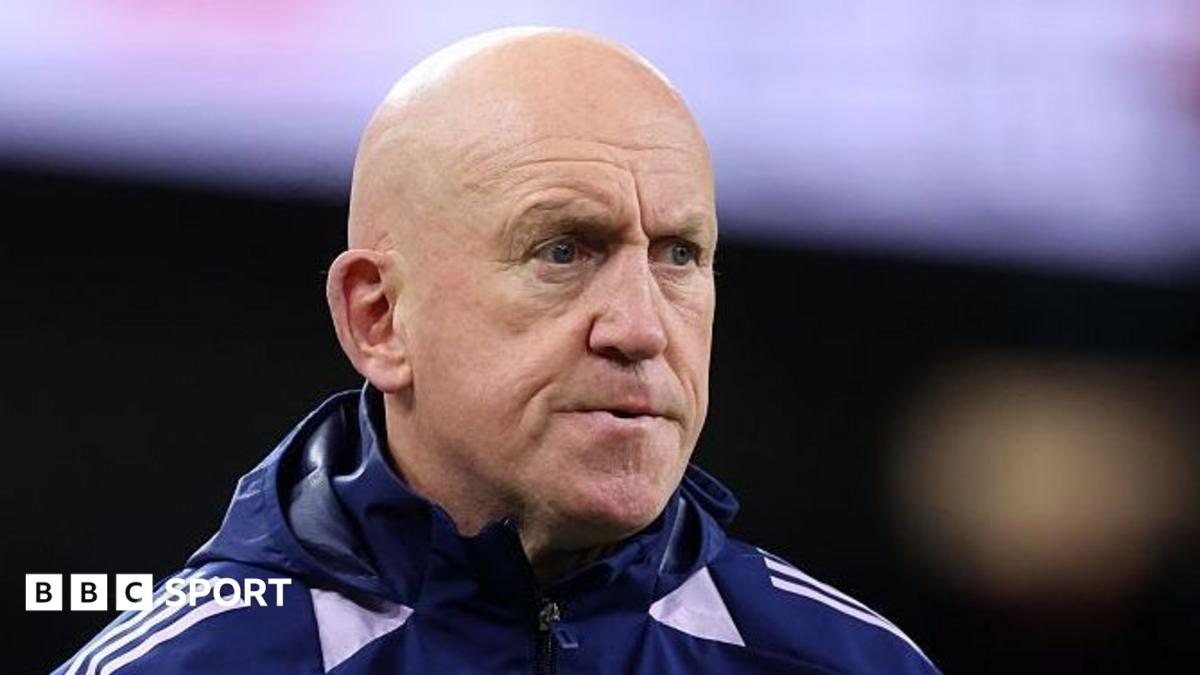
Defence coach Shaun Edwards has joined Argentina’s coaching staff on a deal that runs until the end of the 2027 Rugby World Cup in Australia.
The announcement ends any speculation that Edwards could be handed a role in Steve Borthwick’s England set-up, with the 59-year-old set to fulfil his consultancy role with England’s women’s team before joining Felipe Contepomi’s staff.
“I’m delighted to join Felipe Contepomi, his coaching staff and the Argentina rugby team at the end of this month until the World Cup next year in Australia,” said Edwards.
“I’ve always admired the ability and quality of Argentine players and I hope to bring some of my international experience to the team during the next year,” added the former Wigan rugby league great.
Englishman Edwards, who is one of the most decorated coaches in rugby union, left his position as France men’s defence coach earlier this year after helping them win three Six Nations titles.
Edwards and former Argentina head coach and hooker Mario Ledesma, who has been appointed to take charge of the forwards, will start work with the Pumas at the end of October.
Argentina are then set to face Ireland, Italy and France in November in Nations Championship matches.
Three-time semi-finalists Argentina have been drawn in a pool with Fiji, Spain and Canada at the World Cup which takes place between 1 October and 13 November in 2027.
Edwards, who also spent a successful 12 years with Wales and won four English titles and two Champions Cups while on Wasps’ staff, said in March that he was interested in coaching in the Rugby Championship, the southern hemisphere tournament contested by South Africa, New Zealand, Australia and Argentina.
He turned down a chance to coach his country in 2006, believing that the busier fixture list at Wasps would suit him better as he grieved the death of his brother.
Israel opened its first national pavilion at Morocco’s Marrakech Air Show, joined by Israel’s top military contractors.
Published On 8 Oct 20268 Oct 2026
Israel’s Ministry of Defence says it is participating for the first time in a defence exhibition in Morocco, as it announced its first-ever national pavilion at the Marrakesh Air Show 2026.
“This marks Israel’s first official participation in the defence exhibition held in Morocco since the signing of the Abraham Accords”, Israel’s Defence Ministry said in a statement on Thursday.
The ministry said eight Israeli defence companies exhibited “advanced, combat-proven technologies at the show” in Marrakesh, which runs until Saturday.
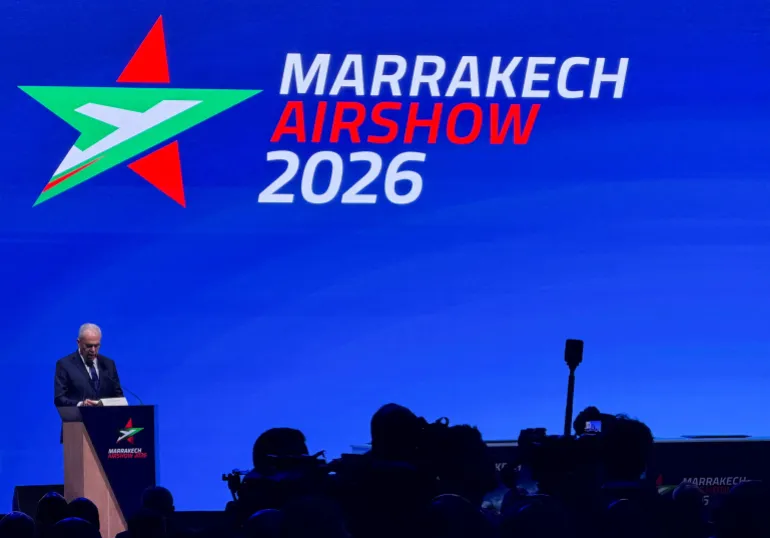
Abdellatif Loudiyi, Morocco’s defence administration minister, speaks at the Marrakech Airshow in Marrakesh, Morocco, October 7, 2026 [Ahmed El Jechtimi/Reuters]
The Marrakech Air Show, taking place from October 7 to October 10 this year at the Marrakech Royal Moroccan Air Force Base, is organised every two years and is meant for civil and military aeronautics and space industries to highlight their latest offerings.
“Israel’s three major defence industries, Elbit Systems, IAI, and Rafael, also exhibited, presenting solutions across the air, land, sea, space, intelligence, cyber, and digital domains,” it said.
Munition exhibited by Israel’s Elbit Systems at the Marrakech Air Show in Marrakesh, Morocco, October 7, 2026 [Ahmed El Jechtimi/Reuters]
The announcement is the latest sign of increasing ties between the Arabic-speaking North African country and Israel, since the two established ties in 2020 as part of the US-backed Abraham Accords.
Last month, Israel and Morocco agreed to upgrade their diplomatic ties, including elevating their respective missions to embassies and appointing ambassadors to both countries.
The move followed a meeting between the two countries’ foreign ministers, hosted by the US ambassador to the United Nations, Mike Waltz, on the sidelines of the United Nations General Assembly in New York.
They also agreed to expand air travel, including by reinstating direct flights operated by carriers from both nations, and confirmed plans for high-level bilateral visits in the coming months.
Morocco is also one of the five countries that have pledged to send troops to Gaza, under the US-backed International Stabilization Force (ISF) as part of US President Donald Trump’s so-called Board of Peace.
Tallinn accuses Moscow of responsibility for fire at Estonian company Milrem Robotics, a supplier of unmanned ground vehicles to Ukraine.
Published On 29 Sep 202629 Sep 2026
Estonian Foreign Minister Margus Tsahkna has accused Russia of “sabotage” following an August arson attack on a defence company, Milrem Robotics, a claim the Kremlin rejected.
“We can conclude with certainty that the arson attack … in Tallinn was an act of sabotage ordered by the special services of the Russian Federation,” Tsahkna wrote on X on Tuesday.
Recommended Stories
list of 4 itemsend of list
He added that the perpetrators of the attack had been apprehended and “no longer pose a threat”, and that Estonia had summoned the Russian ambassador.
“This act of sabotage is part of Russia’s broader campaign across Europe, aimed at intimidating us and weakening our support for Ukraine,” he wrote.
Kremlin spokesman Dmitry Peskov rejected the allegation.
“Such statements are baseless, ill-considered, have absolutely no relation to reality, and lack any form of reasoning. Consequently, we cannot and will not take such statements seriously,” he told reporters.
Estonia, a European Union and NATO member state along the alliance’s eastern flank, has accused Moscow of several hybrid provocations since the beginning of Russia’s full-scale invasion of Ukraine in 2022.
Along with its neighbours Latvia and Lithuania, it has ramped up its investment in defence in the years since and remains a staunch ally of Kyiv.
Support from allies
NATO chief Mark Rutte, speaking to journalists after Estonia’s accusation, said that “Russia continues its reckless campaign of hostile actions against NATO allies. It is trying to weaken our resolve and stop our support for Ukraine”.
“But Russia is failing. It is failing on the battlefield in Ukraine, and it is failing to undermine our unity and support for Ukraine,” he added.
The attack was condemned by several of Estonia’s allies, who also reaffirmed their support for Ukraine.
French President Emmanuel Macron said on X that Paris was in full solidarity with Estonia, adding: “The proliferation of these hostile acts reflects a dangerous headlong rush by Russia – one that will only lead it into a dead end.”
“Russia’s fingerprints are all over” the attack, Lithuanian Foreign Minister Kestutis Budrys wrote on X, adding that Moscow’s “hostile activities do not stop at Ukraine’s borders”.
Latvian President Edgars Rinkevics added that “more support for Ukraine … will be needed and must be provided”.
Swedish Prime Minister Ulf Kristersson called Estonia’s attribution of the attack “extremely serious”, and said the pattern of the attacks was “directed against Europe as a whole”.
On the appointment of Edwards, England head coach John Mitchell said: “Since his time with France ended, we have had a conversation about our game, and he expressed an interest in working in an international women’s set-up for the first time.
“He has a huge amount of respect for the Red Roses and what we stand for; he sees it as a privilege to join our environment.
“His coaching credentials are exceptional and his experience at the highest level of the game speaks for itself.
“Defensively, Sarah Hunter is relishing the opportunity to learn from him, alongside the rest of our coaching group, as we head into another exciting Test match against New Zealand.”
Last week, Edwards expressed his desire to return to coaching and be a part of next year’s men’s Six Nations.
Denmark, Greenland and the United States are set to sign a security agreement that Copenhagen says will give NATO a larger role in protecting the Arctic, potentially shifting responsibility beyond the United States and Denmark alone.
The agreement is expected to be signed at the United Nations General Assembly in New York on Tuesday. Its full contents have not been made public, although US President Donald Trump has described it as giving Washington “permanent control” over Greenland’s security.
Denmark and Greenland have not endorsed Trump’s description. Both have said the agreement will benefit Greenland while respecting the island’s sovereignty.
The deal follows months of pressure from Trump, who has repeatedly argued that the United States should control Greenland and at times declined to rule out military or economic measures to acquire the semi autonomous Danish territory.
Stay ahead of the geopolitical week.
MD Briefing delivers expert analysis across five global fronts — the Indo-Pacific, energy, geoeconomics, European security, and the Middle East — every Monday morning. Free.
His demands triggered a diplomatic crisis within NATO and pushed Copenhagen and Nuuk into negotiations with Washington to address US security concerns while maintaining Greenland’s status within the Kingdom of Denmark.
A broader NATO role
Danish Foreign Minister Lars Lokke Rasmussen said the agreement would change the way Arctic security is handled.
“It will be in a form where responsibility for security in the Arctic is not only Danish or American,” Rasmussen told Danish broadcaster TV2 on Sunday. He added that NATO would play a major role in protecting the region.
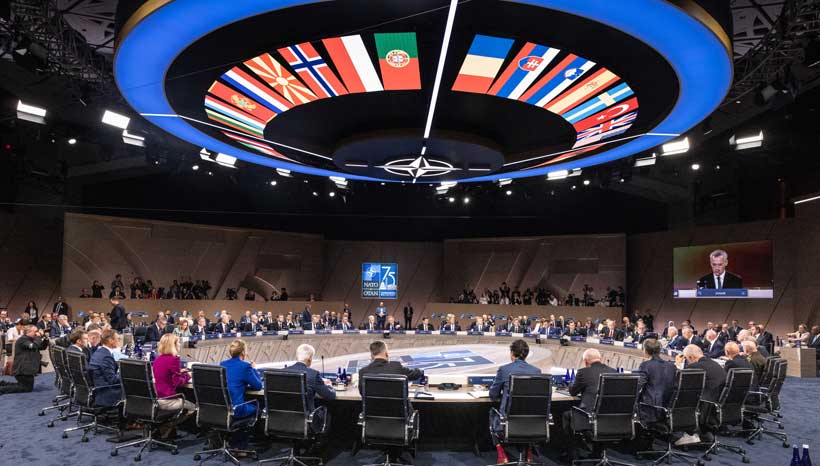
A NATO spokesperson said the alliance welcomed the agreement, describing it as a step that could advance security, stability and cooperation in the Arctic.
Rasmussen travelled to New York for the signing but has declined to disclose the agreement’s details.
He said Denmark had been open from the beginning to addressing what he described as legitimate US security interests.
The negotiations therefore appear to have focused on finding a framework that can accommodate Washington’s strategic concerns without formally transferring Greenland’s sovereignty to the United States.
Trump’s claim raises questions
Trump has offered a different description of what the agreement means.
In a post on Truth Social on Friday, he said the deal gives the United States “permanent control over security, and all other needs” in Greenland. He also said no US adversary would be able to establish a base or military presence on the island without Washington’s written approval.
Copenhagen has not publicly responded to that characterization.
The difference between Washington’s description and Denmark and Greenland’s public statements leaves important questions about the agreement unresolved.
Among the most significant is whether it changes the 1951 US Denmark defence agreement, which provides the legal basis for the American military presence in Greenland.
The document’s provisions on US access, military infrastructure and the role of NATO have not been made public.
Greenland at the centre
The agreement comes as Denmark acknowledges that it underinvested in Greenland’s defence for decades.
Copenhagen has since pledged to increase its military presence on the island and strengthen Arctic surveillance, including through greater NATO involvement.
Greenland’s government has sought to reassure residents that the negotiations do not compromise the island’s sovereignty.
Erik Jensen, an opposition lawmaker in Greenland, said on Facebook that he had read the draft agreement and felt reassured by its contents. He also praised Greenland’s foreign minister for handling the negotiations.
For Greenland, the issue is particularly sensitive because the island has extensive autonomy within the Kingdom of Denmark and has long maintained a political debate over eventual independence.
What the agreement could mean for the Arctic
The deal could mark a significant change in the security architecture of the Arctic.
Greenland occupies a strategically important position between North America and Europe, making it valuable to the United States and NATO as competition over the Arctic increases.
A larger NATO role could provide a multilateral framework for responding to concerns about military activity and strategic infrastructure in the region. At the same time, the agreement’s precise legal and operational arrangements will determine how far that shift actually goes.
Until the text is released, it remains unclear whether the agreement represents a substantial restructuring of Greenland’s defence arrangements or primarily a political framework for closer cooperation.
What is clear is that the negotiations have moved Arctic security from a dispute centred on US ambitions for Greenland toward a broader discussion about NATO’s collective role in one of the world’s increasingly contested strategic regions.
PARIS: France and Iraq on Monday called for a “diversification of export routes” for oil and gas in the Middle East in response to the instability generated by the conflict between the United States and Iran, following talks in Paris.
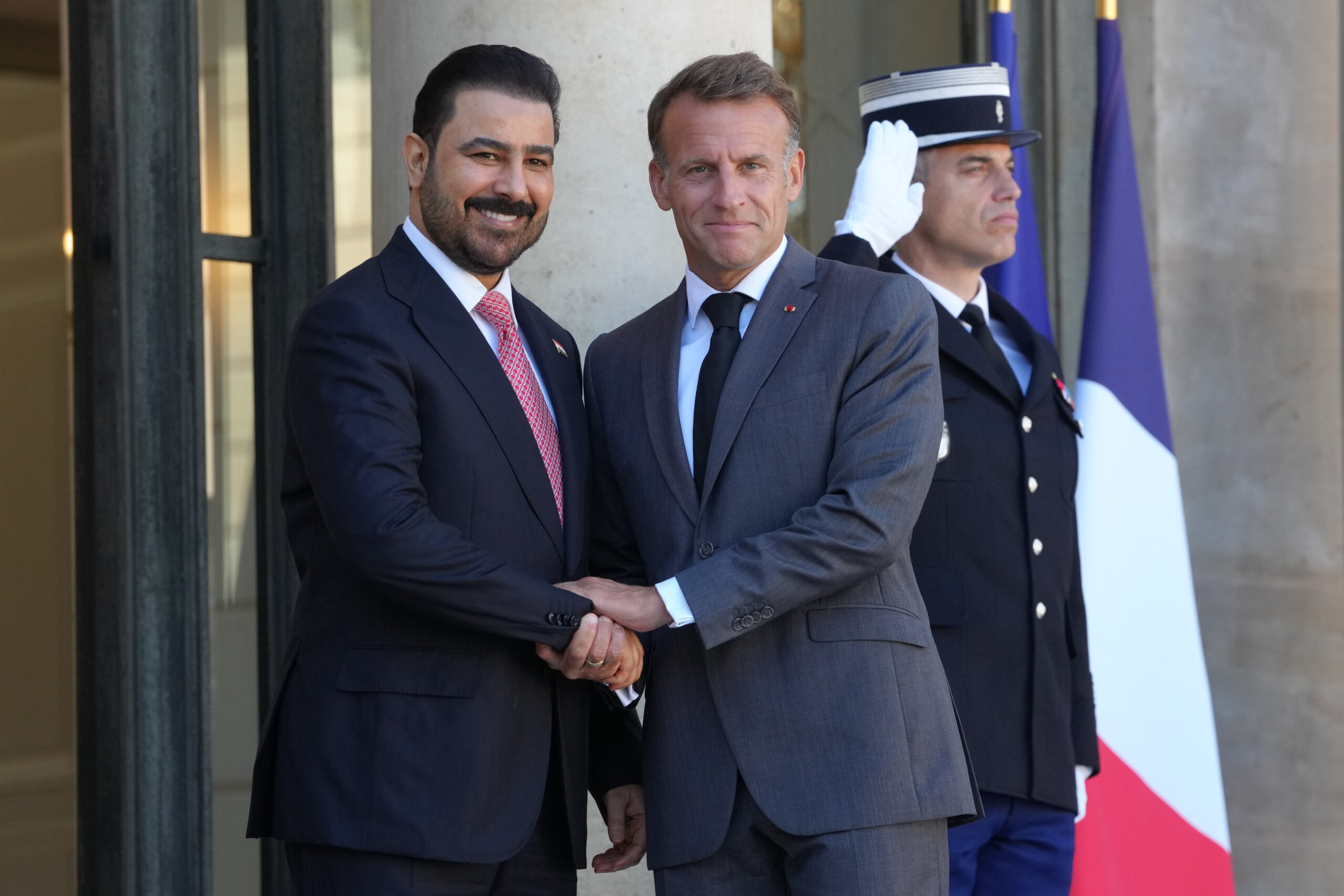
French President Emmanuel Macron and Iraq’s Prime Minister Ali Al-Zaidi stressed the importance of “regional interconnections” and export route diversification to “ensure regional energy security”, in a joint statement.
Zaidi visited the Elysee Paris on his first trip to Europe since taking office in May and is also expected in Berlin on Tuesday.
The visit comes as the situation in the Middle East continues to deteriorate, with the Iran-backed Houthi rebels cementing their hold on the Bab Al-Mandab strait on Friday, adding to the crisis of Iran’s effective closure of the Strait of Hormuz, and driving oil prices up.
On Monday, French energy giant TotalEnergies signed a memorandum of understanding with Iraq on liquefied natural gas supplies and agreed to discuss further energy projects.
TotalEnergies chief Patrick Pouyanne “affirmed the company’s readiness to cooperate with Iraq in the oil and energy sectors”, noting the company planned to increase its investments in Iraq to $16 billion from $12 billion, during a meeting with Zaidi.
The two countries, which in recent years have been involved in the fight against the Islamic State (IS) jihadist group, also agreed to deepen defence cooperation.
They signed a strategic roadmap on the acquisition of French military equipment as Iraq seeks to modernise its armed forces and strengthen its sovereignty capabilities.
French drone company Harmattan AI separately signed a letter of intent with Iraq’s defence ministry concerning autonomous air-defence systems.
Several other agreements were signed in areas including development assistance, education, civil aviation and electricity infrastructure.