decry

Senators decry surge in ICE detention deaths, cite poor medical care

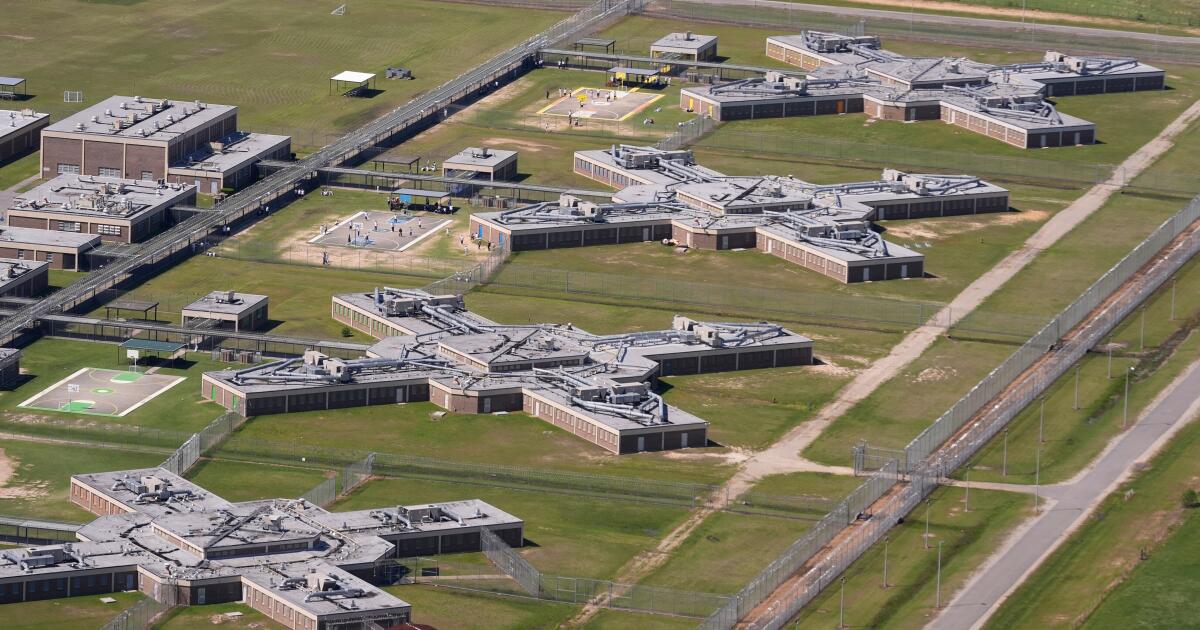
At Immigration and Customs Enforcement detention facilities across the country, detainees go without medicine for serious health conditions, endure miscarriages while shackled and are dying in record numbers, a group of U.S. senators said.

In a letter sent Friday to Homeland Security Secretary Kristi Noem and ICE senior official Todd Lyons, 22 Democratic lawmakers alleged that a “dramatic” surge in deaths in federal immigration custody is a “clear byproduct” of the Trump administration’s mass deportation agenda and rapid expansion of detention.

“Each death in ICE custody is a tragedy and, based on the evidence available from agency records, 911 calls, and medical experts, many could have been prevented if not for this Administration’s decisions,” the senators wrote. The letter, released Tuesday, was led by Illinois Sen. Dick Durbin and signed by California Sen. Alex Padilla.

At least 32 people died in ICE custody in 2025, they asserted. That’s triple the previous year’s total and more deaths than were recorded during the entire Biden administration. ICE has reported seven deaths so far this year, as well as seven in December alone.

In the letter, the senators demanded detailed information about the agency’s death investigations, medical standards and oversight procedures.

The Department of Homeland Security, which oversees ICE, did not respond to the allegations but has repeatedly defended its detention standards. In a statement, ICE said it is “committed to ensuring that all those in custody reside in safe, secure and humane environments,” adding that detainees receive medical, dental and mental health screenings within 12 hours of arrival, full health assessments within 14 days and access to 24-hour emergency care.

The lawmakers’ warning comes amid mounting allegations that detention facility staff have withheld critical medication, delayed emergency responses and failed to provide adequate mental health care.

The agency came under flak recently after a Texas medical examiner ruled the January death of a Cuban immigrant a homicide after witnesses said they saw guards choking him to death.

In Calexico, Calif., Luis Beltrán Yanez-Cruz, 68, died after more than a month in detention, records show; the Honduran national’s family alleged that he repeatedly reported worsening stomach and chest pain but received only pain medication.

The recent rise in deaths coincides with a dramatic expansion of the detention system. Funding for ICE roughly tripled after Congress passed the One Big Beautiful Bill Act. The agency has used the funds to increase detention capacity, holding more than 67,000 people nationwide after reaching a historic high of approximately 73,000, many of whom have no criminal history, the letter says.

Last week, the Trump administration announced $38.3 billion in partnerships with private prison corporations, including GEO Group and CoreCivic, to further scale up detention space. One planned facility near Phoenix will cost $70 million and span the equivalent of seven football fields, according to the lawmakers. ICE has also reopened facilities that were previously shuttered over chronic staffing shortages and medical concerns.

Concerns about conditions have extended to California. Last month, Padilla and Sen. Adam Schiff toured a for-profit detention center in California City after reports of unsafe facilities, inadequate medical care and limited access to attorneys.

“It’s the tragic result of a system failing to meet the most basic duty of care,” Padilla said in a statement, citing reports of mold in food, unclean drinking water and barriers to medical care.

A federal judge recently ordered the administration to provide adequate healthcare and improved access to counsel at the facility, concluding that detainees were likely to “suffer irreparable harm” without court intervention.

In their letter, the senators argued that the rapid growth of the detention system has outpaced oversight and accountability. They cited internal audits documenting violations of detention standards, allegations that ICE failed to pay third-party medical providers for months and analyses of 911 calls from large facilities showing repeated cardiac events, seizures and suicide attempts.

“Rather than accepting responsibility for deaths in government custody and providing detailed facts about the circumstances of each death,” the senators wrote, “the Department of Homeland Security has attempted to smear deceased individuals’ reputations by emphasizing details about their immigration status and their alleged wrongdoing.”

As detention capacity continues to expand, the climbing death tallies underscore the extent to which the Trump administration has overhauled the immigration detention system, and Democrats say the results are fraught.

The opposition party has grown more unified after the fatal shootings of two U.S. citizens by federal agents in Minnesota, which coincided with reports of record high detention deaths in December.

Discord culminated in a partial government shutdown that began Friday when Senate Democrats refused to fund the Department of Homeland Security until the Trump administration agrees to reform at the agency.

Source link

California leaders decry Trump call to ‘nationalize’ election, say they’re ready to resist

President Trump’s repeated calls to “nationalize” elections drew swift resistance from California officials this week, who said they are ready to fight should the federal government attempt to assert control over the state’s voting system.

“We would win that on Day One,” California Atty. Gen. Rob Bonta told The Times. “We would go into court and we would get a restraining order within hours, because the U.S. Constitution says that states predominantly determine the time, place and manner of elections, not the president.”

“We’re prepared to do whatever we have to do in California,” said California Secretary of State Shirley Weber, whose office recently fought off a Justice Department lawsuit demanding California’s voter rolls and other sensitive voter information.

Both Bonta and Weber said their offices are closely watching for any federal action that could affect voting in California, including efforts to seize election records, as the FBI recently did in Georgia, or target the counting of mailed ballots, which Trump has baselessly alleged are a major source of fraud.

Weber said California plays an outsized role in the nation and is “the place that people want to beat,” including through illegitimate court challenges to undermine the state’s vote after elections, but California has fought off such challenges in the past and is ready to do it again.

“There’s a cadre of attorneys that are already, that are always prepared during our elections to hit the courts to defend anything that we’re doing,” she said. “Our election teams, they do cross the T’s, dot the I’s. They are on it.”

“We have attorneys ready to be deployed wherever there’s an issue,” Bonta said, noting that his office is in touch with local election officials to ensure a rapid response if necessary.

The standoff reflects an extraordinary deterioration of trust and cooperation in elections that has existed between state and federal officials for generations — and follows a remarkable doubling down by Trump after his initial remarks about taking over the elections raised alarm.

Trump has long alleged, without evidence and despite multiple independent reviews concluding the opposite, that the 2020 election was stolen from him. He has alleged, again without evidence, that millions of fraudulent votes were cast, including by non-citizen voters, and that blue states looked the other way to gain political advantage.

Last week, the Justice Department acted on those claims by raiding the Fulton County, Ga., elections hub and seizing 2020 ballots. The department also has sued states, including California, for their voter rolls, and is defending a Trump executive order purporting to end mail voting and add new proof of citizenship requirements for registering to vote, which California and other states have sued to block.

On Monday, Trump further escalated his pressure campaign by saying on former FBI Deputy Director Dan Bongino’s podcast that Republicans should “take over the voting in at least 15 places,” alleging that voting irregularities in what he called “crooked states” are hurting his party. “The Republicans ought to nationalize the voting.”

On Tuesday morning, Karoline Leavitt, the White House press secretary, appeared to try to walk back Trump’s comments, saying he had been referring to the Save Act, a measure being pushed by Republicans in Congress to codify Trump’s proof-of-citizenship requirements. However, Trump doubled down later that day, telling reporters that if states “can’t count the votes legally and honestly, then somebody else should take over.”

Bonta said Trump’s comments were a serious escalation, not just bluster: “We always knew they were going to come after us on something, so this is just an affirmation of that — and maybe they are getting a step closer.”

Bonta said he will especially be monitoring races in the state’s swing congressional districts, which could play a role in determining control of Congress and therefore be a target of legal challenges.

“The strategy of going after California isn’t rational unless you’re going after a couple of congressional seats that you think will make a difference in the balance of power in the House,” Bonta said.

California Democrats in Congress have stressed that the state’s elections are safe and reliable, but also started to express unease about upcoming election interference by the administration.

Rep. Ro Khanna (D-Fremont) said on Meet the Press last week that he believes the administration will try to use “every tool in their toolbox to try and interfere,” but that the American people will “overcome it by having a battalion of lawyers at the polls.”

California Sen. Adam Schiff this week said recent actions by the Trump administration — including the Fulton County raid, where Director of National Intelligence Tulsi Gabbard put Trump on the phone with agents — were “wrong” and set off “alarm bells about their willingness to interfere in the next election.”

Democrats have called on their Republican colleagues to help push back against such interference.

“When he says that we should nationalize the elections and Republicans should take over, and you don’t make a peep? What is going on here?” Senate Minority Leader Chuck Schumer (D-N.Y.) said Tuesday. “This is the path that has ruined many a democracy, and our democracy is deep and strong, but it requires — and allows — resistance to these things. Verbal resistance, electoral resistance. Where are you?”

Some Republicans have voiced their disagreement with Trump. Senate Majority Leader John Thune (R-S.D.) said Tuesday that he is “supportive of only citizens voting and showing ID at polling places,” but is “not in favor of federalizing elections,” which he called “a constitutional issue.”

“I’m a big believer in decentralized and distributed power. And I think it’s harder to hack 50 election systems than it is to hack one,” he said.

However, other Republican leaders have commiserated with Trump over his qualms with state-run elections. House Majority Leader Mike Johnson (R-La.), for example, took aim at California’s system for counting mail-in ballots in the days following elections, questioning why such counting led to Republican leads in House races being “magically whittled away until their leads were lost.”

“It looks on its face to be fraudulent. Can I prove that? No, because it happened so far upstream,” Johnson said. “But we need more confidence in the American people in the election system.”

Elections experts expressed dismay over Johnson’s comments, calling them baseless and illogical. The fact that candidates who are leading in votes can fall behind as more votes are counted is not magic but math, they said — with Democrats agreeing.

“Speaker Johnson seems to be confused, so let me break it down. California’s elections are safe and secure. The point of an election is to make sure *every* eligible vote cast is counted, not to count fast,” Sen. Alex Padilla (D-Calif.) wrote on X. “We don’t just quit while we’re ahead. It’s called a democracy.”

Democrats have also expressed concern that the administration could use the U.S. Postal Service to interfere with counting mail-in ballots. They have specifically raised questions about a rule issued by the postal service last December that deems mail postmarked on the day it is processed by USPS, rather than the day it is received — which would impact mail-in ballots in places such as California, where ballots must be postmarked by Election Day to be counted.

“Election officials are already concerned and warning that this change could ultimately lead to higher mailed ballots being rejected,” Senate Democrats wrote to U.S. Postal Service Postmaster General David Steiner last month.

Some experts and state officials said voters should make a plan to vote early, and consider dropping their ballots in state ballot drop boxes or delivering them directly to voting centers.

Source link