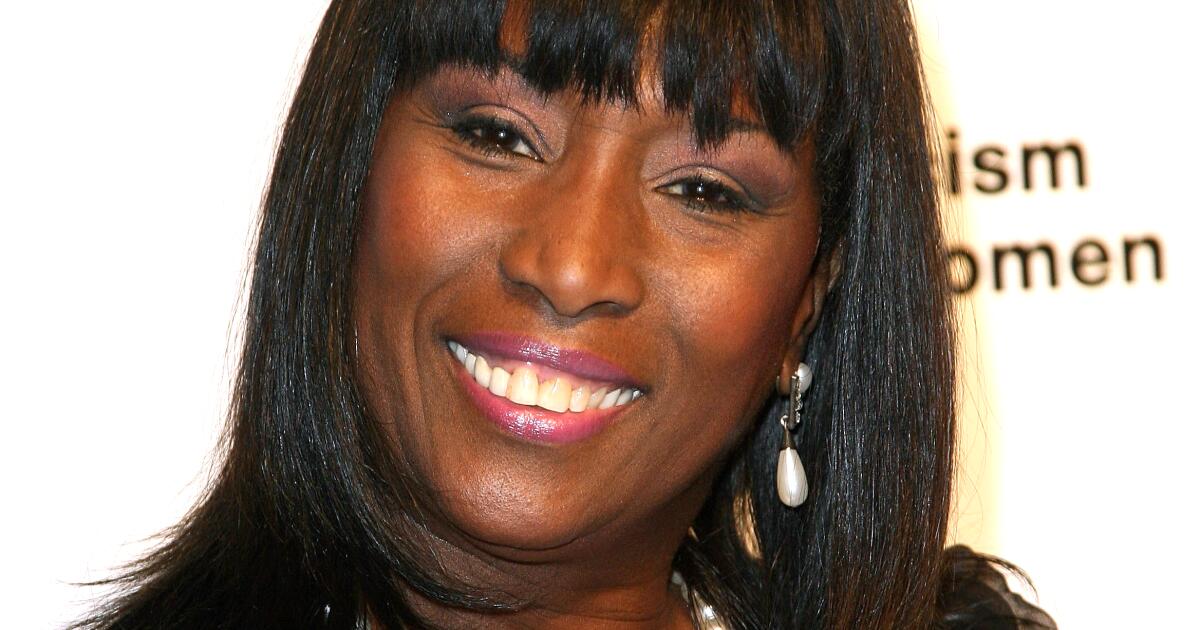
Tzruya “Suki” Lahav, a violinist and poet who played with Bruce Springsteen and the E Street Band in the mid 1970’s on some of the band’s most beloved LPs, has died. She was 74.
Yonatan Albalak, her son, posted on Facebook April 2 that his mother had been “gathered into infinity after a short and hard battle with the cursed disease” of cancer.
“She wrote songs that touched people’s hearts,” he wrote, describing her as “a special woman, smart, pure in heart and loving life. She was the best mom I could ever ask for.”
Lahav’s tenure with the group lasted only between 1974 and 1975, yet she contributed several standout moments to Springsteen’s catalog. She performed on “The Wild, the Innocent and the E Street Shuffle” and its follow-up, the smash “Born to Run.” She played the famed violin intro to the classic single “Jungleland,” and performed the multi-tracked choir on “4th Of July, Asbury Park (Sandy)” after a church vocal group failed to turn up for the session. She also played on a fan-favorite, widely-bootlegged cover of Bob Dylan’s “I Want You.”
She entered Springsteen’s camp after her husband, Louis Lahav, engineered on Springsteen’s 1972 debut album, “Greetings From Asbury Park.” Lahav told the Jerusalem Post in 2007 that she joined the group as “a young girl in a flowing white dress from Kibbutz Ayelet Hashahar in the Upper Galilee, barely out of the army, barely married … I went from kibbutz harvest music to rocking with Bruce.”
She remained a major artist in Israel for decades after her tenure with Springsteen. She recorded with the Israeli rock band Tamuz, and wrote songs for prominent Israeli artists like Rita, including “Yemei Hatom” and “Shara Barkhovot.” She won the ACUM Lifetime Achievement Award and the Arik Einstein Prize there. In 1990, “Shara Barkhovot” was Israel’s submission to the Eurovision Song Contest.
Hello! I’m Mark Olsen. Welcome to another edition of your regular field guide to a world of Only Good Movies.
This is another strong week for new releases. By now you have likely heard something about “The Drama,” which has become inescapable thanks to the tireless promotion of its two stars, Zendaya and Robert Pattinson.
In a movie written and directed by Norwegian provocateur Kristoffer Borgli (“Dream Scenario”), the pair play Emma and Charlie, an engaged couple who find their wedding week thrown into disarray by the revelation of a deep secret from the bride-to-be.
Robert Pattinson and Zendaya in the movie “The Drama.”
(A24)
As Amy Nicholson put it in her review, “To another screenwriter, ‘The Drama’ would be an intimate study and a more emotionally wrenching film. But Borgli forces us to parse the mushy stuff from the mess and analyze the pending nuptials as an impersonal problem: What comes after a public shaming for the guilty and the inquisitors? That’s one of the most important (and unresolved) questions of the modern era, so I’ll forgive the filmmaker for being no more interested in writing Emma and Charlie as complex human beings than if they were character names in a math quiz about two people on two trains speeding toward a crash.”
Meanwhile, Tim Grierson spoke to Shira Small, the folk artist whose sole 1974 album features a song heard in an early scene of “The Drama.” Small, a delightful interview, goes into the music career she left behind a long time ago — one which may be reigniting now thanks to the movie.
Also opening in Los Angeles this week is Israeli filmmaker Nadav Lapid’s “Yes,” a guaranteed conversation-starter. Ariel Bronz stars as a musician who, in the aftermath of the Oct. 7 attacks, decides to say yes to composing a vicious new political anthem..
Reviewing the film, Joshua Rothkopf said, “It’s a movie about a citizenry at war with itself, hoping to keep the plates spinning for one more night. You watch it and think how easy it would be to envision an American remake — and wonder, too, if a filmmaker like Lapid even exists here.”
One of my favorite films from SXSW 2025, “Fantasy Life,” is finally coming to theaters. Written and directed Matthew Shear, the movie is an affectionate nod to the chatty dramedies of Noah Baumbach (some of which Shear has acted in). Here he plays Sam, a troubled law school dropout who takes a job looking after the children of a Brooklyn couple (Amanda Peet and Alessandro Nivola) and finds himself in an emotional affair with the wife.
“Fantasy Life” actor-writer-director Matthew Shear and star Amanda Peet bond in New York.
(Justin Jun Lee / For The Times)
I recently spoke to Shear and Peet about their collaboration on the film. Peet’s character in the film is also an actor and, though much of the film’s anxieties felt familiar to her, one scene in particular is drawn from Peet’s own experience: She is often mistaken in public for Lake Bell, including once on a red carpet.
“It’s a weird thing because you’re like, what do I do here?” said Peet with a laugh. “What’s the least douchey way to get out of this?”
The Black Pack’s resistance humor
Robert Townsend in the 1987 movie “Hollywood Shuffle.”
(Samuel Goldwyn Company / Photofest)
Curated around a new book by Artel Great, the UCLA Film and Television Archive is launching the series “The Black Pack: Rewriting American Comedy,” to spotlight a moment in the 1980s and ’90s when a small group of Black creators reached the very heights of Hollywood.
Eddie Murphy, Paul Mooney, Robert Townsend, Keenan Ivory Wayans and Arsenio Hall were friends and collaborators who, from 1987 to 1994, created the work showcased in the series. The Black Pack is a name they gave to themselves, partly in response to the John Hughes-affiliated Brat Pack.
Things begin tonight with a 35mm screening of Townsend’s essential 1987 satire “Hollywood Shuffle.” Great will be there for an introduction and a Q&A with cast member Anne-Marie Johnson and Spring Mooney, daughter of late actor Paul Mooney, who also appeared in the movie.
The cast of “In Living Color,” to be celebrated as part of the UCLA screening series “The Black Pack.”
(Fox / Photofest)
Other events include an evening of episodes of Wayans’ sketch comedy series “In Living Color,” 1988’s “Coming to America,” starring Murphy and Hall, a 35mm screening of Townsend’s 1991 “The Five Heartbeats” and a 35mm screening of 1989’s “Harlem Nights,” the only movie starring, directed, written and produced by Murphy, then at the height of his cultural capital.
This series is a terrific example of why smart programming matters. Here is a group of films (and a TV show) that might seem only related in a vague way, but when put together under a specific theme or idea, they are suddenly transformed into something revelatory.
Each evening of the series is designed to make the case for a different aspect of the Black Pack’s work and influence. The series as a whole puts forward a larger concept Great has coined a term for.
“I’m arguing through the series that the Black Pack’s cultural material is connected to a longstanding tradition that I call Black resistance humor,” says Great, now an associate professor at San Francisco State University, in an interview this week. “This idea of Black resistance humor is really a cultural practice where Black cultural workers are using political wit, irony, satire, parody, absurdity to challenge corrupt authority, to give voice to racial trauma and also attach themselves to re-imagining what freedom can really look like.”
From left, Arsenio Hall, Eddie Murphy, James Earl Jones and Madge Sinclair in the movie “Coming to America.”
(Paramount / Photofest)
There are plans for Black Pack programs in other cities, including Atlanta, San Francisco and Chicago, bringing this fresh look at their specific moment to venues around the country.
“I’m hopeful that the series will allow communities and audiences to see the Black Pack as cultural strategists who are using this idea of Black resistance humor to address very serious issues of power, identity and race,” says Great. “But also as a way of thinking, as a way of seeing and as a way of building alternative systems. Because that’s what they were able to do.”
Points of interest
‘The Birthday Party’ in 35mm
Actor Robert Shaw, left, with director William Friedkin on the set of “The Birthday Party” in 1968.
(Larry Ellis / Getty Images)
As part of its series celebrating the legacy of actor Robert Shaw, the Academy Museum will screen 1968’s “The Birthday Party” in 35mm on Sunday. One of the earliest features directed by William Friedkin (who would go on to such classics as “The Exorcist” and “To Live and Die in L.A.”), the film’s screenplay was written by Harold Pinter, adapting his own play. Shaw, Friedkin and Pinter make for a combustible intensity.
Shaw plays Stanley, the lone boarder at a seaside inn. When two mysterious men (Dandy Nichols and Sydney Tafler) arrive, they engineer a party for Stanley that becomes increasingly ominous.
In his original review, Charles Champlin lauded Shaw, saying he gives “one of the total and totally engrossing movie performances,” adding that Friedkin “as a director is everything a dramatist, and an audience, could want. The sense of loving care and artistic sureness which characterizes every aspect of the movie is extremely tonic. Pinter may be an acquired taste, but it is easy to acquire.”
‘He Got Game’ in 35mm
Denzel Washington in 1998’s “He Got Game.”
(David Lee / Touchstone Pictures)
Spike Lee’s prolific career is now studded with movies that maybe didn’t quite get their due in their day but deserve renewed attention. Screening in 35mm on Sunday at Brain Dead Studios is Lee’s 1998 “He Got Game,” which is just that kind of movie: stuffed with ideas and ambitions even if it doesn’t totally all come together for everyone. I particularly like his use of composer Aaron Copland’s music, which gives many of the images an epic quality they might not otherwise fully achieve, challenging preconceived notions of what can be thought of as Americana.
The movie stars a particularly electric Denzel Washington as Jake Shuttlesworth, a once-promising basketball player whose life took a turn. Now he’s in prison. His son, Jesus (played by NBA star Ray Allen), is a promising prospect and Jake is given an offer of a reduced sentence if he can convince his son to attend a certain college. The mixture of two of Lee’s own personal preoccupations, basketball and family, makes for a potent combination.
Reviewing the movie when it was released, Kenneth Turan wrote, “Given that writer-director Lee is one of the most visible of the New York Knicks’ celebrity fans, what’s surprising is not that he made a film about the sport he cares so much about but that he waited so long. … Though ‘He Got Game’ is periodically awkward and unruly, it benefits, as many of Lee’s films do, from the director’s determination to connect with the troublesome issues of the real world. Too few American directors work with Lee’s kind of social immediacy, and that makes his films, flawed and didactic though they sometimes are, essential viewing.”
Harmony Korine’s ‘Gummo’
Jacob Reynold, left, and Nick Sutton in Harmony Korine’s ‘Gummo’
(Criterion Collection)
Harmony Korine’s first feature as director, 1997’s “Gummo,” will screen at Vidiots on Monday. The event is co-presented by the Cinegogue, a group perhaps best known for their limited-edition movie-themed clothing drops, but who describe their mission thusly: “Our goal: make movies cool again through concert-like experiences and fanfare. … Because even though a movie might end, cinema is forever.” (And that’s a sentiment we here can get behind.)
The film finds Korine attempting to bring elements of experimental film and video to a nominally more mainstream context. It’s both confrontational and playful. Using a collage-like structure, the film follows a few kids as they make their way around their small town in Ohio after a tornado. Mostly featuring non-actors, the cast also includes Linda Manz and Chloë Sevigny, who is also credited as the film’s costume designer.
Writing about “Gummo” and Korine’s subsequent “julien donkey-boy,” Kevin Thomas made special note of “the intensity of Korine’s compassion for individuals who have so little going for them and so much going against them, yet at times are capable of experiencing an exhilarating freedom of spirit.”
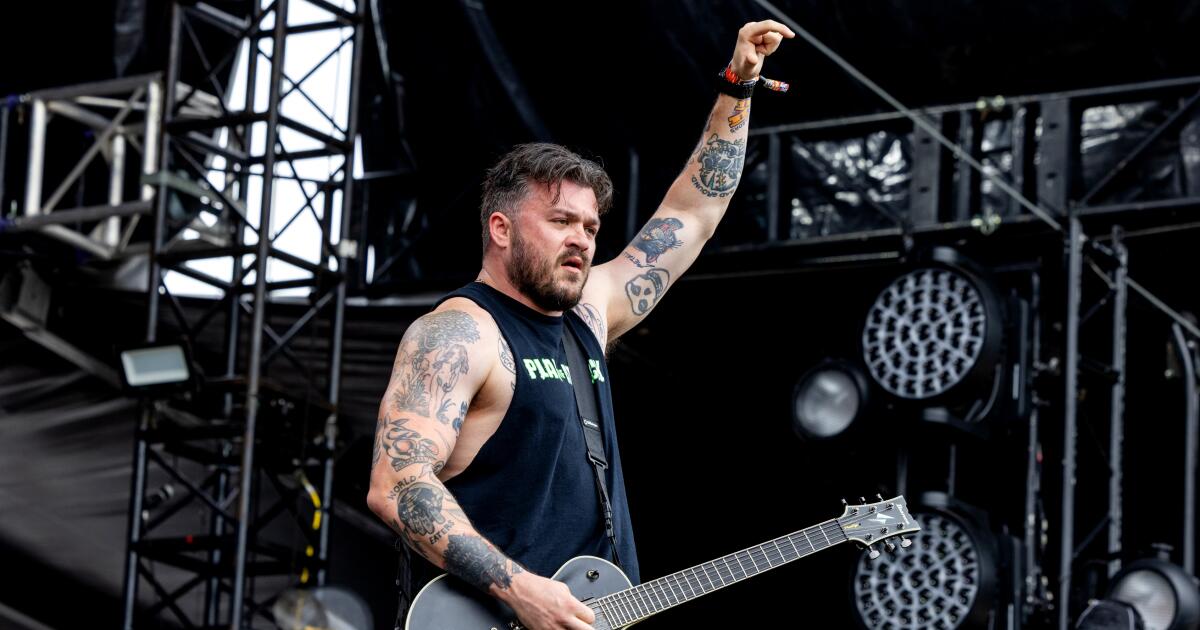
Bo Lueders, guitarist and co-founder of the Chicago-based hardcore metal band Harm’s Way, has died, his bandmates announced “with heavy, broken hearts” Thursday on social media. He was 38.
Lueders “will be remembered for his unwavering empathy and compassion for his friends & family and his magnetic, inimitable presence on & off the stage,” Harm’s Way wrote on Instagram, asking for “grace and privacy” during a difficult time.
No cause of death was provided, but the band offered up the 988 suicide and crisis lifeline to anyone “struggling with depression or urges to self-harm.”
Born Bohan Daniel Lueders in November 1987, the musician co-founded Harm’s Way in 2006 as a side project of the punk band Few and the Proud. It turned into a full-time band that has released five studio albums and five EPs in the years since, with songs including “Human Carrying Capacity,” “Become a Machine” and “Call My Name.”
In a bio posted by the band on Spotify, Lueders took a shot at describing the music on Harm’s Way’s 2018 album, “Posthuman,” which was followed by its fifth album, “Common Suffering,” in 2023.
“To a Harm’s Way fan, I would describe ‘Posthuman’ as a blend of ‘Isolation’ (2011) and ‘Rust’ (2015), but it’s sonically way more insane,” he said. “To anyone else, I would simply say it’s like full on aggression.”
Lueders began the “HardLore” podcast in 2022 with Twitching Tongues frontman Colin Young to chronicle life on the road in the hardcore/punk/metal scene. A new episode — the second part of a two-part interview with Madball singer Freddie Crician — was posted Wednesday.
But on March 19, before that two-parter was done, Young and Lueders posted a “HardLore” episode that broke from format, instead answering listener questions for an hour and a half. One listener asked the hosts what piece of music they wanted to hear last before they died. Young picked “My Way” by Frank Sinatra. His buddy chose another track that was distinctly non-metal and non-punk.
“Mine would be some Björk song, probably. Either ‘Unravel’ or ‘Aurora.’ I just wanna drift and go peacefully,” Lueders said, rubbing both eyes before making a drifting gesture with both hands.
“I think ‘Unravel’ is one of the most beautiful songs ever written.”
A GoFundMe campaign was launched Friday by Young on behalf of Lueders’ “mother Wendy and girlfriend Taylor to help cover the costs of both afterlife & memorial services in Chicago.” The campaign had reached nearly $140,000 by midday.
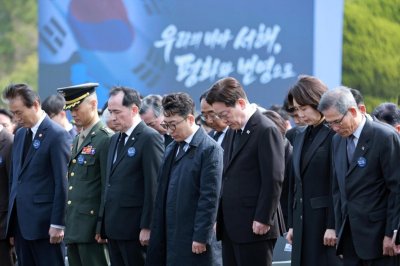
South Korean President Lee Jae Myung (3-R) offers a silent prayer at a national cemetery in Daejeon, South Korea, 27 March 2026, during a ceremony to mark the 11th anniversary of the commemoration day for 55 troops who died in three major clashes with North Korea in the West Sea, comprising an inter-Korean naval skirmish in 2002, North Korea’s torpedo attack on the corvette Cheonan in 2010 and its shelling of the border island of Yeonpyeong in the same year. Since 2016, the government has designated the fourth Friday of March as the commemoration day, known as the West Sea Defense Day. Photo by YONHAP / EPA
March 27 (Asia Today) — President Lee Jae-myung said Friday that building a peaceful Korean Peninsula while maintaining a strong defense is the historic mission left behind by South Korea’s fallen West Sea heroes.
Speaking at the 11th West Sea Defense Day ceremony at Daejeon National Cemetery, Lee said the 55 service members honored each year had protected not only a maritime boundary, but also the everyday peace South Koreans enjoy and the future their descendants deserve.
“Our task is to firmly protect our people and the territory of the Republic of Korea with strong national defense capabilities, while also building a peaceful Korean Peninsula free from the worries of war and hostility,” Lee said.
He said the waters defended by the fallen should no longer remain a symbol of conflict, but be turned into “a foundation of peace and prosperity.”
“Peace is our livelihood, and peace is the greatest security,” Lee said. “Winning a fight matters, but winning without fighting matters even more. More important still is a peace in which there is no need to fight.”
Lee said his government would work to end the legacy of confrontation and tension in the West Sea and open a new chapter of shared growth and prosperity.
He also paid tribute to the bereaved families, saying the government would remember the dead, preserve their record and honor them properly.
Lee said his administration was trying to close gaps in veterans support under the principle that special sacrifice deserves special compensation.
Beginning in May, spouses of financially struggling war veterans will receive monthly living support payments, he said.
Lee also said the government plans to expand the number of designated veterans medical institutions nationwide to 2,000 by 2030 so national meritorious persons can receive treatment more easily at nearby hospitals.
He said mandatory military service should be recognized as a legitimate social asset so former service members can take pride in their time in uniform.
To that end, Lee said the public sector will be required to count mandatory service periods when calculating pay grades and wages for discharged veterans.
West Sea Defense Day is a national commemoration honoring those killed in the Second Battle of Yeonpyeong on June 29, 2002, the sinking of the Cheonan on March 26, 2010, and the shelling of Yeonpyeong Island on Nov. 23, 2010.
Before the ceremony, Lee and first lady Kim Hye-kyung paid respects at the graves of those killed in the Second Battle of Yeonpyeong, the Yeonpyeong shelling, the 46 sailors killed in the Cheonan sinking and the late warrant officer Han Ju-ho.
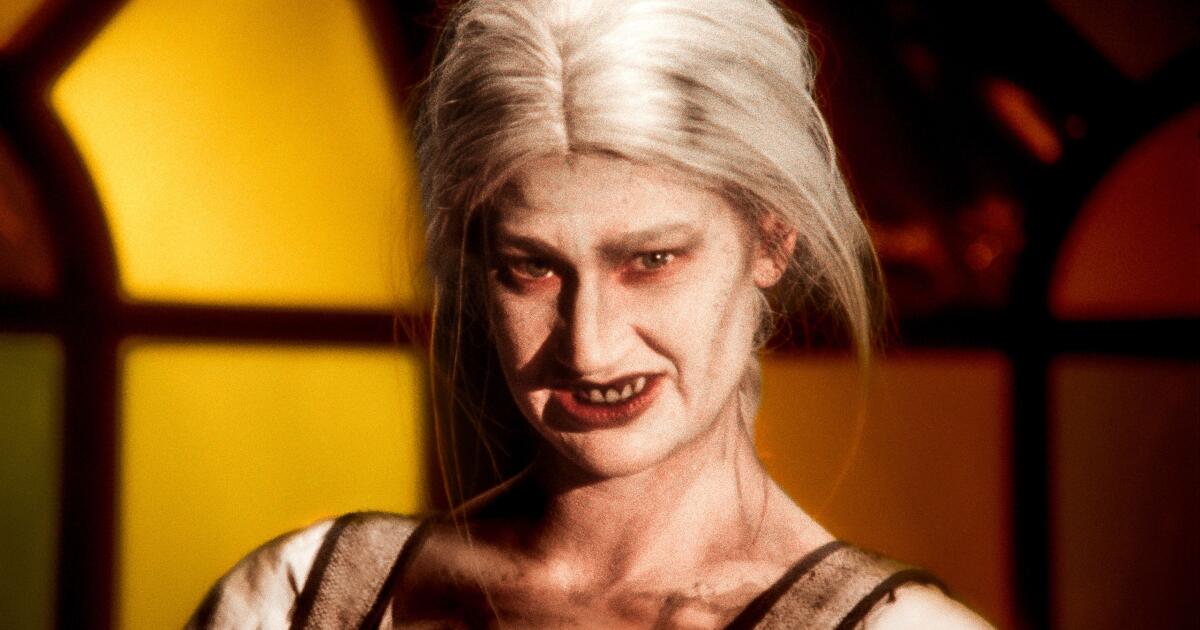
“I want to lick your stink … I want to taste your foulness … I want to shower in your rot … I want to feast in your fetid funk.”
Have more romantic sweet nothings ever graced the screen? Scripted by Grace Glowicki and Ben Petrie (partners in life and in filmmaking), these words of seduction are music to the ears of a lonely Gravedigger (Glowicki), who has been formulating a perfume to cover up her corpse-like stench. What she discovers is that the right one will love her exactly the way she smells, learning that she’s not so pheromonally challenged after all.
Glowicki’s sophomore feature “Dead Lover,” sometimes presented in “Stink-O-Vision,” is one of those entirely singular freakouts that we can thank Telefilm Canada for subsidizing (see also: the Cronenberg family oeuvre, Matt Johnson’s current “Nirvanna the Band the Show the Movie” and many more).
She co-writes, directs and stars in this highly stylized, wonderfully DIY handmade project, beautifully designed with gruesomely gothic sets by production designer Becca Morrin and art director Ashley Devereux. The blend of intentional artifice paired with deep emotion calls to mind other Canadian auteurs like Guy Maddin and Matthew Rankin (“The Twentieth Century”), but Glowicki’s film also exists within another lineage: the feminist Frankenstein film.
The film opens with a quote from Mary Shelley: “There is something at work in my soul which I do not understand.” Her 1818 novel “Frankenstein: or, the Modern Prometheus” has always been a feminist text (despite Guillermo del Toro’s more bro-ey adaptation), grappling with the terrifying power of creating life — and how close that is to death. Feminist filmmakers have drawn out these inherent themes from the book, the most recent and loudest example being Maggie Gyllenhaal’s “The Bride!” But “Dead Lover” hews closer to Laura Moss’ modern medical take, “birth/rebirth,” and even more closely to Zelda Williams’ cute, poppy “Lisa Frankenstein,” in which a young seamstress stitches up a reanimated boyfriend.
Our Gravedigger speaks to us, and to the moon, about her heart’s desire in charming cockney rhyming slang. Her hopes are rather simple and conventional: one true lifelong love and a family. After much rejection, she finally finds her Lover (Petrie) in the cemetery, saving him from a ferocious beast while he mourns his late opera-singer sister (Leah Doz). After the pair consummate their fragrant lust, the Gravedigger is ready to settle down right away.
In order to make her dreams come true, Lover travels to Europe for fertility treatments, where he drowns on a ship, the only thing left of him a finger, delivered to her by fishermen. Our enterprising Gravedigger, a true woman of science, engineers a lizard elixir and regenerates the finger into a long tentacle that eventually demands a body. What better choice than his own sister? But when her wild new Creature (Doz) comes to life, all hell breaks loose, summoning the sister’s jealous, grief-stricken Widower (Lowen Morrow) into an unfortunate love triangle (or square?).
Glowicki is a terrific filmmaker, marshaling her tiny troupe to execute this unique project. Petrie, Doz and Morrow play multiple roles, including a gossipy Greek chorus and the band of merry fisherman (truly an astonishing array of Canadian accent work on display). Her commitment to her singular vision never wavers, but as an actor, Glowicki is truly astonishing. Caked in Halloween makeup and lit with an array of colored gels, Glowicki summons something primal, pure and deeply moving about the lengths one will go to for love, a screech from the depths of her gut.
With a dream-pop soundtrack by U.S. Girls that would be at home in an episode of “Twin Peaks,” “Dead Lover,” in all its stinky, sexy, queer and grotesque glory, is one of the grossest and loveliest films about love I’ve ever seen. This one’s for the horny, hopeless goth inside all of us.
‘Dead Lover’
Not rated
Running time: 1 hour, 25 minutes
Playing: Opens Friday, March 27 at Laemmle Glendale
Hello! I’m Mark Olsen. Welcome to another edition of your regular field guide to a world of Only Good Movies.
In another busy week for new releases, the horror-comedy “Forbidden Fruits” is among the standouts. Having just premiered at SXSW, it is the feature debut for director Meredith Alloway, who co-wrote the screenplay with Lily Houghton, adapting Houghton’s play. Diablo Cody is a producer on the film, and the movie shares a sensibility with her beloved “Jennifer’s Body.”
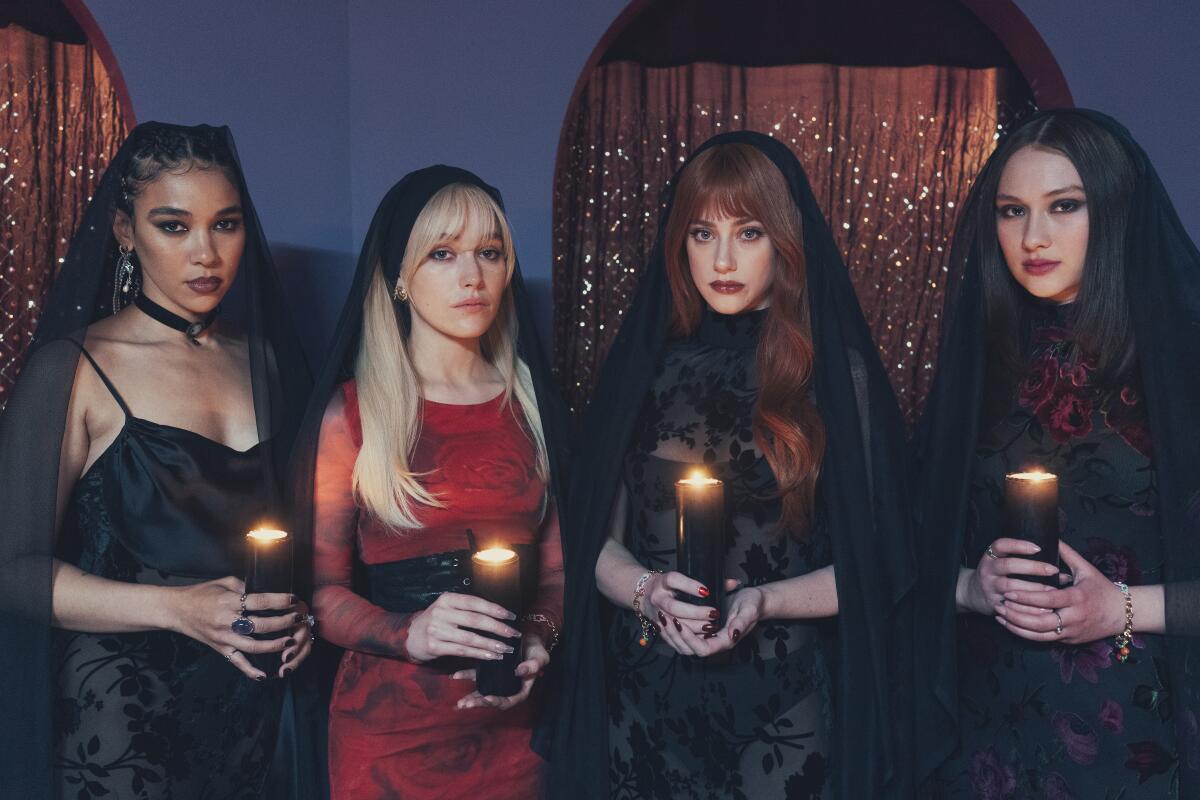
Set at a Texas shopping mall, the plot follows a group of female employees at a boutique who are secretly a coven of witches after hours. They bring a new employee into their fold. Lili Reinhart, Lola Tung, Victoria Pedretti and Alexandra Shipp star.
Alexandra Shipp, from left, Victoria Pedretti, Lili Reinhart and Lola Tung in the movie “Forbidden Fruits.”
(Sabrina Lantos / Independent Film Co. / Shudder)
Though Katie Walsh gave the film a mixed review, declaring it “essentially the fast fashion of girly pop horror,” the film casts a spell when it is working.
Pedretti in particular is a standout, and Malia Mendez spoke to her about the role. “It asks a lot of people to try to step into a world like this one,” Pedretti said of the film’s knowing, campy style. “And as nerve-racking as it may be to take that big swing, you gotta take the big swing.”
Also opening in L.A. this week is Sofia Coppola’s “Marc by Sofia.” The director’s first documentary, it’s more a snapshot than a definitive portrait of the life and career of her longtime friend, fashion designer Marc Jacobs, as he prepares for his spring 2024 collection. While not as in-depth or revealing as one would hope, the film has a warmth and charm all its own. And anyone feeling nostalgic for ’90s New York after watching the recent TV series “Love Story” will get a buzz from this too.
Larry Karaszewski on ‘Last Summer’
Richard Thomas, left, Barbara Hershey and Bruce Davison in the movie “Last Summer.”
(Warner Archive)
The American Cinematheque at the Aero Theatre on Sunday will host the world premiere of a new restoration of the theatrical version of 1969’s “Last Summer,” directed by Frank Perry from a screenplay by Eleanor Perry. Actors Barbara Hershey and Bruce Davison will be there for a Q&A moderated by screenwriter Larry Karaszewski.
“This is one of the holy grails for movie nerds,” says Karaszewski in a recent phone interview. The restoration happened in no small part thanks to his persistent and vocal fandom of the film. Best known for his work with writing partner Scott Alexander (including “Dolemite Is My Name” and “Ed Wood”) and currently a governor in the academy’s writer’s branch, Karaszewski is also a pillar of the repertory scene around Los Angeles, frequently moderating Q&As and an avid moviegoer.
Richard Thomas, left, Barbara Hershey and Bruce Davison in the movie “Last Summer.”
(Warner Archive)
“Last Summer” follows three teenagers (Hershey, Davison and Richard Thomas) whiling away the summer at the beach on New York’s Fire Island. As a certain psychosexual energy escalates among them, winding each other up, they turn their attention to a younger girl (Catherine Burns) and torment her in increasingly sadistic ways.
For her performance, Burns was nominated for an Oscar for supporting actress, while Hershey briefly changed her last name to Seagull after a bird was accidentally injured on set.
In his original July 1969 review, The Times’ Charles Champlin called “Last Summer” “a compelling and disturbing movie, with moments of quite extraordinary power and poignance.”
“This was a movie that people who saw it were just fascinated by,” says Karaszewski. “Even though it came out in ’69, it feels like an important ’70s-style movie, a really rough youth film that used the new freedom that cinema had at that time. But you couldn’t see it.”
Director Frank Perry and screenwriter Eleanor Perry during production of “Last Summer.”
(Warner Archive)
Over time, the rights to the movie changed hands, elements went missing and it became a rarity. Due to an intense rape scene, the movie was also briefly released to some theaters with an X-rating, though Karaszewski says the differences to the R-rated version are minimal — a matter of a few frames and a single word. Released on VHS, “Last Summer” has never been on DVD or Blu-ray. (The Warner Archive label will release a disc of the new restoration later this year.) An edited TV version of the film has circulated, and the last few times “Last Summer” has shown in Los Angeles, it has been from a print discovered at an archive in Australia.
Karaszewski has long had a fascination with the film, one that was only fueled by its inaccessibility.
“It became famous as just, ‘Oh, that’s the movie Larry champions, that’s the movie that Larry won’t stop talking about,’ ” he says. Karaszewski jokes that he won’t know what to do with himself now that his longtime obsession with seeing the film revived has been fulfilled.
“I’ve been championing it so long,” he says. “It could have been just like, ‘Oh, Larry’s a little crazy. He loves this movie.’ And that would’ve been fine too. I’m a person that feels like every movie should have its day in the spotlight.”
The complete Akira Kurosawa in 35mm
An image from Akira Kurosawa’s “Ran.”
(Rialto Pictures)
On Saturday, the Academy Museum launches “Darkness and Humanity: The Complete Akira Kurosawa,” a comprehensive retrospective of the Japanese filmmaker’s 30 existing features, all of which will screen in 35mm. The series opens with two of Kurosawa’s best-known films, “Seven Samurai” and “Rashomon.” Other highlights include “Throne of Blood,” “Ikiru,” “Hidden Fortress,” “Stray Dog,” “High and Low,” “Dreams” and “Ran.” This is a rare opportunity to take in the true breadth of Kurosawa’s work.
Writing about the filmmaker in 2009 to commemorate the centennial of his birth, Dennis Lim said, “The wonder of Akira Kurosawa’s 50-year career is that it was at once remarkably varied and satisfyingly coherent …. But the constant in his films was the principle of heroism, not as a vaporous ideal but a way of life, an awareness of individual agency and personal responsibility in a world that does not always reward or even allow heroic behavior.”
Toshiro Mifune in Akira Kurosawa’s “Yojimbo.”
(Janus Films)
Kurosawa’s influence on other filmmakers around the world has been widely acknowledged. Upon the news of Kurosawa’s death, Steven Spielberg proclaimed him “the visual Shakespeare of our time” and added, “I am deeply saddened by Kurosawa’s death. But what encourages me is that he … is the only director who right until the end of his life continued to make films that were recognized as, or will be recognized as, classics.”
In 1985, while in Los Angeles for a screening of his film “Ran,” Kurosawa described his own work by saying, “I just make up stories and film them. When I am lucky, the stories have a lifelike quality that makes them appealing to people and the film is successful.”
Points of interest
‘To Sleep With Anger’ in 35mm
Actor Danny Glover and director Charles Burnett during production of “To Sleep With Anger.”
(Samuel Goldwyn Company / Photofest)
To celebrate the release of Ashley Clark’s new book “The World of Black Film: A Journey Through Cinematic Blackness in 100 Films,” the UCLA Film and Television Archive will screen Charles Burnett’s 1990 drama “To Sleep With Anger” in 35mm at the Billy Wilder Theater on Sunday. Clark will be there for a book signing, and Burnett will join him for a Q&A.
Recently included as part of The Times’ ranked list of the 101 best Los Angeles movies, “Anger” stars Danny Glover in a galvanizing performance as Harry, an old friend from the South who arrives for an unexpected visit to a family in South Central L.A., upending their lives.
In his book, Clark describes the film as “a singular work with a distinct yet tantalizingly hard-to-pin-down performance from Danny Glover, who, as the inscrutable Harry, flickers between menace and charm, using all of his six-foot-four-inch stature to dominate the frame.”
In a 1990 Times story by David Wallace, Burnett spoke about how the film was meant to evoke a sense of Black cultural history, saying, “I didn’t appreciate the [storytelling] tradition until it disappeared. I had a sense of who I was because of that experience. … This film was an attempt to go back and deal with the past. To tell a story about a story.”
Added Glover: “I think there is a little of Harry in all of us. We’re constantly in conflict between the good side and the other. Harry’s involvement with the dark side is not that uncommon.”
Clark will also appear at the Academy Museum on Monday for the world premiere of Ngozi Onwurah’s restored 1995 film “Welcome II the Terrordome.”
‘Thank You for Smoking’
Aaron Eckhart in the movie “Thank You for Smoking.”
(Dale Robinette / Fox Searchlight Pictures)
On Saturday, Vidiots will host a 20th anniversary screening of Jason Reitman’s debut feature “Thank You for Smoking” in 35mm, with the filmmaker in attendance for a Q&A. Adapted by Reitman from a novel by Christopher Buckley, the film is media satire that follows the misadventures of a lobbyist (Aaron Eckhart) for Big Tobacco. The cast also includes Katie Holmes, Robert Duvall, William H. Macy and Sam Elliott.
In his original review, Kenneth Turan called the movie “that rare film that actually has a sense of humor,” before adding, “Reitman’s script and direction retain the novel’s rhythms and black comic sensibility while at the same time eliminating and/or rearranging large chunks of its plot. He’s also figured out a way to make the story more conventionally audience-friendly without losing the extraordinary bite that made the book so successful.”
I recall an afternoon spent on the Fox lot talking to Reitman and Buckley together for a piece I wrote in 2006. The political climate that the film examines, one of extreme partisanship, has only heightened in the years since.
“The compliment the book always got,” said Reitman at the time, “which I thought was wonderful, was Democrats always thought it was theirs and Republicans always thought it was theirs. Like all good satire, the book was a mirror. … It doesn’t feel like it’s coming from one way or the other. It’s ridiculing both, and hopefully the film does the same thing.”
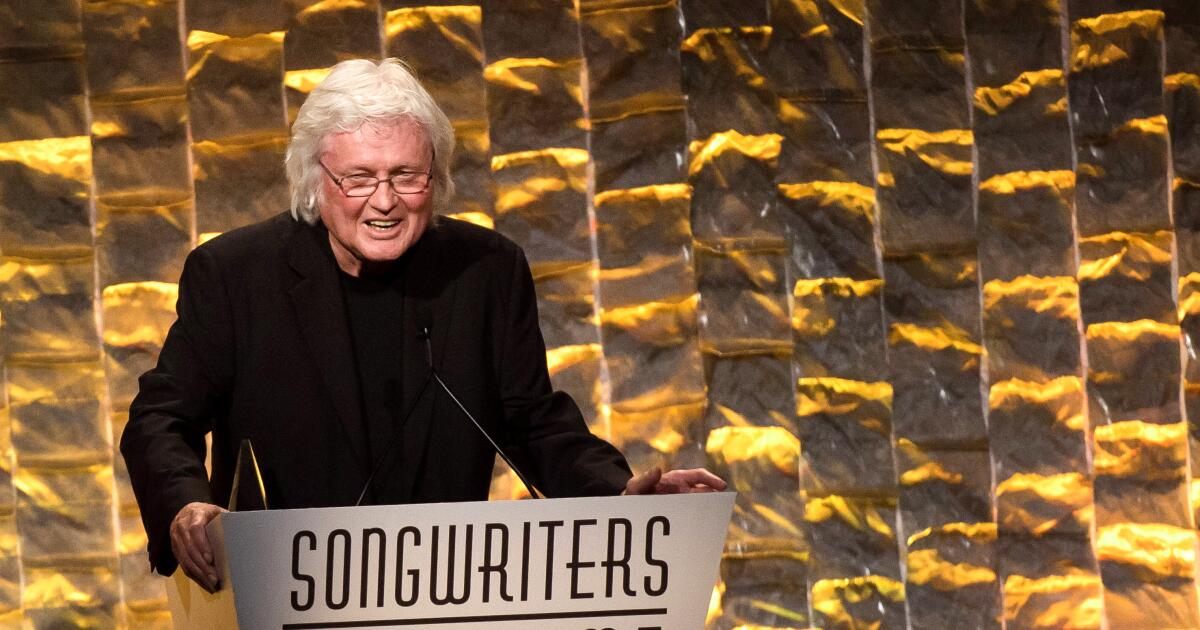
Chip Taylor, the songwriter behind the Troggs’ rock hit “Wild Thing” and actor Angelina Jolie’s uncle, has died. He was 86.
Taylor died Monday in hospice care, according to Page Six, citing Taylor’s longtime friend, producer Billy Vera.
Taylor, born James Wesley Voight in Yonkers, N.Y., in 1940, was actor Jon Voight’s brother, but built a formidable music career outside of his famous sibling’s shadow.
As a teen guitarist, he joined the band Town & Country Brothers, which toured with Neil Sedaka. His songwriting submissions to RCA Records impressed the artist Chet Atkins, who championed his tunes in the country music scene. Taylor also wrote out of the same 1650 Broadway building in New York where Gerry Goffin and Carole King were based.
In 1966, Taylor penned “Wild Thing” for the garage-rock band the Troggs, which rocketed to No. 1 and kicked off a new mode for rock ’n’ roll that favored grungier musicianship and more overt sexuality. “That upstrum, there? You wouldn’t play that if you were properly schooled,” he told the Independent in 2023. “I did it because I didn’t know any better. I ended up with this innocent energy. It came out of me looser that way, the feeling just flew out of me.”
Jimi Hendrix famously performed the song at Monterey Pop in 1967 in a fever of sexual tension (it featured in the 1968 concert documentary), making it an era-defining rock hit and Taylor’s most famous tune. He also wrote “Angel of the Morning,” popularized by Juice Newton and Merrilee Rush, and penned songs performed by Willie Nelson, Linda Ronstadt, Johnny Cash and Janis Joplin, among many others.
Taylor’s career pivoted in the ’80s, when he became a professional gambler and a rogue on the Atlantic City casino strip. Yet he had a later career resurgence in the 2000s, after he met fiddle player Carrie Rodriguez at the South by Southwest Music Conference in Austin, Texas. The pair released several acclaimed alt-country albums together. Taylor’s 2012 single “F— All the Perfect People” prominently featured on the soundtrack for the hit Netflix series “Sex Education.”
Taylor said the song was inspired by performing concerts for prisoners, some of his favorite gigs. “I’ve always liked talking to prisoners because, for the most part, they’re extremely honest,” he said. “I never met a prisoner I didn’t have empathy for. I wrote that at 6 a.m. one morning when I realized I had some shows for prisoners coming up and I wanted to write something that was just for them.”
Taylor’s final album was 2025’s “The Truth and Other Things.” He is survived by several children and grandchildren. His wife, Joan Carole Frey, died in 2025.
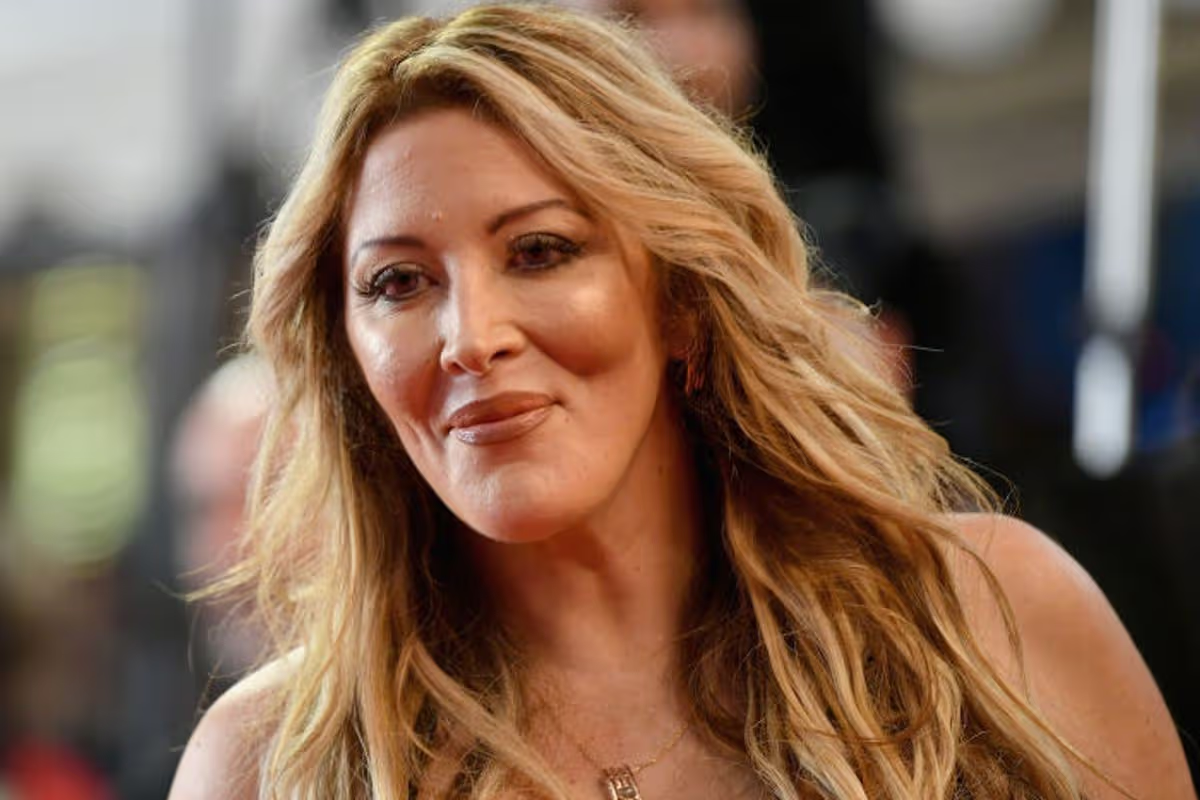
Reality star Loana Petrucciani, who shot to fame after having sex in the pool while appearing on the French edition of Big Brother, has been found dead at her home
Daniel Bird Assistant Celebrity and Entertainment Editor
21:59, 25 Mar 2026Updated 22:16, 25 Mar 2026
Loana Petrucciani was found dead at her home(Image: Getty Images)
A TV star who became known for having sex in the Big Brother pool has been found dead. Loana Petrucciani, who won the first series of Loft Story France 1, was just 48-years-old.
It’s reported that the reality star, simply known as Loana, was found dead at her home in Nice. Prosecutor Damien Martinelli stated that an investigation has since been opened to “find the causes of death”, before stating the TV star had been dead for “several days”.
Loana gained fame in 2001 when she entered the Loft Story house, living with strangers for ten weeks under constant surveillance from cameras, mirroring the Big Brother format. In the wake of her death, TV network M6 said: “An iconic figure of the first season of ‘Loft Story’, she will forever remain a personality who profoundly marked an entire generation of viewers,” before praising her for “her pontaneity, sensitivity and authenticity.”
Ensure our latest headlines always appear at the top of your Google Search by making us a Preferred Source.Click here to activateor add us as your Preferred Source in your Google search settings.
Alexia Laroche-Joubert, CEO of Loft Story’s production company Banijay France, said: “It is with immense emotion that I learned of Loana’s passing. Our paths crossed 25 years ago, and I am honoured to have shared so many memories with her. I witnessed her successes and her struggles.
“My thoughts are, of course, with her mother, Violette, her daughter, her brother, and the other housemates who were part of this adventure. Let us never forget that behind her public image was a sensitive and extremely intelligent woman.” Benjamin Castaldi, presenter of Loft Story said: “There are some faces we never forget. And hers, Loana’s, is part of our collective history.
“Thought we would watch a show. In fact, we were witnessing a revolution. The first one. The truth. The one that changed television forever… and maybe also our view on humans. Loana was not a character. She was a woman. A real one. With its cracks, its sweetness, its fragility in the open sky. And that’s precisely why we loved it.
“But that’s also why we dropped her. We applauded his light… not protecting his shadow. His authenticity has been consumed… without measuring the price she would pay. We’ve watched her live, love, fall… without ever really wondering who would pick her up after. The truth is, we’re all a little responsible. Because we all watched. Cuz we all commented Because we’ve all, at one point, looked away when it got too hard.
“She embodied raw innocence in a world that didn’t forgive anything. And we couldn’t match what she gave us. Today, there’s only a television memory. There’s still an emotion. Embarrassment. A regret. The one of not being human enough to someone who deeply was. So yeah… We lived a revolution together. But maybe we forgot, along the way, the important thing: Behind the phenomenon… There was a woman.”
It was on Lost Story that Loana became known for sleeping with co-star Jean-Edouard Lipa, sparking outrage across the country. Despite the scandal, she walked out of the house as the champion and was welcomed as she paraded down the Champs-Élysées.
With her newfound fame came magazine deals, gracing the cover of Elle, photographed by Jean-Baptiste Mondino and her deeply personal memoir several months later.
In her memoir, the Cannes-born star opened up about the highs and lows of her career in the spotlight, as well as previous suicide attempts. Speaking about entering Loft Story, she said previously: “I went there feeling very insecure. I was worried. The casting director said to me, ‘Aren’t you ashamed to come dressed like that?’ I took it very badly, especially since he was asking everyone that question.”
She added: “He asked me to flirt with the camera: I don’t know how to do that, it’s impossible. I blushed, I stammered. Then they asked me to dance and sing. I left and thought to myself, ‘I didn’t show them anything.'” She said of her fame: “There are two women inside me. The public loved both. Before, we saw a lot of the extroverted Loana who danced on the catwalks, but we didn’t see the other side, because she was too shy to express herself. But, in Loft Story, we saw that there was another side to her.”
In the early 2010s, Loana attempted to take her own life, which left her in a coma. Her family and friends later discovered that she had made several attempts on her life prior to this.
If you’re struggling and need to talk, the Samaritans operate a free helpline open 24/7 on 116 123. Alternatively, you can email jo@samaritans.org or visit their site to find your local branch
If you have been affected by this story, Cruse Bereavement Support offers free help to make sense of how you are feeling. Click here for their website or call 0808 808 1677.
Valerie Perrine, the Las Vegas showgirl turned Oscar-nominated actor best known for playing Lenny Bruce’s wayward wife Honey Harlow in “Lenny” and Lex Luthor’s secretary Eve Teschmacher in the 1978 and 1980 “Superman” films, died Monday morning. She was 82.
Perrine’s death was confirmed by Stacey Souther, her close friend and the director of the 2019 documentary “Valerie,” which followed the star’s debilitating battle with Parkinson’s disease.
“It is with deep sadness that I share the heartbreaking news that Valerie has passed away,” Souther announced on social media. “She faced Parkinson’s disease with incredible courage and compassion, never once complaining. She was a true inspiration who lived life to the fullest — and what a magnificent life it was. The world feels less beautiful without her in it.
“I love you, Valerie. I’ll see you on the other side.”
Souther also shared a GoFundMe link and a note that Perrine’s final wish was to be laid to rest at the Hollywood Hills Forest Lawn Cemetery. “After more than 15 years of fighting Parkinson’s, her finances are exhausted.”
Perrine was born Sept. 3, 1943, in Galveston, Texas, to parents Renee and Kenneth, a dancer and a U.S. Army lieutenant colonel. A military brat growing up, Perrine moved frequently and spent time in Japan, Paris and Scottsdale, Ariz.
She attended the University of Arizona, but her academic aspirations were short-lived. She skipped town, trading her textbooks for a feather headdress and G-string in Las Vegas. Soon she was a lead dancer in the star-spangled Lido de Paris show at the Stardust Hotel. She told the New York Times in 1974 that she spent some of her $800 weekly paycheck on experimenting with drugs: acid, mescaline, peyote, cocaine — you name it, she tried it.
Eight years after her foray into Vegas showbiz, her movie career kicked off unexpectedly during a visit to Hollywood. An agent at a friend’s dinner party took a liking to her, she told the Los Angeles Times in 2013. He asked if she had any publicity photos. The only one she had was in her topless Lido costume.
The sexy picture made its way to the desk of Monique James, the head of new talent at Universal. “She called me in and asked if I had ever acted before and I said ‘no,’” Perrine said. “She arranged a screen test.”
Paul Monash, the producer of “Slaughterhouse-Five,” which was based on Kurt Vonnegut’s acclaimed novel about World War II and time travel, directed the screen test. “They told me to wear a bikini because they wanted to see what my body looked like. I didn’t have a bikini. I wore my G-string and that was it.”
“I had been working in Vegas all the time and had been on the beach in St. Tropez, so being [naked] didn’t mean anything to me,” she told The Times. “It was my attitude that sparked his interest and the way I read the line, ‘Oh, you’re a moon child.’ He hired me.”
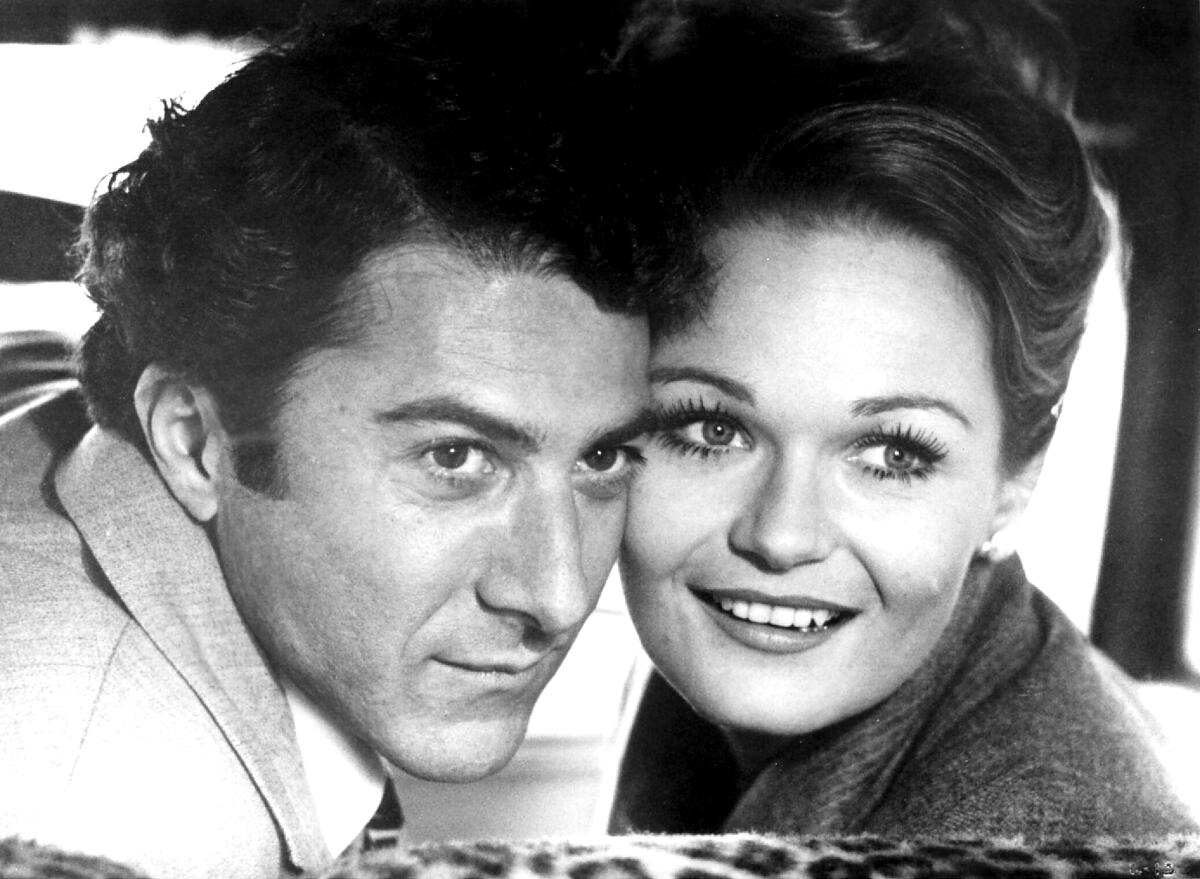
Dustin Hoffman as Lenny Bruce, left, and Valerie Perrine as Honey Harlow in a scene from the 1974 movie, “Lenny.”
(United Archives via Getty Images)
Soon after, she portrayed the love interest of NASCAR driver Junior Johnson opposite Jeff Bridges in the 1973 sports drama “The Last American Hero.” Perrine and Bridges dated briefly while working on the film. The same year she became the first woman to bare her breasts on television in the PBS telefilm “Steambath.”
Bridges described Perrine in the 2019 documentary “Valerie” as having a “real sense of fun and play.”
“She was excited about life and excited where she was and it’s a contagious feeling,” he said. “Growing up in a military family and traveling all over the world made her a really interesting person and as an actress, she had the ability to bring all of that into her performances.”
In 1974, she tapped into her showgirl background to portray the drug-addled stripper Honey Harlow opposite Dustin Hoffman as Lenny Bruce in the biopic “Lenny.” Her performance garnered rave reviews. She nabbed the lead actress award at the Cannes Film Festival, BAFTA named her most promising newcomer and she was nominated for an Oscar.
Perrine was perhaps best known for her portrayal of Eve Teschmacher, Lex Luthor’s secretary and love interest in the 1978 “Superman” starring Christopher Reeve, Gene Hackman and Marlon Brando. She played the role again in 1980’s “Superman II.”
She also starred in the 1980 disco flick “Can’t Stop the Music” alongside the Village People and Caitlyn Jenner. The movie flopped and Perrine was so mortified by the film’s poor reception that she moved to Europe. She didn’t officially retire from acting until around 2010, and by 2015 she had gone public with her Parkinson’s disease diagnosis.
The 2019 documentary short “Valerie,” directed by Souther, dropped the veil on Perrine’s battle with the illness, with her loss of bodily autonomy captured in the film. She said “the shakes” caused her to struggle and the level of care she required made her feel like a baby.
Still intact, though, were her sharp wit and self-deprecating sense of humor. In the film a doctor explains that there are times when physicians aren’t able to pin down a diagnosis or there are multiple diagnoses.
“The doctors don’t know what’s going on with me,” Perrine says. “They can’t figure it out.”
“What do you think it is?” the doctor asks Perrine.
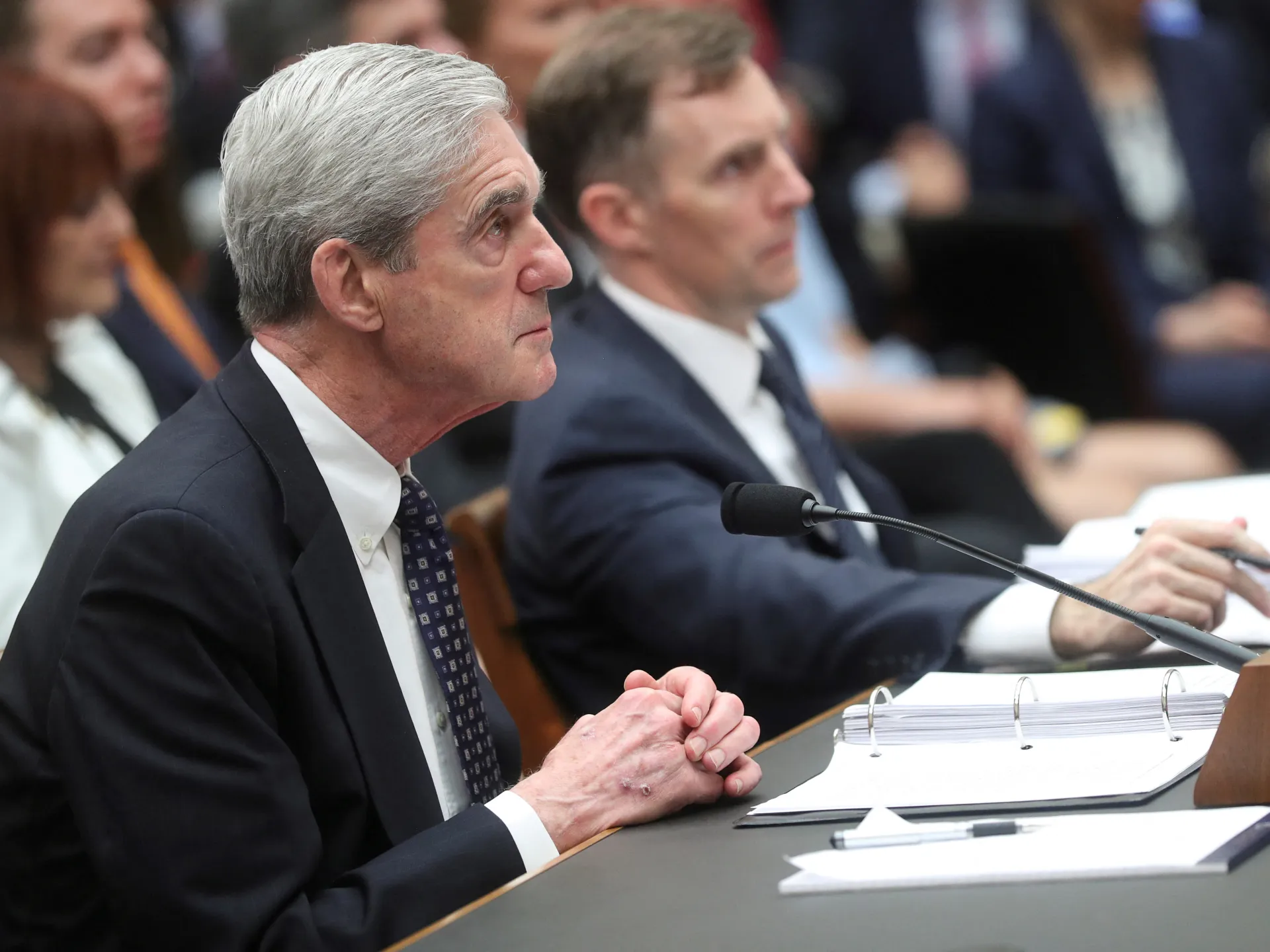
Former FBI chief Robert Mueller, who probed the alleged Russian interference in the 2016 United States election, has died at age 81.
“With deep sadness, we are sharing the news that Bob passed away” on Friday night, his family said in a statement Saturday.
“His family asks that their privacy be respected.”
Mueller was appointed as director of the FBI by then-President George Bush in September 2001, a week before the 9/11 attacks that would push him into the centre of a national crisis.
He became the key figure behind changing the FBI from combating crime to now countering national security risks following the attack on New York’s World Trade Centre.
In 2013, Mueller stepped down from the bureau and later by 2017 was appointed as special counsel to oversee the Justice Department’s probe into possible Russian interference in the election, which saw Donald Trump secure his first term over Democratic nominee, Hilary Clinton.
Following the announcement of his death, Trump took to his Truth Social platform to write: “Robert Mueller just died. Good, I’m glad he’s dead. He can no longer hurt innocent people!”
Jordan Wright was found dead in Thailand aged 33Credit: instagramHaunting CCTV showed him running down a streetCredit: Asia Pacific Press via ViralPressHe was seen running around frantically before being discovered in a drainage canalCredit: Asia Pacific Press via ViralPress
Chilling CCTV captured the beloved TV personality running erratically past a truck before taking a sharp left turn.
The clip was timestamped to 11:25pm on March 12 – about 36 hours before he was found dead on Saturday.
Wright, 33, appeared to be somewhat disoriented and panicked as he rushed through the hotel complex.
He even grabbed onto a white pickup truck to help propel himself forward as he jolted away while turning.
Police now fear he may have been trying to lose someone as he sprinted through the streets of Phuket.
Lieutenant Colonel Sutthirak Chuthong of Choeng Thale district station has refused to rule out foul play.
He said: “The circumstances leading up to the death are quite unclear. It is possible that other people were involved.”
Wright was weaving erratically through the Hotel COCO Phuket Bangtao grounds in the video.
Authorities have also confirmed that they will be reviewing CCTV again throughout Friday in order to get any more details from the haunting clip.
The grainy night-time footage has raised questions over what Wright was doing in the moments leading up to his death.
The CCTV shows him pacing back and forth before suddenly bolting out of the complex again and vanishing into the darkness beyond the hotel perimeter.
From there, his final movements become even more disturbing.
Wright is believed to have sprinted across rough, uneven fields surrounding the hotel before leaping down a 10ft creek.
He is then thought to have splashed through a shallow stream and scrambled towards a nearby construction site.
Wright grabbed onto a white truck as he took a sharp leftCredit: Asia Pacific Press via ViralPressThe drainage canal where Wright was foundCredit: Asia Pacific Press via ViralPress
That site, which is a desolate, half-built area with no CCTV, would become the place where his body was found.
Two days later, a Myanmar worker harvesting morning vegetables made the grim discovery – around 300 metres from his hotel.
A hotel insider revealed he had been staying alone and had no visitors.
They said: “He would go out at night like other guests. There was nothing unusual until we could not find him when he was due to check out.”
Records show Wright checked into the hotel alone and was due to leave on March 13, but never showed up.
March 19 (UPI) — A 20-year-old student from University of Alabama reported missing in Barcelona, Spain, after an evening at a nightclub was found dead Thursday, authorities announced.
Barcelona police said the body of James “Jimmy” Gracey of Elmhurst, Ill., was found on Somorrostro beach near the Shoko Barcelona nightclub where he was last seen, a representative from the Barcelona police said in a statement to CNN.
“Everything points to it being an accident, not a criminal act,” the statement said.
CBS News reported slightly different details about where Gracey’s body was found, saying authorities recovered his body after sending out boats, divers and drones to search the sea.
The El Periódico newspaper in Spain reported that sources told them Gracey’s wallet was found floating in the sea, but officials have not confirmed it.
Gracey traveled to Spain for spring break to visit friends studying abroad. His family said he visited Shoko Barcelona, a nightclub near the Villa Olimpica area, Monday and disappeared early Tuesday morning after being separated from his friends at the club.
The family said he was last seen wearing a white T-shirt, dark pants that were likely joggers and a gold chain with a rhinestone cross. He is 6 feet 1 inches tall and about 175 pounds.
Gracey’s family released a statement after news of his discovery was released.
“We are so grateful for the kindness and concern that has been shown for our family during this incredibly difficult time,” the statement read. “We have made the decision to pause media interviews at this time to focus on being together and caring for one another. Thank you for respecting our privacy and holding our family in your thoughts.
Before his body was found, Gracey’s aunt, Beth Marren O’Reilly, told NBC News that his “parents got a phone call that his phone was picked up, and that’s what drove them to be worried.”
Shoko Nightclub told CBS News Chicago that it has given the security video of that night to local police.
Cavin McLay, junior and president of the university’s Theta Chi fraternity, said he learned from a friend that Gracey was missing, NBC reported. He said he was told that a group at the club got separated, “and that was the last time they saw him.”
“My heart sank to my stomach. It’s definitely not a good text to wake up to,” he said.
The group that Gracey was out with said they didn’t have any encounters that made them worried for their safety before Gracey disappeared, McLay told NBC.
McLay said he was not staying with the same group of friends as Gracey and that there are about 10 friends visiting for spring break.
“Jimmy is a kind, responsible and devoted son and brother,” his parents, Taras and Therese Gracey, said in a statement. “It is completely out of character for him not to check in with family and friends.”
“He’s a great big brother, he’s a great son, he’s a great nephew, he’s just very beloved,” O’Reilly said. “He’s a very responsible kid, which is why we’re very worried. This is pretty out of character for him not to be in touch with friends and family.”
The U.S. Department of State is helping the family, and Sen. Dick Durbin, D-Ill., said he has been in touch with the family.
“UA staff are in touch with the family and those associated with them to offer support and assistance in any way possible,” a spokesperson from the university said.
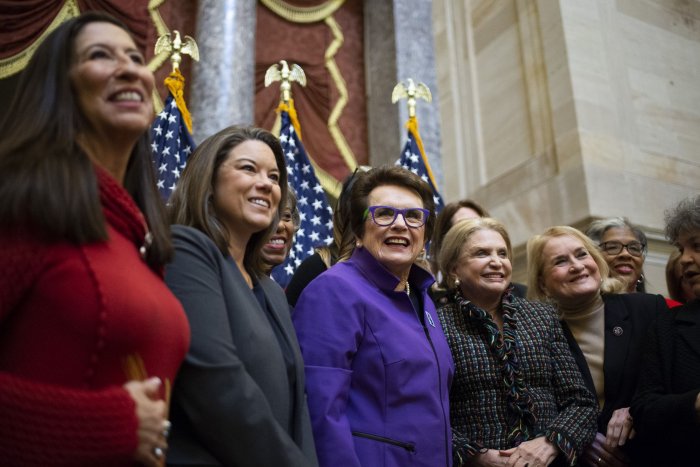
Founder of the Women’s Tennis Association and tennis great Billie Jean King (C) smiles with representatives after speaking during an annual Women’s History Month event in celebration of the 50th anniversary of Title IX in Statuary Hall at the U.S .Capitol in Washington on March 9, 2022. Women’s History Month is celebrated every March. Photo by Bonnie Cash/UPI | License Photo
Rainelle Krause, a coloratura soprano who went viral for singing a signature aria while hanging upside down from aerial silks, has died after a short hospitalization, her family announced “with immense sadness” Tuesday on social media. She was 37.
“Rainelle was a force in our lives, a brilliant talent defined by grit, fearlessness, curiosity, intelligence, integrity, and resilience,” the family said in a statement on Instagram. “Onstage, her voice matched the breathtaking power of her spirit. Offstage, she was a loving, caring soul whose vibrant energy lit up everyone around her. Our hearts are full from the years we shared, even as we’re shocked that her skyrocketing career was cut short.”
The family gave no further details about the circumstances of her death but said they were grateful to have Krause’s “preserved performances” to revisit. They said they would be planning a celebration of life “at a later date” but wanted to share the sad news now with friends and fans.
“Rainelle always gave her very best, pouring her heart into her art and those she loved,” the family said. “The best way we can honor her memory is by living her values every day. We encourage you to keep her memory alive by sharing her beautiful performances.”
Krause, whose website dubbed the Queen of the Night in “The Magic Flute” as her signature role, debuted in that role at the Metropolitan Opera over the holidays. She did the same last fall at Opera Atelier in Toronto.
“Although we knew Rainelle for only a matter of months, we will never forget her astonishing talent. We were awed by her bravery and daring and deeply moved by her willingness to draw all of us into her circle of friends,” Opera Atelier said Wednesday on social media. “Beautiful, generous, talented and kind, Rainelle is irreplaceable and will always hold a unique place in our memories.”
Born in Florida, Krause graduated from Indiana University’s Jacobs School of Music with a bachelor’s in music and a master’s degree in music in vocal performance. The English National Opera said she trained with the Sankt Goar International Music Festival and Academy in Germany, the OperaWorks Advanced Artist Program in Los Angeles, Opera Las Vegas, the Taos Opera Institute and Opera Nova Costa Rica.
She performed with opera companies in Nashville and Atlanta, and in Texas she sang with the Dallas Opera, with symphony orchestras in Irving and Plano, and with a master chorale in Amarillo. She was set to debut with the Santa Fe Opera in May.
Internationally, Krause’s “The Magic Flute” performances included gigs in Berlin, Copenhagen and elsewhere. Roles outside of the Queen of the Night included the title role in “Lucia di Lammermoor,” the princess in “The Snow Queen,” Zerlina in “Don Giovanni” and Pat Nixon in “Nixon in China.”
As for her viral acrobatic performances, those appeared to have been on hold in the year before her death.
“I can’t even begin to express how much I miss aerial work,” Krause wrote last March on social media. “I’ve been dealing with horrendous shoulder impingement for months, I’ve been in physical therapy since last summer, I’m continuously learning new ways to attempt to build strength and fluency in order to support my VERY hypermobile joints.
“I am in pain most days,” she continued. “But I’m not giving up, I’m seeing incremental improvements, and I will fly again — this time working in concert with the body I have, instead of forcing myself to ‘just put in the work’ with all the wrong pathways.”
An acclaimed author and historian of the libertarian movement fell to his death last week, his employer confirmed.
The body of Brian Doherty, 57, senior editor of the libertarian magazine Reason, was found Thursday “after a fall” in the Battery Yates park portion of the Golden Gate National Recreation Area, the publication wrote.
The National Parks Service law enforcement agency confirmed it responded to an incident at Battery Yates on Thursday “involving a male visitor who reportedly fell from the cliffside into the water.”
“The individual was recovered and pronounced dead,” said Scott Carr, parks service spokesperson, in an email. “We do not have any further information to share at this time.”
The Golden Gate Bridge is seen from the Fort Baker Marina in the Golden Gate National Recreation Area in San Francisco. Doherty was found in the Battery Yates park portion of the recreation area.
(Los Angeles Times)
Doherty was the author of several books, with Reason saying his most notable work was the 2007 study “Radicals for Capitalism: A Freewheeling History of the Modern American Libertarian Movement.”
“Doherty has rescued libertarianism from its own obscurity,” the Wall Street Journal wrote of the work, “eloquently capturing the appeal of the ‘pure idea.’”
Libertarianism’s role in gun control and the courts was the subject of his works, and Doherty had no shortage of admirers.
Loren Dean, chair of the Libertarian Party of California, said it was Doherty’s work at Reason that brought him into the liberty movement.
“Brian Doherty was the best kind of libertarian: one who holds true to the principles of liberty as they are,” Dean said in an email. “He was a tireless champion of both gun rights and police reform who wrote books on both [former U.S. Rep.] Ron Paul and Burning Man; his work did not sit on either the ‘left’ or ‘right’ side of the authoritarian box, but delightfully outside that tired frame, where libertarian principles truly sing.”
“What I liked most about Brian was his abiding interest in things happening on the margins of American culture, politics, and thought, and his deep appreciation for the prodigious bounty that markets deliver reliably and without moralizing,” Gillespie wrote in his farewell to Doherty, who had many opinion pieces published in The Times.
Far from just heady subjects, Doherty covered “both libertarian and whimsical” subcultures, according to the obituary, including New Hampshire’s Free State Project and the Seasteaders, a growing community of individuals dedicated to living on the seas.
The Seasteading Institute tweeted its condolences and noted the group had “appreciated his coverage of seasteading over the years.”
Doherty was a native of Queens, majored in journalism at the University of Florida and joined the college’s libertarian group in 1987, according to Reason’s obituary.
He moved to Los Angeles in the mid-1990s and joined a group known as the Cacophony Society, a gang who “inspired or created phenomenon ranging from the novel/movie Fight Club to urban exploration, billboard alteration, the Yes Men, flash mobs, and ‘Santa Rampages,’” according to the obituary.
One of those projects translated into the formation of the annual Burning Man festival, the obituary stated. Doherty later chronicled the famed artsy, hippie-like festival in his book “This Is Burning Man.”
“Libertarians talk a lot about freedom and responsibility. Brian embodied both,” Reason Editor-in-Chief Katherine Mangu-Ward said in his obituary. “His weird, colorful life — filled with comics and festivals and music and books — was a model of life lived freely and openly.”
Kiki Shepard, the actor and entertainer best known for co-hosting the syndicated variety show “Showtime at the Apollo,” has died. She was 74.
LaShirl Smith, a representative for Shepard, confirmed her client’s death, writing in an Instagram post Tuesday that the loss “hurts an awful lot.” Shepard died Monday in Los Angeles after a heart attack, Smith confirmed to TMZ. On Tuesday, Smith honored Shepard with a video collage of their shared moments over the years, lamenting she will no longer be able to speak with her friend “three/four times a day everyday at least for an hour or two.”
“Rest easy cousin, heaven got a good one,” Smith said in her post.
The Texas native, born in July 1951, co-hosted “Showtime at the Apollo” from 1987 to 2002. During her tenure, she shared the stage with a variety of co-hosts including Steve Harvey, Sinbad and Mo’Nique, introducing a range of musical acts at the historic theater in Harlem. The Apollo honored Shepard on its marquee Tuesday, remembering her as a “true Apollo legend.”
“Together, [the hosts] carried the electrifying spirit of our legendary stage into living rooms across the nation, introducing rising stars, celebrating icons, and making millions feel Harlem from wherever they were,” the theater said on Instagram, “reminding the world that we have always been a place where Black excellence takes center stage.”
More than a host, Shepard had an entertainment career that included TV appearances — among them “Baywatch,” “A Different World,” “NYPD Blue” and “Grey’s Anatomy” — and a handful of stints as a choreographer. An alumna of what was then called North Texas State University and Howard University, Shepard also had a minor role in “The Wiz.”
Her television credits include “Thunder in Paradise,” “Baywatch Nights,” “Family Law,” “Everybody Hates Chris” and the 2025 series “Highly Favored.” Shepard also pursued a career on stage, appearing in Broadway productions of “Bubbling Brown Sugar,” “Reggae” and “Porgy and Bess.”
Beyond entertainment, Shepard devoted herself to raising awareness for sickle cell anemia after a friend died of the affliction. In 2006, she founded the Kis Foundation, an organization that seeks to support sickle cell disease patients and their families, following years of other advocacy efforts.
“KiKi believed that compassion, community, and education could change lives. Her voice uplifted countless individuals who often felt unseen, and her work created lasting pathways for hope, resources, and understanding for those living with this disease,” Shepard’s family said in a statement to ABC7.
To daytime talk show host Sherri Shepherd, the beloved “Showtime at the Apollo” personality “was the life of every party” who had a welcoming and warm presence.
“Kiki I am devastated that you are gone, but I am rejoicing because you LIVED and you lived boldly and joyfully,” the “Sherri” host wrote in an Instagram tribute.
“Your love of God was evident and I know you are having a ball up there,” she added.
Mo’Nique and Jackée Harry also honored Shepard’s life and legacy on Instagram. “Rest easy, my dear sweet friend,” comedian Harry said, “I’ll carry you with me always.”
The hit firefighter TV show, London’s Burning, kept us glued to the safety of our sofas for an incredible 14 years, but where are the beloved cast now? Read on to find out
12:20, 17 Mar 2026Updated 12:30, 17 Mar 2026
London’s Burning: Classic ITV drama teased in throwback trailer
The cast of beloved ITV drama London Burning have endured various fortunes since the popular show came to a demise in 2002. This month, actor John Alford made headlines after it was reported he had been found dead in his prison cell just weeks after being convicted of sex offence charges.
The ITV show had viewers fixed on their sofas during its 14-year run on the network. With emotionally charged storylines and action-packed drama, many wished for more. But the show’s success was down to how much the audience warmed to the Blue Watch team.
London’s Burning began life as a two-hour film in 1986 before becoming the television series we all know and love in 1988. There were a total of 172 blazing episodes before the show was extinguished back in 2002. The firefighter drama was originally shot at Bermondsey’s Dockhead Fire Station, with filming in the first three series taking place in the actual watchroom, mess and bay area – where real-life firefighters leapt at the chance to work shifts as extras. Here, we take a look at the cast now.
Ensure our latest headlines always appear at the top of your Google Search by making us a Preferred Source. Click here to activate or add us as your Preferred Source in your Google search settings.
John Alford
Alford, who appeared on the show for five years, was best known as Billy Ray died this month, aged 54. Earlier this year, following a trial at St Albans Crown Court in September 2025, he was jailed.
The actor, who also appeared in Grange Hill, was convicted of six individual counts. There were two counts of sexual activity with a child, two counts of penetrative sexual activity with a child, one count of assault by penetration and one count of sexual assault.
A Prison Service spokesman told The Mirror: “John Shannon died in prison on 13 March 2026. As with all deaths in custody, the Prisons and Probation Ombudsman will investigate.”
After his arrest, he told police: “This stinks. This is a set-up.” He denied all charges and previously told a trial that he “never touched either of the girls.”
Glen Murphy – George Green
George Green was the show’s longest-serving character and the only one to have appeared in every single series of London’s Burning. This hot-tempered former boxer joined Blue Watch at the start of series one, and enjoyed a steady stream of romances throughout his tenure.
Actor Glen is most well-known as the London’s Burning character, but he has also appeared in British thriller flick Tank Malling and The Bill. Back in 2007, he was awarded an MBE for his charity work after raising more than £1m for good causes. Now 68, Glen got to star with his childhood buddy Ray Winstone in the 2014 thriller Lords of London.
Sean Blowers – John Hallam
Did the immensely likeable but rather uptight John ever get that promotion he was chasing? He never did, did he? The character was left severely traumatised after being buried alive when a wall collapsed on a job in series four.
Five years later, John was brutally killed after falling 80 feet when a gantry gave way amid a warehouse inferno. Actor Sean, now 65, also appeared in EastEnders, Crossroads, Heartbeat and Doctor Who. You may also recognise him for playing Wyman Manderly in the finale of season six of the hugely popular Game of Thrones.
Richard Walsh – Bert ‘Sicknote’ Quigley
Blackwall’s resident hypochondriac, the aptly named ‘Sicknote’ was forever complaining about some malady or another. A wannabe star of the stage, he often made theatre appearances alongside his wife Jean, which his colleagues would begrudgingly go to show their support.
Sicknote bowed out in series 12, when he sadly perished in an explosion at a fireworks factory. Since leaving the series, actor Richard has appeared in daytime TV’s Doctors, the movie Daddy’s Girl, Midsomer Murders and Heartbeat. The now 27-year-old also made a cameo appearance in Netflix series The Crown as Joe Gormley in 2019.
Jerome Flynn – Kenny ‘Rambo’ Baines
“But he wasn’t in London’s Burning!” we hear you cry. Well, he did only feature in the initial TV movie, but we felt actor Jerome was worth a mention as he was just so phenomenally successful post Blackwall.
Jerome of course starred as Paddy Garvey of the King’s Fusiliers alongside Robson Green in hit drama Soldier Soldier. The pals even enjoyed multiple Number Ones in the music charts with their versions of Unchained Melody, I Believe and What Becomes Of The Broken Hearted?
Jerome, now 63, appeared in chilling 19th-century drama Ripper Street and an episode of Charlie Brooker’s disturbing Black Mirror in 2016. Game of Thrones fans will instantly recognise him as loveable rogue Bronn, who featured in countless episodes from 2011 to 2019.
In 2019, he also appeared as Berrada opposite Keanu Reeves and Halle Berry in John Wick: Chapter 3 – Parabellum. In 2022, he starred alongside Harrison Ford and Helen Mirren in Taylor Sheridan’s ‘1923’ – a spin-off from the hit series Yellowstone.
James Hazeldine – Mike ‘Bayleaf’ Wilson
A hugely popular member of the team, Bayleaf was mess manager until he departed the show in series 8. The character was involved in many gripping storylines, such as being knocked unconscious when a wall collapsed and also being buried alive.
Very much a star of stage and screen, actor James was a member of the Royal Shakespeare Company and starred in children’s TV series Chocky as well as Heartbeat. James took on the role of Sigmund Freud in the play The Talking Cure in December 2002, but was shortly taken ill and sadly died a week later. He was 55.
Trevor Nunn, director of the Royal National Theatre, described him as “a leading actor of minutely observed truthfulness, comic brio and emotional daring” who “was also a man of infectious enthusiasm, great warmth and humanity who was universally popular among his colleagues”.
Ben Onwukwe – Stuart ‘Recall’ MacKenzie
Dubbed ‘Recall’ thanks to his unbelievable photographic memory, Stuart joined the team midway through series 4. The firefighter was almost dismissed from the crew when he refused to shave off his beard – something the team rectified by tying him down and shaving it off for him!
Since the show ended, actor Ben, now 68, has been keeping himself busy appearing in Coronation Street, as Clyde Johnson in Holby City and as Dessie Dunn in EastEnders. Back in 2018 he starred as Eric Pratchett in drama Safe, and the following year took on the role of W.E.B Dubois in Hero, inspired by the life and times of the Caribbean war hero, judge and diplomat Ulric Cross.
Ross Boatman – Kevin Medhurst
Renowned as Blue Watch’s resident troublemaker, this wayward firefighter would often scrap with colleagues and question the authority of those above him. The character Kevin came from a broken home and had suffered much sadness in his life before he joined the boys at the station.
Actor Ross is a top poker player and member of the professional playing quartet The Hendon Mob. Now 62, the actor has also enjoyed success in the European Poker Tour and proudly has several poker titles under his belt. He joined the cast of EastEnders in 2021 as Harvey Monroe, for which he won the British Soap Award for Best Newcomer.
Michael Garner – Geoffrey ‘Poison’ Pearce
It wasn’t until series 6 that old Poison joined the watch. He received his unpleasant nickname as he had a penchant for gossip and would overly pander to his seniors. The character wasn’t all bad, however, and could at times be very sensitive.
Post-Blackwall, actor Michael joined many of his co-stars by appearing in Doctors, Holby City and Casualty. Rather unexpectedly, he appeared in pop starletEllie Goulding’s music video for How Long Will I Love You in 2013.
Michael, now 72, is perhaps best known for treading the boards, with far-reaching roles in countless Shakespeare plays, Educating Rita and the less high-brow An Evening With Gary Lineker.
Samantha Beckinsale – Kate Stevens
Kate joined the crew in 1990 and quickly became a much-loved member of the team during her two-year stint. Actress Samantha had previously starred as WPC Martin in an episode of Thames Television’s Never The Twain.
Later in 1994, she landed the role of Gillian in the sitcom Time After Time. Three years later she starred as Jilly Howell in the short-lived sitcom Get Well Soon and in 1998 became Gillian Monroe in the short-lived sitcom Duck Patrol with One Foot in The Grave’s Richard Wilson. Samantha, now 59, has also appeared in Doctors, Holby City and Heartbeat.
Connor Byrne – Rob ‘Hyper’ Sharpe
Emotional scenes ensued in series 12 and 13 when Hyper came out as gay to his colleagues. He was later promoted to Leading Firefighter but never got a proper exit as he left for unknown reasons by the start of the final series.
Actor Connor is perhaps best known for playing Mike Milligan in all three of the Tracy Beaker shows, becoming the programme’s longest-serving cast member. Now 61, he also played Geoff in three episodes of Emmerdale back in 2019 and is appearing on our screens this year as Dale Roberts in Doctors.
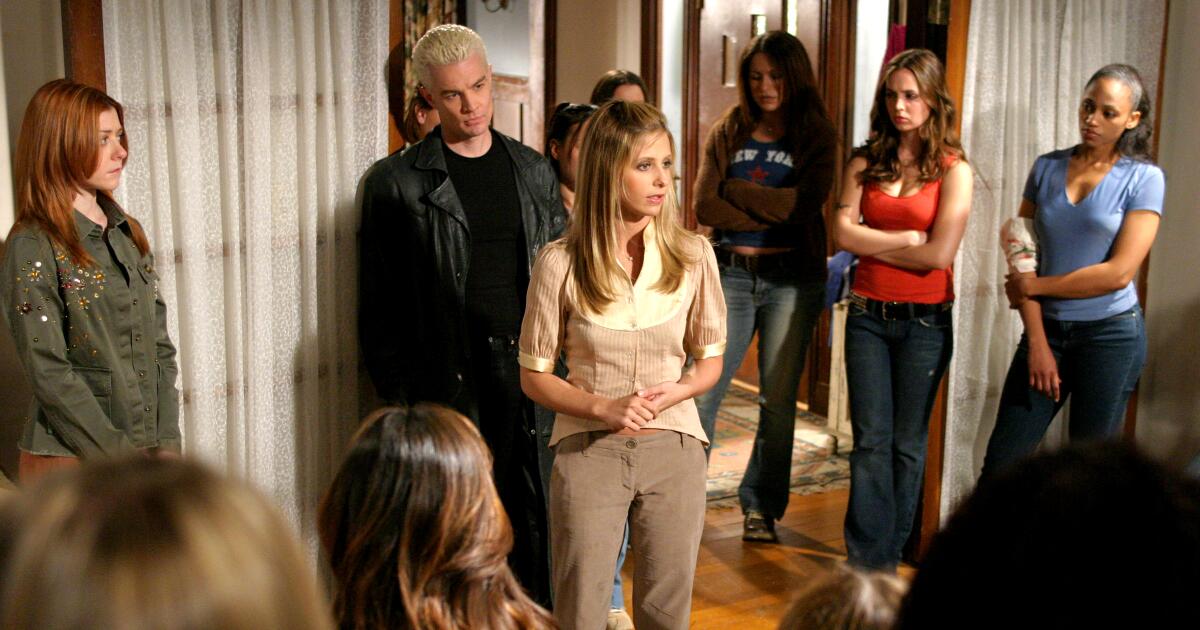
The Disney-owned streaming platform has pulled the plug on its much-anticipated “Buffy the Vampire” revival, a year after star Sarah Michelle Gellar confirmed the series was officially in the works. A “really sad” Gellar delivered news of the pre-debut cancellation to fans in a brief Instagram video shared Saturday. She was set to executive produce the series, tentatively titled “Buffy: New Sunnydale,” with Oscar-winning filmmaker Chloé Zhao set to direct.
“I never thought I would find myself back in Buffy’s stylish yet affordable boots and thanks to Chloé I was reminded [of] how much I love her and how much she means not only to me but to all of you,” Gellar said. “This doesn’t change any of that.”
She added: “I promise if the apocalypse actually comes you can still beep me.”
Gellar’s bittersweet announcement prompted Los Angeles resident Bren O’Brien to organize a rally on Monday outside Hulu’s headquarters in Santa Monica. O’Brien, a lifelong “Buffy” fan, displayed several posters urging the streamer to reconsider its decision along the sidewalk. One bright red poster read “Bring Buffy Back!!” scrawled in black ink. Another, bearing Gellar’s likeness, asserted, “Canceling Buffy Isn’t smart, the world needs a hero!”
“I’m really sad. This was a moment that I’ve been waiting decades for,” O’Brien said.
Hulu officially began production on the “Buffy” sequel series after years of careful consideration by Gellar. Last year, the cast for the pilot was assembled while Gellar vowed , “We will only make this show if we can do it right.”
The “Buffy” star did not share additional details about the cancellation in her weekend post, but Zhao said at the 2026 Academy Awards red carpet that she was “not surprised” by Hulu’s decision.
“I had an incredible, incredible time with Sarah, with all the cast and crew doing this. We, first and foremost, see ourselves as the guardians of the original show,” the “Hamnet” filmmaker told Variety on Sunday. “Our priority for Sarah and for us has always been to be truthful to the show, to be truthful to our fans. So, things happen for a reason, and we keep our hearts open and we welcome the mystery.”
Actor Ryan Kiera Armstrong, who was set to lead the show as a supernatural slayer opposite Gellar, lamented the cancellation on Instagram. “Your slayer,” she captioned a photo of herself in costume.
“Buffy” premiered in 1997 and aired on the WB until 2001 when it moved to UPN. Though the series ended in 2003 , it spawned the spinoff series “Angel” which aired from 1999 to 2004 on the WB. Other prospective “Buffy” revivals, however, reportedly struggled to make it past development. Additionally, several actors in recent years have accused “Buffy” creator Joss Whedon of misconduct.
After Gellar broke the cancellation news, “Buffy” fans reacted online, with many of them slamming Hulu for its “terrible decision.” A representative for Hulu did not immediately respond to a request for comment on Monday.
O’Brien, among the disappointed fans, said he began posting about the cancellation online, creating posters and promoting his rally. He said he was surprised by Hulu’s decision because “Buffy” is “such a valuable IP to have,” considering its generations of fans.
“It’s just a no-brainer,” he added.
Erin McClory, a fellow “Buffy” fan, joined O’Brien outside of Hulu’s headquarters and held a poster depicting a wooden stake through a broken heart. She said she hopes rallying around the slain “Buffy” series can help persuade Hulu to reconsider its decision or prompt another network to pick up the show.
“It seems crazy for them to not even give it a chance,” she said.
Though both O’Brien and McClory say they’re eager for new “Buffy” material down the line, their support for the show remains steadfast.
“We’ll just keep doing what we’ve been doing and keep sharing Buffy edits [on social media],” O’Brien said, then sighed. “I want new content.”
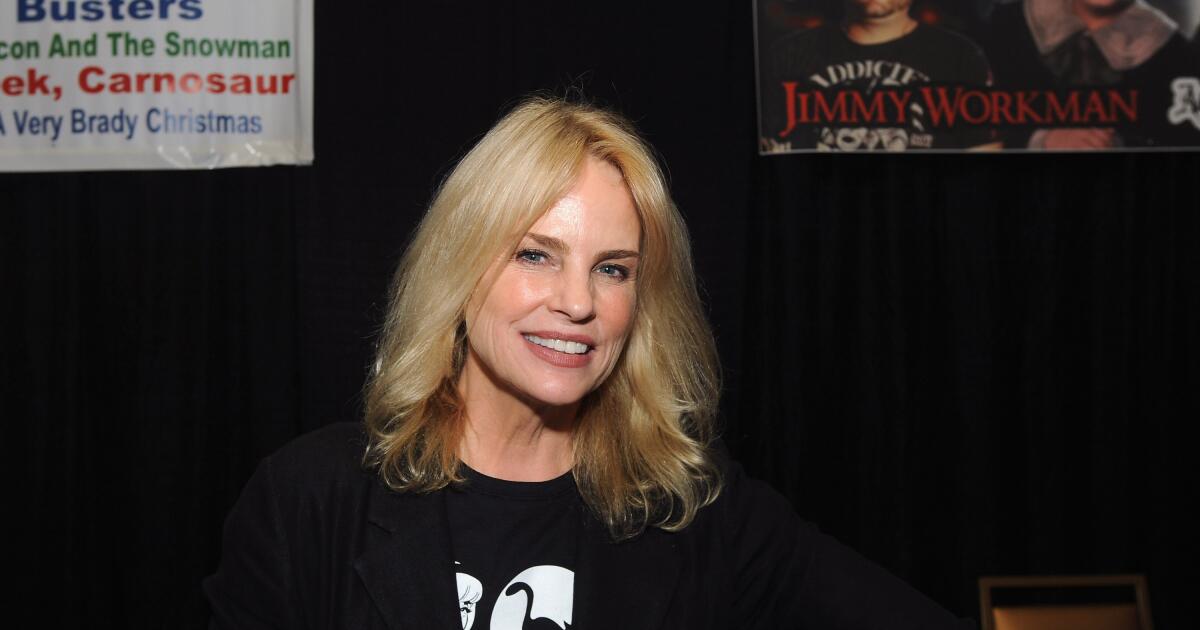
Jennifer Runyon, a film and television actor known best for her roles on “Ghostbusters,” “A Very Brady Christmas” and “Charles in Charge,” has died. She was 65.
Runyon died Friday, according to a Sunday statement reportedly posted to her social media account, which has since gone private.
“This past Friday, our beloved Jennifer passed away. It was a long and arduous journey that ended with her surrounded by her family,” the statement read, according to ABC7. “She will always be remembered for her love of life and her devotion to her family and friends. Rest in peace our Jenn.”
“Bewitched” actor Erin Murphy shared in a Sunday post on Facebook and Instagram that Runyon died “after a brief battle with cancer.”
“Some people you just know you’ll be friends with before you even meet,” Murphy wrote in her tribute. “She was a special lady.”
On the 1980s sitcom “Charles in Charge,” Runyon portrayed Gwendolyn Pierce, a fellow college student of the show’s titular live-in housekeeper (portrayed by Scott Baio) and the target of his affections.
In his Facebook tribute, fellow “Charles in Charge” actor Willie Aames described Runyon as a “dear dear friend, muse, and encourager.”
“From the moment we met on set all those decades ago- I knew you ‘got me,’” wrote Aames. “Watching you slip away these last few months was one of the hardest times of my life… I can still hear your voice so clearly. No one will ever be able to fill the massive hole that’s been left in our hearts… ever.”
A Chicago native, Runyon made her television debut as Sally Frame in the long-running soap opera “Another World.” She also appeared in episodes of “Magnum, P.I.,” “Quantum Leap” and “Murder, She Wrote.” Runyon also portrayed the grown-up Cindy Brady in “A Very Brady Christmas.”
Her film credits include the 1984 classic “Ghostbusters,” where she appeared as one of the students participating in the ESP study conducted by Bill Murray’s Peter Venkman.
On Instagram, Runyon’s daughter Bayley Corman, an actor who has appeared on TV shows such as “Chilling Adventures of Sabrina,” “Bel-Air” and “Running Point,” described her mother as “the kindest most compassionate person i’ve ever known.”
“All of the best parts of me came from you,” Corman wrote in her tribute. “i would give anything for one more day together.”