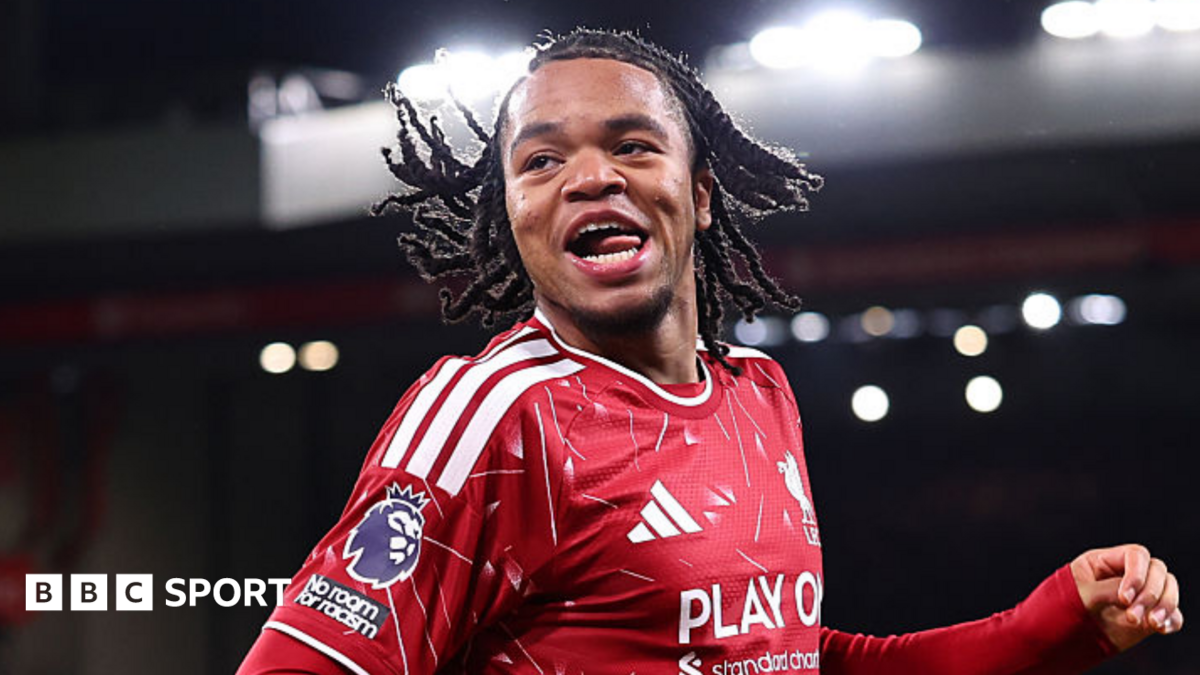
Danny Murphy and Kasper Schmeichel break down the starring role Mikkel Damsgaard played for Brentford in their 4-0 win at Manchester United in the Premier League.
Sometimes it is actually harder when you are playing out wide against 10 men because you don’t get the same amount of space – United were not attacking the same way they would have done with 11, and they were sitting in more.
Yes, Ngumoha ran up the odd blind alley or got outnumbered but that is always going to happen. As he learns, and gets even better, his decision-making will improve too. He will know when to try to go past people or when to find that free man instead.
But he still showed all the bravery you want from a winger against United and, when you keep trying things the way he did, something is going to come off for you.
I look at Bradley Barcola in a similar way to Ngumoha – he can be frustrating but he tries things, and can be brilliant.
For Liverpool right now, one of the biggest positives is the competition they have in wide areas, with those two plus Victor Munoz and Cody Gakpo.
There are other areas of their squad, like left-back or central midfield, where that competition needs to improve, but I don’t really worry about the wide attacking areas in the same way.
Sunday was only Ngumoha’s second Premier League start of the season, and his first since the opening day.
He maybe only got his chance because Gakpo has a calf problem but, when everyone is fit, it is really exciting that they will all be thinking they have to play their best to push the manager and get in the team.
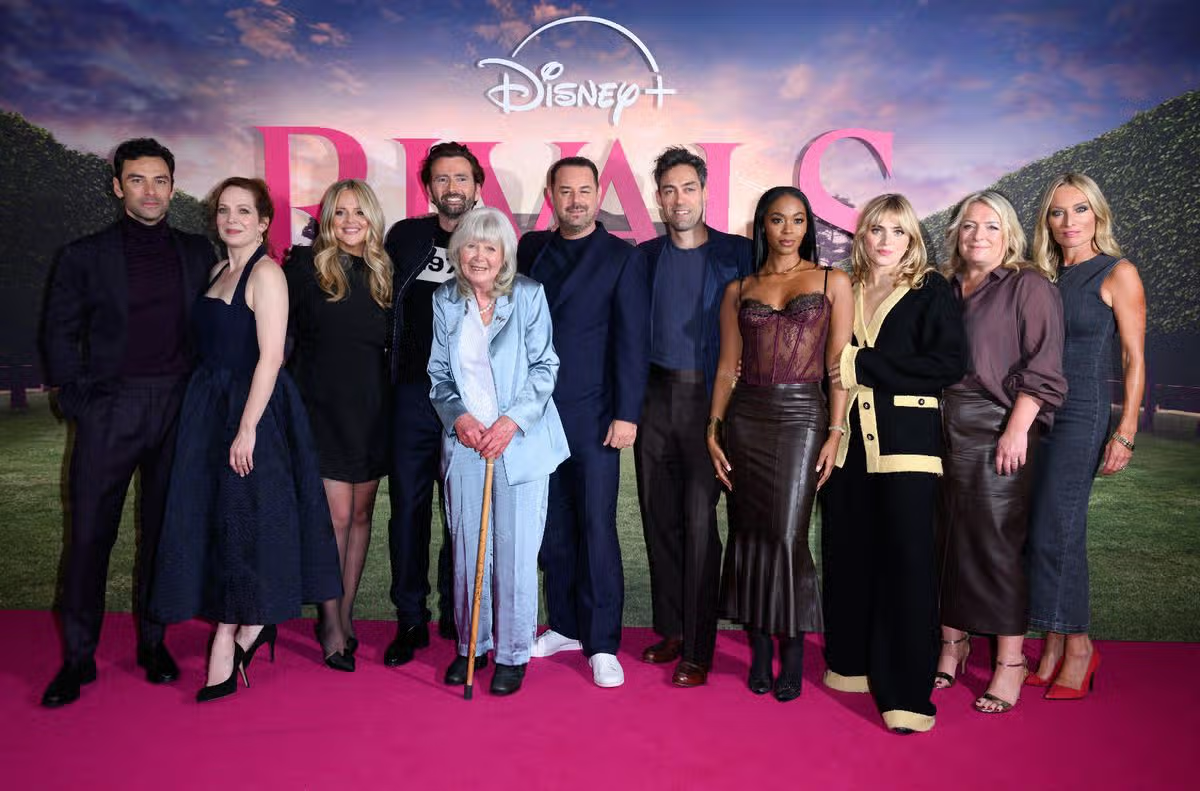
As scandals, affairs and lashings of skulduggery rip through Rutshire, Danny Dyer reveals that, playing Freddie in Rivals, he feels right at home. Father-of-three, Danny, 49, says of his acting career: “I have been around a long time, like 35 years, and I have made a lot of sh**e.
“As actors, you do – to feed your kids – and then you get a job like this. I can’t believe I am in it. It is so well shot. There are some great performances.”
Best known for playing Queen Vic landlord, Mick Carter, in EastEnders, Danny, who grew up in East London, plays another working class geezer – but a rich one – in the Jilly Cooper comic romp.
To see more of the stories you love from The Mirror and to find them easily in Google then make us your preferred source. Free and easy-to-do, just click on the link here to find more from The Mirror at the top of your feed.
Set in the fictional English county of Rutshire, in the Cotswolds, Rivals is centred on the battle for control of an independent TV franchise, with a stellar cast including David Tennant, Aidan Turner, Alex Hassell and Bella Maclean.
Now showing Season 2, in the Disney + series, the aristocratic characters look down on Freddie. But Danny says: “I don’t think he gives a f***. I don’t think he is a social climber. I love Freddie. He is such a lovely guy to play. I think Freddie would thrive in 2026. He is very much about gossip.”
Married to childhood sweetheart Joanne Mas, Danny, who lives in Essex, had a hilarious moment as Freddie, filming a sex scene – as in this series he has an affair, of which he says: “I think it’s a mad situation.”
Recounting his sex scene calamity, involving a bubble bath, he says: “For the bath scene, I had a fake tan. I sat in the bath and then got out and I was as white as a sheet.” His sexy glow had washed off!
The actor also discloses the cast’s sadness when Jilly Cooper, whose book the show is based on, died in October 2025, aged 88, following a fall. Speaking alongside fellow cast members at London’s British Film Institute, he says: “I wear a bit of pink in the show, as she loved a bit of pink.”
Describing her memorial last January as “a tough day” for the Rivals stars, he says: “We all got off our nut in the church, which was great. That is what she would have wanted. It was a very emotional time, as it was half way through shooting. We did what we were trying to achieve and made it as good as we possibly could for her.’
Yet, he did not always feel that Jilly was being entirely honest. He says: “I think she was a bit slippery, Jilly, as I think she told all of us we were her favourite. She told Aidan and Alex and me the same thing.”
Surprised by some of Freddie’s attributes – including his unlikely charisma and even sex appeal – he continues: “Jilly created Freddie like a fantasy, like a working class geezer who is rich. He has got t*** and things and is slightly attractive for some reason.”
But he hankers after playing Rupert Campbell-Black, the upper class cad, played by Alex Hassell. He says: “I would like to play Rupert, but I don’t think I would be able to. He is the most fascinating, because you love him so much and you shouldn’t.
“He’s like a James Bond-type character. He has a danger to him … sexy as f***. He has got the best clobber out of all of us – and the head of hair on him. He has not got to wear a wig [like Danny]. He fascinates me the most.”
*Season 2 of Rivals returned to Disney+ this month with a three-episode premiere, followed by weekly episode drops until the finale on December 2.
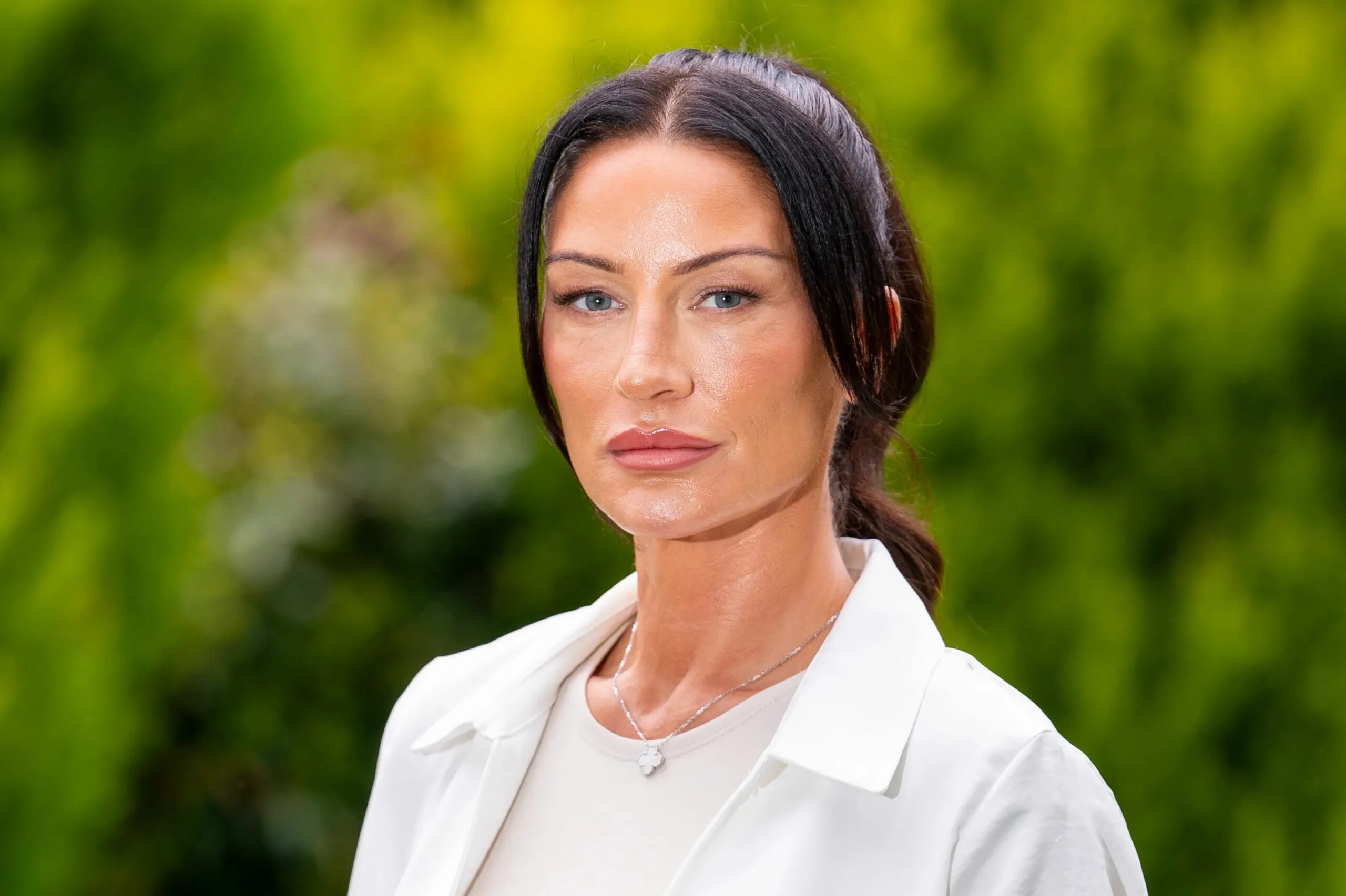
THE ex-wife of rugby star Danny Cipriani has revealed she was sexually assaulted by two men when she was just 12.
Victoria Rose has spoken out about her devastating experience and explained why she believes the justice system must be fair to everyone.
Victoria Rose has opened up about being sexually assaulted by two men when she was just 12Source: Louis Wood News Group Newspapers LtdDanny Cipriani marries girlfriend Victoria Rose in surprise weddingSource: Instagram
She said she believed Russell Brand’s sentence was too long, but insisted her comments are not about defending the comedian, but about the dangers of a potential miscarriage of justice.
In a passionate statement shared on her Instagram account, Victoria revealed that she knows first-hand what it feels like to be failed by the legal system, despite what she says was CCTV footage capturing the assault.
Sign up for the Showbiz newsletter
Thank you!
She said: “When I was 12 years old, I was assaulted by two men. There was actual CCTV footage of the assault.
“The case went to court, and both men were acquitted.
Danny Cipriani’s ex wife Victoria RoseSource: Louis Wood News Group Newspapers LtdRussell Brand has been jailed for more than 10 years for sex crimesSource: Getty
“So believe me, I know firsthand what it’s like to be failed by the justice system, even when there is factual, recorded evidence of what happened.
“So please don’t mistake my opinion for a lack of understanding or compassion for victims. I’ve been one.”
Victoria went on to explain that her concerns about the Brand case centre on the difficulties of testing evidence many years after alleged incidents took place.
She questioned how investigators could expect to piece together events from nearly two decades ago, arguing that memories fade and defendants can face enormous difficulties defending themselves after so much time has passed.
In a strongly worded post, she pointed to the scale of the policeinvestigation, claiming officers interviewed more than 100 witnesses, took over 400 statements and examined more than 1,400 documents.
She questioned why similar resources were not available to ordinary people reporting more recent crimes.
Victoria stressed: “I’m NOT saying he’s innocent. I’m NOT saying these women are lying.
“I’m saying someone’s freedom shouldn’t rest this heavily on what people remember from two decades ago.”
She also sparked debate by sharing a deeply personal reflection on sexual regret, admitting there were experiences in her own past that she now looks back on differently.
She said: “There are things I’ve done sexually that I look back on and think, FLIPPPPPP, I wish I hadn’t. I said yes, I went along with it, and I regret it now.
“That doesn’t give me the right to turn a consensual experience into a crime. I own my choices. REGRET ISN’T ASSAULT.”
Victoria argued that men who have had what she described as wild or questionable nights in their past could be left worrying about how they might defend themselves against allegations made many years later.
She even suggested the country should consider introducing a 12-month reporting limit for sexual offences – a controversial proposal likely to provoke fierce debate.
She said: “This isn’t about defending Russell Brand. It’s about wanting a system that works for everyone, where nobody loses their freedom without the evidence – REAL EVIDENCE – being properly tested.”
Returning to her own traumatic experience, Victoria insisted she had every right to question how the justice system assesses evidence.
She added: “I’m questioning how our justice system operates, how evidence is assessed and how it can arrive at such vastly different outcomes.
“Because I’ve personally experienced a system where even video evidence wasn’t enough to secure a conviction.
“I think I’ve earned the right to question that.”
Concluding her statement, Victoria said she hoped Brand would receive a fair appeal, adding: “What the f** is this world coming to?”
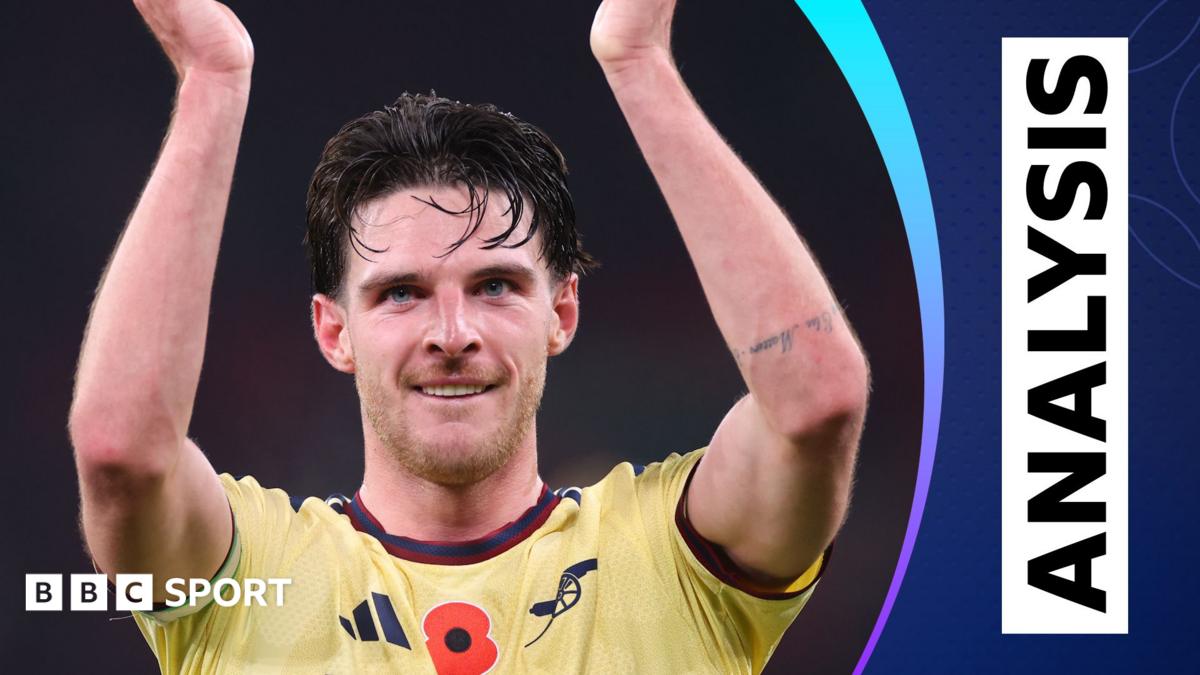
BBC Sport’s Kelly Cates and Micah Richards discuss how rounded Declan Rice has become in Arsenal’s midfield, while Danny Murphy argues that if he was more selfish he would score more goals.
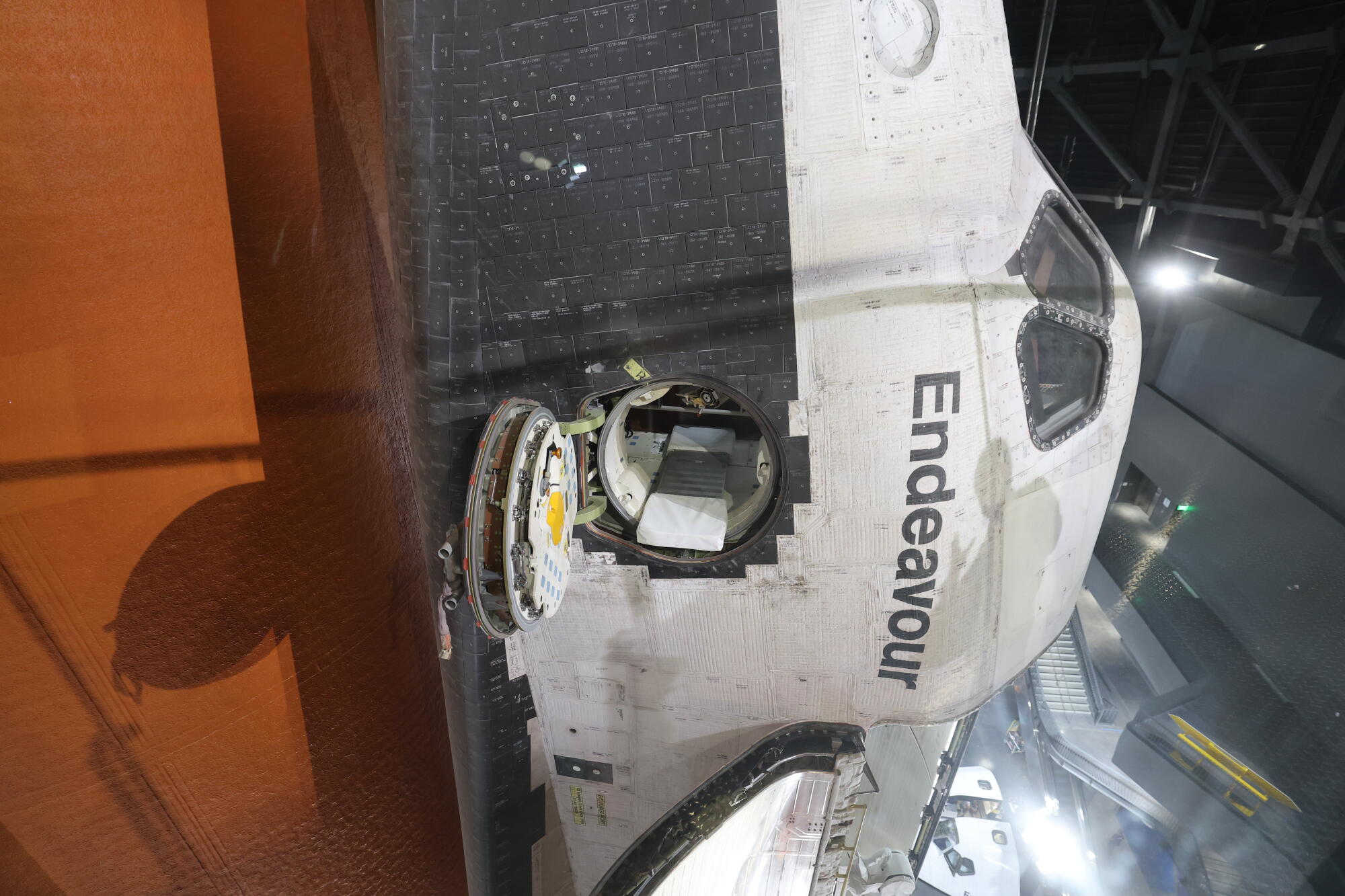
Peer inside the open hatch of the space shuttle Endeavour, and you’ll see a few things: a ladder from the mid-deck to the flight deck (horizontal, since the orbiter is in vertical launch position); pads used to crawl into the hatch and prevent damage to its seal; and small patches of blue Velcro to secure pens, clipboards or procedural notes, so they don’t float away.
Astronaut John Daniel “Danny” Olivas remembers his crews storing tortillas near the blue Velcro. There’s a cold plate there to keep the avionics system cool, and they’d stash the tortillas nearby so they’d stay fresher for longer (“We didn’t have a refrigerator on the space shuttle”). Tortillas, as it turns out, have a long and storied history in space, first brought there in 1985 by payload specialist Rodolfo Neri Vela, the first Mexican astronaut. (Neri Vela requested that they be included in his food supply, and they solved the serious problem of floating crumbs.)
A close-up view of the crew hatch, mid-deck and flight deck of the space shuttle Endeavour. The hatch provided astronauts with access to the crew compartment before launch and after landing, while serving as a sealed barrier during spaceflight. The cockpit contains the flight instruments, displays and controls used to operate the spacecraft during missions in Earth‘s orbit.
(Allen J. Schaben / Los Angeles Times)
There’s something fitting about the tortilla anecdote in multicultural L.A., home to the Samuel Oschin Air and Space Center — the $450-million, 200,000-square-foot expansion to the California Science Center — which now houses Endeavour. On Nov. 13, when the center opens to the public, it will become the only place in the world to see a complete space shuttle system with an orbiter that has actually seen flight (25 missions). That space shuttle system, or “shuttle stack,” includes the orbiter (the part of the shuttle that holds the crew and cargo); a solid rocket booster on either side; and an orange external fuel tank. The entire crew from the Endeavour’s last mission in 2011 plans to attend the center’s opening.
Space shuttles (there have only been five in the U.S., plus one prototype) stand apart for myriad reasons, chief among them are the sheer number of their astronauts, 355, as well as their diversity.
Share via
Astronaut Danny Olivas explains the space shuttle program’s significance and what it means for Endeavour to return to launch position in Southern California.
“Because the space shuttle program came forth, we started seeing people: the first female astronaut, the first African American astronaut, first African American female astronaut, the first Hispanic astronaut,” Olivas said on a recent tour of the new gallery. “So the space shuttle program, to me, is near and dear because it ushered in a level of diversity that represented what America was all about. And what makes her [Endeavour] special, being here in Southern California, is that this is the place she was born. All the space shuttles were born here. This is the heart of the aerospace industry.”
Olivas didn’t fly on the Endeavour, but he did fly two missions, one on the shuttle Atlantis and one on Discovery, for a total of almost 28 days. He ventured into outer space itself (“extravehicular activity”) on both missions, for a total of more than 34 hours. Plus, he and Endeavour go way back.
The Samuel Oschin Shuttle Gallery built a nearly 200-foot-tall space to display Endeavour’s orbiter in a vertical launch configuration, flanked by its external fuel tank and two solid rocket boosters.
(Allen J. Schaben / Los Angeles Times)
NASA selected Olivas as an astronaut candidate in 1998, and invited him and the other candidates to Edwards Air Force Base, in the Mojave Desert’s Antelope Valley about 100 miles northeast of Los Angeles. The Endeavour was being refurbished there, and he had the opportunity to go inside the crew module — the flight deck, the mid-deck and the airlock — all now visible in the new gallery.
The Endeavour was Olivas’ first encounter with any space shuttle, and he studied the spacecraft closely in the wake of the 2003 space shuttle Columbia accident. In many ways, he’s been inside the Endeavour much more personally than if he had flown on it. All of this is to say that he’s the perfect guide for today’s mission — getting to know this particular spacecraft.
“As an astronaut, you don’t get to share with the public all that space is,” Olivas said. “During the space shuttle program, the closest you could get to the space shuttle was three miles away,” as a civilian. “But this is an opportunity for space enthusiasts to get an up-close-and-personal look at the things that we had the privilege and honor to fly. … It’s nice to share this with the American people, because, ultimately, this is their ship.”
Jeff Rudolph, president and CEO of the California Science Center, left, and astronaut Danny Olivas on the 115-foot Shuttle Descent Slide, designed to simulate the descent of a shuttle returning to Earth. “It was no more than a flying brick,” Olivas said. “You had no engines, you had no motors to come home. Unlike the jet engines that you have when you land at LAX, you got nothing.”
(Allen J. Schaben / Los Angeles Times)
It’s been a long journey through time and space for the Endeavour to reach Exposition Park. The Times’ visit to the new gallery in early October happened to mark 15 years to the day since NASA transferred the title and ownership of the shuttle (yes, like a car) to the California Science Center, to the tune of a $1,980,674,785 valuation. (This was largely a donation, although the Science Center did pay for its transportation.)
“The most rewarding thing is watching the people that come through, of all ages, from little kids to senior citizens,” said Jeffrey N. Rudolph, president and CEO of the California Science Center. “Everybody is absolutely thrilled, and I think the sense of awe and wonder that we wanted to create really works.”
A worker inspects the base of one of the solid rocket boosters beneath the space shuttle. During launch, two explosives embedded in the “hold-down nuts” here would detonate, splitting them in half and releasing the shuttle stack from the bolts that held it to the launchpad.
(Allen J. Schaben / Los Angeles Times)
You may remember the orbiter itself or the 154-foot orange fuel tank parading slowly through L.A.’s streets to reach their new home, in 2012 and 2016, respectively. Their voyages were iconic: The former piggybacked atop a Boeing 747, past the Hollywood Sign and Griffith Observatory, before landing at LAX. The latter traversed the Panama Canal on a tugboat named the Shannon Dann, which rescued four fishermen off the coast of Baja California, tangerine behemoth and all.
That external tank, also known as an ET, was like a gas tank for the Endeavour. This one, ET-94, is the last flight-qualified external tank in existence. When full, it contains 1,629,577 pounds of propellants, as well as liquid oxygen and liquid hydrogen, both of which are extremely cold materials.
In the heat and humidity of Florida’s Kennedy Space Center, that meant the shuttle stack would start to drip like a water bottle on a muggy day. “I equate it to the way a thoroughbred would be when you loaded them into a starting gate,” Olivas said. “The cryogenic material would cause the metal to creak and moan due to thermal contraction and thermal expansion. You hear all the hissing of the vent lines, and you hear all the support equipment essentially running to get ready for the launch, and it really came to life. That’s the one thing that you’re missing here.”
Astronaut Danny Olivas shows off the wide-open payload bay of the space shuttle Endeavour. The shuttle’s large cargo bay carried satellites, scientific instruments and other payloads into orbit and helped support missions to construct the International Space Station.
(Allen J. Schaben / Los Angeles Times)
That visceral hissing is basically the only thing not present at the Oschin Center. This shuttle stack sits in flight configuration, almost exactly as it would look on the cusp of liftoff, besides the yellow torque tubes lining the orbiter’s white shell like external ribs. Inside the Science Center, Endeavour’s payload bay doors are cracked wide open, like a car’s lifted hood — but they were built for space, not Earth’s gravity. Here, without the support of those yellow bars, the doors could warp or crumple.
You could get lost in the grandeur of the rocket boosters, full of solid rocket propellant like a firework, or the steampunk bell curve of the main engines, which shoot the spacecraft to more than 17,000 miles per hour in orbit. But each and every piece is incredibly important, as are the teams of people who made them. “There’s no insignificant or small part about space exploration,” Olivas said. “Every single thing has a role to play.”
The space shuttle Columbia disintegrated during reentry because of a piece of foam that the astronaut estimates might have weighed about as much as a Styrofoam container. In 1986, the Challenger exploded during launch because of a tiny rubber O-ring. Olivas himself hung off the end of Atlantis’ robotic arm (the Endeavour has one too) to close a 4-inch hole in the heat-shielding thermal blanket with a medical stapler (the flight surgeon’s idea).
Astronaut Danny Olivas watches a historical montage about the space shuttle program. Unlike previous spacecraft, “the space shuttle was essentially built to be a work platform,” he said, “so not only did it get astronauts into space, but once it got into space, it was reconfigured from a rocket ship or spaceship into an on-orbit work platform.”
(Allen J. Schaben / Los Angeles Times)
Nothing like that had ever happened before; there was no planned repair — so they innovated. Building a space shuttle (or fixing one) is a testament to what humanity can do when we put our minds to it, Olivas said. We can achieve that which has never even been imagined.
“You take this beautiful bird, and you dock to the space station, a colony that’s been formed in space, and was built since the first element was launched in 1998,” Olivas said. “Human beings have lived in space since the year 2000. It’s an oasis that we, as human beings, built.”
Eight and a half minutes after liftoff, when the spacecraft reaches orbital speed, the main engines cut off (this is called MECO). Just like that, everything’s floating. This particular astronaut turned to look at the bright blue planet below and thought: “When we work together, we can accomplish phenomenal things.” But we choose to focus on the things that make us different, he said. And in doing so, we find conflict.
“But yet, the 99.9999% of you, me, all of us here, we’re all the same,” Olivas said. “We all want the same thing: a happy, healthy life. From space, you look down at the Earth — the only border that you see is between the ocean and the land.”