Cricket

India-Bangladesh tensions rock cricket, as sport turns diplomatic weapon | Cricket News

New Delhi, India – On January 3, 2026, a single directive from the Board of Control for Cricket in India (BCCI) quietly ended the Indian Premier League (IPL) season of Bangladesh’s only cricketer in the tournament, Mustafizur Rahman, before it could even begin.

The Kolkata Knight Riders (KKR), a professional Twenty20 franchise based in Kolkata that competes in the IPL and is owned by Red Chillies Entertainment, associated with Bollywood actor Shah Rukh Khan, were instructed by India’s cricket board to release the Bangladesh fast bowler.

Not because of injury, form, or contract disputes, but due to “developments all around” – an apparent reference to soaring tensions between India and Bangladesh that have been high since ousted former Bangladesh Prime Minister Sheikh Hasina received exile in New Delhi in August 2024.

Within days, Mustafizur signed up for the Pakistan Super League (PSL), the Bangladesh Cricket Board (BCB) protested sharply, the IPL broadcast was banned in Bangladesh, and the International Cricket Council (ICC) – the body that governs the sport globally – was pulled into a diplomatic standoff.

What should have been a routine player transaction instead became a symbol of how cricket in South Asia has shifted from a tool of diplomacy to an instrument of political pressure.

Cricket has long been the subcontinent’s soft-power language, a shared obsession that survived wars, border closures, and diplomatic freezes. Today, that language is being rewritten, say observers and analysts.

India, the financial and political centre of world cricket, is increasingly using its dominance of the sport to signal, punish, and coerce its neighbours, particularly Pakistan and Bangladesh, they say.

The Mustafizur affair: When politics entered the dressing room

Rahman was signed by KKR for 9.2 million Indian rupees ($1m) before the IPL 2026 season.

Yet the BCCI instructed the franchise to release him, citing vague external developments widely understood to be linked to political tensions between India and Bangladesh.

The consequences were immediate.

Mustafizur, unlikely to receive compensation because the termination was not injury-related, accepted an offer from the PSL – picking the Pakistani league after an Indian snub – returning to the tournament after eight years.

The PSL confirmed his participation before its January 21 draft. The BCB, meanwhile, called the BCCI’s intervention “discriminatory and insulting”.

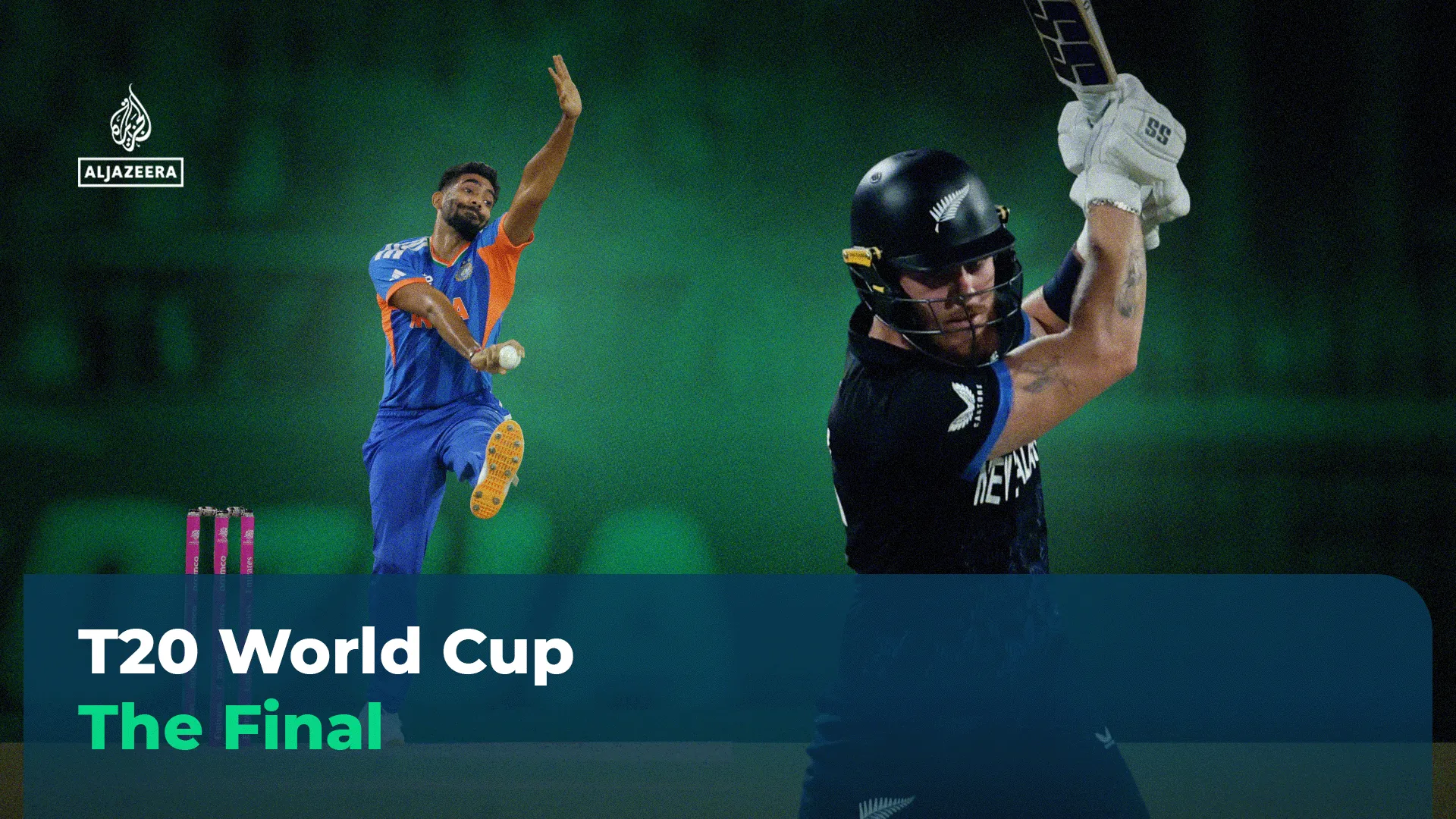
Dhaka escalated the matter beyond cricket, asking the ICC to move Bangladesh’s matches from the upcoming T20 World Cup, which India is primarily hosting, to Sri Lanka over security concerns.

The Bangladeshi government went further, banning the broadcast of the IPL nationwide, a rare step that underlined how deeply cricket intersects with politics and public sentiment in South Asia.

The BCB on January 7 said the International Cricket Council (ICC) has assured it of Bangladesh’s full and uninterrupted participation in the ICC Men’s T20 World Cup 2026, dismissing media reports of any ultimatum.

The BCB said the ICC responded to its concerns over the safety and security of the national team in India, including a request to relocate matches, and reaffirmed its commitment to safeguarding Bangladesh’s participation while expressing willingness to work closely with the Board during detailed security planning.

Yet for now, Bangladesh’s matches remain scheduled for the Indian megacities of Kolkata and Mumbai from February 7, 2026, even as tensions simmer.

Navneet Rana, a BJP leader said that no Bangladeshi cricketer or celebrity should be “entertained in India” while Hindus and minorities are being targeted in Bangladesh.

Meanwhile, Indian Congress leader Shashi Tharoor questioned the decision to release Mustafizur Rahman, warning against politicising sport and punishing individual players for developments in another country.

A pattern, not an exception

The Mustafizur controversy fits into a broader trajectory.

While all cricket boards operate within political realities, the BCCI’s unique financial power gives it leverage unmatched by any other body in the sport, say analysts.

The ICC, the sport’s global body, is headed by Jay Shah, the son of India’s powerful home minister Amit Shah – widely seen as the second-most influential man in India after Prime Minister Narendra Modi. The IPL, meanwhile, is by far the richest franchise league in the world.

India, with 1.5 billion people, is cricket’s biggest market and generates an estimated 80 percent of the sport’s revenue.

All of that, say analysts, gives India the ability to shape scheduling of events and matches, venues, and revenue-sharing arrangements. This, in turn, has made cricket a strategic asset for the Indian government.

When political relations sour, cricket is no longer insulated.

Nowhere is this clearer than in India’s relationship with Bangladesh at the moment. India has historically been viewed as close to Hasina, whose ouster in 2024 followed weeks of popular protests that her security forces attempted to crush using brutal force. An estimated 1,400 people were killed in that crackdown, according to the United Nations.

India has so far refused to send Hasina back to Bangladesh from exile, even though a tribunal in Dhaka sentenced her to death in late 2025 over the killings of protesters during the uprising that led to her removal. That has spurred sentiments against India on the streets of Bangladesh, which escalated after the assassination of an anti-India protest leader in December.

Meanwhile, attacks on Hindus and other religious minorities in Bangladesh since August 2024 – a Hindu Bangladeshi man was lynched last month – have caused anger in India.

Against that backdrop, the BCCI’s move to kick Rahman out of the IPL has drawn criticism from Indian commentators. Senior journalist Vir Sanghvi wrote in a column that the cricket board “panicked” and surrendered to communal pressure instead of standing by its own player-selection process, turning a sporting issue into a diplomatic embarrassment.

He argued Bangladesh did not warrant a sport boycott and warned that mixing communal politics with cricket risks damaging India’s credibility and regional ties.

Echoing the concern, Suhasini Haidar, diplomatic editor of The Hindu, one of India’s largest dailies, said on X that the government was allowing social media campaigns to overpower diplomacy. She referred to how Indian Foreign Minister S Jaishankar had travelled recently to Dhaka to attend the funeral of former Bangladesh PM Khaleda Zia, and wondered why Bangladeshi cricketers couldn’t then play in India.

Cricket analyst Darminder Joshi said the episode reflected how cricket, once a bridge between India and its neighbours, was increasingly widening divisions.

That was particularly visible late last year, when India and Pakistan faced off in cricket matches months after an intense four-day aerial war.

The Asia Cup standoff

The 2025 Asia Cup, hosted by Pakistan in September, was meant to be a celebration of regional cricket.

But citing government advice, the BCCI informed the ICC and the Asian Cricket Council (ACC) – the sport’s continental governing body – that India would not travel to Pakistan.

After months of wrangling, the tournament was held under a hybrid model, with India playing its matches in the United Arab Emirates while the rest were hosted in Pakistan.

But in three matches that the South Asian rivals played against each other during the competition – India won all three – the Indian team refused to publicly shake hands with their Pakistani counterparts.

“There is no rule in cricket that mandates a handshake. Yet players often tie each other’s shoelaces or help opponents on the field, that is the spirit of the game,” Joshi, the cricket analyst, told Al Jazeera. “If countries are in conflict, will players now refuse even these gestures? Such incidents only spread hate and strip the game of what makes it special.

“Sporting exchanges once softened bilateral tensions; this decision does exactly the opposite, making the game more hostile instead of more interesting.”

The controversy did not end with the final. India won the tournament, defeating Pakistan, but refused to accept the trophy from ACC President Mohsin Naqvi, who is also the Pakistan Cricket Board chairman and Pakistan’s interior minister.

The trophy remains at the ACC headquarters in Dubai, creating an unprecedented limbo that has defied resolution despite multiple ICC and ACC meetings. The BCCI requested that the trophy be sent to India. Naqvi has refused.

From bridge to divider

Unlike Pakistan, Bangladesh has historically enjoyed smoother cricketing ties with India. Bilateral series continued even during political disagreements, and Bangladeshi players became familiar faces in the IPL.

The Mustafizur episode marks a turning point. The current moment stands in stark contrast to earlier eras when cricket was deliberately used to soften political hostilities.

The most celebrated example remains India’s 2004 tour of Pakistan, the so-called “Friendship Series”.

That tour took place after years of frozen ties following the Kargil War, an armed conflict between India and Pakistan that took place from May to July 1999.

The then-Prime Minister Atal Bihari Vajpayee personally met the Indian team before departure, handing captain Sourav Ganguly a bat inscribed with the Hindi words: “Khel hi nahi, dil bhi jeetiye” which translates to “don’t just win matches, win hearts too”.

Special cricket visas allowed thousands of Indian fans to travel across the border. Pakistani then-President Pervez Musharraf followed the games and publicly lauded Indian cricketers who developed followings of their own in Pakistan.

The 2008 Mumbai attacks, carried out by fighters that Pakistan acknowledged had come from its territory, froze cricketing ties.

But in 2011, when India and Pakistan faced off in the World Cup semifinal in Mohali, Indian then-Prime Minister Manmohan Singh invited his Pakistani counterpart, Yousuf Raza Gilani, over – the two premiers watched the match together in what was widely seen as an act of “cricket diplomacy”.

By intervening in a franchise-level contract and linking it, however obliquely, to geopolitical tensions as has happened with the Mustafizur case, the BCCI sent a clear message, say analysts: Access to Indian cricket is conditional.

Sport journalist Nishant Kapoor told Al Jazeera that releasing a contracted player purely on political grounds was “absolutely wrong” and warned it would widen mistrust in the cricketing ecosystem.

“He is a cricketer. What wrong has he done?” Kapoor said.

Source link

Bangladesh to ‘work with ICC’ on T20 World Cup security concerns in India | Cricket News

BCB refutes reports saying ICC had issued an ultimatum over Bangladesh’s refusal to play its World Cup games in India.

Cricket authorities in Bangladesh have agreed to “work closely” with the International Cricket Council (ICC) to resolve security concerns regarding their team’s participation in the upcoming T20 World Cup in India.

The Bangladesh Cricket Board (BCB) will cooperate with the tournament’s organisers in order to ensure the country’s participation, it said in a statement on Wednesday, three days after saying its men’s team will not travel to the neighbouring country.

Recommended Stories

list of 4 itemsend of list

“The ICC has conveyed its willingness to work closely with the BCB to address the concerns, and has assured that the board’s inputs will be welcomed and duly considered as part of the detailed security planning for the event,” the BCB’s statement said.

“The BCB will continue constructive engagement with the ICC and relevant event authorities in a cooperative and professional manner to arrive at an affable and practical solution that ensures the smooth and successful participation of the team in the ICC Men’s T20 World Cup 2026,” the statement added.

The sport’s governing body and the BCB reportedly held a virtual meeting on Tuesday in response to Bangladesh’s request for a change of venue for its fixtures.

India and Sri Lanka are co-hosting the 20-team tournament from February 7, but all of Bangladesh’s group matches were allocated to Indian venues.

Bangladesh’s refusal to travel to India stemmed from a recent controversy, when its star fast bowler Mustafizur Rahman was dropped by his Indian Premier League (IPL) franchise Kolkata Knight Riders at the directive of the Board of Control for Cricket in India (BCCI).

It led to an outcry from cricket fans and administrators in Bangladesh, urging the BCB to take reciprocal action. In turn, the BCB asked the ICC to relocate its games from India to Sri Lanka over security concerns, saying its team will not travel to India.

Following two days of silence, the ICC – led by former BCCI chief Jay Shah – and BCB held a call to discuss the issue, with the tournament’s and Bangladesh’s opening match just more than a month away.

According to a report on ESPNCricinfo, the ICC told the BCB during the meeting that Bangladesh will need to travel to India or risk forfeiting points.

However, the BCB refuted the report and termed its claims as “completely false”.

“The BCB has taken note of certain reports published in a section of the media suggesting that the board has been issued an ultimatum. Such claims are completely false, unfounded and do not reflect the nature or content of the communication received from the ICC,” it said.

Earlier, Bangladesh’s interim government also banned the broadcast ‍of the IPL, saying the unceremonious dumping of a “star player defied logic” and had “hurt people”.

It is the latest flashpoint in a growing dispute with neighbouring India, which has now extended to cricket ties between the two nations.

The ongoing tensions flared in recent weeks after a 25-year-old Hindu man was lynched and burned publicly in Bangladesh following allegations of blasphemy.

A few days later, Hindutva activists tried to storm the Bangladesh High Commission in New Delhi as they rallied against the neighbouring nation for failing to protect its Hindu minorities.

Diplomatic relations between the once-close allies have been sharply tested since August last year, when former Prime Minister Sheikh Hasina fled to New Delhi from Dhaka after an uprising against her rule.

Bangladesh blames India for a number of its troubles, including Indian Prime Minister Narendra Modi’s support for Hasina when she was in power.

Source link

Bangladesh bans IPL broadcast amid growing tensions with India | Cricket News

The move comes after star Bangladesh fast bowler Mustafizur Rahman was dropped by his IPL team on the BCCI’s directives.

Bangladesh’s interim government has banned broadcast ‍of this ‍year’s Indian Premier League (IPL), the latest flashpoint in a growing row with neighbouring India, which has now extended to cricket ties between the two nations.

The move follows the decision by the Board of Control for Cricket in India (BCCI) to have the Kolkata Knight Riders drop Bangladesh pacer Mustafizur Rahman, ​who had signed for the IPL franchise for ‍this season.

The unceremonious dumping of a “star player” like Mustafizur from the IPL “defied logic” and had “hurt people”, the country’s Ministry of Information and Broadcasting said in a statement explaining its decision.

Bangladesh have also refused to play their matches of next month’s Twenty20 (T20) World Cup in India, demanding that those ‍be staged ⁠in Sri Lanka, co-host of the 20-team tournament.

The Bangladesh Cricket Board’s directors met in an emergency meeting on Sunday and confirmed their decision shortly afterwards.

“Following a thorough assessment of the prevailing situation and the growing concerns regarding the safety and security of the Bangladesh contingent in India and considering the advice from the Bangladesh Government, the board of directors resolved that the Bangladesh national team will not travel to India for the tournament under the current conditions,” it said.

“The board believes that such a step is necessary to safeguard the safety and wellbeing of Bangladeshi players, team officials, Board members and other stakeholders and to ensure that the team can participate in the tournament in a secure and appropriate environment,” the statement added, urging the ICC to take swift action.

The International Cricket Council (ICC) has not publicly responded to Bangladesh’s ‌demand to play World Cup matches in Sri Lanka.

Tensions have risen ‌in recent weeks between India ⁠and Bangladesh.

Following the protests, the Indian board asked ‍Knight Riders to drop Mustafizur.

The IPL, the ​world’s richest T20 league, is scheduled ‌from March 26 to May 31.

Source link

Bangladesh wants T20 World Cup games shifted from India to Sri Lanka | Cricket News

Amid growing political tension, a Bangladeshi official voices concerns over safety of players in India during the upcoming tournament.

Bangladesh will request the International Cricket Council (ICC) to shift its team’s T20 World Cup fixtures from India to Sri Lanka over concerns about its players’ safety, following the removal of a top Bangladeshi player from the Indian Premier League (IPL), a government official has said.

Amid growing political tension between the South Asian neighbours, the Bangladesh Cricket Board (BCB) has been asked by its government to write to the ICC, requesting a change of venue for its games and seeking clarity on fast bowler Mustafizur Rahman’s abrupt removal from the IPL, youth and sports adviser Asif Nazrul said in a statement on Saturday.

“As the adviser in charge of the Sports Ministry, I have asked the BCB to explain the entire matter to ICC. The board should inform that where a Bangladeshi cricketer cannot play in India despite being contracted, the entire Bangladeshi cricket team cannot feel safe going to play in the World Cup,” Asif wrote in a social media post.

“I have also instructed the board to request that Bangladesh’s World Cup matches should be held in Sri Lanka,” he added.

“We will not accept any insult to Bangladeshi cricket, cricketers and Bangladesh under any circumstances. The days of slavery are over.”

BCB President Aminul Islam Bulbul said the board will hold an emergency meeting later on Sunday.

“The dignity and security of our cricketers are our top priorities, and we will take a decision at the appropriate time, keeping these in mind,” he told reporters late on Saturday.

Defending champions India and 2014 winners Sri Lanka will cohost the ICC Men’s T20 World Cup 2026 from February 7 to March 8.

Bangladesh are scheduled to play all their group-stage matches in India, with three fixtures allocated to Eden Gardens in Kolkata and one to the Wankhede Stadium in Mumbai.

Should the ICC – headed by former BCCI chief Jay Shah – consider the BCB’s request, Bangladesh will become the second country to have its games moved out of India.

Sri Lanka will host all of Pakistan’s matches as the 2009 champions will not travel to India in an ICC-brokered agreement that allows the bitter rivals to avoid travelling across their mutual border.

Earlier on Saturday, the team Kolkata Knight Riders (KKR) confirmed that Mustafizur had been released from the franchise’s squad for IPL 2026 after the BCCI advised it to do so, and the move was confirmed by the Indian cricket board’s secretary, Devajit Saikia.

“Due to the recent developments which are going on all across, BCCI has instructed the franchise KKR to release one of their players, Mustafizur Rahman of Bangladesh, from their squad, and BCCI has also said that if they ask for any replacement, BCCI is going to allow that replacement,” Saikia told Indian news agency ANI.

Political tension spills over into sport

The ongoing tensions between India and Bangladesh have flared in recent weeks after a 25-year-old Hindu man was lynched and burned publicly in Bangladesh following allegations of blasphemy.

India’s Ministry of External Affairs last month condemned what it called “unremitting hostility against minorities”.

A few days later, Hindutva activists tried to storm the Bangladesh High Commission in New Delhi as they rallied against the neighbouring nation for failing to protect its Hindu minorities.

Diplomatic relations between the once-close allies have been sharply tested since August last year, when former Prime Minister Sheikh Hasina fled to New Delhi from Dhaka after an uprising against her rule.

Bangladesh blames India for some of its troubles, including Indian Prime Minister Narendra Modi’s support for Hasina when she was in power.

Political tensions have spilled over into sport in recent months, with the Bangladeshi women’s cricket team’s recent tour of India postponed indefinitely, and the Indian men’s team’s tour of Bangladesh meeting the same fate in August.

The BCCI’s move to have Mustafizur removed from the IPL has met with backlash in Bangladesh, where the popular franchise league may face a blackout.

Bangladeshi government official Nazrul said he had requested the national broadcasting body to “stop broadcasting of IPL tournament in Bangladesh”.

Source link

Stokes concerned for England’s mental wellbeing on Ashes tour of Australia | Cricket News

Captain Ben Stokes said protecting England players’ welfare was his top concern amid claims of excessive drinking on a mid-Ashes beach break, without directly addressing the allegations.

Stokes was peppered with questions on Wednesday ahead of the Boxing Day Test in Melbourne about the team’s behaviour at Noosa between the second and third Tests after British media reports compared it with a “stag-do”.

Recommended Stories

list of 4 itemsend of list

Unverified social media footage appeared to show opener Ben Duckett drunk and disoriented.

Their disastrous five-Test tour, which has seen Australia take an unassailable 3-0 lead, took another hit on Wednesday when pace spearhead Jofra Archer was ruled out of the rest of the series with a side strain.

England cricket chief Rob Key on Tuesday pledged to investigate the drinking claims, while the England and Wales Cricket Board said in a statement it was intent on establishing the facts.

Stokes, whose team have already lost the Ashes, said his main concern was the players’ mental welfare and to ensure they were ready for the Melbourne Test starting Friday.

“I’m obviously aware of the reports and everything circulating around right now,” Stokes said.

“My main concern is my players, and how I handle this moment is the most important thing to me.

“The welfare of everyone in there, and probably some certain individuals as well, is the most important thing to me right now as England captain.

“It’s never a nice place to be in when not only the media world, but also the social media world, is piling on top of you,” he added.

“It’s a very tough place to be in as an individual. As an individual, when you know you’ve got the support of the people who are sort of leaders, in a sense, it’s very good to know that you’ve got that support.”

Asked directly whether his teammates had “done anything wrong in Noosa”, Stokes replied: “I’ve just answered everything there.”

Stokes calls for focus as spotlight increases on England

England went to Queensland tourist resort Noosa after losing the first two Tests in Perth and Brisbane heavily.

They spent several days on the sand and around restaurants and bars before travelling to Adelaide, where they lost the third Test as Australia retained the Ashes.

Britain’s Daily Telegraph reported that “after drowning their sorrows after the Brisbane Test, it is no exaggeration to say some, certainly not all, players drank for five or six days”.

It added that players “did nothing outrageous in Noosa” but there was concern over the level of drinking, with England’s professionalism already under the microscope after their limited preparations.

England captain Ben Stokes speaks with Brendon McCullum during an England nets session at Melbourne Cricket Ground
England captain Ben Stokes, right, and coach Brendon McCullum are both under pressure following the side’s failures in Australia [Gareth Copley/Getty Images]

Stokes conceded that when a side was losing, there would be scrutiny, and “rightly so”.

“When you are 3-0 down you don’t really have a leg to stand on but we’ve got two games of cricket to play. That’s what we have to focus on,” he said.

“We haven’t won a game in Australia for a long, long time.”

England have gone 18 Tests since winning a match in Australia, dating back to their last series victory there in 2010-11.

Their capitulation in this series in 11 days of play is the joint second quickest in more than a century, since the 1921 Ashes was completed in eight days.

Making matters worse, Archer will take no further part in the tour, with Gus Atkinson replacing him in Melbourne.

The under-performing Ollie Pope paid for his poor form at number three, with Jacob Bethell taking over in the only other change.

England’s Test woes in contrast to Australia’s Ashes high

Bowling with the ‌wicketkeeper standing up to the stumps can bruise a fast bowler’s ego, ‍but Australia paceman ‍Scott Boland said Alex Carey’s stellar glovework in the ongoing Ashes series has helped him grow comfortable with it.

Carey’s wicketkeeping masterclass has been a key factor in Australia’s unassailable lead in the five-match series, and the ⁠34-year-old was particularly impressive in the second Test at the Gabba, where he stood ​up to Boland and Michael Neser.

With the wicketkeeper breathing down their ‍necks, English batters were pretty much confined to the crease, which meant the home bowlers did not really need to vary their length.

“I’ve just never really bowled to the keeper up to the ‍stumps before,” Boland ⁠told reporters ahead of the fourth Test.

“Everyone wants to be a fast bowler, and you don’t really like the keeper up to the stumps.

“But I’ve seen over the last month how effective it is and how still I can keep their batters by Alex being up to the stumps.”

Wicketkeepers typically stand farther back from the stumps when facing fast bowlers to give ​themselves more time to react to the high speed ‌and bounce of the ball, reducing the risk of missed catches.

Even from close range, Carey showed tremendous reflexes to pouch a thick edge from Ben Stokes after the England captain had nicked a Neser delivery ‌in the second innings.

Dismissals like that gave confidence to Boland that he could continue bowling his edge-inducing length balls regardless ‌of where Carey stood.

“I just need to trust that ⁠the length balls I bowl to try and nick guys off is the same length I bowl when he’s up to the stumps or back,” the 36-year-old said.

“The Gabba was pretty bouncy and he ‌was up to the stumps for a bit of it and catching balls above waist-high and I bowled a bouncer and he caught that, so I have full trust ‍in him up there.”

Former Australia wicketkeeper Ian Healy called Carey “clearly the best in the world”, while teammate Steve Smith termed him a “freak”.

Source link

Australia beat England to win third Test and retain Ashes | Cricket News

Australia has swept to an 82-run win in the third Ashes Test at Adelaide Oval to retain the urn with two matches to spare and leave England facing recriminations over another failed campaign.

Chasing a world record 435 runs to win on Sunday, England battled doggedly on day five but folded for 352 with left-armed quick Mitchell Starc taking three wickets and Scott Boland the last dismissal of Josh Tongue before tea.

Recommended Stories

list of 4 itemsend of list

“Three-nil is hugely satisfying for many reasons but particularly with how the chat before the series was how equally poised it was going to be,” Australia captain Pat Cummins, who took ⁠six wickets on his return from a back injury, told reporters

“This group’s amazing at just cracking on.”

Much of the talk in the build-up to the Ashes had been the age ​profile of the Australia squad, but Starc said the veterans had proved their worth.

“We do laugh at some of the comments that get back to us about how old we are,” the 35-year-old said.

“I’m sure experience plays a part going through your highs and lows. … That plays a big part in all of this.”

After eight-wicket defeats in Perth and Brisbane, England have now lost the Ashes in three matches for the fourth consecutive tour while losing 16 of their last 18 Tests in the country.

Although two Tests remain, the latest surrender may top the previous tours for sheer disappointment.

There were expectations of a genuine contest, fighting words from England captain Ben Stokes and hope that “Bazball” might win the urn in Australia for the first time since 2010-2011.

All that was swept aside in Adelaide, where England ditched their trademark aggression, reverted to more traditional Test batting and were still beaten convincingly.

“We obviously came here with a goal in mind, and we haven’t been able to achieve it. It hurts, and it sucks,” England skipper Stokes said.

“They’ve been able to outdo us on a much higher level. … I thought we did incredibly well to take us where we did in this fourth innings.

“We couldn’t do what we came here to do, but there was some good stuff to come out of this game.”

Jaime Smith in action.
England’s Jamie Smith scored 60 and mounted an England comeback on the final day, but it wasn’t enough to save the match – and the series [Asanka Brendon Ratnayake/Reuters]

The king of Adelaide

On day five while still needing 228 runs to win, England’s hopes were pinned on all-rounder Will Jacks and wicketkeeper Jamie Smith after they resumed on 207 for six.

Jacks turned his ankle when pushing off his crease for a run but battled on for 40 minutes until rain halted play.

England fans cheered, but it was just a passing squall, the ground soon bathed in sunshine.

The Surrey duo brought up a fifty-run partnership with the old ball and were soon spared spinner Nathan Lyon, who came off with a hamstring injury after cutting off a four in the field.

When the second new ball came, Smith attacked with gusto, smashing both Cummins and Starc for back-to-back fours.

But with the deficit trimmed to 150 runs, he threw the bat at a Starc delivery for a third time in succession and was caught for 60 by a ‌back-pedalling Cummins at mid-on.

Jacks played a steadier hand with tailender Carse, who finished 39 not out and hung ⁠tough with the all-rounder for 52 runs.

Home fans shifted uncomfortably in their seats as the pair reduced the deficit to under 100 runs, but Starc returned and Marnus Labuschagne flew in the slips to snuff out the danger.

Jacks, on 47, drove at a Starc ball that moved away off the seam, and Labuschagne dived to his left for another terrific one-handed catch, having removed Ollie Pope with a screamer in the slips on day ‌four.

Jofra Archer then tried to slog Starc but sent the ball down the throat of Jake Weatherald at deep point to leave England one wicket from defeat before Boland had Tongue sending another slips catch to Labuschagne.

Australia wicketkeeper Alex Carey was named Man of the Match for a first-innings 106 and 72 in the second while Travis Head set up ‍the victory with 170 in the third innings, his fourth consecutive Test ton at Adelaide Oval.

“If he wasn’t before, he’s the king of Adelaide,” Starc said of Head, who also scored a match-winning 123 in Perth.

“He’s not going to have to pay for another beer [here]. I don’t know how he does it, but jeez, it’s bloody good to ‌watch.”

Ben Stokes and Pat Cummins react.
Australia’s captain Pat Cummins, right, shakes hands with England captain Ben Stokes after the third Ashes cricket Test match in Adelaide [William West/AFP]

Source link

Australia look to seal Ashes series in third Test against England | Cricket News

Al Jazeera takes a look at the third Ashes Test between Australia and England, which is being played in Adelaide.

England face a series-defining third Ashes Test in Australia, knowing defeat will see their hosts retain the famous urn, but also have the chance of whitewashing their old enemy.

The match begins in Adelaide on Tuesday, where an unassailable 3-0 lead is in sight for the Aussies.

Australia won the first Test inside two days in Perth as Travis Head’s century made short work of his side’s target, while the Aussies needed only four days in Brisbane to secure the second match of the series.

Source link