NEW YORK — A tax on tea once sparked rebellion. This time, it’s just causing headaches.
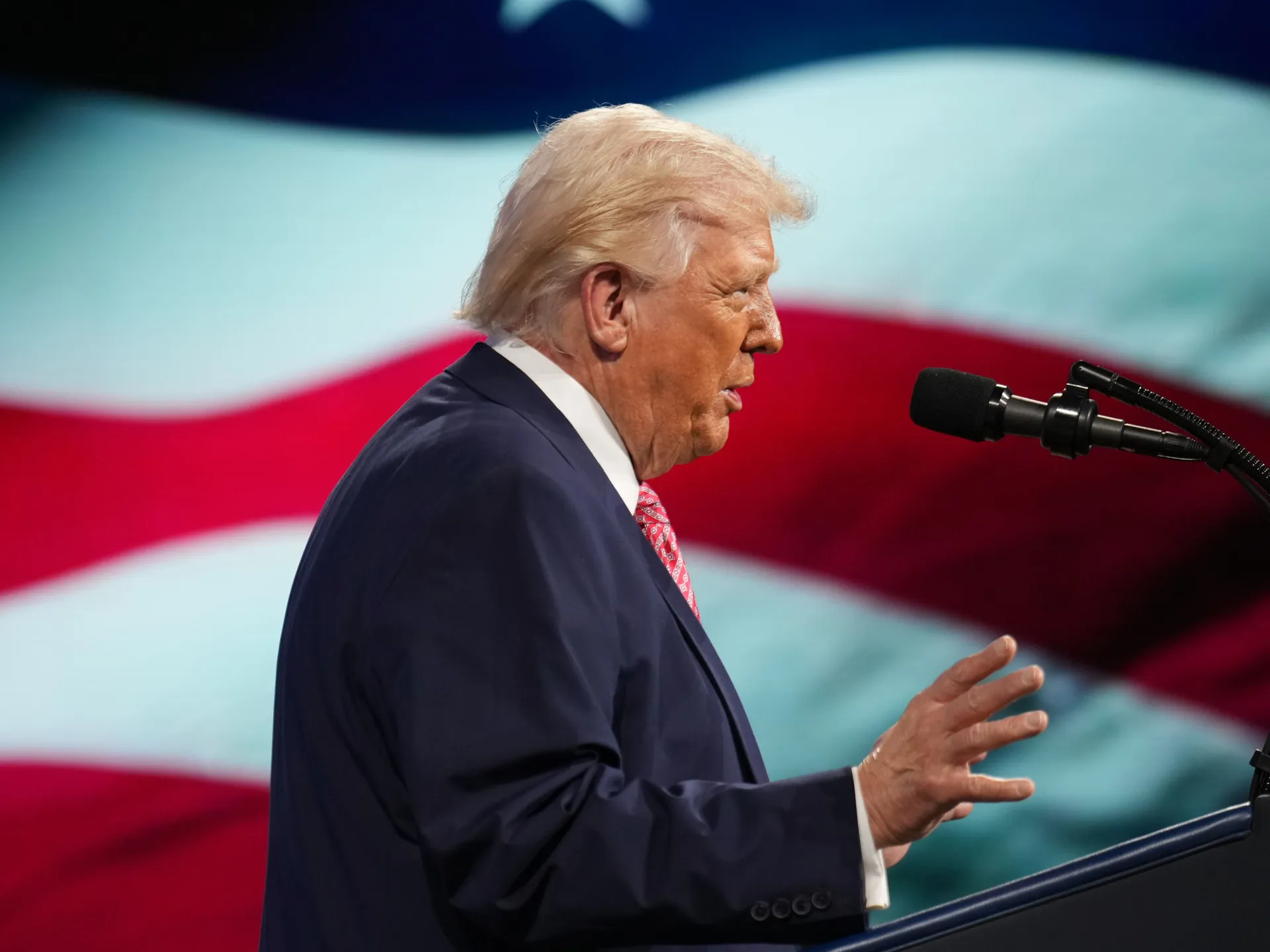
Importers of the prized leaves have watched costs climb, orders stall and margins shrink under the weight of President Trump’s tariffs. Now, even after Trump has given them a reprieve, tea traders say it won’t immediately undo the damage.
“It took a while to work its way through the system, these tariffs, and it will take a while for it to work its way out of the system,” says Bruce Richardson, a celebrated tea master, tea historian and purveyor of teas at his shop, Elmwood Inn Fine Teas, in Danville, Ky. “That tariffed tea is still working its way out of our warehouses.”
While some bigger firms are behind the biggest supermarket brands, the premium tea market is largely the work of smaller businesses — family farms, specialty importers and a web of little tea shops, tea rooms and tea cafes across the U.S. Amid an onslaught of tariffs, they have become showcases for the levies’ effects.
On their shelves, selection has narrowed, with some teas missing because they’re no longer viable products to stock with the steep levies. In their warehouses, managers are consumed with uncertainty and operational headaches, including calculating what a blend really costs, with ingredients from multiple countries on a roller coaster of tariffs. And in backrooms where the wafting scent of fresh tea permeates, owners have been forced to put off job postings, raises, advertising and other investments so they can have cash available to pay duties when their containers arrive at U.S. ports.
“If I were to add up all the money I’ve spent on tariffs that weren’t there a year ago, it could equal a new employee,” says Hartley Johnson, who owns the Mark T. Wendell Tea Co. in Acton, Mass.
Johnson’s prices used to stay static for a year or longer. He ate the tariff costs before being forced to respond. His most popular tea, a smoky Taiwanese one called Hu-Kwa, has steadily risen from $26 to $46 a pound.
He knows some customers are reconsidering.
“Where is that tipping point?” Johnson asks. “I’m kind of finding that tipping point is happening now.”
That tipping point already came for one tea company in the City of Commerce.
International Tea Importers, already under financial strain from climate change and the COVID-19 pandemic, said that tariffs were the final blow, creating an untenable cash flow crunch and forcing its closure after 35 years in business.
“We just became over-leveraged financing — not just the inventory, but also the tariffs,” says the company’s chief executive, Brendan Shah.
Despite the other financial challenges, if not for the tariffs, Shah says, it may have survived.
“Unpredictable tariff policies,” he wrote to customers in announcing the company’s closure, “have created the final, insurmountable barrier.”
Though Trump backed off some tariffs on agricultural products last week, many in the tea trade are wary of celebrating too soon and caution tea drinkers shouldn’t either. Much of next year’s supply has already been imported and tariffed, and the full impact of those duties may not have fully spilled downhill.
Meantime, other tariff-driven price hikes persist. All sorts of other products tea businesses import, such as teapots and infusers, remain subject to levies, and costs for some American-made items, like tins for packaging, have spiked because they rely on foreign materials.
“The canisters, the bamboo boxes, the matcha whisks, everything that we import, everything that we sell has been affected by tariffs,” says Gilbert Tsang, owner of MEM Tea Imports in Wakefield, Mass.
Though globally tea reigns supreme, imbibed more than anything but water, it has long been overshadowed by coffee in the U.S. Still, tea is entwined in American history from the very beginning, even before colonists angry with tariffs dumped tons of it in Boston Harbor.
Boston may run on Dunkin’ today, but it was born on tea.
The 1773 revolt that became known as the Boston Tea Party rose out of the British Parliament’s implementation of tea tariffs on colonists, who rejected taxation without representation in government. After an independent United States was born, one of the new government’s first major acts, the Tariff Act of 1789, ironically set in law import taxes on a range of products including tea. In time, though, trade policy came to include carve-outs for many products Americans rely on but don’t produce.
For more than 150 years, most tea has passed through U.S. ports with little to no duties.
That began to change in Trump’s first term with his hard-line approach to China. But nothing compared to what came with his return to the White House.
In July, the most recent month for which the U.S. International Trade Commission has tallied tariff numbers, tea was taxed at an average rate of over 12%, a huge increase from a year earlier when it was just under one-tenth of a percent. In that single month, American businesses and consumers paid more than $6 million in tea import taxes, amassing in just 31 days more tariffs than any previous full year on record.
“All over again, taxation without representation,” says Richardson, an advisor to the Boston Tea Party Ships & Museum. “Our wants and needs and our voices are not being represented because Congress is avoiding the issue by simply allowing the president to act like George III.”
All told, tea importers paid about $19.6 million in tariffs in the first seven months of 2025, nearly seven times as much as the same period last year.
It’s all been confounding to those steeped in the world of tea, on which the U.S. depends on foreign countries for nearly all of the billions of pounds Americans brew each year. Though a number of small tea farms exist in the U.S., they can’t fill Americans’ cups for more than a few hours of the year.
Said Angela McDonald, president of the United States League of Tea Growers: “We don’t have an industry and we can’t produce one overnight.”
Belém, Brazil — Two stark-white cruise ships loomed over a muddy Amazonian estuary, an odd sight from a beach where two children waded in the water.
The diesel-powered vessels towered over the impoverished riverfront neighborhood where trash littered the ground and a rainbow sheen from household and street runoff glistened on top of rain puddles.
The cruise liners — with their advertised swimming pools, seafront promenades and an array of restaurants and bars — were brought in to house thousands of delegates attending the 12-day United Nations COP30 climate summit in Belém, which ends Friday. The ships helped address a housing crunch created by an influx of roughly 50,000 people into the capital of Pará in northern Brazil.
Along with being a global economic powerhouse, Brazil is also one of the planet’s most important climate actors. The South American nation is home to tropical rainforests that absorb vast amounts of carbon dioxide but are increasingly threatened by deforestation and a drying Amazon.
A navy soldier patrols the Port of Outeiro, where cruise ships are docked to host delegations attending the COP30 U.N. Climate Change Conference in Belem, Brazil, on Nov. 8. Two cruise ships tower imposingly over a sleepy port in the Brazilian Amazon where some 50,000 people are gathering for a U.N. climate conference. With capacity for 6,000 people, the behemoths came from Europe to the riverine city of Belem on Brazil’s north coast to serve as floating hotels.
(Pablo Porciuncula / AFP via Getty Images)
The contrast — a climate conference relying on emissions-heavy cruise ships — has become the defining image of this year’s COP30, where wealth and scarcity sit side by side.
Belém residents said they felt a mix of curiosity and excitement watching the influx of foreigners, eager to show a culture that is often overshadowed by the country’s larger southern cities.
Many described COP30 as the first time the world had paused long enough to take notice of the people living at the mouth of the Amazon River, where locally grown açaí is sold on nearly every block. The region supplies the vast majority of Brazil’s açaí crop and much of what’s exported worldwide.
As humidity hung thick in the hot air, locals across the city of 1.3 million people pointed to expanded docks meant to attract future tourism, freshly painted walkways, restored colonial buildings with late-19th-century European touches and new cultural centers rushed to completion. But the sudden infusion of money layered atop long-standing inequality sharpened questions from residents about what will remain after the summit’s global spotlight fades.
Much of the summit footprint, they said, sits in areas where new structures were built fast, unevenly or only partly completed. Brazil’s government highlighted upgrades to Belém’s airports, ports, drainage systems, sanitation networks, parks and tourist areas, saying the work would leave a lasting legacy beyond COP30.
The BBC reported that a new four-lane highway built for COP30 resulted in tens of thousands of acres of protected Amazon rainforest being leveled, including trees locals relied on to harvest açaí berries to sell. One roadway to ease traffic to the climate summit remains unfinished and blocked by plastic orange netting.
“They cut all this forest to make that road and didn’t even finish it,” said Lucas Lina, 19, who works as an administrator at a Belém fire station, as he pointed to the unfinished road. “I don’t think they ever will. They will delay and delay.”
Lina said climate change is something locals feel acutely. The region has seen unpredictable rainfall, and in some years, receives little at all in an area used to its showers.
“The climate is going crazy,” Ana Paula, a government food safety inspector, said in Portuguese as Lina translated. “We can’t predict anything anymore.”
Even environmentalists acknowledge the optics are fraught, particularly as attendees flew more than 1,800 miles from events in Rio de Janeiro and São Paulo for satellite gatherings. That included members of California’s delegation and Gov. Gavin Newsom.
“It’s not well conceived because there’s not enough housing,” said Terry Tamminen, former California environmental secretary. “If we really cared about the climate, we’d have these events every year and they’d be 100% virtual.”
Such contradictions have often fueled demonstrations at climate summits, including on Friday when roughly 100 Indigenous protesters blocked the conference’s main entrance for more than 90 minutes. They formed a human chain as they denounced development plans they say would accelerate deforestation.
Indigenous activists participate in a climate protest during the COP30 U.N. Climate Summit on Saturday in Belém, Brazil.
(Andre Penner / Associated Press)
“Our forest is not for sale,” they wrote in a statement.
It was the second protest during the first week of COP30 after a brief clash inside the massive newly constructed facility resulted in two security guards suffering minor injuries.
“There are a lot of promises that the government made that are yet to be delivered,” said Lina, who taught himself English by watching YouTube and through online gaming. “We don’t know if these promises will actually be kept up after COP30.”
That tension — between symbolism and the city’s strained reality — defines this climate conference in a way that delegates say feels impossible to ignore.
Brazil remains one of the world’s top oil producers and recently approved new drilling near the rainforest. Many delegates argued that no setting better captures the stakes of the climate crisis than the Amazon, where Indigenous stewardship, extraordinary biodiversity and the consequences of deforestation are felt globally.
“I don’t know there’s a more important location than the rainforest,” Newsom told The Times. “The one area that consistently gets overlooked in the climate discussion is biodiversity.”
This aerial view shows a deforested area of the Amazon rainforest in the municipality of Moju, Brazil, on Wednesday during the COP30 U.N. Climate Change Conference.
(Mauro Pimentel / AFP via Getty Images)
With the summit came new investments that residents say they welcomed, including new bus routes, expansions at ports meant to increase future tourism and increased police presence to make streets safer.
“It’s very good for us,” said Maria Fátima in Portuguese while standing under an awning of a shuttered bar overlooking the cruise ships. She smiled and gave a thumbs up after saying she had never seen an American in Belém before.
“Everyone is very happy,” she said of the possibility that the newly expanded port will bring future tourism.
That port, which experienced an oil spill in April, is now being marketed as the Amazon’s next cruise-tourism hub. Its expansion cost $44 million and relied on nonstop work from construction crews in rotating shifts. The rush project doubled the pier’s capacity.
Room prices aboard the cruise ships soared to more than $1,400 a night for a balcony cabin, according to Times inquiries. On land, Belém’s modest supply of hotels and even seedy love motels that typically rent by the hour surged in price, pushing residents to rent their apartments and homes at rates many said they had never imagined.
People on a beach along the Guama River watch cruise ships docked at the Port of Outeiro, which will host delegations attending the COP30 U.N. Climate Change Conference in Belém, Brazil, on Nov. 6.
(Carlos Fabal/AFP via Getty Images)
One attendee said her hotel room typically goes for $85 a night. Her room cost $1,000 instead.
Newsom even joked about the costs. When a Brazilian journalist asked whether California would make climate investments in the country, Newsom said the price of his room at the Holiday Inn in Belém already felt like an “economic contribution.”
But those prices didn’t benefit everyone. Local media reported that some renters were evicted ahead of the conference in order to open up rooms to foreigners.
Inside the summit, Newsom operated as a proxy for the United States while attending COP30 for two days after President Trump, an outspoken climate skeptic, declined to send any high-level federal officials.
Long Beach resident Dominic Bednar, attending his fifth climate summit, said the contradictions of this year’s summit don’t diminish the importance of being there.
“It’s a double-edged sword,” said Bednar, an assistant professor in the Department of Urban Planning and Public Policy at UC Irvine. “On one hand, it brings understanding to the city and is driving a lot of economic investment. But I’m also curious: What is the carbon footprint of everybody coming into COP and the construction of this place? We are using energy, and we’re contributing to climate pollution.”
People riding in boats participate in a People’s Summit event on Guajara Bay during the COP30 U.N. Climate Summit on Wednesday in Belém, Brazil.
(Andre Penner / Associated Press)
Graduate students from UC San Diego’s Scripps Institution of Oceanography echoed that discomfort, but said not attending would only cede more ground to powerful energy interests that already dominate climate talks.
“We can empathize with not having our voices heard,” said graduate student Danielle McHaskell as she waited to take a photo with Newsom. “And that’s an important part of the climate movement — empathy for other people.”
Newsom, too, said he was aware of the contradiction of using fossil fuels to reach a climate summit.
Still, he defended the decision to hold COP30 in the Amazon. He said it offered a chance to “see what I’ve only seen on TV or could see disappear in my lifetime.” He added that he was particularly excited about venturing into the Amazon rainforest with a small delegation to learn in person about conservation efforts and connect with something beyond policy and negotiations.
“I think that spiritual element really matters in a world that can use a little bit more of that,” he said before returning to California on Sunday. “That’s one of the reasons I’m looking forward to getting deeper into the Amazon.”
“We’re going to use all the tools at our disposal to be able to acquire new technology as quickly as possible to get it into the hands of the warfighter,” Brig. Gen. Matt Ross, director of the newly created Joint Interagency Task Force-401 (JIATF-401). Ross spoke on Friday to a small group of reporters, including from The War Zone.
The Army-led task force is creating what Ross calls a “UAS and counter-UAS marketplace” that will allow the installation commanders and interagency partners like the FBI, Department of Homeland Security and local law enforcement to shop for equipment and components.
A task force spokesman described the effort as “an Amazon-like marketplace for the procurement of counter-drone technology and equipment where people can go online, look for capabilities and user feedback.” It will be similar to one being launched by the Army for the procurement of drones.
Tech. Sgt. Ian Kay, a member of the U.S. Northern Command Counter-small Unmanned Aerial System fly-away kit team, sets an Anvil drone interceptor on its platform during an exercise at Minot Air Force Base, N.D., Oct. 27, 2025. (Department of Defense photo by John Ingle) John Ingle
The marketplace “will provide authoritative data on how each of these systems performs under varying conditions and allow users or customers to select the tool that’s right for them,” Ross explained. “We’ve got a wide variety of counter-UAS tools, and I actually think that we need all of them, because depending on where you are or what threat you’re focused on, your requirements will be slightly different. So we want to ensure that we provide a range of options both to the Department of War and to our interagency partners.”
The task force is looking at systems and components already on the market as well as working with industry partners to develop new ones. There are “hundreds of componentsof counter-UAS systems that could go on to the marketplace today, and we need to start thinking about these counter-UAS systems as components that are interchangeable.”
He did not offer specific examples but said it includes a wide range of sensors to detect drones and low-collateral and non-kinetic effectors to defeat them. The task force is not looking at explosive interceptors because, as we pointed out in the past, there are concerns about collateral damage and what works in a combat zone is not applicable in the homeland. We have profiled a number of these systems in previous articles.
Providing individual components in addition to complete systems allows individual purchasers to better obtain what they need, Ross noted.
“When you look at a full-stack system, you may settle for a less-than-optimal configuration of your radar, your EO/IR camera, and your layered effectors,” Ross explained. “If I only need to sense 20 kilometers and not 40 kilometers and I could change out that radar, put a lower-cost radar on there, then I could put more systems out into the field. As we look at that marketplace, I really want it to be components, similar to what you would see on any other online marketplace, that are plug-and-play as part of a counter-UAS system.”
A system designed to detect drones via the radiofrequency signals they put out and hijack the control link between them and their operators on display at Falcon Peak 2025. (Howard Altman)
Beyond offering equipment, the task force is streamlining the command and control of the wide array of systems being used by the military and its agency partners.
“What’s critical in any counter-UAS system is the mission command that allows you to tie together disparate sensors and effectors,” he posited. “And so what we are going to do inside of JIATF-401 is ensure that we standardize the communications protocols on how we send and receive information so that every component of a counter-UAS system is plug and play.” “
“For too long, we’ve struggled with integration,” Ross suggested. “And as people use different mission command systems, they had to specifically integrate a new component. And just like when you buy something to put on your Wi-Fi network at home, you know it’s going to work because the communication protocols are already established. We want to do the exact same thing for counter-UAS systems, both internal to the Department of War and for our interagency partners.”
The task force has yet to settle on a specific system.
The Engagement Operation Center, which is the primary data process and communication component of the Army’s Integrated Battle Command System. (U.S. Army) NATHANIEL PIERCE
“We evaluated every service’s mission command system last month in Operation Clear Horizon,” the task force director explained. “We did that specifically to assess their quantitative performance and then qualitatively how the workflows affected the outcome of those mission command systems. And we’re evaluating that now.”
While the task force is creating a more unified mission command system, Ross said it is important for individual installations to be able to act quickly on their own.
“It’s important that we remain decentralized,” he said. “If you look at the speed at which these systems can present a threat, you have to have operators that are empowered, trained, and they understand their authorities to be able to counter those threats, because they just don’t have time to go up to a higher level for approval.”
Wright Patterson Air Force Base in Ohio was one of several military installations to report drone overflights last year. (Wright Patterson Air Force Base) Wright Patterson Air Force Base
“I think there’s a number of things that have changed,” the director pointed out. “Number one, we are consistently fielding new counter-UAS capabilities at our installations, and as we do that, we prioritize them based off what we have to protect at each of those installations.”
In addition, the task force has “also worked with the services that are responsible for each of the installations in NORTHCOM to provide additional options. So what you described is a very complex problem, and as you look at it at scale, there’s a lot of work to do.”
“We are helping the services with their assessments of critical infrastructure, determining what they need to close gaps, and then we’re helping them get it quickly. In areas where the services require assistance inside of the homeland.”
According to the Army, the kits themselves are “an amalgamation of sensors and effectors that creates a total detect, track, identify and mitigation system including:
The Heimdal mobile sensor trailer that includes a continuous 360-degree pan and tilt unit, thermal optics and a radar, all working together autonomously for target acquisition.
Anvil drone interceptors and launch box, which operate autonomously to detect, track, shadow and mitigate threats.
An electromagnetic warfare effector called Pulsar that features radio frequency detect, track, classify and deny options.
The Wisp, a wide-area infrared system that is AI-enabled and offers 360-degree, full-motion sensoring that provides an accurate sight picture for operators.”
An Anvil non-kinetic drone interceptor from Anduril launches from its platform in response to a drone threat during an exercise at Minot Air Force Base, N.D., Oct. 23, 2025. (Department of Defense photo by John Ingle) John Ingle
Last month, the kits attained operational certification, according to the Army. NORTHCOM told us they are the “final option in a series of escalating measures for the Department of War’s response to drone threats,” only called upon if an installation or the service that owns it can’t provide the needed tools and personnel.
Still, Ross insisted that military installations “are equipped to handle UAS incursions.”
“The specific equipment varies by location,” Ross proffered, “but what we’re trying to build at each location where we have critical infrastructure that needs to be protected is a layered defense that includes distributed sensing and layered effectors so that we have the ability to counter any and all threats.”
Another huge area of concern for the military are attacks like Ukraine’s Spider Web strike on Russian aviation and Israel’s Operation Rising Lion attack on air defense systems and other military targets and personnel. The incidents have highlighted the danger presented by near-field drone attacks launched deep within enemy territory, in close proximity to their targets. As we have pointed out for many years, military assets and other high-value targets are extremely vulnerable to these types of operations within the homeland.
One of the most visible counter-drone efforts is taking place on the southern border, where President Donald Trump has ordered thousands of troops and equipment to prevent the flow of undocumented aliens and drugs into the country.
“I was actually at the southern border last week, spending time both with the NORTHCOM team and with the Joint Task Force Southern Border to understand the challenges that they’re facing,” he said. “I do that because understanding their challenges very specifically will allow us to focus our effort on closing that next gap. If you look across the 1,954-mile border, I think that we do face a challenge of unmanned systems, and NORTHCOM is focused on addressing those challenges now, in conjunction with other lead federal agencies.”
The task force is working toward “an integrated, distributed sensing network that includes both passive and active sensors, and then layering in effectors, or counter UAS effectors that will allow us to defeat a threat as it crosses the border,” Ross explained. “We’re working closely with DHS, Customs and Border Protection, the Department of Interior and other agencies that are working along the southern border.”
The U.S. Army is contributing ground-based radars to help spot and track drones as part of the continued build-up of U.S. military support along with the U.S.-Mexican border. (DoD/US Army)
In addition, JIATF-401 is “also looking to integrate new technology like low-cost attritable interceptors that will provide additional options and more tools to our service members as they’re defending our southern border.”
These include “RF defeat, absolutely low-cost interceptors, a variety of different sensors that would include acoustic and active radar. And then we’re going to make sure that all of those sensors provide an integrated air awareness or air picture, so that we can choose the best effector to counter a UAS depending on its size, its activity in the location.”
Drones have already been taken down coming over the border, Ross stated, but he did not specifically say how. We reached out to NORTHCOM and the task force for further details.
U.S. Army soldiers stand outside of a Stryker armored infantry transport vehicle, which has been deployed along the U.S.-Mexico border as part of the military’s Joint Task Force Southern Border mission, in Sunland Park, New Mexico, on Friday, April 4, 2025. Paul Ratje
It is one thing to have the equipment and personnel, but the task force is also pushing for increased authorities to act. That includes making sure all bases fall under the provisions of “130(i),” federal law covering current authorities for the “protection of certain facilities and assets from unmanned aircraft.”
Under 130i, the U.S. military has the authority to take “action” to defend against drones including with measures to “disrupt control of the unmanned aircraft system or unmanned aircraft, without prior consent, including by disabling the unmanned aircraft system or unmanned aircraft by intercepting, interfering, or causing interference with wire, oral, electronic, or radio communications used to control the unmanned aircraft system or unmanned aircraft” and “use reasonable force to disable, damage, or destroy the unmanned aircraft system or unmanned aircraft.”
The new counter-drone task force is pushing for additional authorities to protect bases from drones. (Air Force photo by Peter Borys) (U.S. Air Force photo by Peter Borys)
However, only a portion of U.S. bases are covered and Ross wants to make it a blanket protection for all.
“We want to make sure that those authorities enable installation commanders with everything they need to be able to protect that critical infrastructure,” Ross explained. “That’s one part of it. The second part of it is making sure that what’s actually in the law is clearly communicated to those installation commanders so there’s no ambiguity, and they know exactly what they can do, both inside the fence line, outside the fence line, and in coordination with local law enforcement around those installations.”
On Nov. 25, JIATF-401 is going to hold what Ross calls “a counter-UAS summit” attended by subject matter experts from interagency partners. The summit will focus on intelligence gathering, policy, science and technology, and operations.
“We want to make sure that we’ve got an enduring partnership with each of those agencies because we know this problem is going to continue to evolve,” said Ross, “and we want to be able to move at the speed of relevance.”
SALT LAKE CITY — A Utah judge on Monday rejected a new congressional map drawn by Republican lawmakers, adopting an alternate proposal creating a Democratic-leaning district ahead of the 2026 midterm elections.
Republicans hold all four of Utah’s U.S. House seats and had advanced a map poised to protect them.
Judge Dianna Gibson ruled just before a midnight deadline that the Legislature’s new map “unduly favors Republicans and disfavors Democrats.”
She had ordered lawmakers to draw a map that complies with standards established by voters to ensure districts don’t deliberately favor a party, a practice known as gerrymandering. If they failed, Gibson warned she may consider other maps submitted by plaintiffs in the lawsuit that led her to throw out Utah’s existing map.
Gibson ultimately selected a map drawn by plaintiffs, the League of Women Voters of Utah and Mormon Women for Ethical Government. It keeps Salt Lake County almost entirely within one district, instead of dividing the heavily Democratic population center among all four districts, as was the case previously.
The judge’s ruling throws a curveball for Republicans in a state where they expected a clean sweep as they’re working to add winnable seats elsewhere. Nationally, Democrats need to net three U.S. House seats next year to wrest control of the chamber from the GOP, which is trying to buck a historic pattern of the president’s party losing seats in the midterms.
The newly approved map gives Democrats a much stronger chance to flip a seat in a state that has not had a Democrat in Congress since early 2021.
“This is a win for every Utahn,” said state House and Senate Democrats in a joint statement. “We took an oath to serve the people of Utah, and fair representation is the truest measure of that promise.”
In August, Gibson struck down the Utah congressional map adopted after the 2020 census because the Legislature had circumvented anti-gerrymandering standards passed by voters.
The ruling thrust Utah into a national redistricting battle as President Trump urged other Republican-led states to take up mid-decade redistricting to try to help the GOP retain control of the House in 2026. Some Democratic states are considering new maps of their own, with California voters approving a map last week that gives Democrats a shot at winning five more seats. Republicans are still ahead in the redistricting fight.
Redistricting typically occurs once a decade after a census. There are no federal restrictions to redrawing districts mid-decade, but some states — more led by Democrats than Republicans — set their own limitations. The Utah ruling gives an unexpected boost to Democrats, who have fewer opportunities to gain seats through redistricting.
If Gibson had instead approved the map drawn by lawmakers, all four districts would still lean Republican but two would have become slightly competitive for Democrats. Their proposal gambled on Republicans’ ability to protect all four seats under much slimmer margins rather than create a single-left leaning district.
The ruling came minutes before midnight on the day the state’s top election official said was the latest possible date to enact a new congressional map so county clerks would have enough time to prepare for candidate filings for the 2026 midterms.
Republicans have argued Gibson does not have legal authority to enact a map that wasn’t approved by the Legislature. State Rep. Matt MacPherson called the ruling a “gross abuse of power” and said he has opened a bill to pursue impeachment against Gibson.
Gibson said in her ruling she has an obligation to ensure a lawful map is in place by the deadline.