cover

Let’s Talk About All The Things We Did And Didn’t Cover This Week

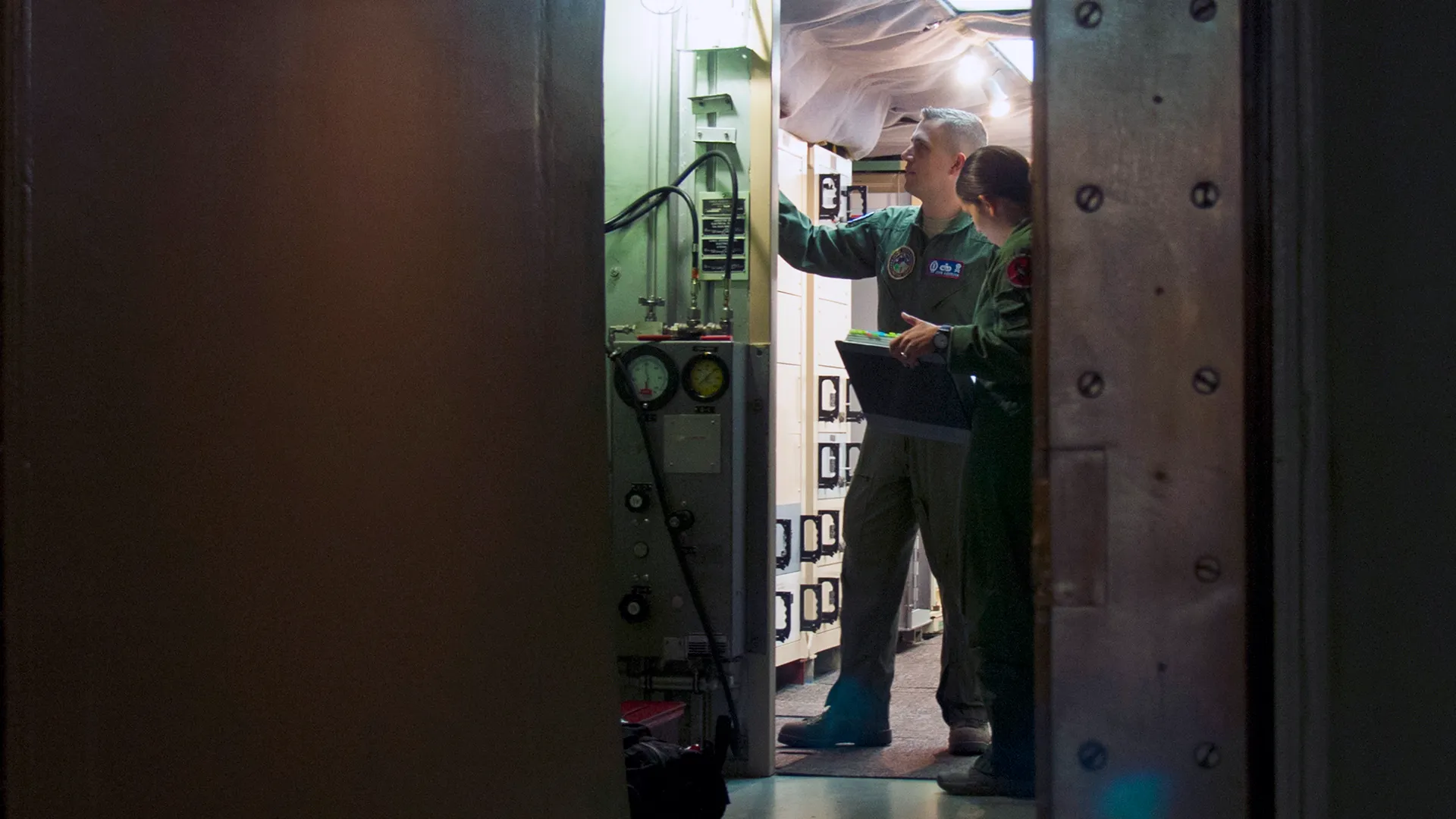
Welcome to Bunker Talk. This is a weekend open discussion post for the best commenting crew on the net, in which we can chat about all the stuff that went on this week that we didn’t cover. We can also talk about the stuff we did or whatever else grabs your interest. In other words, it’s an off-topic thread.

This week’s second caption reads:

NANTWICH, ENGLAND – MAY 24: A general view inside the former RAF Hack Green secret nuclear bunker on May 24, 2023 in Nantwich, England. Hack Green played a central role in the defence of Britain for almost sixty years. It was chosen during WW2 to protect the land between Birmingham and Liverpool from hostile attack and as a location for the new RADAR equipment. The bunker went on to be used for shelter and protection during the Cold War. As relations between East and West thawed many of the UK’s nuclear bunkers were sold off. The Secret Bunker is now privately owned by the Siebert family and is run as a museum trust. (Photo by Christopher Furlong/Getty Images)

Also, a reminder:

Prime Directives!

  • If you want to talk politics, do so respectfully and know that there’s always somebody that isn’t going to agree with you. 
  • If you have political differences, hash it out respectfully, stick to the facts, and no childish name-calling or personal attacks of any kind. If you can’t handle yourself in that manner, then please, discuss virtually anything else.
  • No drive-by garbage political memes. No conspiracy theory rants. Links to crackpot sites will be axed, too. Trolling and shitposting will not be tolerated. No obsessive behavior about other users. Just don’t interact with folks you don’t like. 
  • Do not be a sucker and feed trolls! That’s as much on you as on them. Use the mute button if you don’t like what you see.  
  • So unless you have something of quality to say, know how to treat people with respect, understand that everyone isn’t going to subscribe to your exact same worldview, and have come to terms with the reality that there is no perfect solution when it comes to moderation of a community like this, it’s probably best to just move on. 
  • Finally, as always, report offenders, please. This doesn’t mean reporting people who don’t share your political views, but we really need your help in this regard.

Tyler’s passion is the study of military technology, strategy, and foreign policy and he has fostered a dominant voice on those topics in the defense media space. He was the creator of the hugely popular defense site Foxtrot Alpha before developing The War Zone.


Source link

The Grammys reintroduce its award for album cover. Here’s why

Sometimes an album cover could be worth a thousand words. And the Grammys finally agree.

The 2026 ceremony will be the first time in 53 years that the award for best album cover will be presented. Previously, the award for a recording package included the album’s visuals and physical materials. Last year, Charli XCX earned the accolade for the virality of “brat” and its distinct mucus-y green.

However, this year, the categories for boxed/special limited-edition packages will be combined into a single recording package category, with album covers receiving their own trophy.

This category isn’t exactly new. At the first Grammys in 1959, Frank Sinatra’s “Only the Lonely” received the award for album cover. It was presented every year until 1973, when the Siegel-Schwall Band won for its self-titled album. After that, the category was renamed album package and then changed again in 1994 to recording package.

The nominated albums for art cover include Tyler the Creator’s “Chromakopia,” Djo’s “The Crux,” Bad Bunny’s “Debí Tirar Más Fotos,” Perfume Genius’ “Glory” and Wet Leg’s “Moisturizer.” From the nostalgic white plastic chairs that grace Bad Bunny’s sixth studio album to Tyler the Creator’s masked longing gaze on his cover, an album’s artwork is often essential to the listening experience.

“When a cover in a campaign hits right,” said nominated photographer Neil Krug to the Associated Press, “it’s part of the language and the fabric of what makes a great record a great record.”

Krug has a history of photographing covers for artists like Lana Del Rey and Tame Impala. He’s nominated for shooting the cover of “The Crux, ” by Joe Keery (“Stranger Things”), who goes by the musical moniker Djo. The image includes a chaotic menagerie of an old hotel and a crowded street, including everything from Djo himself hanging from a window, a kissing couple and a parking ticket dispute.

“Anything that we could come up with, we were just like throwing it at the canvas,” Krug told the Associated Press.

This split of categories is meant to better recognize music in the digital age. Grammy rules state that albums do not need to exist physically to be considered for this category, unlike in the recording package category. (Though this year every album nominated for the award is available on vinyl and CD).

“In today’s digital world, album covers are arguably more impactful than ever. Chances are, there’s an iconic cover that’s instantly recognizable to you, even if you never owned the physical album. Their cultural significance is undeniable,” said Recording Academy CEO Harvey Mason Jr., in an interview with Grammy.com.

Recording Academy voters are tasked with judging the cover’s creativity and design elements. Once the winner is determined, trophies will go to the album’s art director and the designers, photographers and illustrators will receive a certificate.

In addition to the album cover category, the country album category has also been split into two groups: traditional country and contemporary country. (Last year, Beyoncé won country album for “Cowboy Carter.”) The new artist category has also been expanded to include performers who were featured on previous album of the year nominees, if they are featured on less than 20% of the album.

The Grammys kick off on Feb. 1 at Crypto.com Arena.

Source link

LAFD leaders tried to cover up Palisades fire mistakes. The truth still emerged

Pacific Palisades had been burning for less than two hours when word raced through the ranks of the Los Angeles Fire Department that the agency’s leaders had failed to pre-deploy any extra engines and crews to the area, despite warnings of life-threatening winds.

In the days after the fire broke out, and as thousands of homes and business continued to go up in flames, then-Fire Chief Kristin Crowley said little about the lack of pre-deployment, which was first disclosed by The Times, instead blaming those high winds, along with a shortage of working engines and money, for her agency’s failure to quickly knock down the blaze.

Crowley’s comments did not stand up to scrutiny. To several former LAFD chief officers as well as to people who lost everything in the disaster, her focus on equipment and City Hall finances marked the beginning of an ongoing campaign of secrecy and deflection by the department — all designed to avoid taking full responsibility for what went wrong in the preparations for and response to the Jan. 7 fire, which killed 12 people and leveled much of the Palisades and surrounding areas.

“I don’t think they’ve acknowledged that they’ve made mistakes yet, and that’s really a problem,” said Sue Pascoe, editor of the local publication Circling the News, who lost her home of 30 years. “They’re still trying to cover up … It’s not the regular firefighters. It’s coming from higher up.”

With the first anniversary of the fire a week away, questions about missteps in the firefight remained largely unanswered by the LAFD and Mayor Karen Bass. Among them: Why were crews ordered to leave the still-smoldering scar of an earlier blaze that would reignite into the Palisades inferno? Why did the LAFD alter its after-action report on the fire in a way that appeared intended to shield it from criticism?

The city also has yet to release the mayor’s communications about the after-action report. The Times requested the communications last month, and the report — which was meant to pinpoint failures and enumerate lessons learned, to avoid repeating mistakes — was issued in early October. Nor has the city fulfilled a records request from The Times about the whereabouts of fire engines in the Palisades when the first 911 call came in. It took the first crews about 20 minutes to reach the scene, by which time the fierce winds were driving the flames toward homes.

A Bass spokesperson has said that the mayor did not demand changes to the after-action report, noting that she pushed for its creation and that it was written and edited by the LAFD.

“This administration is only interested in the full truth about what happened before, during, and after the fire,” the spokesperson, Clara Karger, said earlier this month.

The LAFD has stopped granting interviews or answering questions from The Times about the matter, vaguely citing federal court proceedings. David Loy, legal director of the First Amendment Coalition, said that the federal prosecution of a man accused of starting the earlier blaze does not preclude the department from discussing its actions surrounding both fires.

In a December television interview, Fire Chief Jaime Moore acknowledged that some residents don’t trust his agency and said his mandate from Bass was to “help guide and rebuild the Los Angeles Fire Department to the credibility that we’ve always had.”

The Lachman fire

Shortly after midnight on New Year’s Day, a man watched flames spread in the distant hills and called 911.

“Very top of Lachman, is where we are,” he told the dispatcher. “It’s pretty small but it’s still at the very top and it’s growing.”

“Help is on the way,” the dispatcher said.

A few hours later, at 4:46 a.m., the LAFD announced that the blaze, which later became known as the Lachman fire, was fully contained at eight acres.

Top fire commanders soon made plans to finish mopping up the scene and to leave with their equipment, according to text messages obtained by The Times through a state Public Records Act request.

“I imagine it might take all day to get that hose off the hill,” LAFD Chief Deputy Phillip Fligiel said in a group chat. “Make sure that plan is coordinated.”

Firefighters who returned the next day complained to Battalion Chief Mario Garcia that the ground was still smoldering and rocks still felt hot to the touch, according to private text messages from three firefighters to a third party that were reviewed by The Times. But Garcia ordered them to roll up their hoses and leave.

At 1:35 p.m., Garcia texted Fligiel and Chief Deputy Joseph Everett: “All hose and equipment has been picked up.”

Five days after that, on the morning of Jan. 7, an LAFD captain called Fire Station 23 with an urgent message: The Lachman fire had started up again.

LAFD officials were emphatic early on that the Lachman fire was fully extinguished. But both inside and outside the department, many were certain it had rekindled.

“We won’t leave a fire that has any hot spots,” Crowley said at a community meeting in mid-January.

“That fire was dead out,” Everett said at the same meeting, adding that he was out of town but communicating with the incident commander. “If it is determined that was the cause, it would be a phenomenon.”

The department kept under wraps the complaints of the firefighters who were ordered to leave the burn site. The Times disclosed them in a story in late October. In June, LAFD Battalion Chief Nick Ferrari had told a high-ranking fire official who works for a different agency in the L.A. region that LAFD officials knew about the firefighters’ complaints, The Times also reported.

Bass has directed Moore, an LAFD veteran who took charge of the department in November, to commission an “independent” investigation of the Lachman fire mop-up. The after-action report contained only a brief mention of the earlier fire.

No pre-deployment

The afternoon before hazardous weather is expected, LAFD officials are typically briefed by the National Weather Service, using that information to decide where to position firefighters and engines the following morning.

The weather service had been sounding the alarm about critical fire weather for days. “HEADS UP!!!” NWS Los Angeles posted on X the morning of Jan. 6. “A LIFE-THREATENING, DESTRUCTIVE” windstorm was coming.

It hadn’t rained much in months, and wind gusts were expected to reach 80 mph. The so-called burning index — a measure of the wildfire threat — was off the charts. Anything beyond 162 is considered “extreme,” and the figure for that Tuesday was 268.

In the past, the LAFD readied for powerful windstorms by pre-deploying large numbers of engines and crews to the areas most at risk for wildfires and, in some cases, requiring a previous shift of hundreds of firefighters to stay for a second shift — incurring large overtime costs — to ensure there were enough personnel positioned to attack a major blaze.

None of that happened in the Palisades, with its hilly terrain covered in bone-dry brush, even though the weather service had flagged it as one of the regions at “extreme risk.”

Without pre-deployment, just 18 firefighters are typically on duty in the Palisades.

LAFD commanders decided to staff only five of the more than 40 engines available to supplement the regular firefighting force citywide. Because they didn’t hold over the outgoing shift, they staffed the extra engines with firefighters who volunteered for the job — only enough to operate three of the five engines.

On Jan. 6, officials decided to pre-deploy just nine engines to high-risk areas, adding eight more the following morning. None of them were sent to the Palisades.

The Times learned from sources of the decision to forgo a pre-deployment operation in the Palisades. LAFD officials were mum about the inadequate staffing until after The Times obtained internal records from a source in January that described the department’s pre-deployment roll-out.

The officials then defended their actions in interviews. Bass cited the LAFD’s failure to hold over the previous shift of firefighters as a reason she removed Crowley as chief less than two months after the fire.

The after-action report

In March, a working group was formed inside the LAFD to prepare the Palisades fire after-action report. A fire captain who was recommended for the group sought to make sure its members would have the freedom to follow the facts wherever they led, according to internal emails the city released in response to a records request by an unidentified party.

“I am concerned about interference from outside entities that may attempt to influence the direction our report takes,” Capt. Harold Kim wrote to Battalion Chief Kenneth Cook, who was leading the review. “I would like to ensure that the report that we painstakingly generate be published as is, to as reasonable an extent as possible.”

He worried about revisions, saying that once LAFD labor unions and others “are done with many publications, they become unrecognizable to the authors.”

Cook, who had been involved with review teams for more than a decade and written numerous reports, replied: “I can assure you that I have never allowed for any of our documents to be altered in any way by the organization.”

Other emails suggest that Kim ultimately remained in the group.

As the report got closer to completion, LAFD officials, worried about how it would be received, privately formed a second group for “crisis management” — a decision that surfaced through internal emails released through another records request by an unidentified party.

“The primary goal of this workgroup is to collaboratively manage communications for any critical public relations issue that may arise. The immediate and most pressing crisis is the Palisades After Action Report,” LAFD Asst. Chief Kairi Brown wrote in an email to eight others, including interim Fire Chief Ronnie Villanueva.

“With significant interest from media, politicians, and the community, it is crucial that we present a unified response to anticipated questions and concerns,” Brown wrote. “By doing so, we can ensure our messaging is clear and consistent, allowing us to create our own narrative rather than reactive responses.”

Cook emailed a PDF of his report to Villanueva in early August, asking the chief to select a couple of people to provide edits so he could make the changes in his Word document.

The following week, Cook emailed the chief his final draft.

“Thank you for all your hard work,” Villanueva responded. “I’ll let you know how we’re going to move forward.”

Over the next two months, the report went through a series of edits — behind closed doors and without Cook’s involvement. The revised report was released publicly on Oct. 8.

That same day, Cook emailed Villanueva, declining to endorse the public version because of changes that altered his findings and made the report “highly unprofessional and inconsistent with our established standards.”

“Having reviewed the revised version submitted by your office, I must respectfully decline to endorse it in its current form,” Cook wrote in the email obtained by The Times. “The document has undergone substantial modifications and contains significant deletions of information that, in some instances, alter the conclusions originally presented.”

Cook’s version highlighted the failure to recall the outgoing shift and fully pre-deploy as a major mistake, noting that it was an attempt to be “fiscally responsible” that went against the department’s policy and procedures.

The department’s final report stated that the pre-deployment measures for the Palisades and other fire-prone locations went “above and beyond” the LAFD’s standard practice. The Times analyzed seven drafts of the report obtained through a records request and disclosed the significant deletions and revisions.

Cook’s email withdrawing his endorsement of the report was not included in the city’s response to one of the records requests filed by an unknown party in October. Nearly 180 of Cook’s emails were posted on the city’s records portal on Dec. 9, but the one that expressed his concerns about the report was missing. That email was posted on the portal, which allows the public to view documents provided in response to records requests, after The Times asked about it.

The LAFD did not respond to a query about why the email was not released with Cook’s other emails. Karger, the Bass spokesperson, said the link to the document was broken and the city fixed it after learning the email wasn’t posted correctly. The Times has inquired about how and why the link didn’t work.

Former LAFD Asst. Chief Patrick Butler, who worked for the agency for 32 years and now heads the Redondo Beach Fire Department, said the city’s silence on such inquiries is tantamount to deceiving the public.

“When deception is normalized within a public agency,” he said, “it also normalizes operational failure and puts people at risk.”

Pringle is a former Times staff writer.

Source link

Adam Peaty’s devastated dad breaks cover after missing son’s wedding and being told he ‘would have to sit at back’

ADAM Peaty’s dad Mark has broken cover and been seen for the first time since his son married Holly Ramsay yesterday.

The devastated dad and his wife Caroline were snubbed from the star-studded big day amid a bitter family feud.

Adam Peaty’s dad Mark takes the dog for a walk a day after his son tied the knotCredit: Andy Kelvin / Kelvinmedia
Adam and Holly Ramsay said ‘I do’ inside Bath AbbeyCredit: Splash
Adam with parents Caroline and Mark at the Rio Olympics in 2016Credit: Tim Stewart

We revealed that Adam allegedly told Mark he could only attend if he sat at the back of Bath Abbey, where the lavish celebration took place.

But Mark declined, finding the offer insulting, and remained at home 150 miles away as Adam tied the knot.

Today, he has been pictured walking his dog, worlds away from the glitz and glamour of his son’s big day.

Mark kicked on with his day-to-day duties, wearing an orange coat and beanie hat for the drizzly walk.

ICY MESSAGE

Adam Peaty ‘sent brutal text by aunt moments before marrying Holly Ramsay’


ROWS, VOWS & WOWS

Peaty’s dad ‘told he could attend wedding but would have to sit at back’

The family was split last month after Caroline was not included at Holly’s hen do at the swanky Soho Farmhouse, Oxfordshire, and was subsequently uninvited from the wedding.

Holly’s mum Tana and close pal Victoria Beckham were both in attendance at the girly get together near to the Beckhams’ country home.

Things escalated when Holly later called cops after Adam’s brother James allegedly made threats via text while Adam was on his stag do.

We reported last night how Adam had infuriated dad Mark with his church ultimatum.

It was in stark contrast to Adam’s sister Bethany, who was a maid of honour.

Our source said: “It was a difficult day for Caroline and Mark, so the family spent the evening together.

“Caroline got upset as soon as she saw the photographs from the wedding.

“For him to turn around and tell Beth that his dad could come and sit at the back of the church is awful.

“Mark was told he could sit behind plus-ones — who Adam has probably never even seen or spoken to.”

Meanwhile celeb guests like TV presenter Dan Walker, chef Marcus Wareing and the Beckhams arrived to much fanfare.

Adam reportedly received a stinging text from his estranged aunt Louise just moments before walking down the aisle, according to the Daily Mail.

She is said to have let him know her feelings with full force, telling him “shame on you both”.

Her text allegedly read: “I hope you never suffer the depth of pain you have put your mother through and despite it all she loves you still. Shame on you both. Shame.

“Remember on this, your happiest day, and on each anniversary of your happiest day, that you hurt your mum so deeply her soul screams.”

The sentiments were echoed by other family members, with Adam’s great aunt Janet, 73, telling the publication: “I just feel so sorry for Caroline.

“I can’t believe he’s done this to his mother who’s done so much for him from an early age. To be treated like this is not kind.”

Adam’s mum Caroline wasn’t invited to the big dayCredit: Shutterstock
Bethany Peaty, Adam’s sister, was a maid of honourCredit: Getty

The star’s swimming coach Melanie Marshall stepped in to deliver a reception speech, in place of his brothers.

Proud dad Gordon walked his daughter down the aisle. Mum Tana gave a reading.

Holly arrived nearly 30 minutes late, wearing a bridal cape over her Christmas-themed dress.

A large crowd of onlookers cheered the couple as they emerged before the pair were whisked off in a black Rolls-Royce to the reception at plush Kin House in Kington Langley, Wilts.

The maids of honour wore dresses designed by Victoria in red, while Tana wore a similar style dress in green.

Gordon Ramsay proudly walked his daughter down the aisleCredit: Getty
Guest Dan Walker shared the order of serviceCredit: mrdanwalker / Instagram

Security was tight, with guests wearing wristbands embossed with H&A.

One invitee said: “It was a lovely day, but with the wristband it felt more like a hospital appointment.”

Guests were barred from taking snaps of the service.

Adam’s mum had intended to watch from the street, despite being disinvited, but decided against it.

Source link

Let’s Talk About All The Things We Did And Didn’t Cover This Week

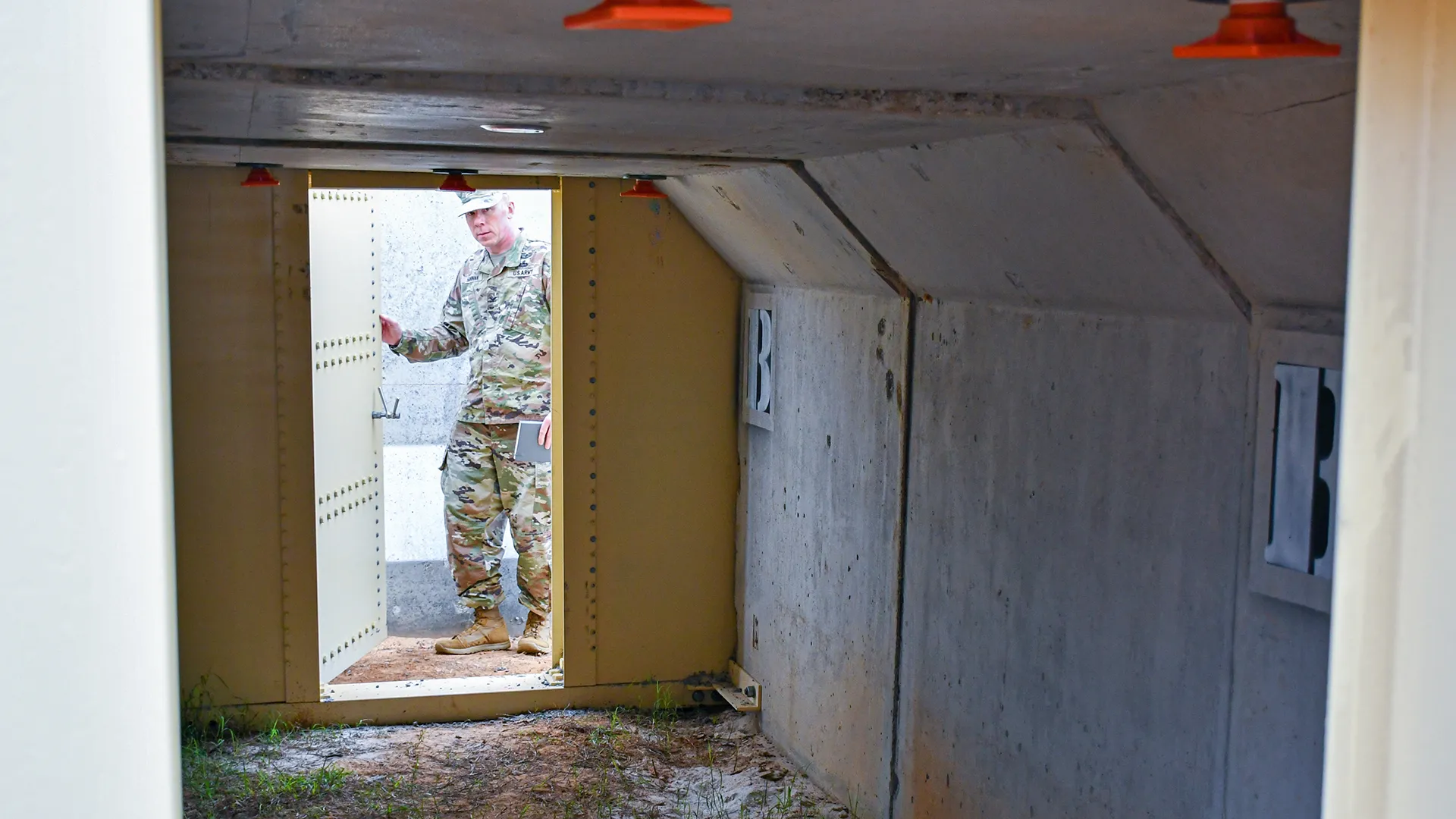
Welcome to Bunker Talk. This is a weekend open discussion post for the best commenting crew on the net, in which we can chat about all the stuff that went on this week that we didn’t cover. We can also talk about the stuff we did or whatever else grabs your interest. In other words, it’s an off-topic thread.

This week’s second caption reads:

Camp Shelby, Mississippi (February 3, 2023) Seabees, assigned to Naval Mobile Construction Battalion 133 (NMCB 133), go to bunkers during a simulated missile strike on Camp Shelby, Mississippi, February 3, 2023. NMCB 133 is at Camp Shelby, Mississippi conducting a field training exercise operating as part of Navy Expeditionary Combat Command conducting the advanced phase of the force readiness training plan (FRTP). (U.S. Navy photo by Mass Communication Specialist 2nd Class Andrew Waters/Released) 

Also, a reminder:

Prime Directives!

  • If you want to talk politics, do so respectfully and know that there’s always somebody that isn’t going to agree with you. 
  • If you have political differences, hash it out respectfully, stick to the facts, and no childish name-calling or personal attacks of any kind. If you can’t handle yourself in that manner, then please, discuss virtually anything else.
  • No drive-by garbage political memes. No conspiracy theory rants. Links to crackpot sites will be axed, too. Trolling and shitposting will not be tolerated. No obsessive behavior about other users. Just don’t interact with folks you don’t like. 
  • Do not be a sucker and feed trolls! That’s as much on you as on them. Use the mute button if you don’t like what you see.  
  • So unless you have something of quality to say, know how to treat people with respect, understand that everyone isn’t going to subscribe to your exact same worldview, and have come to terms with the reality that there is no perfect solution when it comes to moderation of a community like this, it’s probably best to just move on. 
  • Finally, as always, report offenders, please. This doesn’t mean reporting people who don’t share your political views, but we really need your help in this regard.

Tyler’s passion is the study of military technology, strategy, and foreign policy and he has fostered a dominant voice on those topics in the defense media space. He was the creator of the hugely popular defense site Foxtrot Alpha before developing The War Zone.


Source link