James Trafford: Made a good save in the second half. Trafford was very calm with the ball at his feet and showed his passing range which pleased Tuchel throughout. 6
Trent Alexander-Arnold: Started his first England game for nearly two years. Not much to do defensively but put in a great ball for the England opener. 7
Trevoh Chalobah: A shaky start from the centre back who lost possession a couple of times and lost out in challenges which frustrated manager Thomas Tuchel. But Chalobah settled and ensured England kept a clean sheet against 10-man Czech Republic. 6
Marc Guehi: The usual reliable performance from Guehi. England didn’t have much defending to do but he put in a couple of important blocks. 6
Lewis Hall: The left-back combined well with Anthony Gordon and offered a good outlet for England. Hall was a threat going forward and should have scored in the second half. 7
Elliot Anderson: Dominated the midfield, kept the ball ticking for England and won possession back the few times that the Czech Republic ventured forward. A mature performance. 7
Myles Lewis-Skelly: Started the game well and was given a lot of responsibility in England’s build up play. However, Lewis-Skelly was booked for a mis-timed tackle and then taken off at half time. 6
Morgan Rogers: Played Bukayo Saka through with a nice pass early on and hit the post twice. Not given much room by a Czech side who defended very deep. 6
Bukayo Saka: Not much of note to mark for Saka in what was a cagey match as England laboured when breaking down the Czech defence before Gordon’s goal. 6
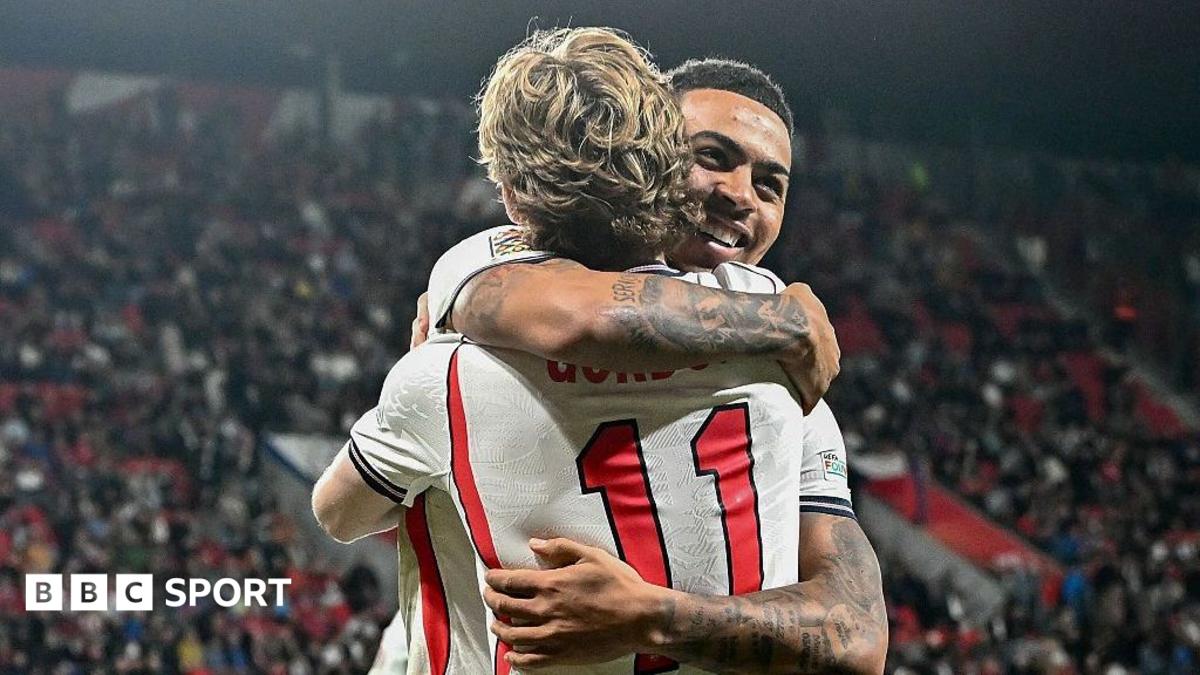
Anthony Gordon: A constant threat in behind and put in a dangerous cross in the first half that deserved to end up with a goal. Scored the opener and continues to show why he is becoming so important for the Three Lions. 8
Harry Kane: A quieter night for Kane who dropped deep and went looking for the ball but the England captain still got on the score sheet with a good finish inside the area in the second half. 7
Subs:
Eberechi Eze (on 46, Lewis-Skelly): Added a spark to midfield. 6
Jude Bellingham (on 70, Kane): Took the captains armband and led the line. 6
Alex Scott (on 70, Anderson): Made his England debut. 6
Rio Ngumoha (on 71, Saka): His first thought was to go forward. 6
Morgan Gibbs-White (on 81, Gordon):
Subs not used: Pickford, Steele, Konsa, Branthwaite, Garner, Calvert-Lewin, Quansah
Lebanese Prime Minister Nawaf Salam wants US-brokered ceasefire to be consolidated and for Israel to retreat.
Lebanese Prime Minister Nawaf Salam has called for an end to the Israeli occupation of southern Lebanon and the full enforcement of the ceasefire, as Israeli shelling and demolitions continue.
“We want the war to end and we want the ceasefire [with Israel] consolidated,” Salam said in a speech at the United Nations General Assembly in New York on Friday.
The prime minister demanded a complete withdrawal of Israeli forces from Lebanese territory up to its internationally recognised border and the release of all Lebanese detainees.
As delegates gathered to listen to Salam, on the ground in Lebanon, Israeli forces carried out a large explosion near Taybeh and Deir Siryan, while an Israeli air strike targeted a valley between Froun and Ghandourieh, triggering a large fire.
Al Jazeera’s Zeina Khodr, reporting from Froun, said the reality on the ground is that the conflict is far from over.
“From the ground here in Froun, we can still see Israeli warplanes and drones flying at low altitudes in the skies above and Israeli artillery shelling is still causing uncontrollable fires. Lebanese civil defence and firefighters are not being allowed by the Israelis to reach these areas and put out the flames,” she said.
“More than 60 towns in southern Lebanon are still occupied by the Israeli army, where the Israelis are carrying out a systematic campaign of demolitions,” Khodr added.
Israeli forces are “blowing up people’s homes, despite the framework agreement in which there is supposed to be a ceasefire that they have signed with the Lebanese government,” she said.
Israeli attacks in southern Lebanon have killed at least 4,386 people and wounded 12,407 others since March 2 , when the current Hezbollah-Israel war started. Since then, Israeli forces have occupied up to 600sq km of Lebanese territory up to the Litani River.
A US-brokered framework agreement between Lebanon and Israel in June provides for a gradual Israeli withdrawal from Lebanese territory and the deployment of the Lebanese army in areas vacated by Israeli forces.
Israeli armoured vehicles in the southern Lebanese village of Zawtar al-Charkiyah on Thursday [Ammar Ammar/AFP]
Speaking at the UNGA, Salam said his government had entered into negotiations with Israel, mediated by the United States and President Donald Trump, “to end the war and restore Lebanon’s sovereignty”, adding that the success of any agreement is measured not by intentions but by fulfilment of commitments.
“What is required is to complete the translation of this agreement into practical steps within a clear timetable and with a verification mechanism that ensures the implementation of all its provisions,” he said.
He focused on state sovereignty, saying it “cannot be untouchable in one place and negotiable in another, nor can the rules of international law apply to some but not to others”.
Salam also pledged to oversee the disarmament of Hezbollah in exchange for Israel’s eventual full withdrawal, also saying “weapons must be exclusively in the hands of the state and that decisions on war and peace rest solely with its constitutional institutions”.
Stability in the Middle East can only come with respect for Palestinian rights, he said.
“There can be no lasting stability in Lebanon without lasting stability in our region, and there can be no stability in the region as long as this organisation [the UN] remains unable to enable the Palestinian people to exercise their inalienable right to self-determination, like all other peoples of the world,” Salam said. “No less and no more.”
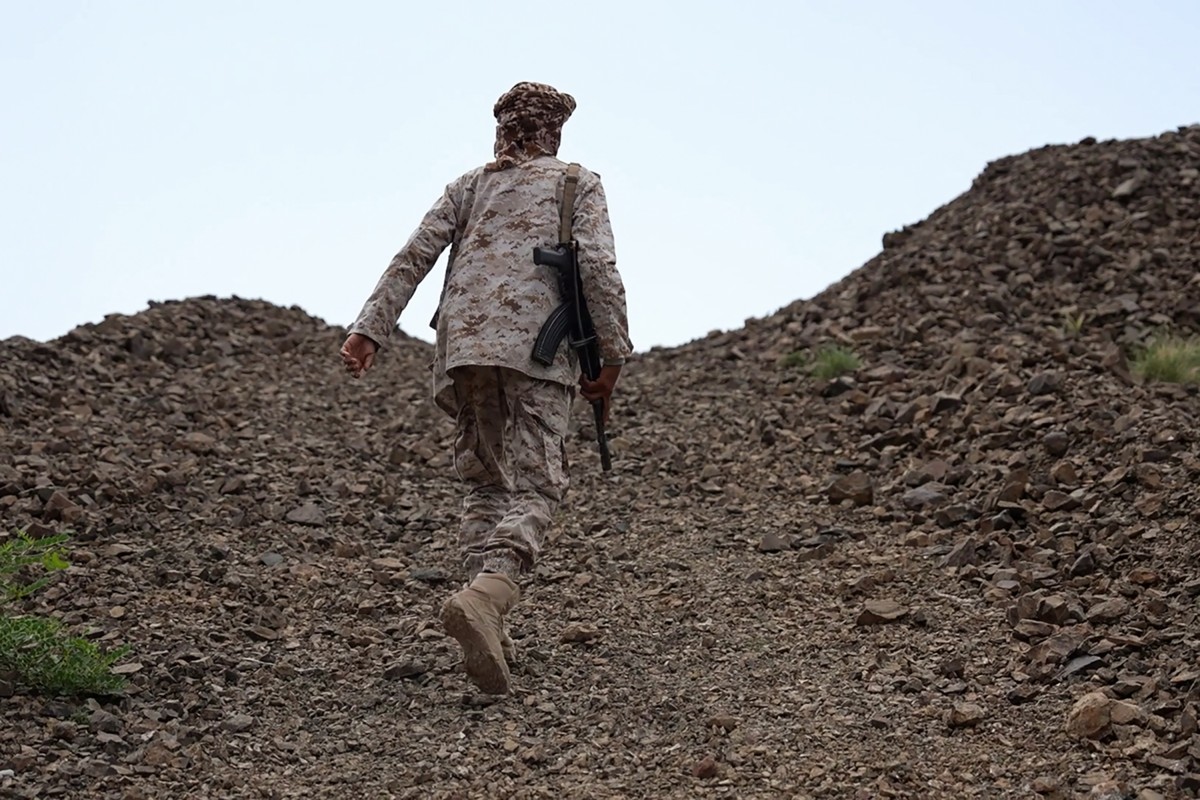
Fighting is continuing along Yemen’s western front, with government forces reporting strikes against Houthi positions in areas stretching from Taiz toward the Red Sea coast.
The government said on Monday that its forces targeted Houthi personnel, equipment and positions in Dhu Bab in Taiz governorate and Khokha in neighboring Hodeidah governorate.
The areas are strategically important because they lie along Yemen’s western coastline near the Red Sea and Bab Al-Mandab Strait, one of the world’s key maritime chokepoints connecting the Red Sea with the Gulf of Aden and wider Indian Ocean.
Dhu Bab is close to Bab Al-Mandab, while Khokha lies further north along the Red Sea coast. The fighting is taking place along territory that links the front lines around Taiz with Yemen’s strategically important western coastline.
Yemen’s armed forces spokesman, Col. Majid Al-Nazili, said government forces targeted Houthi equipment, personnel and positions in the two areas.
Military commanders also visited several front lines around Taiz, including areas near Bani Omar, Jardad and Al-Wazi’iyah, to assess combat readiness.
Maj. Gen. Abu Bakr Al-Jubouli, commander of the Tor Al-Baha axis, said government forces had inflicted heavy losses on the Houthis during recent clashes.
By that point, Ohio State had just blown a 20-point, fourth-quarter lead to Texas, and Oregon had, hours earlier, been stunned by Oklahoma State. The path to the top of the Big Ten suddenly seemed open as ever, just as the Trojans’ tremendous freshman caught the punt and took off in search of an opening himself.
With his stunning start to the season, no one player at USC — and perhaps in all the nation — had manufactured more hope through two games. While the conference’s other top teams spent the day licking their wounds, here, once again, was Mosley weaving joyfully through the open field and conjuring the very same magic from thin air. He shook off one tackle, then another. Soon enough, he was gone for an 86-yard punt return, and the No. 14 Trojans were rolling, comfortably on their way to a 49-30 win over Louisiana.
The second half didn’t feel quite as hopeful, as the Trojans let up and let Louisiana linger around through a victory that coach Lincoln Riley deemed “up and down.”
Still, the win was USC’s 10th straight at home, going back to the 2024 season, and gives the Trojans’ a spotless nonconference slate in 2026 — not that anyone would confuse their early-season schedule for a murderer’s row. There won’t be any easy home wins from here, though, with USC’s next three games against Oregon, Washington and Ohio State.
“It’s been good getting adjusted to this,” Mosley said. “But now we go on the road, so that’ll be a new adjustment.”
USC has, in glimpses this season, looked like a team that belongs among those Big Ten behemoths. And the most encouraging of those moments have largely come from the Trojans’ talented freshman class.
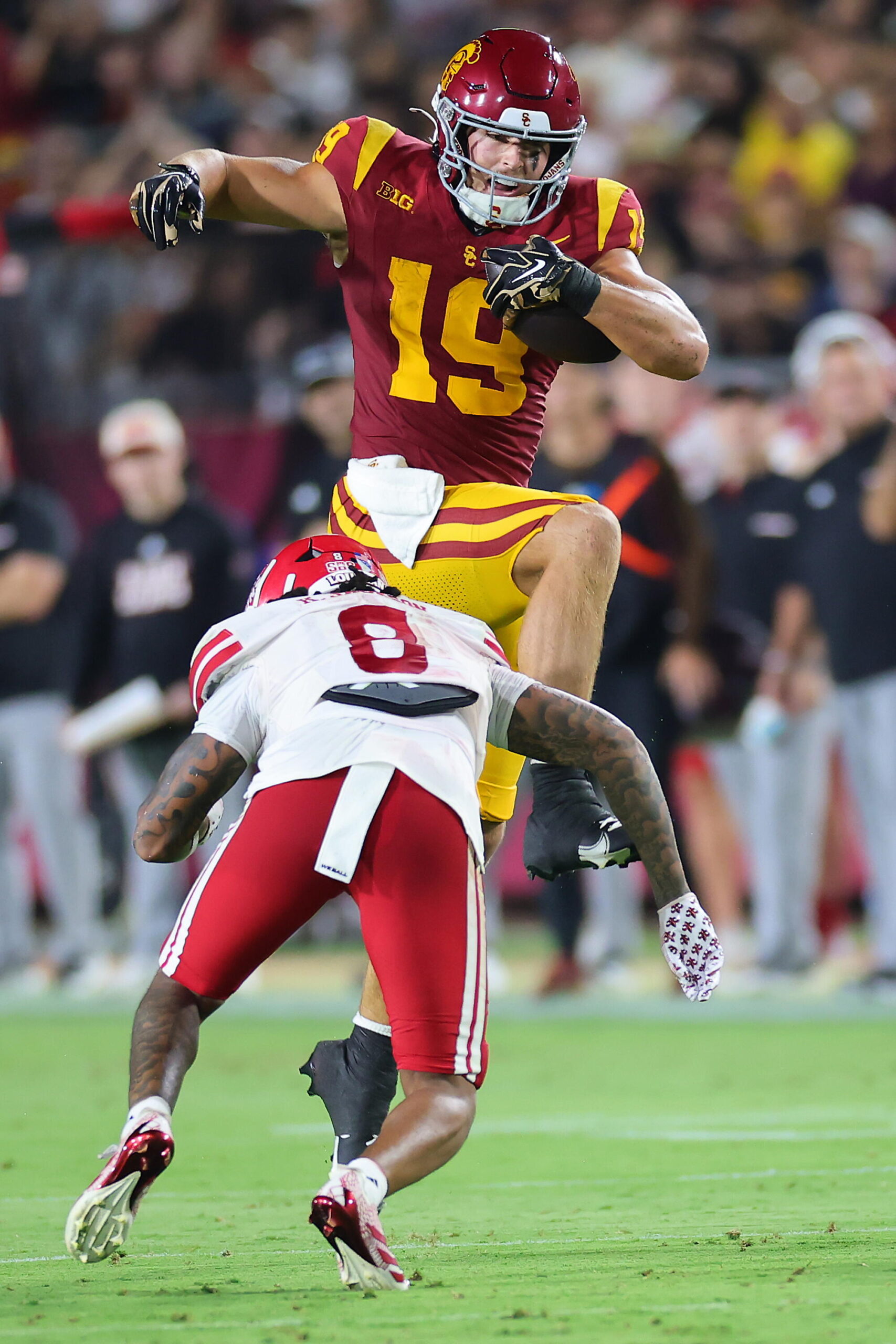
Mosley, who also had an acrobatic receiving touchdown Saturday, wasn’t the only one who made his presence felt. Tight end Mark Bowman had his eagerly anticipated breakout game, as he exploded for six catches, one of which he capped by hurdling two defenders. He finished with 83 yards and two touchdowns, all in the first half. Defensive tackle Luke Wafle, meanwhile, continued his streak of early dominance by tallying a team-leading seven tackles.
USC tight end Mark Bowman hurdles over Louisiana safety Kody Jackson during the first half Saturday.
(Kevin Terrell / Getty Images)
“I feel like our peak, our trajectory should be even higher because of how many young guys are playing,” Riley said.
The win wasn’t nearly as dominant an effort for the rest of USC’s defense, which was coming off of a shutout of Fresno State. Louisiana averaged 7.6 yards per play and scored 20 points in the second half, led by dual threat quarterback Lunch Winfield, who scampered to 91 rushing yards.
“We’re just gonna take this as a learning moment,” defensive tackle Jide Abasiri said. “I just feel like sometimes we’ll get comfortable or complacent, then that’s something we need to, going forward, fix when adversity hits.”
It wasn’t the sharpest night for the Trojans’ offense, either. Though, you wouldn’t know it from the box score. While USC rushed for 214 yards, nearly 100 came in the fourth quarter, with the game well in hand. Quarterback Jayden Maiava put up numbers once again, as well, completing 19 of 29 passes for 261 yards and five touchdowns.
USC receiver Trent Mosley makes a touchdown catch under pressure from Louisiana safety Maurion Eleam Saturday at the Coliseum.
(Mark J. Terrill / Ap Photo/mark J. Terrill)
The five passing scores tied a career high. But Maiava said after the game that it “definitely didn’t feel like” that strong of a performance.
Through two games, Maiava had accounted for as many touchdowns (six) as he had incomplete passes entering Saturday’s game. But on Saturday, he missed his first three passes, the third of which went directly to a Louisiana defensive back.
The interception was Maiava’s first of the season, and it led to a Louisiana field goal, giving the Ragin’ Cajuns (1-1) an early lead. It was also the first time the Trojans trailed this season.
USC (3-0) and its quarterback settled down after that. The Trojans mounted a 12-play scoring drive on the ensuing possession, and Maiava found Bowman for a five-yard score. Then, they mounted a 10-play drive, and Maiava found Bowman again.
By that point, USC’s offense had piled up almost 200 yards, while Louisiana had scraped together just 18.
But the Ragin’ Cajuns refused to go away — for the moment, at least. They marched the length of the field and scored, cutting USC’s lead to 14-10.
That was the closest they’d get. The Trojans mounted a third straight drive of 10 plays or more, and this time, Maiava fired a touchdown pass through the hands of a Louisiana defensive back on its way to freshman Kayden Dixon-Wyatt.
The knockout blow came soon after that. After its follow-up drive went nowhere, Louisiana made the mistake of punting to Mosley, who took off sprinting to his right and didn’t stop until he reached paydirt.
The punt return was his fourth score of the season. He added a fifth before the final buzzer sounded.
The rest of the night wouldn’t go nearly as smoothly. The intensity, Riley said, “dipped a little bit.” Louisiana would linger, well into the fourth quarter.
But by then, the Trojans could safely coast their way to a clean non-conference sheet, knowing the trust test of their season – and their stellar true freshmen – is still to come.
August employment report brings mixed blessings for the U.S. economy.
U.S. employers added a robust 162,000 jobs in August, signaling an employment rebound, even as finance-sector jobs declined, according to the Bureau of Labor Statistics’ latest Employment Situation Summary.
The sectors with the most job growth were leisure/hospitality (62,000 jobs), government (35,000 jobs), private education/health services (29,000 jobs), and construction (22,000 jobs).
In contrast, the financial and insurance sectors lost 7,400 jobs compared to July. The hardest-hit sectors were insurance carriers and related activities (-6,300) and credit intermediation and related activities (-3,400). Securities, commodity contracts, funds, trusts, and other financial vehicles, investments, and related activities was one of two sub-sectors to add jobs (2,200). The other was the monetary authority/central bank, which added 100 new jobs.
Unemployment continues to edge down slightly, remaining at 4.1%, according to the summary.
By historic standards, the low jobless rate has the Federal Reserve pivoting its focus from maximum employment to price stability, said Federal Reserve Chairman Kevin Warsh during his keynote speech at the Jackson Hole Symposium at the end of August.
“There should be no misunderstanding: The Fed’s price-stability objective of 2%, as measured by the personal consumption expenditures (PCE) price index, is a firm, fixed target,” he added.
“The data can be noisy, partly due to seasonal variation and differences in pay-period timing, but in our view, this suggests labor market momentum may have ebbed a little,” wrote the authors of a Bank of America Institute report released Thursday. “Still, the overall picture from the Bank of America jobs estimate is one of a relatively healthy labor market. This is also the case in Bank of America data on unemployment payments into customer accounts, which showed very little [year-over-year] change in August.”
Using anonymized customer data, the Bank of America Institute estimated that August’s YoY payroll growth fell 3 basis points to 1.5% from the previous month.
Likewise, the ADP authors reported that private-sector employees added 38,000 jobs in August, the slowest pace of job creation since January. The education and health services sector added 45,000 jobs. Other growth sectors include leisure and hospitality (16,000) and construction (12,000).
However, its findings diverge from BLS estimates in a few sectors. The ADP authors were optimistic about financial activities, reporting that the sector added 6,000 jobs. They also estimated that manufacturing and business and professional services shed 17,000 and 4,000 employees, respectively.
Companies with more than 500 employees added the most new positions in August (34,000), followed by companies with fewer than 20 employees (20,000). Small companies (20-49 employees) lost 17,000 jobs. Mid-sized companies’ hiring picture was mixed. Those with 50-249 employees hired 2,000 people, while those with 249-499 employees let 2,000 go.
Although payroll growth is up, it offers little comfort to Wall Street because the financial sector remains under pressure.
Sabalenka’s pace and power was too much for world number 160 Iatcenko, who managed just three winners compared to the 24 put away by the top seed.
Iatcenko looked a bundle of nerves in the biggest match of her career, but composed herself to get on the scoreboard for 5-1 and immediately broke out into a relieved smile.
It was merely respite as Sabalenka held to love in less than 90 seconds to clinch the opening set.
Despite only being on court for 24 minutes, Iatchenko decided she wanted a bathroom break to change her kit – but more likely for a mental reset than anything else.
Sabalenka kept loose while she waited by practising her serves and maintained her rhythm as she surged a double break ahead for 3-0 in the second set.
It was not all plain-sailing for Sabalenka as she lost serve in a sloppy fourth game, but reasserted her authority with two more breaks as Iatchenko was taught a harsh lesson.
The Russian can console herself with the knowledge she has gained valuable experience against the world number one on the biggest court on the planet – and a bumper paycheck.
Coming into the US Open, she had earned $300,000 (£220,000) in her career but takes another $190,000 (£140,000) home from New York to reinvest into her future.
Earlier on Wednesday, third seed Pegula continued her quest for a maiden Grand Slam singles title with a comfortable victory over fellow American Sofia Kenin.
Pegula also has a shot of replacing Sabalenka as world number one if she wins the title, as does fourth seed Coco Gauff, and kept her dream alive with a 6-3 6-1 win.
There were also straight-set wins for Wimbledon runner-up Karolina Muchova, two-time major semi-finalist Marta Kostyuk and teenage American sensation Iva Jovic as the patten of few shocks in the women’s draw over the opening two rounds continued.