Consultation

Venezuelan Gov’t Announces New Popular Consultation, ‘Productive Pilgrimage’

Delcy Rodríguez kicks off the new “pilgrimage” stage at the Cabelum company in Bolívar State. (Presidential Press)

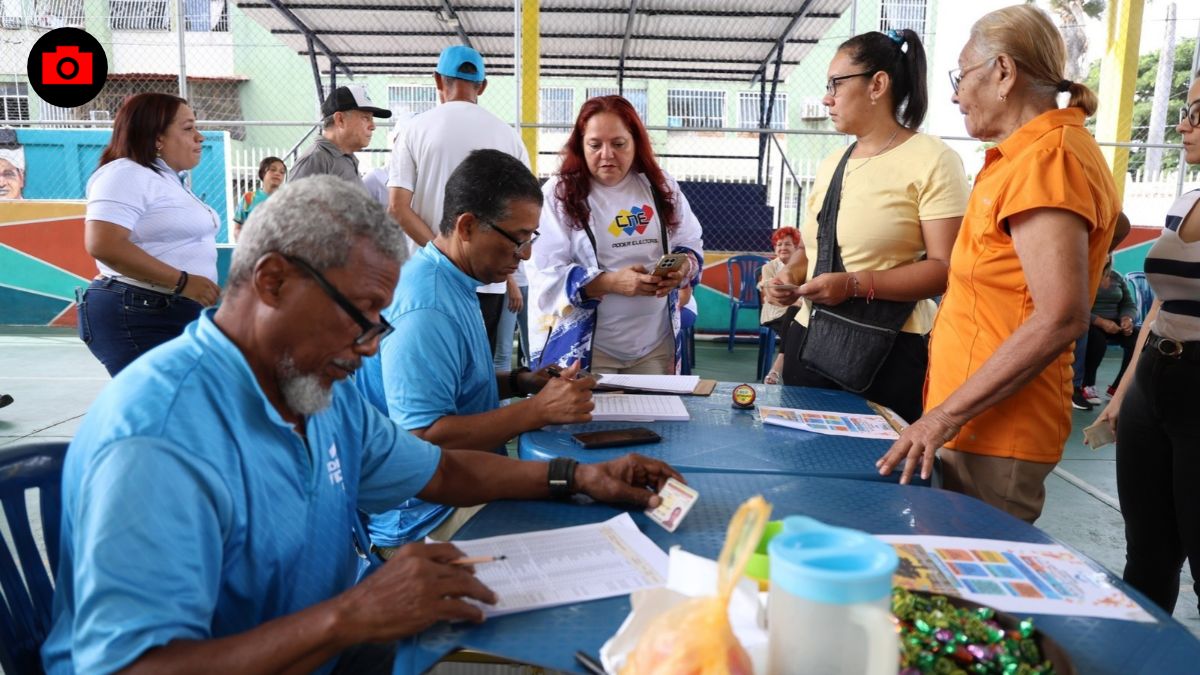
Mérida, May 21, 2026 (venezuelanalysis.com) – Venezuelan Acting President Delcy Rodríguez announced that on 12 July the country will conduct its second popular consultation of the year to fund local projects. 

The Venezuelan leader made the announcement during the inauguration of the “City of Entrepreneurship” at the Giant Cacique Tiuna commune in Caracas on Monday, an event with local small-scale entrepreneurs. The upcoming vote follows the first consultation of 2026, which took place on March 8 in 5,336 communal circuits.

“I am pleased to announce that the second popular consultation will take place on July 12. So, everyone should prepare for this national consultation,” Rodríguez stated. “It will be open to projects in any of the Seven Transformations,” she added, referring to the government’s development plan across different areas.

A significant development for the upcoming vote is the incorporation of new types of organizations into the process. The acting president announced that the consultation will include 120,000 condominium boards and 15,000 neighbor associations, emphasizing the importance of consolidating a “common effort” alongside traditional communal projects. Following the March 8 consultation, Rodríguez pledged to expand the process to traditionally middle-class areas where there is no grassroots organization.

Popular consultations have become the main mechanism of government policy to transfer funds to grassroots organizations. Prior to the vote, communities hold assemblies to identify the local priorities, traditionally focusing on infrastructure, public services, or supplying healthcare facilities.

The most-voted initiative receives the equivalent of US $10,000, with the local organizations charged with executing the projects and rendering accounts. According to official figures, the Venezuelan government supported 33,743 initiatives in 2025. On some occasions, state, regional, and municipal offices have funded the second-place projects in several communes.

The upcoming July vote will be the seventh national consultation since the mechanism was consolidated, following two rounds in 2024 and three in 2025.

Venezuelan authorities have yet to specify whether the condominium boards and neighbor associations will access similar funding and if all will be eligible to participate. Their jurisdiction and ability to access state funds have yet to be defined. The move to expand the consultation to organizations in traditionally middle-class apartment complexes and residential areas bypasses the communal instances envisioned by former President Hugo Chávez as “unit cells” for the construction of socialism.

New Phase of ‘National Pilgrimage’

The announcement of the July consultation coincided with the launch of a second phase of the “Great National Pilgrimage” to defend peace and oppose sanctions. The pilgrimage, a large-scale political mobilization strategy, began the new stage on 19 May with a special emphasis on dialogue with the productive sectors of the economy.

According to Interior Minister Diosdado Cabello, this new phase differs from the first stage, which concluded on April 30, by expanding its reach to non-metropolitan areas and focusing on specific regional economic activities such as fishing, agriculture, and the oil industry.

During a rally in the western state of Zulia on Tuesday, Cabello explained that the objective is to establish direct engagement with the population, independent of political affiliation, and to channel proposals on public services, security, and financing to the Rodríguez administration.

At the same time, the Caribbean nation’s acting president held meetings in Bolívar state with the aluminum conductor company Cabelum. She stated that the pilgrimage aimed to go “to the heart of productive Venezuela” to identify structural obstacles and promote productivity. In recent months, the Venezuelan National Assembly has approved several pro-business reforms with the stated purpose of attracting private sector investment, both national and foreign.

Rodríguez explicitly linked the pilgrimage’s goals to the need for diplomatic dialogue with the Trump administration to request a removal of unilateral coercive measures, which she lamented have imposed a “very high cost” on the Venezuelan population.

The pilgrimage, which also includes mass assemblies and the collection of proposals for public management, is expected to run alongside the preparations for the upcoming July consultation. Venezuelan authorities have defended the initiative as an effort to reach out to other political factions under common national goals.

Edited by Ricardo Vaz in Caracas.

Source link

Who Speaks in the Kurultai? The Logic of Power Behind Consultation

In August 2026, Kazakhstan will hold an unusual election. The newly established unicameral parliament—the “Kurultai”—will, for the first time, be formed entirely through party lists. Independent candidates and regional representatives will no longer enter the core of state power. As a representative institution of so-called “steppe democracy,” the Kurultai has undergone multiple transformations throughout history, both in its functions and in the composition of its participants. According to recent constitutional arrangements, this mechanism has been elevated to an unprecedented level. This raises a key question: what direction does this transformation reveal in the current round of political modernization?

Historically, the Kurultai functioned as an important mechanism of consultation in steppe society, not as a system of mass participation, but as a platform composed of multiple layers of elite actors. Its participants included khans and sultans who held political authority, biys who were responsible for adjudication and governance, military leaders who organized mobilization in times of war, as well as tribal elders and influential akyns and zhyrau who shaped public discourse. In addressing critical issues such as succession, warfare, and internal conflict, the Kurultai did not rely on formalized procedures or fixed institutional rules. Instead, decisions were reached through authority, negotiation, and consensus. Although ordinary people did not possess direct institutional channels of participation, their interests and attitudes indirectly constrained decision-making through tribal structures, public opinion, and their willingness to comply with and implement decisions.

During the Soviet period and the early years of Kazakhstan’s independence, the Kurultai gradually lost its function as an operative political institution and became a symbol of historical memory and cultural identity. It was not until 2022, amid a serious crisis of political trust, that this traditional symbol was revived and institutionalized as the “National Kurultai,” reintroduced as a new format of public dialogue within the framework of state governance. Its declared purpose is to strengthen interaction between the government and society. In terms of composition, the National Kurultai formally continues the tradition of “broad participation,” including regional representatives, members of parliament, professionals from various sectors, and leaders of social organizations with a degree of public influence. However, this diversity is largely structural rather than functional. It reflects broad inclusion, but does not necessarily translate into a substantive mechanism for reconciling competing interests. The institution lacks the capacity to independently coordinate diverse social demands.

Moreover, the agenda-setting process and operational logic of the National Kurultai remain distinctly top-down. Key issues are primarily defined by the state, while participants tend to act as interpreters and endorsers of pre-established policy directions. In this sense, “consultation” often takes the form of explaining and legitimizing the state agenda. Through the participation and symbolic endorsement of elite actors, the state is able to construct an image of “broad public dialogue,” thereby reinforcing the legitimacy of its reform agenda. In this respect, the National Kurultai should not be seen as a simple continuation of a traditional consultative institution, but rather as an institutionalized platform for political communication and discursive integration. Its core function lies not in generating genuinely competitive policy alternatives, but in organizing a process of “consensus production” aimed at shaping values, mobilizing society, and reproducing the legitimacy of ongoing reforms.

In 2026, President Kassym-Jomart Tokayev announced a major reform of Kazakhstan’s parliamentary system, proposing the transition to a unicameral “Kurultai Parliament.” Its members will be elected entirely through proportional representation based on party lists. The reform abolishes both the presidential quota and the special quota previously allocated to the Assembly of the People of Kazakhstan. At the same time, quota guarantees for women, youth, and persons with disabilities will be retained, but incorporated into party list mechanisms rather than being directly allocated by the state.

From the perspective of institutional design, this reform strengthens the role of political parties as key intermediaries within the political system, positioning them as the primary channel through which social demands are transmitted to the state. In the context of electoral competition, parties are expected to secure support by more effectively representing public interests, while also integrating fragmented social demands. Compared with the previous mixed model of representation, which included multiple categories of actors, a party-centered system enhances the coherence of political positions: social demands are systematically aggregated and restructured before entering the political arena, thereby improving, to some extent, the efficiency of policy articulation and decision-making.

Building on this, if meaningful and substantive competition among political parties can be established, this model has the potential not only to integrate social interests but also to more fully reflect the diversity of social groups. Political parties could function not merely as instruments of organization and coordination, but also as a crucial link between diverse societal demands and the process of state decision-making—balancing efficiency in representation with breadth and inclusiveness.Under such conditions, the consultative model of the Kurultai may gradually evolve from an elite-driven mechanism of integration into an institutionalized system of interest articulation grounded in party competition, thereby enhancing, to a certain extent, its capacity for bottom-up representation.

Source link