condemn

US critics and allies condemn Maduro’s abduction at UN Security Council | Nicolas Maduro News

Denmark and Mexico, also threatened by US President Donald Trump, warn that the US violated international law.

Members of the United Nations Security Council (UNSC), including key US allies, have warned that the abduction of Venezuelan President Nicolas Maduro and his wife by US special forces could be a precedent-setting event for international law.

The 15-member bloc met for an emergency meeting on Monday in New York City, where the Venezuelan pair were also due to face drug trafficking charges in a US federal court.

Recommended Stories

list of 4 itemsend of list

Venezuela’s ambassador to the UN, Samuel Moncada, condemned the US operation as “an illegitimate armed attack lacking any legal justification”, in remarks echoed by Cuba, Colombia and permanent UNSC members Russia and China.

“[The US] imposes the application of its laws outside its own territory and far from its coasts, where it has no jurisdiction, using assaults and the appropriation of assets,” Cuba’s ambassador, Ernesto Soberon Guzman, said, adding that such measures negatively affected Cuba.

Russia’s ambassador, Vassily Nebenzia, said the US cannot “proclaim itself as some kind of a supreme judge, which alone bears the right to invade any country, to label culprits, to hand down and to enforce punishments irrespective of notions of international law, sovereignty and non-intervention”.

Notable critics at the emergency session included traditional US allies, Mexico and Denmark, both of whom Trump has separately threatened with military action over the past year.

Mexico’s ambassador, Hector Vasconcelos, said that the council had an “obligation to act decisively and without double standards” towards the US, and it was for “sovereign peoples to decide their destinies,” according to a UN readout.

His remarks come just days after Trump told reporters that “something will have to be done about Mexico” and its drug cartels, following Maduro’s abduction.

Denmark, a longstanding US security ally, said that “no state should seek to influence political outcomes in Venezuela through the use of threat of force or through other means inconsistent with international law.”

“The inviolability of borders is not up for negotiation,” Denmark’s ambassador, Christina Markus Lassen, told the council in an oblique reference to Trump’s threat that the US would annex Greenland, a self-governed Danish territory.

France, another permanent member of the UNSC, also criticised the US, marking a shift in tone from French President Emmanuel Macron’s initial remarks that Venezuelans “can only rejoice” following Maduro’s abduction.

“The military operation that has led to the capture of Maduro runs counter to the principle of peaceful dispute resolution and runs counter to the principle of non-use of force,” said the French deputy ambassador, Jay Dharmadhikari.

Representatives from Latvia and the United Kingdom, another permanent UNSC member, focused on the conditions in Venezuela created by Maduro’s government.

Latvia’s ambassador, Sanita Pavļuta-Deslandes, said that Maduro’s conditions in Venezuela posed “a grave threat to the security of the region and the world”, citing mass repression, corruption, organised crime and drug trafficking.

The UK ambassador, James Kariuki, said that “Maduro’s claim to power was fraudulent”.

The US ambassador, Mike Waltz, characterised the abduction of Maduro and his wife as a “surgical law enforcement operation facilitated by the US military against two indicted fugitives of American justice”.

The White House defended its wave of air strikes on Venezuela, and in the waters near it, and Maduro’s abduction as necessary to protect US national security, amid unproven claims that Maduro backed “narcoterrorist” drug cartels.

Source link

Venezuela: Latin American Countries Jointly Condemn US Attacks as Interim Gov’t Backs Maduro

The Venezuelan armed forces expressed readiness to maintain peace and internal order in the country. (Archive)

Caracas, January 4, 2025 (venezuelanalysis.com) – The governments of Brazil, Chile, Colombia, Mexico, Uruguay, and Spain issued a joint statement Sunday rejecting “unilateral US actions in Venezuelan territory.”

“These actions contravene basic principles of international law and represent a very dangerous precedent for peace and regional security,” the communique read.

The joint statement followed widespread regional and global condemnation of Washington’s January 3 strikes against Venezuelan military sites and kidnapping of President Nicolás Maduro and First Lady Cilia Flores.

The countries went on to issue calls for dialogue and urged the United Nations secretary general and member states to help “de-escalate tensions and preserve peace.” 

In response to US President Donald Trump’s claim that he would “run” Venezuela, the signatories expressed concern over “attempts at foreign government control or seizure of natural resources.” However, the declaration made no mention of Maduro nor called for his release.

The diplomatic response to the US attacks also included an emergency summit of the Community of Latin American and Caribbean nations (CELAC), held on Sunday, January 4. Venezuelan Foreign Minister Yván Gil decried the US actions as blatant violations of international law and the United Nations Charter.

“The US has violated the personal immunity of a sitting head of state,” Gil told regional leaders in the conference call. “Kidnapping a president is kidnapping a people’s sovereignty.”

Venezuela’s top diplomat urged CELAC member-states to “take a step forward,” warning that silence would amount to acceptance of Washington’s unilateral acts.

A number of countries, including Venezuelan allies Russia and China, have forcefully denounced the US military operation. In a Sunday statement, Beijing charged Washington with a “clear violation of international law” and called for Maduro and Flores’ “immediate release.”

The UN Security Council is scheduled to hold an emergency session on Monday.

For her part, Venezuela Vice President and now acting Interim President Delcy Rodríguez reiterated demands for Maduro’s release and vowed that the country would not submit “to any empire.” Rodríguez held a press conference Saturday afternoon and confirmed the enactment of a decree establishing a “state of external commotion.” The instrument grants the executive additional tools, including the ability to mobilize troops or restrict civil liberties, for a period of 90 days that can be extended.

On Saturday night, the Venezuelan Supreme Court ruled that Maduro’s kidnapping and rendition to US soil constituted a temporary absence and that Rodríguez was mandated to take over the presidency on an interim basis.

Footage surfaced Saturday evening showing Maduro being walked out of an airplane in New York. He was later taken to a DEA facility before being moved, along with Flores, to the Metropolitan Detention Center in Brooklyn. He made no statements but greeted DEA officers and appeared upbeat in photos, making a peace sign and holding his thumbs up.

The Venezuelan president was indicted by a New York district court on Saturday, with charges including “narcoterrorism conspiracy” and “possession of machine guns.” A hearing is reportedly scheduled for Monday.

For their part, Venezuela’s National BolivarianArmed Forces (FANB) likewise issued a communique on Sunday, rejecting the “cowardly kidnapping” of Maduro and Flores and reiterating its mission to “confront imperial aggression.”

The FANB voiced support for Rodríguez taking over the presidency on an acting basis and vowed to maintain readiness to preserve “peace and internal order.” 

The Defense Ministry has yet to provide a report on damages and casualties from the US strikes, though Sunday’s communiqué condemned the “cold-blooded murder” of members of Maduro’s security detail. Unconfirmed reports have put forward a figure of 80 deaths.

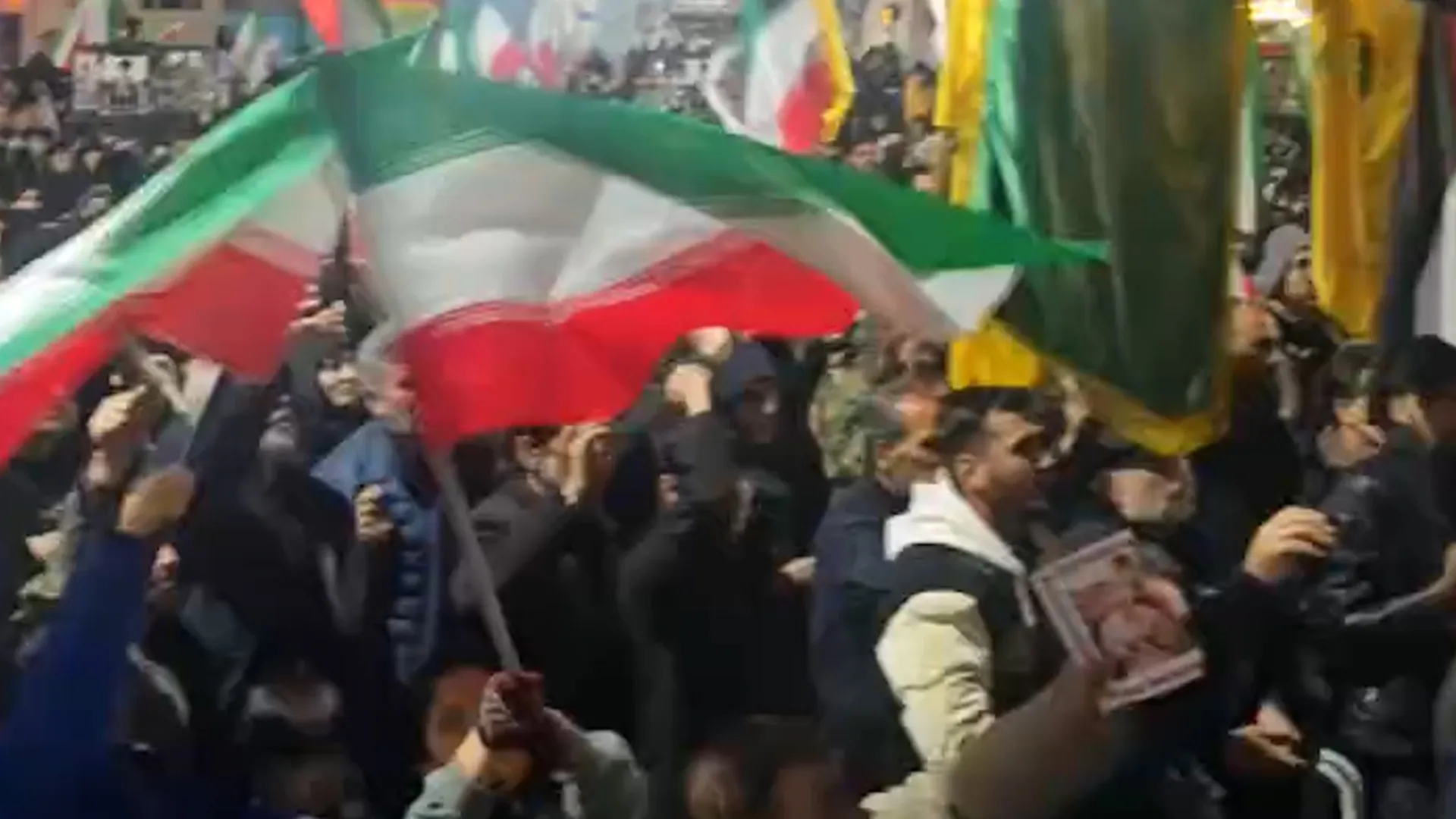
Venezuelan popular movements and political parties took to the streets for a second consecutive day on Sunday, holding marches and rallies in Caracas and other cities. Public transportation and retail functioned to a greater degree than on Saturday.

The US attacks also spurred numerous international solidarity demonstrations over the weekend. Crowds gathered in dozens of Latin American, European and US cities. A demonstration was called for Sunday outside the Brooklyn detention center where Maduro is being held.

The January 3 operation came on the heels of the largest ever US Caribbean military build-up, with Trump having previously ordered dozebs of strikes against small boats accused of carrying drugs, killing over 100 civilians. The US president has repeatedly expressed intentions of using military threats to extract favorable oil deals for US corporations.

In a Sunday interview, Secretary of State Marco Rubio warned the acting government in Caracas to “make the right decisions” and affirmed that the US retained “leverage” mechanisms, including a naval blockade stopping oil exports.

Source link

Venezuelan, International Popular Movements Condemn US Bombings, Maduro Kidnapping

Caracas, January 3, 2026 (venezuelanalysis.com) – Venezuelan popular movements and international solidarity organizations have taken to the streets to condemn a US military attack against the country and the kidnapping of President Nicolás Maduro.

Following the bombings and special operations raid in the early hours of January 3, pro-government collectives began to concentrate in Caracas near Miraflores Presidential Palace. Demonstrations were likewise registered in many other Venezuelan cities.

“Long live a free and revolutionary Venezuela,” grassroots leader Mariela Machado told press in the Caracas demonstration. “International institutions must stop being accomplices and take a stance because our people are being massacred.”

She went on to state that “the US government is not the world’s police” and demanded the safe return of the Venezuelan President.

Venezuelan Interior Minister Diosdado Cabello and Defense Minister Vladimir Padrino López published statements in the early morning hours, urging the international community to take a stance against the US actions and calling for popular mobilization.

International solidarity organizations also set up emergency rallies in dozens of cities, including London, New York and several Latin American capitals.

US forces began the attack at 2 am local time with missiles fired against a number of Venezuela military installations in the capital and surrounding areas. Social media users broadcast fires and large columns of smoke emerging from Fuerte Tiuna, the main military installation in Caracas.

The port in La Guaira, an airbase in Higuerote, Miranda State, and a radar facility in El Hatillo, Eastern Caracas, were among the targets reportedly struck. Venezuelan authorities have not disclosed information concerning damages and casualties.

A few hours after the first bombings, US President Donald Trump announced that a special operations raid had kidnapped Maduro and first lady Cilia Flores and that the two were “flown out of the country.” The pair was reportedly taken aboard the USS Iwo Jima warship.

US Attorney General Pam Bondi stated that Maduro and Flores were indicted in a New York District Court on charges including “narco-terrorism conspiracy.” In recent years, US officials have repeatedly accused Maduro and other Venezuelan high-ranking officials of “flooding” the US with drugs. However, they have not presented any court-tested evidence, while UN and DEA reports have shown Venezuela to be a marginal player in global drug trafficking.

In a Saturday press conference, Trump stated that the US will “run” Venezuela until there are conditions for a “safe, proper and judicious transition.” He added that Secretary of State Marco Rubio and other officials will be charged with “running the country.”

The US president reiterated claims to Venezuelan oil resources and threatened that Venezuela would have to “reimburse” the US for oil nationalizations and damages from alleged drug trafficking. Trump went on to say that Rubio had held talks with Venezuelan Vice President Delcy Rodríguez, alleging that she had been sworn in and had vowed to accept US dictates.

Trump dismissed the idea of María Corina Machado taking power in the South American nation, affirming that the far-right leader lacks on-the-ground support. 

Washington’s military attack and special operations raid followed months of buildup and escalating regime-change threats against Caracas. US forces have amassed the largest military deployment in decades in the Caribbean Sea while also conducting dozens of bombings against small boats accused of narcotics trafficking.

The military operation drew widespread international condemnation from Latin America and elsewhere.

“The US bombings and Maduro’s capture are unacceptable,” Brazilian President Lula da Silva wrote on social media. “These actions are an affront to Venezuelan sovereignty and set an extremely dangerous precedent for the international community.”

Colombian, Mexican and Cuban leaders were among those to strongly reject US actions and demand respect for international law.

Russian Foreign Minister Sergei Lavrov reportedly held a phone conversation with Vice President Rodríguez, reiterating Moscow’s support for the Venezuelan government and a call for dialogue.

For its part, the Chinese foreign ministry issued a statement “fiercely condemning the use of force against a sovereign nation.” Beijing urged Washington to cease its violations of international law and respect other countries’ sovereignty.

Venezuelan Foreign Minister Yván Gil held multiple phone conversations with counterparts from different countries who expressed their condemnation of the US attacks as violations of international law.

Caracas has likewise requested an emergency meeting of the United Nations Security Council. Two prior meetings called by Venezuela saw China, Russia and other countries criticize the US’ military actions but ultimately no resolutions were put forward.


Source link

UN Security Council members condemn Israel’s recognition of Somaliland | United Nations News

Most United Nations Security Council (UNSC) members have slammed Israel’s recognition of Somaliland at a meeting convened in response to the move, which several countries said may also have serious implications for Palestinians in Gaza.

The United States was the only member of the 15-member body not to condemn Israel’s formal recognition of the breakaway region of Somalia at the emergency meeting in New York City on Monday, although it said its own position on Somaliland had not changed.

Recommended Stories

list of 4 itemsend of list

Addressing the UNSC, Somalia’s UN ambassador, Abu Bakr Dahir Osman, implored members to firmly reject Israel’s “act of aggression”, which he said not only threatened to fragment Somalia but also to destabilise the wider Horn of Africa and the Red Sea regions.

In particular, Osman said that Somalia was concerned the move could be aimed at advancing Israel’s plans to forcibly “relocate the Palestinian population from Gaza to the northwestern region of Somalia”.

“This utter disdain for law and morality must be stopped now,” he said.

The emergency meeting was called after Israel last week became the first and only country to recognise the self-declared Republic of Somaliland as an independent and sovereign state.

Al Jazeera’s Gabriel Elizondo, reporting from UN headquarters in New York, said that “14 of the 15 council members condemned Israel’s recognition of Somaliland”, while the US “defended Israel’s action but stopped short of following Israel’s lead”.

Tammy Bruce, the US deputy representative to the UN, told the council that “Israel has the same right to establish diplomatic relations as any other sovereign state”.

However, Bruce added, the US had “no announcement to make regarding US recognition of Somaliland, and there has been no change in American policy”.

Israel’s deputy ambassador to the UN, Jonathan Miller, told the council that Israel’s decision was “not a hostile step toward Somalia, nor does it preclude future dialogue between the parties”.

“Recognition is not an act of defiance. It is an opportunity,” Miller claimed.

Many other countries expressed concerns about Israel’s recognition of Somaliland, including the implications for Palestinians, in statements presented to the UNSC.

Speaking on behalf of the 22-member Arab League, its UN envoy, Maged Abdelfattah Abdelaziz, said the group rejected “any measures arising from this illegitimate recognition aimed at facilitating forced displacement of the Palestinian people, or exploiting northern Somali ports to establish military bases”.

Pakistan’s deputy UN ambassador, Muhammad Usman Iqbal Jadoon, said at the meeting that Israel’s “unlawful recognition of [the] Somaliland region of Somalia is deeply troubling”, considering it was made “against the backdrop of Israel’s previous references to Somaliland of the Federal Republic of Somalia as a destination for the deportation of Palestinian people, especially from Gaza”.

China and the United Kingdom were among the permanent UNSC members to reject the move, with China’s UN envoy, Sun Lei, saying his country “opposes any act to split” Somalia’s territory.

“No country should aid and abet separatist forces in other countries to further their own geopolitical interests,” Sun Lei said.

Some non-members of the UNSC also requested to speak, including South Africa, whose UN envoy, Mathu Joyini, said that her country “reaffirmed” Somalia’s “sovereignty and territorial integrity” in line with international law, the UN Charter and the constitutive act of the African Union.

Comparison with Palestinian recognition

In addition to defending Israel’s decision, US envoy Bruce compared the move to recognise Somaliland with Palestine, which has been recognised by more than 150 of the UN’s member states.

“Several countries, including members of this council, have unilaterally recognised a non-existent Palestinian state, yet no emergency meeting has been convened,” Bruce said, criticising what she described as the UNSC’s “double standards”.

However, Slovenia’s UN ambassador, Samuel Zbogar, rejected the comparison, saying, “Palestine is not part of any state. It is illegally occupied territory… Palestine is also an observer state in this organisation [the UN].”

“Somaliland, on the other hand, is a part of a UN member state, and recognising it goes against… the UN Charter,” Zbogar added.

The self-declared Republic of Somaliland broke away from Somalia in 1991, after a civil war under military leader Siad Barre.

Source link

UN experts condemn US naval blockade of Venezuela as illegal aggression | Donald Trump News

UN experts criticise US blockade for endangering human rights and call for an investigation into alleged violations.

Four United Nations human rights experts have condemned the partial naval blockade of Venezuela by the United States, finding it an illegal armed aggression and calling on the US Congress to intervene.

“There is no right to enforce unilateral sanctions through an armed blockade,” the UN experts said in a joint statement on Wednesday.

Recommended Stories

list of 3 itemsend of list

The US has deployed a major military force in the Caribbean and intercepted oil tankers as part of a naval blockade against Venezuelan vessels it considers to be under sanctions.

A blockade is a prohibited use of military force against another country under the UN Charter, they added.

“It is such a serious use of force that it is also expressly recognised as illegal armed aggression under the General Assembly’s 1974 Definition of Aggression,” the experts said. “The illegal use of force, and threats to use further force at sea and on land, gravely endanger the human right to life and other rights in Venezuela and the region.”

US President Donald Trump accuses Venezuela of using oil, the South American country’s main resource, to finance “narcoterrorism, human trafficking, murders and kidnappings”.

Caracas denies any involvement in drug trafficking. It says Washington is seeking to overthrow its president, Nicolas Maduro, to seize Venezuela’s oil reserves, the largest in the world.

Since September, US forces have launched dozens of air strikes on boats that Washington alleges were transporting drugs. It has yet to provide evidence for those accusations. More than 100 people have been killed.

‘US Congress should intervene’

“These killings amount to violations of the right to life. They must be investigated and those responsible held accountable,” the experts said.

“Meanwhile, the US Congress should intervene to prevent further attacks and lift the blockade,” they added.

They called on countries to take measures to stop the blockade and illegal killings and bring the perpetrators to justice.

The four who signed the joint statement are: Ben Saul, special rapporteur on protecting human rights while countering “terrorism”; George Katrougalos, an expert on promoting a democratic and equitable international order; development expert Surya Deva; and Gina Romero, special rapporteur on the right to freedom of peaceful assembly and association.

Source link

Vance declines to condemn bigotry as conservatives feud at Turning Point

Vice President JD Vance said Sunday that the conservative movement should be open to everyone as long as they “love America,” declining to condemn a streak of antisemitism that has divided the Republican Party and roiled the opening days of Turning Point USA’s annual convention.

After a long weekend of debates about whether the movement should exclude figures such as bigoted podcaster Nick Fuentes, Vance came down firmly against “purity tests.”

“I didn’t bring a list of conservatives to denounce or to de-platform,” Vance said during the Phoenix convention’s closing speech.

Turning Point leader Erika Kirk, who took the helm after the fatal shooting of her husband, Charlie Kirk, has endorsed Vance as a potential successor to President Trump, a helpful nod from an influential group with an army of volunteers.

But the tension on display at the four-day gathering foreshadowed the treacherous political waters that Vance, or anyone else who seeks the next Republican presidential nomination, will need to navigate in the coming years. Top voices in the “Make America Great Again” movement are jockeying for influence as Republicans begin considering a future without Trump, and there is no clear path to holding his coalition together.

Defining a post-Trump GOP

The Republican Party’s identity has been intertwined with Trump for a decade, but he’s constitutionally ineligible to run for reelection despite his musings about serving a third term. Tucker Carlson said people are wondering, “who gets the machinery when the president exits the scene?”

So far, it looks like settling that question will come with a lot of fighting among conservatives. The Turning Point conference featured arguments about antisemitism, Israel and environmental regulations, not to mention rivalries among leading commentators.

Ben Shapiro, co-founder of the conservative media outlet Daily Wire, used his speech on the conference’s opening night to denounce “charlatans who claim to speak in the name of principle but actually traffic in conspiracism and dishonesty.”

“These people are frauds and they are grifters and they do not deserve your time,” Shapiro said. He specifically called out Carlson for hosting Fuentes for a friendly interview on his podcast.

Carlson brushed off the criticism when he took the stage barely an hour later, and he said the idea of a Republican “civil war” was “totally fake.”

“There are people who are mad at JD Vance, and they’re stirring up a lot of this in order to make sure he doesn’t get the nomination,” he said. Carlson described Vance as “the one person” who subscribes to the “core idea of the Trump coalition,” which Carlson said was “America first.”

Turning Point spokesperson Andrew Kolvet framed the discord as a healthy debate about the future of the movement, an uncomfortable but necessary process of finding consensus.

“We’re not hive-minded commies,” he wrote on social media. “Let it play out.”

‘You don’t have to apologize for being white anymore’

Vance acknowledged the controversies that dominated the Turning Point conference, but he did not define any boundaries for the conservative movement besides patriotism.

“We don’t care if you’re white or black, rich or poor, young or old, rural or urban, controversial or a little bit boring, or somewhere in between,” he said.

Vance didn’t name anyone, but his comments came in the midst of an increasingly contentious debate over whether the right should give a platform to commentators espousing antisemitic views, particularly Fuentes, whose followers see themselves as working to preserve America’s white, Christian identity. Fuentes has a growing audience, as does top-rated podcaster Candace Owens, who routinely shares antisemitic conspiracy theories.

“We have far more important work to do than canceling each other,” he said.

Vance ticked off what he said were the accomplishments of the administration as it approaches the one-year mark, noting its efforts at the border and on the economy. He emphasized efforts to end diversity, equity and inclusion policies, drawing applause by saying they had been relegated to the “dustbin of history.”

“In the United States of America, you don’t have to apologize for being white anymore,” he said.

Vance also said the U.S. “always will be a Christian nation,” adding that “Christianity is America’s creed, the shared moral language from the Revolution to the Civil War and beyond.”

Those comments resonated with Isaiah White-Diller, an 18-year-old from Yuma, Ariz., who said he would support Vance if he runs for president.

“I have my right to be Christian here, I have my right to say whatever I want,” White-Diller said.

Turning Point backs Vance

Vance hasn’t disclosed his future plans, but Erika Kirk said Thursday that Turning Point wanted Vance “elected for 48 in the most resounding way possible.” The next president will be the 48th in U.S. history.

Turning Point is a major force on the right, with a nationwide volunteer network that can be especially helpful in early primary states, when candidates rely on grassroots energy to build momentum. In a surprise appearance, rapper Nicki Minaj spoke effusively about Trump and Vance.

Vance was close with Charlie Kirk, and they supported each other over the years. After Kirk’s killing on a college campus in Utah in September, the vice president flew out on Air Force Two to collect Kirk’s remains and bring them home to Arizona. Vance helped uniformed service members carry the casket to the plane.

Emily Meck, 18, from Pine City, N.Y., said she appreciated Vance making space for what she called a wide variety of views.

“We are free-thinkers, we’re going to have these disagreements, we’re going to have our own thoughts,” Meck said.

Trump has spoken highly of both Vance and Secretary of State Marco Rubio as potential successors, even suggesting they could form a future Republican ticket. Rubio has said he would support Vance.

Asked in August whether Vance was the “heir apparent,” Trump said, “Most likely.”

“It’s too early, obviously, to talk about it, but certainly he’s doing a great job, and he would be probably [the] favorite at this point,” he said.

Cooper and Govindarao write for the Associated Press.

Source link

Rights groups condemn new record number of executions in 2025

Caroline HawleyDiplomatic correspondent

ESOHR Issam al-ShazlyESOHR

Egyptian fisherman Issam al-Shazly was executed on Tuesday after being convicted of drug-related charges

Saudi Arabia has surpassed its record for the number of executions carried out annually for a second year in a row.

At least 347 people have now been put to death this year, up from a total of 345 in 2024, according to the UK-based campaign group Reprieve, which tracks executions in Saudi Arabia and has clients on death row.

It said this was the “bloodiest year of executions in the kingdom since monitoring began”.

The latest prisoners to be executed were two Pakistani nationals convicted of drug-related offences.

Others put death this year include a journalist and two young men who were children at the time of their alleged protest-related crimes. Five were women.

But, according to Reprieve, most – around two thirds – were convicted of non-lethal drug-related offences, which the UN says is “incompatible with international norms and standards”.

More than half of them were foreign nationals who appear to have been put to death as part of a “war on drugs” in the kingdom.

The Saudi authorities have not responded to the BBC’s request for comment on the rise in executions.

“Saudi Arabia is operating with complete impunity now,” said Jeed Basyouni, Reprieve’s head of death penalty for the Middle East and North Africa. “It’s almost making a mockery of the human rights system.”

She described torture and forced confessions as “endemic” within the Saudi criminal justice system.

Ms Basyouni called it a “brutal and arbitrary crackdown” in which innocent people and those on the margins of society have been caught up.

Tuesday saw the execution of a young Egyptian fisherman, Issam al-Shazly, who was arrested in 2021 in Saudi territorial waters and said he had been coerced into smuggling drugs.

Reprieve says that 96 of the executions were solely linked to hashish.

“It almost seems that it doesn’t matter to them who they execute, as long as they send a message to society that there’s a zero-tolerance policy on whatever issue they’re talking about – whether it’s protests, freedom of expression, or drugs,” said Ms Basyouni.

There has been a surge of drug-related executions since the Saudi authorities ended an unofficial moratorium in late 2022 – a step described as “deeply regrettable” by the UN human rights office.

Speaking anonymously to the BBC, relatives of men on death row on drugs charges have spoken of the “terror” they’re now living in.

One told the BBC: “The only time of the week that I sleep is on Friday and Saturday because there are no executions on those days.”

Cellmates witness people they have shared prison life with for years being dragged kicking and screaming to their death, according to Reprieve.

Reuters Crown Prince Mohammed bin Salman of Saudi Arabia attends the US-Saudi Investment Forum in Washington DC, (19 November 2025)Reuters

Prince Mohammed bin Salman has loosened social restrictions while simultaneously silencing criticism

The de facto ruler of Saudi Arabia, Mohammed bin Salman – who became crown prince in 2017 – has changed the country profoundly over the past few years, loosening social restrictions while simultaneously silencing criticism.

In a bid to diversify its economy away from oil, he has opened Saudi Arabia up to the outside world, taken the religious police off the streets, and allowed women to drive.

But the kingdom’s human rights record remains “abysmal”, according to the US-based campaign group Human Rights Watch, with the high level of executions a major concern. In recent years, only China and Iran have put more people to death, according to human rights activists.

“There’s been no cost for Mohammed bin Salman and his authorities for going ahead with these executions,” said Joey Shea, who researches Saudi Arabia for Human Rights Watch. “The entertainment events, the sporting events, all of it is continuing to happen with no repercussions, really.”

According to Reprieve, the families of those executed are usually not informed in advance, or given the body, or informed where they have been buried.

The Saudi authorities do not reveal the method of execution, although it is believed to be either beheading or firing squad.

In a statement sent to the BBC, the UN’s special rapporteur on extrajudicial, summary or arbitrary executions, Dr Morris Tidball-Binz, called for an immediate moratorium on executions in Saudi Arabia with a view to abolition, as well as “full compliance with international safeguards (including effective legal assistance and consular access for foreign nationals), prompt notification of families, the return of remains without delay and the publication of comprehensive execution data to enable independent scrutiny”.

Amnesty International Abdullah al-Derazi (L) and Jalal al-Labbad (R)Amnesty International

Abdullah al-Derazi and Jalal al-Labbad were executed in October and August respectively after being convicted of crimes they allegedly committed as minors

Among the Saudi nationals executed this year were Abdullah al-Derazi and Jalal al-Labbad, who were both minors at the time of their arrest.

They had protested against the government’s treatment of the Shia Muslim minority in 2011 and 2012, and participated in the funerals of people killed by security forces. They were convicted of terrorism-related charges and sentenced to death after what Amnesty International said were grossly unfair trials that relied on torture-tainted “confessions”. UN human rights experts had called for their release.

The UN also condemned the execution in June of the journalist, Turki al-Jasser, who had been arrested in 2018 and sentenced to death on charges of terrorism and high treason based on writings he was accused of authoring.

“Capital punishment against journalists is a chilling attack on freedom of expression and press freedom,” said Unesco’s Director-General, Audrey Azoulay.

Reporters Without Borders said he was the first journalist to be executed in Saudi Arabia since Mohammed bin Salman came to power, although another journalist, Jamal Khashoggi, was murdered by Saudi agents at the Saudi consulate in Istanbul in 2018.

Human Rights Watch Turki al-JasserHuman Rights Watch

Journalist Turki al-Jasser was executed in June after seven years in detention

Last December, UN experts wrote to the Saudi authorities to express concern over a group of 32 Egyptians and one Jordanian national who had been sentenced to death on drugs charges, and their “alleged absence of legal representation”. Since then, most of the group have been executed.

A relative of one man put to death earlier this year said that he had told her that people were being “taken like goats” to be killed.

The BBC has approached the Saudi authorities for a response to the allegations but has not received one.

But in a letter dated January 2025 – in reply to concerns raised by UN special rapporteurs – they said that Saudi Arabia “protects and upholds” human rights and that its laws “prohibit and punish torture”.

“The death penalty is imposed only for the most serious crimes and in extremely limited circumstances,” the letter stated. “It is not handed down or carried out until judicial proceedings in courts of all levels have been completed.”

Source link