Concorde

‘New Concorde’ to return in four years and cut hours off UK to US flight time

A new supersonic aircraft that could travel from New York to London in just three hours and 40 minutes is being developed by a firm called Boom Supersonic, and early tests seem positive

Supersonic air travel could be making a triumphant return to the skies, nearly two decades after the iconic Concorde was grounded.

A company is currently developing a new supersonic aircraft that could whisk passengers from New York to London in a mere three hours and 40 minutes, taking the mantle of the long-mothballed Concorde. By 2029, it’s suggested that travellers could once again experience supersonic journeys, with flight times significantly shorter than those offered by current commercial airlines.

Concorde’s last flight was 22 years ago, on November 26, 2023, when it departed London’s Heathrow Airport and landing in Bristol, England, greeted by a cheering crowd gathered behind fences near the runway. When at its best, the plane could fly at 1,354 mph. That is more than double the top speed of a Boeing 747, which peaks at a miserly 614mph.

There are numerous reasons why no one has filled the void left by Concorde over the past few decades. We looked into some of those reasons in depth last year.

Author avatarMilo Boyd

READ MORE: Aviation experts slam promises made by ‘new Concorde’ firm as ‘complete bulls**t’

A crucial development has now increased the odds of a supersonic company taking to the skies again, and making a business success of doing so. In June 2025, the United States passed a key piece of legislation lifting the longstanding ban on supersonic travel over land. That means the potential US market has increased hugely.

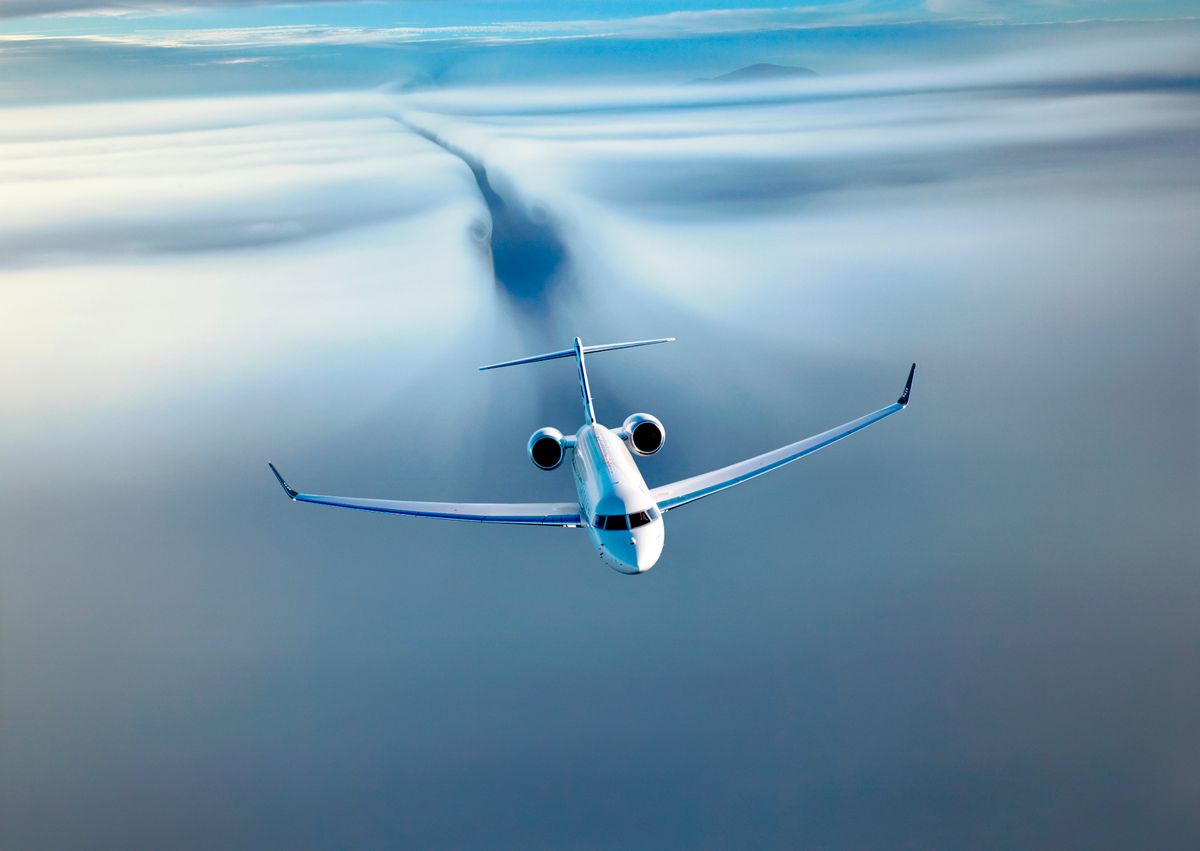
The new plane, dubbed the Overture by Boom Supersonic, is already undergoing testing. The Overture would fly at Mach 1.7 and twice as fast over water. Major airlines including United Airlines, American Airlines, and Japan Airlines have placed orders and preorders for the Overture to join their fleets, reports the Express.

The aircraft could accommodate between 60-80 passengers and would cruise at an altitude much higher than standard passenger jets, at 60,000 feet.

The original Concorde faced backlash due to its noise levels, but these updated models aim to tackle this issue with modern noise-reduction technology. By 2029, US airline United has announced plans to purchase 15 new supersonic airliners and “return supersonic speeds to aviation”.

The new Overture aircraft will be manufactured by a Denver-based company named Boom. According to Boom, the plane will operate on a minimum of 600 routes.

READ MORE: TUI flight attendant says pre-flight decision is key to a happy flight with kidsREAD MORE: Some think major airline’s armrest change is ‘worse for everyone’ – others love it

Discussing supersonic flights, Nicholas Smith, holidays digital director at Thomas Cook and eSky online travel agency, told Express.co.uk: “While it’s thrilling to imagine this aviation icon back in the skies, it’s unlikely to appeal to the average holidaymaker from the UK jetting off to Benidorm for a week in the sun.

“We see the future of mainstream air travel heading towards larger, more efficient aircraft designed to carry more people, not fewer.

“That said, a modern relaunch focused on sustainability, digital innovation, and safety could carve out a niche for high-end, short-haul luxury routes – such as London to New York in under four hours. It’s not a mass-market solution, but for time-sensitive premium travellers, it could once again become the pinnacle of prestige flying.”

Travel times on routes such as London to New York or Los Angeles to Washington could be slashed to just two hours – a significant reduction from the current six to seven hours.

Source link

‘New Concorde’ would cut UK to US flight time to 45 minutes going 7x speed of sound

The A-HyM Hypersonic Air Master is designed to carry 170 passengers and cruise at an altitude of 30,000 metres while travelling at speeds of Mach 7.3

A mockup of the plane
The plane is designed to fly at 5,600mph

A groundbreaking hypersonic airliner could cut London-New York flight times to a mere 45 minutes.

The revolutionary A-HyM Hypersonic Air Master is set to transform air travel by flying at Mach 7.3-over 5,600 mph (9,000 kph). Designed to carry 170 passengers, it could reduce the transatlantic journey from the usual seven hours, making transatlantic travel quicker than ever before.

In comparison, Concorde typically flew from London to New York in just under three and a half hours, compared to about eight hours on a subsonic flight. Spanish designer Oscar Viñals says the A-HyM would cruise at an altitude of 30,000 metres, far above conventional jets, using advanced heat-resistant materials like titanium and carbon fibre to withstand temperatures up to 1,000°C.

Its innovative Sonic Boom Mitigation System aims to reduce the disruptive noise of breaking the sound barrier, potentially allowing supersonic-and even hypersonic-flights over land without disturbing communities below. Powered by a next-generation hydrogen-fuelled combined-cycle engine, the aircraft would blend turbojet, ramjet, and oblique detonation technologies for both speed and eco-friendliness.

READ MORE: ‘Concorde’s final flight was 20 years ago – the supersonic jet was always doomed’

A mockup of the plane
The plane could hypothetically fly from London to New York in 45 minutes

Inside, passengers would enjoy spacious, comfortable cabins equipped with virtual panoramic windows and advanced entertainment systems designed to handle the unique conditions of hypersonic flight.

Although only a concept at this stage, the A-HyM illustrates how rapid breakthroughs in materials science, propulsion systems, and aerodynamics are making the prospect of ultra-fast and sustainable global travel increasingly plausible.

According to Oscar Viñals: “This aircraft concept would allow its users not only to experience a unique flight at dizzying speeds in excellent conditions, but it would also allow them to “master” time, because a trip, for example, from London to Los Angeles would only take an hour and a half, from boarding at Heathrow international airport to disembarking at LAX (Los Angeles International Airport).”

READ MORE: Five best ‘extreme day trips’ with short UK flight time – and what to do thereREAD MORE: Private Maldives island stay comes with one-of-a-kind Ferrari – but it’ll cost you

The A-HyM aircraft’s developers are far from the only ones perusing the dream of commercial super-sonic flight. In January the Boom supersonic jet – dubbed the ‘new Concorde‘ – officially broken the sound barrier.

The Colorado-based company Boom launched its XB-1 test plane from California‘s Mojave Air and Space Port for a test flight in January, reaching a speed of Mach 1.1, or 844 miles per hour while flying at about 35,000 feet.

A plane is classed as having reached ‘supersonic’ speeds once it passes Mach 1. The Boom XB-1 is the first civil supersonic jet made in the US to break the sound barrier.

The goal of crashing through the sound barrier, and the loud bang that happens when planes do, is part of the reason super-fast air travel proved difficult from a business perspective.

A mockup of the plane
Making a commercial success of super-sonic aircraft has proved a challenge

As iconic and beautiful as the Concorde’s curved-delta wing shape was, there had always been a fundamental problem with the plane before it was mothballed for good. Smashing through the sound barrier causes a huge bang that has big consequences of those on the ground. During a 1965 test over Oklahoma city by the US Air Force, hundreds of reports of smashed windows were made.

The potential to cause this kind of disruption meant that Concorde could only fly certain routes at supersonic, meaning no high-speed flights over land. This crushed the business case for the aircraft in the US as cities such as Los Angeles and New York could not be linked up effectively.

Climate scientists also began to express alarm about the impact of the Concorde on the ozone layer, specifically the potentially damaging impact its emissions could have while flying at 60,000 feet – something it needed to do to get into air thin enough.

The relatively small number of passengers onboard coupled with the large amount of fuel required to fly so fast (compared to slower air travel), meant fluctuations in oil price hit the airline hard. At points customers were paying close to $12,000 for a single trip, back in 2003. Operators Air France and British Airways had to have reserve planes made as back-ups, which added to the spiralling bill.

Source link