Weekly insights and analysis on the latest developments in military technology, strategy, and foreign policy.
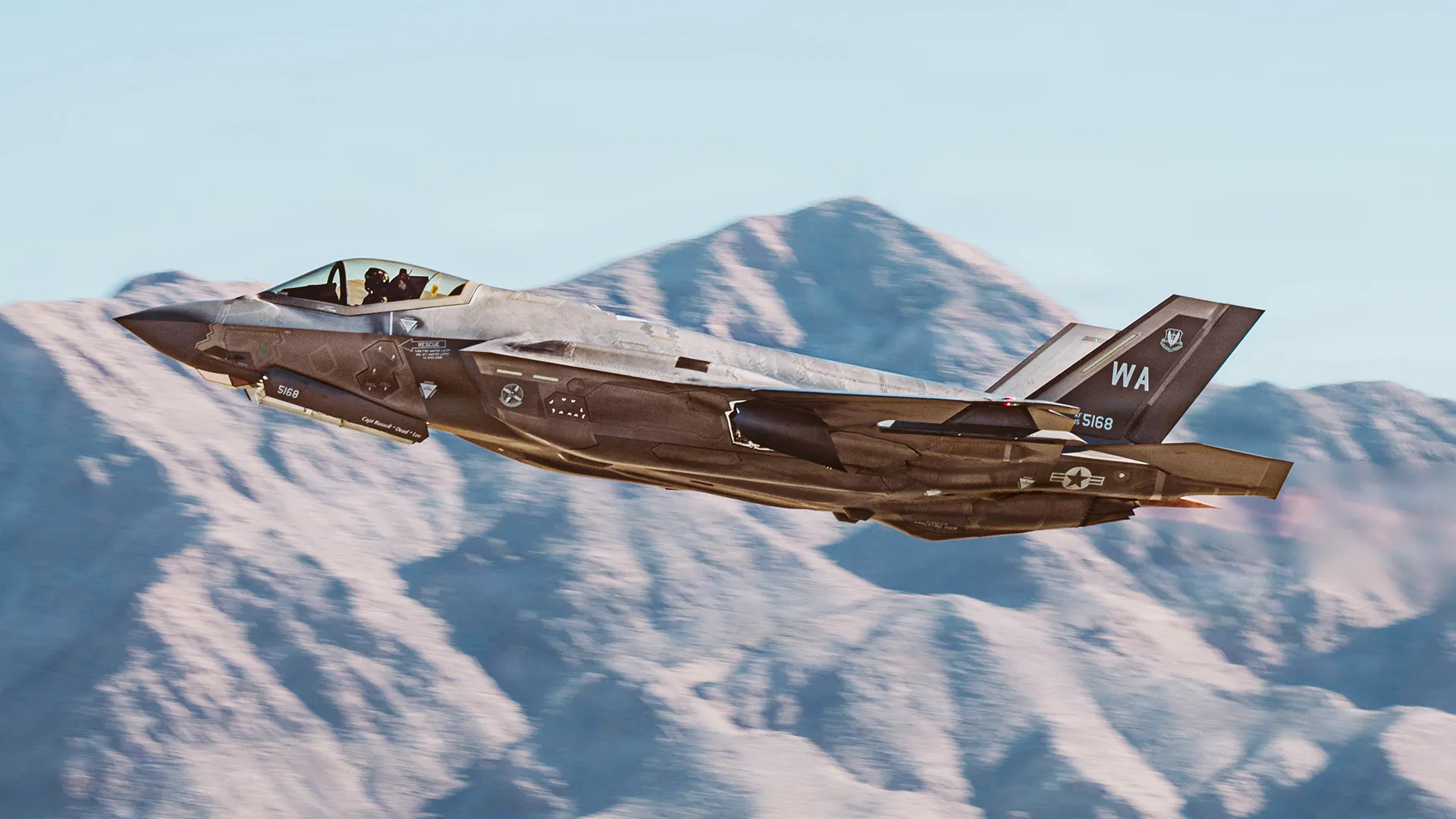
An F-35 crashed in the Nevada Test and Training Range in Southern Nevada. The pilot ejected and is reportedly safe after sustaining only minor injuries.
According to KSNV News 3, “The U.S. military is searching for a pilot who had to eject from an aircraft over Southern Nevada on Tuesday, sources tell News 3… The aircraft reported trouble maneuvering around noon, according to sources.” The outlet subsequently reported that the pilot was found in good condition.
UPDATE: Nellis Air Force Base tells News 3 the pilot is safe, having reported minor injuries. An F-35 from Nellis AFB crashed north of Las Vegas, and emergency responders are on scene.https://t.co/KNlxePnBRm
An F-35 from Nellis AFB crashed north of Las Vegas today. The incident occurred approximately 25 miles northeast of Indian Springs, Nevada, within the controlled airspace and restricted federal property of the Nevada Test & Training Range.
Emergency responders are on-scene and there is no impact to populated areas. The pilot is safe and being treated for minor injuries. The safety of our personnel and the community remain our top priority.
We will provide additional information as it becomes available.
There was a spiritual pull for Bellamy returning to Wales.
Born in Cardiff, he spent most of his playing career outside of his homeland, representing the likes of Liverpool and Newcastle.
As a coach, Bellamy followed Vincent Kompany to Anderlecht and Burnley, describing his time with the now Bayern Munich boss as an “education”.
The former Manchester City team-mates remain good friends and speak frequently, but Bellamy felt it was time to become a head coach in his own right when his country came calling.
Despite only being an assistant to Kompany at Burnley, Bellamy took a substantial pay cut to take charge of Wales.
This, however, was a job like no other. As well as the obvious emotional ties, Bellamy had unfinished business.
He never got the chance to play at a major international tournament but, as head coach, he aims to put that right by qualifying for this summer’s World Cup.
“You always have that buzz of chasing something, like I want qualification, I want to be at major tournaments,” Bellamy says.
“But how do we do it? I’ve got loads of flaws, but the team needs to play with intensity, play with balls.
“As long as you have belief, that’s the motivation. That’s why you do so much work, why you look at opposition.
“As a footballer for Wales, I didn’t really feel belief, I just felt hope. Italy [when Wales won 2-1 in 2002 in a European Championship qualifier] was different because we took the game to them. We were brilliant but there weren’t many nights like that.”
Bellamy scored the winning goal when Wales last faced Italy in Cardiff, a momentous occasion at a sold-out Millennium Stadium.
The teams will meet again if they win their respective World Cup play-off semi-finals on Thursday, with the final to be played at Cardiff City Stadium the following Tuesday.
Much like Bellamy himself, Welsh football is unrecognisable from that memorable night 24 years ago.
Having been absent from major tournaments since the 1958 World Cup, Wales not only qualified for Euro 2016 but reached the semi-finals in France, three years after Bellamy retired.
They followed that by getting to the knockout stages at Euro 2020 and then qualifying for the 2022 World Cup.
Bellamy wants to build on that success – and take his country to new heights.
“Euro 2016, that moment was like, ‘We are here’. That gave belief and I want to carry that on,” he says.
“We do punch well above our weight but that’s where we want to be. We need to do it continuously. I like expectations.
“This is what it takes to be a Wales player. To wear this shirt, these are the qualities you have to have. I believe we have a chance to consistently be at major tournaments.”
With that, Bellamy turns back to his laptop. The cursor hovers over files labelled ‘Italy’ and ‘Northern Ireland’ – Wales’ potential play-off final opponents – and then back to ‘Bosnia’.
Whether or not Wales get to the World Cup this summer, it will not be down to a lack of preparation.
NO ONE could ever have imagined that little Maura Higgins from a sleepy Irish town would go on to be one of the country’s most famous exports.
Not least her sisters – Becki and Louise – who have sat watching her meteoric rise to fame from the peripheries. There are few relationships closer than that of siblings, but what happens when celebrity gets in the way? Here, we take a look at their now very complicated dynamic – and reveal why Maura’s decision to miss Louise’s wedding had a lasting impact and how imitation isn’t always the highest form of flattery when it comes to Becki.
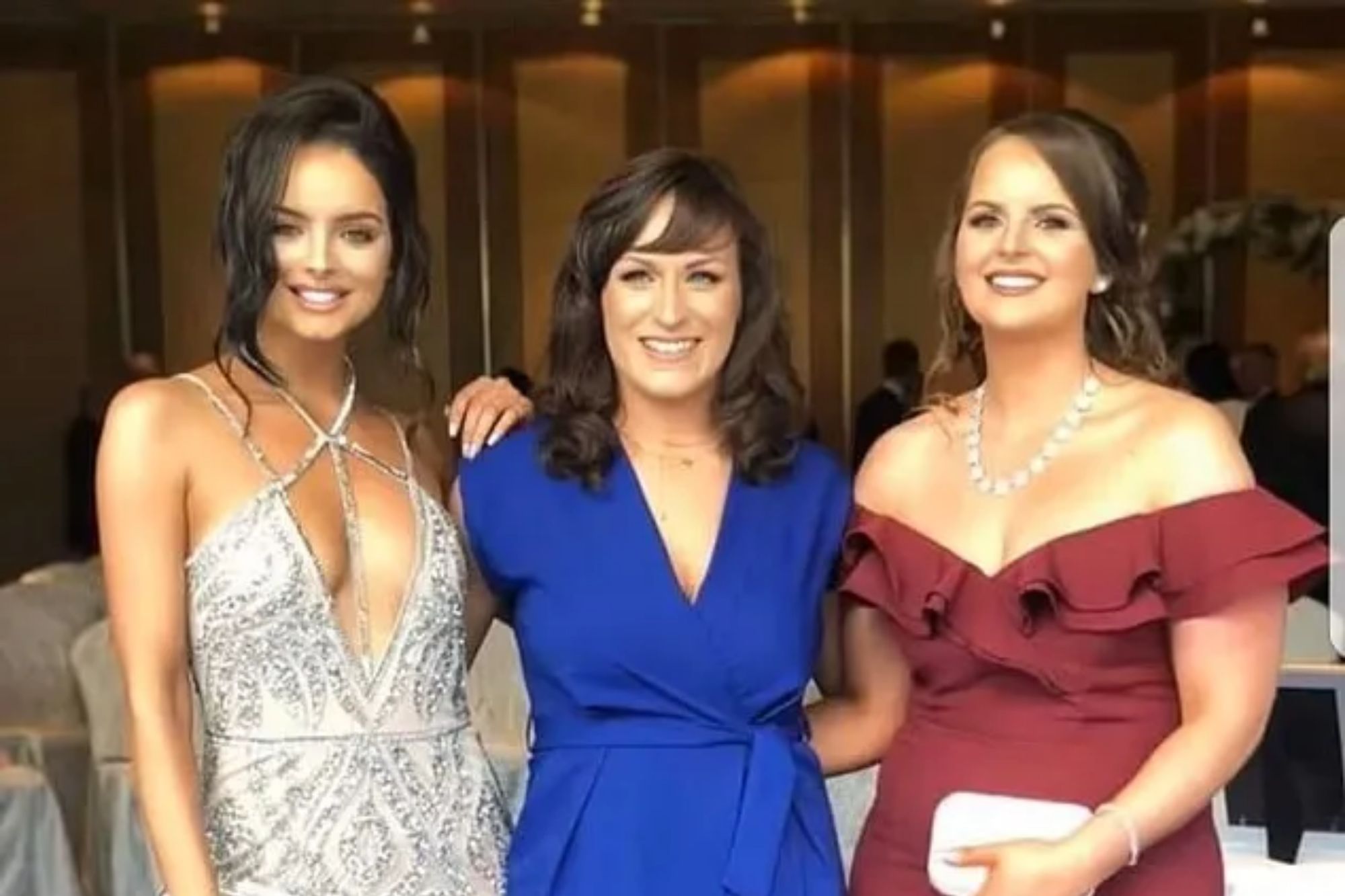
Maura Higgins with sisters Louise (centre) and Becki (right)Becki has attempted to follow in her sister’s footsteps with an online careerCredit: Instagram/@beckihiggins
When Maura, now 35, chose to apply for Love Island, she already knew her older sister Louise was getting married that summer.
Astonishingly, fitness instructor Louise, 38, gave her blessing for her to miss her big day – but whisperings at the time suggested not everyone in the family agreed with the move.
She made it very clear what her intentions were when she chose fame over Louise’s wedding.
It was certainly risky, but it paid off massively. From the very first moment Maura appeared on screen in 2019 on Love Island, her family – which also includes her brother, who has never been named publicly – realised life would never be the same again.
An insider explained: “Maura was from a very tight-knit family and grew up in a place where everyone knew everyone. When she became well known, of course, things changed.
“At times, she’s not always been able to support her sisters as much as she would like. She made it very clear what her intentions were when she chose fame over Louise’s wedding.
“Louise has spent years just trying to get on with her life, while Becki has been hanging off her coattails, desperate for even some semblance of her success.
“Like all sisters, there is a level of competitiveness and jealousy that just doesn’t exist in other relationships. It’s fair to say it’s very complicated.”
Today, Maura is a huge star both in the UK and in America – rubbing shoulders with A-listers and really putting her home town of Longford on the map in a way no one could ever have dreamed of.
But it has meant Maura has missed out on a series of huge life events – most notably her sister’s wedding.
When Louise walked down the aisle with long term fiance Mark Kelly at a private ceremony at Abbeyshrule Church, outside Ballymahon, Maura was busy cementing herself in the Love Island hall of fame.
Even Maura’s ex-boyfriend, James Finnegan, attended the big day, having grown very close to the family.
A source told us at the time: “Louise got engaged in 2016, and the wedding was planned over a year ago. So Maura would have known that when she applied for Love Island.
“But Maura and Louise are very close, and her sister fully supports her decision to go on Love Island.
“In fact, she’s happy for Maura and is delighted she’s been given an amazing opportunity to find love and further her career.”
Louise made the decision to distance herself from the limelight as much as possible at that time.
Mimicking Maura
But Becki, Maura’s younger sister, who is now 31, grabbed the chance of fame with both hands.
She chatted about Maura whenever she got the chance and even appeared on Virgin Media One’s Ireland AM for a fashion segment.
Maura was delighted, gushing that she was “so proud”.
Becki, mum Sharon, Maura and Louise were all incredibly close growing upCredit: Instagram/@beckihigginsMaura rose to fame on Love Island in 2019Credit: Rex FeaturesMaura returned to visit her family for her niece’s Holy Communion in 2024Credit: Instagram/@beckihigginsMaura no longer speaks to her dad Seamus
She started joining Maura on nights out and built up her own social media presence.
Becki, however, has never quite managed to break into the limelight fully – despite her best efforts. She regularly posts images of herself glammed up for a night out and clearly shares Maura’s same cheeky sense of humour, judging by some of her more risky posts.
She has just 3.5k followers but has still managed to land herself a few paid ads here and there.
‘Scared and alone’
As Maura’s fame grew, her schedule became busier and busier – she moved to London and her once close relationship with her sisters felt the strain.
Maura has said she felt “scared” and “very alone” during that period of her life.
It wasn’t long until Becki and Louise stopped posting publicly about their sister – they couldn’t keep up with her endless achievements.
Maura tried to get back to see Louise’s children as much as possible and is particularly close to her niece Isabelle. While she may not always be around, she made sure she was there for Isabelle’s first Holy Communion in 2024, calling her a “best friend for life”.
When she found out her nephew, believed to be her brother’s son, was being bullied in 2022, she showed up at his school to pick him up – no doubt scaring the bullies off for good.
Maura was very close to her siblings while growing up, and their bond became even tighter when her parents, Sharon and Seamus, split up.
The break-up was a defining moment in all their lives.
Maura candidly said: “It was a very nasty break-up and a lot went on, like, things I would never want to talk about because I wouldn’t want to be saying things about my mum or dad.”
She has reached new heights of fame ovr the last 12 monthsCredit: SplashBecki has built up her own online followingCredit: Instagram/@beckihigginsBecki has always shown her support for her sisterCredit: Instagram/@louise_h87Maura’s ex James Finnegan attended her sister Louise’s wedding without her
She added: “When the break-up happened, my mum was trying to keep a roof over four kids and herself, and we were all in school, it was very, very hard and I remember seeing my mum struggle a lot.”
Maura continued: “She had a nervous breakdown, she collapsed in the kitchen in front of all of us and only my older sister, she was a lot older at the time, she knew how to like put her on her side and call the ambulance.
“I don’t know why I remember this, but I remember, mammy has a rare blood type and my older sister knew to say that to the paramedics.”
Cutting contact
After appearing on Love Island, Maura ended up cutting all contact with her dad, which is said to have left him blindsided.
She explained: “My dad spoke to me not very nice. I’m not saying it was just a bit of an argument. It was horrendous where I physically couldn’t breathe after the phone call.
“I thought to myself, ‘I wouldn’t let a partner talk to me like that. I wouldn’t let a friend talk to me like that. I’m not going to let my dad talk to me like that’.
“But also, I think if I dig deep, I don’t think I’ve ever forgiven my dad for not being there for me when my best friend passed away. And he wasn’t there for me.”
The sisters were bonded by the horror. Tragically, Becki suffered more heartache when another close friend passed away at the start of the year.
As she laid him to rest on January 23rd, Maura was in New York filming The Drew Barrymore Show.
It was a real sign of just how far apart their lives had become. Maura’s future is no doubt going to be bright – but what part, if any, her sisters will play isn’t as clear.
Maura is now one of the most sought after stars on the telly both in the UK and AmericaCredit: Instagram