In a typical election year, the interest in the down-ballot race for California insurance commissioner musters modest interest at best.
That all changed on Jan. 7, 2025, when wildfires swept through L.A. County, damaging or destroying more than 18,000 homes and killing at least 31 people.
The resulting anger directed at the insurance industry over how it has handled claims has helped draw four Democrats into the race, who will be vying this weekend for a critical endorsement at the party’s annual convention in San Francisco ahead of the June 2 primary election.
“We haven’t seen this level of competition and, frankly, choice on the Democratic side since it first became an elected office in 1990,” said Jamie Court, president of Consumer Watchdog, a Los Angeles insurance advocacy group. “They represent wide-ranging views and a broad diversity of candidates.”
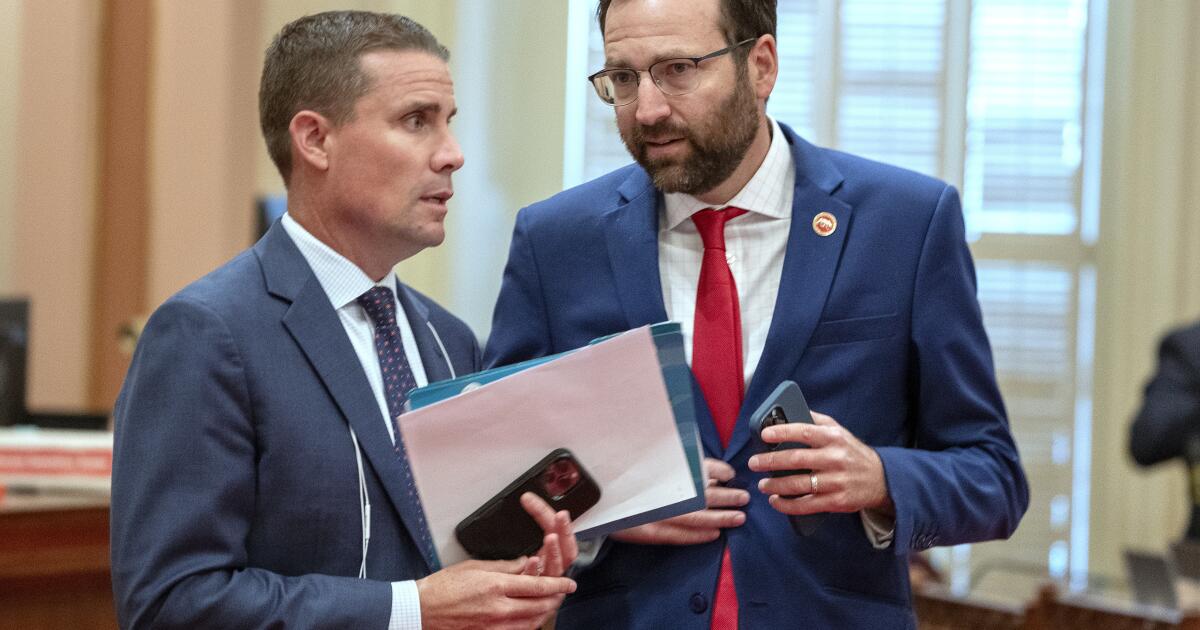
Up for endorsement are state Sen. Benjamin Allen (D-Santa Monica), whose district includes the Palisades fire zone; former San Francisco Supervisor Jane Kim; former state Sen. Steven Bradford; and San Francisco businessman Patrick Wolff, who has not held elective office.
Three Republicans have declared their candidacies, but that party’s convention isn’t until April. The filing deadline to file for the race is March 6.
The GOP field includes businessman Robert Howell, who lost by 20 points in the 2022 general election to current Insurance Commissioner Ricardo Lara. Also running are insurance agent Stacy Korsgaden from Grover Beach, and attorney Merritt Farren, whose Pacific Palisades home burned down.
Peace and Freedom Party candidate Eduardo Vargas, a Los Angeles school teacher, is on the ballot too.
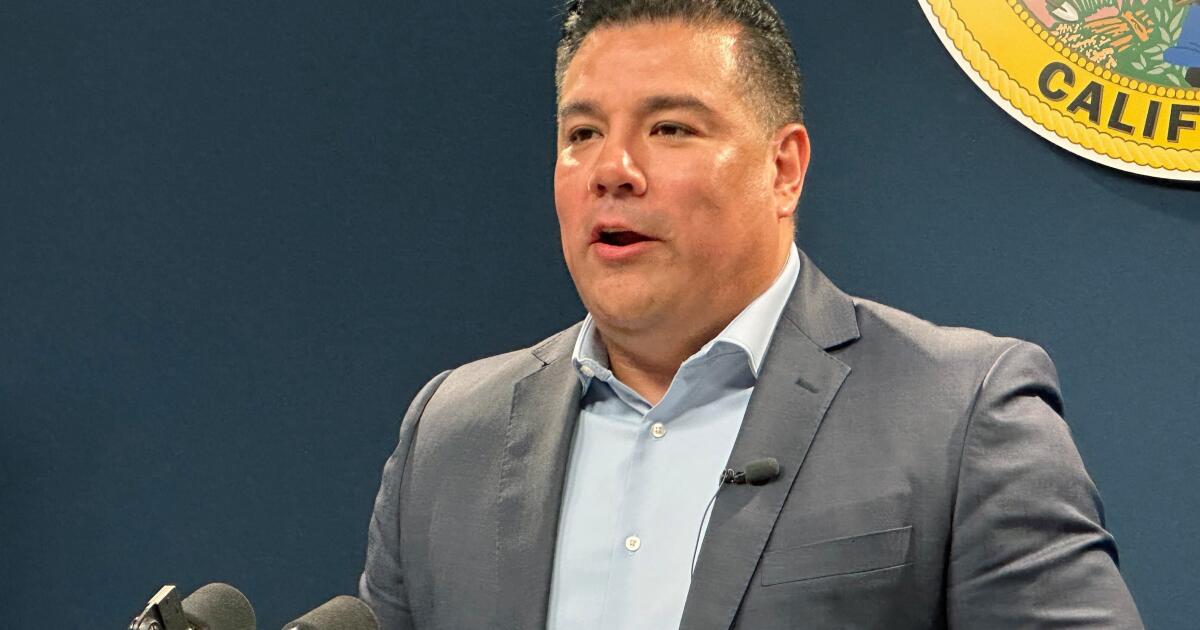
The race also follows Lara’s two troubled terms in office, during which he has been accused of cozying up to and receiving money from the insurance industry for his first campaign and conferences abroad.
Lara has denied any wrongdoing, and all the Democratic candidates have vowed not to accept insurance industry donations.
“For me and maybe for many survivors, it’s not a position that we ever thought much about, but now with many of our lives devastated by our dealings with insurers I think many survivors will be watching much more closely this time around,” said Joy Chen, executive director of the Eaton Fire Survivors Network, a community group that has accused Lara of being soft on insurers and has called for his resignation.
Allen was perceived by some as the leading candidate for the party’s nomination when he announced his candidacy in September. He has held his seat for more than a decade and is the only sitting legislator in the race. He said he would not be running if not for the wildfire that struck his district.
“The fire certainly was a searing experience, helping hundreds of people get their claims paid right, but it kind of begs the question of why should you have to call your state senator to get treated right,” he said.
Allen’s platform includes a number of ideas to ensure policyholders are treated better, including requiring insurers to clearly explain claim denials. But also key to his campaign is stabilizing an insurance market that over the last several years has seen insurers drop policyholders by the hundreds of thousands, especially in fire-prone neighborhoods.
That forced them onto the California FAIR Plan, the insurer of last resort. It’s rolls grew even more since the January fires and the insurer has been sued by fire victims over its claims practices. Allen wants to build insurer confidence in the market by having insurer requests for rate hikes reviewed in months, rather than the year or more they can drag out now.
He also points to his legislative record, especially his authorship of Proposition 4, which was approved by voters in 2024 and set aside $10 billion in general obligation bonds to fund climate resiliency and environmental protection projects — an important part, he said, of lowering insurance risks.
Allen has drawn a key endorsement from California Sen. Adam Schiff and as of Dec. 31 had about $1 million in the bank, more than any other candidate. But the race was shook up last month when progressive politician Kim declared her candidacy. She boasted an endorsement from U.S. Sen. Bernie Sanders (I-Vt.), for whom she worked as his California political director during the 2020 presidential campaign.
She also has drawn attention for a plan to create a state-run disaster insurance policy for Californians.
Residents would continue to buy regular home insurance from the commercial market but would buy coverage for wildfires and other disasters from the state, similar to plans in some other countries.
The idea has come under sharp criticism from Court, who said it will shift the risk of costly disasters to taxpayers while allowing insurers to make profits from more predictable perils such as water and roof damage.
“We have to explore some different models, because the current system is not working. It’s too expensive and a market failure,” said Kim, adding that the plan could evolve.
Bradford, who represented communities in south L.A County and the South Bay in the Legislature, has been endorsed by L.A. Mayor Karen Bass. He said he’s running as a pragmatist and unifier.
“What we’ve been doing for far too long has been a whole lot of finger pointing and doing the blame game,” he said.
Bradford wants insurers to open their pricing books and give homeowners “real, guaranteed” premium discounts for upgrading their property.
He also is proposing a public–private partnership that shares the risk for insurers who write policies in fire-prone neighborhoods.
Wolff, a political newcomer, is a Chartered Financial Analyst, real estate investor and former hedge manager who cites his experience building a home and auto insurance brokerage for financial services firm Capital One.
“I spent the first half of 2025 really deeply studying the commissioner’s role and the history, and the race — the politics of everything. And after really doing that deep dive, I decided to step forward,” said Wolff, who wrote his campaign a $500,000 check and loaned it another $100,000.
He also thinks rate hikes sought by insurers need to be reviewed more quickly but wants the insurance department to publish annual reports on how specific companies handled claims.
“The insurance industry has basically lobbied to keep that data anonymous at the company level, and I think it’s really important to make that information public,” Wolff said.
Under California’s open primary system, the top two candidates will move on to the Nov. 3 general election, which means two Democrats could run up against each other if a Republican isn’t able to consolidate the GOP vote.
Steve Maviglio, a longtime political consultant currently working for State Treasure Fiona Ma, who is seeking the office of lieutenant governor, said that the race is wide open.
“This is a statewide election with millions of people with candidates they’ve never heard of,” he said.
With multiple candidates seeking the endorsement, it may be hard for any single one to reach the 60% threshold of delegate votes needed.
“If no one is endorsed, somebody is going to have to be the breakout candidate, and the way you do that is with money or organization,” Maviglio said. “Until I see that happen, it’s totally up in the air.”