California revives Wildlife Coexistence Program amid record wolf pup boom
California is set to bring back a program aimed at reducing conflict between wild animals and people, as the state’s rebounding wolf population continues to cause concern among ranchers.
Newsom signed a bill restoring the program Tuesday ahead of a “fireside chat” focused on biodiversity and natural resources, during which he described growing up with a father who was dedicated to protecting mountain lions, condors and other wildlife.
Protecting nature is “a moral issue,” Newsom said, describing a “relationship we have to what’s above us, and … how that connects us to our Creator.”
The California Department of Fish and Wildlife once employed 13 specialists dedicated to resolving human-wildlife conflicts, but it let all but one of them go after funding ran dry in 2024. The loss came as such clashes are increasing, with climate change and urban sprawl bringing people closer to bears, mountain lions and other animals.
State Sen. Catherine Blakespear, author of Senate Bill 1135, said she’s seen it play out with sea lions around La Jolla Cove. This year, someone kicked one of the marine mammals, she said, and in general there have been no government staffers “to provide the guardrails.”
When the program ended, “we weren’t doing the education, and we didn’t have staff at the state that could help intervene or provide guidance,” Blakespear (D-Encinitas) told The Times. “It was a clear lack.”
The legislation also codifies a program to compensate ranchers when they lose livestock to wolves or suffer indirect harm. The program also provides money for nonlethal equipment to deter wolves, such as electric fences with bright flags.
Part of the law is rebranding, adding “coexistence” to both programs’ names.
The California Cattlemen’s Assn. and the California Farm Bureau shifted from opposing the bill to an “enthusiastic neutral,” said Kirk Wilbur, vice president of government affairs for the former trade group, noting his colleague coined the term.
Wilbur’s group was initially concerned about parts of the bill focused on livestock compensation, but he said they were amended in a way to avoid impeding how the program operates. However, the changes “didn’t quite get us to a support position because we didn’t necessarily view it as a significant improvement over the status quo.”
His group is in favor of the bill’s requirement to relaunch the Wildlife Coexistence Program, as it’s now called, saying it “does provide resources, for instance, for my members that are contending with mountain lion depredations of their livestock.”
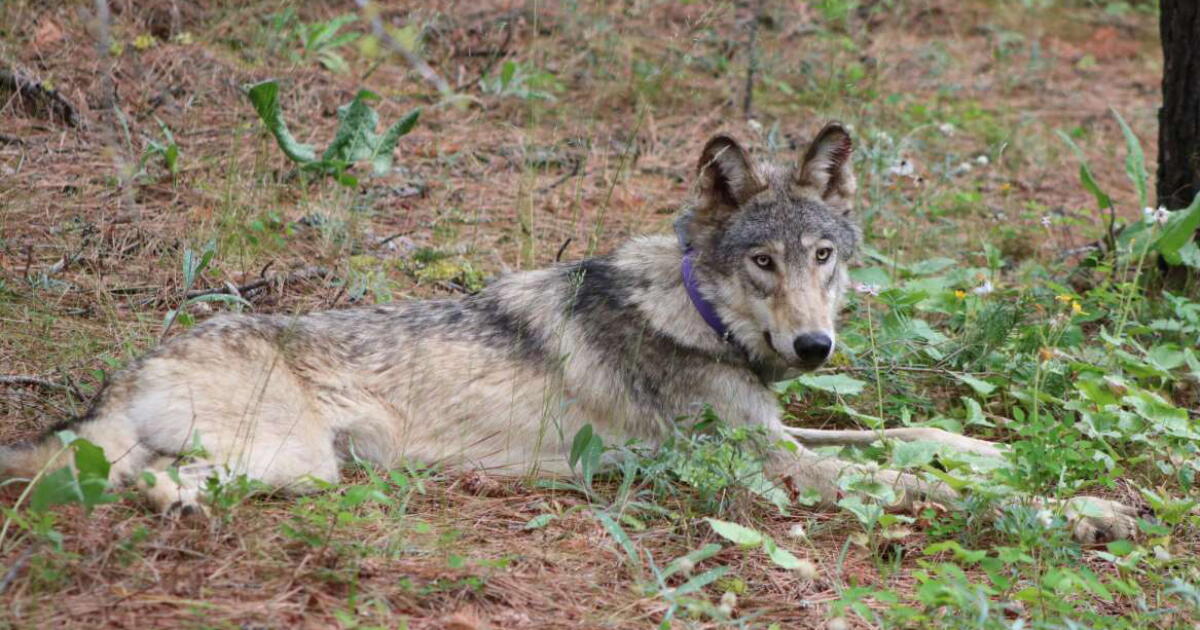
The bill signing comes as California’s gray wolves had at least 42 pups this year — a record. The apex predators were extirpated in the state in the 1920s, beginning to naturally recolonize their native digs only 15 years ago.
“It’s a great sign for the conservation of the species that the population continues to reproduce, and that the number of individuals continues to reproduce,” said Axel Hunnicutt, gray wolf coordinator for the Department of Fish and Wildlife.
The animals’ success has delighted conservationists but frustrated some cattle ranchers, whose livelihood can become dinner for the endangered canids.
Hunnicutt spoke to The Times from Siskiyou County, where he was trying to get more GPS collars on wolves in the Whaleback pack, linked to 41 confirmed or probable livestock attacks this year, according to a recent report. That’s by far the most of any pack in the state.
Hunnicutt’s team consists of him and two other employees, along with temporary staffers. Collaring wolves in a pack that doesn’t already have the devices is challenging, he said. It involves setting up cameras, howling throughout the night to try to get the animals to respond and sometimes driving hundreds of miles looking for tracks.
Some members of the Whaleback pack are collared, providing a good starting point. While on the phone, he said he could see the tracks of two wolves on the road where he was walking.
Proponents of SB 1135 say it could lead to the expansion of Hunnicutt’s team or more resources for efforts such as collaring, which wildlife officials say helps reduce conflicts by enabling ranchers to know where wolves are.
However, the legislation does not guarantee funding for the programs it establishes.
Pamela Flick, California program director for Defenders of Wildlife, a co-sponsor of the bill, said advocates asked state leaders for $18 million in one-time funding for the human-wildlife coexistence program, followed by $15 million annually. They also asked for around $30 million for wolf compensation and management.
What they got this year is $6 million, with $2.5 million earmarked for compensation, according to Flick.
“It’s really a drop in the bucket when we’re talking about statewide human-wildlife conflicts,” she said. “So we will be advocating for additional funds in out years for sure.”