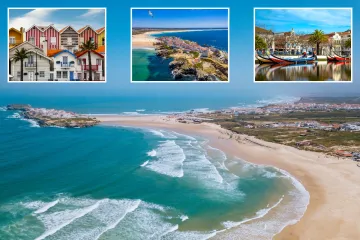
JUST off the Algarve coast, near Faro, is the Ilha Deserta.
This literally means “deserted island”, but there was no going hungry when I hopped on a boat to this unique spot.
Sign up for the Travel newsletter
Thank you!
There is a quiet sandy island just off the Portuguese coastCredit: SuppliedJill took a trip to Ilha DesertaCredit: SuppliedPraia Do Canal Nature Retreat is a five-star hotel set in the heart of the Vicentine Coast, offering tranquillity and relaxationCredit: Supplied
Call me Jill Robinson Crusoe, if you will.
Alongside seven kilometres of gorgeous white sand, the island is home to just one building – the fish restaurant Estamine.
And every dish on the menu is worth the trip alone.
My delicate, buttery, grilled sea bass was cooked to perfection and served with roasted potatoes and vegetables.
The choice is dizzying, with everything from giant carabinero prawns and Atlantic lobster to crispy sand shrimps and Grandma’s squid stew.
Reached by boat taxi in around 15 minutes, the restaurant has stunning views of the Atlantic from its floor-to-ceiling windows.
Afterwards, you can sunbathe beside the crystal-clear waters, or take a peaceful stroll while trying to spot the rare birds and chameleons that frequent the island.
If, however, you prefer something a little more fancy, you can enjoy a catamaran trip around the Ilha Deserta, which is part of the Ria Formosa Natural Park — a coastal lagoon stretching 60km from Faro to Manta Rota.
I sailed with a local company called iSea and have to admit, sitting on deck with a glass of prosecco and the sun on my face was a highlight of my trip.
But if you don’t have the sea legs for a boat trip, the Algarve has plenty for you to enjoy on dry land.
Faro itself has a marina and historic old town with cobbled streets.
And here, you can delve into fabulous Portuguese cuisine at Tertulia Algarvia, which is set in an historic whitewashed building.
Alongside cooking classes, craft workshops and cooking demonstrations, it serves up some real classics.
Fish restaurant Estamine sits on the sandy shoresFpraiCredit: Unknown
There’s still plenty of seafood, from octopus rice to grilled golden bream, but a standout on the menu was the chicken piri-piri.
This original grilled chicken dish comes with a spicier marinade than your local Nando’s as well as a huge portion of crispy chips, all for just £12.60.
Meat dishes are as big a deal as seafood and fish across much of the region, and I was always spoilt for choice when it came to getting my daily fix of protein.
One of my favourite places was in Aldeia da Pedralva — a rural village which has been lovingly rebuilt after many of the buildings were left in ruins.
Now, most of the village buildings are available as accommodation to hire, but the main restaurant, Sitio da Pedralva, is a destination in itself thanks to its incredible farm-to-table offerings.
From succulent wild boar to melt-in-your-mouth pork cheeks, it was a true meat lover’s paradise.
As well as the meat dishes, the chef also serves another classic dish from the region, bacalhau no pao — creamy cod served in a rustic, hollowed-out crusty-bread bowl. Delicious.
After all that food, I needed a walk and, thankfully, a short drive away was a stunning coastal route which makes up part of the Fisherman’s Trail.
Covering 226km from Sao Torpes (near Sines) to Lagos, it is considered one of the best coastal paths in the world.
Along the way, it offers views of dramatic, rugged cliffs that drop off into incredible turquoise waters, and waves that keen surfers seek to ride.
If you want to see the sights but don’t fancy a hike or walk, a Jeep tour is another fun option — and I did a morning trip with Sagres Discovery.
Our charismatic driver took us off-roading to the western Algarve, including Sagres and Cape St Vincent Lighthouse — one of the most powerful in Europe.
All the adventure, food and sea air can certainly make you feel sleepy and, thankfully, I had the perfect place to stay a little further along the coast.
Praia Do Canal Nature Retreat is a five-star hotel set in the heart of the Vicentine Coast, offering tranquillity and relaxation, not to mention incredible decor and attention to detail.
A brief glance at the delicious grilled fish menuCredit: supplied
With an infinity pool, yoga classes and exceptional food in its restaurant, it’s perfect if you want to reconnect with nature — and yourself.
The huge rooms also offer a shower that is bigger than my entire bathroom at home, massive beds and views across the rolling hills to the Atlantic Ocean.
But if you want to stay closer to the action and not somewhere as remote as Praia Do Canal Nature Retreat, Faro is a great place to base yourself.
I finished my stay in the region with a couple of nights at 3*B Faro, the only five-star hotel in the downtown area of the city, and just a short walk from the old town and marina.
With a rooftop infinity pool and terrace, as well as indoor spa facilities, the hotel offers some quiet calm once you’ve finished a day of exploring the region.
The Algarve is also a top destination for wine lovers, and a trip to a local vineyard is a must for any itinerary.
I enjoyed a lovely lunch and afternoon at Morgado do Quintão — a family-owned vineyard that also offers a farm-stay experience if you want to linger a little longer.
The estate offers guests a farm-to-table experience with a wine flight from its collection, which has revived the indigenous Negra Mole grape.
It is known for having an unusual variation of grape colour within the same bunch.
I had the chance to try a white, rose and red during my visit, all while enjoying fine views of the vineyard and the imposing 2,000-year-old olive tree which sits in the grounds.
I left the Algarve with a totally different perspective.
From deserted islands to delicious dishes, I’d encourage anyone to go and enjoy every tasty morsel of it for themselves.
GO: Algarve
GETTING THERE: There are multiple daily flights to Faro from most UK airports with British Airways, Ryanair, easyJet, Wizz Air and Jet2. Fares start from £29 return in May.
STAYING THERE: Double rooms at the Praia do Canal Nature Retreat are from £209, including breakfast.
ALONG the Essex coast are well-known seaside towns like Southend, Clacton-on-Sea, but most won’t have heard of Brightlingsea.
The seaside destination is visited far less than its neighbours, and is said to have one of the ‘best kept traditional high streets in the East of England‘.
Sign up for the Travel newsletter
Thank you!
Brightlingsea is a lesser-visited seaside town on the coast of EssexCredit: AlamyIt has a pretty promenade and shingle beach lined with colourful beach hutsCredit: Alamy
During the summertime, Brightlingsea is much quieter than its neighbours where holidaymakers are more likely to flock to.
However, it’s shingle beach is recognisable thanks to its line of colourful beach huts on the promenade.
The Blue Flag beach is popular for paddling too and has excellent water quality.
On a clear day, holidaymakers can even see across to Mersea Island.
One visitor wrote on Tripadvisor called it a “traditional beach without the noise.”
Another added: “Very unspoilt, family oriented, beautiful beach. Traditional town back in the 50’s.”
As well as a beach, Brightlingsea also has its own beachside lido, with tickets from £3.50 to £5.
There’s no date for the lido reopening for 2026 but last year it opened for the season in May.
Around the corner from Brightlingsea Beach is its harbour which in the summer has an influx of visitors by boat.
In the summer months, Brightlingsea can get as many as 2,500 visiting yachts in a single season and hundreds of local boats.
For anyone wanting to visit neighbouring islands, it’s here you can hop on a ferry to the likes of East Mersea and Point Clear.
Unlike other towns across the country, Brightlingsea’s high street is considered one of the ‘best kept traditional high streets’.
Rather than lots of typical chains, it’s dotted with independent shops.
Some sell records and plants like Roots & Grooves; others like Toggs is where you can pick up women’s clothes and handbags.
Brightlingsea has traditional pubs and independent high street shopsCredit: Ye Olde Swan
For another seaside stay – head up the coast to this pretty Norfolk town…
*If you click on a link in this box, we will earn affiliate revenue
Old Hunstanton, Norfolk This town has some of the best beach walks beside striped limestone cliffs, a Victorian lighthouse and 13th century ruins. The beach has golden sands with rolling dunes and colourful beach huts, backed by a pretty pinewood forest. Stay at a beachfront hotel from £100 per room.
There are also beauty salons as well as food shops like Joy Thai Spices and Bumbles greengrocers.
Little Boat Gifts is a sea-themed shop filled with lots of knickknacks and gifts while at River Colne Food Co. Deli there are lots of homemade treats like chocolate brownies and cinnamon rolls.
Opposite is Ye Olde Swan, which is a pub, bed and breakfast, and is one of the oldest buildings in the town dating back to the 1300s.
Another pub on the high street is The Brewers Arms and head to Winkies for takeaway fish and chips.
Minutes from the high street is the popular Rosebud Pub & Seafood Restaurant which is the top-rated spot to enjoy seafood in the town.
Here you can get an entire seafood platter for £26.
When it comes to where to stay, Brightlingsea has its own Hoseasons holiday park.
It has a choice of holiday caravans from the Bronze which has two bedrooms, an open lounge, kitchen and dining area.
In April, a stay for four in a Bronze caravan starts from £10 per person per night.
Here’s another pretty seaside town that’s one of the UK’s driest places…
Shoeburyness is a small town along the Essex coastline that’s one of the driest places in the country…
Thirteen minutes from Southend-on-Sea is the lesser-known coastal spot of Shoeburyness.
The town is home to around 22,000 people and is one of the driest places in the country.
Its position on the southeast coast means it gets less rainfall than other spots around the UK.
Shoeburyness records an average of between 526.78mm and 527mm of rain per year.
In comparison, the average annual rainfall for the entire UK is 1,163mm – Shoeburyness receives less than half of that.
So, it’s no wonder that lots of people flock to the town to visit its two Blue Flag beaches; Shoebury Common and Shoebury East Beach.
Shoebury Common is a sand and shingle beach that’s popular with families during the summer.
But it’s not just bucket and spade friendly, or for paddling, though. It’s also a popular place to launch boats and jet-skis, and is good for kitesurfing too.
A SMALL Spanish coastal city has been named one of the up-and-coming destinations to visit in 2026.
Airbnb has recently announced its 2026 Dupe-It List, with alternative holiday destinations to visit instead of the better known, busier hotspots.
Sign up for the Travel newsletter
Thank you!
Airbnb has named Denia in Spain as one of the must-see destinations in 2026Credit: Alamy
And included on the list is swapping Marbella for Denia, Spain.
Airbnb said: “Situated on the Mediterranean coast of Spain’s Costa Blanca – Denia is a charming port city that might just be the country’s best sun-soaked secret.
“Offering vibrant marina life, tapas-fuelled evenings and Instagram-worthy sea views, travellers can meander through the old town’s cobbled streets, pop into local boutiques, or unwind on nearby beaches for a relaxed, authentic escape that’s every bit as picturesque as its flashier cousin, Marbella.”
The holiday accommodation platform also recommends that visitors stay in Casa Sol, which is an entire townhouse and that the best time to visit is between June and September.
Denia sits on the Costa Blanca and often dubbed the pearl of the region by locals, according to WTG Spain.
Not only that, but in 1982, the World Health Organisation dubbed the climate as one of the best in the world.
This is because the mountains that back the city stop the cold air from cooling temperatures in the city.
As a result, the microclimate means the seasons don’t change harshly in the city and leads to around 320 days of sunshine a year.
High temperatures tends to sit around 32C during the summer and lows sit around 11C during the winter, though the average annual temperature is a comfortable 19C.
When it comes to making the most of the weather in the city, like many other Spanish coastal cities, Denia has a number of beaches to choose from – including six Blue Flag spots.
For example, Punta del Raset Beach has both soft golden sand and calm waters making perfect for families.
If you fancy heading somewhere a bit more spacious, then opt for Deveses, which is the longest beach in Denia.
One recent visitor said: “A quiet beach, ideal for going with children.
“You can spend all day there, and enjoy the Los Baños bar, both for an aperitif, lunch and even a cocktail in the middle of the afternoon – very clean beach.”
Overlooking the beach, up 60 metres high on a hill, is the famous Denia Castle and Archaeological – an ancient fortress and ruins with panoramic views of the sea.
Otherwise the marina, is where tourists can find some of the city’s waterfront restaurants.
For watersports fans, the marina is where you can head off jet skiing, paddle boarding, kayaking or even sailing.
In the summer months, it can reach up to 32CCredit: GettyThe Spanish coastal city is known for its golden beaches and charming Old TownCredit: Getty
You can hop even hop on a ferry to another destination such as Ibiza, just two hours away, which costs around €25 (£21.78) per passenger.
And of course, Denia has an Old Town known as El Barrio – here you will find narrow streets, the Assumption Church and lots of traditional Spanish homes.
Travel writer Amalia Maloney even called the charming destination a ‘goldilocks town’ because it is neither too big or too small.
Fancy leaving the city for some green space? You can also head to Montgó Natural Park.
The park is the ideal spot for keen hikers and wildlife lovers, as it’s home to over 600 plant species and 150 animal species including the Bonelli’s eagle and Peregrine falcon.
The peak of the park sits at a staggering 753 metres – so it isn’t a hike for the faint hearted.
Montgo Natural Park is home to over 600 plant species and 150 animal speciesCredit: GettyYou can fly either to Valencia or Alicante and then drive to DeniaCredit: Alamy
One recent visitor said it was the “most impressive on the Costa Blanca”.
When looking for a bite to eat, visitors won’t spend too much with a mid-range three-course meal for two people likely to set you back €40 (£34.93).
And if you fancy a tipple, such as a beer, it will cost you around €2.20 (£1.92).
In fact, the city has been a UNESCO Creative City of Gastronomy since 2015 due to culinary traditions being kept up across the city’s 300 plus restaurants, with key dishes including rice-based meals and crimson shrimp.
You can get to Denia by flying to either Valencia or Alicante, where flights are around £14.
From Valencia to Denia it takes around 1hr19 by car, or just over an hour from Alicante.
For more top places to travel to in 2026, Europe’s ‘top trending city break’ destination has been revealed with flights for £15 and beers for £2.17.
A MAJOR capital city in Africa has revealed its huge new terminal that is about to open – and you can even fly there with Ryanair.
The expansion or Rabat-Sale Airport comes in time for the 2030 FIFA World Cup which will have games hosted in Morocco.
Sign up for the Travel newsletter
Thank you!
Rabat-Sale is about to open its expanded terminal for the first timeCredit: ALA CONCEPT architectsThe airport serves the country’s capital – the coastal city of RabatCredit: Alamy
Rabat, a coastal city, is close to finishing the expansion of its terminal that will quadruple the amount of passengers.
It’s part of Morocco’s investment of $2.8 billion (£2.1billion) in its airports to double capacity from38million to 80million passengers each year by 2030.
Rabat-Sale Airport’s annual capacity alone will go from around 1.5million passengers to 5million.
The whole terminal will be 69,000 square metres and have state-of-the-art facilities – like six telescopic boarding bridges.
It will have upgraded shops and eating areas, additional aircraft parking positions, and a two-level parking with 1,300 spaces.
The terminal was expected to open years ago, but was subject to delays.
Brits will get to see the upgraded terminal if they fly there with Ryanair as the airline is opening a new base in Rabat in April 2026 and will station two aircraft there.
The service will include a total of 20 routes for the 2026 summer season.
There are direct flights from both London Stansted and Manchester with Ryanair to Rabat from as little as £16.
The expansion has been put in place to take additional passengers in time for the World Cup in four years’ time.
The airport is are five miles outside of Rabat56 miles away from Casablanca – which city’s airport is also getting an upgrade.
The Mohammed V Airport in Casablanca, Morocco is expanding its airport with a new terminal which will be able to handle up to 20million passengers a year.
The new terminal will be in the shape of an ‘H’ and is scheduled to be operational by 2029.
It will have three levels with shops, green spaces, an airport hotel, and a 3,700 metre runway.
Other airports around the country getting expansions and upgrades are in Marrakech, Agadir, Tangier and Fez.
Other airports are also undergoing upgrades – like CasablancaCredit: ALA CONCEPT architects and RSHP architects
Brits have shared the top 30 things they love most about staycations as more and more choose to stay at home instead of going abroad
Families are choosing to stay in the UK and embrace holidays only a short drive away(Image: Matt Howell)
Brits’ favourite things about a staycation include shorter travel times, avoiding the airport – and proper pub lunches. A poll of 2,000 adults revealed over a third of Brits would prefer to holiday on home turf than go abroad. In addition, rising travel costs have made 50% of Brits more likely to holiday at home.
Nevertheless, many enjoy the opportunity to visit the countryside and take in scenic drives. For 28%, the stunning coastlines are the best thing about staying in the UK, with 62% saying the best type of staycation is a ’coastal getaway’. This was followed by 50% who love a city break and 28% who enjoy camping or glamping.
Eurig Druce, managing director of Vauxhall, which commissioned the research, said: “The UK is such a wonderful place to holiday, and it’s been great finding out why people love it so much.
“Everyone has memories of holidaying in the UK from their childhood, and more than ever, Brits are choosing ‘staycations’ over going abroad, whether that be because of the beautiful scenery on our doorstep or the comfort of travelling in your own car.”
The south west of England was considered the best place to get away for 21%, followed by Scotland (15%) and Wales (11%).
It emerged those polled, via OnePoll.com, are willing to spend an average of £391.11 per trip. And the only potential downside was that 78% felt the weather could make or break a holiday in the UK.
The car is the most common mode of transport (80%) with the average person travelling just under 206 miles. Of the electric vehicle drivers polled, 77% said having charging points at their accommodation is important.
The research found 15% have been asked by their children to be more environmentally friendly when planning their trips, and one in 10 said sustainability is a priority for them when booking.
Eurig Druce from Vauxhall added: “The Grandland Electric has been designed with families in mind, with a spacious interior, large boot and an electric range of over 300 miles, making it the ideal vehicle for a ‘staycation.’
“Whether it is stunning coastlines, rural escapes or bustling city centres, the home nations have some fantastic places on offer for people to enjoy.”
FORGET the white sand beaches of the Caribbean – actress Michelle Keegan has opted for a quiet and beautiful village in Majorca for her latest holiday.
The tiny destination is in the heart of the Tramuntana mountains, but is right next to the coast and is within walking distance to a little bay with clear waters.
Sign up for the Travel newsletter
Thank you!
Deia is a beautiful mountain village near the coast in MajorcaCredit: AlamyMichelle Keegan has posted being in Majorca on her social mediaCredit: Instagram
We’ve all heard of Majorca, the Balearic Island loved by Brits gets over two million visitors every year.
Lots will flock to the capital of Palma, but there are so many other beautiful spots to explore – and Michelle Keegan is exploring it right now.
The former Coronation Street actress posted images of herself enjoying the Spanish sunshine on Instagram.
So what is there to do in the pretty village of Deià?
The coastal village has the best of both worlds as it’s tucked away in the mountains and is minutes from the coast.
To explore Deià, be prepared to take on a hill or two as visitors do comment on how steep the cobbled streets are, with the highest point being the church.
The roads are narrow too so your best bet to get around is taking a local taxi, walking or hiring a bike.
Just a short walk from the village is Cala Deià, a small pebbly cove that has crystal-clear waters and is popular for swimming and snorkelling.
One visitor said: “It is very rocky but absolutely gorgeous and great for swimming.”
Another added: “This cove is amazing – we are already ready to return.”
If you get peckish, there are cliffside restaurants including Ca’s Patró MarchandCan Lluc.
Cala de Deià is just a short walk from the hilltop villageCredit: Alamy
Check out this Majorca hotel near a beautiful beach cove…
*If you click on a link in this box, we will earn affiliate revenue
Gavimar Cala Gran Costa Del Sur, Majorca
This hotel sits on Majorca’s Cala Gran Beach, a beautiful cove just a short drive away from the coastal town centre, with its trinket shops and relaxed bars. The hotel itself has all the activities and entertainment you’d expect, including bingo and live music – as well as some unique extras like mini golf and archery. Week-long breaks start from £478pp.
Back in the 1980s Richard Branson transformed the crumbling mansion into a luxury hotel – which he then sold in 2002.
The Belmond Hotel has pretty suites, a swimming pool and is surrounded by palm trees.
Luckily it’s not all luxury hotels. At Hostal Villa Verde which has simple rooms with enviable views, holidaymakers can book a stay from £60 per person per night.
There are lots of local restaurants to try too. One visitor recommended sitting on the terrace at Es Punt to try padrón peppers and patatas bravas.
Another is Restaurante Miró which has a beautiful patio area and visitors have said it’s a great place to watch the sunset.
If you want to explore Deià, head to Majorca’s capital of Palma and from there it’s a 40-minute drive.
Michelle has also shared snaps of her exploring the neighbouring destination of Valldemossa.
It’s another mountain village which sits around Real Cartuja, a huge palace and monastery.
Just like Deià, Valldemossa is considered one of the most beautiful towns and villages in the country.
This sun-soaked city that welcomes more than 3,000 hours of sunshine a year and a tropical climate, is a haven for holidaymakers seeking a quieter escape from the tourist crowds
This beautiful coastal city, with nearby towns, is a lesser-known destination (Image: Getty Images)
A beautiful coastal city, less than three hours from the UK, offers a scenic escape with 21C April temperatures and £13 flights.
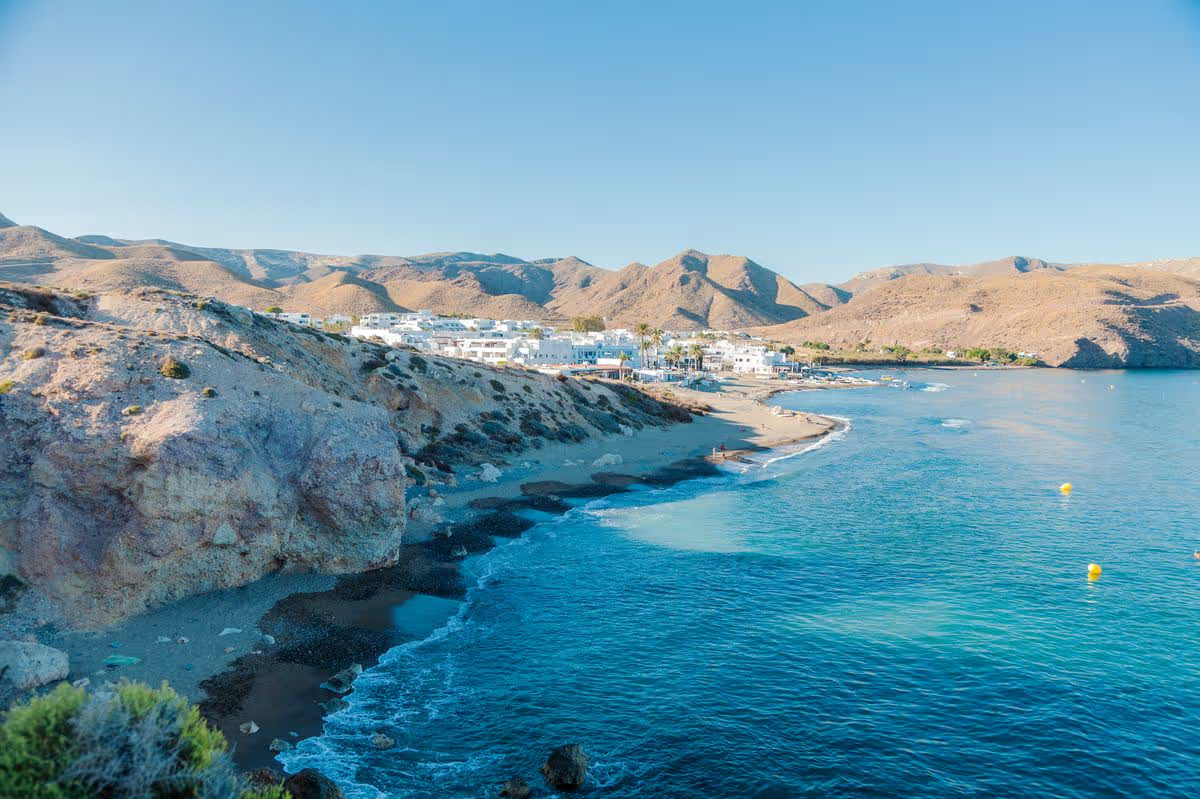
Almería, in southeast Spain, is set against the diverse landscapes of volcanic beaches, azure waters, and dramatic desert, with balmy rays and virtually year-round sunshine. It’s a lesser-known destination compared to the likes of Costa del Sol, with quieter beaches and a laid-back atmosphere for a more authentic Spanish experience.
Due to its location near the Tabernas Desert, Almería is known as the ‘desert coast’ and enjoys a warmer, drier climate than neighbouring areas. It welcomes more than 3,000 hours of sunshine a year and only around 26 days of rainfall, making it a highly desirable sun-soaked destination.
In April, visitors can expect to bask in a balmy 21C and enjoy eight hours of blistering sunshine. During the summer months, temperatures can creep up to 32C, with an inviting 12 hours of sunshine every day, and a warm 24C in the turquoise sea.
Aside from the inviting climate, the coastal city offers an affordable holiday, with flights from London to Almería starting at £13 in April, or £17 from Manchester, according to Skyscanner. What’s more, prices don’t rise too much during the peak summer season, with flights from Manchester to Almería costing from £28 one-way in July, or from £33 departing from London.
Once you’ve arrived in the pretty Spanish city, the appealing prices only continue. Travel experts at First Choice found that a beer could set you back just £3 (€3.50) in Almería, while a three-course meal for two typically costs between £25 (€30) and £30 (€35).
Alongside its stretches of golden-sand beaches, crystal-clear blue waters, and diverse landscapes, there’s plenty to explore in the Spanish region. The walkable, compact city centre is brimming with charm, from its Gothic and Renaissance architecture to ancient landmarks, narrow streets and bustling tapas bars.
Almería is renowned for its huge tapas culture and vibrant bars, so you’ll often get free tapas with every drink, as you dine alongside Spaniards. There’s also the 16th-century cathedral towering over the streets, the Plaza Vieja with its beautiful architecture and palm trees, and the main shopping area of Puerta de Purchena, which is brimming with boutique shops.
Away from the city is the protected Cabo de Gata-Níjar Natural Park, with volcanic cliffs, hidden coves, and some of the most stunning Spanish beaches. There’s also the striking Tabernas Desert that you can explore during a guided day tour, as well as the charming whitewashed hilltop village of Mojácar.
The village may look recognisable to some as it was famously used as the backdrop for major Hollywood movies, including Indiana Jones, and the hit TV series Game of Thrones. There’s even the opportunity to visit the preserved Wild West film set of MiniHollywood Oasys, which offers various shows and attractions in a setting that will transport you straight onto the set of Indiana Jones.
Do you have a travel story to share? Email webtravel@reachplc.com
This place deserves far more recognition – it has amazing views, a real sense of community, and a fascinating history too.
Nicola Roy Multimedia content creator
04:01, 21 Mar 2026
This coastal spot is a true hidden gem(Image: Nicola Roy)
There’s genuinely nothing better than those first sunny spring days as we leave winter behind. It immediately makes you crave a visit the seaside, even if there’s still a slight chill and it’s not quite swimming weather yet.
Last weekend, I chose to take advantage of my renewed enthusiasm and positivity for life, and drove to a stunning coastal village that many people have never heard of. Admittedly it’s tiny, and there’s barely anything there, but there’s a welcoming pub and restaurant, breathtaking sea views , and it’s near to another popular seaside destination too. Lower Largo in Fife has a population of approximately 2,300, and it’s one of the most picturesque places I’ve seen.
The compact village overlooks Largo Bay, on the northern side of the Firth of Forth in Scotland. It required roughly an hour and a half to drive from Glasgow, and from Edinburgh, it’s just an hour’s drive away.
Largo is a historic fishing village, divided into two separate sections – Lower and Upper, with the small village of Lundin Links just to the left. Here, you won’t discover amusement arcades or crowds of holidaymakers, and it boasts a far more peaceful atmosphere than other coastal villages I’ve visited lately.
But don’t let the lack of attractions put you off. The more relaxed rhythm of life here was captivating, and already I’m eager for my next opportunity to return.
Waking up to those stunning views was an instant mood-booster, especially when the sun was shining brightly. The chilly temperature didn’t matter – the setting looked perfect, and the fresh coastal air felt wonderfully revitalising, reports the Express.
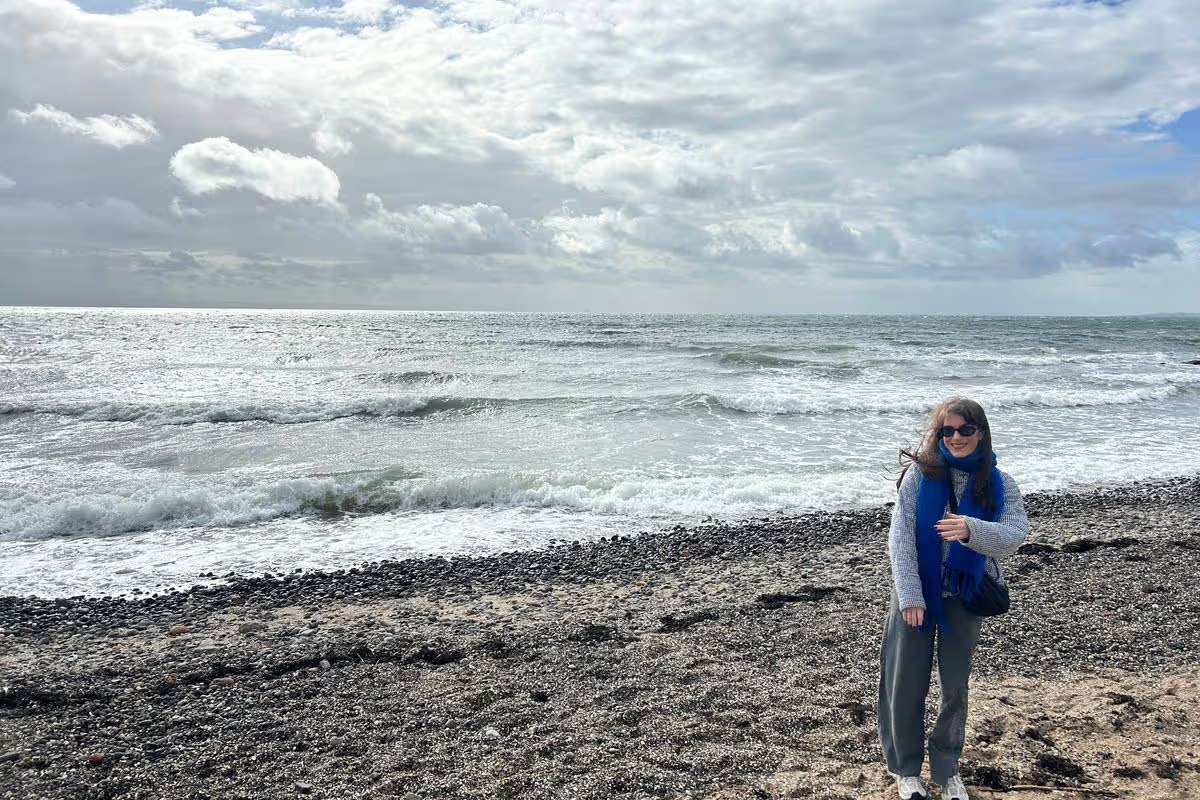
Lower Largo’s shoreline consists of sand and rocks, and it’s pristine. We noticed plenty of dog walkers enjoying the area, and even saw one brave soul taking a plunge in the sea, which must have felt incredible once she got past the initial cold shock.
The surrounding streets were equally delightful to explore. It’s fairly peaceful, meaning you’ll hardly encounter any traffic, but you will discover some impressively decorated front gardens. The nautical theme ran strong throughout, with garden gates featuring pirates, fish and mermaids.
We had breakfast at The Aurrie, a delightful cafe set within a converted church that offered such a warm and inviting ambience. Artwork from local artists lined the walls and was available to purchase, alongside an excellent range of hot dishes, coffees, and a cake display packed with tempting options. I chose the veggie haggis and potato scone roll with a flat white, and it was absolutely lovely.
During our visit, we also ate at The Crusoe, another wonderfully welcoming four-star hotel featuring a restaurant and pub. It serves all the traditional pub favourites you’d anticipate, from mac and cheese to fish and chips, and my entire family really enjoyed the experience.
Just over the way is the Railway Inn, another pub boasting a real fire that I didn’t manage to pop into, but my parents assured me it was fantastic and the ideal place for a post-dinner drink.
The pub enjoys a prime location right next to an impressive viaduct, now disused but still standing tall. It spans the Keil Burn, and was constructed to serve a section of the Fife Coast Railway Line. It’s been out of service since 1965 due to the reorganisation of British railways known as the Beeching cuts, but it remains a significant landmark and is well worth a look.
Another fascinating aspect of Lower Largo’s past is that it’s actually the birthplace of the man who inspired Daniel Defoe’s Robinson Crusoe – hence the hotel’s name.
Born in 1676, Alexander Selkirk was born in the village, and the house that now occupies his birthplace at 99-105 Main Street showcases a life-sized statue of him gazing out towards the horizon.
A signpost at the harbour points in the direction of the Juan Fernández Islands, some 7,500 miles distant, where he spent over four years shipwrecked.
I’m already looking forward to my next trip to Lower Largo. The overall atmosphere of the place was so welcoming, and it’s clear it has a strong sense of community.
It’s the ideal spot to enjoy a peaceful few days, but if you fancy exploring further afield, the beloved coastal town of St Andrews is just a 20-minute drive away.
While it’s best known for its golfing heritage and as the location where Prince William and Princess Catherine first crossed paths, there’s also a wealth of excellent pubs and eateries, bookshops and cafés to discover.
THE UK isn’t short of coastal paths but a new 2,700-mile path will become the longest of its kind in the country and even the world.
The King Charles III England Coast Path will give Brits and tourists access to the country’s entire coastline for the first time.
Sign up for the Travel newsletter
Thank you!
The King Charles III England Coast Path will stretch across 2,700 milesCredit: Getty
Natural England will celebrate the path’s official opening next week, which has been in the works for 16 years.
Around 80 per cent of the path is already open, with the final sections due to open by spring next year.
When the path is completed, it will be the longest managed coastal path in the world and eventually link with the 870-mile Wales Coast Path and 3,260 miles of the Scottish coast.
The new path means that walkers and tourists will be able to see and access hidden coves that were not previously accessible.
For example, new bridges and steps have been introduced in parts of the path.
On the Isle of Wight, new steps to a ‘secret beach’ have been built.
The steps are part of a 2.8-mile route that starts at Gurnard Luck before heading through Lynda’s Woods and reaching the beach dubbed locally as a secret spot.
On the National Trails’ website, you can see which parts of the path are open near you and also if there are any current issues that mean the path is temporarily inaccessible, for example, due to storm damage.
The site has different pages for different parts of the route, and once you go into a page, you will be able to see a map with the route on it.
You can also use filters to find nearby hotels and B&Bs as well as attractions and places to grab a bite to eat.
For example, looking at the South East coast page and map, you can walk directly along the coast through Dover, and if you want to explore more of the area, then head to Western Heights – an English Heritage fortification site that dates back to the Napoleonic Wars, which is free to visit.
Alternatively, in the South West, head on to part of the South West Coastal Path through Outer Hope, which is near Salcombe.
It will include paths and walks past top UK spots including the White Cliffs of Dover and the Jurassic CoastCredit: Getty
You could stay at The Cottage Hotel and Restaurant with sea-view rooms and cream teas out on the terrace.
The hotel sits on the cliffs just above the harbour beach in Hope Cove, so you can get to the sand and sea within a few minutes.
The map of the coastal path also highlights holiday parks, ideal for summercamping trips.
For example, in Devon near Exmouth, you can head to Cofton Holidays which has lodges, cottages, caravans and a campsite.
The holiday park runs a number of events and shows and has a high ropes course, an indoor pool and an arcade and games room.
Other highlights on the 2,700-mile path include the White Cliffs of Dover in Kent and the Jurassic Coast in Dorset.
If you are looking for a day walk that is already fully open, you could venture from Shoreham-by-Sea to Brighton.
Around 80 per cent of the trail is already openCredit: Getty
Setting off from Shoreham-by-Sea, you will walk next to the River Adur estuary where you can spot birds before heading past the old lighthouse in Shoreham Harbour.
The trail then follows on to Hove Esplanade to Brighton, where you can see the remains of West Pier.
Finally, in Brighton, you can enjoy the beach, pier and bustling town.
Or you could travel up north, to walk to Newbiggin-by-the-Sea, which was once a vital port for shipping grain.
You can learn more about the town in the Newbiggin Maritime Centre, and in the town, there are a number of shops and places to grab a bite to eat.
And if you happen to be there in April, make sure to catch the Kite Festival with live music gigs, film showings and of course, lots of colourful kites taking to the skies.
In other UK travel news, these are the beautiful UK hiking trails that have delicious tea rooms and beautiful castles along the way.