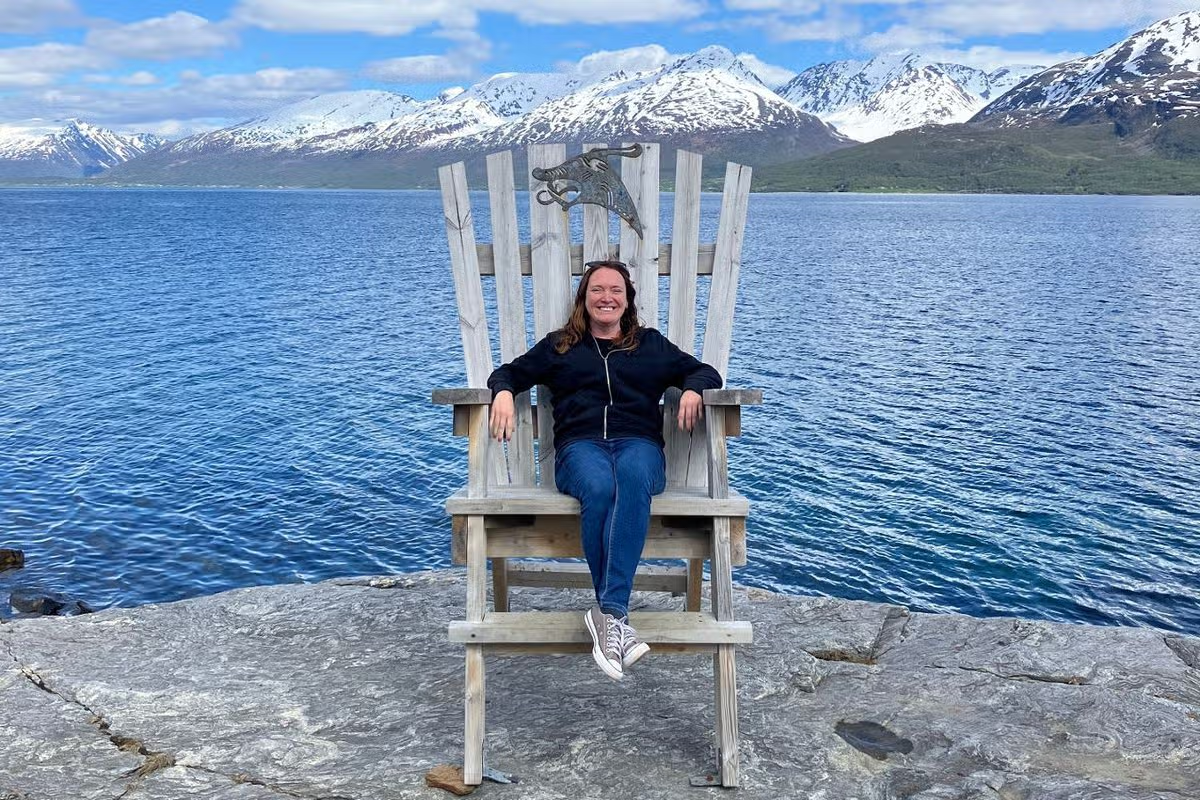
Towering snow-capped mountains — even in May — the sea everywhere you look, beautiful, traditional houses and, of course, a few trolls to keep you company. Clare Fitzsimons takes a trip to Tromsø

Clare Fitzsimons headed to the Gateway of the Arctic
Visiting the Arctic Circle isn’t necessarily everyone’s first thought for a holiday, but as I’m descended from Viking royalty (apparently… a looooooong way back), it’s always been on my bucket list of destinations.
And arriving in the city of Tromsø, the ‘Gateway to the Arctic’, was as spectacular as I’d hoped.
Towering snow-capped mountains — even in May — the sea everywhere you look, beautiful, traditional houses and, of course, a few trolls to keep you company. So what do you need to know to have a fabulous time in the unofficial capital of the Arctic, known as the ‘Paris of the North’?
When to go
It all depends on what you’re looking for on your trip. The famous northern lights are often visible from the city and tourists flock from all over the world in the hope of catching a glimpse of them.
But you don’t have to go in winter — late spring and summer have plenty of plus points too, including the Midnight Sun.
It’s undeniably weird — but also quite a lot wonderful — to walk out of a building in the middle of the night to find it full daylight. Confusing? Undoubtedly. But absolutely worth seeing. Just remember your eye mask for getting some shut-eye.
How to get there
Of course, you can fly into the city, but why not make a trip out of it?
I cruised up the coast with Hurtigruten on the MS Trollfjord to really enjoy the incredible scenery (not to mention some delicious food and drink) on the way.
What to do
The world’s northernmost distillery, Aurora Spirits, in Arctic Lyngen, is worth the couple of hours’ drive from Tromsø. The scenery along the way is almost beyond description as the Lyngen Alps tower above you and fjords stretch ahead of you as you wind through valleys that feel like they were created at the dawn of time.
The distillery itself is in an equally striking setting and makes whisky and other spirits using Arctic ingredients, including local botanicals and glacier water. It’s also a former NATO base and if you get a chance, visit the underground bunkers where they mature the whisky.
They also make a special Seaweed Gin for the Hurtigruten cruise ships I travelled on. If you aren’t able to travel beyond the city, there are plenty of things to do within walking distance.
If you’re feeling brave, you can do an Arctic sauna and polar plunge in the harbour, though that all seemed a little chilly for my liking.
For some culture there are Norwegian heritage experiences, to celebrate the traditional indigenous Sámi people, with joik (throat singing), duodji (Sámi handicrafts) and language classes. And for a slightly more light-hearted look at the traditions of the country, there’s also the Troll Museum.
Where to stay
There are lots of options for every budget, but for ease and a little luxury, Clarion The Edge on the waterfront was perfect. Comfy rooms, a fabulous breakfast, a stone’s throw from the centre of the city and excellent blackout blinds!
Where to eat
If you’re looking for a special dinner, then Hildr is a great option. It’s pricey, but their seasonal menu celebrates local Norwegian ingredients with a modern twist. There are plenty of more wallet-friendly places to eat too. Raketten Bar is famous for its hot dogs, including a reindeer one, and is hilariously tiny.
Tromsø is also home to the world’s northernmost McDonald’s and I couldn’t resist a couple of chicken nuggets in the Arctic Circle!
Where to drink
In a word… Everywhere.
The streets of the city are lined with cosy bars and coffee shops to sit in the sun or snuggle under a blanket and watch the world go by.
I was there to see teams of relay racers running through the streets and if you time it right you could catch the Midnight Sun Marathon there.
Sitting and watching the runners has got to be more enjoyable than doing it, right?
Though be warned the prices can be enough to make London bars blush and might make you wish you’d put your running shoes on after all…
Book it
Hurtigruten’s Svalbard Line (Northbound) travels from Bergen to Longyearbyen over eight days. There are 14 departures between May 2027 and September 2027, on MS Trollfjord and MS Midnatsol .
All-inclusive meals and unlimited selected drinks are included, with prices starting from £2,466pp, based on two people sharing a Polar Inside cabin onboard MS Trollfjord, departing on 30 August 2027. Flights and transfer options start from £250pp per route.