Chevron

Ties between California and Venezuela go back more than a century with Chevron

As a stunned world processes the U.S. government’s sudden intervention in Venezuela — debating its legality, guessing who the ultimate winners and losers will be — a company founded in California with deep ties to the Golden State could be among the prime beneficiaries.

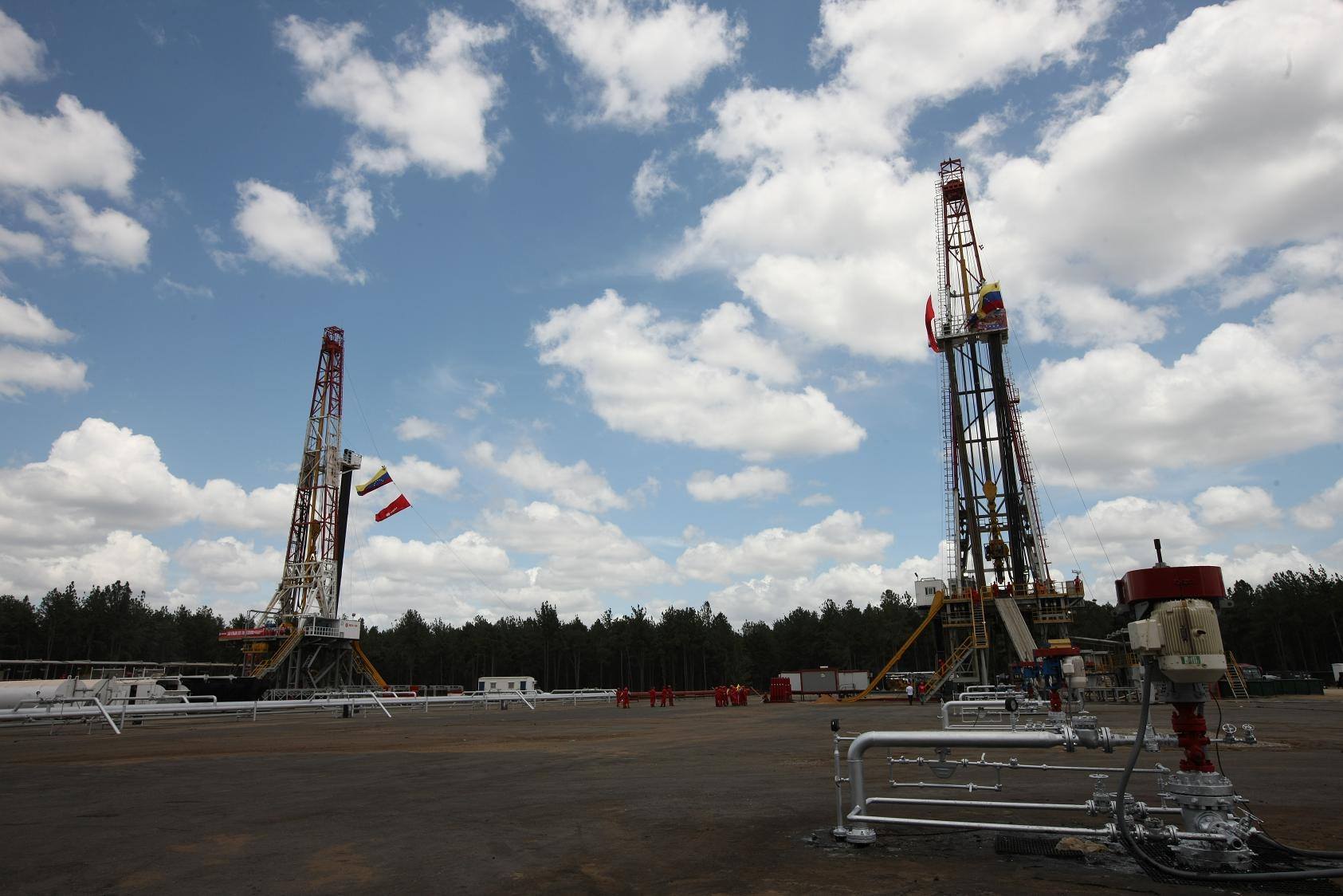
Venezuela has the largest proven oil reserves on the planet. Chevron, the international petroleum conglomerate with a massive refinery in El Segundo and headquartered, until recently, in San Ramon, is the only foreign oil company that has continued operating there through decades of revolution.

Other major oil companies, including ConocoPhillips and Exxon Mobil, pulled out of Venezuela in 2007 when then-President Hugo Chávez required them to surrender majority ownership of their operations to the country’s state-controlled oil company, PDVSA.

But Chevron remained, playing the “long game,” according to industry analysts, hoping to someday resume reaping big profits from the investments the company started making there almost a century ago.

Looks like that bet might finally pay off.

In his news conference Saturday, after U.S. Special Forces snatched Venezuelan President Nicolás Maduro and his wife in Caracas and extradited them to face drug-trafficking charges in New York, President Trump said the U.S. would “run” Venezuela and open more of its massive oil reserves to American corporations.

“We’re going to have our very large U.S. oil companies, the biggest anywhere in the world, go in, spend billions of dollars, fix the badly broken infrastructure, the oil infrastructure, and start making money for the country,” Trump said during a news conference Saturday.

While oil industry analysts temper expectations by warning it could take years to start extracting significant profits given Venezuela’s long-neglected, dilapidated infrastructure, and everyday Venezuelans worry about the proceeds flowing out of the country and into the pockets of U.S. investors, there’s one group who could be forgiven for jumping with unreserved joy: Chevron insiders who championed the decision to remain in Venezuela all these years.

But the company’s official response to the stunning turn of events has been poker-faced.

“Chevron remains focused on the safety and well-being of our employees, as well as the integrity of our assets,” spokesman Bill Turenne emailed The Times on Sunday, the same statement the company sent to news outlets all weekend. “We continue to operate in full compliance with all relevant laws and regulations.”

Turenne did not respond to questions about the possible financial rewards for the company stemming from this weekend’s U.S. military action.

Chevron, which is a direct descendant of a small oil company founded in Southern California in the 1870s, has grown into a $300-billion global corporation. It was headquartered in San Ramon, just outside of San Francisco, until executives announced in August 2024 that they were fleeing high-cost California for Houston.

Texas’ relatively low taxes and light regulation have been a beacon for many California companies, and most of Chevron’s competitors are based there.

Chevron began exploring in Venezuela in the early 1920s, according to the company’s website, and ramped up operations after discovering the massive Boscan oil field in the 1940s. Over the decades, it grew into Venezuela’s largest foreign investor.

The company held on over the decades as Venezuela’s government moved steadily to the left; it began to nationalize the oil industry by creating a state-owned petroleum company in 1976, and then demanded majority ownership of foreign oil assets in 2007 under Chávez.

Venezuela has the world’s largest proven crude oil reserves — meaning they’re economical to tap — about 303 billion barrels, according to the U.S. Energy Information Administration.

But even with those massive reserves, Venezuela has been producing less than 1% of the world’s crude oil supply. Production has steadily declined from the 3.5 million barrels per day pumped in 1999 to just over 1 million barrels per day now.

Currently, Chevron’s operations in Venezuela employ about 3,000 people and produce between 250,000 and 300,000 barrels of oil per day, according to published reports.

That’s less than 10% of the roughly 3 million barrels the company produces from holdings scattered across the globe, from the Gulf of Mexico to Kazakhstan and Australia.

But some analysts are optimistic that Venezuela could double or triple its current output relatively quickly — which could lead to a windfall for Chevron.

The Associated Press contributed to this report.

Source link

The Chevron fire in El Segundo is an indictment of air quality regulation

More than two months after an explosion erupted at the Chevron oil refinery in El Segundo, neither the company nor the regulators responsible for monitoring the facility have released details on the cause and the extent of the environmental fallout.

Here’s what we do know so far: Around 9:30 p.m.on Oct. 2, a large fire broke out in the southeast corner of the refinery, where Chevron turned crude oil into jet fuel. The resulting violent blast allegedly wounded several workers on the refinery grounds and rattled homes up to one mile away.

The refinery carried out emergency flaring in an effort to burn off potentially hazardous gases, as public officials told residents in neighborhoods nearby to stay indoors. That warning held until firefighters managed to extinguish the fire the following day.

You’re reading Boiling Point

The L.A. Times climate team gets you up to speed on climate change, energy and the environment. Sign up to get it in your inbox every week.

By continuing, you agree to our Terms of Service and our Privacy Policy.

The South Coast Air Quality Management District — the agency responsible for regulating the refinery’s emissions — said Chevron would submit reports detailing the potential cause of the fire and any unexpected equipment failures within 30 days. But the preliminary reports were handed in nearly a month late — and without any significant updates from what was said in the days immediately following the fire.

In those reports, Chevron said the fire was “unexpected and unforeseeable.” The cause is still under an investigation that probably won’t conclude until next month, an air district spokesperson told me recently.

Company officials said the fire significantly damaged power supply, utilities and gas collection systems in that section of the refinery. Repairs are underway but could take months. Meanwhile, the majority of the 1,000-acre refinery is operational, distilling crude oil into gasoline and diesel.

At an air district meeting on Dec. 2, Chevron asked for leniency from conducting equipment testing at the damaged wing of the refinery that is now offline, and the air district obliged.

One member of the agency’s hearing board, Cynthia Verdugo-Peralta, said she understood that the investigation was “quite involved” but stressed the need for “some type of response” from Chevron on the cause.

“I’m hoping that this will never happen again,” she said. “Hopefully this repair will indeed be a full repair and there won’t be another incident like this.”

Environmental regulators like the South Coast Air Quality Management District often rely on the very industries that they oversee to arrange for monitoring and investigations into disasters. For obvious reasons, that’s not ideal. Experts say this system of self-reporting is somewhat inevitable, given that many government agencies lack the staffing, budget and access to provide adequate oversight.

But it often leaves the public waiting for answers — and skeptical of the findings, when they finally arrive.

For example, there are still serious questions surrounding the air monitoring systems at Chevron’s El Segundo refinery that were supposed to act as a safety net for the public nearby during emergencies like the October fire.

Under state law, refineries are required to install, operate and maintain real-time fence line air monitors. Indeed, over four hours after the Oct. 2 fire at El Segundo, Chevron’s fence line air monitors detected elevated levels of volatile organic compounds, a category of quickly vaporizing chemicals that can be harmful if inhaled.

However, at the time of the incident, the refinery’s monitors oddly did not detect any elevated levels of some of the most common types chemicals that experts say would have been likely to be released during such a fire, such as cancer-causing benzene, a typical byproduct of burning fossil fuels.

Experts are now asking whether those monitors were fully functioning at the time.

Earlier this month, the Bay Area Air Quality Management District fined Chevron’s refinery in Richmond $900,000 after the agency found 20 of the oil company’s fence line monitors were not properly calibrated to detect the full range of emissions, potentially allowing excessive air pollution to go undetected and unreported.

As for the El Segundo facility, neither the South Coast air district nor the refinery could confirm whether the air monitors were working properly on Oct. 2. A spokesperson said the air district is scheduled to audit Chevron’s fence line air monitoring network sometime next year.

But it may already be too late to warn nearby communities. Since October’s explosion, there have been more than a dozen reported incidents of unplanned flaring at Chevron’s refinery in El Segundo, according to air district data.

Each one raises the question: What happened?

More news on air pollution

The holiday season is associated with fragrant candles, incense and gathering around the fireplace. But health experts say these traditions should be done in moderation to avoid respiratory risks, according to Associated Press reporter Cheyanne Mumphrey.

That’s especially true in Southern California, where the air district continues to issue no-burn advisories, prohibiting burning wood to limit unhealthy levels of soot, per Pasadena Now.

Almost a year after the Eaton and Palisades fires, the health effects from breathing wildfire smoke are still coming into focus. L.A. Times science and medicine reporter Corrine Purtill writes that emergency room visits rose 46% for heart attacks at Cedars-Sinai Medical Center in the 90 days after the fires. The findings suggest the death toll could be much higher than the 31 fatalities that have been linked with the fires.

California Atty. Gen. Rob Bonta sued the Trump administration — for the 50th time — after the suspension of $3 billion in federal funding that Congress approved for building more electric vehicle chargers, according to Times climate reporter Hayley Smith. California alone stands to lose out on $179.8 million in grants that could help reduce smog and greenhouse gases.

A few last things in climate news

The Trump administration announced it will dismantle the National Center for Atmospheric Research in Colorado, one of the world’s premier Earth science research institutions, per reporting from the New York Times. Scientists fear this could undermine weather forecasting in an age when global warming is contributing to more intense storms and other natural disasters.

A new analysis from Woods Hole Oceanographic Institution found the rate of sea-level rise has more than doubled along U.S. coastlines over the last 125 years, according to Washington Post environmental reporter Brady Dennis. The research rebuts a controversial federal assessment published this summer that concluded there was no acceleration in rising ocean waters.

The U.S. and Europe continue to abandon their electric vehicle aspirations, ceding the clean car market to China, Bloomberg auto reporter Linda Lew writes. The European Commission recently scrapped an effective ban on combustion engine vehicles by 2035, and Ford Motor Co. walked away from plans to significantly overhaul its EV production — including the imminent demise of its all-electric Ford 150 Lightning truck.

This is the latest edition of Boiling Point, a newsletter about climate change and the environment in the American West. Sign up here to get it in your inbox. And listen to our Boiling Point podcast here.

Source link