How the Chavista State Failed Before and After the Earthquakes
This video, made by a teenager who was living in one of the OPPP buildings in Vargas state, is one of the most moving visual documents of a tragedy that abounds in them.
If you are brave enough to watch it to the end, you’ll be moved by the crying around the kid trying to save his life without turning off the camera, his effort to get out of his room just after the earthquake that shook Vargas state, the desperation of the people looking for their relatives, shouting the names of their kids. The continuous shot of outstanding cinematic quality leads us down the stairs onto the streets where an entire community begins to run for shelter and to take the wounded to someplace where someone can save their lives. You see that the building is standing but irremediably damaged, that it will be impossible to inhabit again. These people have lost everything in an instant, and they are just realizing it. And you realize, with them, the depth, the extent of their vulnerability.
This is a complex built with oil money by a government that was desperate to get its president reelected at any cost, even if that president was dying of cancer and telling everyone he was fine. The same government, with another president that no one elected, is in place several years later. During the first thirteen minutes this video recorded, the immediate aftermath, we see no police, no firemen, no rescuers. The only trace of the State is the damaged building. Well, way more than thirteen minutes would pass, and that community of people would have to remove their dead from the rubble with no help from the State.
Between 2011 and 2015, the OPPP managed approximately $3.3 billion, calculated using the official exchange rates for each year. There was no transparency regarding the use of these funds. The office received 1.17 billion the year Chávez was last re-elected.
The State failed them. It failed to prevent this tragedy. It failed to respond to it. It’s failing at learning from it. And all this is deliberate: it’s part of a model of exerting power and extracting everything from the nation.
The failure at preventing
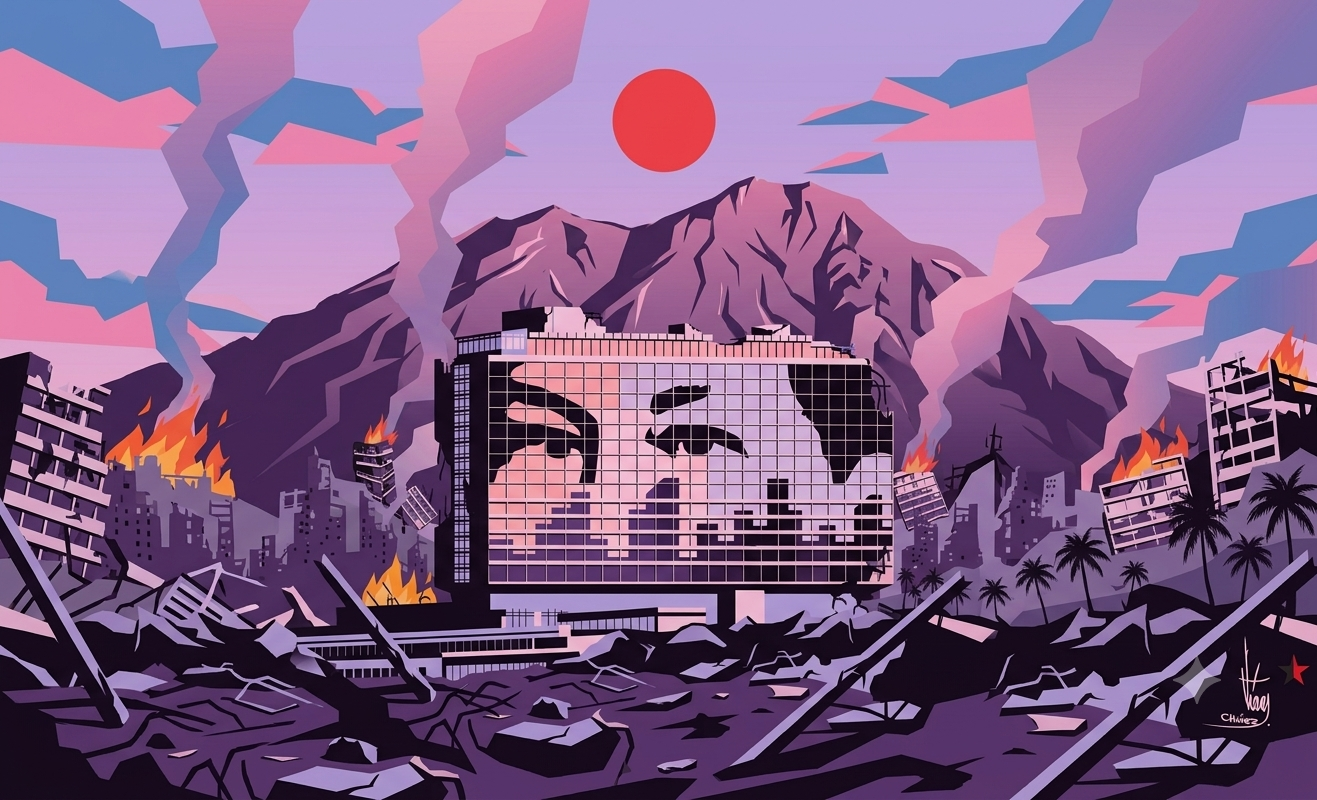
The OPPP buildings we see in the video (shorthand for the Presidential Office for Special Plans and Projects, known for housing people displaced by the 2010 floods, a landmark component of the Gran Misión Vivienda Venezuela) are a dramatic example of the lack of safeguards during construction, particularly in public housing complexes. In previous reporting, we have noted that both private and public residential buildings were severely affected by the earthquakes, and that drawing broad political conclusions from the rubble alone would be imprudent. However, there are documented cases in which the State actively disregarded construction practices that could have better prepared infrastructure to withstand the double earthquake.
According to Armando.Info, the OPPP’s first president, architect Francisco “Farruco” Sesto, once acknowledged that soil studies were not conducted due to the need to deliver fast. Independent assessments showed that buildings of that scale simply could not comply with safeguards in that time frame and that the local soil requires extensive studies. Beyond that significant omission, the construction process was marked by limited financial transparency and opaque contracting practices. Even before the earthquakes, residents had raised concerns about vulnerabilities in the buildings. After the disaster, Armando.Info identified that nearly 4 out of every 10 OPPP towers collapsed, while 27 suffered serious structural damage.
Speed was also the priority with the Hugo Chávez complex in Playa Grande. More than 150 of its 196 buildings were crushed, sunken, or tilted, while even those that remained standing suffered significant internal damage. As with the OPPP developments, Armando.Info found no publicly available records confirming that detailed soil studies were conducted before construction. They were made by a company called Summa, which was awarded the contract within the framework of the Venezuela-Türkiye Agreement of 2011. The complex reached an estimated population density of approximately 450 people per hectare, three times the 150 inhabitants per hectare permitted for that type of terrain. Independent assessments have also raised the strong possibility of inadequate foundations, while the compressed construction schedule may have made strict compliance with seismic-resistance regulations more difficult. Community spokespeople speak of more than 3,000 affected families.
Despite extensive efforts of citizen-led initiatives to try to find missing people, there is still no official number reported by the State.
Between 2011 and 2015, the OPPP managed approximately $3.3 billion, calculated using the official exchange rates for each year. There was no transparency regarding the use of these funds. The year with the largest budget was 2012, when the office received approximately $1.17 billion, during an election year.
This is part of a broader pattern of simply ignoring seismic-resistant regulations. Physicist Raúl Estévez pointed out that Venezuelan scientists have been engaging with the question of seismic activity and risk prevention in the country for decades, including seismic microzoning of urban areas, but the State did not take active effort to increase the country’s capability to resist earthquakes. In fact, it did the opposite. Geologist Luiraima Salazar echoed a similar statement: “Buildings were raised on land whose stability, bearing capacity, shear resistance, or behavior during an earthquake required much more detailed and specialized studies or simply incorporating all the knowledge generated in the country’s geoscience faculties, because all this was already known, but was somehow ignored by those who had decision-making power. That is why some areas are more vulnerable than others, not only because they are close to an active fault, but because they combine unfavorable soils, poor construction, high density of population, unstable slopes, poorly prepared essential services and bad political decisions in the management of territorial planning based on geological risk.”
All is compounded by Venezuela’s prolonged complex humanitarian emergency, with food insecurity, an unstable electrical grid, and a healthcare system in which, according to Transparencia Venezuela, only 40% of operating rooms were functional, 74% lacked surgical supplies, and approximately 60% of hospitals lacked running water. The country was simply not well positioned to face an emergency of the scale of the double earthquake.
The failure at responding
The State’s response was extremely delayed compared to international standards. Within the first 24 hours, reports Transparencia Venezuela, the government deployed only 12.6% of its peak personnel. That figure reached 34.6% after 48 hours. The maximum deployment of 31,837 civilian and military officials was not achieved until day 18, well past the crucial 72-hour “golden window” when rescuing survivors is most feasible.
According to The Wall Street Journal, in the first few hours after the tragedy, the government also hindered the efforts of rescue workers by blocking or delaying international rescue teams, demanding they obtain safe conduct passages and forcing them to participate in propaganda-related activities, all while dismissing the massive citizen reaction as a “media matrix”. The delays were costly in lives, time and money, with the flight detour costing another $20,000 in fuel for the jet that a private donor had lent them. “Rescue teams say they squandered hours waiting to receive their equipment and luggage at the overwhelmed airport in Valencia, a two-hour drive from the disaster. Some said they were forced to take photos with (Delcy) Rodríguez, which were then posted on her social-media accounts”.
A similar sentiment was echoed by the United Nations Office for the Coordination of Humanitarian Affairs, which listed bureaucratic delays as a factor that can delay humanitarian response during the first few months of 2026. However, they mentioned that they have maintained good coordination with local authorities.
Even the government admitted to blocking affected areas, which prevented volunteers from accessing. So, during the first 48 hours, most of the people who were rescued alive were rescued by neighbors, local volunteers, and self-evacuated, digging with their bare hands without heavy machinery. In addition, despite the fact that, according to Transparencia Venezuela, the State spent billions of dollars over two decades on a fleet of 59 heavy and medium transport aircraft (such as Mi-26 helicopters and Y-8 planes), there was little to no evidence of their effective use during the emergency.
To mitigate this absence, private machinery had to be mobilized from miles away to assist with rescue operations. On the site of the tragedy, multiple reports alleged that members of the National Guard and CICPC looted the rubble. This footage gained traction on social media and became a symbol of the government response to the tragedy.
In addition to hindering rescue operations, the state also tried to control the flow of information. Operations on the ground in Caracas have reported limits for on-site inspections and have highlighted the inconsistent reporting on the damages and casualties of the earthquake. For instance, despite extensive efforts of citizen-led initiatives to try to find missing people, there is still no official number reported by the State. The lack of centralized information makes the work of international aid organizations and humanitarian workers more difficult.
State communications mention more than 600 “delivered” housing units in the weekly “reconstruction stage” updates. This timeline is excessively rushed, especially considering the amount of soil studies and other preventative measures that must be taken to build safely in La Guaira.
The international standards, based on the experience from so many tragedies around the world, recommend registering and managing volunteers according to their different capabilities, assigning working areas for all of them, and trusting in experts like UN agencies to administer the supplies that are suddenly sent to the disaster area. It’s essential to trace what came in, from whom, where it is, and to whom it was delivered. In Venezuela, however, doing this work means competing with a State that never wants anyone to supplant it (unless it is Southern Command marines).
One source with knowledge of inspections in Caracas says the government blocked access to La Guaira and tried to absorb all the information the engineers were generating while reviewing the damage in the capital, but refused to share its own data. This time, fortunately, foreign presence prevented the police from arresting engineers, as the regime always does with anyone who is trying to break the theoretical monopoly of the State to care for the population. This is consistent with the deliberate opacity and the highly inconsistent casualty figures, which severely underreported the scale of the damage. While official figures claimed 856 affected buildings, independent satellite estimates from NASA radar suggested around 58,870 structures were damaged or destroyed.
Just as there were delays in the deployment of rescue workers, the state’s response was characterized by significant delays in the distribution of humanitarian aid. The Transparencia Venezuela report mentions that, of more than 150 collection centers in Caracas and the affected areas, only three were operated by the State. Furthermore, it highlights potential traceability problems. For example, despite a significant number of donations being reported from 133 international donors (including the IMF, the US government, and UN offices) as of the report’s cutoff date, none of the more than $781 million appeared to be confirmed or verified in the UN tracking system.
The tracking problems persist. Although the State reported distributing 9,585 tons of food and thousands of liters of water, there is simply no breakdown clarifying which of these supplies came from international aid, its own resources, or national donations. Moreover, a striking example of the traceability problems was the discovery of boxes labeled “Humanitarian Aid” in Maturín, Monagas state, hundreds of kilometers from the affected areas. The boxes had been donated by the Panama City Hall. However, due to doubts about the transparency of the delivery process, city hall officials hid GPS devices in the boxes, which helped locate them in the eastern part of the country. Nevertheless, Interior Minister Diosdado Cabello dismissed the accusations.
These traceability and tracking errors represent a significant risk to reconstruction efforts in the affected areas, as the arrival of hundreds of millions of dollars to a State with fragile institutions and high levels of opacity can lead to the funds being used for rent-seeking or money laundering. Experts warn, in fact, that the greatest risk of corruption occurs in the months following a tragedy. However, one also has to worry that the State seems to be failing to learn from this experience, because this isn’t the kind of knowledge that is useful to preserve power.
The failure at learning
In the weeks following the earthquakes, the State opted to repeat the patterns from past tragedies: announcements of accelerated construction, political patronage, and propaganda. Interim authorities have repeatedly promised that the government will provide housing for those affected by the earthquake before the end of the year. They already mentioned more than 600 “delivered” housing units in the weekly “reconstruction stage” updates. This timeline is excessively rushed, especially considering the amount of soil studies and other preventative measures that must be taken to build safely in La Guaira. In fact, the first of these “deliveries,” which took place on July 20, did not include new properties. They were homes in Fuerte Tiuna intended for chavista officials. Yes, that huge military facility where Nicolas Maduro was living until January 3.
According to reports by El Pitazo, the recipients of these homes were officials from the La Guaira Governor’s Office, the National Integrated Customs and Tax Administration Service (SENIAT), and other government agencies. Authorities argued that, given that Fuerte Tiuna is a strategic military point, residents should be selected through careful vetting, which, according to the report, included proven loyalty to the political process in power. It is difficult to separate this from the clientelistic tradition of chavismo.
According to AUAEV’s first director, Carlos Genatios, the agency’s work was repeatedly subordinated to political interests.
The distribution process also served as an opportunity for political propaganda. Images of grateful families were shared on State social media channels and complemented a communications strategy that positions Rodríguez as a “stateswoman” in an active, leading role within her government. This shift contrasts with the more impersonal nature of the “Free Venezuela Mission” and is the central theme of communications for the “Venezuela Reborn Mission” reconstruction plan.
This is a model
The most concerning aspect of the government’s response is that it is neither new nor accidental. Rather, it reflects a governing logic that has repeatedly emerged in the aftermath of major disasters.
The first large-scale example came 26 years ago, when catastrophic floods and landslides devastated La Guaira in what remains Venezuela’s deadliest natural disaster. Faced with a humanitarian emergency that left thousands dead and displaced, the Chávez government transformed reconstruction into a political project. In practice, this meant prioritizing political results over the deliberate and methodical work of institutional planning and risk reduction.
Reconstruction became a vehicle for political messaging, technical expertise was repeatedly subordinated to political conflict, and new housing programs increasingly prioritized speed over long-term resilience.
For instance, one of the most ambitious reconstruction efforts was led by the Autoridad Única del Estado Vargas (AUAEV), a government agency created to coordinate the work of geologists, engineers and urban planners tasked with rebuilding the region and reducing its vulnerability to future natural disasters. According to its first director, Carlos Genatios, the agency’s work was repeatedly subordinated to political interests. Local and national authorities reportedly sabotaged reconstruction by dumping debris onto roads and drainage systems that had already been cleared, obstructing coordination with international experts, withholding critical information and derailing long-term planning during the 2000 electoral season. Most importantly, key mitigation works were severely compromised by the usage of inadequate construction materials, weakening efforts to build a more resilient La Guaira.
Political scientists Maryhen Jiménez, Rebecca Hanson, Benedicte Bull and Verónica Zubillaga describe the chavista regime as a predatory State: one that prioritizes the extraction and distribution of resources for political survival over the provision of public goods, institutional capacity and accountability. For decades, chavismo has morphed governing institutions into arms of a structure aimed at both siphoning the country’s wealth and repressing dissent. Yet, the process of disaster response requires careful planning, deliberate construction and freedom of information, characteristics that are simply not compatible with chavismo’s model.
While rushed housing projects continue to be announced and meaningful information sharing remains absent, it is becoming increasingly clear that rebuilding La Guaira will require far more than pouring new foundations and raising new apartment blocks. It will require rebuilding the institutions responsible for deciding where, how, and under what standards those buildings are constructed. Institutions willing to share information and coordinate with international organizations and, most importantly, institutions able to deliver timely aid to those in need.