Tobey Maguire closed off one chapter of his love life by helping ex-wife Jennifer Meyer enter a new one.
The “Babylon” and “Spider-Man” star, 51, officiated Meyer’s marriage to music executive Geoff Ogunlesi at the Four Season Resort Lanai in Hawaii over the weekend, according to photos published Sunday by TMZ. Maguire can be seen pronouncing Ogunlesi and jewelry designer Meyer, 49, husband and wife as the newlyweds share a kiss in a photo from the luxury golf course wedding. Other photos published by TMZ show Amazon’s billionaire owner Jeff Bezos and wife Lauren Sánchez Bezos and Leonardo Di Caprio were among the guests present for the ceremony.
Maguire and Meyer’s meaningful reunion came more than a week after they finally settled their divorce. The former spouses, who share two teenage children, officially terminated their marriage on Oct. 1, according to court documents filed in Los Angeles County Superior Court. The exes married in 2007 and announced their separation in 2016.
Meyer and Ogunlesi reportedly began their romance in the summer of 2023 and made their relationship red-carpet official at the Baby2Baby Gala later that fall. They got engaged in August 2024 and in December 2025, Meyer announced she was expecting her third child. The pair welcomed their first child together, a baby girl in June.
The designer has since shared scenes from her latest chapter of motherhood on Instagram, posting photos of herself cradling her daughter, taking the baby out on the town and spending time with her loved ones, including her daughter with Maguire and her now-husband.
“Last few months…. 10000000000/10,” she captioned an Instagram carousel of photos in August.
If the above sounds familiar, then you might already be a Wholigan — someone who routinely listens to the long-running celebrity podcast “Who? Weekly.” Part of the fun of listening to the thrice-weekly show (one being for Patreon members), aside from its hosts contextualizing a dizzying array of tabloid headlines, is learning its lexicon. For example, “Crunch, Crunch” spoofs a bit of sponsored content the pop singer Bebe Rexha did for Lay’s Potato Chips in 2019. Other popular phrases unique to the Who-verse: “Good form, Bella Thorne.” “Scar-Jo Yummy Pop.”
Launched in 2016 by pop culture journalists Bobby Finger and Lindsey Weber, “Who? Weekly” eagerly mines the growing world of lower-tier celebrity, with the two hosts categorizing trending names under two main umbrellas: the fame-hungry “Whos” (influencers, reality stars, a pre-royal Meghan Markle) and the instantly recognizable, likely critically acclaimed “Thems” (Tom Cruise, Taylor Swift, Beyoncé). Rounding out the paradigm are the “Nahs,” or folks who aren’t well known enough to claim “Who” status.
On the Shelf
“I Want to Be Famous: When Everybody and Nobody Is a Celebrity”
By Bobby Finger and Lindsey Weber Crown, $33
If you buy books linked on our site, The Times may earn a commission from Bookshop.org, whose fees support independent bookstores.
“We came of age reading all the [gossip] bloggers, from Perez Hilton to Liz Smith,” Weber tells The Times of why she and Finger originally started “Who? Weekly,” which technically began as a newsletter before it morphed into a podcast.
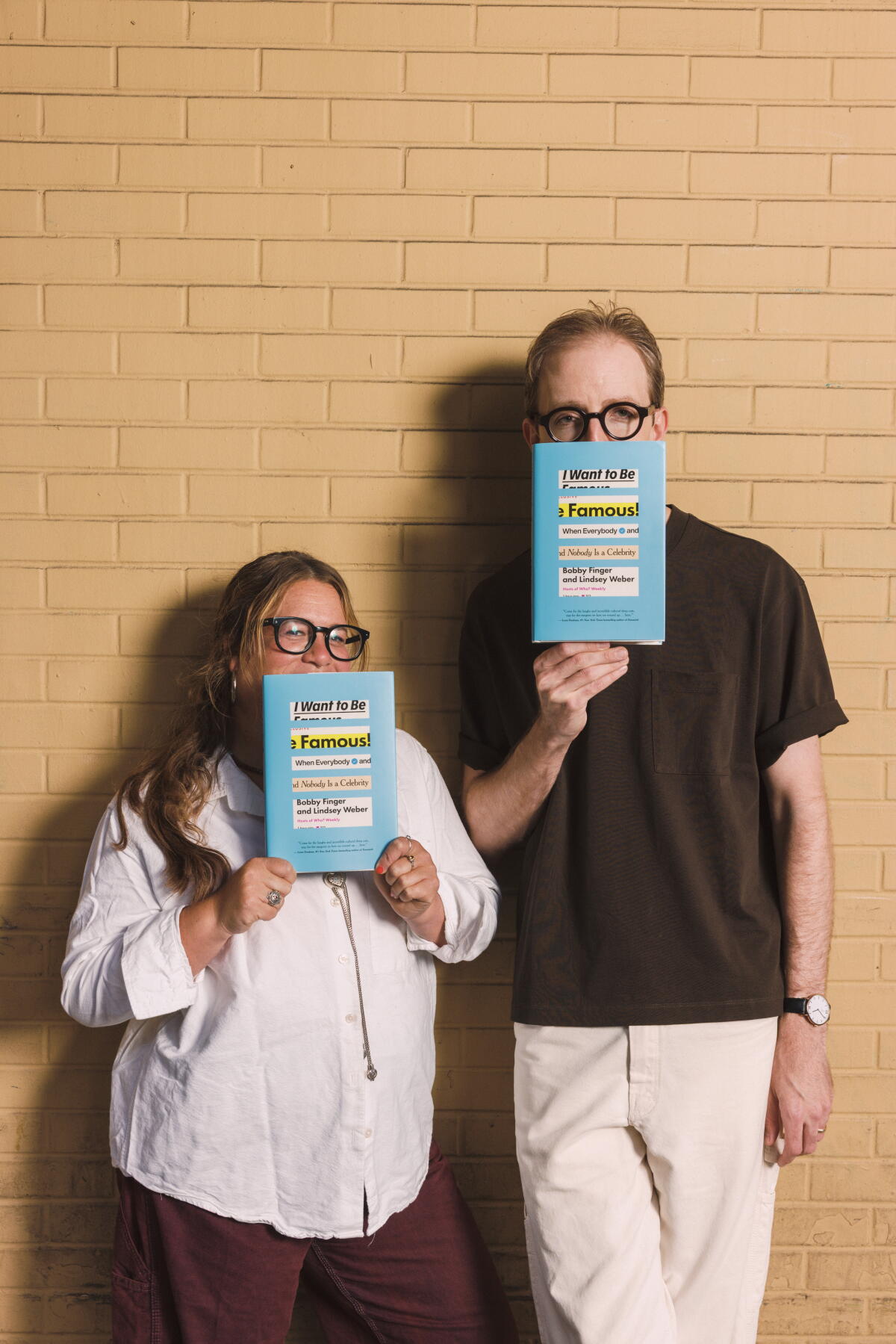
Lindsey Weber and Bobby Finger have co-written the newly released book, “I Want to Be Famous: When Everybody and Nobody Is a Celebrity.”
(Justin Jun Lee / For The Times)
Finger also cites influence from “Oh No They Didn’t,” a 2000s-era LiveJournal page that aggregated celebrity headlines and invited users to comment (kind of like a proto-Subreddit). “You read the story just as you read the comments, which were integral to the story,” Finger says. “All of the inside jokes, the additional commentary. That’s what ‘Who? Weekly’ has become, especially in our Patreon Discord. [Listeners] are always chiming in and creating their own language and extensions of the ‘Who? Weekly’ universe.”
That universe is about to expand again: In conjunction with the pod turning 10 this year, Weber and Finger are releasing a new book, “I Want to Be Famous: When Everybody and Nobody Is a Celebrity,” which looks at fame and celebrity through a historical lens while also exploring how the line between Whos and Thems got that much blurrier in the social media age. “I feel like we were always barreling towards a book,” Weber says. “Both of us are trained journalists. We were always kind of like, ‘When are we going to put our money where our mouth is?’”
To demonstrate how the binary is evolving into a spectrum, Weber and Finger revisit juicy pop cultural anecdotes (remember when Courtney Love threw her compact at Madonna at the VMAs? Or when Ariana Grande dated Pete Davidson? Or when Katy Perry flew into space on the Blue Origin?) while blanketing every chapter with an elucidation of why, no matter what decade we’re in, society just can never get enough gossip.
Meanwhile, unlike the podcast, “I Want to Be Famous” gives the hosts ample room to go deeper into the cultural framework of modern celebrity than they normally have time for. Each week, Weber and Finger dedicate one episode to unpacking a prepared list of Who-y headlines, and a follow-up episode, titled “Who’s There?,” is dedicated to listener calls. Which is to say, Weber and Finger usually spend more time explaining and trading jokes about what each micro-celeb is known for rather than how celebrity itself has evolved.
Lindsey Weber and Bobby Finger are celebrating the 10th year of their podcast “Who? Weekly.”
(Justin Jun Lee / For The Times)
“The pod is on the surface funny, [but] if you are a real fan, you’re like, ‘Oh, there’s actually some interesting stuff beneath the funny,’” Finger says. “We wanted this book to be the opposite, where it’s actually outwardly interesting and smart, and then inwardly funny when it can be.”
The writers’ tone might lean more academic within “I Want To Be Famous,” but longtime fans of the pod will recognize dozens of niche names, stories and extremely online subjects that were at one point or another discussed on the show. The authors present their grand theory of Whos and Thems by opening with the story of how former Who Meghan Markle shot to Them-dom after marrying Prince Harry. Other chapters observe what happens when Thems date or marry Whos. There’s a history of how celebrities say sorry (where there were once press releases there are now Notes app apologies) and a conversation about how nepo babies fit into the framework. As the book moves across history and demonstrates how the internet has completely upended the binary, they also show what hasn’t changed about the way fans relate to their favorites. “What we want most in a celebrity is authenticity,” Weber theorizes.
For Weber and Finger, the chance to tie the disparate threads they discuss on “Who? Weekly” was a major incentive to work on their book. “I kept being like, ‘Is this the first time anyone’s ever written about this in a book?’” Weber says with a laugh. “Because some of it was so stupid — these references to fandoms and Club Chalamet and niche things that are newer … I’m like, ‘Oh my God, are we doing this thing where now people have to read about Club Chalamet in 100 years?’ Obviously that would be incredible.”
“There’s a temporality to our show that is not the case with this book, which is very exciting,” Finger adds. “Because our show kind of exists to go in one ear and out the other. And I say that because it goes in one of our ears and out the other too, as the creators.”
Woven into the conversations around Whos, Thems, Thems behaving like Whos (see: brand deals), and Whos aspiring to be Thems is the authors’ palpable anxiety about the decaying role of entertainment journalism in an age in which celebrities can simply promote themselves via social media — or host their own podcasts. The authors are also painfully aware that most audiences have less of an appetite for reading, period. A chapter titled “The 2010s Killed the Cover Star” looks back what is thought to be the greatest piece of celebrity journalism ever written (Gay Talese’s 1966 Esquire classic, “Frank Sinatra Has a Cold”) and contrasts it with today’s style of uncritical, PR-friendly celebrity Q&As that boast nothingburger headlines that don’t tell us much of anything.
Conversations about media and journalism itself run through the podcast too, and that’s by design. “Sometimes we go so niche that it’s like, ‘Are we just making a podcast for our friends that work in media?’ And sometimes the answer is yes,” Weber says. “We can only speak from our experience. … But the most shocking thing about ‘Who? Weekly’ is that [media discourse] is actually quite interesting for lots of people.”
Finger adds, “Our past in media and our abundance of friendships with people who are still in media is like a crucial part of our show. It’s an industry we respect so much, you know, and we’re obsessed with the way it evolves. If we didn’t have that background, I don’t think the show would exist the way it does at this current moment.”
Even with a massive archive of episodes and no plans to stop, Weber and Finger are thrilled to have cemented their legacy with a book that could (and really should) be taught in media and communications classes. “Bobby and I both obviously love celebrities,” Weber says. “But we love media more.”
Brodsky is an L.A. culture and music writer. Her biography of Stevie Nicks, “Lessons & Lace,” published by Penguin Random House, is out now.
The Lakers’ longtime public address announcer Lawrence Tanter died Wednesday, the team announced. He was 76.
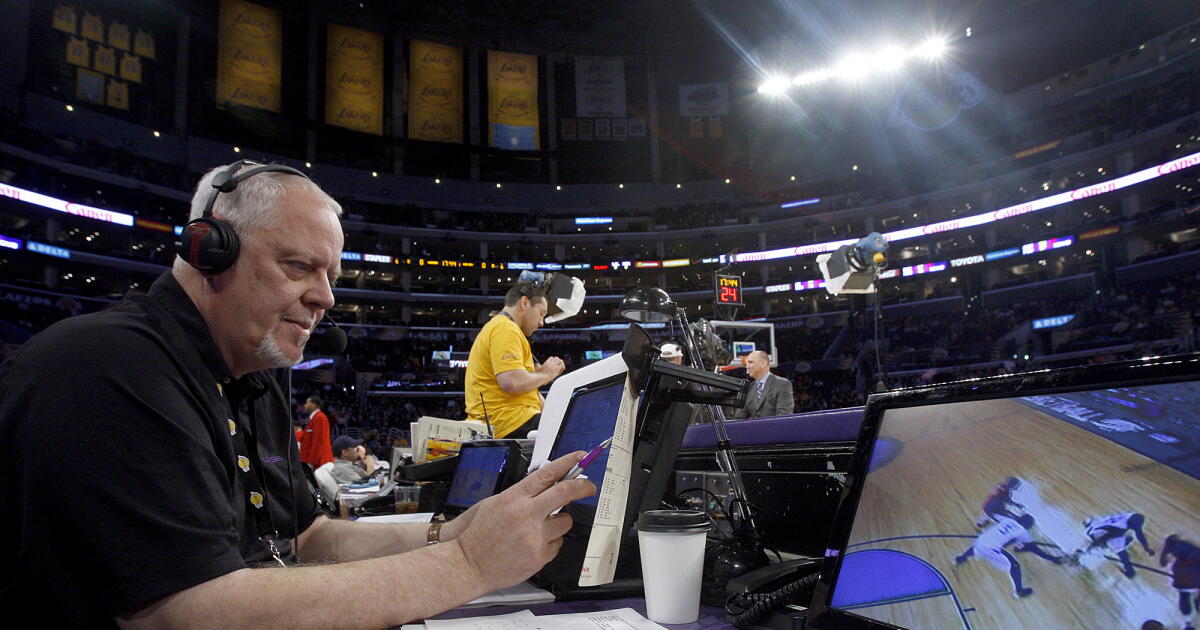
Remembered for his smooth, baritone voice, Tanter served as the voice of the Lakers for more than four decades. Tanter narrated chapters of Kareem Abdul-Jabbar and Magic Johnson, Kobe Bryant and Shaquille O’Neal, LeBron James and now Luka Doncic. After a stroke suffered in March forced him to retire from his game-day role, he transitioned to an advisory role in June.
“For 43 years, LT’s voice served as the soundtrack to Lakers games at the arena,” the team said in a statement Wednesday. “He will be remembered as a cherished member of the Lakers family.”
Tanter started with the team in 1982 when the Lakers played in the Forum. His signature calls — “toooo many steps,” “Kobeee Bryant,” “Lllaker Girlsss” — were not boastful or over the top. For a franchise that came to embody old Hollywood glamour, Tanter’s voice became the ideal soundtrack.
“A true original that added his unique style to Showtime,” Lakers governor Jeanie Buss wrote on X. “Rest in peace, LT.”
He backed fans up as they celebrated 10 championships during his tenure. He offered comfort in other painful times.
Days after Lakers legend Kobe Bryant died in a helicopter crash in 2020, Tanter guided a sold-out crowd through a tearful pregame routine, introducing all five of the Lakers’ starters with a familiar call: “Number 24, 6-6, 20th year out of Lower Merion High School, Kobeeee Bryant.”
The 6-foot-7 Tanter towered over many, but greeted everyone with a kind smile and warm conversation. Just as the players he serenaded with his calls became institutions in the sport, so did he. Tanter was inducted into the Southern California Sports Broadcaster Hall of Fame.
“I hope the team wears an LT patch this season,” former Lakers center and current team broadcaster Mychal Thompson wrote on X on Tuesday.
“He was a great vibe dude, always engaged me in conversation about jazz, he was a music lover and the best announcer in the NBA,” Red Hot Chili Peppers bassist and longtime Lakers fan Flea wrote on X. “I realized when attending many other NBA arenas that no one else came close.”
While many in his profession brought energy with loud, hyped-up calls, Tanter held firm with his cool style. He “never tried to be a cheerleader,” Tanter told The Times’ Bill Plaschke in June.
“It’s been a great run,” Tanter said after announcing his retirement. “I’ve been blessed.”
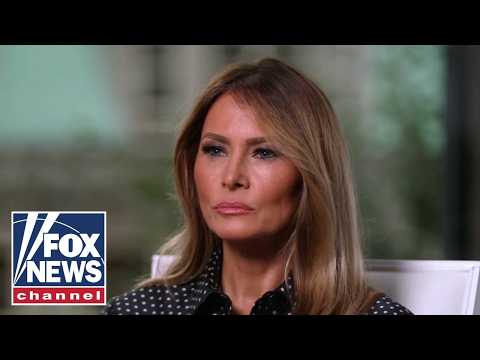
A two-part docuseries about Melania Trump arrives later this year, the first lady revealed Wednesday. The new project follows the January release of director Brett Ratner’s documentary, which made $16.7 million worldwide at the box office and was universally panned by critics.
“It will come out this year, and it will be very different what is in the movie,” Trump told “Fox & Friends” ahead of her appearance to ring the New York Stock Exchange opening bell. “It’s more [like a] conversation one on one with me.”
Trump indicated that the docuseries will cover new ground.
“So when I was traveling and doing all of the filming, the director was asking me questions, and there’s some private questions that I will answer that people never heard before,” she said.
The Times has reached out to Amazon Studios for more information on the project, which does not appear in press materials, though Ratner teased the new “chapters” in an Aug. 11 Instagram post.
“Here we go again….” the director wrote. “The saga continues …. can’t wait to share with everyone around the world the next two chapters of MELANIA, THE DOCU SERIES!”
Ratner’s film followed the first lady in the 20 days leading up to President Trump’s 2025 inauguration, promising “exclusive footage capturing critical meetings, private conversations, and never-before-seen environments” as Melania “orchestrates inauguration plans, navigates the complexities of the White House transition, and moves her family back to the Nation’s Capital.”
Critics, however, found the cinematic experience lacking.
“I’m hesitant to call ‘Melania’ propaganda because I can’t imagine anyone watching this movie and thinking that Melania Trump comes off well,” Times film critic Amy Nicholson wrote in a February review. “If this vapid, airless, mindless time-waster had subversive designs of being a satire about the first lady of the United States, there’s not much it would have changed. Yet somehow, ‘Melania’ is exactly the film that the first lady wanted to make — her company was paid $40 million for the rights to this self-greenlit production — and no one around her warned that it was a very expensive bad idea.”
“Melania” was Ratner’s first film since six women accused him of sexual assault in 2017. In February 2026, The Times reported that the “Rush Hour” filmmaker appeared in the unsealed Epstein files in photos with unidentified women and the financier, who died by suicide in 2019 while awaiting trial on sex trafficking charges.
In addition to the initial $40 million Amazon MGM Studios paid to license the project, the marketing and promotion budget was reportedly another $35 million.
Chavez’s eyes still gaze from walls across Caracas. So too do the eyes of other figures, like Maduro and independence leader Simon Bolivar. Some images are faded. Others are accompanied by slogans like “To doubt is treason”.
Forastero has worked on government projects, including under Rodriguez. But he is critical of some of the newer images. He remembers a time when he painted murals of Chavez playing with children or riding a bicycle, not slogans.
“When Chavez was alive, people painted Chavez because we loved him very much. It’s as simple as that,” he said.
In recent decades, he argues that Venezuela’s public art has fallen increasingly under government control, with murals commissioned to carry explicitly political messages.
“Muralism is a story told on a wall,” Forastero said. “What we really see on the walls now are propaganda posters. I’m a chavista, and I’m disgusted by it.”
Still, the removal of the artwork is another form of propaganda, in Forastero’s eyes. He believes the Rodriguez government is seeking to project a more “neutral” appearance to better appeal to the US.
He also accuses Rodriguez of abandoning ideals key to the chavismo movement: namely, anti-imperialism and revolution. He pointed to the US’s role in shaping Venezuelan policy.
“The United States is forcing our government to behave this way,” Forastero said.
Forastero believes the removal of Hugo Chavez murals is part of an effort by Venezuela’s government to appeal to the US [Catherine Ellis/Al Jazeera]
Rafael Araujo, a Venezuelan activist, has a different view of the changing landscape.
To him, there was something “jarring” about seeing chavista figures plastered across city walls, especially the leaders who have caused the country so much pain.
During their time in power, Chavez and Maduro both faced allegations of overseeing human rights abuses, including through the violent suppression of dissent. Venezuela’s last two presidential elections have been widely denounced as illegitimate.
Known in Caracas as Senor Papagayo, Araujo has used colourful, handmade kites to protest against government violence and economic policy.
He sees the Chavez murals as a form of oppression, an ever-visible reminder of a repressive government apparatus.
His kites are a way of sending a different message. His favourite carries aloft a single word: “Freedom”.
“Freedom is what all countries need. Democracy is the most balanced system a citizen can live under,” Araujo said.