OUR new Spotlight On column gives you the lowdown on what to see, do and enjoy in your favourite holiday hotspots.
This week we are discovering the delights of Scotland‘s Isle of Arran with recommendations from Graham Omand, manager at the Lagg Distillery.
MUST SEE/DO
Graham says: “I have to mention a visit to Lagg Distillery, a place I’ve been calling home for the past six years. Not only is it a modern architectural masterpiece, it is the home of Lagg Single Malt.
“Along with multiple tours and tastings options, there’s also a shop full of bespoke items and gifts, and a cafe with views that stretch from Ailsa Craig to Northern Ireland.
Sign up for the Travel newsletter
Thank you!
“There’s no better place to fall in love with peated whisky and learn about the local rich distilling history.”
HIDDEN GEM
“It is impossible to visit the island without admiring its picturesque coastal villages,” says Graham.
“Enjoy a drink in Corrie while looking at seals or sunbathing on the beach.
“Or grab a bite to eat in Lamlash while staring at the majestic Holy Isle at sunset. Or go for a wander around Lochranza Castle spotting otters playing on the rocks and deer roaming the hills. Magical.”
BEST VIEW
Graham says: “Arran is a walker’s paradise. You could choose the classic Goatfell, the highest mountain we have on the island, or other famous walks like the one to King’s Cave, to Machrie Moor standing stones, the many Glens and more.
“Expect breathtaking panoramic views, wildlife encounters and unforgettable memories.”
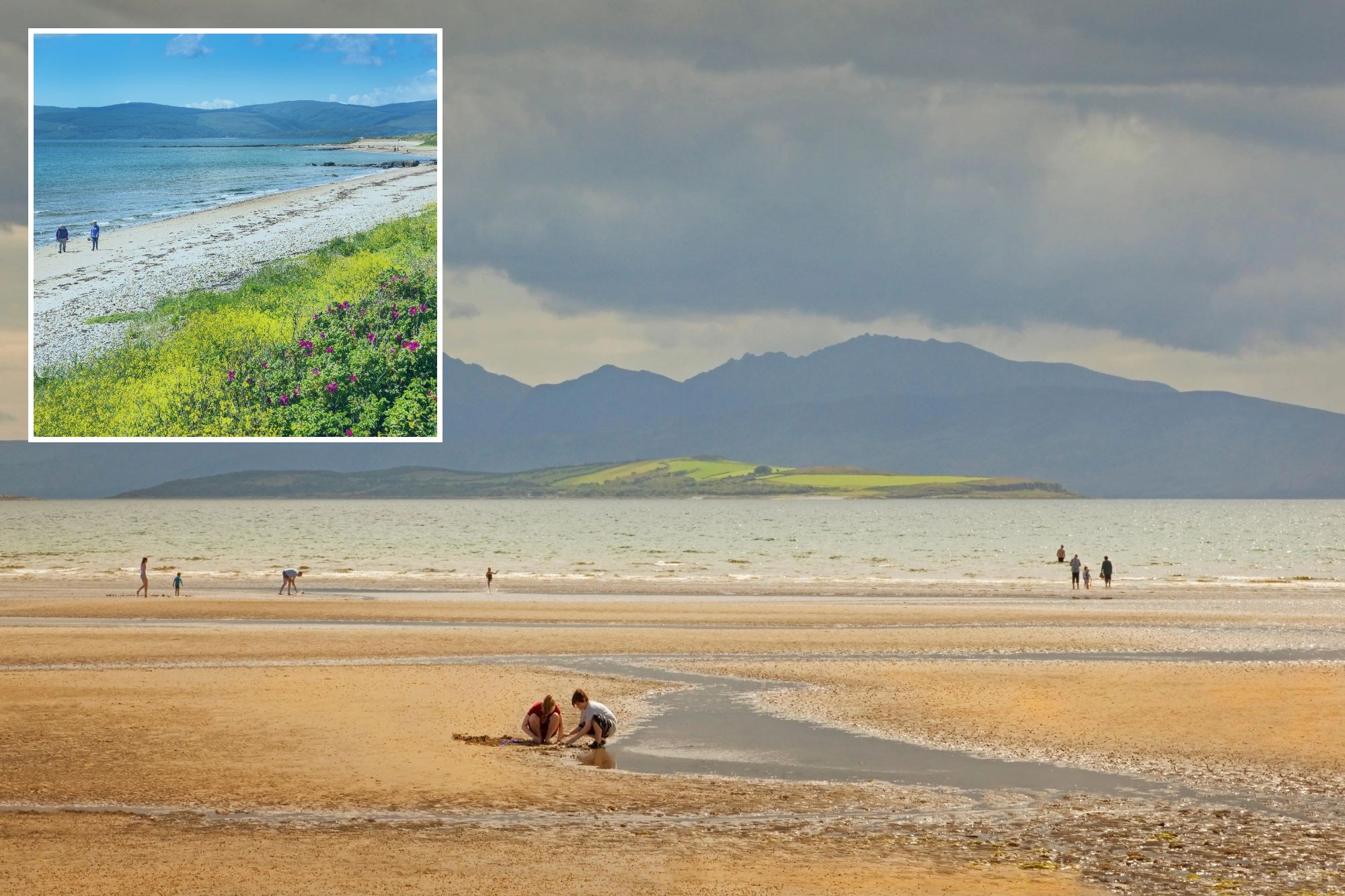
The Arran hills are beautiful from afarCredit: AlamyThe beaches are worth a visit even in winterCredit: Alamy
RATED RESTAURANT
“There are so many restaurants, pop-up cafes, food vans and more that offer modern and classic dishes with local produce such as venison or seafood,” says Graham.
“The Mara Fish Bar & Deli in Corrie does amazing seafood platters with fantastic views to enjoy.
“There is also the Blackwater Bakehouse & The Bread Shed for fresh bread and croissants.
“The Corrie Hotel is also great for lunch and dinner. And don’t miss the chance for a scoop at Arran Ice Cream.”
BEST BAR
Of course, Graham recommends the Lagg Distillery for a tipple or two with tours and tastings from 10.30am to 4.30pm, Tuesdays to Sundays.
Also worth a visit is the Douglas Hotel, which Graham says has some of the best views of Goatfell mountain.
HOTEL PICK
Tucked away on the west coast of the island, the Kinloch Hotel has 22 rooms as well as self-catering apartments, many with stunning sea views.
The family owned property promises a peaceful retreat.
The restaurant offers hearty local cuisine including a seafood platter with local fish, Highland venison sausages as well as island treats such as Arran Dairies ice cream and Wooleys oat cakes.
After a day exploring, go for a relaxing dip in the indoor pool or enjoy a sauna. Rooms cost £135, based on two sharing. See kinloch-arran.com.
WHAT makes a city the best in the world? Well, there are lots of factors that go into it, according to Oxford Economics which has just named the top 100.
Looking at subjects like governance and quality of life, it has created the Global Cities Index 2026 and four UK cities have made the cut, with one coming in second place.
London has been revealed as the second best city in the worldCredit: Getty New York City came in first place according to Oxford EconomicsCredit: Getty
It might be a surprise to some, but London was named second best city in the world – only beaten by New York City.
Oxford Economics made their decision on the factors of economics, human capital, quality of life, environment and governance.
Sign up for the Travel newsletter
Thank you!
Talking about the city, Oxford Economics said: “London remains one of the clearest examples of a truly global city.
“Its influence extends across business, science and technology, education, and the arts, giving it a reach that few other cities can equal.”
It named its top strengths with its universities, large GDP size and low emissions.
It’s not the first time London has been named one of the world’s best cities – earlier this year it was named THE best city by Tripadvisor.
Almost as many as 80,000 people visit every day to see its historic landmarks like Big Ben, the Tower of London, St. Paul’s Cathedral and Tower Bridge.
Or its more modern ones like the London Eye, The Shard and the Sky Garden.
And if you want some ideas on what to do in the capital for all ages, Sun Travel has some recommendations for you from its attractions to rooftop bars and free things to do.
The next UK city in the top 100 is Edinburgh in Scotland which came 71st on the list.
Edinburgh came in 71st place – it has a huge castle and cobbled streetsCredit: Getty Images
The historic city has cobbled streets – one of which being the Royal Mile which is considered one of the most beautiful in the world.
Edinburgh also has around 385 pubs, plenty of cafes, independent shops and of course it’s hilltop castle.
Another activity that lots of visitors embark on during a trip to Edinburgh is the hike up to Arthur’s Seat.
The extinct volcano is the highest peak in Holyrood Park just east of the city and you can see across the whole city from above.
Coming in at number 90 on the list is the city of Manchester – it was also named one of the world’s up-and-coming cities.
The publication described the city as “booming” thanks to its “productivity growth”.
It was also praised for its “thriving cultural scene” thanks to its two football clubs, Manchester City and Manchester United – as well as Co Op Live and AO Arena which both hold live events.
For more on what to do in Manchester, one local has lots of recommendations like exploring Warehouse Project for seeing live bands or DJs and stopping by the bars on Canal Street.
Dublin, known for its lively nightlife, came in sixth positionCredit: GettyEuropean cities like Stockholm took up 44 positions in the top 100Credit: Getty
Just about making the list is the city of Cambridge which placed in 100th position.
The city in the East of England is most famous for its prestigious university which is often ranked as being one of the best in the world.
Popular activities include exploring the historic colleges, punting along the River Cam and exploring the shops and its many pubs.
One of which, The Eagle, is where Francis Crick and James Watson burst in to announce they discovered the DNA.
Other cities that deserve a mention are Dublin in Ireland which came in at number six.
It’s is largely known around the world for its lively nightlife, but it also has world-class museums, restaurants and historical sites.
Also in the top 10 were Paris and Zurich, as well as Tokyo in Japan and American cities, Seattle, San Francisco and San Jose.
Within the top 100, Europe represents almost half with 44 cities, a lot also belong in North America with its 34 cities making the list.
There are the top 100 cities according to Oxford Economics…