
Carr

Stephen Colbert, Trump and the clash over the FCC equal time rule

It was an extraordinary media moment: CBS late-night host Stephen Colbert on Tuesday publicly blasted his own employer over its handling of his interview with Democratic U.S. Senate candidate James Talarico of Texas.

Colbert contended that his own network prevented him from airing the interview in an effort to appease the Trump administration, which CBS has denied. He chose instead to put the sit-down with the Texas state legislator on YouTube, which is not regulated by the FCC.

The standoff not only highlighted the simmering tensions inside CBS with the late-night host, it also marked the latest flash point in the ongoing clash between the Trump administration and leading media and entertainment figures — including other late-night hosts Seth Meyers and Jimmy Kimmel — who have been openly critical of the president’s policies.

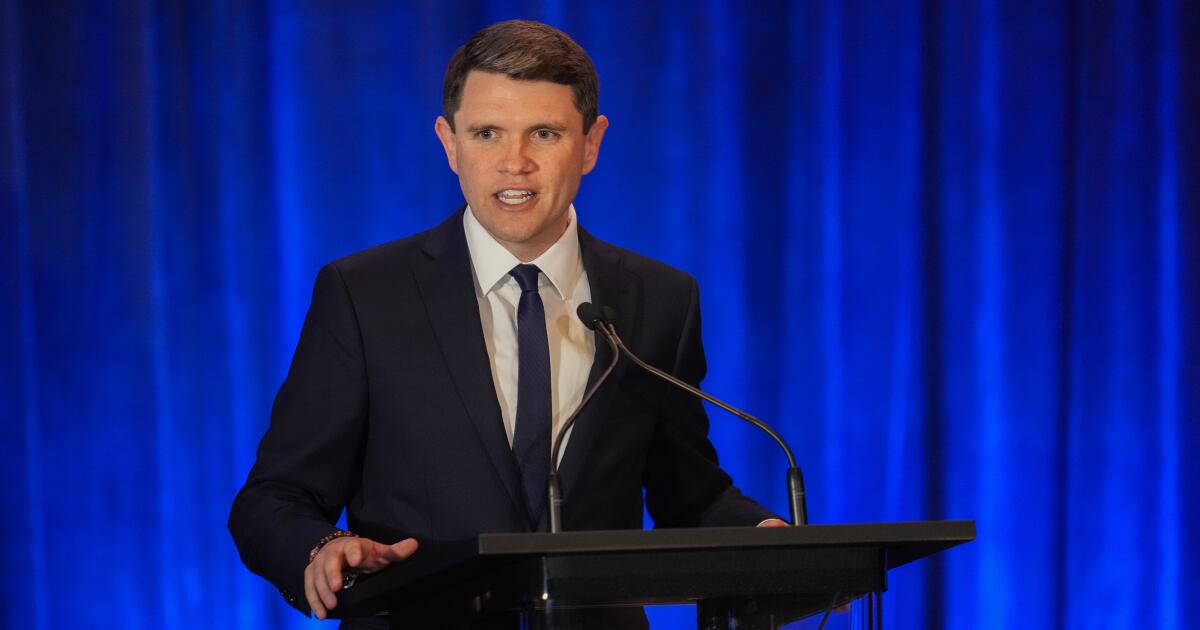
Federal Communications Commission Chairman Brendan Carr has been leading the charge, aggressively attempting to wield the long dormant equal time rules forcing broadcast TV stations to offer equal time to opposing candidates as a means of influencing the legacy media companies who President Trump believes treats him unfairly.

Carr contends the effort is a long overdue corrective to combat what he and Trump believe is liberal bias in broadcast network news coverage. He has even threatened to pull TV station licenses if programmers don’t get in line.

Last fall, he warned ABC that it could lose its TV station licenses after Kimmel made remarks on his program about slain right-wing activist Charlie Kirk that upset conservatives. Two major TV station groups pulled the program and the network suspended Kimmel‘s program for a week.

But experts say the efforts — along with the recent arrest of former CNN journalist Don Lemon over civil rights charges — pose a threat to constitutionally protected freedom of speech and would likely face court challenges.

“We don’t want the government trying to make decisions as to what counts as political speech and what doesn’t and what counts as fairness and what doesn’t,” media consultant Michael Harrison told The Times last month.

Some experts are also skeptical that Carr will ever make good on those threats through greater enforcement of the equal time provision.

Andrew Jay Schwartzman, a public interest communications attorney, said Carr is using his bully pulpit at the FCC to intimidate “a timorous broadcasting industry.”

"The Late Show with Stephen Colbert " on July 23, 2024.

“The Late Show with Stephen Colbert “ on July 23, 2024.

(Scott Kowalchyk / CBS)

“It’s just all bluster,” said Schwartzman. “Broadcasters are more interested in short-term regulatory relief from the FCC, and in the case of [CBS parent] Paramount, getting approval of a possible Warner Bros. Discovery deal.”

CBS cited financial losses as the reason for the cancellation of Colbert’s show, which ends in May, just two months before CBS parent Paramount Global closed its merger deal with Skydance Media, which required regulatory approval from the Trump administration. Paramount also has been attempting a hostile bid for Warner Bros. Discovery.

Paramount also drew scrutiny over its controversial decision to pay $16 million to settle Trump’s legal salvo against “60 Minutes” over the editing of an interview with his 2024 opponent, then-Vice President Kamala Harris. Most legal analysts viewed the case as frivolous.

Jeffrey McCall, a communications professor at DePauw University, said he understands why CBS did not want to invite FCC scrutiny.

“CBS could have other matters in front of the FCC,” McCall said. “So, I don’t blame CBS for trying to tell Colbert like, ‘hey, back off.’”

But McCall added that he sees no reason for the FCC to end or curtail the exemption daytime and late-night television talk shows have from laws requiring stations to offer equal broadcast opportunities to political candidates.

“They have a lot to do otherwise and I’m just not sure this is worth their trouble,” he said.

The equal time rules were devised at a time when consumers had a limited number of media options. Broadcast TV is no longer dominant in the era of streaming as evidenced by how the Talarico interview drew 8 million views on YouTube — more than three times the typical TV audience for Colbert’s “Late Show.”

Schwartzman noted that equal time provision cases are typically resolved quickly, as the rule only applies during an election campaign.

If Talarico’s interview had aired on TV and his opponents requested time, CBS would have to accommodate them ahead of the Texas primary election on March 3. (The network would not have been required to give time to Republican candidates).

CBS could have fulfilled the request by providing time on its affiliated stations in Texas. The opposing candidates did not have to appear on Colbert’s show.

“The remedy is you have to give them airtime,” Schwartzman said. “That’s all.”

CBS wanted Colbert to steer clear of Talarico because the FCC previously announced it is “investigating” ABC over the candidate’s appearance on “The View,” according to a network executive not authorized to discuss the matter publicly. Talarico was on the daytime talk show Feb. 2, which has led to the FCC launching an “enforcement action” on the matter.

Representatives from CBS and ABC declined comment.

Appearing Wednesday on Fox News Channel’s “The Ingraham Angle,” Carr brushed off accusations by Democrats that he was using the rule to silence their candidates.

“What we’re doing now is simply applying the law on the books,” Carr said.

When host Laura Ingraham noted that if CBS had aired the Talarico interview, it would have meant free airtime for Tarico’s primary opponent and high-profile Trump critic Rep. Jasmine Crockett (D-Texas), Carr replied, “Ironically, yes.”

But Schwartzman noted that if the FCC punished a network for ignoring the rule, the move would likely be challenged in court and take years to resolve. Even if the policy were violated, that would not be enough to get a station license pulled.

“A single violation or even a couple of violations of FCC policy are meaningless,” Schwartzman said. “You have to demonstrate a pattern of violations.”

Carr has also publicly supported Nexstar Media Group’s proposed $6.2-billion merger with Tegna, which would require the government to lift the ownership cap that limits TV station owners to coverage of 39% of the U.S. with their outlets.

Not surprisingly, the merger has the support of Trump, who is pals with top Nexstar executive Sean Compton, who oversees its cable channel NewsNation.

“We need more competition against THE ENEMY, the Fake News National TV Networks,” Trump wrote Feb. 7 on Truth Social. “Letting Good Deals get done like Nexstar — Tegna will help knock out the Fake News because there will be more competition, and at a higher and more sophisticated level.”

How Nexstar could take on the broadcast networks is a mystery. Nexstar is highly dependent on its affiliations with ABC, CBS, NBC and Fox due to their contracts with the NFL, which provide the stations with their highest-rated programming. Those network affiliations also give Nexstar leverage in its negotiations to get carriage on cable and satellite providers.

Source link

Stephen Colbert calls out CBS for barring interview with Democratic candidate

The Federal Communications Commission‘s stronger enforcement of its “equal time” rules is already affecting late-night TV.

During Stephen Colbert’s Monday night monologue on “The Late Show With Stephen Colbert,” he carried on per usual, introducing the Late Show Band and his guest Jennifer Garner. He then posed the question, “You know who is not one of my guests tonight?”

The late-night host was meant to have Texas state representative James Talarico on the show. But he said on air that he was “told in no uncertain terms by our network’s lawyers, who called us directly, that we could not have him on the broadcast.”

He continued on to explain the FCC’s new guidance for equal time rules under its Chairman Brendan Carr. The rules require broadcasters who feature political candidates to provide the same time to their rivals, if requested. Typically, news content, daytime and late-night talk shows have been excluded from these regulations, as it’s been an informal tradition for presidential candidates to make their rounds on various late-night shows.

But the FCC under Carr, who has made no secret of his intention to carry out an agenda that is aligned with President Trump’s wishes, has questioned whether late-night and daytime talk shows deserve an exemption from the equal-time rules for broadcast stations using the public airwaves. Many legal and media experts have said a stricter application of the rule would be hard to enforce and could stifle free speech

“Let’s just call this what it is. Donald Trump’s administration wants to silence anyone who says anything bad about Trump on TV, because all Trump does is watch TV,” said Colbert Monday night.

Earlier this year, ABC’s “The View” featured Talarico, as well as his main rival and fellow Democrat Jasmine Crockett. Talarico is currently facing off with Crockett and Ahmad Hassan in the Democratic primary for one of Texas’ two seats in the U.S. Senate. The FCC is also reportedly investigating his appearance on “The View.”

Experts consider the equal time rule to be antiquated, designed for a time when consumers were limited to a handful of TV channels and a dozen radio stations if they lived in a big city. The emergence of cable, podcasts and streaming audio and video platforms — none of which are subject to FCC restrictions in terms of content — have greatly diminished traditional broadcast media’s dominance in the marketplace. Carr has previously suggested that if TV hosts want to include political candidates in their programming, they can do it — just not on broadcast TV.

Colbert said he was taking Carr’s “advice” and revealed that his entire interview with Talarico was instead uploaded on YouTube. During the interview, Talarico calls out the Republican Party for initially running against “cancel culture.”

“Now they are trying to control what we watch, what we say, what we read. And this is the most dangerous kind of cancel culture, the kind that comes from the top,” said Talarico. “They went after ‘The View’ because I went on there. They went after Jimmy Kimmel for telling a joke they didn’t like. They went after you for telling the truth about Paramount’s bribe to Donald Trump.”

“The Late Show with Stephen Colbert” is leaving the air come May, signaling the end of CBS’s longstanding relationship with the late-night talk show. Its cancellation was a “purely financial decision,” according to CBS. But it also came at a time when Paramount Global, which owns CBS, was seeking regulatory approval from the Trump administration to sell itself to Skydance Media. The merger was finalized in August.

L.A. Times staff writer Stephen Battaglio contributed to this report.

Source link