captain

Jac Morgan: Wales captain in line for Ospreys return at Benetton

Morgan missed the first four rounds of the URC after suffering a calf problem on his return from the Lions’ tour to Australia.

The flanker came off the bench in the draw against Dragons at Rodney Parade in October and then went off to Wales duty.

“The guys that have been playing while Jac has been injured have done a terrific job, but it’s always brilliant when you bring a Lion back into your environment and selection,” said Jones.

“It’s good for the competition for places and competitiveness around training. He has added a great energy to the environment, on and off the field.”

This weekend’s fixture against Benetton would be Morgan’s first game since it was confirmed that he will leave Ospreys for Gloucester along with Dewi Lake in the summer.

Jones believes the forward from Brynaman will be determined to finish with a flourish.

“He has put a lot into the Ospreys over the time he has been here, physically and emotionally,” said the head coach.

“We want the whole thing to end on a really positive note. I can’t see anything other than a fully-focused, excited Jac Morgan wanting to go out on a high, and as a team we definitely want to do that.”

Source link

Reece James injury: Chelsea captain could be out for ‘weeks’

Chelsea defender Reece James could be out for weeks with a hamstring injury, says head coach Liam Rosenior.

The Chelsea captain will miss his side’s Champions League home match against Paris St‑Germain, following their 5-2 first‑leg defeat in France.

An exact time frame was not given, but when asked whether it could be that James misses a number weeks, Rosenior replied “it could be”.

The 26‑year‑old may miss the upcoming England internationals later this month, with Thomas Tuchel’s squad to be announced on Friday.

He sustained the injury in Saturday’s 1-0 Premier League defeat by Newcastle.

“With a hamstring injury, it is never great and for Reece we can hopefully get him scanned, find out the full extent and then we will know more because we know how important he is and what a leader he is in the group,” added Rosenior.

“He felt something in his hamstring at the end of the game against Newcastle. It’s really frustrating and a disappointing one for us. We don’t know the full extent for us but it rules him out for tomorrow.”

James has largely enjoyed an injury‑free season until now after being carefully managed by Chelsea following several disrupted campaigns in recent years. On Friday, he signed a new six‑year contract to keep him at the club until 2032.

Chelsea are also without winger Jamie Gittens, goakeeper Filip Jorgensen and defender Levi Colwill but Brazil forward Estevao Willian returned to training and is in contention having not featured since early February.

Right-back Malo Gusto missed training through illness but could still be available on Tuesday, while winger Pedro Neto is eligible to play after receiving just a warning from Uefa for pushing a ball boy in the closing moments of last week’s defeat at the Parc des Princes.

Rosenior added: “There was no real bad intention, it was just a will to get on with the game so I think Uefa made the right decision.”

Source link

Captain of Iran’s women’s team withdraws Australia asylum bid: State media | Football News

The captain of the Iranian women’s football team has withdrawn her bid for asylum in Australia, Iran’s state media says, making her the fifth member of the delegation to change her mind after her team’s participation in the Asian Cup.

Zahra Ghanbari will fly from Malaysia and travel to Iran within the next few hours, the IRNA news agency said on Sunday.

Three players and one backroom staff member had already withdrawn their bids for asylum and travelled to Malaysia from Australia, where the team participated in the AFC Women’s Asian Cup.

Australia’s Home Affairs Minister Tony Burke said his country had offered asylum to all players and support staff members prior to their departure over fears they might be punished upon their return home after the team refused to sing Iran’s national anthem at the tournament.

Iranian state broadcaster IRIB reported on Saturday that the three had “given up on their asylum application in Australia and are currently heading to Malaysia”, posting a picture of the women allegedly boarding a plane.

The news was confirmed by Burke a few hours later.

“Overnight, three members of the Iranian women’s football team made the decision to join the rest of the team on their journey back to Iran,” Burke said.

“After telling Australian officials they had made this decision, the players were given repeated chances to talk about their options.”

Five players took up the offer and signed immigration papers last week, with one more player and a member of staff joining them a day later. It leaves two Iranian players in Australia, where they have been promised asylum and an opportunity to settle.

Iran played their three group games of the Asian Cup at the Gold Coast Stadium in Queensland on March 2, 5 and 8, after the United States and Israel launched their war on Iran on February 28.

The initial attacks killed Iran’s Supreme Leader Ayatollah Ali Khamenei and other leaders.

Overall, an estimated 1,444 Iranians have been killed since the war began, including more than 170 people, mostly schoolgirls, who were inside a primary school in the city of Minab.

After refusing to sing the Iranian national anthem at their first match, players on the Iranian women’s football team were branded “traitors” by an IRIB presenter.

When Iran played their second game of the tournament against Australia three days later, not only did the players sing the national anthem, but they also saluted it, prompting fears that they may have been forced to change their stance after receiving backlash in Iranian media.

While neither the players nor the team management explained why they refrained from singing before the first match, fans and rights activists speculated that it may have been an act of defiance against the Iranian government.

On the day of the team’s departure from Australia, Burke announced his government had offered all players and staff members the chance to stay back in the country.

On Tuesday, Burke told reporters that five Iranian players had decided to seek asylum in Australia and would be assisted by the government.

“They are welcome to stay in Australia, they are safe here, and they should feel at home here,” he said.

A day later, Burke confirmed that an additional player and a member of the team’s support staff had received humanitarian visas in the hours before their departure.

However, one player, who previously chose to stay behind, changed her mind and decided to return to Iran.

The player, who was later identified as Mohadese Zolfigol, changed her decision on the advice of her teammates, Burke told the Parliament of Australia.

“She had been advised by her teammates and encouraged to contact the Iranian embassy,” he said.

The players who managed to escape with the help of Iranian rights activists were taken away by Australian police officials to a safe house, where they met immigration officials and signed the paperwork.

“Our understanding is that every single member of the squad was interviewed independently by the Australian Federal Police,” Beau Busch, the Asia/Oceania president of players’ welfare body FIFPRO told Al Jazeera last week.

“[The players] were made aware of their rights and the support available to them. They certainly weren’t rushed through that process.”

Source link

Brentford and Ireland captain Nathan Collins on World Cup dreams

Kelly: Let’s try and get to know you a little bit more away from the pitch. Firstly, I always like asking: what were you like as a youngster?

Nathan: If you asked my mam or dad, they’d say I was a headcase! I was just a bit itchy, I always had to move. I could never sit still and relax. I always had to do something. So they had to burn me out. I always wanted to be in the grass or playing football, just running around to drain my energy. I think I was hard work for my parents, I’d say it like that!

Kelly: It sounds like maybe it was quite a chaotic household. How many siblings have you got?

Nathan: I’ve got an older brother, a younger sister and a younger brother. I think it was just a constant battle of me trying to beat my older brother. It was just so hard because the age difference. We all had training at different times and they’d be running out of the house and you’d forget your boots or they’d be taking two cars in different directions. It was a bit of a carnage, but you wouldn’t have it any other way.

Kelly: Are you still close now?

Nathan: Ah yeah, of course. I talk to them more or less every day on the phone. Every chance I get to go home I will. My mam goes to every game – home and away. She watches them all.

Kelly: So she flies over? Are they still in Ireland?

Nathan: Yeah, they live in Ireland, so she flies over and she goes everywhere to be fair.

Kelly: Home and away?

Nathan: Yeah.

Kelly: That is some commitment!

Nathan: I know, I tell her, ‘listen, you don’t have to’ and she’s like, ‘no, I want to’.

Kelly: Not everyone’s got a son that’s a Premier League footballer though… I kind of get the appeal!

Nathan: Yeah, I don’t think that she watches the matches. I think that she just looks at me the whole game and sees what I’m doing. She’ll come after, ‘Why were you scratching your leg so much in the match?’ … ‘I don’t know. How do you know that?’

Kelly: Aw, bless her, that’s really sweet. How would your best friend describe you?

Nathan: I’d like to think that they’d describe me as the same lad I was growing up. The first thing that would pop in their head… they wouldn’t say I’m a footballer. I think they’d just say, ‘ah Nathan, he’s just a good lad like… he’s a bit of craic and he comes out when he can’ … but I don’t think that they’d look at me as a footballer, which I really enjoy. And it just means when I’m with them, I can just be myself and just enjoy being one of the lads.

Kelly: So if the manager gives you a day off, what would you do?

Nathan: It depends. If it’s a weekday and it’s good weather, I’ll play golf with a few of the lads here and we’ll get out in the sun.

Kelly: Are you any good?

Nathan: I’m all right. Listen, I can play. I’m not the greatest, but I’m not the worst.

Kelly: Who do you play with here?

Nathan: The group right now is me, Keane Lewis-Potter, Kris Ajer, Hakon Valdimarsson. It’s a good crew because we have a lot of players and we do a little Ryder Cup-style.

Kelly: Oh nice!

Nathan: So it’s staff v players.

Kelly: Wow!

Nathan: Yeah, because there’s a lot of players. We did that last year. We did 18 holes in the morning, we went for some lunch, and then we did 18 holes in the afternoon and it was really good fun. Players won, so thank God!

Kelly: Oh, that was my next question. Have you got any secret hobbies?

Nathan: I like cooking, so that’s something. When I cook, I think I just forget about everything. I’m just in my own little zone and my head kind of goes quiet, which is nice.

Kelly: Are you a good cook?

Nathan: It depends who you ask…

Kelly: If I was asking your girlfriend…

Nathan: Yeah, she’s actually saying: ‘Ah, you’re getting better at cooking!’

Kelly: That’s a bit patronising!

Nathan: Yeah, and I was like… ‘Does that mean I was bad?’

Kelly: Fair enough. What do people get wrong about you the most?

Nathan: Maybe I get a bit of stereotypical: ‘Ah, he’s just a footballer.’ Maybe they get that and then think, ‘oh, he’s actually pretty nice to talk to… he’s all right… he’s kind of relaxed… he’s chill’.

I always want to be just a good person as well. That’s important for me, just to be a nice person, a good person, a caring person. As much as I want to be the best footballer I can ever be, I also want to be the best person I can be and I think that’s something that I always strive towards as well.

Kelly: What’s the toughest moment of your career been? Has there been a tough moment?

Nathan: I had one game for Brentford against Wolves and I had two mistakes in the game. I gave away two goals, we lost 3-1 or something like that and I got battered off the Wolves fans because I’d just left Wolves and the fans had so much to go against me, so much stick. I was like, ‘oh my God, this couldn’t have got any worse’.

To be fair, that night Thomas Frank rang me and he was like, ‘listen Nathan, that’s probably the worst game you’ll ever have in your career’, and he’s like, ‘so it’s only up from here’.

Source link

LAFD testimony details missed chances to fully put out Lachman fire

Jacob Ulibarri spent about six hours on New Year’s Day last year squashing hot spots where the Lachman fire had burned.

The rookie Los Angeles firefighter arrived sometime after 7 a.m., when the smoky areas were all over and easy to see. By the time the next crew swapped with his that afternoon, they were scarcer: “One every 30 minutes, roughly,” Ulibarri recalled.

At that point, Battalion Chief Martin Mullen, who was running the mop-up operation, had walked three laps around the perimeter of the fire. He recalled one hot spot he saw at about 10 a.m., which crews hit with water. Later in the afternoon, Mullen did his fourth and last loop and left the area for good.

He decided to leave the hoses out overnight, just in case.

Over the next two days, a series of communication failures and questionable decisions led crews to leave the area prematurely, with embers from the small Jan. 1 fire later reigniting into the devastating Palisades fire. A firefighter picking up hoses on Jan. 2 found crackling, red-hot coals in the dirt and warned colleagues that a more thorough mop-up was needed. Also that morning, a captain cautioned his chief that it was too soon to pick up the hoses. In yet another missed opportunity, crews apparently did not walk the entire perimeter of the burn scar after a caller reported smoke in the area on Jan. 3.

Because of the holiday, some were filling in for others outside of their normal assignments. Firefighters said they adhered to the LAFD’s strict chain of command and did not question higher-ups, while those in charge had fuzzy memories or shifted responsibility to others.

The revelations, contained in the sworn testimony of a dozen firefighters earlier this year as part of a lawsuit filed by Palisades fire victims, corroborate previous reporting by The Times and call into question the LAFD’s repeated claims that commanders left the fire “dead out.” More than a year later, with much of the Palisades still in ruins, LAFD leaders have refused to explain how or why the breakdowns occurred.

The LAFD employees mentioned in this story either could not be reached or declined to comment.

In a statement Monday, LAFD spokesperson Stephanie Bishop pointed to the alleged arsonist charged by federal prosecutors with deliberately setting the earlier fire. “The Lachman and Palisades Fire incidents would not be matters of discussion had this individual not allegedly initiated the original fire,” she said.

“It is important to allow the legal process to proceed without external influence or speculation. Offering running commentary on depositions outside of the courtroom risks compromising witness testimony, affecting the integrity of evidence review, and impacting ongoing judicial proceedings. We stand by the investigation conducted by the ATF,” Bishop added, referring to the Bureau of Alcohol, Tobacco, Firearms and Explosives.

Around 6 a.m. on Jan. 2, 2025

At the end of his 24-hour overtime shift, Mullen handed the reins to Battalion Chief Mario Garcia, recommending that the incoming chief scope out the fire perimeter.

“I told him I left him hose lines in place overnight. You need to walk that and make sure there’s nothing going up on there,” said Mullen, whose regular job is managing the LAFD’s 106 fire stations and 30 or so other buildings.

Before Garcia set foot on the burn scar, he put word out to station captains about the plan for the morning: Pick up hoses.

At Fire Station 19 in Brentwood, Capt. Alexander Gonzalez got a text from the chief’s aide, directing him to bring a “plug buggy” — a pickup truck used to carry equipment — “to help pick up hose.”

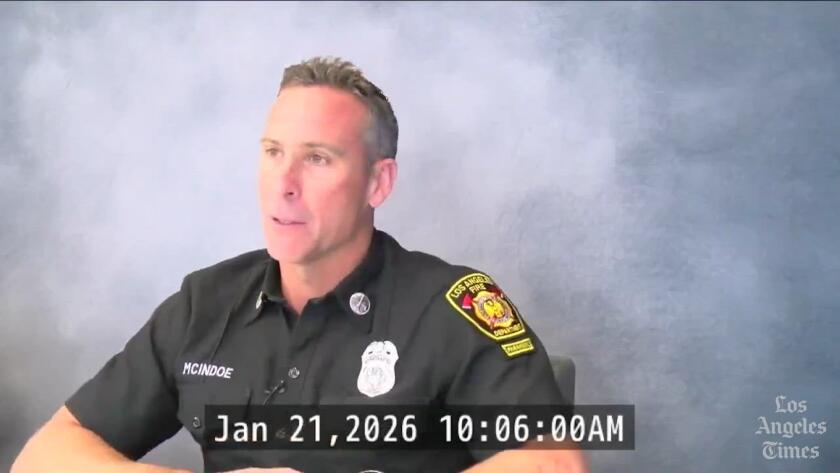
The plan reached Capt. David Sander at Fire Station 23 in the Palisades and Capt. Michael McIndoe at Fire Station 69.

McIndoe had reservations.

He told the chief’s aide that he thought the hoses should stay out longer. He had seen the forecast that day — a National Weather Service alert had warned of weather conducive to wildfires — and handling any lingering hot spots would be easier with hoses in place. The aide told him to take it up with the chief.

So McIndoe shared his concerns with Garcia over the phone.

Garcia “said something along the lines of, ‘OK. Let me go check it out, and then I’ll get back to you,’” McIndoe testified.

But the orders for the morning never changed.

8:30 a.m. on Jan. 2, 2025

After a briefing at Fire Station 23, Scott Pike and his partner took their ambulance to a cul-de-sac near the burn area. They spotted some hose dangling over a retaining wall covered in ivy.

An engine crew threw a 20-foot ladder to get over the wall. Soon, Pike said, they got another call and left.

“We were kind of making jokes, like, ‘It’s on us,’’’ recalled Pike, a firefighter normally assigned to a station in Sunland.

He grabbed his brush jacket, helmet and gloves and climbed over. He decided to hike to the end of the hose line — he was feeling good and thought he’d get a workout in.

Pike followed the main line — called the trunk line — which had hoses branching off in other directions. About 100 feet in, he saw where grass had burned. He navigated through culverts and climbed a steep hill of about 300 feet before hitting a hiking trail.

When he got to the end of the line, at about 8:45 a.m., he noticed a handful of smoky areas in heavier brush, and a hand line that wasn’t cut properly.

One ash pit was so hot he didn’t want to touch it, even with gloves. So he kicked it with his boot, exposing red-hot coals. He heard crackling and smelled smoke. He looked around, and there were no other firefighters.

We shouldn’t be picking up hoses, he thought to himself. Instead, we should be filling the hoses with water to do a more thorough mop-up.

He pinched the hose, directing any residual water to the ash pit. It steamed and crackled. He felt defeated when he only got a couple of gallons out, which wasn’t enough.

He slowed down, in case the pickup plan were to change because of his observations, and was relieved when more crews began hiking over.

“Hey, guys, are you seeing what I’m seeing?” Pike told a couple of firefighters. He was working an overtime shift away from his usual fire station, so he didn’t know them. “Like, maybe we should be charging these lines instead of picking them up.”

Since they were already there, he figured, some extra mop-up could save them work down the line if the fire were to reignite.

The firefighters shrugged him off and seemed eager to finish the assignment.

“They were like, ‘Yeah, I see what you’re saying,’ And then it was like, ‘We’ll tell one of the skippers. We’ll tell one of the captains.’ But, like, in the meantime, people were just very much like, just get the hose picked up,” Pike testified.

Shortly after, he saw a captain and raised the same concerns.

“That’s how I approached him, is like, ‘Hey, Cap … We have hot spots in general. We have some ash pits,’” Pike said. “That’s an alert to double-check the whole area and maybe we need to switch our tactics.”

Pike testified that it was not his job “to overstep and tell him what to do. He earned that rank.”

The captain suggested possibly bringing hand tools or a backpack filled with water up the hill to extinguish any hot spots.

Pike went back to picking up the hose while awaiting new orders, which never came.

The LAFD has declined to say whether the captain has been identified. Pike believed the captain was from Engine 69, which would have been McIndoe. But McIndoe told The Times he did not speak with Pike that day.

McIndoe said he also came across a smoldering ash pit during the couple of hours he was on the hill.

He retrieved a backpack with water from his engine, sprayed into the ground with a couple of gallons of water and dug up the dirt with his hand tool until he was satisfied it was cool.

At one point, he saw Garcia, the battalion chief, and brought up their earlier conversation.

“I just went up to him, and I said, ‘Hey, I hope you don’t think I’m just trying to get out of work,’” McIndoe said. “And he said, ‘No, that’s — that’s fine.’ Something along those lines, and that that’s all I can really recall.”

He said he was trying to tell Garcia that he believed “that the hose should stay up a little bit longer.”

By the time Gonzalez, who was backfilling that day at the Brentwood station, got to the scene, the operation was well underway, with half the hose already down the hillside.

“When I got there, it was just, it’s like a big daisy chain of hands pulling hose off and getting it down to the street. And rolling it, hosing it off and loading it into the plug buggy,” he testified.

He did not see smoldering that day. He testified that he went about 200 to 300 feet up, to where piles of hose were being dropped. “The next person brings it back down and that was it,” he said.

Some firefighters on hose pickup duty that day have not been deposed in the lawsuit. Aside from McIndoe and Pike, the four other firefighters who testified that they were at the burn scar on Jan. 2 said they did not see smoldering.

Garcia testified that at the burn scar, no one raised any concerns with him about the hose pickup. Nor did he see any need to leave the hoses at the site.

At 1:35 p.m. on Jan. 2, Garcia texted two higher-ups: “All hose and equipment has been picked up.”

Around 4:30 p.m., Garcia walked the area again with his aide to see if they had left any equipment behind. He saw no issues.

“We both walked the whole area,” Garcia said. “We went separate directions, but covered the whole area, and there was nothing that would bring any concern.”

11:51 a.m. on Jan. 3, 2025

Shortly before noon, someone called the LAFD about a grass fire in the burn area.

Engineer Edward Rincon, who had been on Engine 23 retrieving hoses the day before, pulled up to the same cul-de-sac. Once again, his crew threw the 20-foot ladder over the retaining wall. As on the previous day, he never entered the burn scar. He stayed with the engine while the captain and two firefighters went to scope out the area. He set the volume high on his radio to hear if they needed anything.

On the other side of the wall, Capt. Cesar Garcia walked for what he said was more than a couple of football fields, while the two firefighters went to different peaks to look around for smoke or fire.

“Everything is completely burned. I don’t smell anything. I don’t see any smoke. I don’t see any fire,” he testified.

He canceled another engine that was assigned to the call.

Firefighter Michael Contreras said he also didn’t see smoke. He said he could not see the entirety of the burn scar from his vantage point. He also said he did not suggest to his captain, Cesar Garcia, that they walk the whole perimeter.

“Is there a reason you did not?” a plaintiffs’ attorney asked.

“Again, would not be my lane to tell him that, you know,” he said.

Battalion Chief Mario Garcia was on duty again that day. Like Rincon, he stayed with his vehicle. Cesar Garcia said the chief pulled up a live feed on an iPad from two cameras on the mountain, which showed no smoke or fire.

An incident report shows they spent about 34 minutes on the call.

On the morning of Jan. 7, LAFD records show, a captain on duty in the Palisades called Fire Station 23 and told colleagues: The Lachman fire had started up again.
Source link

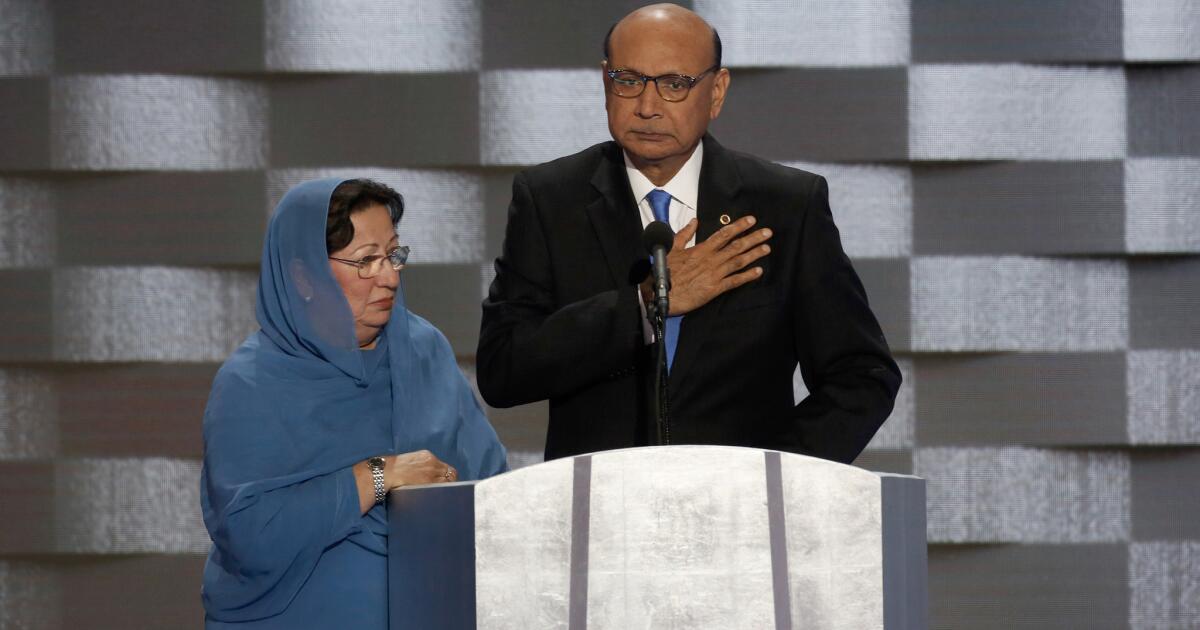
Trump’s remarks about the parents of a fallen Army captain become the latest trouble spot in his campaign

The father of an Army captain who died a hero in Iraq looked incredulous.

Donald Trump had seemed to criticize his wife on national television, suggesting that her Muslim faith might be the reason she stayed silent during the couple’s high-profile appearance at the Democratic National Convention last week, when Khizr Khan criticized the GOP presidential nominee.

Speaking to CNN on Sunday, Khan said his wife was simply too grief-stricken to speak that night. Then the father said something that may sum up Trump’s biggest challenge between now and November: “He had to take that shot at her.”

Trump has built an unlikely presidential campaign on his combative style and language. He can’t seem to resist taking a shot or responding to an attack, even when the political fight seems unwinnable.

That instinct arguably has served Trump well so far, allowing him to win a crowded Republican primary and stay competitive in national polls with Hillary Clinton.

But it has also caused him unneeded political wounds, playing into the Clinton campaign’s argument that he lacks the temperament to lead the country and sometimes stealing attention from Clinton’s own political liabilities.

The public feud with the Khans looks to stir up the biggest self-inflicted controversy since Trump criticized a federal judge in a fraud lawsuit against Trump University. Trump repeatedly questioned the judge’s ability to be fair because his parents were born in Mexico.

The Khan flap may also linger because Trump’s words were directed at grieving parents whose son died while serving the United States, rather than the politicians he usually targets.

“It violates almost every hallmark of traditional politics, but I guess that’s Donald Trump,” said Reed Galen, a veteran Republican consultant who is not supporting Trump or Hillary Clinton. “The way to get to a guy like Trump — and the Hillary campaign is now finally understanding this — this is a guy who can’t let slights, major or minor, go by.”

Trump’s puzzling engagement with the Khans not only inspired an unusually pointed rebuke from Clinton on Sunday, it also sparked broad condemnation from many Republicans.

For much of the weekend, Trump found himself squaring off against the Khans, whose convention appearance was an emotional high point for many Democrats. During the last night of the convention, Khizr Khan, his wife, Ghazala, beside him, recounted the loss of their son, Humayun. Then he questioned Trump’s call to ban Muslims from entering the U.S., pulling out a pocket Constitution and asking whether Trump had even read the document.

Trump could have let the moment pass, or simply praised their sacrifice without confronting them, as other politicians have done when met by military families who have rendered the highest sacrifice.

See the most-read stories in National News this hour >>

Instead, Trump, in an ABC interview broadcast Sunday, said Khizr Khan looked like a “nice guy,” but he questioned why Ghazala Khan did not speak during the convention, saying “maybe she wasn’t allowed to.”

He pushed back against Khizr Khan’s assertion that Trump’s proposal to ban Muslims from entering the country would have kept his son out. “He doesn’t know that,” Trump said. Then the businessman, who avoided the draft during the Vietnam War, said he too had made “sacrifices,” citing his hiring of “thousands and thousands of people.”

After the ABC transcript from the taped interview was released Saturday, Trump’s campaign attempted to correct course. In a statement released late Saturday, Trump called Humayun Khan “a hero to our country” and said “the real problem here are the radical Islamic terrorists who killed him.”

Yet he still could not resist keeping the fight alive.

“While I feel deeply for the loss of his son, Mr. Khan, who has never met me, has no right to stand in front of millions of people and claim I have never read the Constitution, (which is false) and say many other inaccurate things,” Trump added.

On Sunday, as the controversy festered, Trump complained on Twitter that “I was viciously attacked by Mr. Khan at the Democratic Convention.”

“Am I not allowed to respond? Hillary voted for the Iraq war, not me!” he said.

The Khans proved formidable and sympathetic foes as they granted multiple rounds of nationally televised interviews. Ghazala Khan wrote an emotional essay Sunday for the Washington Post, recounting her 12 years of grief since her son died, her inability to enter a room where his picture is displayed because of the pain, and the fact that she could not even bring herself to clean out his closet.

“I don’t think he knows the meaning of sacrifice, the meaning of the word,” Ghazala Khan said of Trump on ABC. “Because when I was standing there, all of America felt my pain. Without saying a single word. Everybody felt that pain, but I don’t know how he missed that.”

While trying to remain above the partisan swamp, they looked shaken yet defiant — casting Trump as someone who lacks a moral compass and the capability for empathy. They challenged Republican leaders to denounce Trump.

As the pressure simmered, Senate Majority Leader Mitch McConnell issued a statement of support for the Khans, saying he agreed “that a travel ban on all members of a religion is simply contrary to American values.”

House Speaker Paul D. Ryan also called out Trump’s proposed ban on Muslim travel and praised the “many Muslim Americans [who] have served valiantly in our military, and made the ultimate sacrifice. Capt. Khan was one such brave example. His sacrifice — and that of Khizr and Ghazala Khan — should always be honored. Period.”

Other Republicans were even more forceful.

“There’s only one way to talk about Gold Star parents: with honor and respect,” Ohio Gov. John Kasich, who lost to Trump in the primary and has withheld his endorsement, wrote on Twitter. “Capt. Khan is a hero. Together, we should pray for his family.” (Gold Stars are awarded to the family members of soldiers who die serving in the U.S. armed forces.)

Tim Miller, a former aide to Mitt Romney, wrote on Twitter that Trump’s words were a “grotesque slander of a dead soldier.” He contrasted them with George W. Bush’s response to an antiwar protest in 2005 by Cindy Sheehan, whose son died in Iraq.

“I grieve at every death,” an emotional Bush said at the height of the protest. “It breaks my heart to think about a family weeping over the loss of a loved one.”

Bush said he recognized and thought about the “sincere desire” of those who wanted to pull out of Iraq while laying out his case to keep troops there.

Clinton faced a similar question Sunday on Fox News. She was asked about the assertion by two parents who lost their sons in the 2012 attack on a U.S. compound in Benghazi, Libya, that Clinton had come to them on the day their bodies were returned to the United States and claimed their deaths were the result of an inflammatory video, rather than terrorism.

“My heart goes out to both of them,” she said, bemoaning their loss and praising them as “extraordinary men.”

“As other members of families who lost loved ones have said, that’s not what they heard — I don’t hold any ill feeling for someone who in that moment may not fully recall everything that was or wasn’t said,” Clinton added.

Clinton spoke directly about the controversy later Sunday at a church in Ohio.

“Mr. Khan paid the ultimate sacrifice in his family, didn’t he? And what has he heard from Donald Trump?” Clinton said. “Nothing but insults, degrading comments about Muslims, a total misunderstanding of what made our country great — religious freedom, religious liberty.”

Clinton has made Trump’s reactive style central to her critique. “A man you can bait with a tweet is not a man we can trust with nuclear weapons,” she said during her convention speech.

Even in defending against that charge, Trump showed his instinct to counterpunch, something many of his supporters admire.

“She’s a very dishonest person. I have one of the great temperaments,” he said on ABC. “I have a winning temperament. She has a bad temperament. She’s weak. We need a strong temperament.”

Trump’s campaign manager, Paul Manafort, blamed the controversy on Clinton, a tactic he has used after previous blowups.

“This is the Clinton narrative,” Manafort said on NBC, when asked about Trump’s comments about Khan. “Mr. Trump, of course, feels sorry for what the Khan family has gone through.”

The controversy came just a few days after another headline-grabbing moment, when Trump on Wednesday effectively baited Russia to hack Clinton’s old email account to try to recover more than 30,000 emails she deleted from the private server she used when she was secretary of State.

“He’s going off down these rabbit trails,” said Ron Nehring, a former national spokesman for Texas Sen. Ted Cruz’s presidential campaign and former chairman of the California Republican Party. “Every day that is spent on these manufactured non-issues is another day he is not training fire on Hillary Clinton’s vulnerabilities.”

Such controversies tend to overshadow issues that might otherwise gain broader attention, experts say, such as Friday’s disappointing economic growth figures.

During Sunday’s interview with ABC, for example, Trump tried to sidestep questions about his failure to release his tax returns and raised concerns about the timing of three upcoming presidential debates, complaining that two dates overlap with NFL games.

Times staff writer Chris Megerian in Columbus, Ohio, contributed to this report.

noah.bierman@latimes.com

Twitter: @noahbierman

MORE NATIONAL NEWS

Here’s how Democrats are trying to reclaim patriotism from Republicans — and how Trump helps

Shooting in downtown Austin leaves 1 dead, 3 wounded; suspect sought

A sparkling new Sandy Hook school arrives, with high-tech features and security ‘second to none’


UPDATES:

3:15 p.m.: The story was updated with additional reaction.

The story was originally published at 12:15 p.m.


Source link

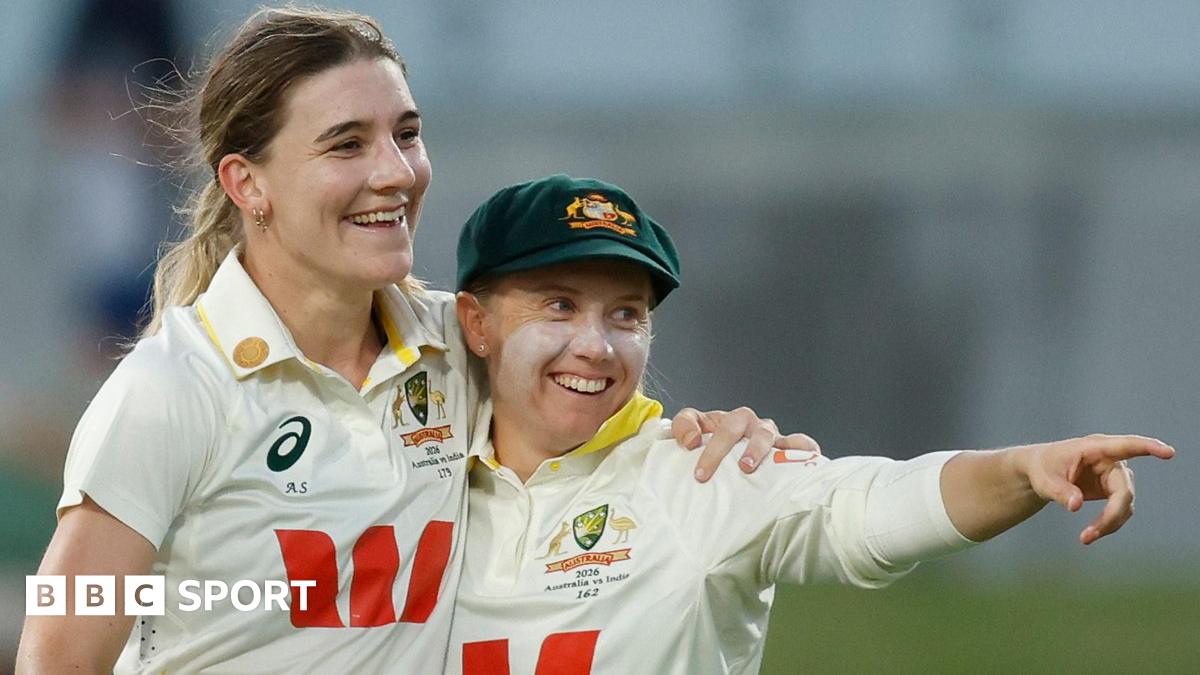
Australia vs India: Alyssa Healy’s side edge day one of her final Test as captain

Australia dismissed India for 198 on day one of the day-night Test in Perth as Alyssa Healy begun her final match as captain of the hosts.

Australia closed on 96-3 in reply, trailing by 102 runs, with Healy – who will retire from all formats after this series – falling for 13 at the Waca.

All-rounder Annabel Sutherland starred with the ball, taking 4-46, while left-arm fast bowler Lucy Hamilton impressed on her Test debut by claiming 3-31.

After losing the toss, India slipped to 107-5 but Jemimah Rodrigues compiled a defiant 52 to prevent her side being skittled.

In reply, Australia openers Georgia Voll (two) and Phoebe Litchfield (nine) both made single-figure scores to leave the hosts 31-2, bringing Healy to the crease.

She started to rebuild alongside Ellyse Perry before picking out Rodrigues at point off Sayali Satghare as the Aussies fell to 58-3.

However, Perry remains unbeaten on 43 and Sutherland is 20 not out as Australia will look to build a first-innings lead on day two of the four-day game.

Source link

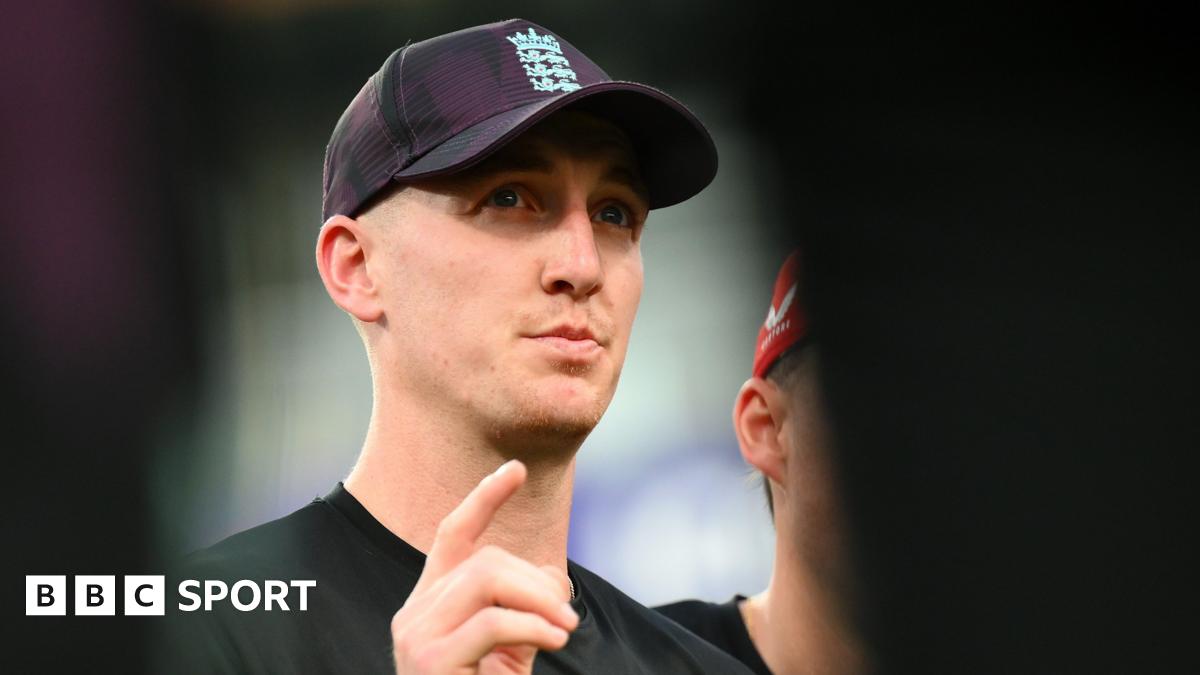
T20 Cricket World Cup, India vs England: Captain Harry Brook says “unity” has been key to run to semi-finals

With England needing 43 from the last 18 balls to beat New Zealand on Friday, Will Jacks and Rehan Ahmed put on an unbeaten partnership of 44 from 16 balls to secure the win.

In the previous two games, England made a below-par 146-9 against Sri Lanka only to dismiss their co-hosts for 95 to secure victory, and were 58-4 against Pakistan before Brook himself hit a stunning century.

Those three victories followed a group stage where England struggled to beat Nepal, Scotland and Italy and were beaten by West Indies.

Their success also follows the dismal Ashes tour of Australia in Test cricket.

“I don’t believe we need a perfect game to win the competition,” said Brook, who is leading England for the first time at a World Cup.

“We’ve won those tight games which in World Cups prove to be very important and we’ve got a lot of confidence going into the deeper parts of the game.

“We’ve got a lot of competitive lads. Everybody wants to win, which is a given really, but even off the field when we’re playing golf, playing cards, whatever, everybody is always really competitive and they always have that slight edge and they take it out into the cricket as well.”

Brook said he expects Thursday’s atmosphere to be “awesome”, with the match to be played at the iconic Wankhede Stadium in front of 33,000 spectators.

England resisted naming an XI before the toss, but seam-bowling all-rounder Jamie Overton appears likely to replace leg-spinner Ahmed.

India were the overwhelming pre-tournament favourites but have also stuttered at times in the competition.

They were given a scare by the United States in the group stage and were well beaten by South Africa in the Super 8s.

“I said the other day there’s a lot of pressure on both sides, potentially more on them going into here with the crowd and the disappointment they had against South Africa as well,” Brook said.

“But we’re just going to go out there, stick to what we know and assess conditions as quickly as possible and give it real good fight.”

Source link

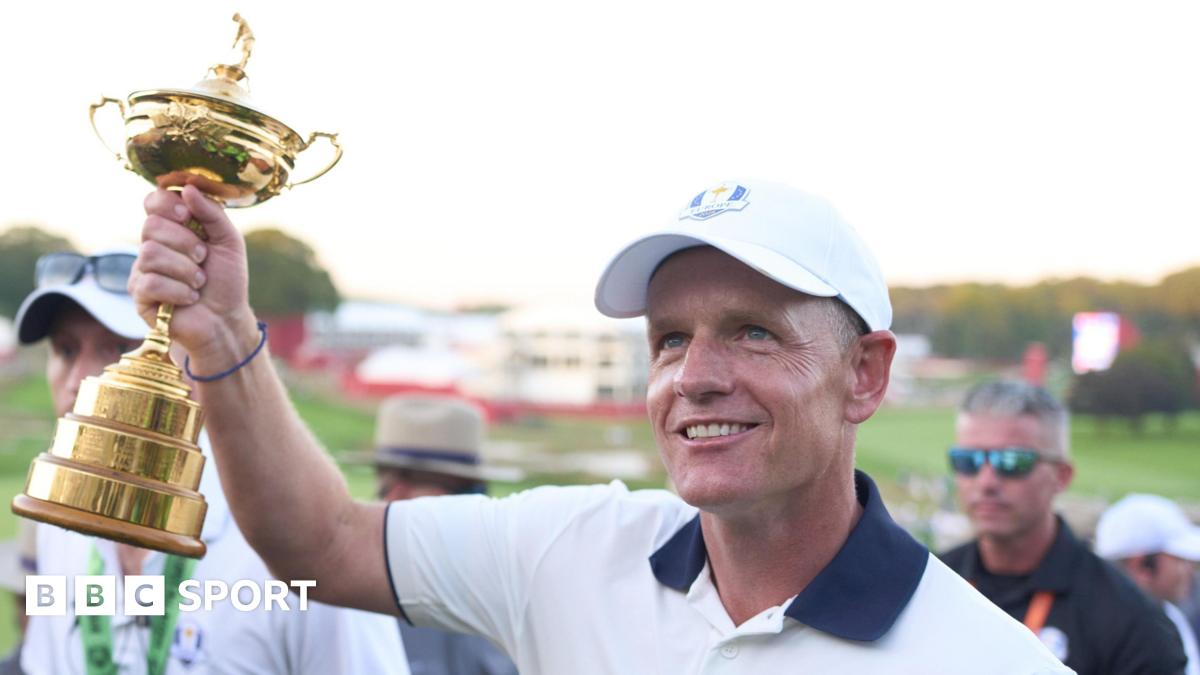
Ryder Cup 2027: Luke Donald to remain Europe captain in Ireland

Donald’s reappointment always felt like a no-brainer – certainly from the perspective of the European Ryder Cup committee trying mastermind another home victory, the players who adore and admire the Englishman, and the thousands of European fans who jubilantly chanted “two more years” as they partied at Bethpage.

The only one who seemed to need convincing was Donald himself.

Donald has thrown everything into the role – arguably more than any other captain in the 99-year history of the iconic event. So it is no surprise he wanted to take his time over the decision whether to continue or not.

On the morning after Europe clung on to victory, Donald looked exhausted when he sat down for a BBC Sport interview.

It was not a hangover from the celebrations. It was a hangover from the mental and physical exertions spent over the whole Bethpage cycle.

What Donald had to weigh up was whether he had enough energy to go through another 18 months of meticulous research, preparation and implementation.

His leadership has been characterised by warm man-management and attention to detail.

How many captains regularly message a wide pool of playing candidates in an attempt to make each one of them feel integral to the team?

How many captains have asked for cracks in hotel doors to be covered because they let too much light into the rooms and could disrupt sleep?

Minor moves in a macro machine. That is what Donald has built his Ryder Cup dynasty on.

In the midst of the beer-swilling the Bethpage shindig, Shane Lowry remarked that whoever follows Donald – whenever that might be – will have to fill a void as big as the one left by Sir Alex Ferguson at Manchester United.

If Donald manages to complete a rare Treble, like Fergie did in 1999, his place in the pantheons of British sporting leaders will also be secured.

Source link

FPL gameweek 29 tips – Captain Antoine Semenyo, pick Harry Wilson and Hugo Ekitike

Bruno Fernandes, Manchester United, £9.9m – Newcastle (a)

Is Fernandes a must-pick for the rest of the season? He’s got four double-digit returns in seven games.

His 59 points since returning from injury in week 21 is the most of any player.

Antoine Semenyo (c), Manchester City, £8.2m – Nottingham Forest (h)

In the same bracket as Fernandes is Semenyo. Keeps starting, keeps scoring.

Every Manchester City player carries a slight question mark as they enter a period that also involves Newcastle away in the FA Cup, two legs against Real Madrid and the Carabao Cup final against Arsenal.

But it’s also impossible to second-guess Pep Roulette so start Semenyo with confidence – Fernandes is my vice-captain if he doesn’t play.

Harry Wilson, Fulham, £6m – West Ham (h)

Wilson’s now the fourth-highest-scoring midfielder and at just £6m still.

He takes on West Ham this week, who just conceded five goals at Liverpool, and you’ll want to eye up Burnley at home in gameweek 31 too.

Wilson is another player whose injury status you need to watch this week.

Marcus Tavernier, Bournemouth, £5.3m – Brentford (h)

Another player returning from gameweek 28’s team and, at this price, how can you resist?

A team-high four shots last week and a big chance created, Tavernier ended up with bonus points and an assist.

He has a lot of routes to points for a £5.3m midfielder and faces a Brentford side that conceded three – and should possibly have been more – at Burnley.

Kiernan Dewsbury-Hall, Everton, £5m – Burnley (h)

KDH is the forgotten budget gem after his long injury, but he’s got three returns in four games and is always a good shout for defensive contribution points.

This home match against Burnley is too good to pass up.

Source link

Who made the call to leave the Lachman fire? In sworn testimony, LAFD officials pass the buck

Early in Michael McIndoe’s shift on Jan. 2, 2025, his crew got their marching orders: Pick up hoses left overnight at the scene of the Lachman fire.

McIndoe, a captain at Fire Station 69 in Pacific Palisades, didn’t think the plan was a good idea, he said in sworn testimony obtained by The Times. He had read the National Weather Service’s forecast for the day — temperatures were expected to be warmer — and handling any lingering hot spots would be easier with hoses in place.

While he was still at the station, he said, he relayed his concerns by phone to Battalion Chief Mario Garcia, who was in charge of the operation.

Garcia “said something along the lines of, ‘OK. Let me go check it out, and then I’ll get back to you,’ ” McIndoe testified last month.

Despite the warning, Garcia’s orders never changed, and McIndoe spent a couple hours or so that morning rolling up hose lines.

At one point, McIndoe said, he came across a smoldering ash pit. He retrieved a backpack with water from his engine, sprayed into the ground with a couple gallons of water and dug up the dirt with his hand tool until he was satisfied it was cool.

Days later, amid high winds, embers from the Lachman fire ignited into the Palisades fire, which killed 12 people and destroyed thousands of homes.

McIndoe was one of a dozen Los Angeles firefighters deposed in January in a lawsuit filed by Palisades fire victims against the city and the state. Transcripts and videos of the testimony were released Thursday and Friday, backing up earlier reporting by The Times that crews were ordered to pack up their hoses despite signs that the Lachman fire was not completely out.

One firefighter, Scott Pike, testified that he informed a captain of hot spots and ash pits in the area but that he never received orders to take care of the hazards.

Garcia testified that no one informed him of any concerns about picking up the hoses and that he believed the decision was made before his shift.

The testimony raises questions about why LAFD officials did not address concerns expressed to them about weather conditions and potentially dangerous hot spots that could flare up into another fire. With Pike and McIndoe saying they were following directions from above, and Garcia and the battalion chief from the prior shift appearing to pass the buck to others, it is unclear who made the decision to leave the Lachman fire.

LAFD spokesperson Stephanie Bishop declined to answer the question of who decided to pull the hoses, citing an ongoing investigation. She also would not answer whether officials had identified the captain whom Pike spoke with or determined what the captain did with his concerns.

Pike said he did not know the captain’s name but believed the captain was from Engine 69.

McIndoe testified that he was the captain on Engine 69 that day. In an email Saturday, McIndoe said he was not authorized to speak with the media but wanted to correct the record: “I did not speak to, nor do I recall seeing, Firefighter Pike the day that we picked up hose at the Lachman fire.”

Garcia did not immediately respond to a request for comment. Pike did not respond to a request for comment.

That day, McIndoe testified, he saw Garcia on the hill picking up hoses and brought up their earlier conversation.

“I just went up to him, and I said, ‘Hey, I hope you don’t think I’m just trying to get out of work,’ ” McIndoe said. “And he said, no, that’s — that’s fine. Something along those lines, and that that’s all I can really recall.”

He said he was trying to clarify with Garcia that he believed “that the hose should stay up a little bit longer.”

Garcia testified that when he got to the burn scar, no one raised any concerns about the hose pickup, nor did he see any need to leave the equipment at the site.

He said he thought the decision to pick up the hoses was made before his shift — though he was “not 100 percent sure” — and that it was a “collaborative decision, based off all the information that was received.”

By the time he got up to the burn area, Garcia testified, half the hose had already been picked up. He walked the perimeter to ensure there was a line cut around it and that it was cold, and did not see any smoke or any sign that the fire was not fully extinguished.

“Came across several members,” he said. “Nobody mentioned anything about there being any concerns of any sort.”

Battalion Chief Martin Mullen, who was on duty before Garcia, testified that he walked the perimeter four times and left the hose lines in place overnight as a precaution, keeping two assistant chiefs, Vinny Alvarado and Joseph Everett, in the loop. Mullen said they informed another top chief, Phillip Fligiel.

The hoses could be hooked up again quickly “if something were to happen,” Mullen testified.

Mullen testified that he also notified Garcia: “I told him I left him hose lines in place overnight, you need to walk that and make sure there’s nothing going on up there.”

Mullen, who said he was not involved in deciding when to pick up the hoses, did not immediately respond to a request for comment.

In an email Sunday, Everett said: “I was not present or assigned to that incident. As a result I made no command decisions nor do I have information as to anyones testimony.”

Text messages obtained by The Times through a public records request in December show that Fligiel, Alvarado and Everett were making plans to remove the equipment on Jan. 1. The Lachman fire, which federal prosecutors believe was deliberately set, flared up shortly after midnight on Jan. 1, 2025. A few hours later, at 4:46 a.m., the LAFD announced that it was fully contained at eight acres.

“I imagine it might take all day to get that hose off the hill,” Fligiel said in a group chat early the morning of Jan. 1. “Make sure that plan is coordinated.”

At 1:35 p.m. on Jan. 2, Garcia texted Fligiel and Everett: “All hose and equipment has been picked up.”

Earlier that day, Pike was making troubling observations that led him to think that the entire area needed to be re-investigated. He saw about five smoky areas and ash pits, including one he remembered vividly that was too hot to touch with his gloved hand.

“So I just kicked it with my boot to kind of expose it, and there was, like red hot, like, coals,” he testified. “And I even heard crackling.”

Pike, a 23-year LAFD veteran based at a station in Sunland, was working an overtime shift at Fire Station 23, the LAFD’s second outpost in the Palisades, that day. He relayed his observations to a captain and two firefighters.

“That’s how I approached him, is like, ‘Hey, Cap … We have hot spots in general. We have some ash pits,’ ” Pike testified about his conversation with the captain. “That’s an alert to double-check the whole area and maybe we need to switch our tactics.”

Pike testified that it was not his job “to overstep and tell him what to do. He earned that rank.”

The captain, he said, suggested possibly bringing hand tools or a backpack filled with water up the hill to extinguish any hot spots. Pike went back to picking up the hose while awaiting new orders, which never came.

Pike testified that he felt his colleagues — the captain and two firefighters — blew him off.

“It kind of sits heavy with me that nobody listened to me,” he said.

In his deposition, McIndoe did not recall details about other conversations he had that day.

He was asked by a plaintiffs’ attorney: “Any dialogue with anyone else that you haven’t told me about concerning any of the work that was being done up there at the Lachman fire site, in terms of checking for smokers? Making sure that you got all the hose? Anything like that?”

McIndoe responded: “I don’t recall specific conversations. I think I may have had a conversation with one or two of the other captains that were on scene before we left.”

McIndoe testified that he told that captain — whom he said was from Fire Station 37 — that he thought it would be a good idea to leave the hose out because the warm weather could preheat the ground and bring up smokers, “and it would be nice to have the hose lines in place to address those.”

The Times reported in October that crews were ordered to leave the Lachman fire, even though the ground was still smoldering and rocks were hot to the touch.

In a text message reviewed by The Times, a firefighter who was at the scene wrote that Garcia had been told it was a “bad idea” to leave because of the visible signs of smoking terrain, which crews feared could start a new fire if left unprotected.

“And the rest is history,” the firefighter wrote.

Source link

L.A. firefighter testifies that Lachman fire was not fully put out when crews were ordered to leave

A Los Angeles firefighter said in sworn testimony that he sounded the alarm about the inadequate mop-up of the Lachman fire — and was blown off by a captain — days before the embers reignited into the deadly Palisades fire.

The firefighter, Scott Pike, testified last month in a lawsuit brought by Palisades fire victims against the city and the state.

Pike, a 23-year LAFD veteran normally assigned to a station in Sunland, was working an overtime shift on Jan. 2 when he was assigned to pick up the hoses from the Lachman fire. But he said he saw about five areas that were still smoking.

At one ash pit, he said, “I didn’t even want to use my gloved hand because it was hot. So I just kicked it with my boot to kind of expose it, and there was, like red hot, like, coals … that was still smoldering. And I even heard crackling.”

  • Share via

Pike’s dramatic retelling, which city attorneys initially blocked from release along with transcripts of deposition testimony from 11 other firefighters, corroborates previous reporting by The Times that a battalion chief ordered crews to pack up their hoses and leave, despite signs that the earlier fire was not completely extinguished.

Pike testified that when he reported his observations to other firefighters at the scene, “I felt like I kind of got blown off a little bit.”

Then he tried the captain.

“That’s how I approached him, is like, ‘Hey, Cap … We have hot spots in general. We have some ash pits,’” Pike said of the captain on the scene, whose name he did not know. “That’s an alert to double-check the whole area and maybe we need to switch our tactics.”

Pike testified that it was not his job “to overstep and tell him what to do. He earned that rank.”

The other firefighters, too, seemed eager to “just get this hose picked up,” Pike said, adding that he was working overtime the day after a holiday “because nobody else wanted to work it.”

“It kind of sits heavy with me that nobody listened to me,” he said.

LAFD commanders have insisted that the flames were completely out and barely mentioned the earlier fire in an after-action review report designed to examine mistakes and prevent them from happening again.

Pike said in his testimony that he was never interviewed for the after-action report.

After the firefighters testified over the course of three weeks, city attorneys invoked a general protective order that any party in the litigation can designate testimony as confidential for up to 30 days. A city attorney previously told The Times that this allowed them to review the testimony and determine which parts, if any, should stay confidential.

Days after the firefighters left the scene, high winds reignited the embers into the inferno that destroyed much of Pacific Palisades and killed 12 people.

Alex Robertson, an attorney representing the Palisades fire victims in the lawsuit, said the 11 other firefighters who were deposed testified that the fire was out and that they did not see hot spots or smoldering.

“Only one of the firefighters we deposed had the courage to tell the truth — that his fellow firefighters and captain ignored his warnings that the fire had not been fully extinguished,” Robertson said.

The fire victims allege that the state government, which owns Topanga State Park, failed in the week between the two fires to inspect the burn scar after firefighters left and make sure a “dangerous condition” did not exist on its property.

The LAFD was responsible for putting out the fire, but plaintiffs’ attorneys argue that the state should have done more to monitor the burn scar and ensure the area was safe.

Several California State Parks representatives also testified in the case. Their testimony and text messages show that their initial concern was whether the fire was on parkland and whether firefighting efforts and equipment would harm federally endangered plants and artifacts.

The Times report about crews being ordered to leave the earlier fire, published Oct. 30, described text messages from firefighters indicating that at the scene of the Lachman fire on Jan. 2, 2025, the ground was still smoldering and rocks were hot to the touch.

In one text message, a firefighter who was at the scene wrote that the battalion chief had been told it was a “bad idea” to leave because of the visible signs of smoking terrain, which crews feared could start a new fire if left unprotected.

“And the rest is history,” the firefighter wrote.

A second firefighter was told that tree stumps were still hot when the crew packed up and left, according to the texts. And a third firefighter said last month that crew members were upset when told to pack up and leave but that they could not ignore orders, according to the texts. The third firefighter also wrote that he and his colleagues knew immediately that the Palisades fire was a rekindle of the Jan. 1 blaze.

LAFD officials were emphatic early on that the Lachman fire, which federal prosecutors believe was deliberately set, was fully extinguished.

“We won’t leave a fire that has any hot spots,” Kristin Crowley, the fire chief at the time, said at a community meeting Jan. 16, 2025.

“That fire was dead out,” Chief Deputy Joe Everett said at the same meeting, adding that he was out of town but communicating with the incident commander. “If it is determined that was the cause, it would be a phenomenon.”

The Lachman fire broke out shortly after midnight on New Years Day. A few hours later, at 4:46 a.m., the LAFD announced that the blaze was fully contained at eight acres.

Top fire commanders soon made plans to finish mopping up the scene and to leave with their equipment, according to another set of text messages obtained by The Times through a state Public Records Act request.

“I imagine it might take all day to get that hose off the hill,” LAFD Chief Deputy Phillip Fligiel said in a group chat early the morning of Jan. 1. “Make sure that plan is coordinated.”

At 1:35 p.m. on Jan. 2, Battalion Chief Mario Garcia — whom firefighters said had received the observations about the smoldering ground and hot rocks, according to the private text messages The Times reviewed — texted Fligiel and Everett: “All hose and equipment has been picked up.”

Five days after that, on the morning of Jan. 7, an LAFD captain called Fire Station 23 to say that the Lachman fire had started up again.

In June, LAFD Battalion Chief Nick Ferrari had told a high-ranking fire official who works for a different agency in the L.A. region that LAFD officials knew about the firefighters’ complaints at the Lachman fire scene, The Times also reported.

After the Oct. 30 Times report, Bass directed Fire Chief Jaime Moore, who started the job in November, to commission an independent investigation into the LAFD’s handling of the Lachman fire.

In an interview last month, Moore said he opened an internal investigation into the Lachman fire through the LAFD’s Professional Standards Division, which probes complaints against department members. He said he requested the Fire Safety Research Institute, which is reviewing last January’s wildfires at the request of Gov. Gavin Newsom, to include the Lachman fire as part of its analysis, and the institute agreed. Moore also pointed to the L.A. City Council’s move to hire an outside firm to examine the Lachman and Palisades fires.

Even with the internal investigation underway, Moore said he spoke with the battalion chief who was on duty during the Lachman fire mop-up.

“He swears to me that nobody ever told him verbally or through a text message that there was any hot spots,” Moore said.

Source link