

cameras

ICE pushes back on report suggesting body cameras that automatically record | Civil Rights News

The immigration agency has rejected a report from a government watchdog, making suggestions for improved body camera policy.

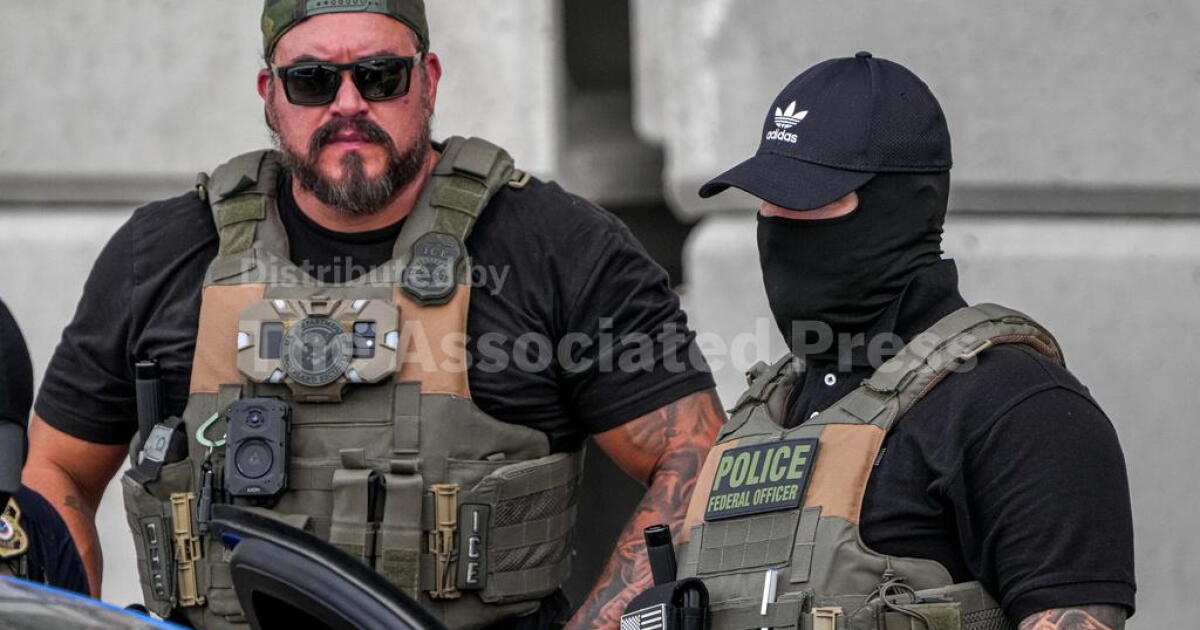
Immigration and Customs Enforcement (ICE), a United States agency that has taken a central role in President Donald Trump’s mass deportation campaign, has rejected a government report calling for its agents to wear body cameras that automatically activate.

On Wednesday, the Government Accountability Office, a nonpartisan agency that provides research to Congress, released a report recommending an update to ICE guidelines for camera usage.

Recommended Stories

list of 3 itemsend of list

It suggested that “automated camera activation” would be helpful in situations where “unexpected and unplanned incidents, unrelated to sensitive operations, result in use of force by or against personnel”.

“Given the important role of body-worn cameras in law enforcement activities, we maintain that additional controls are needed to help ensure that ICE personnel capture footage in accordance with policy,” the report said.

Automatic activation, it added, would address difficulties ICE agents face in manually turning on their cameras during enforcement operations.

But ICE has rejected the recommendation for automatic activation, which could be triggered by an agent pulling a gun or turning on a car siren. The agency cited privacy concerns.

But the Trump administration faces public pressure to improve transparency during its immigration raids.

Agents from ICE and other agencies such as Customs and Border Protection (CBP) have faced accusations of excessive force and civil liberties violations.

In January, two US citizens – Renee Good and Alex Pretti – were shot to death in separate shootings in Minneapolis, Minnesota, during immigration operations.

The New York Times estimated in July that immigration agents had opened fire on at least 25 people since the start of Trump’s second term. A CBS News review updated this week counts at least 30 shootings, with nine people killed and 13 others wounded.

ICE has often blamed such incidents on aggression against its agents, and it has argued that its officers have opened fire to defend themselves from danger.

But in several cases, that rationale has come under scrutiny.

Critics argued that video footage in Good’s fatal shooting disproved government statements alleging that she had weaponised her vehicle against agents. Her car, according to observers, appeared to be turning away from agents, not towards them.

In another case, ICE agent Christian Castro was accused of making false statements about a shooting that resulted in injury to Julio Cesar Sosa-Celis, a Venezuelan man living in Minneapolis.

Castro faces federal charges for allegedly lying about being attacked with a snow shovel and broom before the shooting, after video footage contradicted his account. Castro pleaded not guilty last month.

More recently, on October 8, immigration agents shot a man named Oscar Belgal in New York City while his five-year-old son was in the backseat of his car. ICE stated that Belgal appeared to be “going towards officers” in his car when they opened fire.

On Tuesday, a judge rejected the government’s effort to have Belgal deported.

Activists say better recording procedures for body camera footage could help clarify what happened in such incidents.

But the Trump administration has largely refused to implement reforms to ICE protocol.

Earlier this year, Democrats in Congress delayed funding for the Department of Homeland Security, which oversees ICE, on the basis that significant changes needed to be made to reduce incidents of excessive force.

The department said on Wednesday that automatically recording cameras could result in “the unauthorised recording of sensitive interactions with informants or victims”.

The agency added that all ICE offices had received body cameras as of August 5, but that training in their use was still ongoing and would be finished “soon”.

Source link

ICE rejects suggestion that its officers wear body cameras that automatically activate

Federal immigration officials need to ensure that body cameras worn by officers are uniformly activated when needed, a government report released Wednesday said, following a series of contentious shootings and aggressive arrests by ICE officers.

The agency rejected the recommendation, saying that using cameras that automatically activate when an officer pulls their weapon or activates a car siren could risk privacy concerns.

ICE has come under intense scrutiny after numerous incidents where officers have opened fire during enforcement operations and the agency has claimed they were under threat but officers weren’t wearing body cameras. Critics say the cameras could help hold officers accountable and promote transparency at a time when the agency is operating at a high tempo across the country and increasingly accused of excessive use of force. The report by the Government Accountability Office covers the period from February 2025 until September of this year. The report, conducted at the request of Democratic members of Congress, delves into policies governing the use of body-worn cameras by ICE and U.S. Customs and Border Protection and details improvements both agencies can make to improve their programs. But it did not go into any of the high-profile ICE-involved shootings that have focused attention on the agency’s body-worn camera usage, such as the shooting deaths of Renee Good in Minneapolis or Lorenzo Salgado Araujo in Houston.

A fatal shooting exposed gaps in ICE’s camera rollout

Former Homeland Security Secretary Kristi Noem announced in February that every Homeland Security officer on the ground in Minneapolis would be issued body-worn cameras. Noem, who was later fired by Trump, said officers across the country would receive them as funds became available.

The department later received $20 million from Congress to finish the ICE body-camera rollout plan. But then came a shooting in July of Salgado Araujo, when Immigration and Customs Enforcement officers shot and killed the Mexican man who lived in the U.S. for more than 35 years. Those officers were not wearing body cameras, raising questions about why the agency still hadn’t gotten the cameras out to officers in the field. Homeland Security said after Salgado Araujo’s death that body cameras had been deployed to more than half of ICE field offices and that the remainder would get them in the next 60 days. In the GAO report, DHS said all ICE offices had received the body-worn cameras as of Aug. 5 and that officers were being trained on their use.

In a statement Wednesday, DHS said that while they’d purchased devices for all ICE officers across the country, the required training was still ongoing and that they expected to be finished “soon.”

DHS rejects automatic recording, citing privacy concerns

The report recommended ICE take additional steps such as “automated camera activation” that it said would be particularly helpful in situations where “unexpected and unplanned incidents, unrelated to sensitive operations, result in use of force by or against personnel.” The report said this would improve transparency and public trust. But DHS disagreed, saying that cameras that automatically activate could result in “the unauthorized recording of sensitive interactions with informants or victims.” The agency said the body-worn cameras are required to be turned on at the beginning of pre-planned enforcement activities.

Confusion over camera rules kept one ICE office from using them

The report also said some of the officers they talked to at both ICE and CBP were confused as to when they should activate the cameras. For example, some officers told the GAO they didn’t know whether to activate the cameras during vehicle searches or when transporting detainees. The report noted that at one ICE office, staff was so uncertain about when they were supposed to use the cameras that they hadn’t begun using them even after they’d been trained.

The report also found that neither agency had updated the plans that oversee their body-worn camera programs even as their staff had grown significantly.

Santana writes for the Associated Press.

Source link

Mel Giedroyc showed true personalist when The Great British Bake Off cameras weren’t rolling

Mel Giedroyc hosted The Great British Bake Off for seven years between from 2010 to 2016, but one contestant shared what she’s really like once the cameras stop filming

Mel Giedroyc showed her true personality to contestants when cameras weren’t rolling during filing of The Great British Bake Off. Mel Giedroyc hosted The Great British Bake Off for seven years between from 2010 to 2016 and left the show when it moved from the BBC to Channel 4, famously stating they were “not going with the dough”.

Over her time on the show she met dozens of contestants and hundreds of filming and production crews – with one show member lifting the lid on what she was like once the cameras stop rolling. Former contestant Howard Middleton, a graphic designer from Sheffield who left on week six of series four the show.

He shared one moment where he believes Mel showed her true colours once the cameras were not rolling in the tent.

Speaking to Smooth Spins Casino, former GBBO contestant Howard Middleton said: “They [Mel and Sue Perkins] were so funny. They were lovely. I remember there was one occasion where Mel came up and asked whether I wanted a cup of tea.

“And there were no cameras or anything like that. She actually asked one of the runners to get one for me; she didn’t make it herself, but it was just that consideration and warmth, which was very genuine.”

Nigella Lawson replaces Prue Leith for 2026 Great British Bake Off

Earlier this year, Prue Leith 86-year-old announced it was the ‘right time’ to leave The Great British Bake Off after nine years on the show. However, in her place, viewers will welcome Nigella Lawson to the tent as the 66-year-old will be judging this year’s contestants alongside Paul.

Sharing his thoughts on the newcomer, Paul told Radio Times how each person he’s worked alongside has varied from one another.

He remarked that Mary Berry was different from Prue and Prue was different to Nigella before adding ‘Nigella is different to Mary’. Admitting how each of them brought their ‘own character’ to the programme, he highlighted that Nigella is a ‘very warm’ person, especially to the contestants taking part in the competition.

However, Paul commented that he’s the ‘constant’ as he remains the ‘constructively critical’ judge. Although people are welcoming a new face to the tent, presenters Alison Hammond and Noel Fielding are returning as hosts once again.

Channel 4 viewers were treated to a glimpse of Nigella in the iconic tent during a brief teaser clip revealing the show’s return date. She walked towards the camera in a purple jumpsuit before playfully pretending to tuck into the lens as though it was a sweet treat.

When it was announced that Nigella was joining the Channel 4 show, she had nothing but excitement. Nigella commented: “I’m uncharacteristically rather lost for words right now!

“Of course, it’s daunting to be following in the footsteps of Prue Leith and Mary Berry before her, great dames both, but I’m also bubbling with excitement.

“The Great British Bake Off is more than a television programme, it’s a National Treasure – and it’s a huge honour to be entrusted with it.

“I’m just thrilled to be joining the team and all the new bakers to come. I wish the marvellous Prue all the best, and am giddily grateful for the opportunity!”

Source link